Go Back

Lin
Weekly Market Update: Key Support
AI stocks have been getting hit pretty hard lately. And that’s been the status for the last few weeks as we’ve talked about already in depth.
Even Elon Musk recently warned that most neocloud companies will eventually fail. That’s just pouring fuel into the fire. Of course comments like these help SpaceX cloud business and makes it harder for the competition. So he’s definitely profiting from this uncertainty.
But it's important to remember that 2 things drive the stock market more than anything else: earnings and sentiment.
Earnings tell us how well a company is actually doing. Sentiment tells us how much investors are willing to pay for those earnings.
And the two don't always move together.
A company can report strong earnings, grow its business, and still see its stock fall if investors become less confident about the future.
We've seen this happen many times before.
When sentiment is good, investors are willing to pay higher prices because they expect even more growth ahead. But when sentiment starts to turn, those same stocks can fall sharply, even if the underlying business is doing just fine.
And that's something we're starting to see in parts of the AI sector.
The companies might still be growing, but investors are becoming more careful about how much they're willing to pay for that growth.
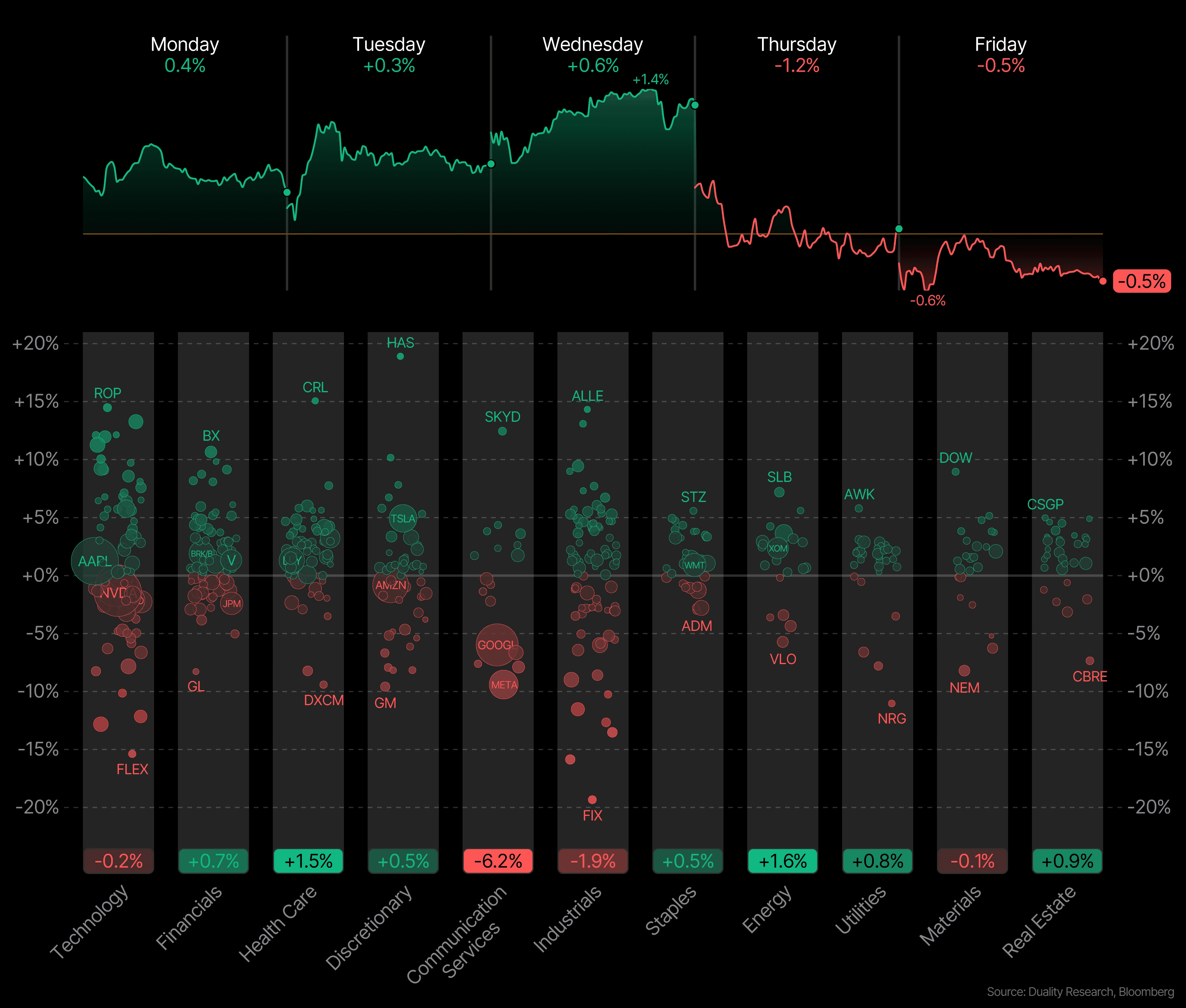
The S&P 500 is still holding up surprisingly well, considering what's happening in the rest of the market. It’s still only a few percent below its all-time highs.
Looking at the weekly chart, the index is still holding above its 20-week moving average, which has been an important support level during this rally.
But there are some warning signs.
The recent attempt to move higher failed, and the index closed the week near its lows and below its 10-week moving average. That's not great.
On the positive side, selling volume has been relatively low compared to previous selloffs. So far, we're not seeing the kind of heavy selling that usually comes with investors rushing to exit the market.
For now, the bigger trend still looks okay.
But there's clearly a lot of weakness hiding beneath the surface, and a deeper correction in the S&P 500 would likely put even more pressure on stocks that are already struggling. And a break below $750 would be another warning sign that this correction could have further to go.

The Nasdaq is starting to look a bit more concerning.
Unlike the S&P 500, QQQ has now fallen below both its 10-week and 20-week moving averages. And that's not a great sign.
Just a few weeks ago, QQQ was trading near $760 and looking ready to push higher. Now it's around $704, down roughly 8% from its highs.
The recent breakout attempt has failed, and momentum has clearly weakened as AI and technology stocks continue to struggle.
For now, the $690 to $700 area is important to watch. This level held up during the summer, and buyers will need to defend it again. A break below that area would be another warning sign that the correction has further to go.
So, I think patience is still the best approach.

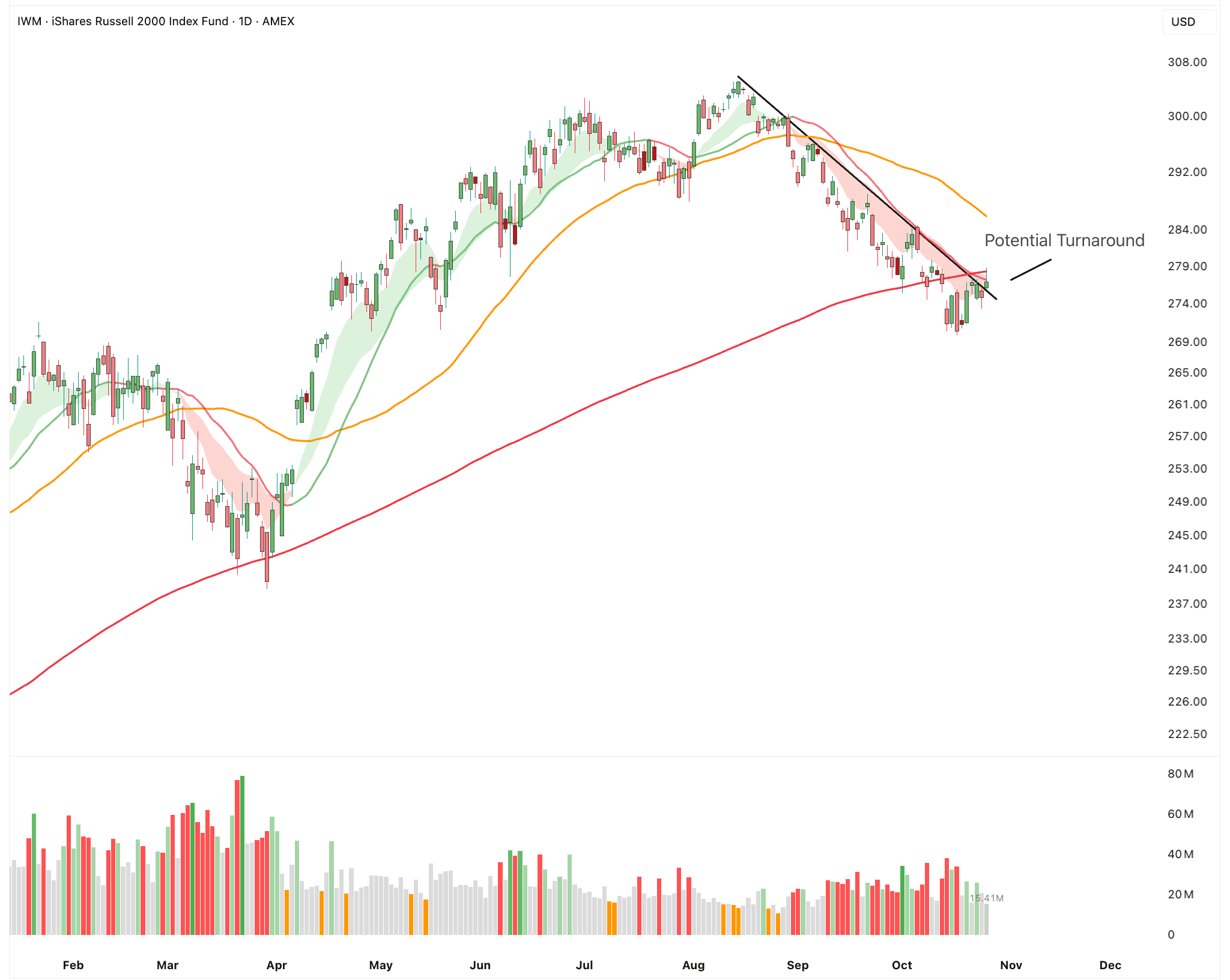
Of course, the weakest of the main indices continues to be small caps.
But there might be some good news ahead for small-cap stocks.
The ETF is trading below both its 10-week and 20-week moving averages. But buyers finally stepped in around the 50-week moving average. That's a good first sign. Now we need to see whether they stick around.
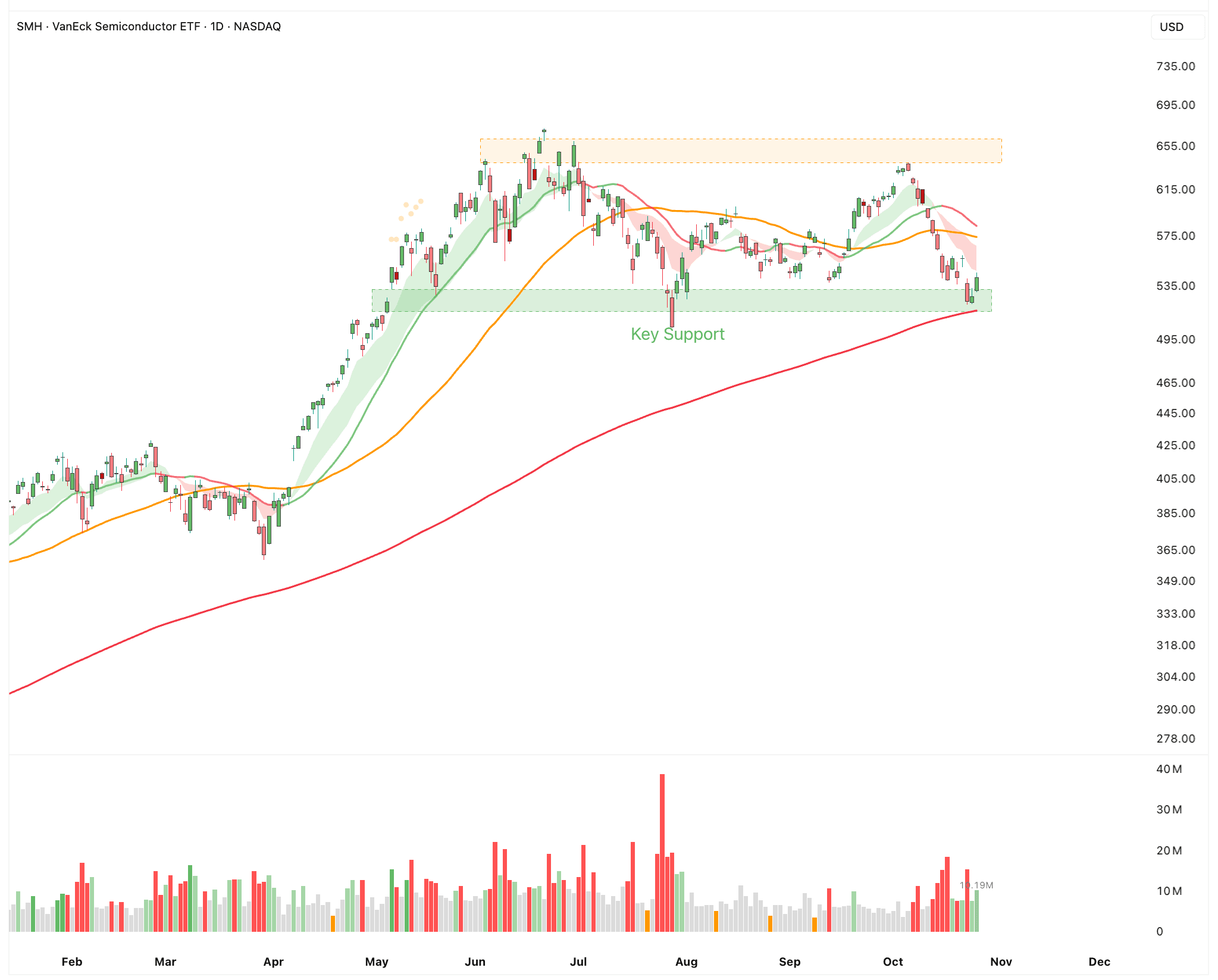
Semiconductors have been one of the biggest drivers of this bull market, especially with all the excitement around AI.
But they are looking a bit concerning right now.
After trying to move higher a few weeks ago, semiconductor stocks have started falling again and are now trading below both their 10-week and 20-week moving averages.
The $520 to $530 area is now especially important for SMH. Buyers have stepped in around this level several times over the past few months, and we're back testing it again.
A break below this area would open the door to another drop toward the 50-week moving average. That's quite a bit more downside.
And with semiconductors playing such a big role in the market, it will be difficult for the broader tech sector to regain momentum until chip stocks start showing some strength again.
The next few weeks should be interesting.
For years, AI stocks were leading the market higher. Investors were buying almost anything related to AI, especially companies that were seen as important to building AI infrastructure.
But that’s not true anymore.
AI stocks have underperformed the S&P 500 excluding AI stocks by almost 20 percentage points over the past 6 months. That's the worst relative performance since this bull market started in late 2022.
After years of massive gains, sentiment has changed drastically. Investors are becoming more careful about which companies they buy and how much they're willing to pay. But that shouldn’t be too surprising either. Sentiment like most market moves come in cycles. Since this AI bull market started 4 years ago, there has been plenty of periods where the market was only focused on the negatives. And that’s happening again today.
And it’s a good reminder that many AI stocks have already gone up 5x, 10x, or more over the past few years. Even after a big drop, some of these companies are still trading far above where they were before the AI boom.

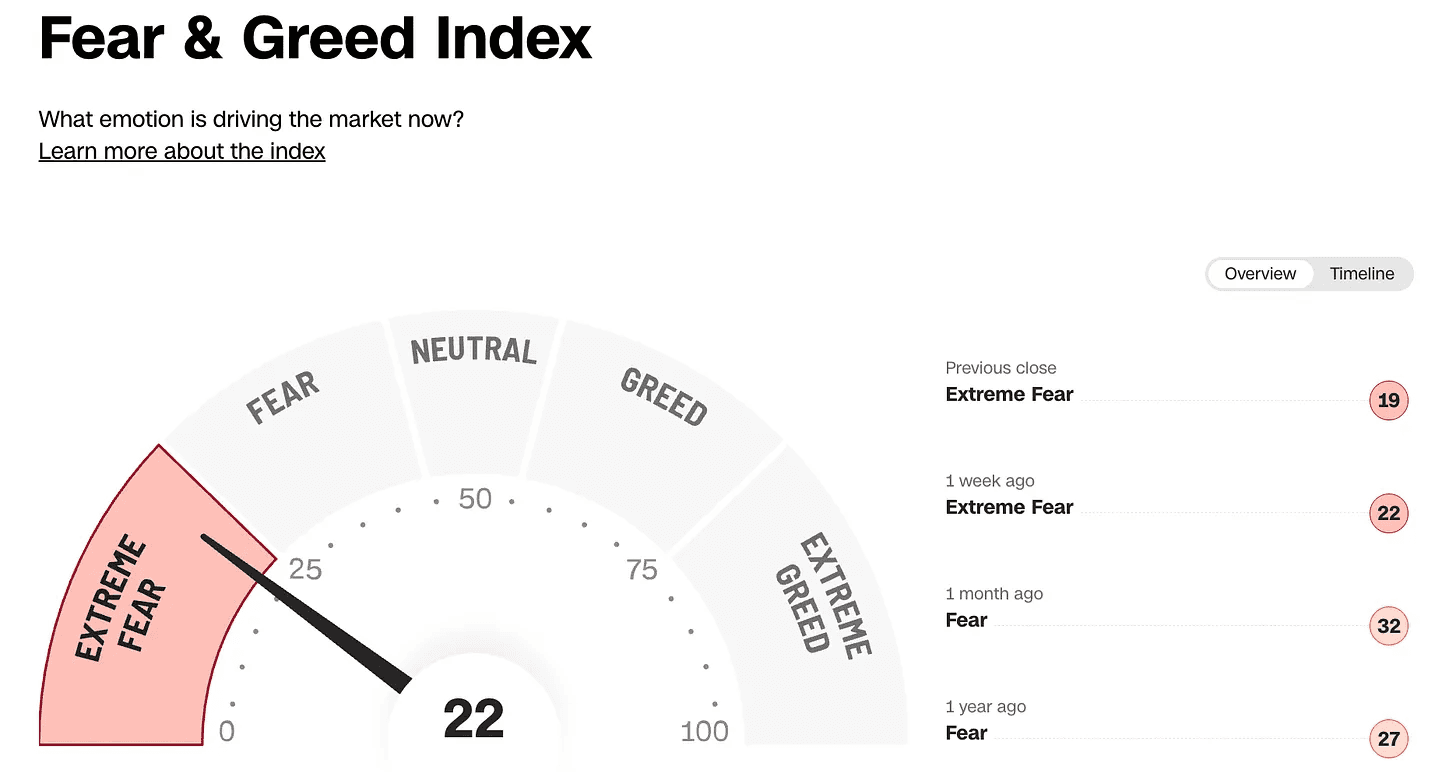
With the recent correction in AI stocks, there's a lot of fear in the market right now.
The CNN Fear & Greed Index is sitting at just 22 out of 100, down from 32 just 1 month ago.
Investors are getting nervous, and more people are starting to question whether the AI boom can keep going.
And you can see it in the price action.
When fear gets this high, even good companies can see their stocks fall sharply as investors become less willing to take risks.
But that can also create some interesting opportunities. Especially as we're heading into November and December, which have historically been among the strongest months for the stock market.
Of course, extreme fear doesn't mean the selling is over. Stocks can always fall further, and sentiment can stay negative longer than expected.
That's why patience is so important right now.
Nobody knows how far this correction in the AI trade will go.
But a lot of hedge funds are already betting against stocks more aggressively than at almost any point in the past 5 years.
Short leverage is at the 99th percentile. So, it has been higher only 1% of the time during that period. That's a pretty extreme level.
At the same time, hedge funds have cut their net exposure to stocks to some of the lowest levels in years.
With so many investors betting against the market, even a small move higher could trigger a rally. As stocks rise, short sellers come under pressure and start buying back shares to close their positions. That buying pushes prices even higher.
But we still need a vary strong catalyst. And maybe the Anthropic IPO which is expected to happen on November 16th will do just that.
Of course, heavy short positioning doesn't guarantee a rally. But there's a lot of potential buying power sitting on the sidelines, and it wouldn't take much good news to change the mood.
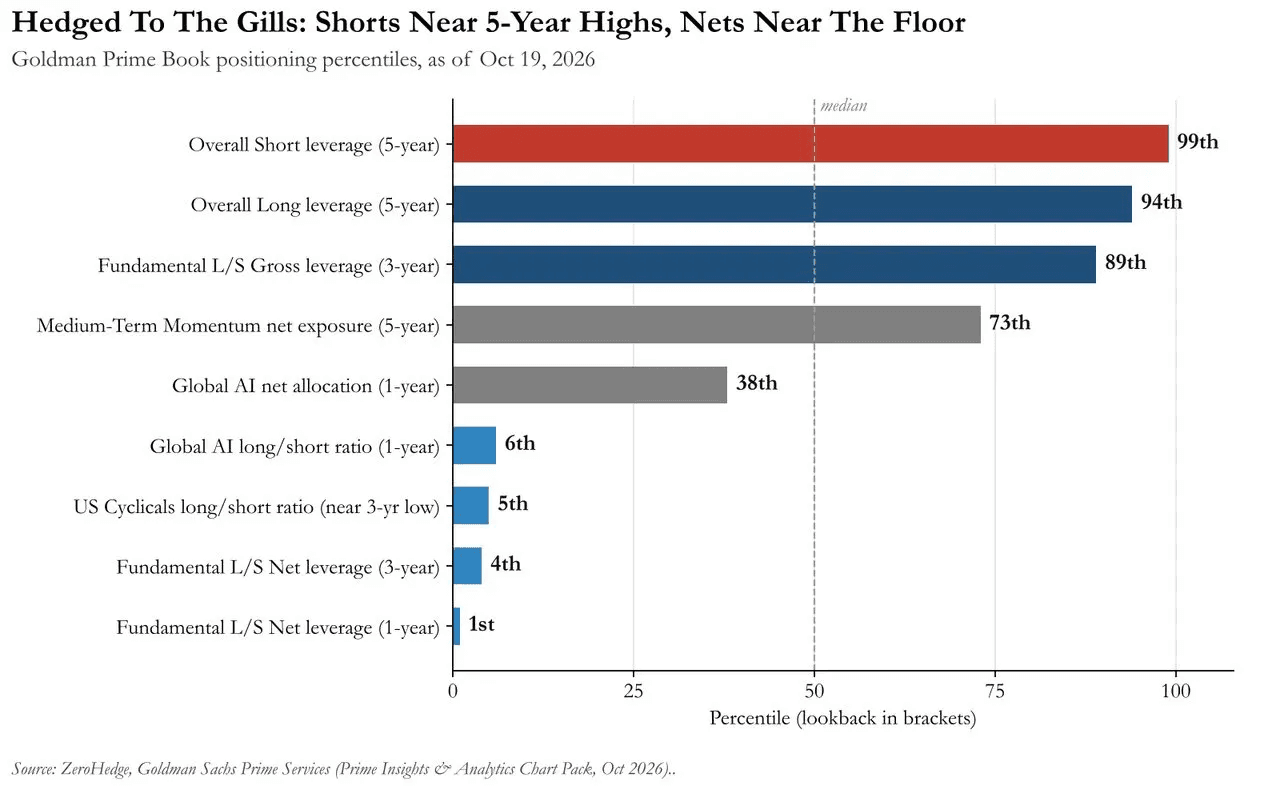
Here are a few more data points on the short side:
Short ETF volume for S&P 500 is at record levels.
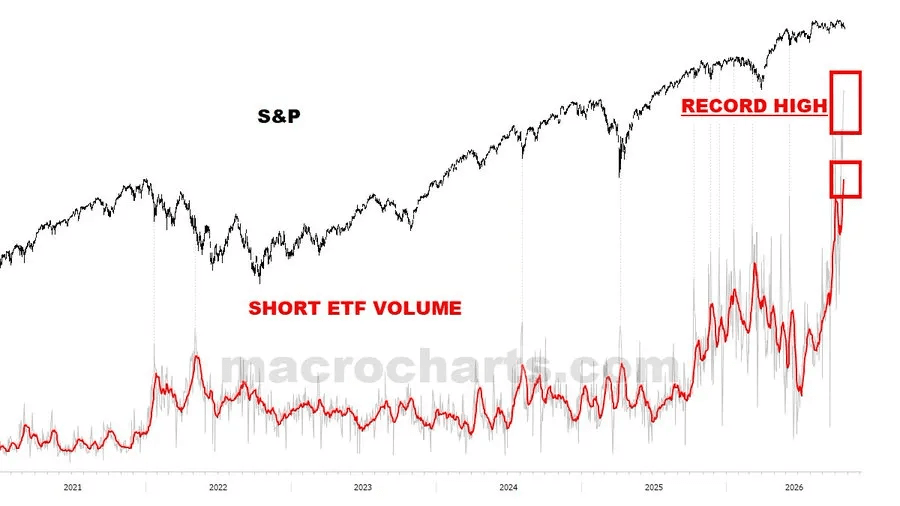
Short leverage is piling up.
Hedge funds are using more borrowed money to bet on falling stock prices.

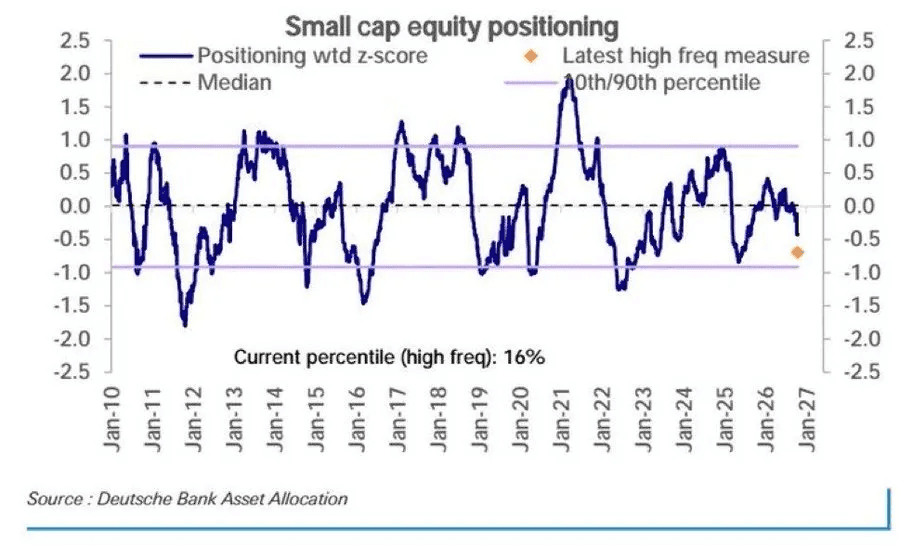
Small cap positioning is pretty wiped out here, nobody wants to own these right now after a sizable drawdown.
Positioning is now approaching levels we've seen during some of the more difficult periods for small-cap stocks over the past 15 years.
So, there might some more downside ahead. But a reversion to the mean becomes more and more likely.
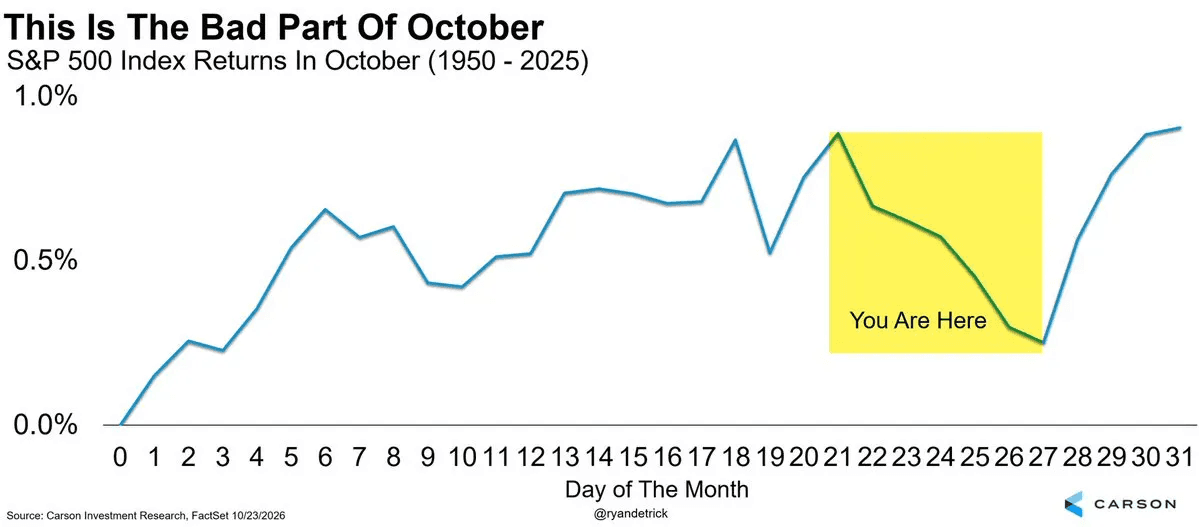
And there's some good news.
We're currently in what has historically been one of the worst parts of October for the stock market. Looking at data going back to 1950 shows that the S&P 500 typically struggles at the end of October before it finally recovers.
And that's pretty much where we are right now.
Overall, we're at a pretty interesting point in this correction. And this is starting to look like a make-or-break level for most of the major indices. This needs to hold to not see any further downside and create the chance for the markets to rally again.
So far, this selling has been pretty brutal, especially in AI stocks. Some names have already fallen 30%, 40%, or even 50% from their highs. And after such big declines, I'm starting to think the risk of becoming too bearish is growing.
That doesn't mean we should suddenly start buying everything. The market is still weak, and there's no guarantee we've seen the bottom yet.
But there's a big difference between getting cautious before a selloff and becoming bearish after stocks have already fallen a lot.
And that's worth keeping in mind.
What's interesting is that the major indices are still holding up relatively well. The S&P 500 and Dow Jones remain much stronger than many of the growth stocks that led the rally earlier this year.
There's a lot of rotation happening beneath the surface.
Money is moving around the market, and the stocks that led the rally are now taking the biggest hits.
At the same time, many of the indicators we've looked at are reaching pretty extreme levels.
Fear is high. Hedge funds are heavily positioned against stocks. Small-cap exposure is near historic lows, and more investors are betting on more downside.
With so many investors already positioned for more downside, even a little good news could lead to a strong bounce as short sellers close their positions and others start buying again.
But a bounce alone won't tell us whether the correction is over.
What matters is what happens afterward. Do buyers keep stepping in? Do AI stocks start recovering? Does the rally spread to more parts of the market?
Those are the things I'll be watching.
For now, I'm still a bit more defensive in the short term, while my longer-term view remains bullish. Corrections like these can create some great opportunities, but there's no need to rush. The market will eventually give us better opportunities to be aggressive again.
Until then, I'm happy to stay patient, protect my capital, and wait for the market to show some real strength.
Previous Updates
View All
- Weekly Market Update: Key Support
- Weekly Market Update: Earnings Season is Back
- Weekly Market Update: Big Tech Divergence
- Weekly Market Update: Accumulation
- Weekly Market Update: The Best Quarter
- Weekly Market Update: Rate Hikes
- Weekly Market Update: AI is Not Slowing Down
- Market Update: Has AGI Arrived?
- Weekly Market Update: Consolidation
- Weekly Market Update: September is Here
- Market Update: Nvidia Crushes Earnings
- Weekly Market Update: Yields
- Market Update: The Future of Biotech