Go Back

Lin
Weekly Market Update: Consolidation
OpenAI’s release of GPT-6 Astra is probably the most important AI development we have seen in quite some time.
It seems that the AI Trade is coming back to life. And this might be the catalyst that the market needs to kick off the next leg higher. There has been a noticeable change in character across AI stocks recently, after months of choppy price action.
The broader market remains constructive too.
The S&P 500 and Nasdaq have continued grinding higher, while small caps have quietly shown strong relative performance. At the same time, there are real macro risks. Treasury yields remain high, oil has surged and inflation concerns are coming back. Higher rates can compress growth-stock valuations even while AI fundamentals remain strong. So I do not think this is a market where you blindly buy anything with an AI label. You need to look out for fundamentals, earnings, narrative and price action to line up together.
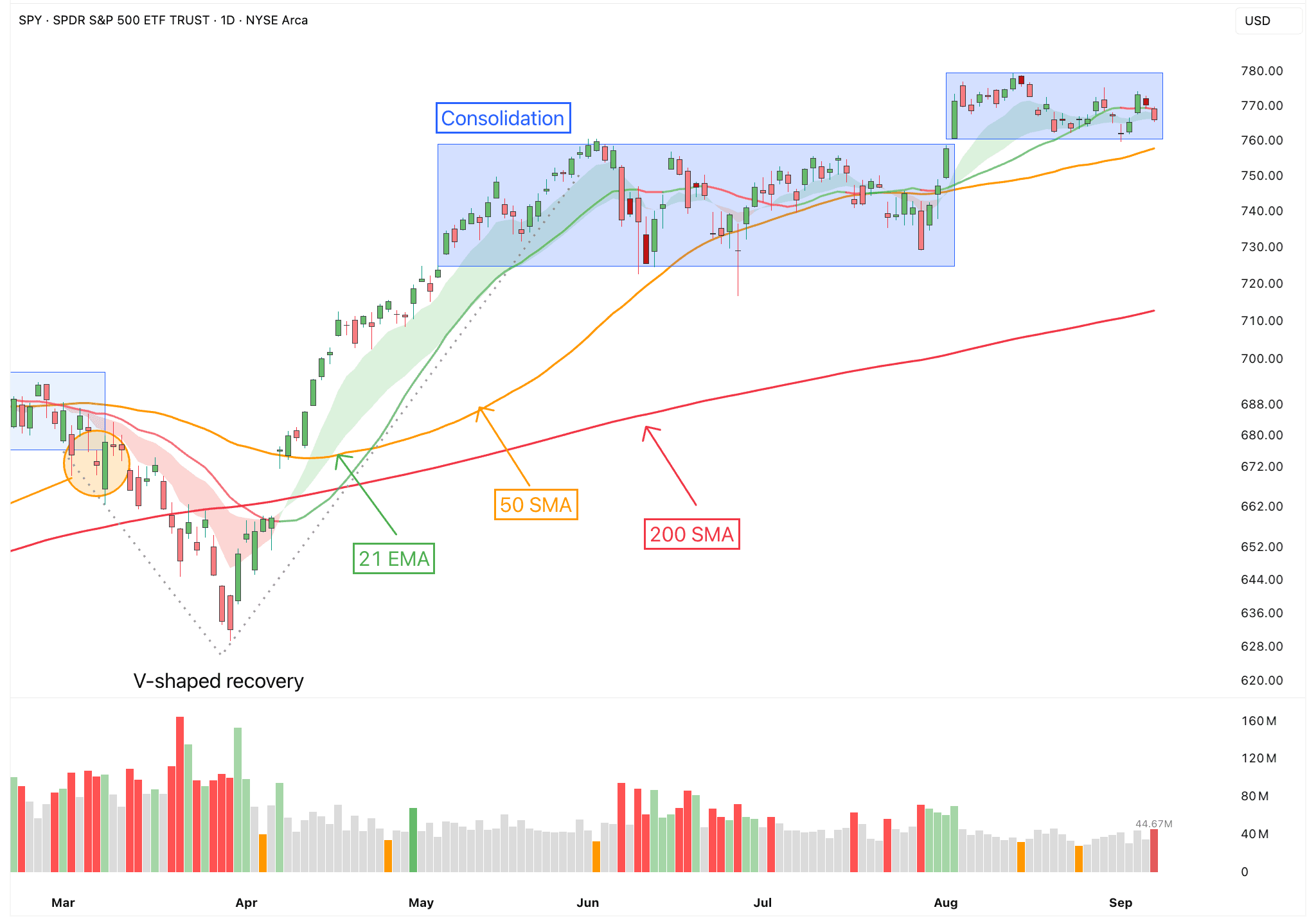
Even with that huge green candle about a month ago, the index has technically been moving sideways since late May. Over the past 3 months, the S&P 500 is up less than 2%. It still looks like a large consolidation waiting for a serious move either way.
Compression eventually leads to expansion. At some point, this multi-month chop is going to resolve into a much larger move. Right now, my bias remains to the upside. The primary trend is still clearly higher, the index continues to hold key moving averages, and there has been no real technical damage. For now, there is very little reason to fight the trend.
On the surface there is very little to worry about. But underneath the headline index, there are a few interesting data points.
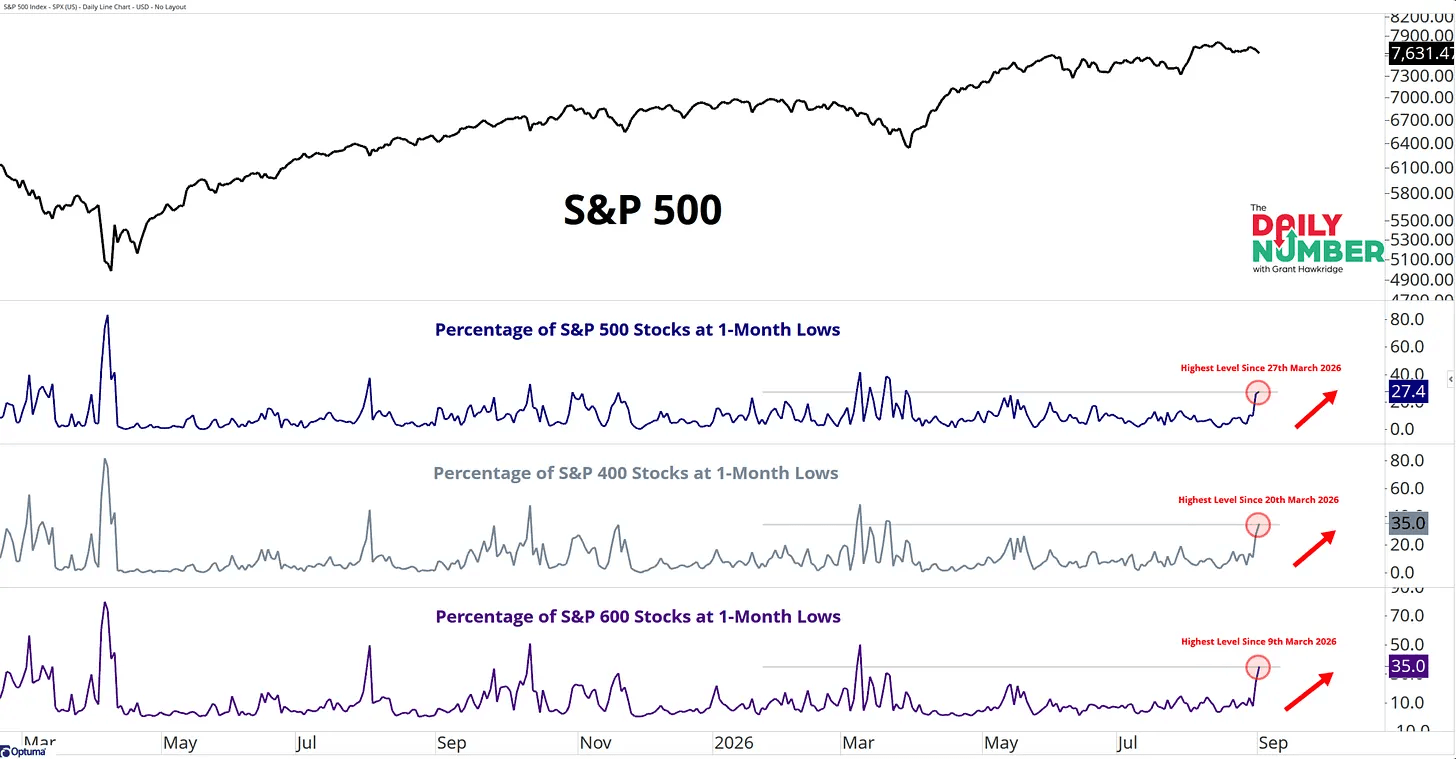
27.4% of S&P 500 stocks are now trading at 1-month lows, the highest reading since March. That is a meaningful deterioration in short-term breadth. The index remains near its highs, but a growing number of individual stocks underneath it are already pulling back. So, that is important to keep in mind.
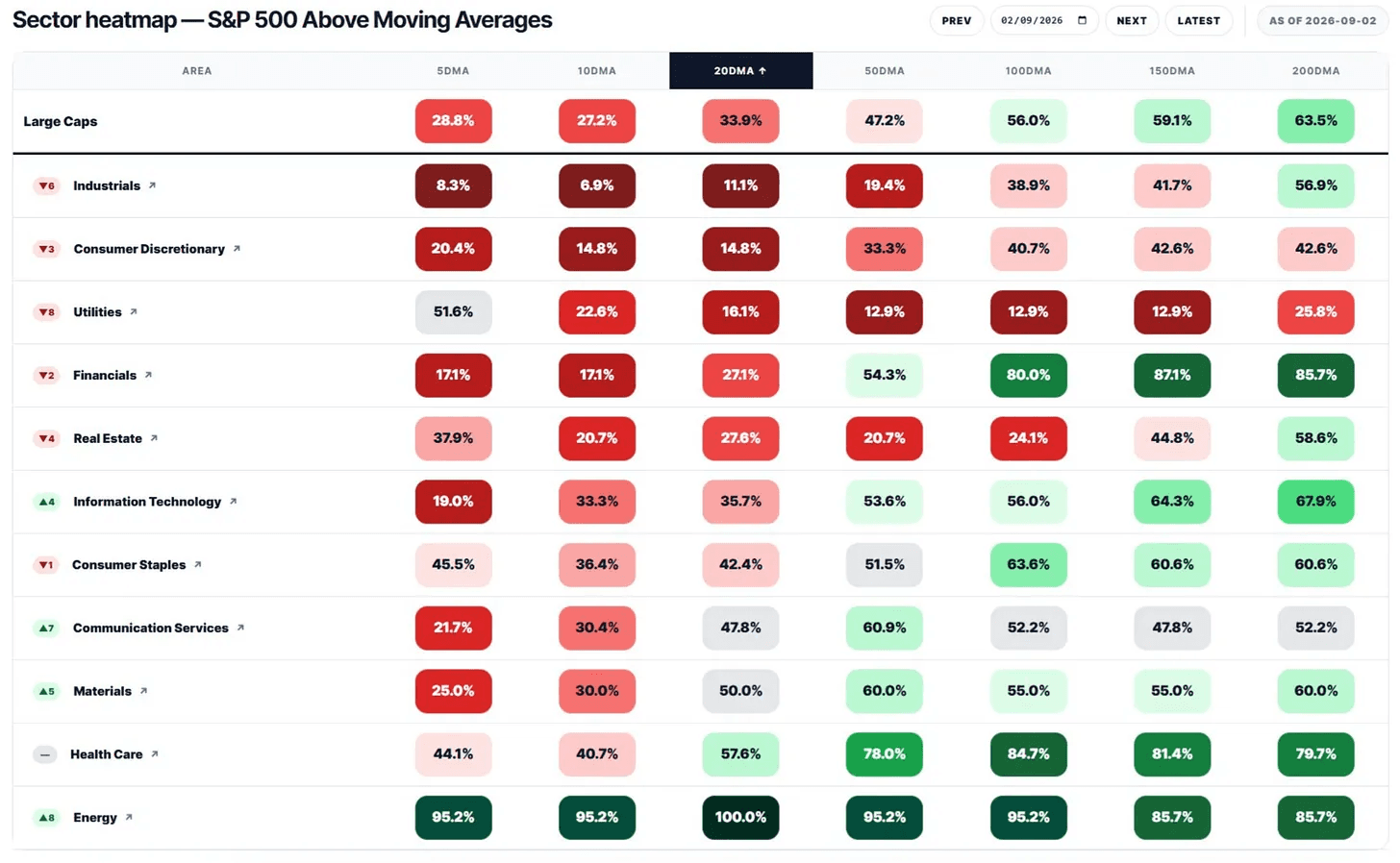
The weakness is not evenly distributed. Some sectors are still holding up well, while others have already rolled over much more aggressively underneath the index. Will see if breadth continues to deteriorate. For now, that’s more like a yellow flag rather than a major warning.
Rising yields are not automatically bad for stocks.
It’s more important to understand why they are rising. The 10-year yield started moving higher when the war began, and oil moved higher at the same time. It seems that the market is becoming more worried about inflation again. Higher oil makes energy and transport more expensive. If that keeps inflation higher, the Fed has less room to cut rates. Which means that nvestors then demand a higher return on bonds, which pushes yields up.
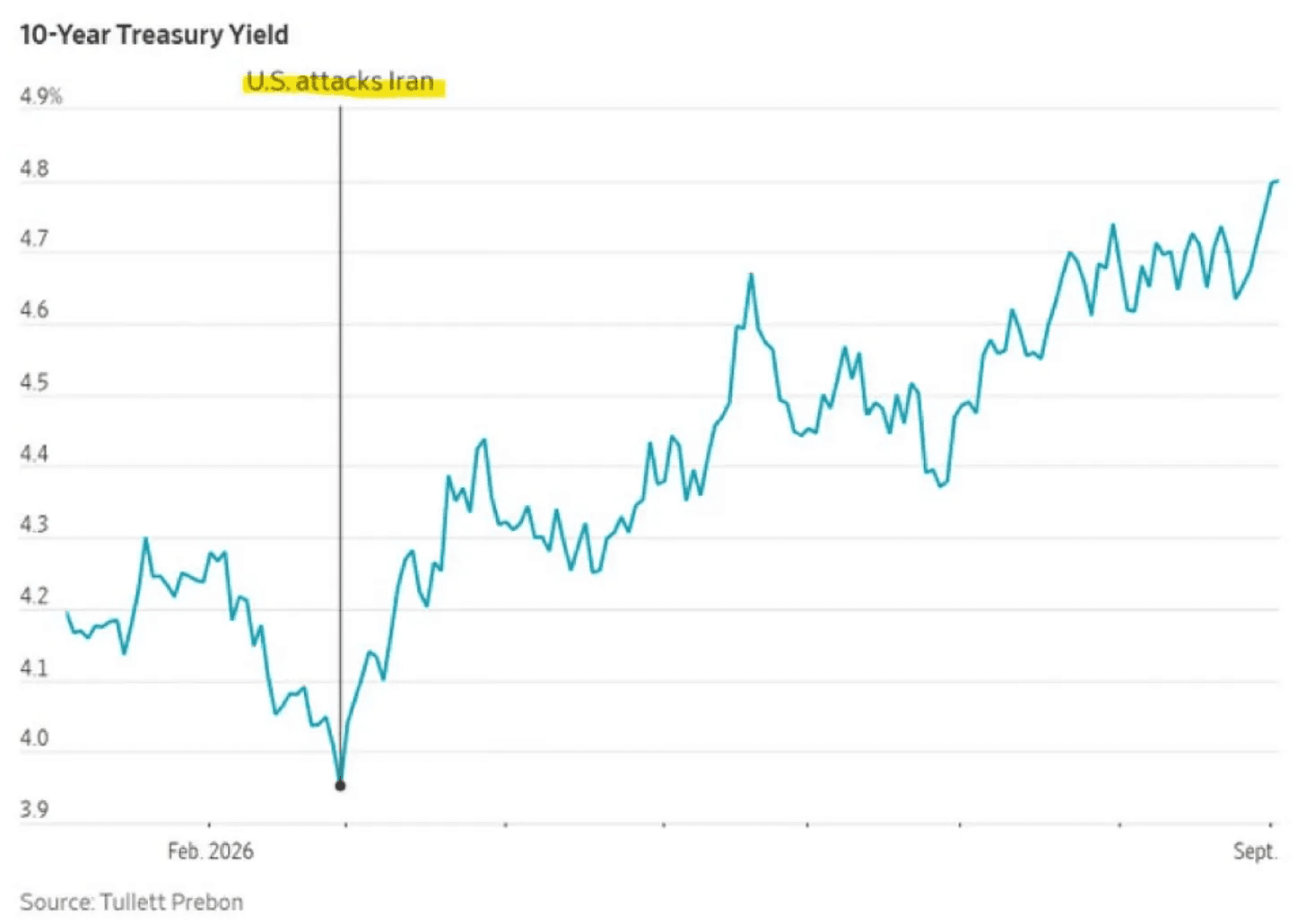
The 10-year yield has spent most of the last 3 years moving around in roughly the same 1 percentage point range, while the S&P 500 has kept trending higher. Again, it shows that higher rates do not automatically mean falling stock prices. The market can handle higher yields if earnings are growing and the economy continues to hold up.
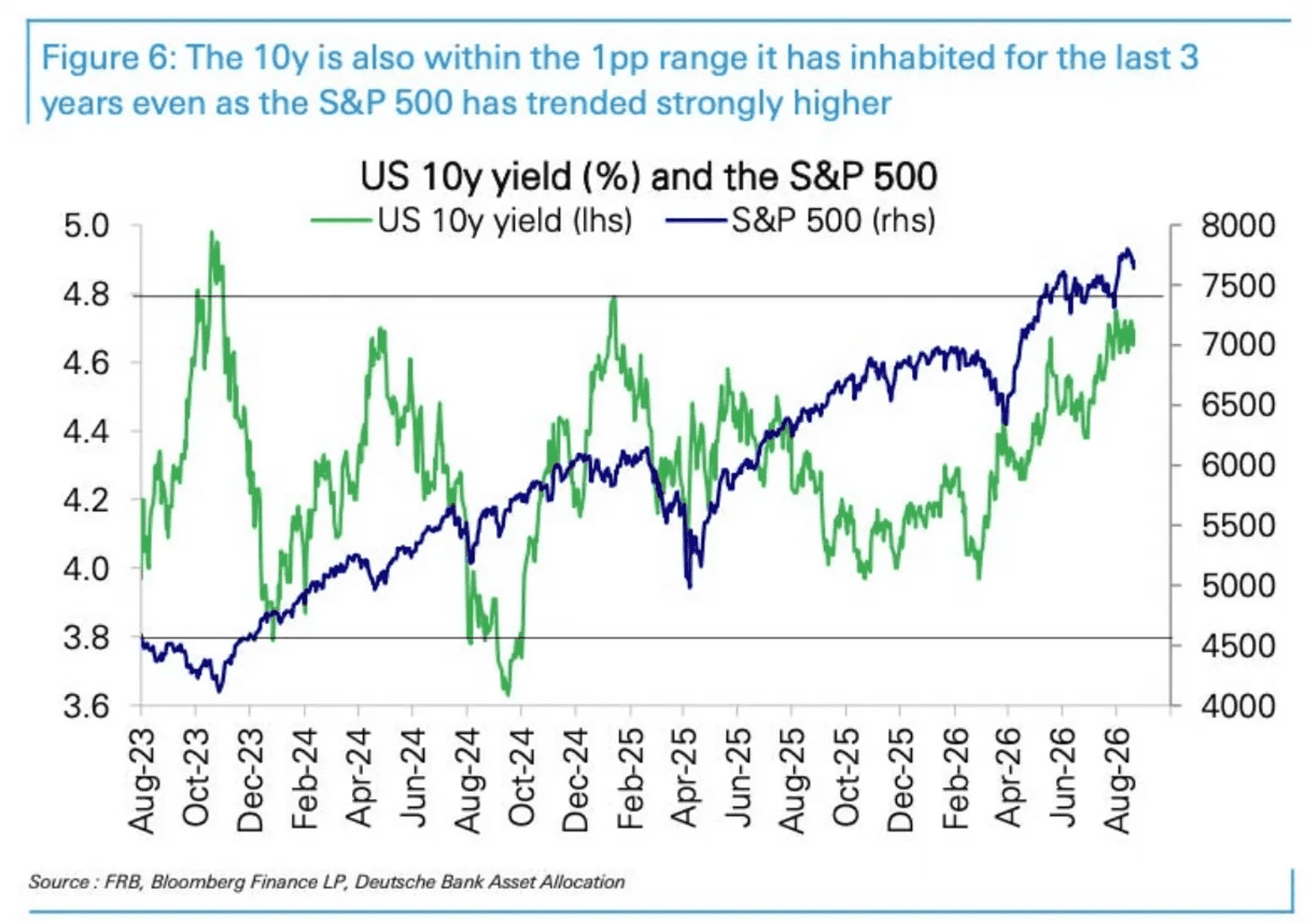
If rates are going higher, which sectors should you want to own?
Historically, Financials and Energy tend to hold up better when the 10-year yield is rising. Financials benefit from higher rates and wider spreads, while Energy often does well when higher yields are tied to stronger nominal growth or rising commodity prices.
Utilities and Consumer Staples tend to struggle more. Both are often treated as bond proxies. Investors own them partly for their steady dividends, so when actual bonds start offering a much better yield, those stocks become less attractive at least on a relative basis.
If rates do keep moving higher from here, sector rotation is something to track.
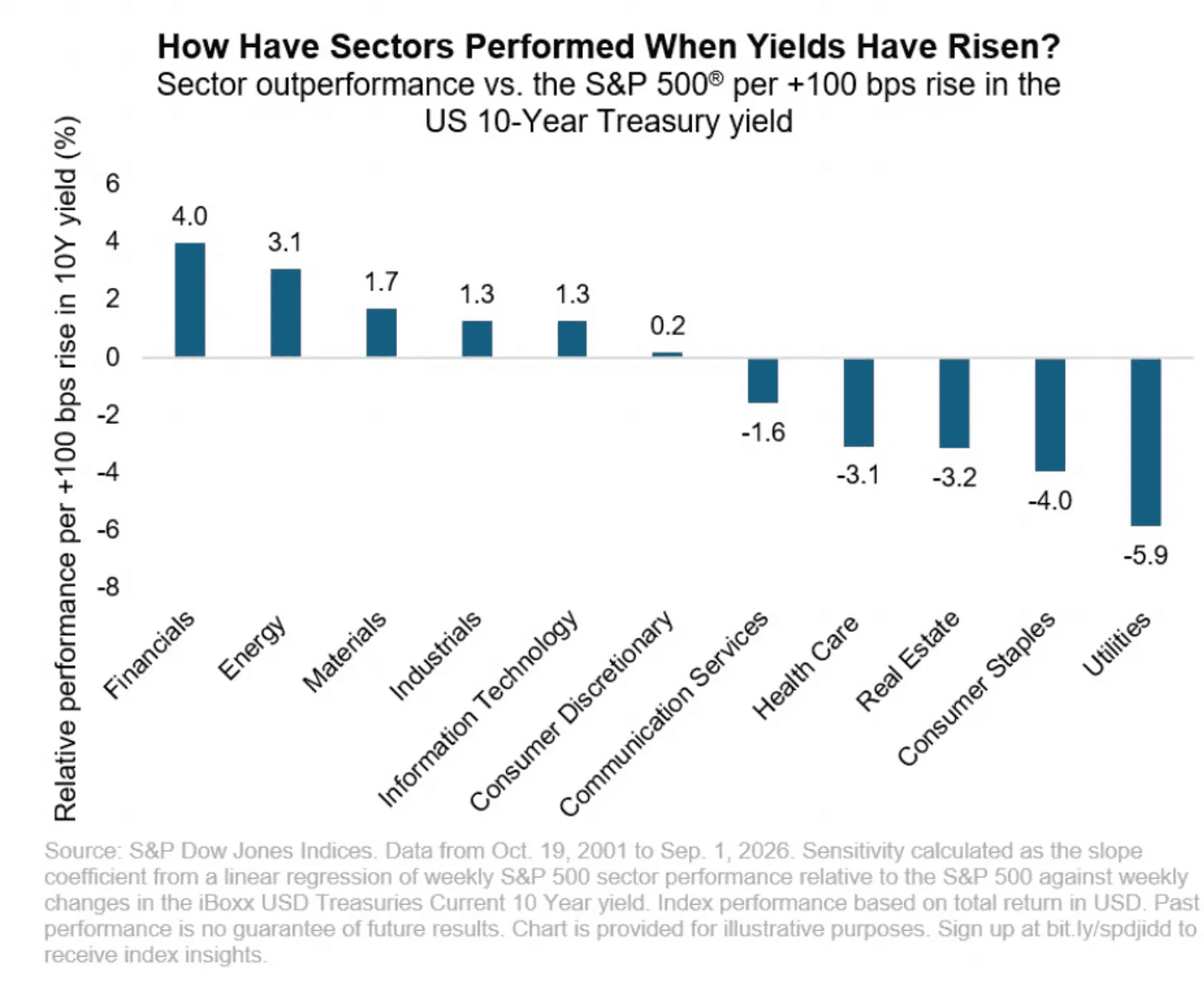
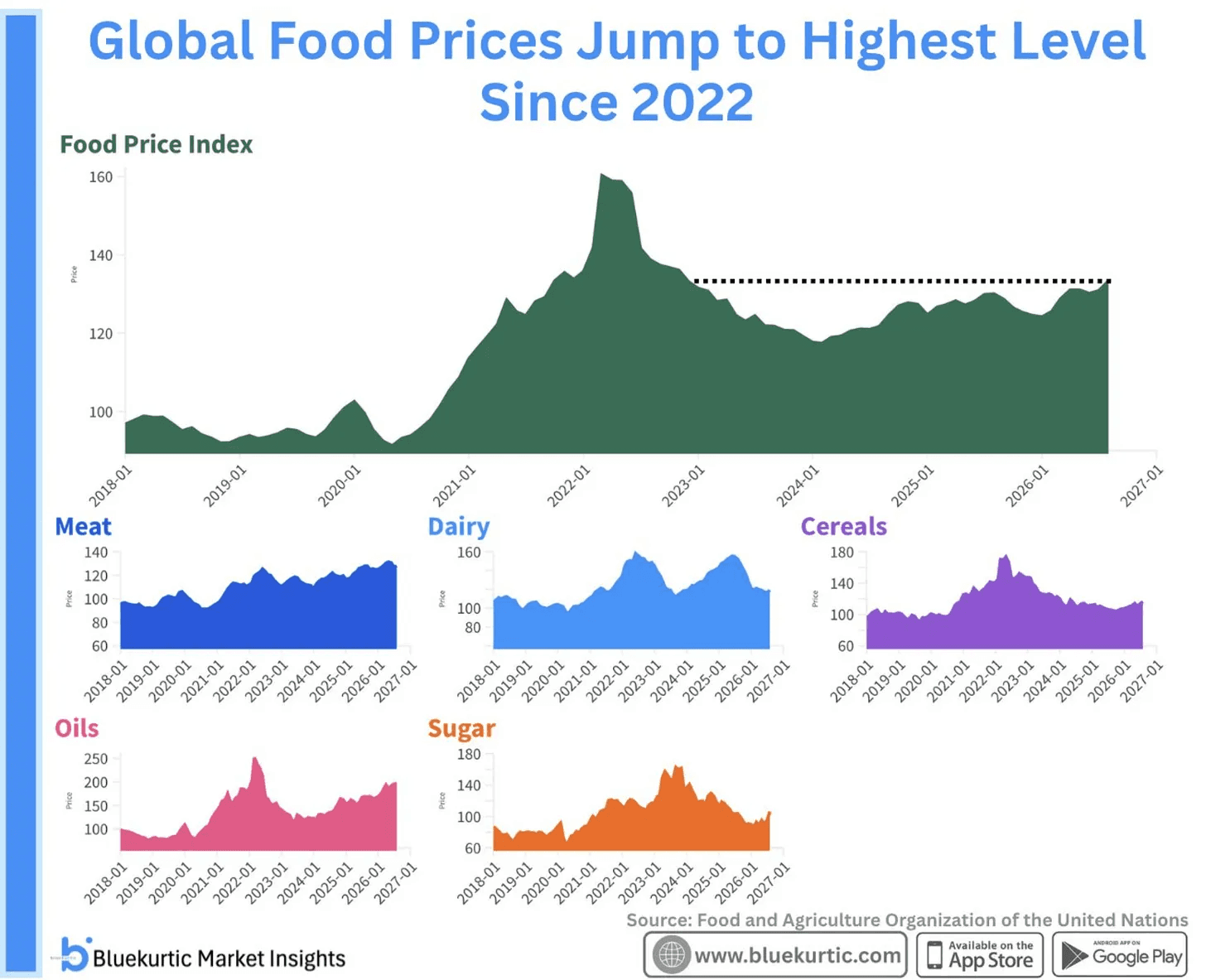
The best signal for rising inflation are commodities.
Food prices are one place you can see it. The FAO Food Price Index has been moving higher again.
Oil is also rising. Higher energy prices affect almost everything. Shipping costs more, factories pay more to run, and businesses often pass some of those extra costs on to customers.
It’s hard for inflation to come down when food and energy prices are rising at the same time. So, if inflation stays higher, interest rates will stay higher for longer. And that can make things harder for many expensive growth stocks.

Here’s a stat that I found surprising: Short interest on the median S&P 500 stock just jumped to a decade high.
Investors are betting against stocks more aggressively than they have in years. Even though, the index is close record highs.
I guess that fits with what we are seeing in market breadth. The headline index looks strong, but underneath it there is clearly more weakness and more skepticism than you’d think.

Looking at the most shorted names. Reddit is at the top, along with a handful of less popular stocks. Many of them have a short interest over 15% of market cap.
On the other end, the least shorted stocks are mostly the mega caps everyone already owns. Alphabet, Apple, Amazon and Walmart are all below 1%.
The mega caps are widely owned and barely shorted, while parts of the rest of the market still have a lot of investors betting against them.
We’ll see how this develops. But if the market keeps moving higher, some of those short positions could eventually become fuel for the next move by triggering a short squeeze.

Overall, I still think the market looks very constructive.
I also still do not think this looks like some obvious market-wide bubble. There are definitely expensive stocks and crowded areas, but the whole market is not priced like that. A lot of the excess has already been cleaned out. The reset in momentum tech has been violent. We’ve seen one of the worst drawdowns in years. This could create a sharp recovery if the market gets the right catalyst which could very well be AI.
Iran is the biggest wildcard and inflation + yields will eventually matter but after everything stocks have absorbed over the last few months, the indexes are still holding up really well.
The most important thing for now is to be prepared. It means staying ready. Having a clear list of the stocks and sectors to own, the levels where to add, and looking for signals that the market is actually confirming the move.
Previous Updates
View All
- Weekly Market Update: Earnings Season is Back
- Weekly Market Update: Big Tech Divergence
- Weekly Market Update: Accumulation
- Weekly Market Update: The Best Quarter
- Weekly Market Update: Rate Hikes
- Weekly Market Update: AI is Not Slowing Down
- Market Update: Has AGI Arrived?
- Weekly Market Update: Consolidation
- Weekly Market Update: September is Here
- Market Update: Nvidia Crushes Earnings
- Weekly Market Update: Yields
- Market Update: The Future of Biotech
- Weekly Market Update: Earnings Acceleration