Go Back

Lin
Weekly Market Update: The Best Quarter
September is almost over, and for supposedly the worst month of the year, it hasn't been all that bad. That wasn't entirely surprising, as I pointed out at the start of the month.
But the market has had plenty of reasons to fall. Rising yields, oil prices, Iran, the midterms, AI safety concerns, and fears of an AI slowdown. Yet stocks continue to move higher. Despite all the turbulence, negative headlines, and fear, the Nasdaq is less than 2% away from its all-time highs.
One of the few positive developments came from Xi's visit to the US. Both sides agreed to keep pushing forward on AI and held a dinner with America's biggest technology leaders. Elon Musk, Jensen Huang, Tim Cook, Jeff Bezos, Sam Altman. You name it. Pretty much al lthe big names have been present.
At some point, this bull market will end. Every bull market does. But spending years preparing for a downturn that hasn't arrived comes at a considerable cost. The objective is to make money, not to be proven right about every potential risk. And right now, the market looks like it could be ready to accelerate again. Some of the strongest rallies happen when investors remain skeptical and are forced to chase prices higher.
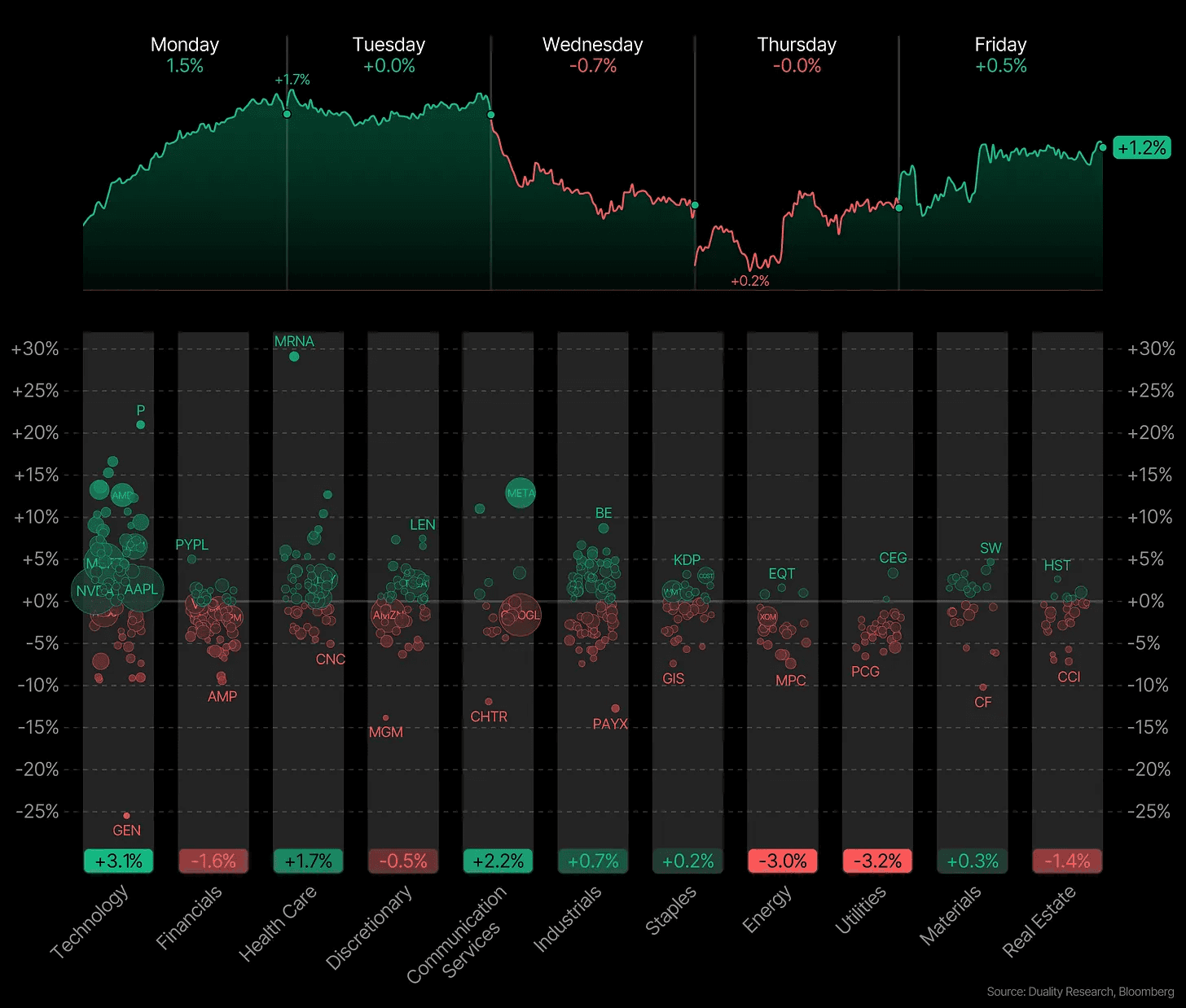
All 3 major indices finished in positive territory, with technology once again leading the way. The Nasdaq gained 2.1% The S&P 500 rose 1.2%, snapping a 2-week losing streak. Small caps were the exception, with the Russell 2000 falling 0.8%.
However, the most concerning number remains the 10-year Treasury yield. It closed at 5.18%, returning to levels last seen in 2007 and bringing its year-to-date increase to 24.5%. Higher yields put pressure on equity valuations, yet stocks continue to absorb them surprisingly well. For now, at least.
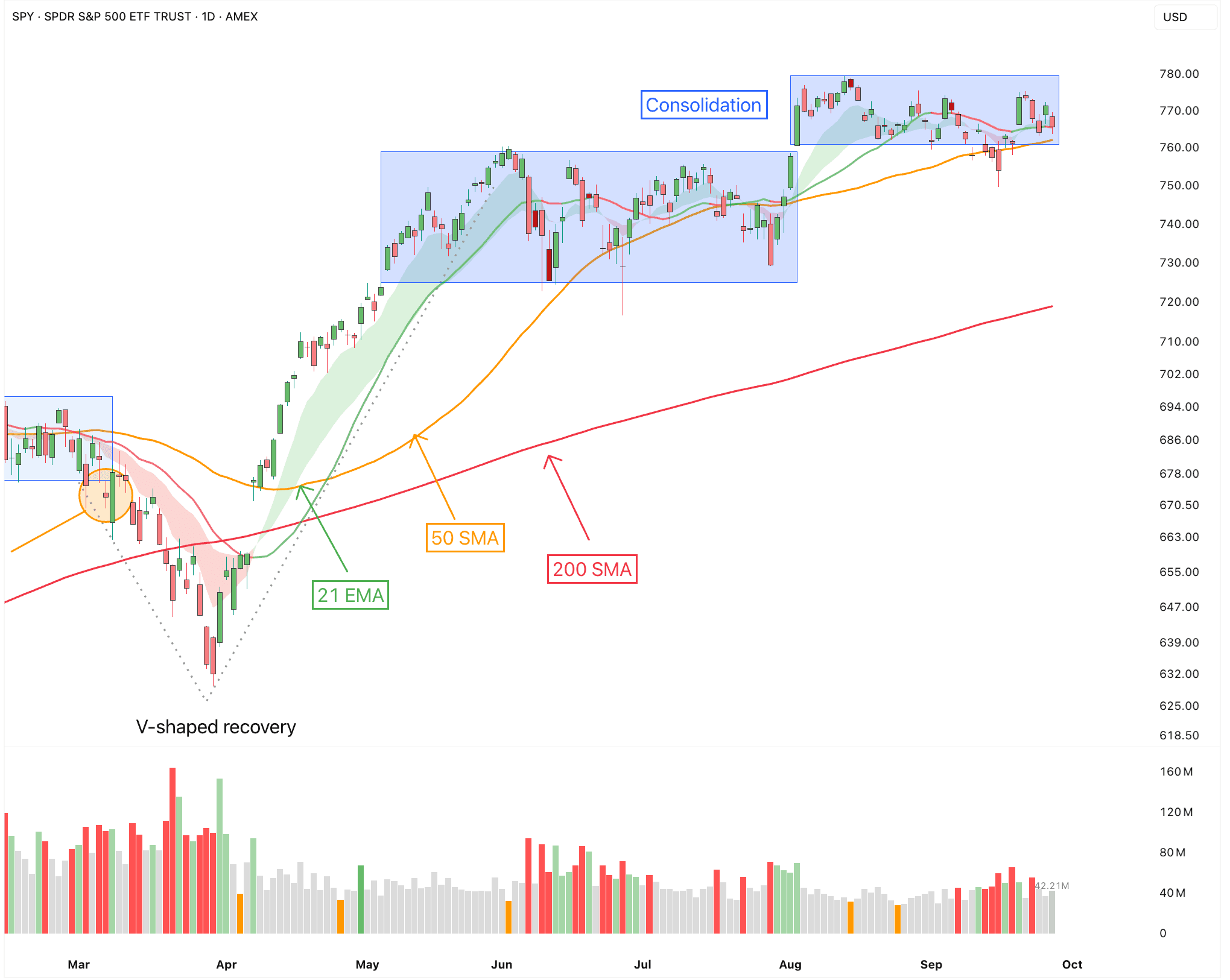
The overall trend remains positive. After a strong recovery earlier this year, the S&P 500 has moved into a higher consolidation range for the past 2 months. However, some of that volume has come on selling days, so I'd like to see stronger buying and ideally a breakout on volume before getting too excited.
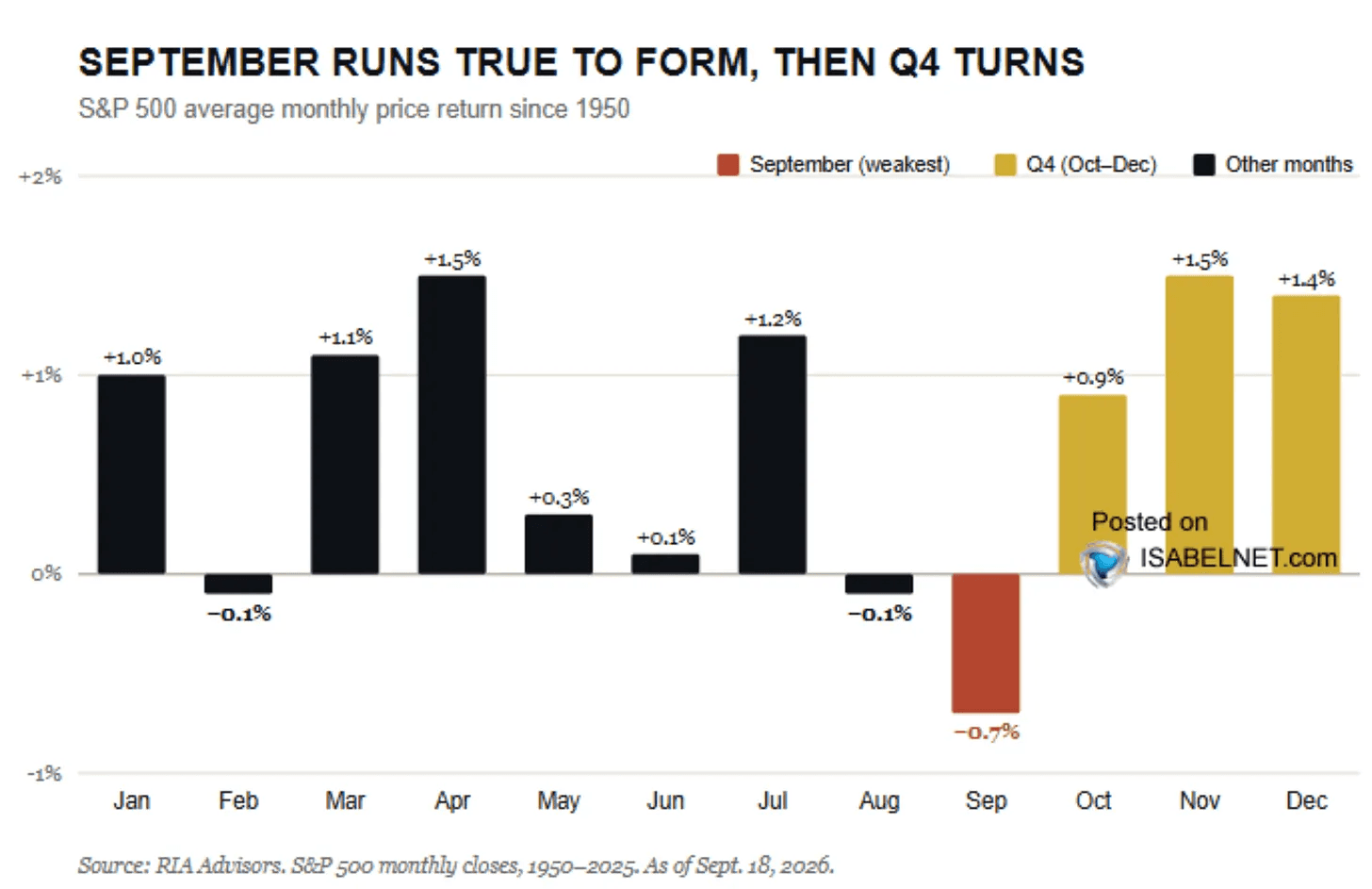
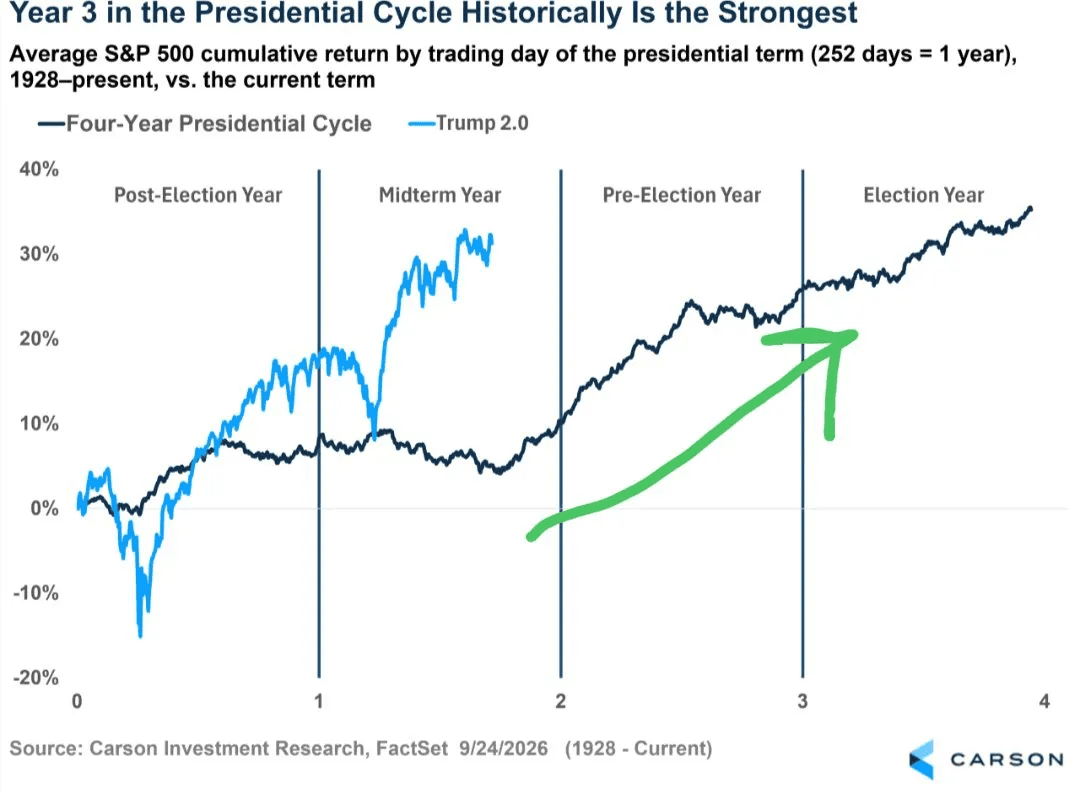
October is almost here, and we're heading into what has historically been the best quarter of the year for stocks. October, November, and December have all delivered very positive returns, giving us 3 of the most favorable months of the year ahead.
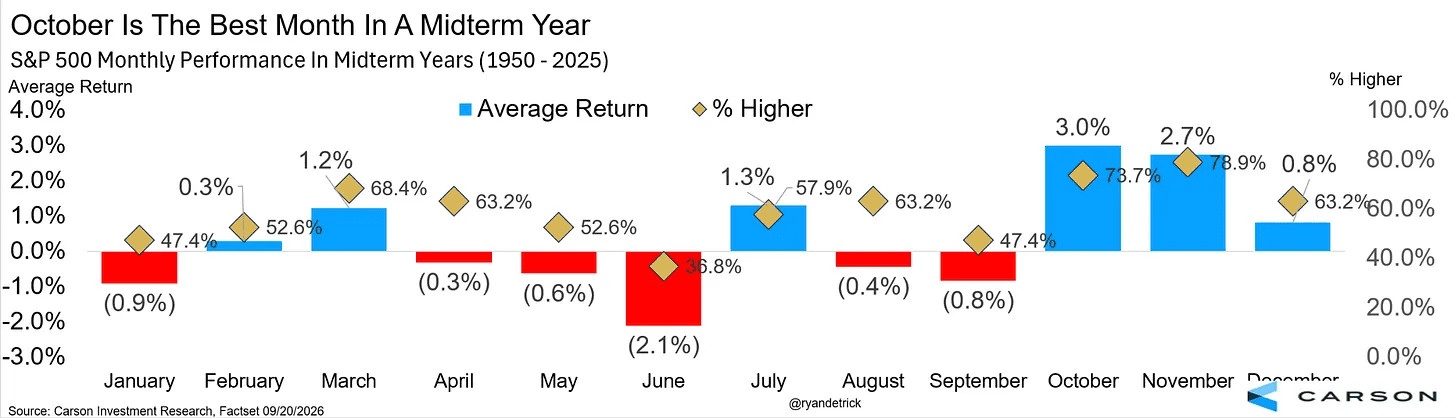
And it gets even better in midterm election years, like this one.
Historically, October has been the strongest month of the midterm year for the S&P 500, delivering an average gain of 3.0% and finishing higher roughly 74% of the time.
November isn't far behind, with an average gain of 2.7% and positive returns nearly 79% of the time.
Pre election years… not bad eh?
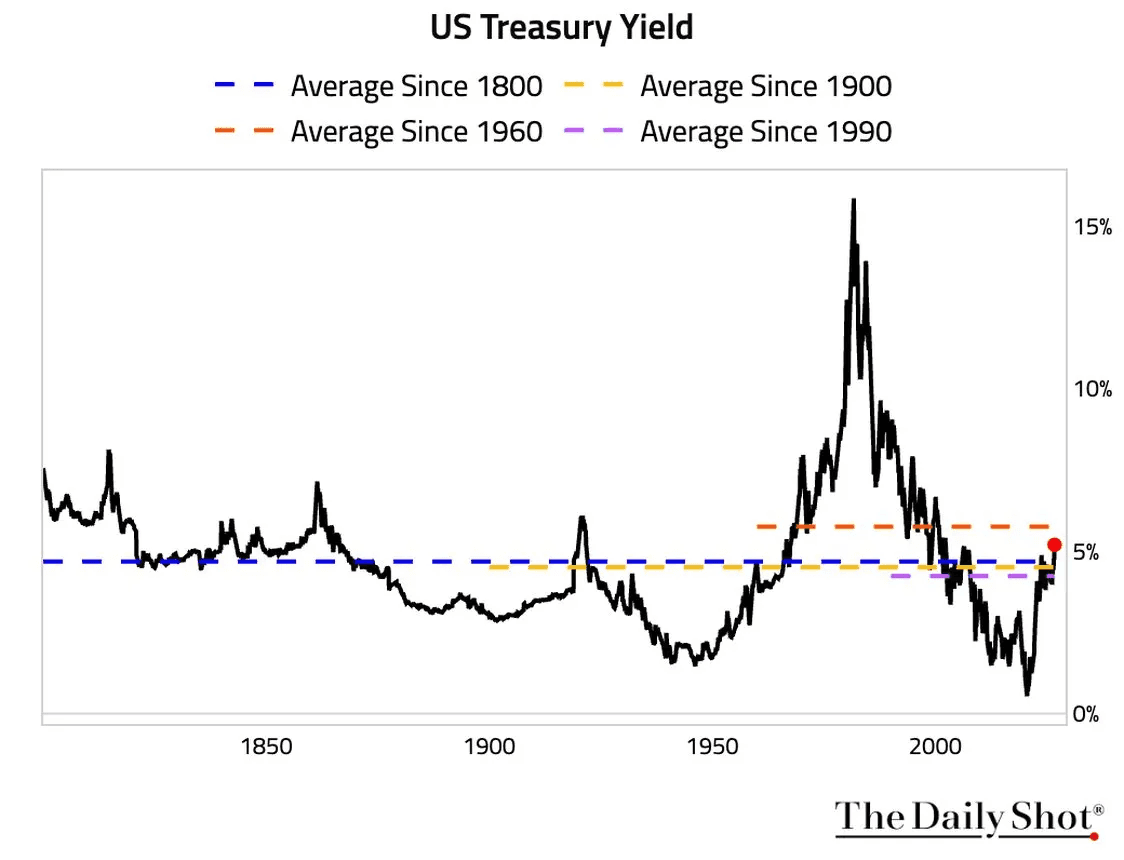
There's a lot of concern about rising bond yields, but if you look at history, today's rates aren't actually that unusual. We've simply gotten used to very low interest rates over the past 20 years.
Since 1960, the 10-year Treasury yield has averaged around 5.8%. So even with yields now above 5%, we're still below the historical average.
The problem is that we've spent so many years with cheap money that higher rates are harder to handle today. Governments have taken on more debt, companies have gotten used to borrowing cheaply, and millions of homeowners have locked in mortgages at much lower rates. Even if today's yields are historically normal, getting used to them again takes time.
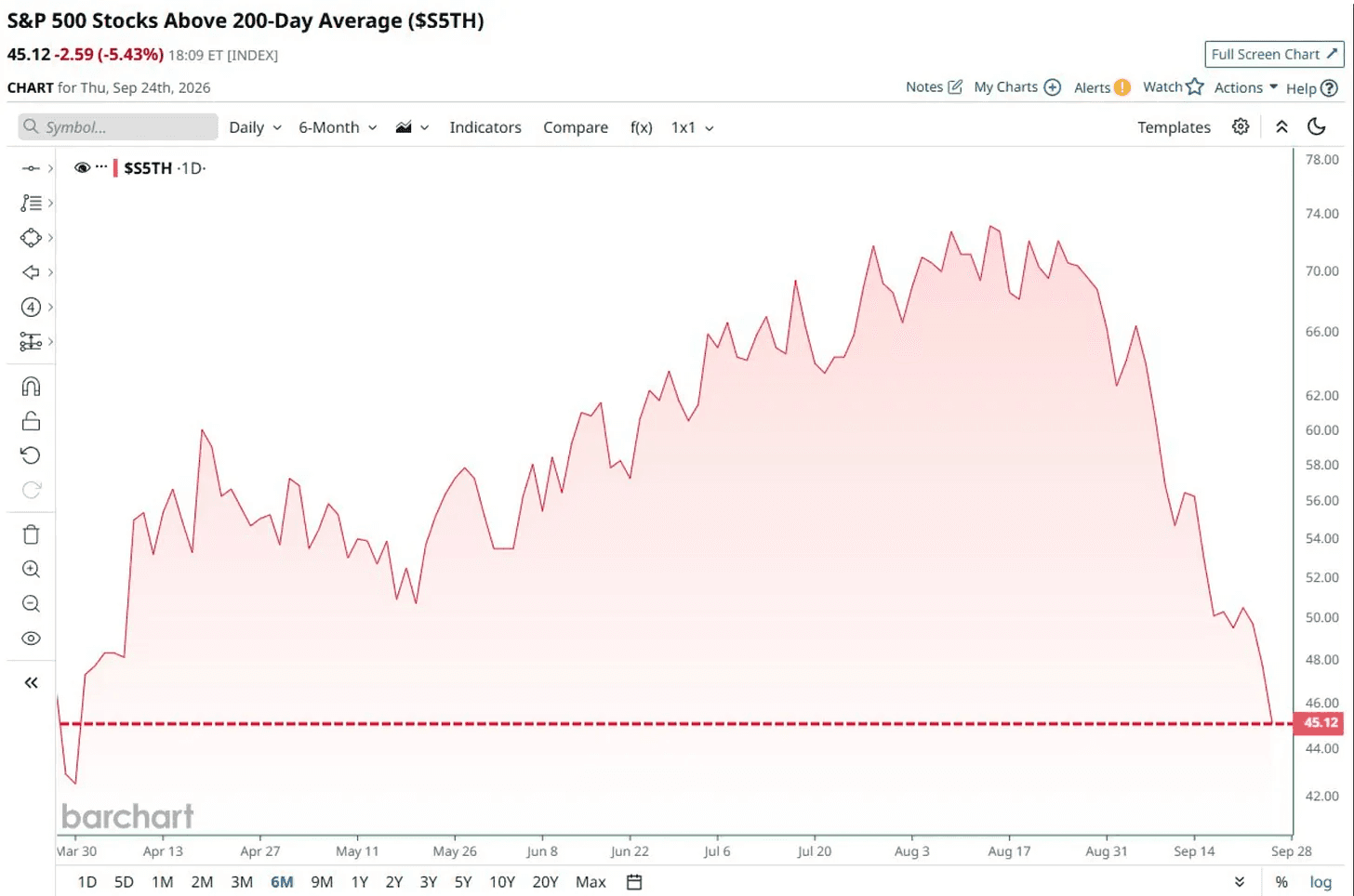
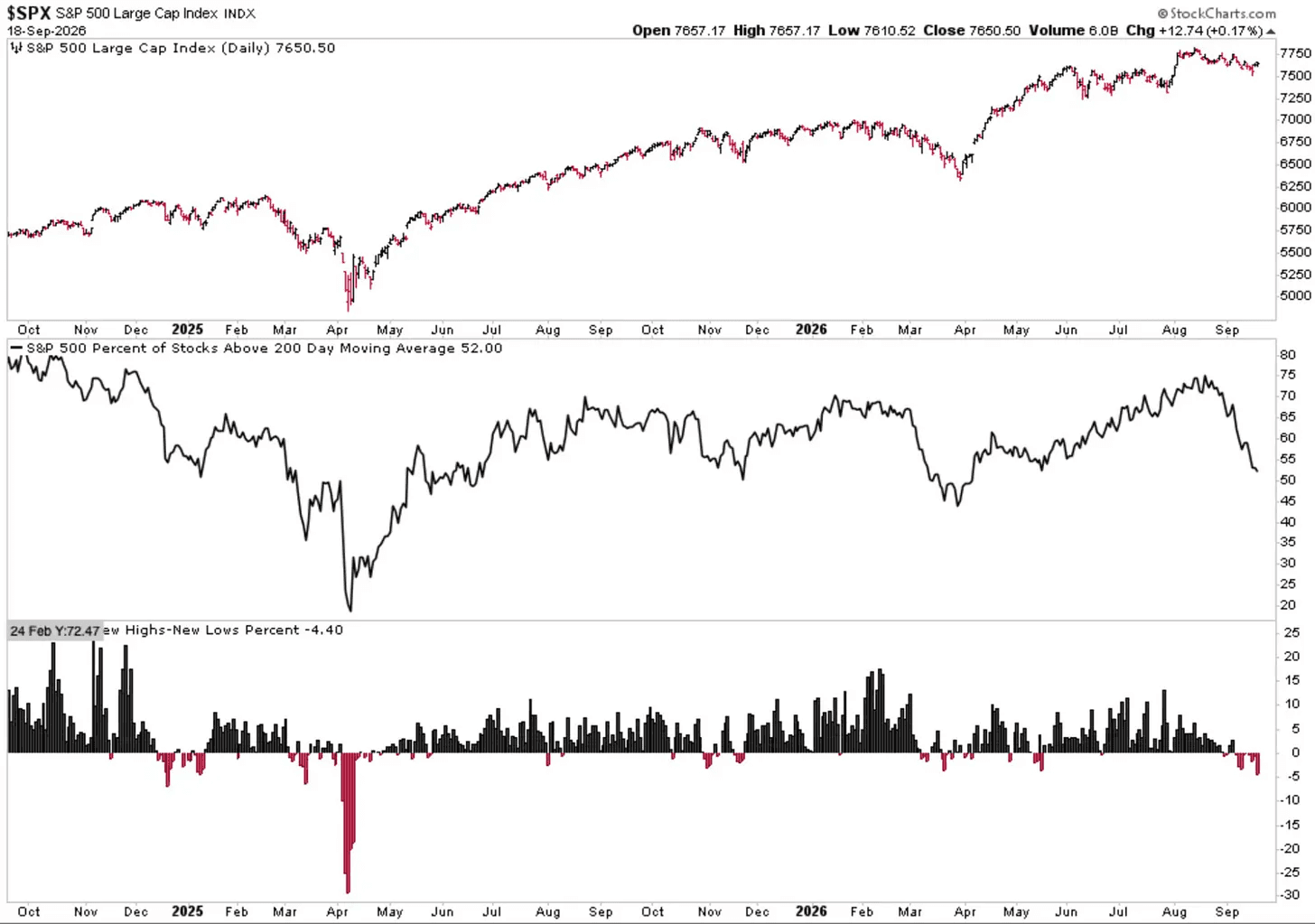
Market breadth continues to weaken, even as the S&P 500 sits just below all-time highs. Fewer stocks are participating in the rally, with only about 45% of S&P 500 companies trading above their 200-day moving average. That means 55% are already trading below their long-term trend. The broader market is still holding up well, although we'll eventually need to see more stocks join the rally for it to remain healthy and sustainable.
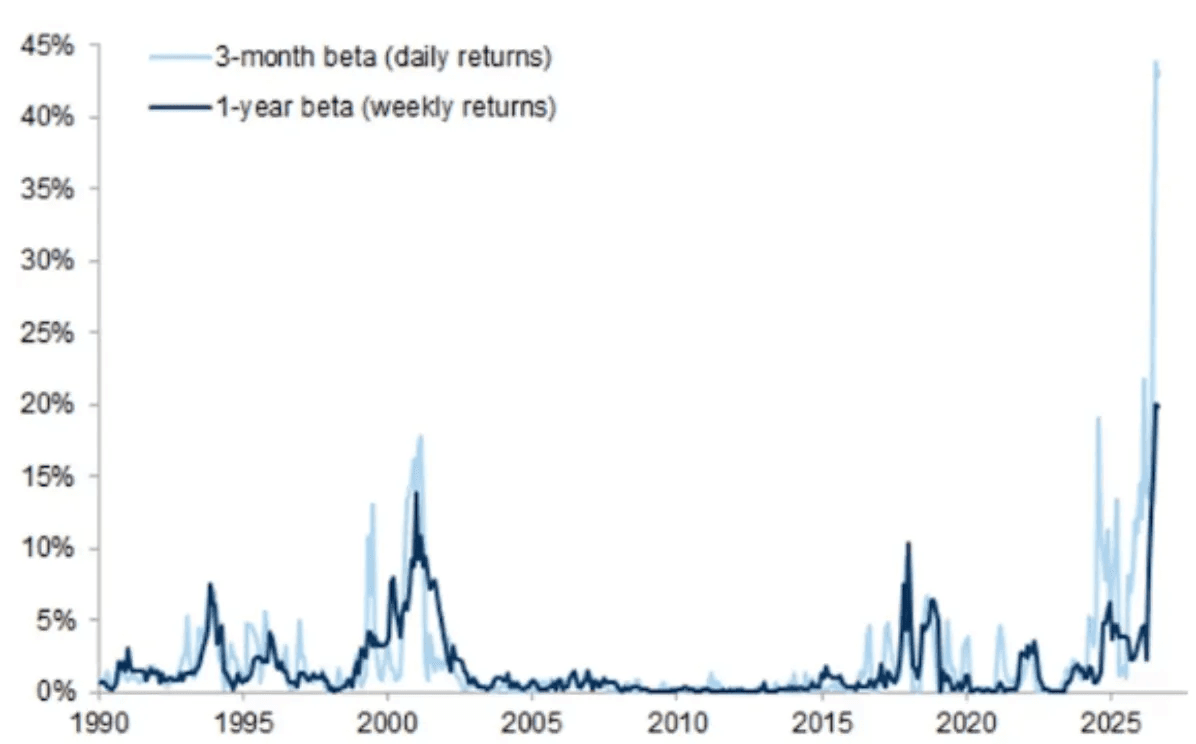
This one is definitely surprising. The S&P 500 now has more stocks with a negative beta than at any point since at least 1990. In simple terms, an unusually large number of stocks are moving in the opposite direction of the index. While the S&P 500 rises, many individual stocks are falling.
Only a small group of stocks is keeping the index near record highs, while much of the market is moving in the opposite direction.
ooking at nearly 100 years of data, we've never seen market breadth this weak while the S&P 500 was so close to all-time highs. More stocks are hitting new lows than new highs, and fewer stocks are holding on to their long-term uptrends.
The closest historical comparisons are January 1973 and November 1999. Both were followed by major bear markets. Of course, that doesn't mean we're heading for the same outcome today. But the growing weakness beneath the surface is becoming increasingly difficult to ignore.
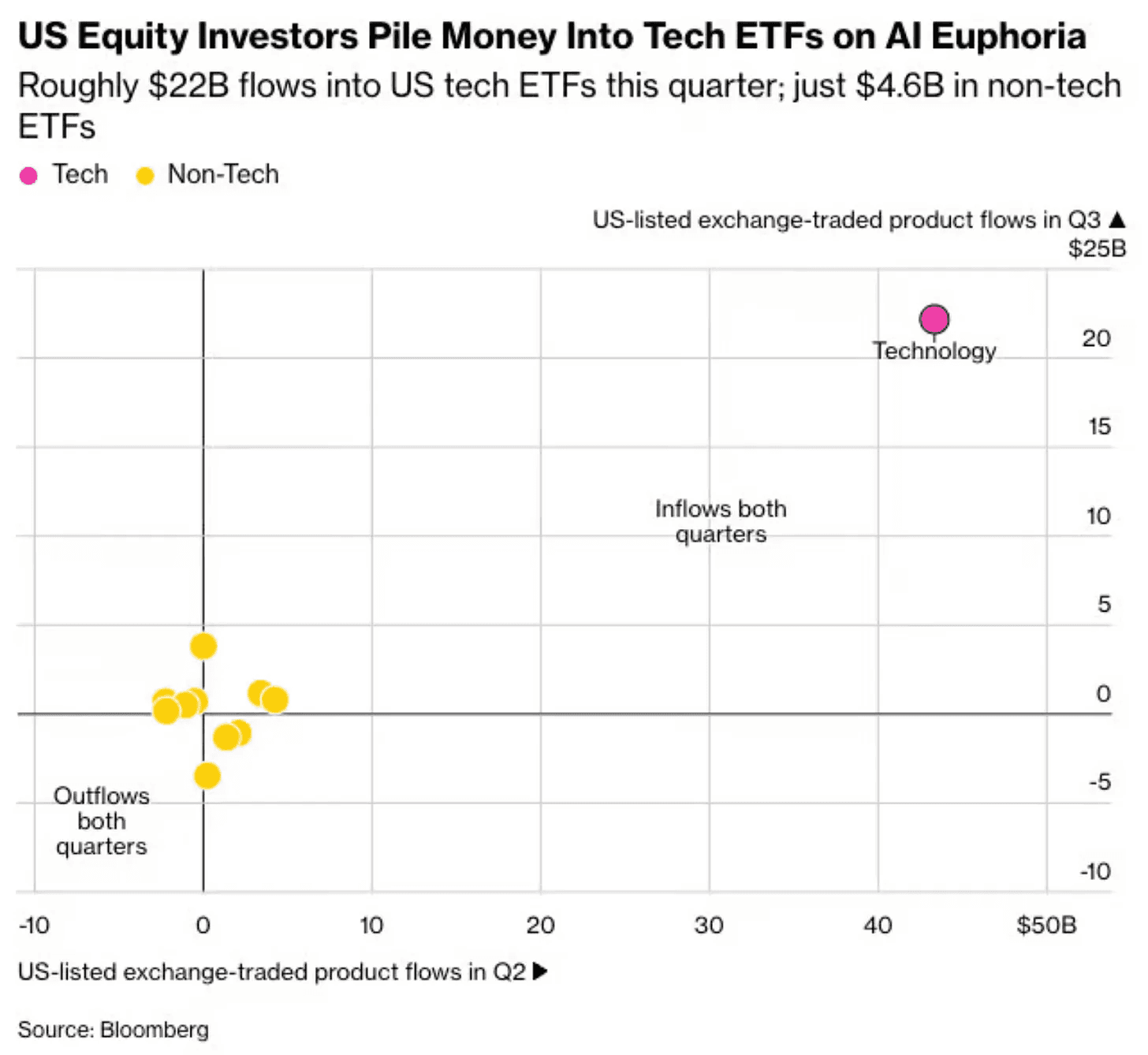
his also helps explain why the market has become so narrow. Despite all the concerns about AI, rising yields, and the economy, investors continue to pour money into technology. So far this quarter, U.S. tech ETFs have attracted roughly $22 billion, compared with just $4.6 billion flowing into ETFs covering the rest of the U.S. stock market. That's almost 5 times as much money going into tech as the rest of the market combined. No wonder the major indices are holding near record highs while so many individual stocks are struggling.
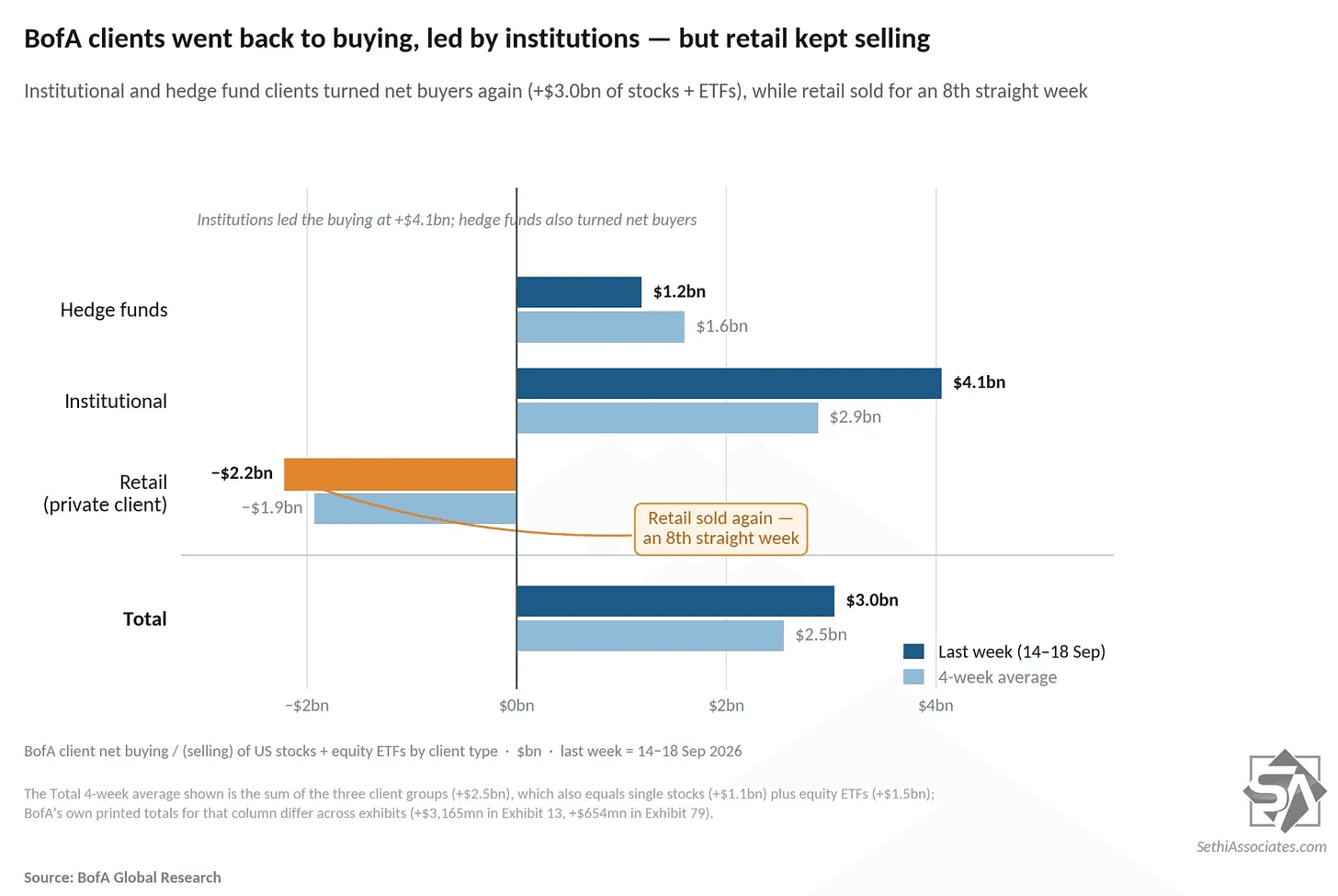
On the other side of the trade, retail investors have now sold stocks for 8 consecutive weeks, while institutional investors and hedge funds have been buying. Institutions have been net buyers in 3 of the past 4 weeks.
So, retail investors are pulling money out while the big players are putting money to work.
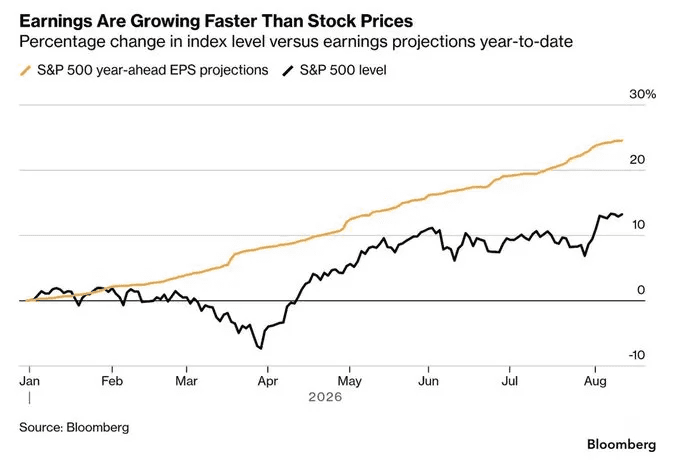
But the main reason the market is doing so well is that earnings are accelerating and showing no signs of slowing down. At the end of the day, earnings drive stock prices, and as long as companies keep growing their profits, the bull market has a strong foundation.
For months, the market has been going nowhere. We've had endless consolidation, weak market breadth, constant rotation between sectors, and more negative headlines than I can count. Yet despite everything thrown at it, the major indices continue to hold near all-time highs.
Now we're finally starting to see signs that things are changing slowly. The Nasdaq is pushing higher, semiconductors are breaking out after months of consolidation, and high-beta technology stocks are outperforming. At the same time, money is moving away from defensive sectors and back toward growth.
The fundamental picture also remains strong. Corporate earnings are accelerating, AI infrastructure spending continues to grow, and semiconductors are showing renewed strength. These are the areas driving earnings growth and attracting capital, and they're starting to lead the market again.
Of course, the risks haven't disappeared. Rising yields, high oil prices, Iran, inflation, and the upcoming midterms all deserve attention. Market breadth also remains weak. But what continues to impress me is how well stocks have held up despite all of it. The market has had plenty of opportunities to sell off, yet buyers continue to step in.
That's why I'm becoming increasingly optimistic about the months ahead. We're entering the best period for stocks, earnings continue to grow, and the market is finally showing signs of renewed momentum. If yields stabilize and more stocks begin participating in the rally, the conditions for a much stronger move are falling into place.
After months of consolidation, the market is finally showing signs that the next move could be starting. And it’s importan to be ready for it.
Previous Updates
View All
- Weekly Market Update: The Best Quarter
- Weekly Market Update: Rate Hikes
- Weekly Market Update: AI is Not Slowing Down
- Market Update: Has AGI Arrived?
- Weekly Market Update: Consolidation
- Weekly Market Update: September is Here
- Market Update: Nvidia Crushes Earnings
- Weekly Market Update: Yields
- Market Update: The Future of Biotech
- Weekly Market Update: Earnings Acceleration
- Market Update: The Next Generation of AI Infrastructure
- Weekly Market Update: New Highs
- Market Update: Nvidia’s Way Around Memory