Go Back

Lin
Weekly Market Update: Earnings Season is Back
The sentiment around AI is pretty sour right now. CoreWeave, Oracle, Anthropic’s IPO valuation getting cut. There’s plenty to choose from. And until some of these clouds clear, it’s probably going to stay choppy.
And it’s been a divergent market. On the surface the indices look fine, and the S&P 500 is sitting just below all-time highs. But underneath, it’s been ugly. A lot of the AI boom’s biggest winners are deep in drawdowns.
Hence, This week, the S&P 500 fell 2.0% and the Nasdaq dropped 4.5%, ending a four-week winning streak. Tech got hit hardest, and Friday was the worst day of the bunch.
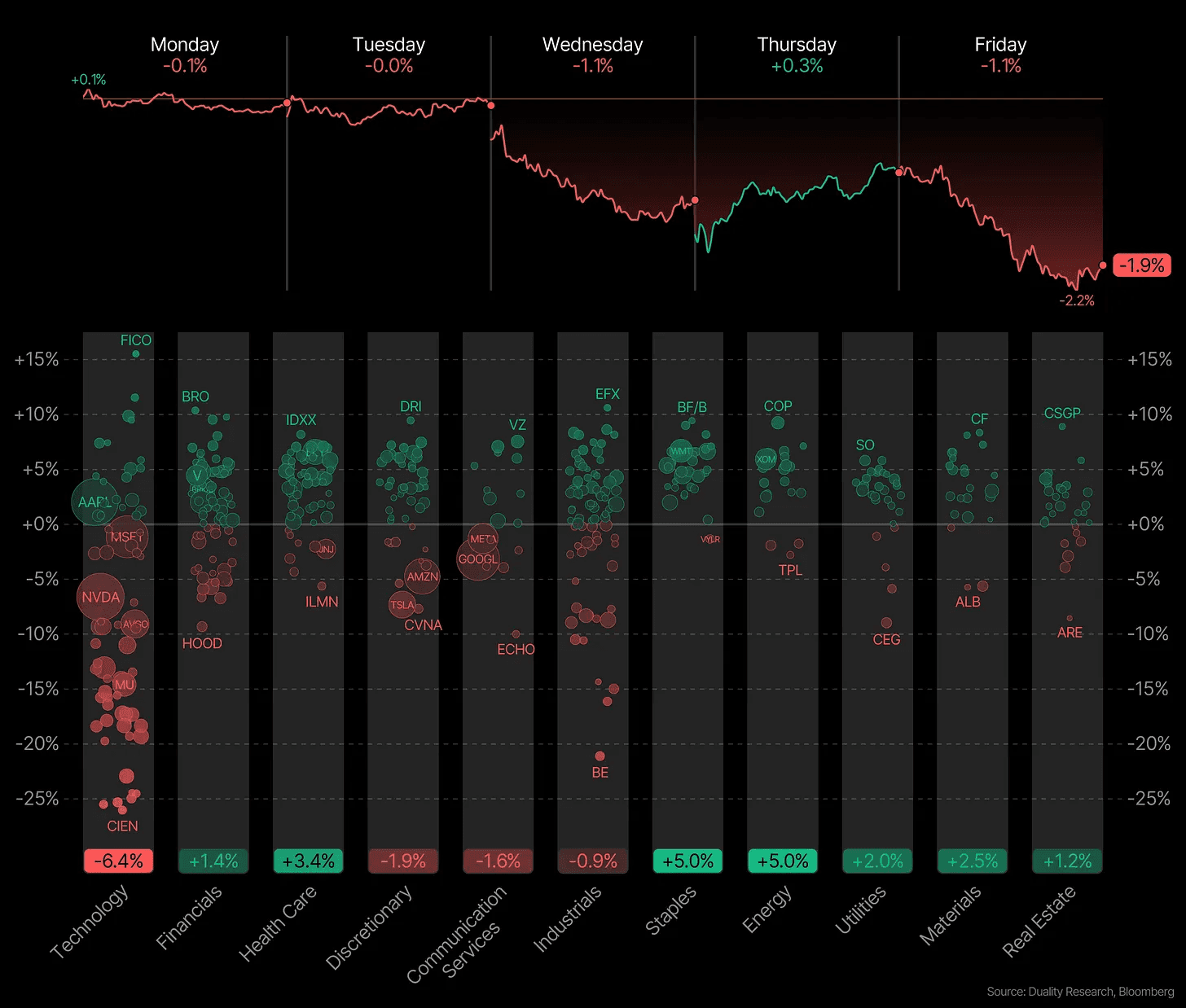
If you look beyond the major indexes, many individual stocks are getting hit pretty hard. Many have already suffered significant losses, and the selling pressure is starting to spread across the market.
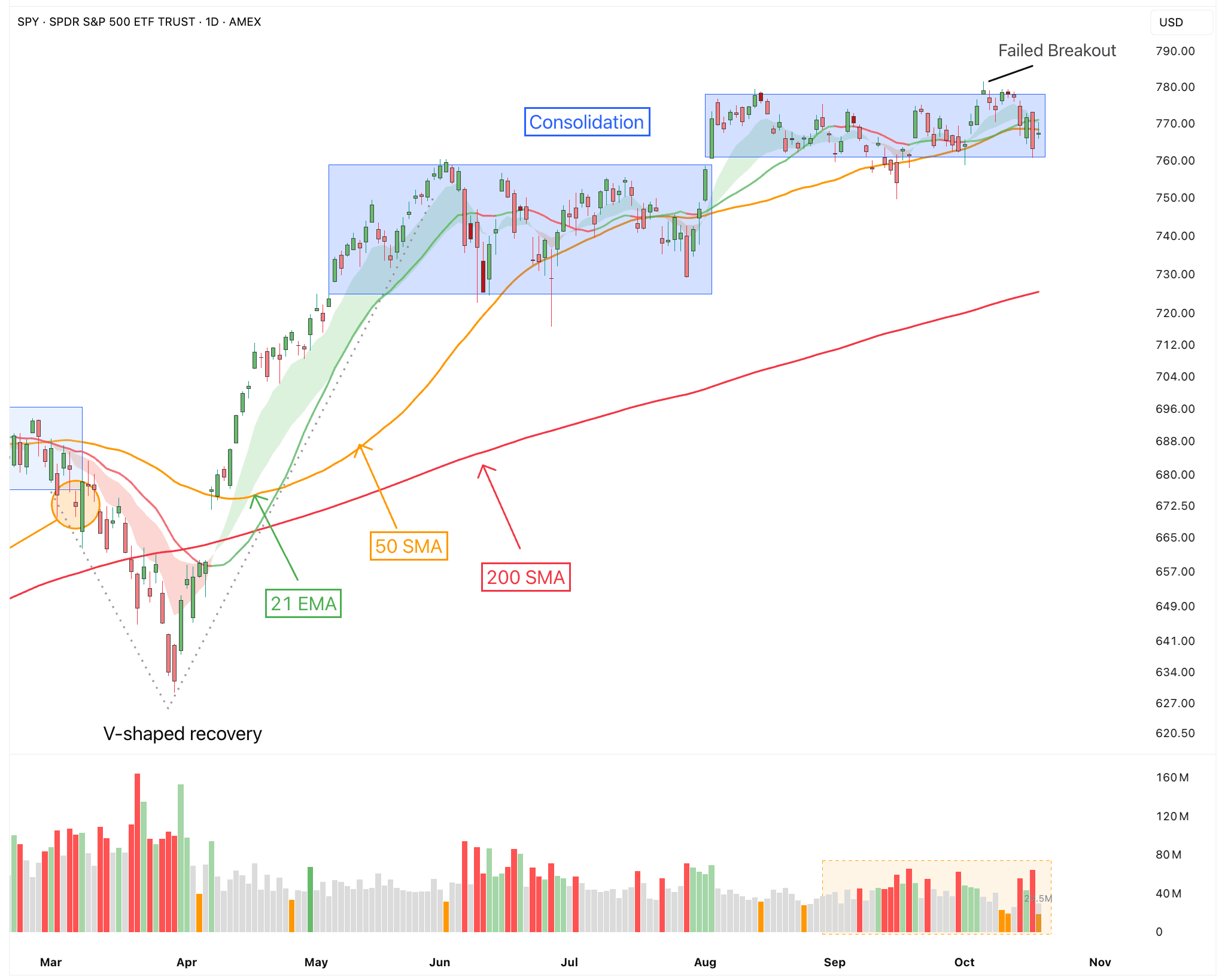
One encouraging sign from last week was that we didn't see a major spike in selling volume. So, investors weren't rushing to sell at any price, at least not yet. Still, the selling pressure was significant, and a 2% decline in the S&P 500 in a single week is something I take seriously.
The index is still trading within a large consolidation range. The broader uptrend hasn't broken down yet. But what’s happening underneath the surface is becoming harder to ignore and now is definitely not the time to be aggressive.
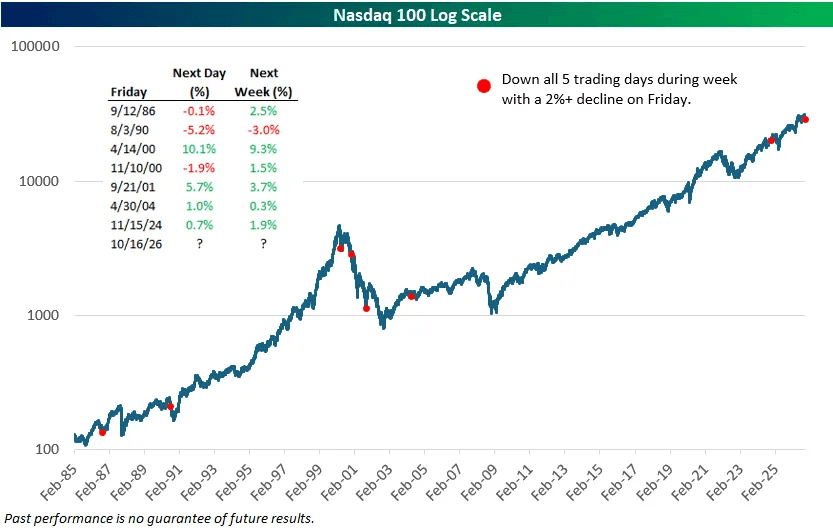
It’s been a while since the Nasdaq dropped 2% or more on a Friday, but looking at how the market reacted to similar selloffs in the past, a rebound next week wouldn’t be surprising.
The last 7 times this happened, the Nasdaq closed higher the following Monday 4 out of 7 times. More interestingly, it finished the following week in the green 6 out of 7 times. Of course, it’s important to keep in mind that 7 occurrences are a very small sample.
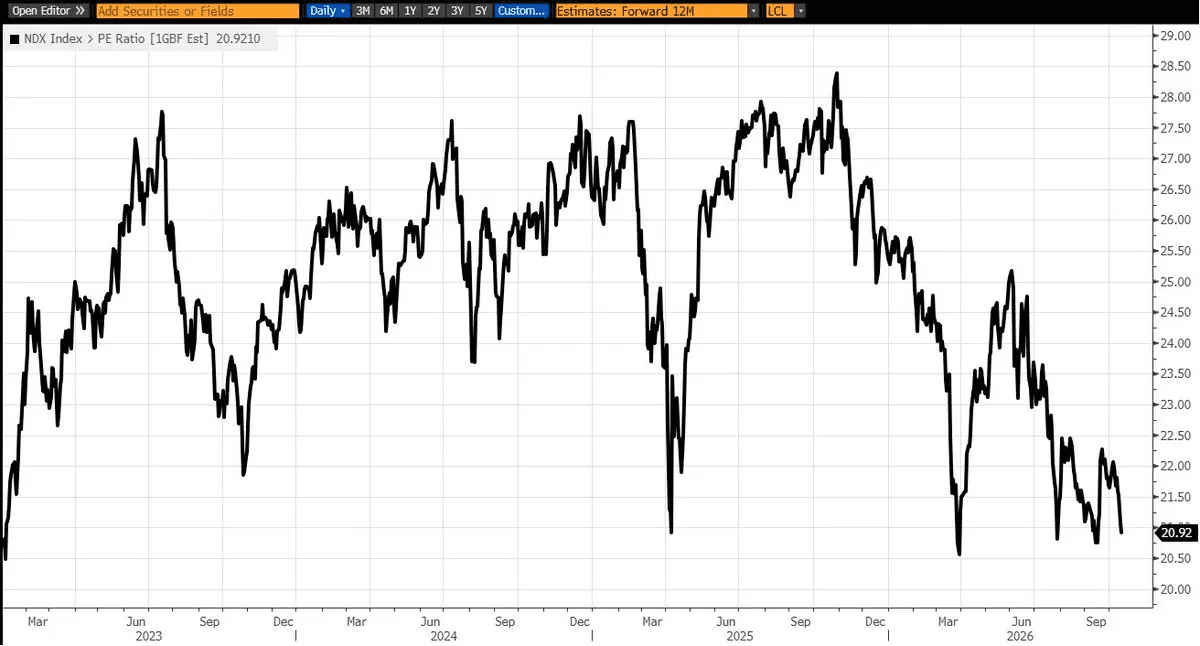
I know that lower valuations don’t automatically lead to better returns. But with stocks now trading at around 20x earnings, valuations have come down significantly. That’s a much more reasonable price to pay, especially for companies that are still growing earnings. I find it hard to call this a bubble when valuations have already come down this much.
But even if this isn’t the end of the AI trade, it’s completely normal to expect some rough patches along the way. Market corrections are a healthy part of any long-term bull market. They help cool down excessive optimism, bring valuations back to more reasonable levels, and create better opportunities for investors to build positions. No bull market just moves up in a straight line.
The current bull market turned 4 years old last week.
Since bottoming on October 12, 2022, the S&P 500 has gained around 118%, making this the 3rd strongest bull market at the 4-year mark since 1949. Only the bull markets that started in 1982 and 2009 performed better over their first 4 years.
That puts the current rally among some of the strongest bull markets in modern history. And while 4 years might sound like a long time, we’ve seen that strong bull markets can continue for years after reaching this milestone.
Bull markets don't simply end because they get old.

So what can we expect in year 5?
Since 1950, the 6 previous bull markets that completed their fifth year all delivered positive returns. The average gain was 18.9%. So, bull markets can definitely continue to deliver strong returns even after several years of gains. Some of the biggest gains have come well after the first few years. And a bull market that’s a few years in doesn't automatically mean it's running out of steam.

Over the past weeks, I’ve been pointing out how weak market breadth had become. Fewer and fewer stocks were participating in the rally, even as the major indexes held up relatively well. A healthy bull market needs broad participation to keep moving higher.
But we’re finally starting to see some improvement.
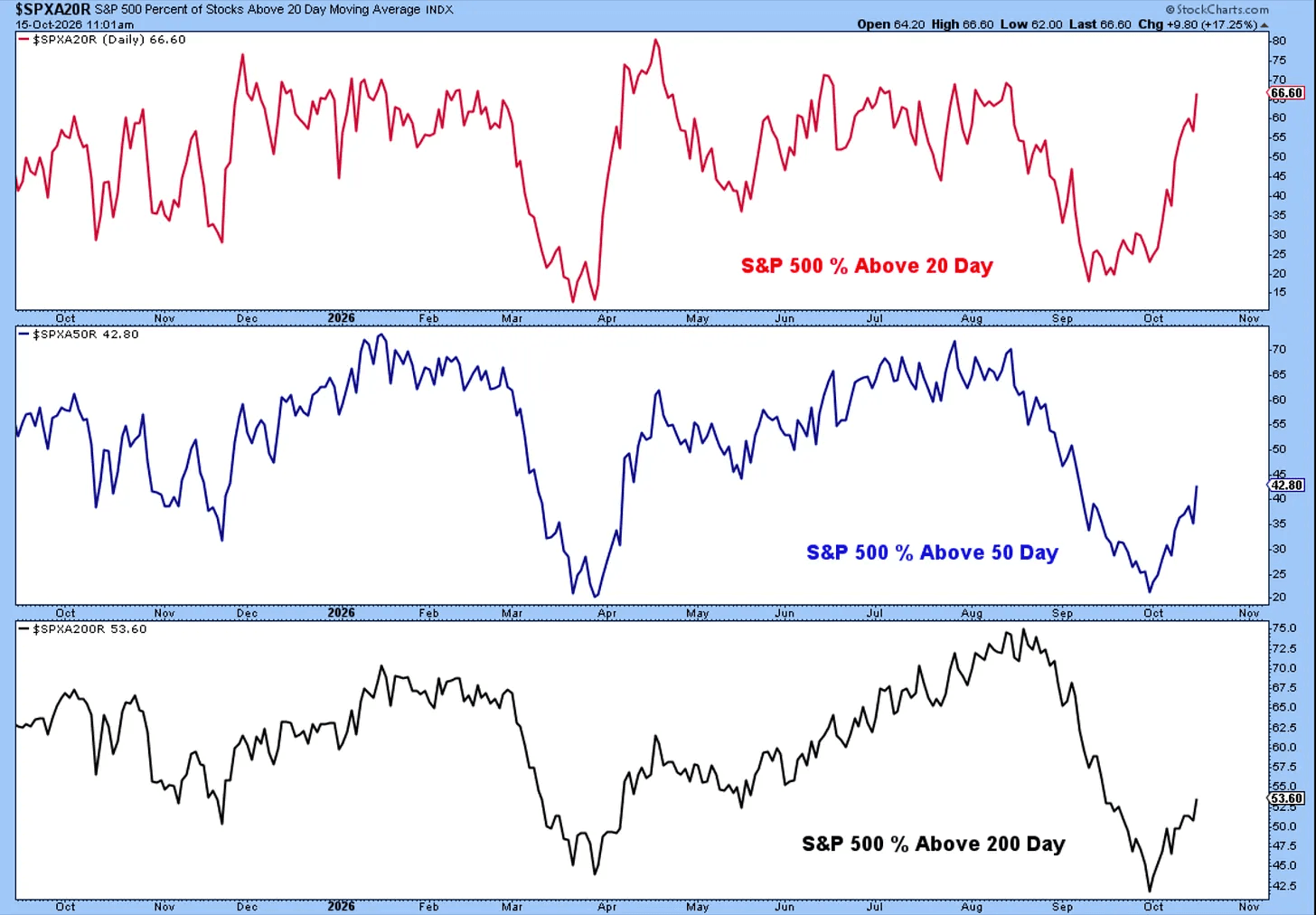
The percentage of S&P 500 stocks trading above their 20-day, 50-day, and 200-day moving averages has finally started to turn around.
At the end of September, fewer than 20% of S&P 500 stocks were trading above their 20-day moving average. This week, that number climbed above 66%.
We still need to see whether this improvement can continue. But for now, this is an encouraging sign that the market is becoming healthier beneath the surface.
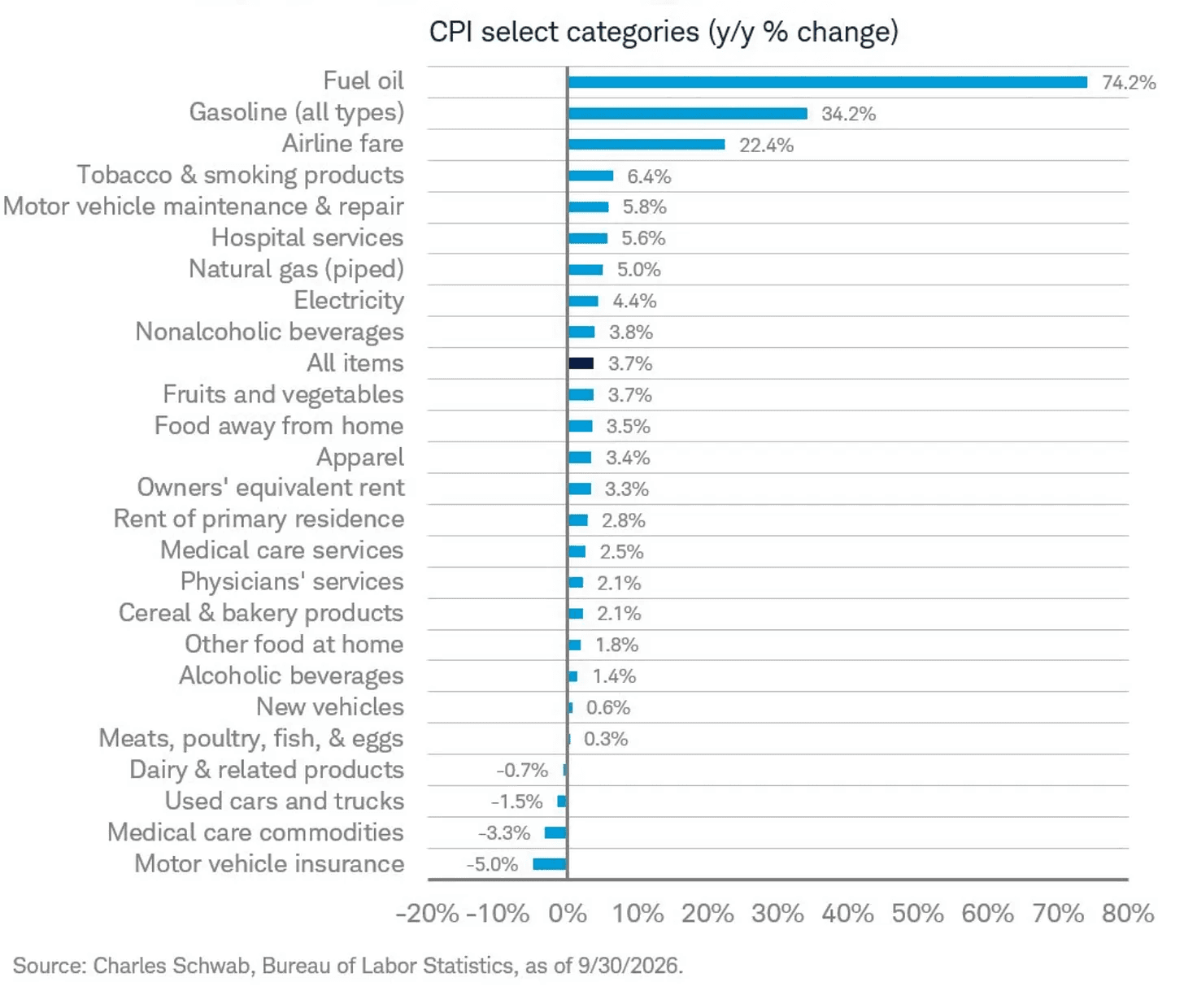
Inflation is slowly becoming a significant problem.
Energy is by far the biggest inflation factor. Fuel oil prices have jumped 74% over the past year, gasoline is up 34%, and airfares have increased 22%. In fact, rising gasoline prices alone accounted for more than half of September's monthly increase in consumer prices.
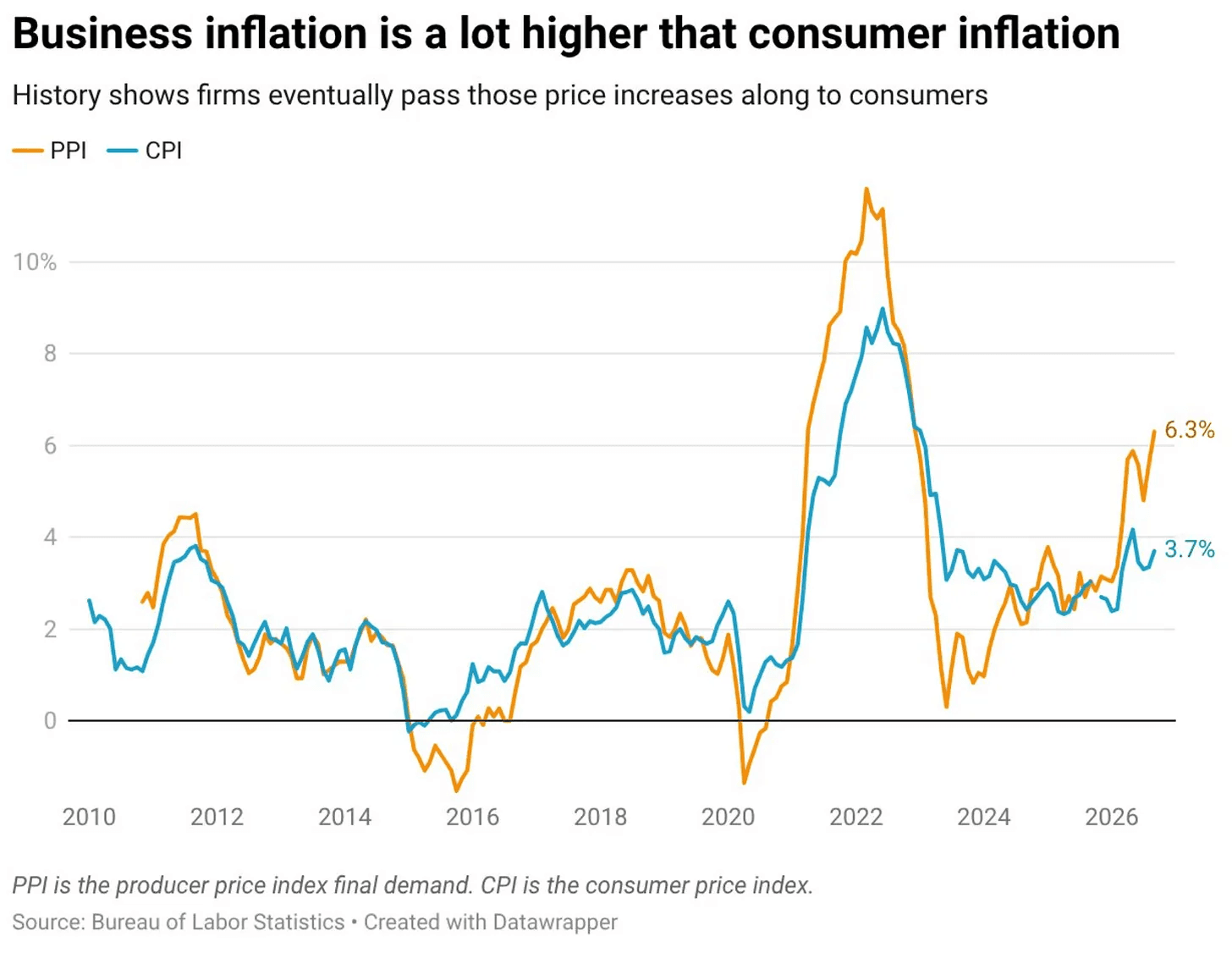
But the bigger surprise this week came from producer prices.
The Producer Price Index (PPI), which tracks the prices businesses receive for the goods and services they sell, jumped to 6.3% in September, up from 5.6% in August and well above the 5.3% economists had expected. That's the highest annual reading since December 2022.
Businesses are facing rising costs at a time when consumers are already struggling with higher prices. Companies can try to pass those costs on to customers, but there's a limit to how much people are willing to pay.
If businesses absorb those higher costs instead, their profit margins could come under pressure. And if they pass them on, consumer inflation could remain elevated for longer. The market is starting to price in the possibility that interest rates will have to rise further. After the latest inflation reports, expectations for another Fed rate hike increased materially.
Either way, this creates another challenge for corporate earnings, especially for small caps.
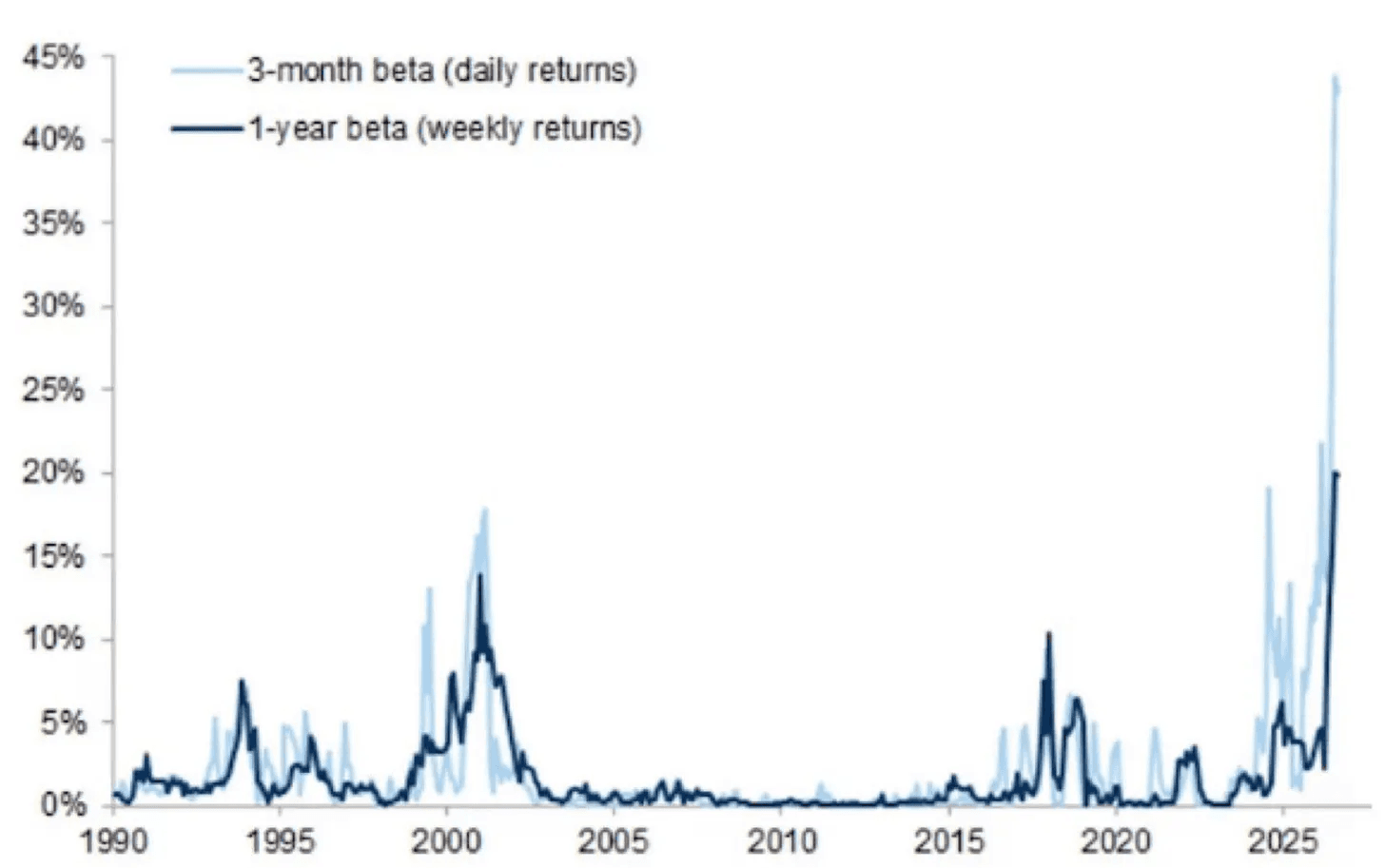
That’s why so many companies are struggling right now.
The S&P 500 recently reached a record number of stocks with a negative beta. So, these are stocks that have tended to move in the opposite direction of the overall index.
Around 140 S&P 500 stocks now fall into this category. While the S&P 500 has been climbing toward record highs, more than 1 in 4 stocks actually moved against the index.
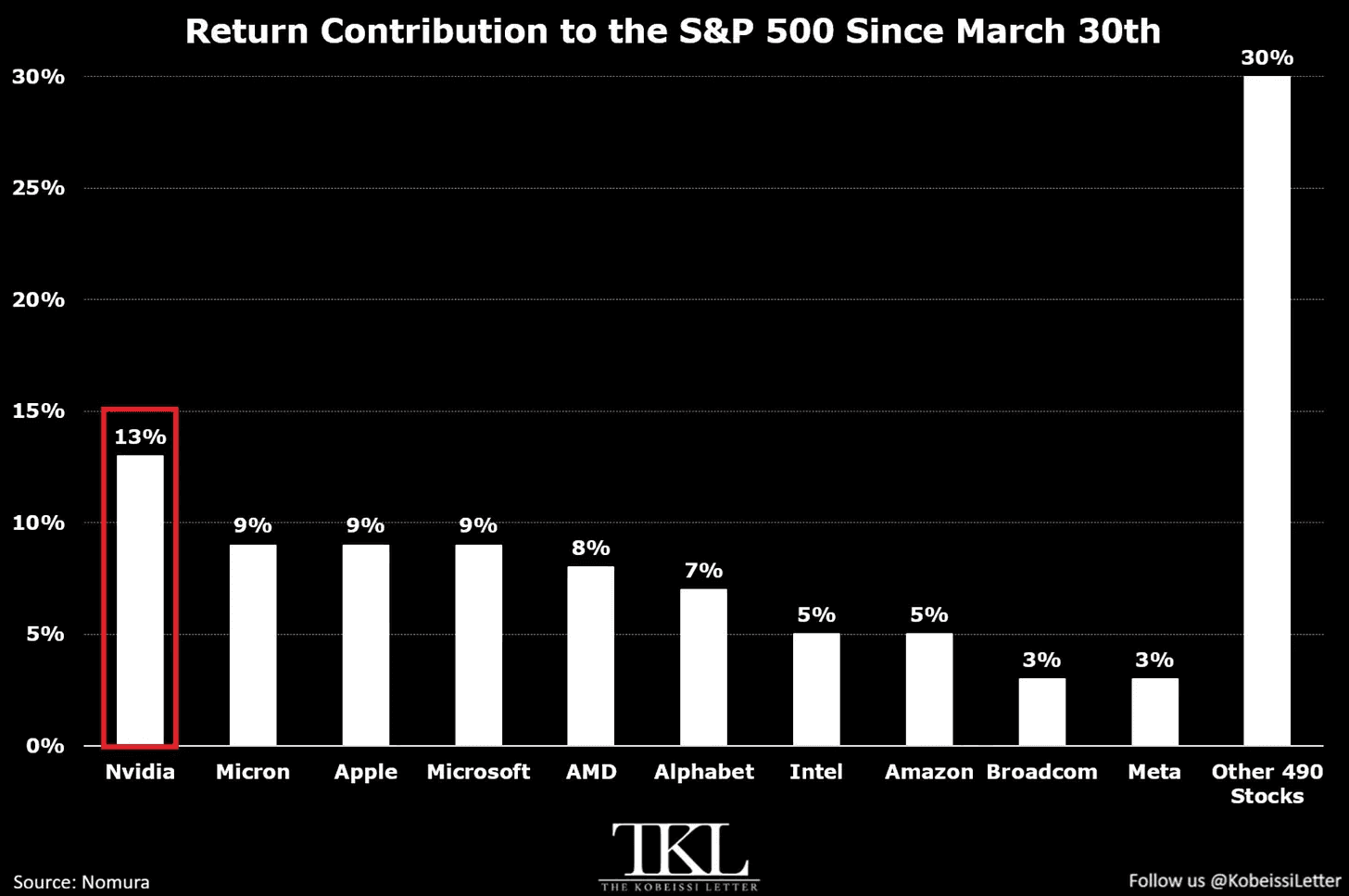
So, it’s not surprising that just 10 stocks have been responsible for around 70% of the S&P 500’s gains since March 30. The index has climbed roughly 23% over that period, but those 10 companies alone contributed 16 percentage points to the rally. The other 490 stocks combined accounted for just 7 percentage points.
But now even the most important sector in the market is going through a correction. The VanEck Semiconductor ETF (SMH) fell for 9 consecutive trading days, down around 19% from its June high. So, the index has basically gone nowhere since April. It’s now at a critical support level that needs to hold or the chances of a serious market correction increases significantly.

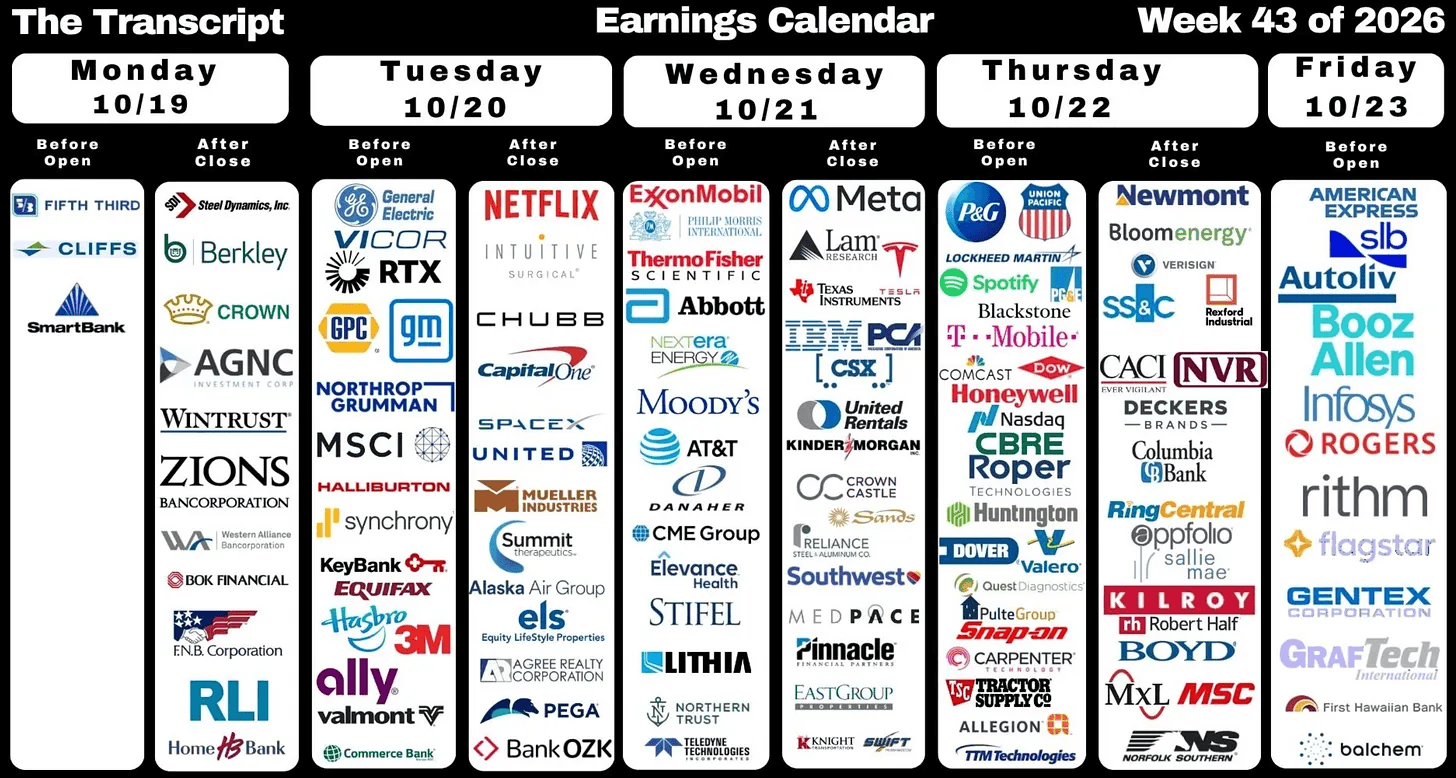
I consider this week the real start of tech earnings season, and it could be one of the most important market periods for the market in quite some time.
We have some massive companies reporting, including Netflix (NFLX), SpaceX (SPCX), Tesla (TSLA), and Meta (META). On top of that, we have important semiconductor companies, Lam Research (LRCX), Western Digital (WDX) and Texas Instruments (TXN), reporting as well.
But given the current market environment, I'm keeping my expectations for positive stock reactions relatively low.
One thing I've learned over the years is that even great earnings don't always lead to higher stock prices. When market sentiment is weak and investors are looking for reasons to sell, companies can beat expectations, raise guidance, and still see their shares fall.
That's why I'll be paying just as much attention to how stocks react to earnings as I do to the actual numbers.
Maybe a few companies can deliver results strong enough to break through the negative sentiment and push their stocks higher. That would be encouraging, especially after the recent selloff in technology stocks.
But until we start seeing the market reward good earnings again, I'm staying cautious.
The market is becoming increasingly difficult to navigate. The weakness we've been seeing beneath the surface for weeks is now showing up in the major indexes. Hence, the market environment has clearly changed, and our approach needs to change with it.
There are times when the market rewards aggressive positioning, and there are times when protecting capital and staying patient makes much more sense. Right now, I believe we're firmly in the second category.
The priority is to protect capital today so we can take advantage of better opportunities tomorrow.
And those opportunities will come.
One of the good things about market corrections is that they bring previously expensive and extended stocks back to more attractive levels. They also help shake out excessive speculation and often create the conditions for new market leaders to emerge.
Some of the strongest trends begin after periods of weakness.
The mistake many investors make is trying to force those opportunities before they're ready. They keep buying as stocks fall, hoping they've found the bottom, often without a clear plan for managing risk.
I've never been a fan of trying to predict exactly where the market will bottom or how much further stocks might fall. Nobody knows that with any certainty, and I don't think it's a particularly useful exercise.
I'd rather preserve my capital, keep building my watchlist, and wait until the market starts showing signs of strength again. That means looking for stocks that hold up well during selloffs, recover quickly, and start breaking out when the broader market turns around.
I want the market to show me that buyers are returning before I start getting aggressive again.
The upcoming earnings season should give us a much better idea of where the market stands. I'm particularly interested in seeing whether investors start rewarding companies that report strong earnings and raise their outlooks.
Until then, I see little reason to force trades.
One of the biggest lessons I've learned over the years is that you don't have to participate aggressively in every market environment.
There's nothing wrong with taking a small position when the setup is attractive and the risk is clearly defined. But trading large positions in an environment where breakouts keep failing and stocks struggle to hold gains can quickly do more harm than good.
Sometimes the best trade is simply doing nothing and allowing the market to sort itself out.
It's also important to avoid getting caught up in the extreme opinions that tend to dominate during corrections.
Every time the market pulls back, some people become convinced that a major crash is coming. Others insist that every dip is an opportunity to buy aggressively.
We've had an incredible run in many parts of the market over the past few years. There's absolutely nothing wrong with protecting some of those gains and waiting for conditions to improve.
The biggest mistake right now would be allowing frustration, impatience, or FOMO to dictate our decisions.
There will always be another opportunity to make money. But first, you have to survive to thrive.
Previous Updates
View All
- Weekly Market Update: Earnings Season is Back
- Weekly Market Update: Big Tech Divergence
- Weekly Market Update: Accumulation
- Weekly Market Update: The Best Quarter
- Weekly Market Update: Rate Hikes
- Weekly Market Update: AI is Not Slowing Down
- Market Update: Has AGI Arrived?
- Weekly Market Update: Consolidation
- Weekly Market Update: September is Here
- Market Update: Nvidia Crushes Earnings
- Weekly Market Update: Yields
- Market Update: The Future of Biotech
- Weekly Market Update: Earnings Acceleration