Go Back

Lin
Weekly Market Update: Yields
This is one of the most important market weeks before the midterms later this year, with several major catalysts ahead. Nvidia reports earnings, Kevin Warsh gives his first Jackson Hole speech, and we also get fresh inflation data. There is a lot of data that will move the market.
One of the main reasons the market struggled last week was the sharp rise in bond yields. The 10-year Treasury yield climbed to around 4.74%, while the 30-year moved above 5.2%. Higher long-term rates make borrowing more expensive and creates pressure on expensive growth stocks. The Treasury has been trying to reduce some of that pressure on the bond market by using short-term bills and expanding buybacks of longer-dated Treasuries.
This is probably the biggest concern in the market right now.
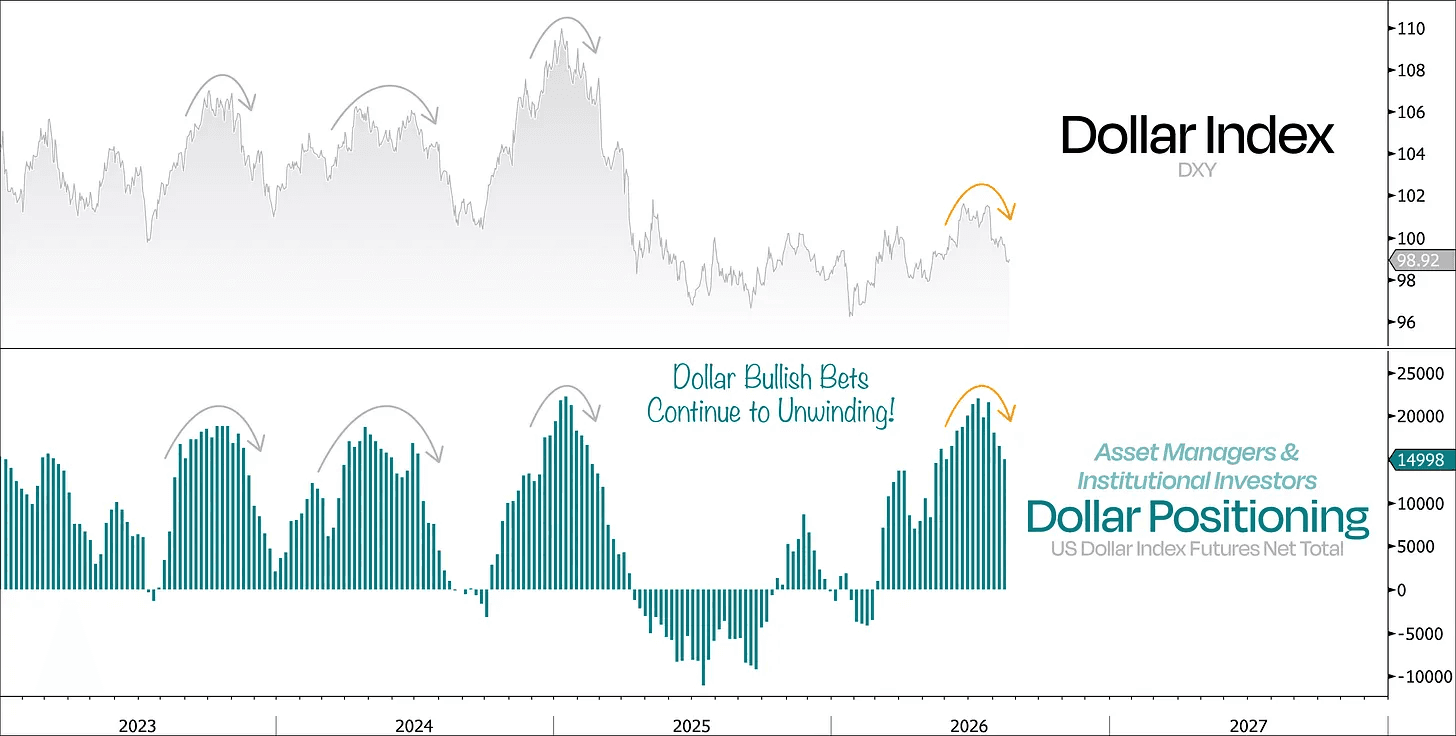
If long-term Treasury yields start falling, that yield advantage becomes a little less attractive. That is one reason the dollar fell sharply after the Treasury announced larger bond buybacks.
A weaker dollar makes US assets cheaper for foreign investors and can also help commodities and US companies that earn a lot of money overseas.
There is another important factor now. Long-term US interest rates have been rising, which makes mortgages, corporate borrowing, and government debt more expensive. The Treasury can influence some of that pressure through how it finances the deficit and through bond buybacks. If it relies more on short-term debt or buys back more long-term bonds, it can reduce some of the pressure on long-term yields.
High US interest rates make dollar assets more attractive because investors can earn higher returns. If long-term yields stop rising or begin falling that advantage disappears, which puts pressure on the dollar.
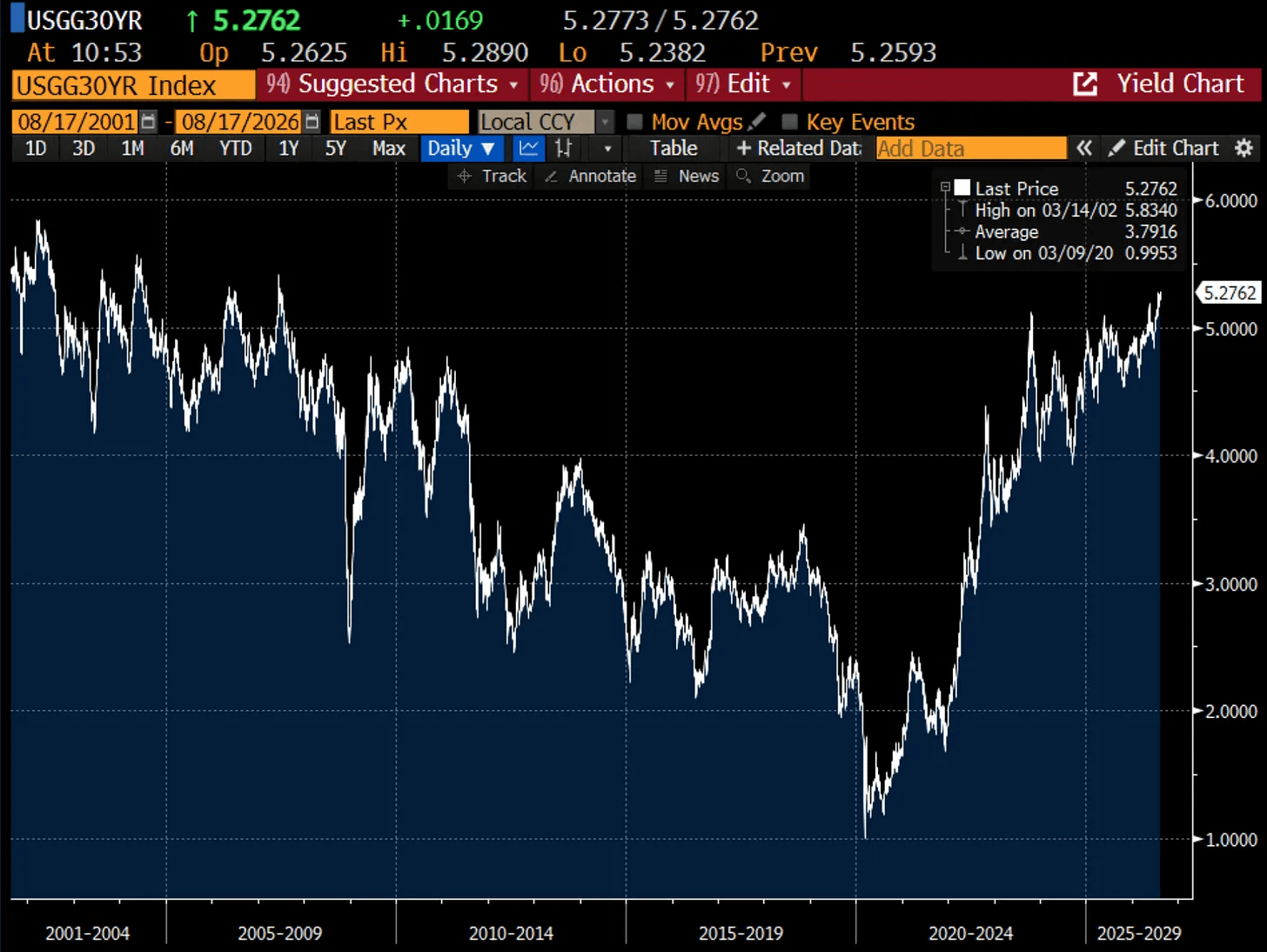
The 30-year Treasury yield climbed above 5.3% this week, the first time it has been that high since 2007. When they rise, borrowing becomes more expensive for households, companies, and the government.
For consumers, that shows up most clearly in mortgages. Mortgage rates tend to move with longer-term bond yields, so higher Treasury yields make buying a home more expensive and reduce how much people can afford. For companies, higher yields raise the cost of issuing debt and financing new projects.
Higher long-term yields also put pressure on stocks, especially expensive growth companies. Investors compare the return they can get from stocks with the return available from relatively safe government bonds. When Treasury yields move above 5%, investors need a stronger reason to take more risk in equities.
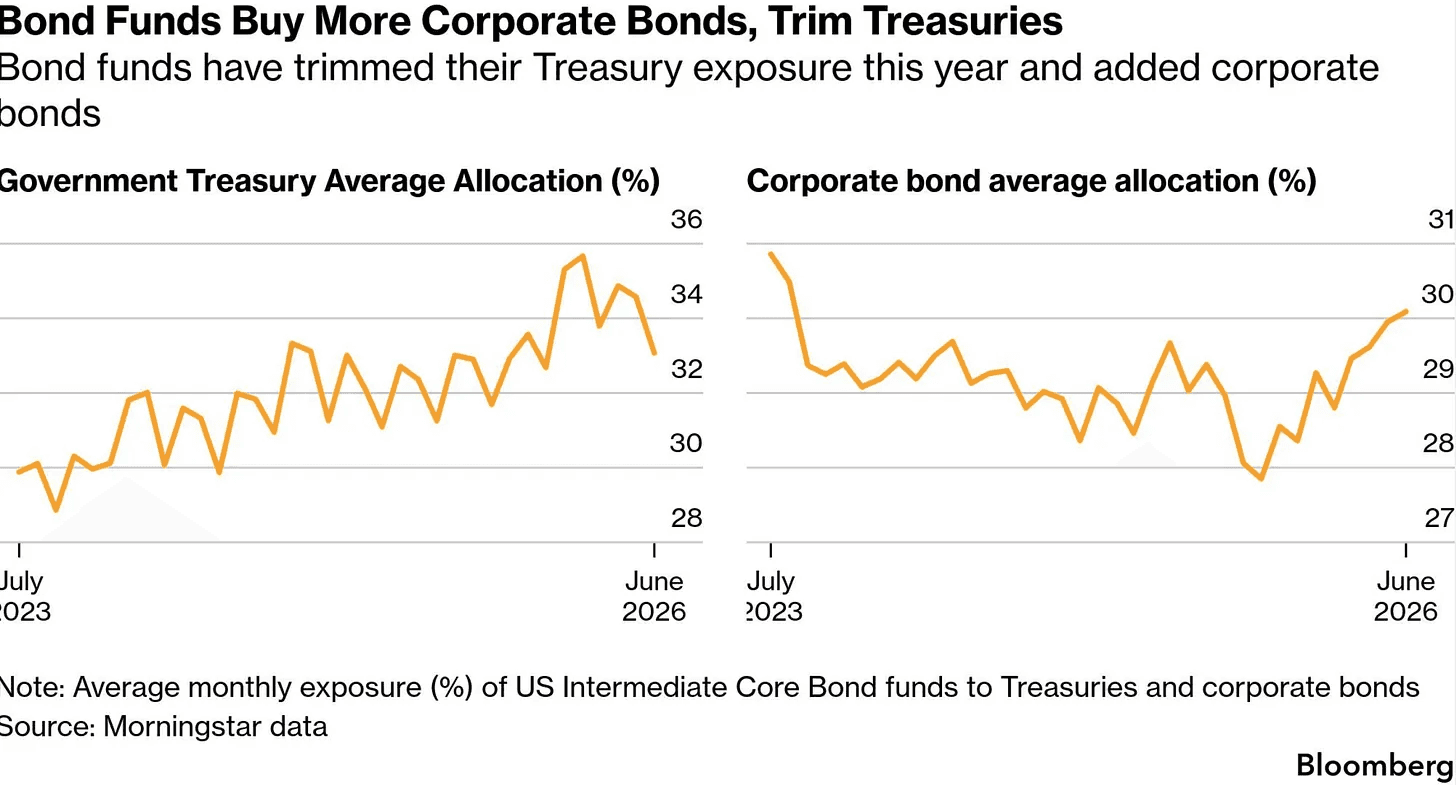
The AI buildout adds another layer to the pressure on Treasuries.
Big tech companies are now issuing huge amounts of debt to finance data centers and AI infrastructure, giving bond investors another place to put their money. Many of these companies have strong credit ratings and their bonds pay more than Treasuries, so they compete directly for the same long-term capital. And in return weaken demand for government bonds and force Treasury yields higher to attract buyers. Alphabet alone has issued more than $50 billion globally this year, including a $25 billion dollar bond deal.
This is not just a US story either. The same thing is happening across global bond markets.
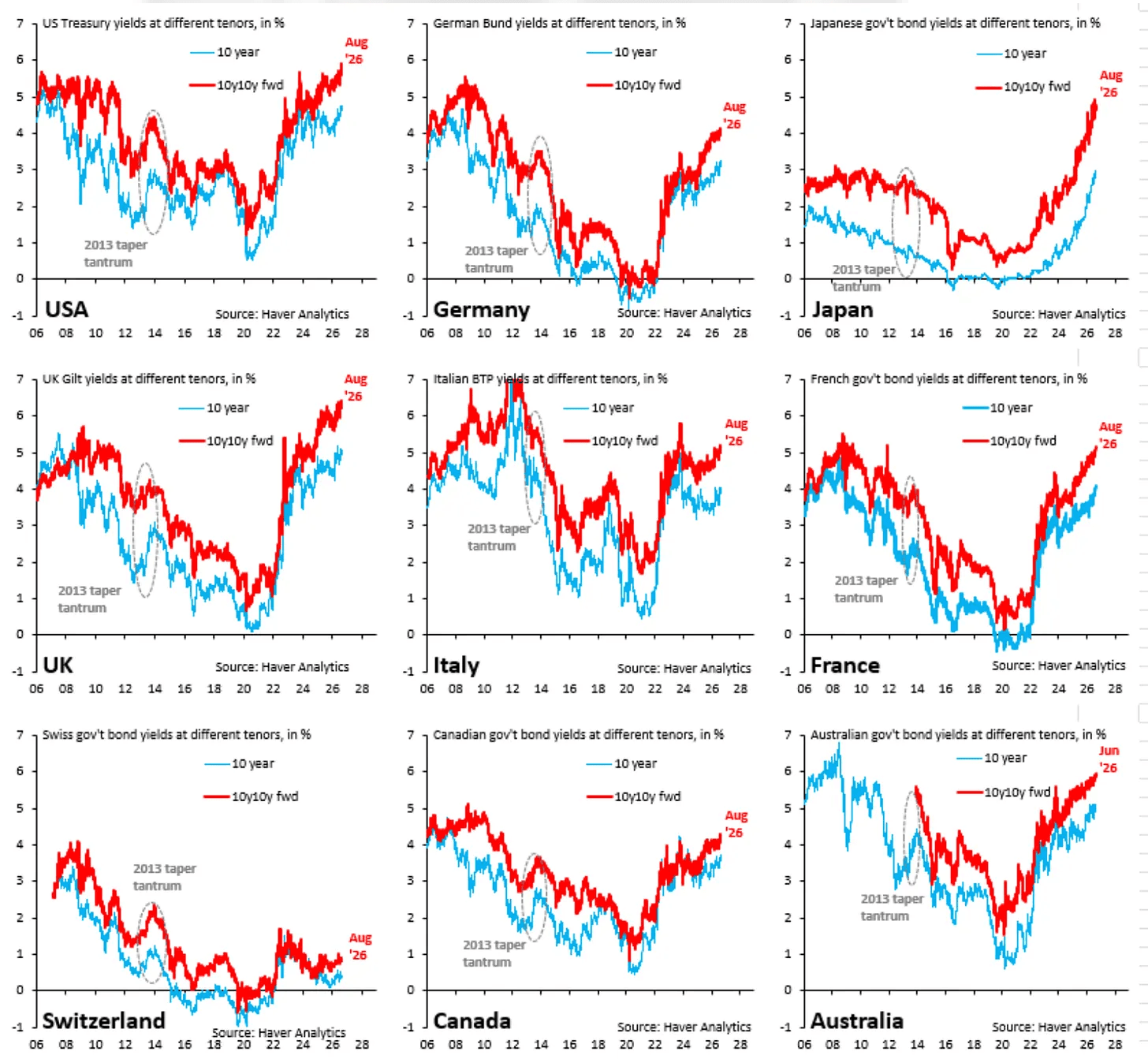
The chart below shows the 10-year, 10-year forward rate, which is basically the market’s estimate of where 10-year interest rates will be 10 years from now.
And the message is pretty similar around the world.
Markets are pricing in structurally higher long-term interest rates than they were a few years ago. Investors are demanding a higher premium to lend money for long periods. This is because governments are running larger deficits, debt supply keeps growing, and inflation risk remains high.
The 10-year is still below 5%, and the 30-year is still below 6%. Those are the levels where I think the pressure on equities could become much more serious. At that point, bonds start offering returns that are hard for stocks to ignore, financing costs move even higher, and valuations become much harder to justify.
A lot of the bearish case depends on yields climbing higher. If the bond selloff continues and the 10-year breaks above its previous peaks, then we’ll like see more selling pressure in the stock market.
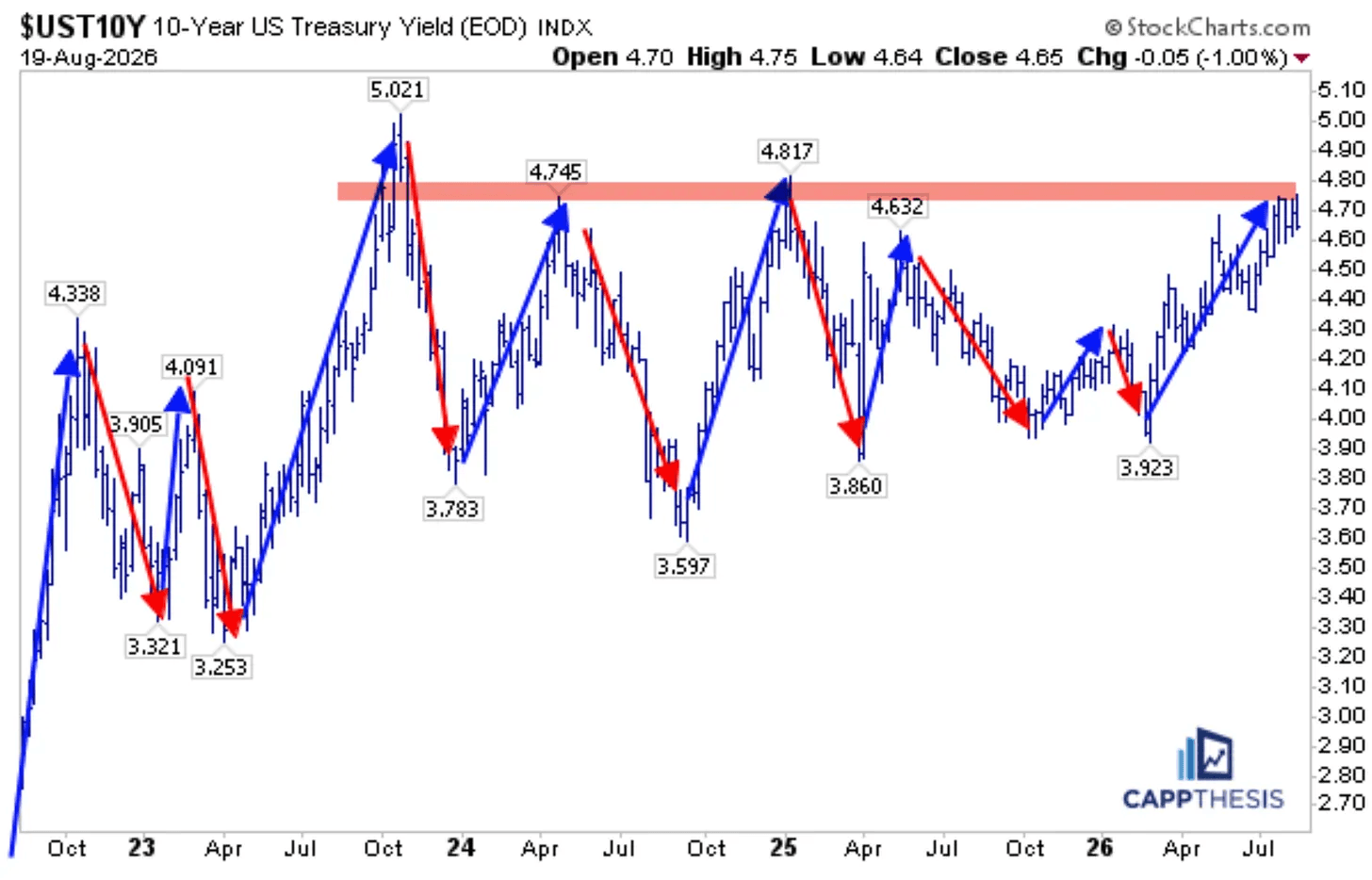
Yields still need to climb quite a bit further before they start pulling meaningful amounts of money out of stocks. They are getting more attractive, but they are not high enough yet.
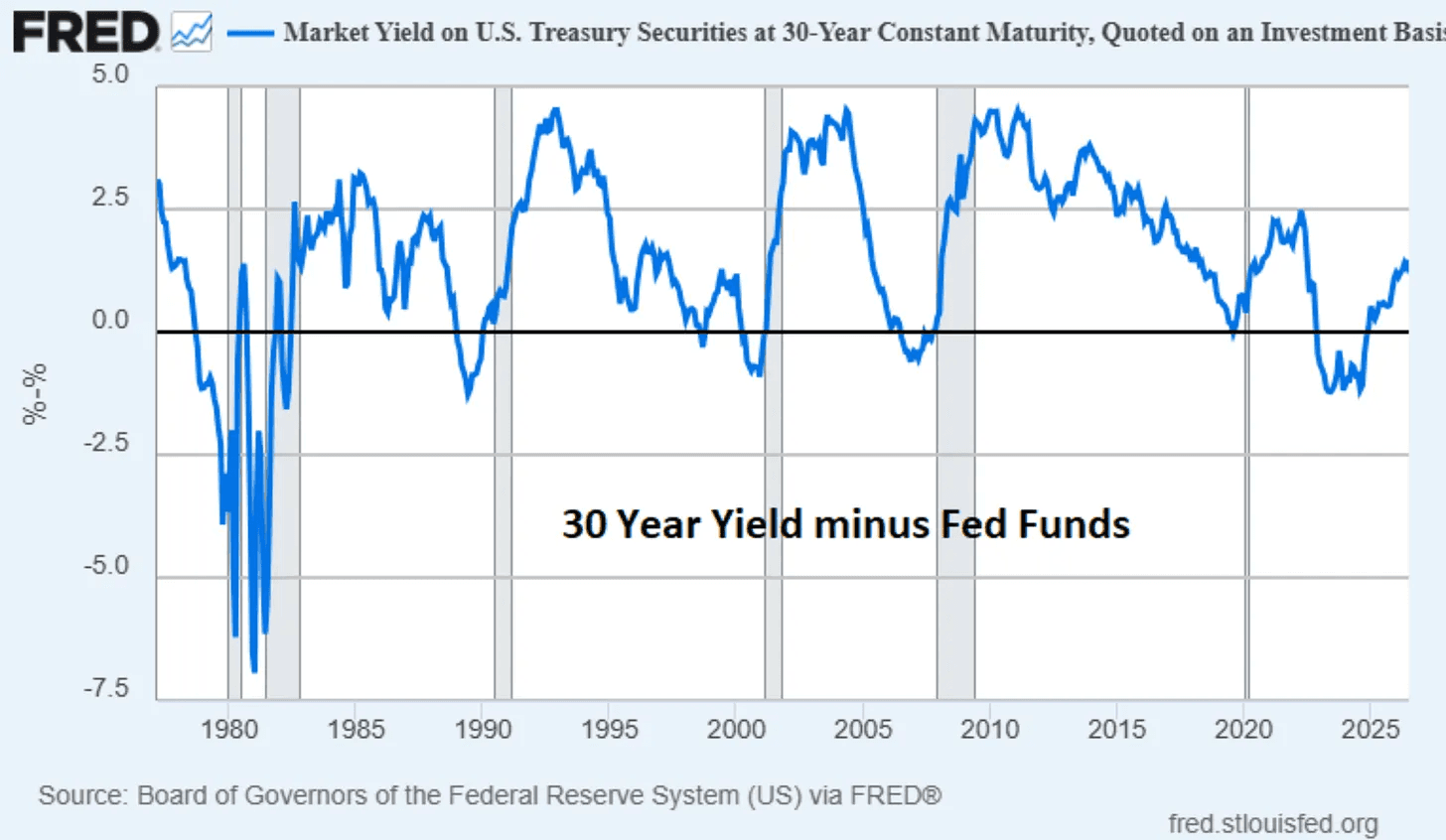
The issue is not just the absolute yield on a 10-year or 30-year Treasury. Investors also care about how much extra yield they get for locking up their money for much longer.
Right now, that extra compensation is still pretty small. Whether you compare the 10-year with the 2-year, the 30-year with the 5-year, or long bonds with cash and Treasury bills, investors are not being paid much more to take on years of additional interest-rate risk.
Ask yourself a simple question: are you pulling money out of stocks right now to put into bonds?
Probably not. And that is the point.
The real danger for equities starts when investors actually consider making that switch. When long-term yields get high enough that you can lock in a strong return with much less risk, stocks have much more competition for capital.
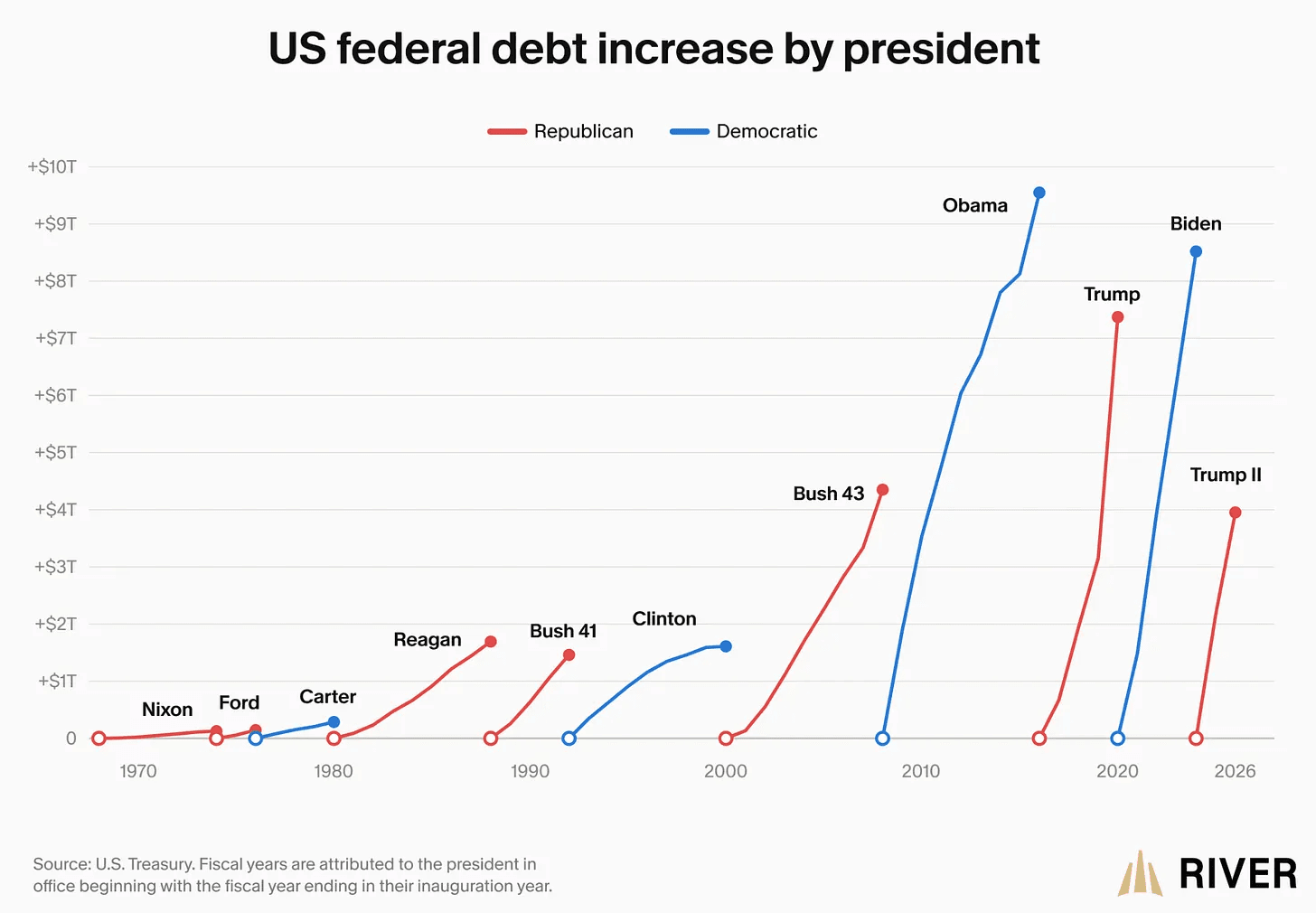
And behind all of this sits the US debt problem. The government is now paying roughly $3.8 billion per day in interest on its debt. Per day. That is not a typo.
That is why the bond market is so important right now. If investors start demanding materially higher yields to keep financing the government, the pressure does not stay inside Treasuries. It spreads into mortgages, corporate borrowing, valuations, and eventually the stock market.
Here’s where it gets interesting.
Look at gold relative to global money supply. One way to think about it is that gold acts like a form of money outside the credit system, while most of the financial system is built on credit. For years, global money and credit expanded much faster than gold. But now that gap is starting to close.
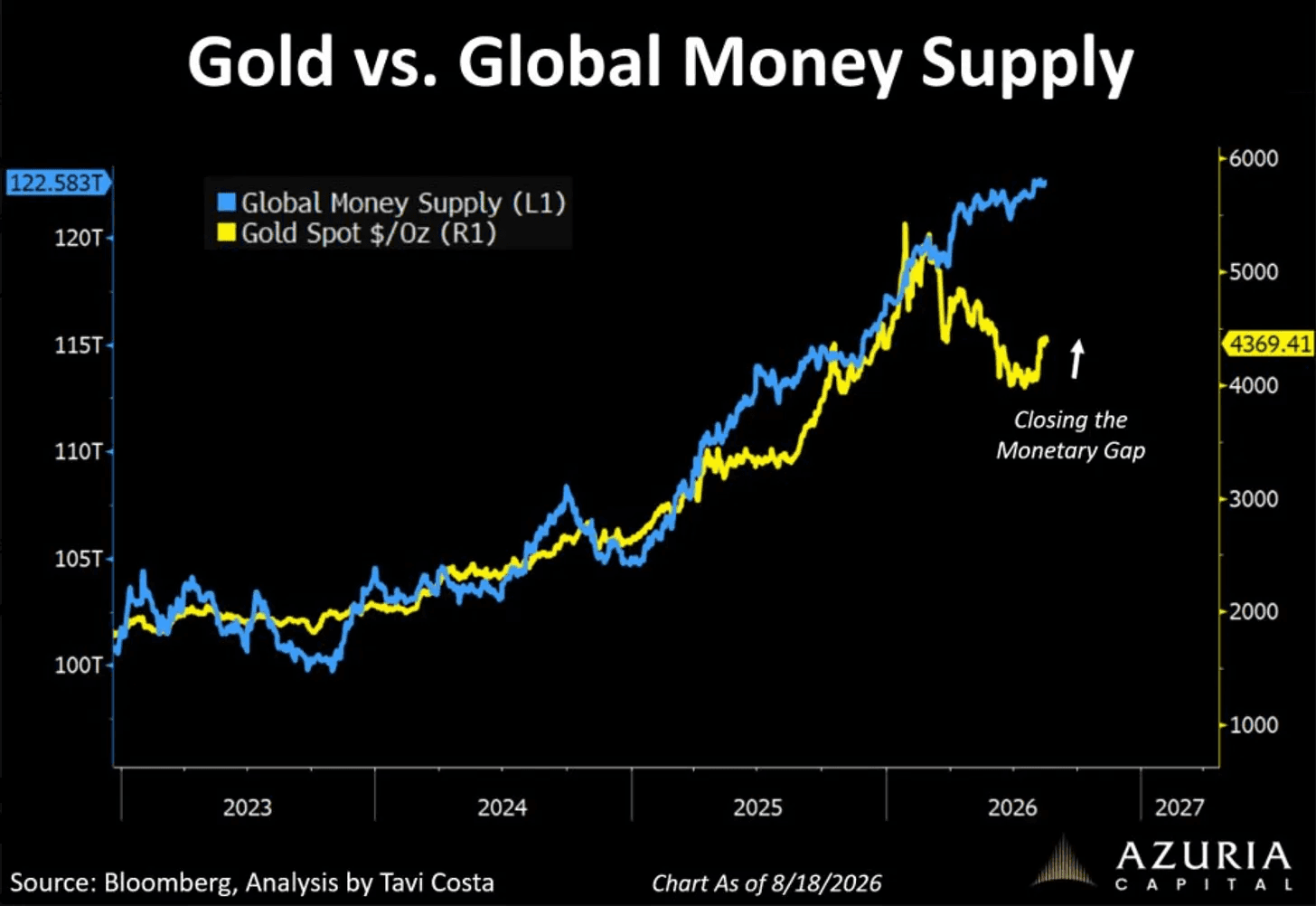
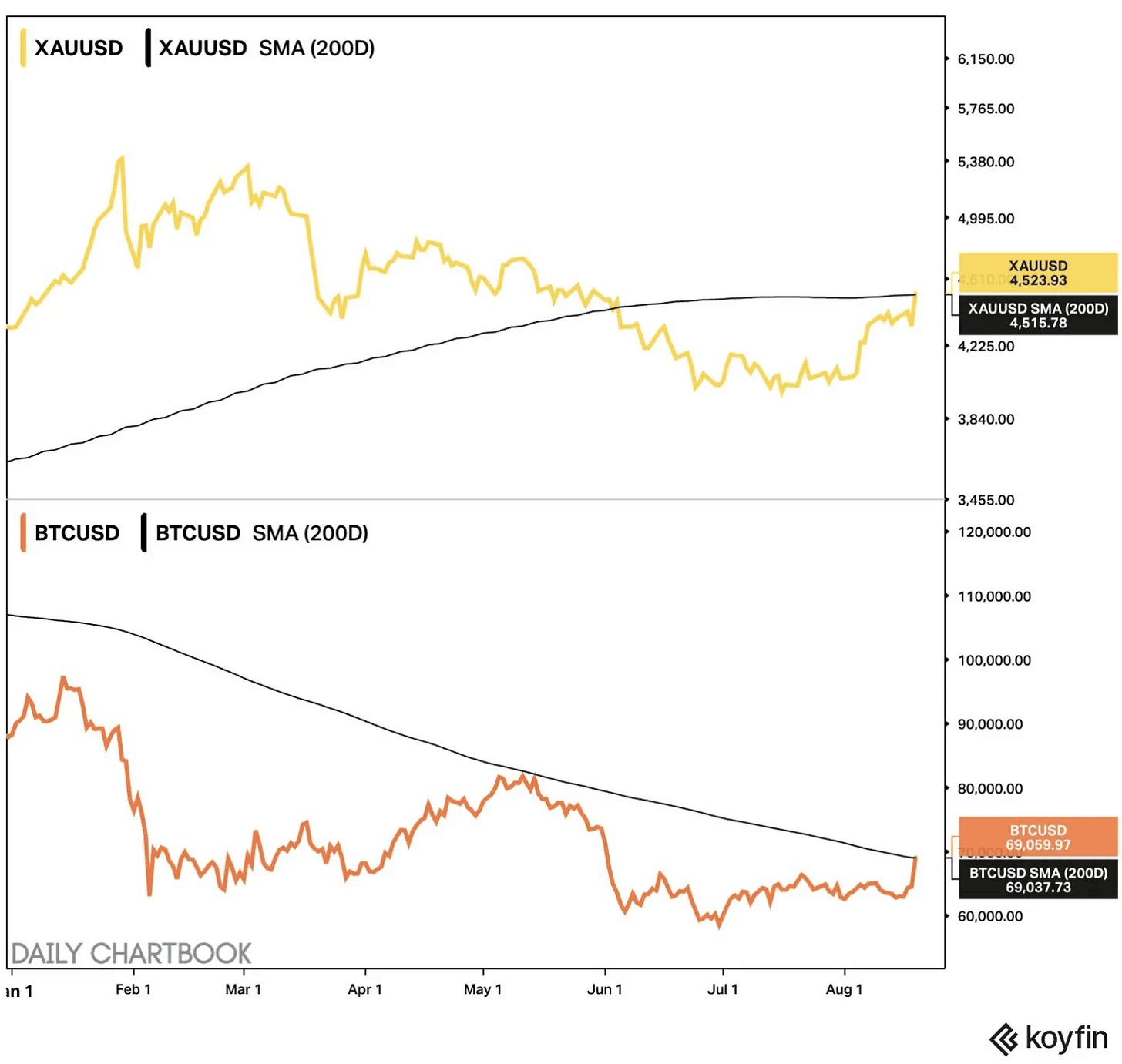
Gold isn’t alone here either. Investors are looking for alternatives to traditional financial assets. Bitcoin just had its best week since March 2023, gaining more than 20%.
That move pushed both gold and Bitcoin back above their 200-day moving averages. For Bitcoin, it was the first move back above the 200-day in more than a year. There hasn’t been much reason to look at Crypto at all for the past year. But things have changed now. And that’s something worth paying attention to.
This might be the catalyst for an actual bottom in Cryptoland which coincides with the Clarity Act vote on September 15th.
Mutual funds are not all-in on AI any more. Large-cap funds are still underweight AI-related stocks as a group compared with their benchmark weights. But what really stands out is Nvidia. Despite becoming one of the largest companies in the market and arguably the most important company in the AI trade, many active large-cap funds are still meaningfully underweight it. That could change quickly if they manage to beat expectations by a huge margin this week.

This Wednesday Nvidia reports earnings after hours. Unfortunately, over the past 4 quarters, the stock has fallen the day after every earnings report. So the question is whether that streak finally breaks this time.
Nvidia has almost been pretty much ignored by investors. The market cap is enormous, the stock has already had a historic run, and a lot of attention has shifted toward other parts of the AI trade like memory, optics, photonics, and infrastructure. But I still think Nvidia matters just as much as ever.
Over the weekend, Reuters reported that Nvidia customers were being told to expect price increases of more than 15% on AI servers. The increases are expected to affect systems based on Vera Rubin and Grace Blackwell.
And the underlying business is still growing at a ridiculous pace.
Over the last 4 reported quarters:
Revenue: $46.7B → $57.0B → $68.1B → $81.6B
Data Center revenue: $41.1B → $51.2B → $62.3B → $75.2B
GAAP EPS: $1.08 → $1.30 → $1.76 → $2.39
So I think the market may be focusing too much on the question of how large Nvidia already is and not enough on how large AI infrastructure demand can still become. This is a multi-trillion dollar market just getting started. And if Nvidia can show that demand, pricing power, and forward spending are still accelerating, the market may have to start looking at the stock differently again.
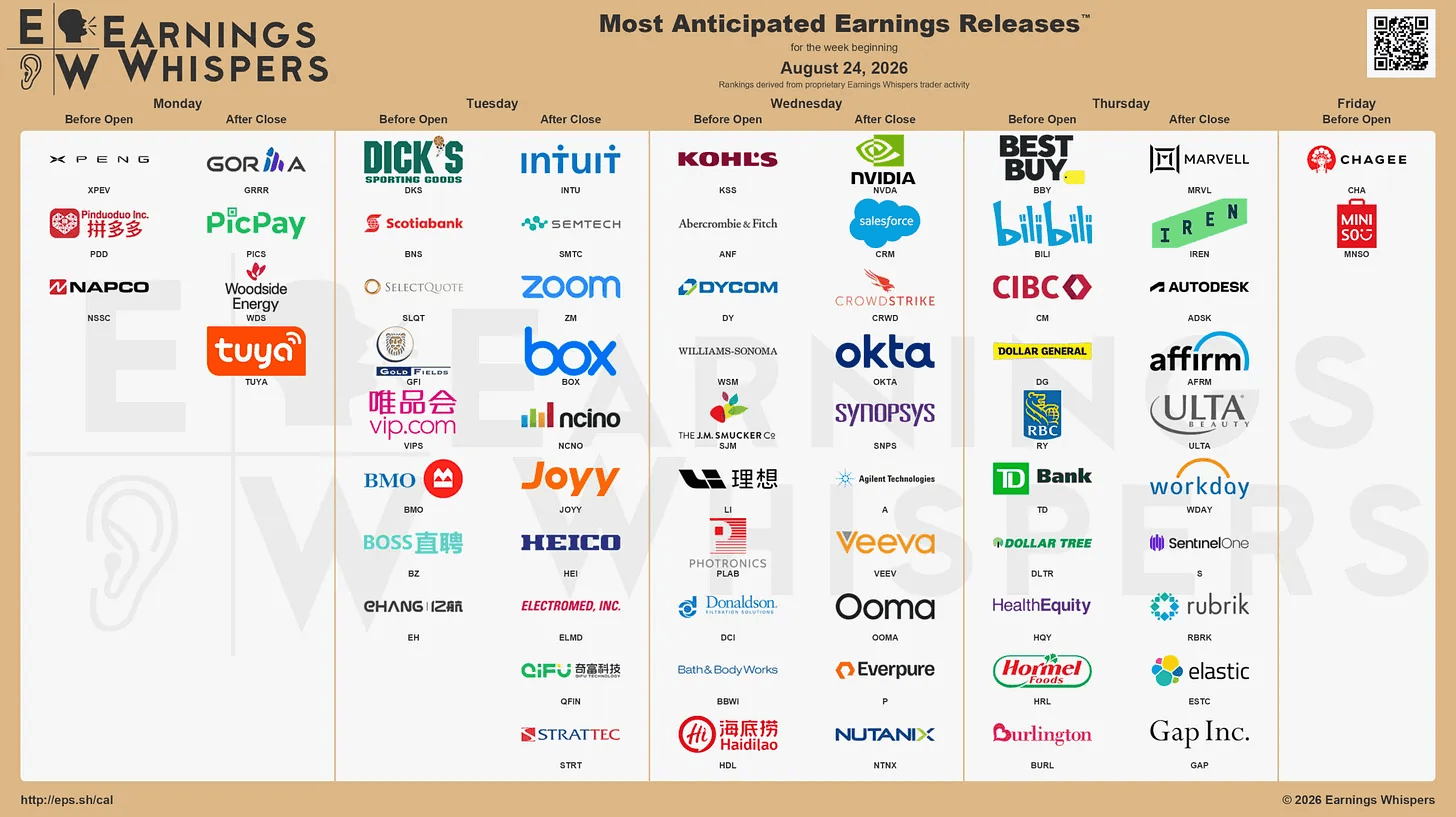
This is going to be a very important week.
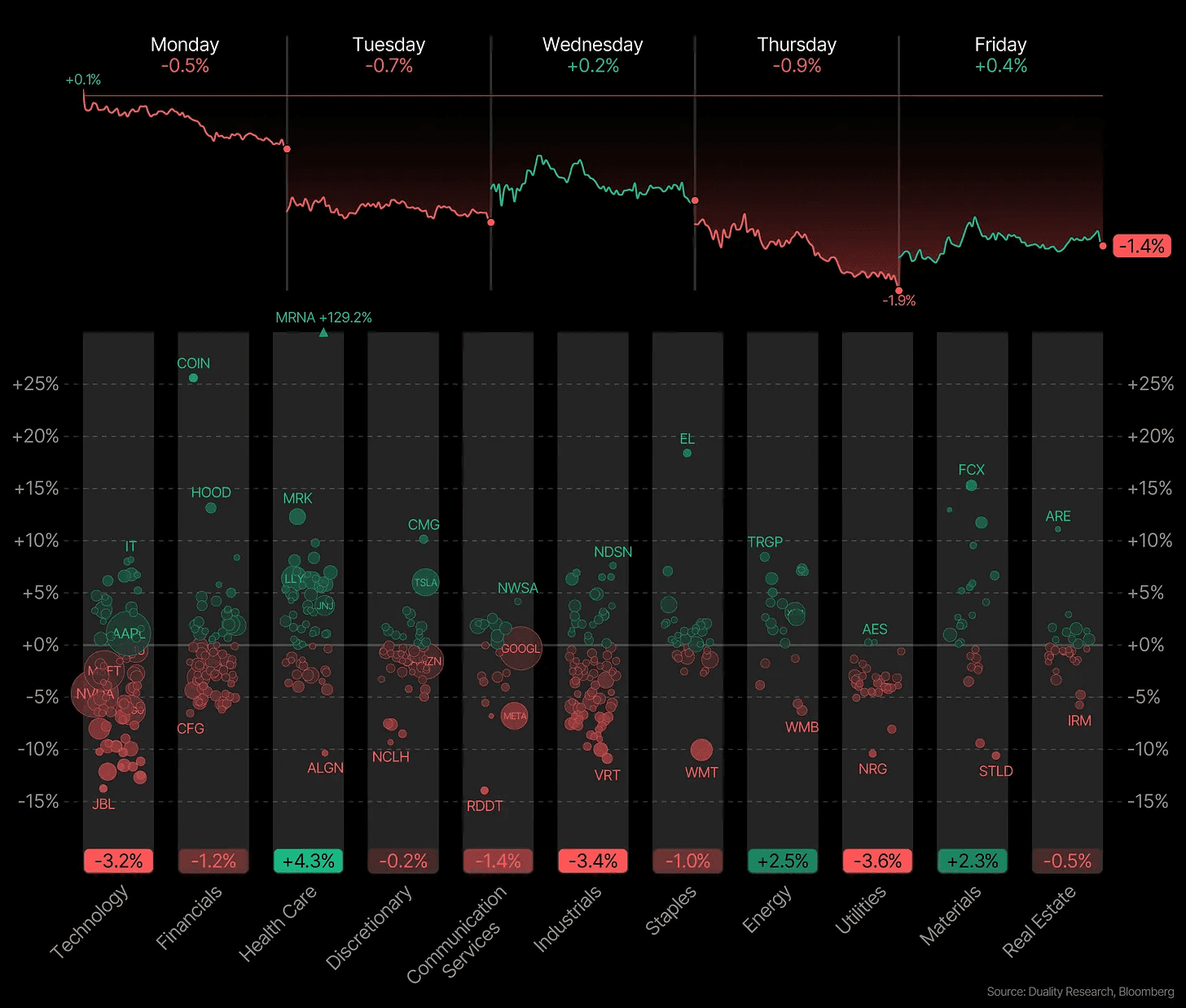
The overall market still looks fine, but underneath the surface a lot is clearly changing. The AI trade that carried the market for so long has cooled off, while money is rotating pretty aggressively into software, crypto, healthcare, and other parts of the market.
I don’t think that is automatically bearish. In some ways, it is exactly what you want to see. A healthy bull market should not depend on the same 20 stocks going up forever. It’s normal to see capital rotation and new market themes to emerge. But it’s even more important during this periods to not get too attached to the old leaders but focus on what the market is telling us now.
With that said, Nvidia earnings this week could completely change the setup again. If Nvidia delivers another monster quarter and the stock finally reacts well, that could be exactly what semiconductors and tech sector need to wake back up. If the numbers are great and the stock still gets sold, that would be a pretty clear sign the AI trade needs more time to get back on track.
Then you add Jackson Hole, PCE, GDP, employment data, bond yields, Iran, and midterm seasonality into the mix, and there is plenty of room for volatility.
A lot can change this week. The important part is staying flexible and being prepared if the market is starting to change.
Previous Updates
View All
- Weekly Market Update: Accumulation
- Weekly Market Update: The Best Quarter
- Weekly Market Update: Rate Hikes
- Weekly Market Update: AI is Not Slowing Down
- Market Update: Has AGI Arrived?
- Weekly Market Update: Consolidation
- Weekly Market Update: September is Here
- Market Update: Nvidia Crushes Earnings
- Weekly Market Update: Yields
- Market Update: The Future of Biotech
- Weekly Market Update: Earnings Acceleration
- Market Update: The Next Generation of AI Infrastructure
- Weekly Market Update: New Highs