Go Back

Lin
Weekly Market Update: Accumulation
The AI trade keeps accelerating, and there are still very few signs that it’s slowing down.
Just last week, the White House hosted some of the biggest leaders in AI and officially declared the beginning of the “Super Intelligence” era, replacing AI with SI across the executive branch. We’ve apparently moved past AI already.
Whatever you want to call it, the spending isn’t slowing down.
It wasn’t long ago that headlines were filled with warnings that AI progress was hitting a wall, hyperscaler spending would slow, and the AI trade had gone too far.
But, as expected, that turned out to be completely wrong.
And I still see plenty of big opportunities.
The market is setting up again after months of consolidation, just as we move into the strongest part of the entire year.
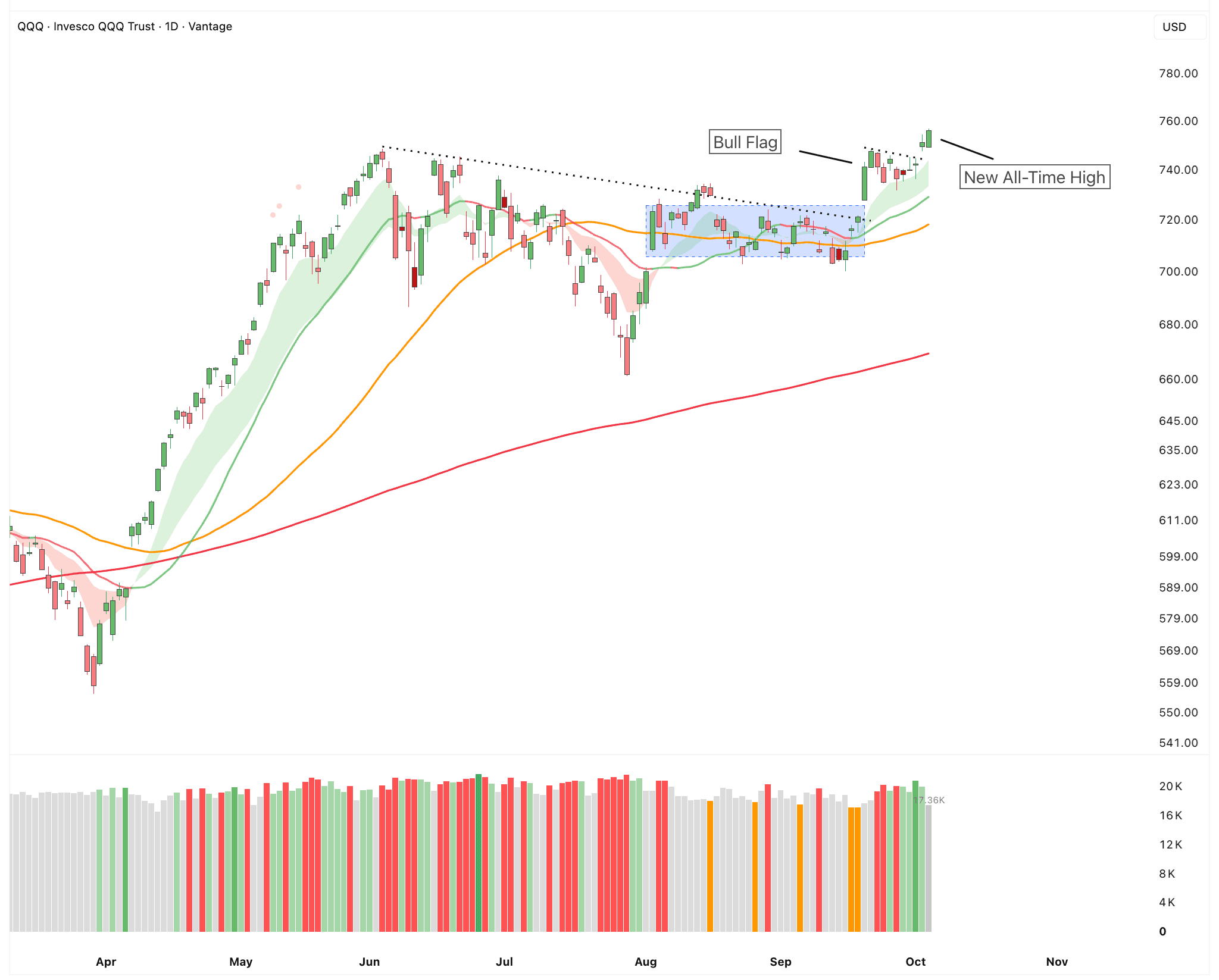
There’s almost nothing more bullish than a market making new all-time highs. Statistically, new highs tend to be followed by more new highs because they usually happen in strong trends, not at random.
And look at how well this market is holding up. We’ve had rising yields, higher oil, geopolitical uncertainty, and an active conflict with Iran. Yet if you ignored the headlines and looked only at price, you’d barely know any of it was happening.
Sellers have had plenty of reasons to take control, and they haven’t. Every negative headline has been absorbed. Buyers keep stepping in. The Nasdaq just closed at an all-time high while S&P500 continues to consolidate near its highs. It tells you buyers are eager to get exposure. Every dip gets bought because investors who are underexposed don’t want to be left behind if the market breaks higher.
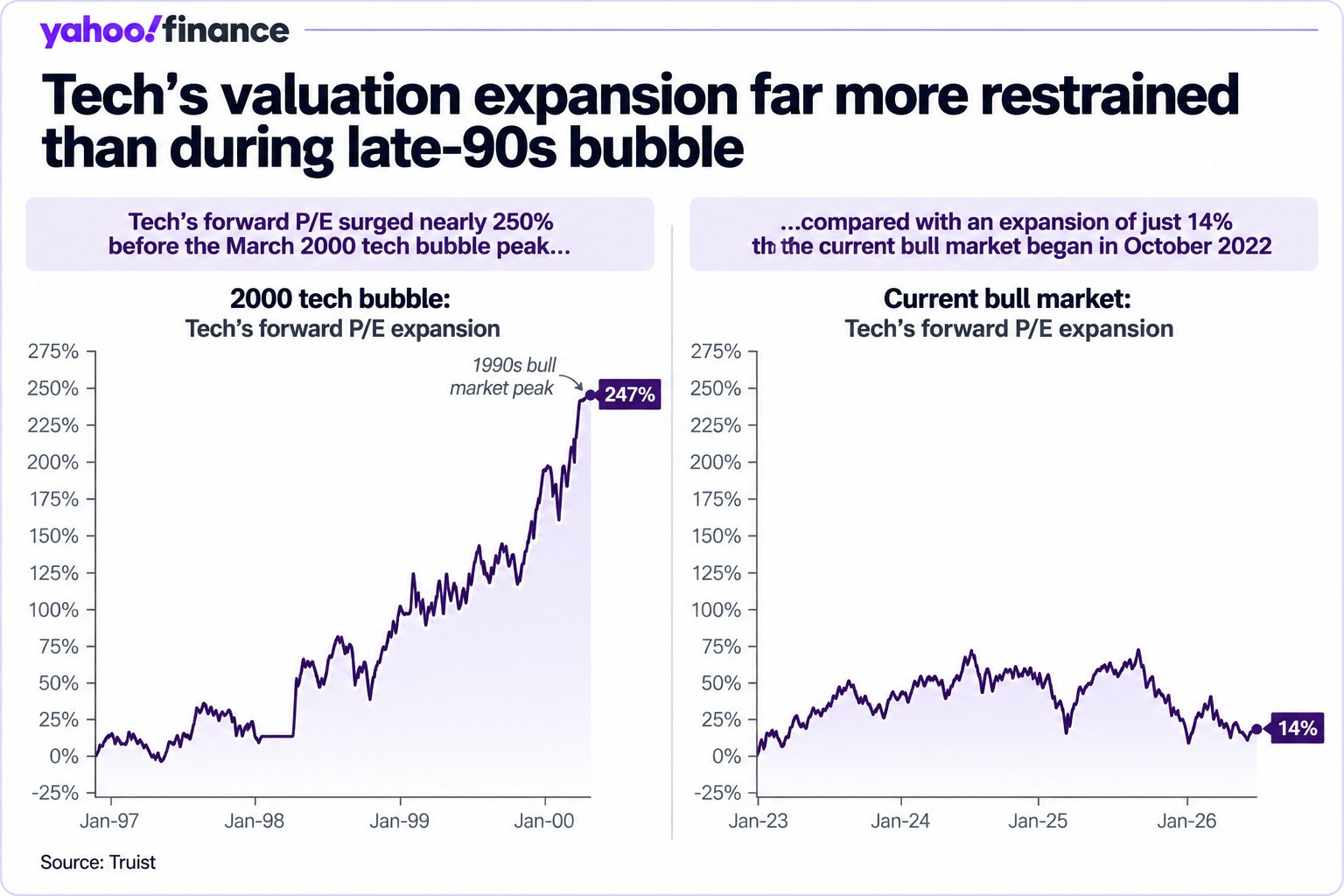
There is no bubble in sight. The difference between what we saw during the dotcom bubble and today is pretty stark.
2000:
P/E ratios were high because earnings were tiny or nonexistent.
Investors were pricing in explosive future growth.
The whole trade fell apart when that growth failed to materialize.
2026:
Earnings are already massive.
Many leading tech and semiconductor companies are still growing earnings at 40% to 100% today.
Yet the market is already pricing in a major slowdown, with growth expected to fade toward the high teens over the next 3 to 5 years.
What happens if the biggest companies and their fastest-growing business units keep compounding at 20% to 30% for several years longer than the market expects?
Pretty simple: If earnings keep moving higher, then the market has to re-rate higher with them.
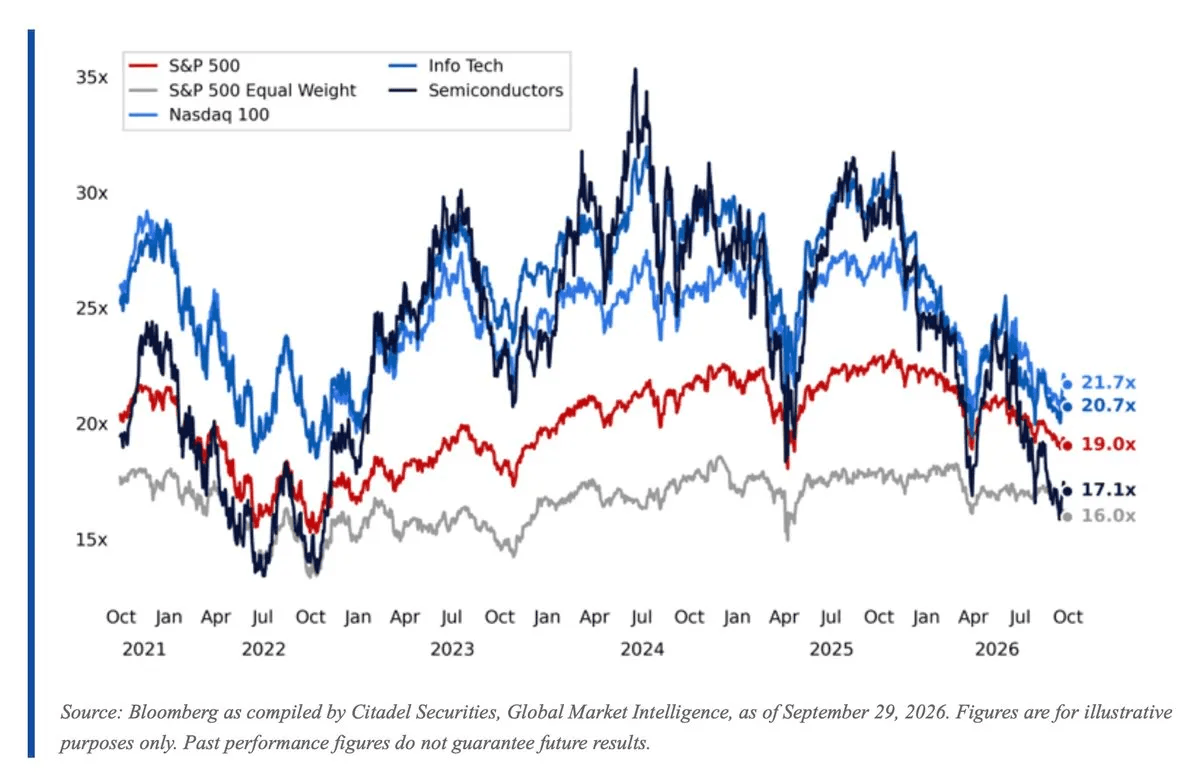
The defining feature of a classic bubble is usually that prices run far ahead of earnings. That’s hard to square with a market where many of the biggest AI beneficiaries are producing huge profits and still growing them quickly.
If this were a true late-stage valuation bubble, I’d expect the major tech indices to be trading closer to 30x earnings while investors assume today’s growth lasts forever.
Instead, a lot of leading names and parts of the market are still sitting closer to the 16x to 20x range, while expectations already assume growth slows substantially over the next few years.
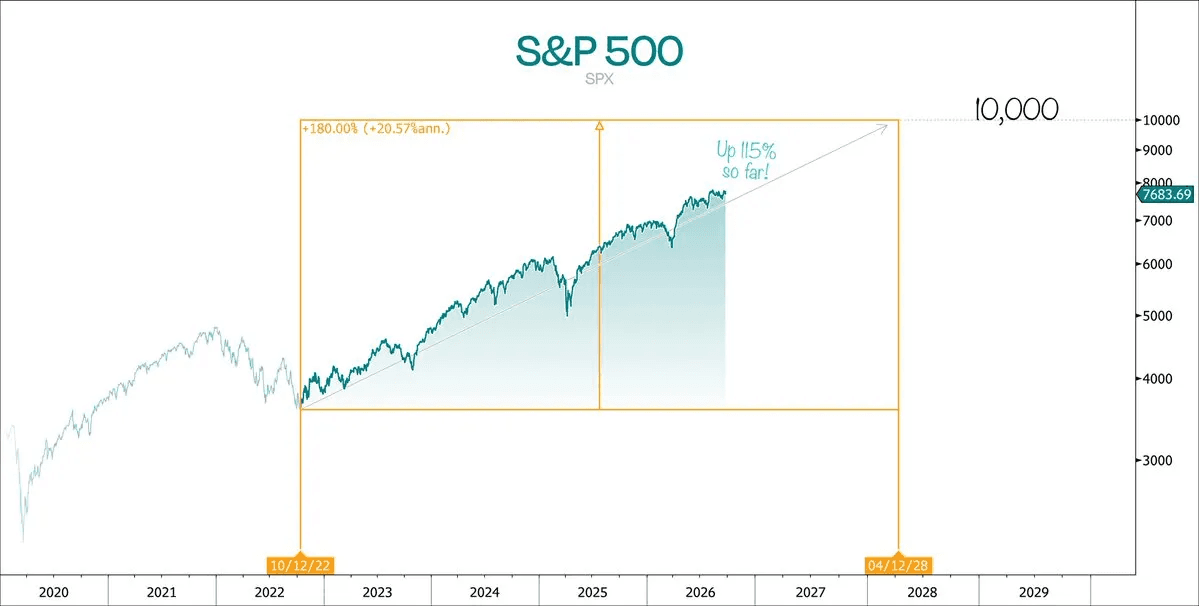
Historically, S&P 500 bull markets have lasted around 5.5 years and delivered gains of roughly 180%.
This bull market started from the October 2022 low. Since then, the S&P 500 is already up about 115%. If this cycle simply followed the historical average, the index would have room to keep running into 2028 and could even reach 10,000. It’s pretty wild to think about but it’s definitely possible. After all, we’re in the middle of one of the biggest technology investment cycles in decades.
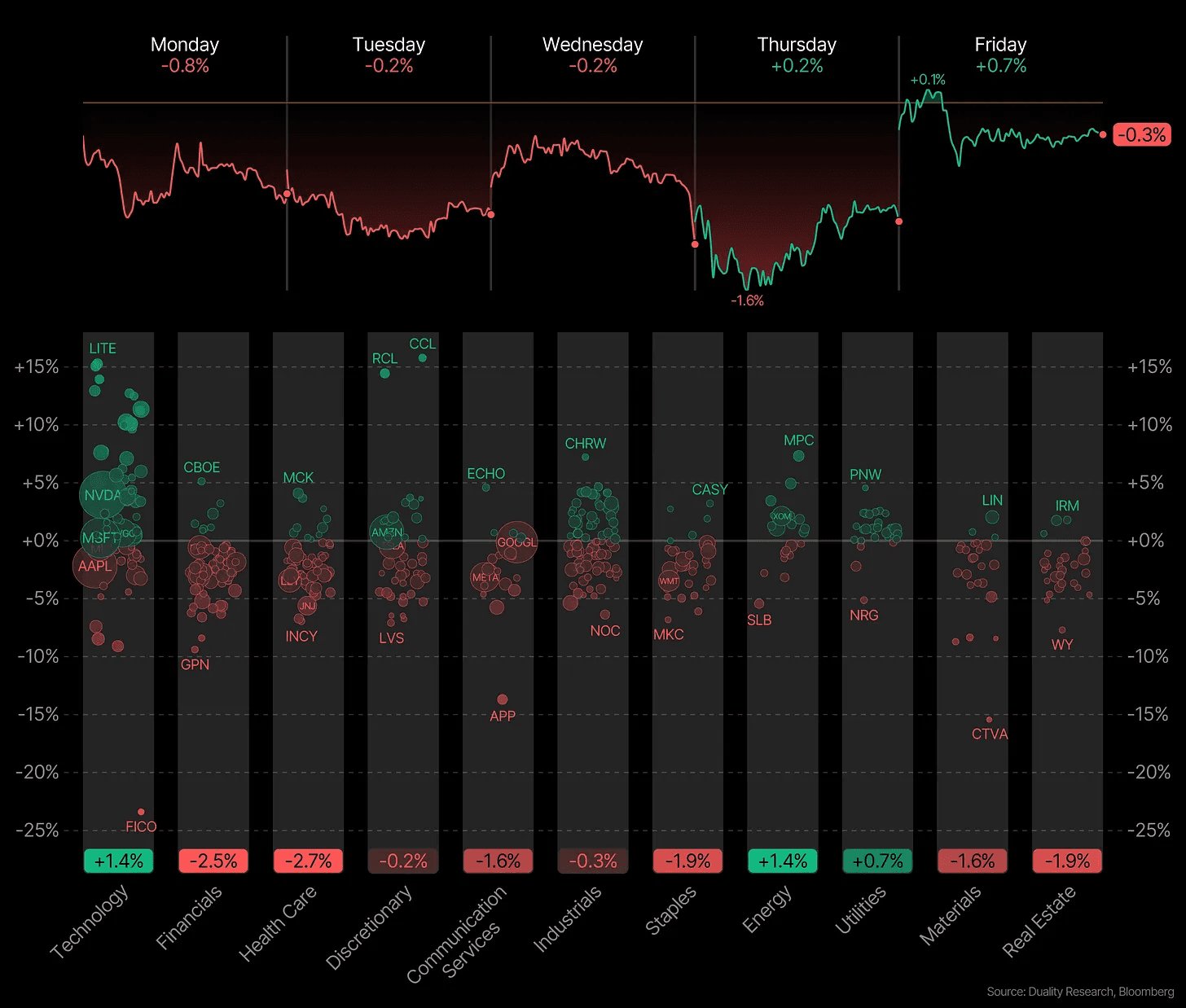
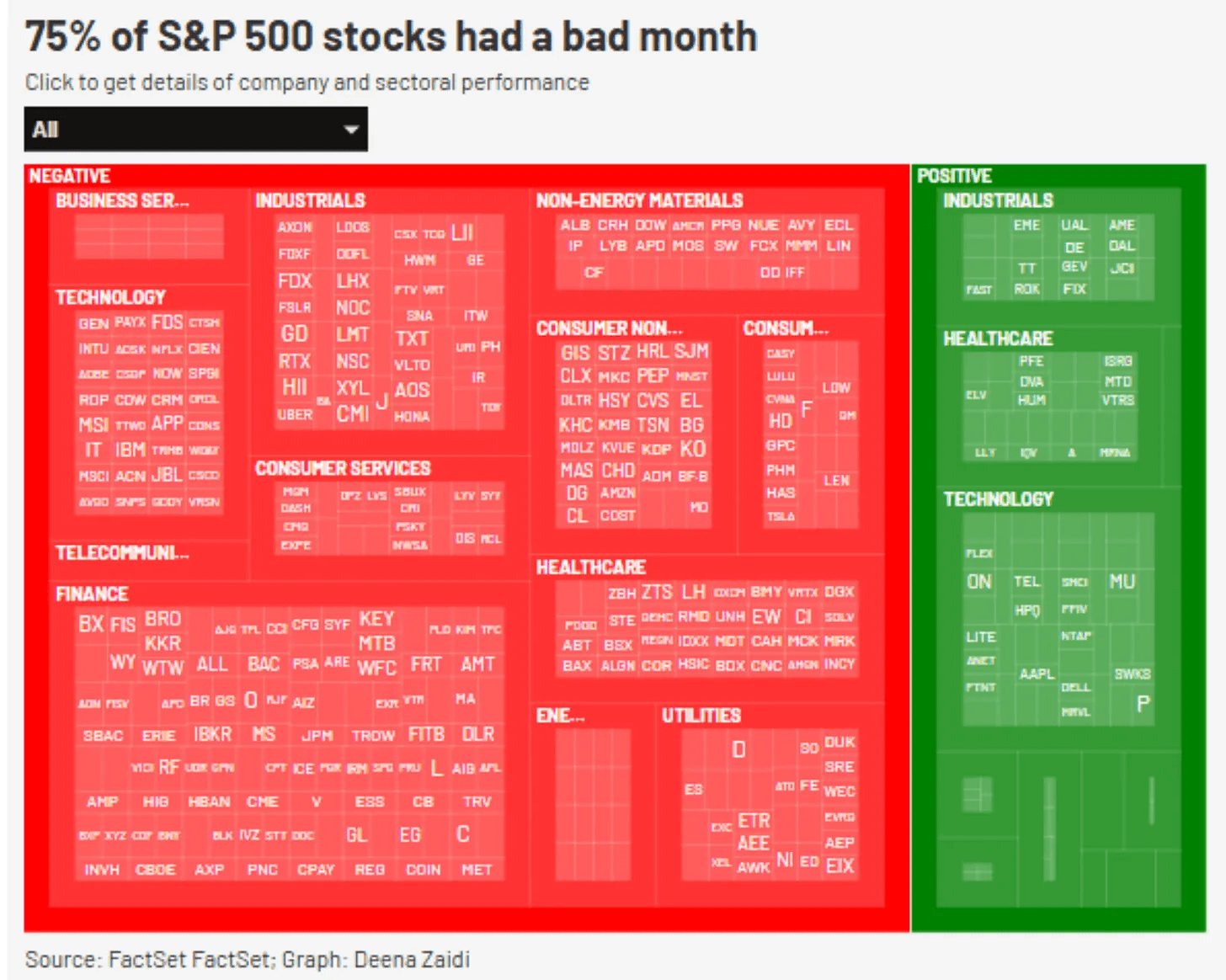
The S&P 500 finished September down just 0.45%.
But more than 75% of S&P 500 stocks fell in September. 3 out of every 4 stocks were down, while a small group of mega-cap tech names kept the index almost flat. That’s an incredibly narrow market.
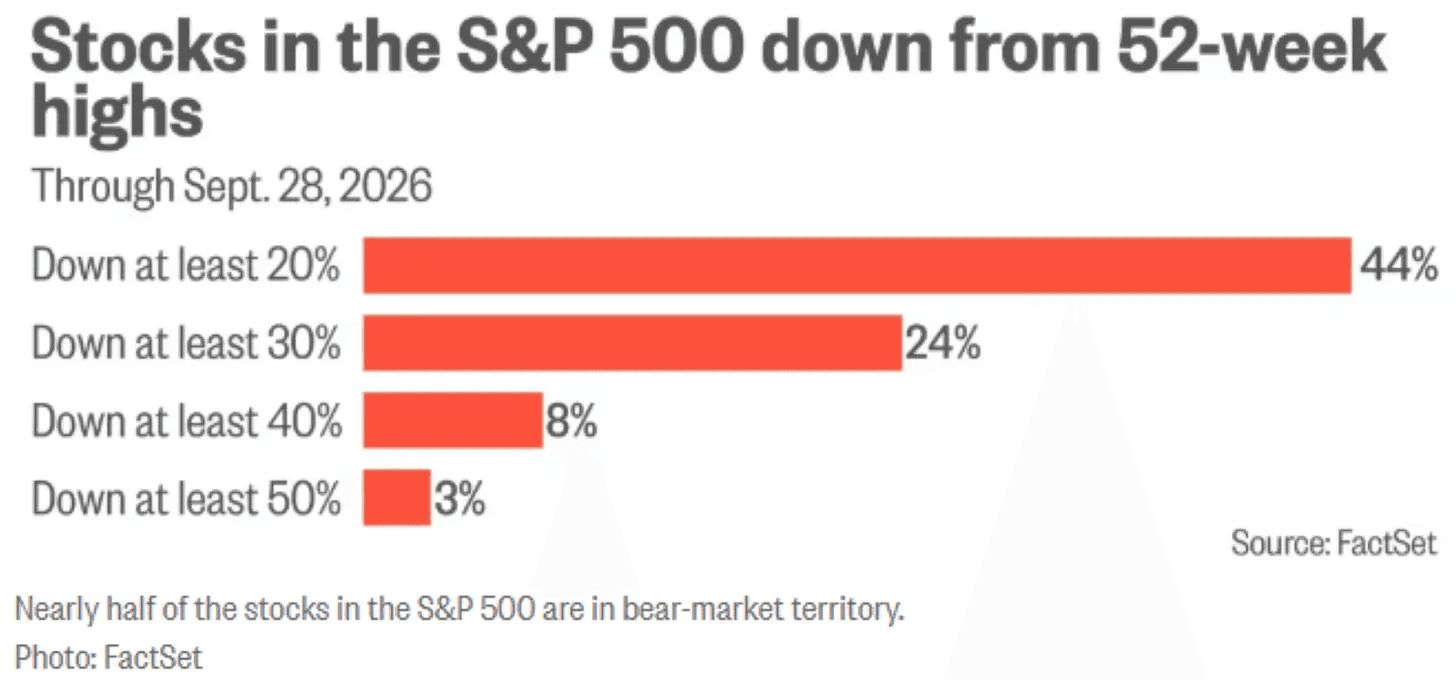
Almost half of S&P 500 stocks are now at least 20% below their highs. Basically, half the index is already in bear-market territory. And almost 1 in 4 S&P 500 stocks is down 30% or more from its high.
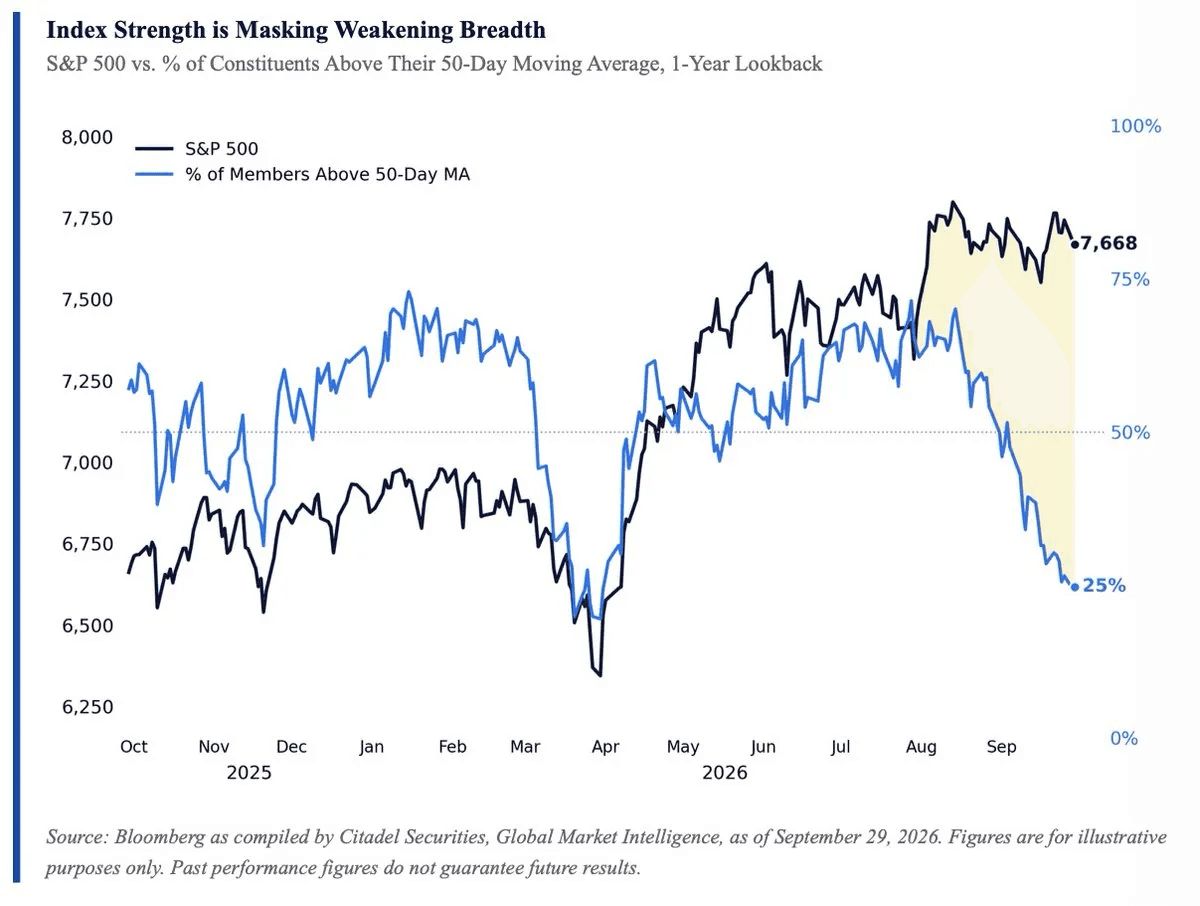
Historically, market breadth has tended to move with the S&P 500. When the index moves higher, more stocks usually participate. That has not been true this year.
The S&P 500 is near record highs, while a huge share of the companies inside the index are still sitting 20%, 30%, or more below their own highs. This gap cannot persist forever.
I’d expect the average stock to start catching up. That would mean the next leg higher doesn’t have to come from the same handful of mega-cap winners. It can come from broader participation across the market. And if breadth starts improving while the current leaders remain strong, that creates a powerful setup for the major indices to move materially higher.
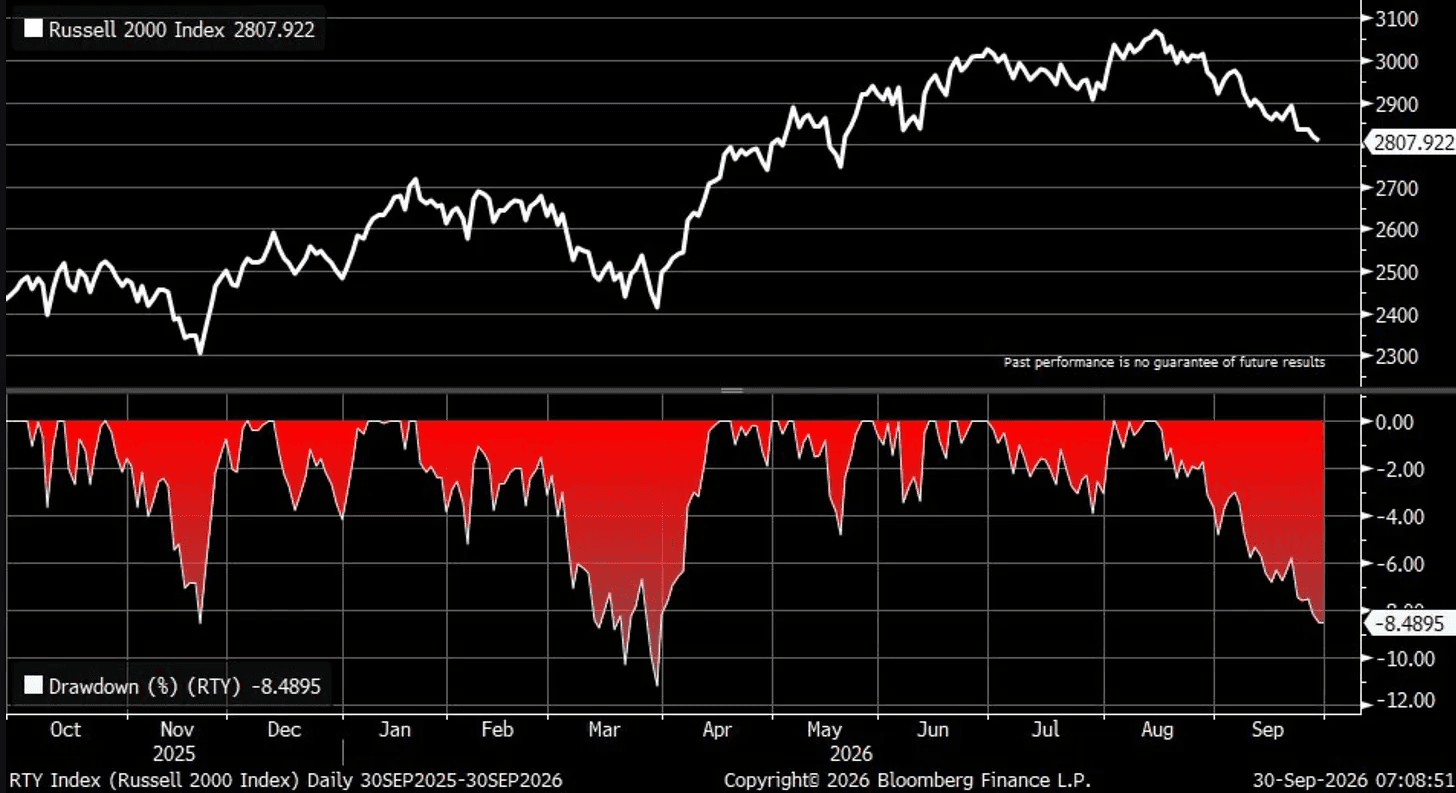
Hence, it’s not surprising that small caps are still struggling. The Russell 2000 is about 8.5% below its high. That’s meaningful weakness, just short of a full 10% correction. The major factor here is bonds. Small caps are much more sensitive to interest rates. When bond yields stay high, their cost of capital rises and investors naturally favor larger, more profitable companies.
That’s a big reason why the mega caps can keep making new highs while the average small-cap stock struggles.
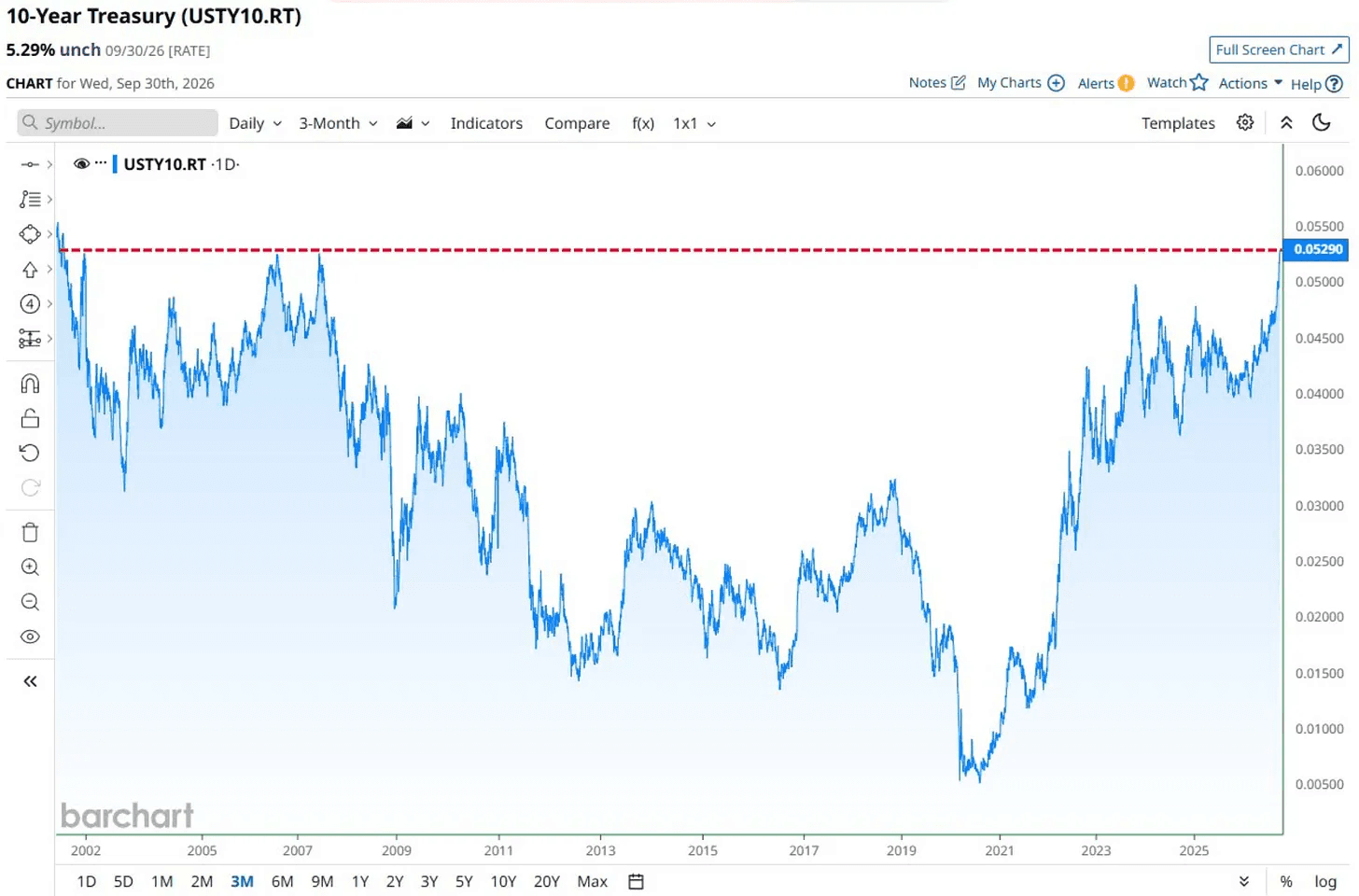
The 10-year Treasury yield is now around 5.3%, its highest closing level since 2001. And what makes that even more notable is that yields kept climbing this week despite a weak jobs report.
Now the good part: Q4.
The S&P 500 gained nearly 15% in Q2 and then followed that with another positive quarter in Q3. Since 1935, that combination has happened only 6 other times. Q4 was positive every single time. The average Q4 gain after those setups was more than 9%.
This is exactly the kind of setup you want heading into the strongest part of the year.

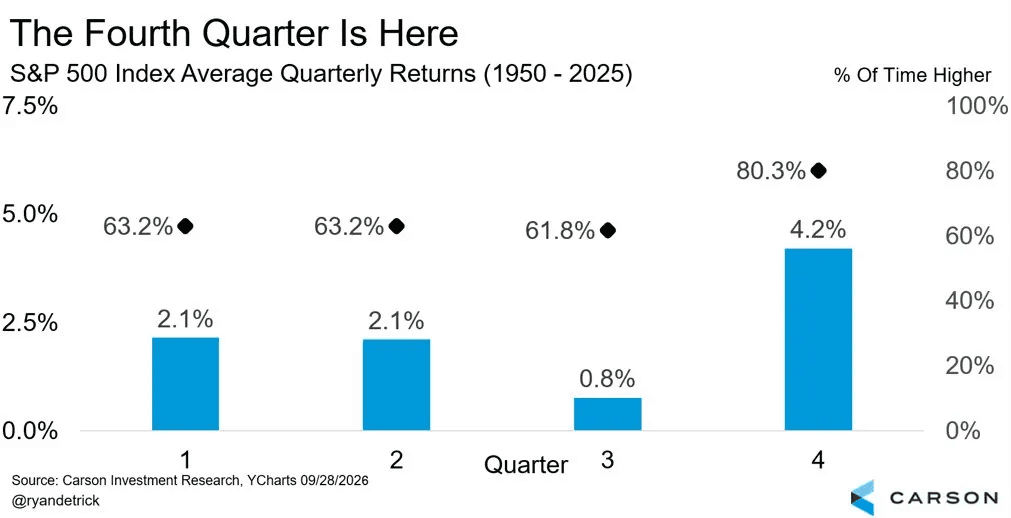
Q4 is historically the strongest part of the year by a meaningful margin.
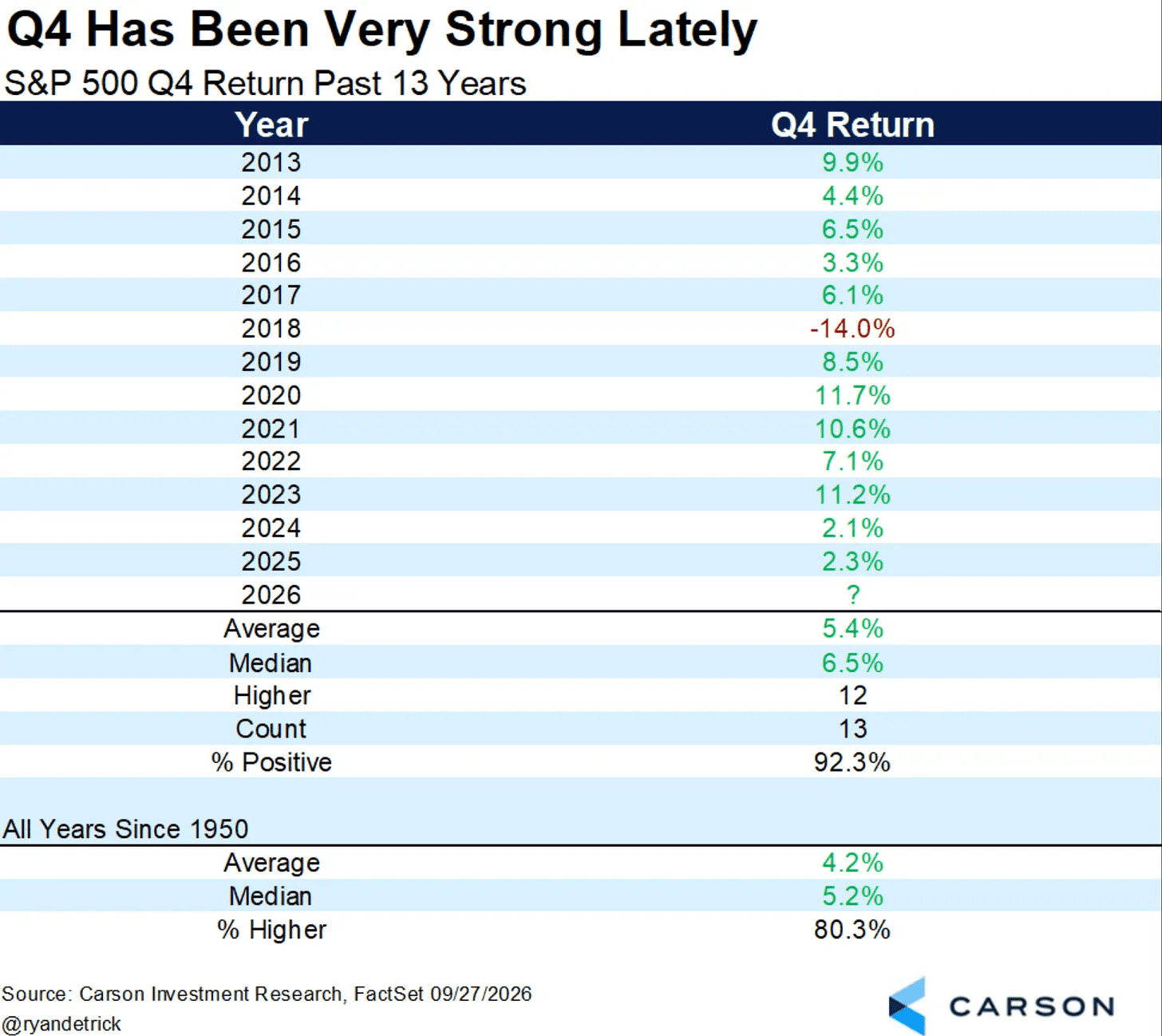
If we look at the last 13 years, the seasonal pattern is hard to ignore. Q4 finished higher in 12 of those 13 years. The only exception was 2018, when the market was hit by a combination of tighter Fed policy, slower global growth, and rising recession fears. Outside of that one year, Q4 has been remarkably positive.
Seasonality is one of those indicators people love because it is simple and easy to visualize. By itself, seasonality does not tell you why the market should move higher. It just tells you that, historically, the odds tend to improve during this part of the year. What matters more is whether the fundamental setup supports that seasonal tailwind. And right now, there are several fundamentals that line up well.

This market feels like it’s setting up for a much bigger move.
QQQ just closed at an all-time high. SPY has spent 9 weeks consolidating. Semiconductors are breaking out. AI is making a comeback again. And we’re moving into one of the best seasonal stretches of the year. Despite every negative headline thrown at this market, price keeps holding up.
The biggest things standing in the way are still yields, oil, and Iran. I’ve been talking about these risks for weeks. If we get some kind of deal and those pressures start to unwind, I think the market could broaden out very quickly.
A lot of people are still focused on narrow breadth and market concentration. Fair enough. The average stock has lagged badly. But breadth and the S&P 500 historically tend to move together over time, and right now that relationship has stretched unusually far apart. The expectation for now is that the average stock eventually starts catching up. If that happens while mega-cap tech and AI leaders remain strong, you suddenly have a very different market. You could see strength spread into small caps, housing, crypto, solar, cyclicals, and other rate-sensitive areas. That would turn a narrow rally into a broad one.
At the same time, sentiment still looks far from euphoric. Investors remain cautious. Bears are still confident. Retail participation has cooled. Yet the major indices are sitting near record highs. That is an interesting combination. Then you add seasonality. Q4 is historically the strongest part of the year. October and November have been especially strong in midterm years, and we’re moving into one of the strongest stretches of the presidential cycle.
There is one major risk that has to be watched closely: bonds.
At some point, yields become high enough that bonds start competing seriously with equities for capital. I still think the 10-year could push toward 6% this quarter, especially if oil remains elevated and geopolitical risk keeps inflation pressure alive. Higher yields alone don’t necessarily kill a bull market. The real problem would be higher yields combined with weakening earnings. But fortunately that is not the case at the moment. Right now, the evidence still points higher.
And if yields and oil start cooling while earnings remain strong, this market could broaden out much faster than people expect. Q4 is shaping up to be very interesting.
Previous Updates
View All
- Weekly Market Update: Accumulation
- Weekly Market Update: The Best Quarter
- Weekly Market Update: Rate Hikes
- Weekly Market Update: AI is Not Slowing Down
- Market Update: Has AGI Arrived?
- Weekly Market Update: Consolidation
- Weekly Market Update: September is Here
- Market Update: Nvidia Crushes Earnings
- Weekly Market Update: Yields
- Market Update: The Future of Biotech
- Weekly Market Update: Earnings Acceleration
- Market Update: The Next Generation of AI Infrastructure
- Weekly Market Update: New Highs