Go Back

Lin
Weekly Market Update: Rate Hikes
Tons of people thought the AI trade was over because OpenAI and Anthropic wanted to slow AI development, which meant AI spending could slow with it.
Anyone who’s been following here for a while knows that we’re far from done. And now we saw what they are actually doing.
OpenAI reportedly expects to spend around $856B through 2030, with a huge share going toward compute and infrastructure. At the same time, it is discussing another major funding round at roughly a $1.2T valuation.
Anthropic is doing the same. Anthropic expects to have around 5 gigawatts of computing capacity available by the end of 2026. By the end of 2027, that could reach 10 gigawatts. OpenAI is targeting roughly the same scale.
That does not look like a slowdown at all to me.
Watch what they do, not what they say. These companies have a strong incentive to slow the rest of the market down. They already have more capital, compute and talent than almost anyone. The longer that lead lasts, the better for them.
At the same time, Trump announced that he plans to create an “AI force” and appoint a new AI adviser, or AI czar. There are still a lot of details missing but it’s clear that he does not want the U.S. slowing AI development while China keeps pushing forward.
Now we’re entering the best quarter of the year and it looks like that there is a lot of big money waiting to rotate back into AI. (Check back on this update where some of the most interesting AI setups were highlighted).
We have heard a lot about the AI story slowing down.
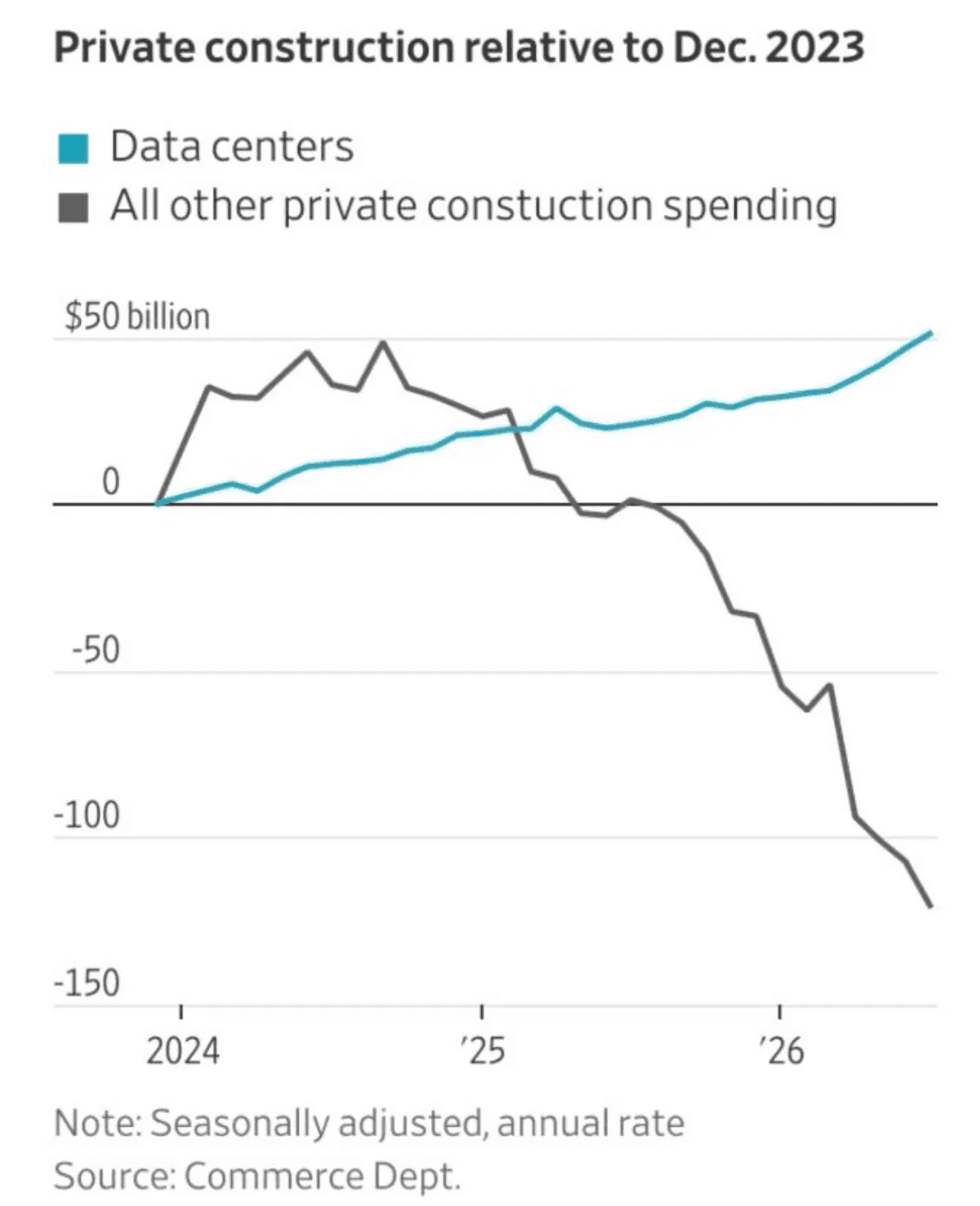
But the data still points in the opposite direction. The AI buildout is still growing rapidly. Look at private construction spending. Most major categories have started to flatten or roll over expect for data centers.
Companies can talk about slowing down. Their spending says they are still building A LOT.
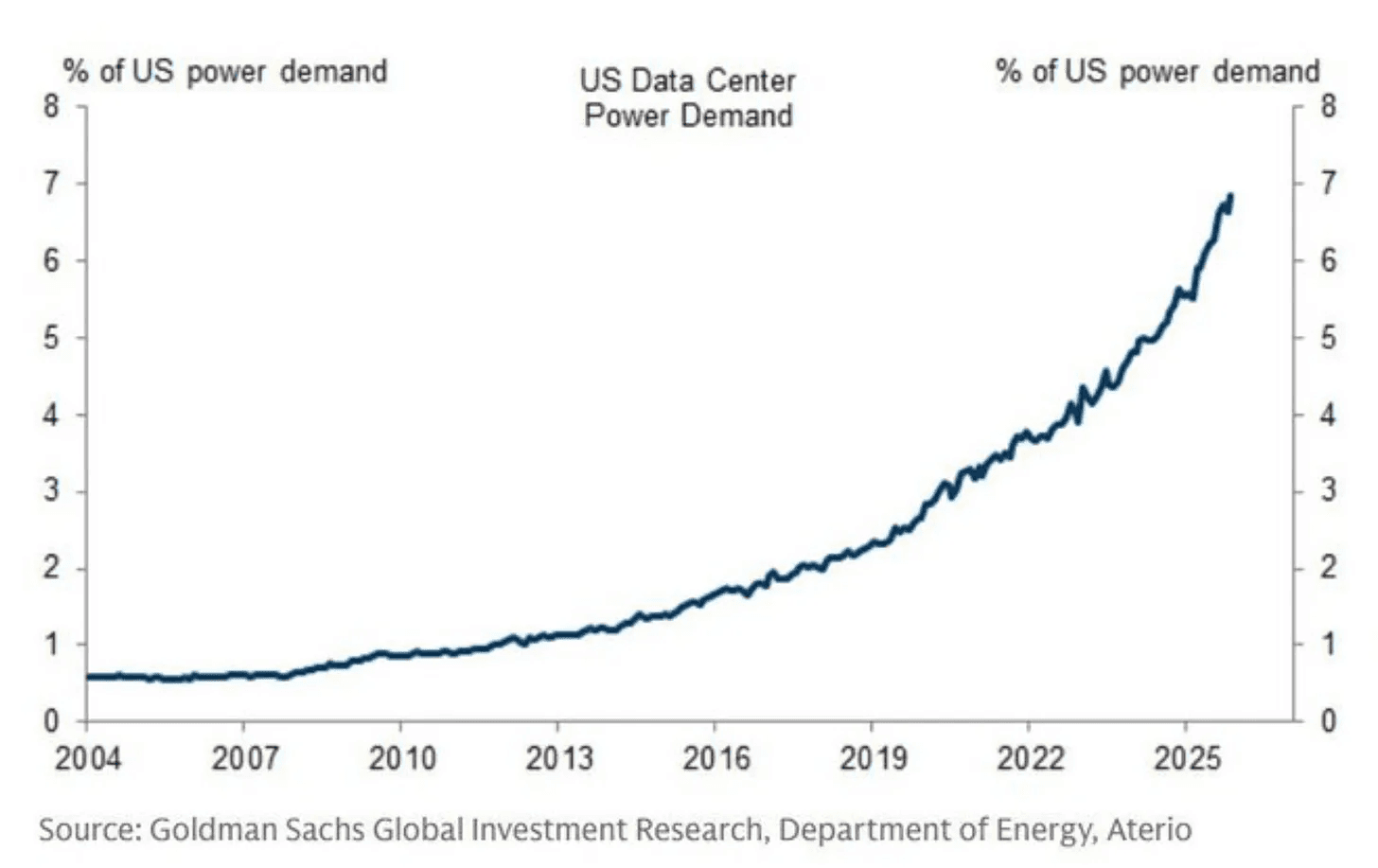
The AI boom is starting to show up in the power grid.
Data centers now use nearly 7% of total U.S. electricity. A decade ago, their share was basically 0%.
That tells us how quickly the AI infrastructure buildout is growing. More data centers means more servers, more cooling and a lot more power.
That gives you a sense of how much infrastructure is being built behind AI and that does not look likes it’s slowing down.
Only around 22% of firms say AI is already part of their normal day-to-day work.
So even though AI gets huge attention, most companies still have not fully integrated it into their regular business processes.
Adoption is growing, but the market is still early. There is still be a lot of future demand

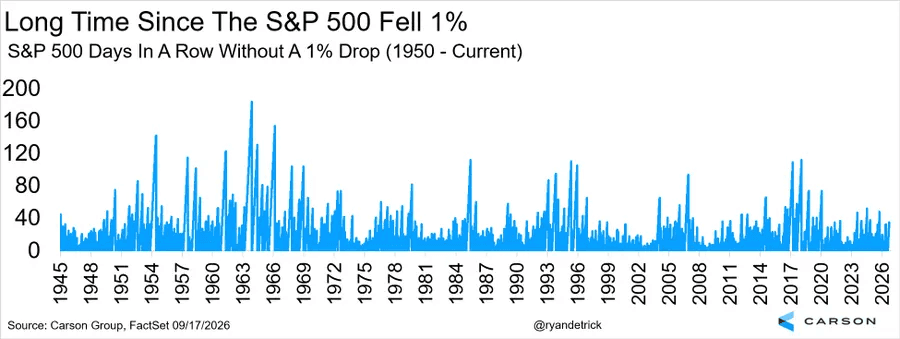
The S&P 500 hasn’t had a 1% down day in quite some time.
One reason may be the amount of money still trying to get into the market.
Large institutions cannot simply buy hundreds of millions of dollars worth of stock at once. If they did, they would push prices higher against themselves. So they spread those orders out. Trading algorithms break large orders into thousands of smaller ones and slowly buy throughout the day.
So, there is likely a large amount of money deciding to move now that creates steady demand underneath the market.
The good news is that we are getting close to the strongest part of the year.
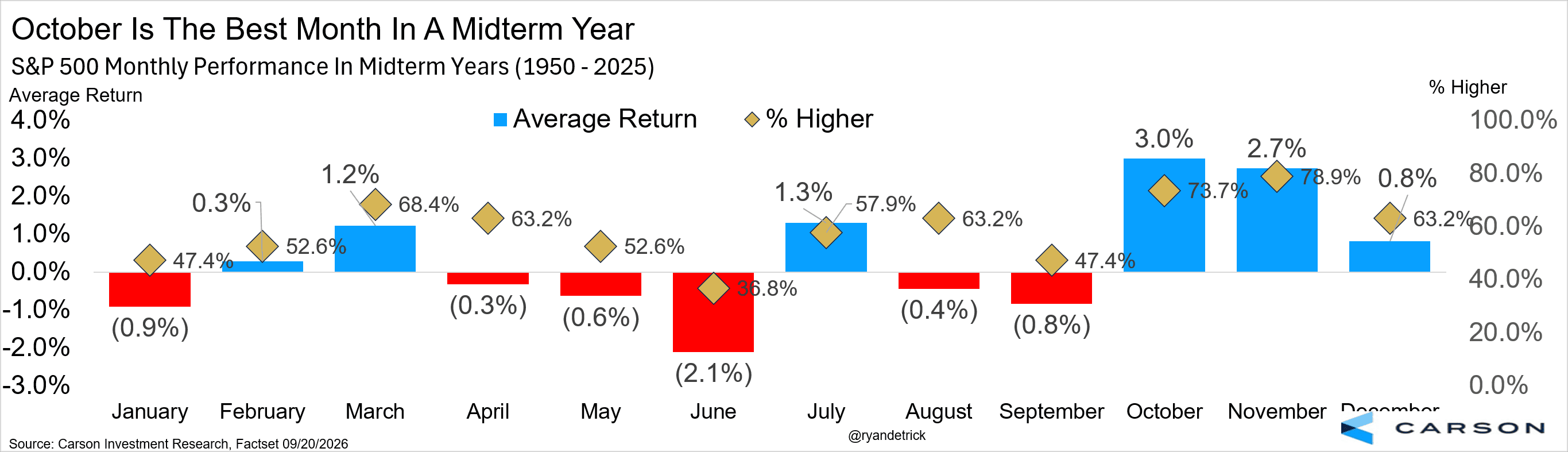
Historically, October has been the best month for stocks during midterm years. November has been the second best.
And we’re almost there.
The Fed raised rates for the first time in 3 years, lifting the target range by 25 basis points to 3.75% to 4%. That is the highest level since late 2025. The vote was unanimous at 12 to 0.
But not all rate hikes are created equal.
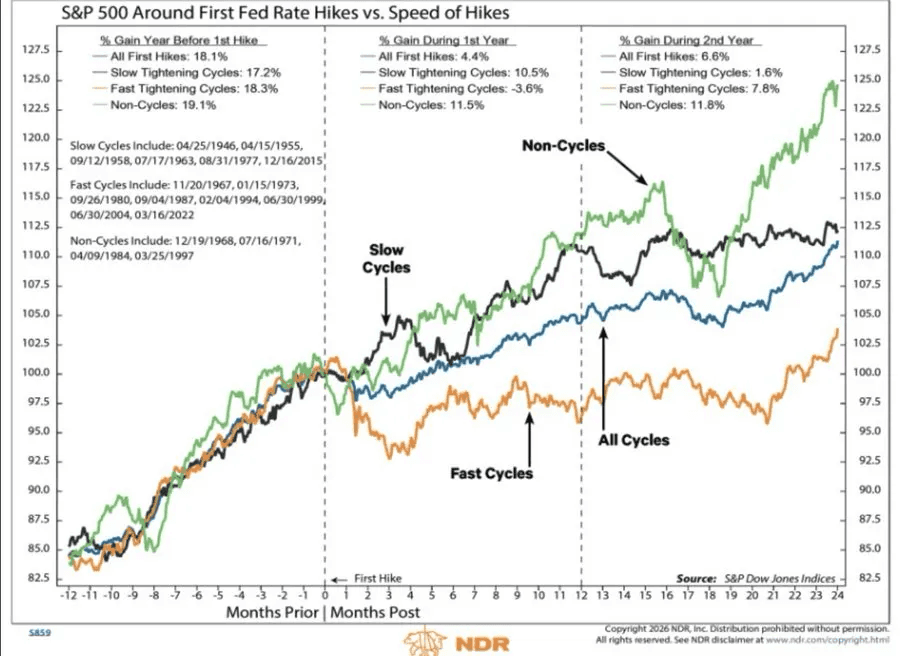
When the Fed raised rates quickly, stocks tended to struggle over the following 1 to 12 months. Faster tightening means borrowing costs rise quickly, financial conditions tighten, and companies have less time to adjust. Higher rates also put more pressure on valuations, especially in parts of the market where investors are paying more for future growth.
When the Fed increased rates gradually, markets were positive in almost every historical period. A slower pace gives the economy more time to absorb higher borrowing costs and usually means the Fed is under less pressure to crush inflation immediately.
That is why Wednesday’s 25 basis point hike is only the starting point. If this turns into a slow and controlled hiking cycle, the market will likely handle it. The next few inflation reports and Fed meetings will tell us which path we are on.
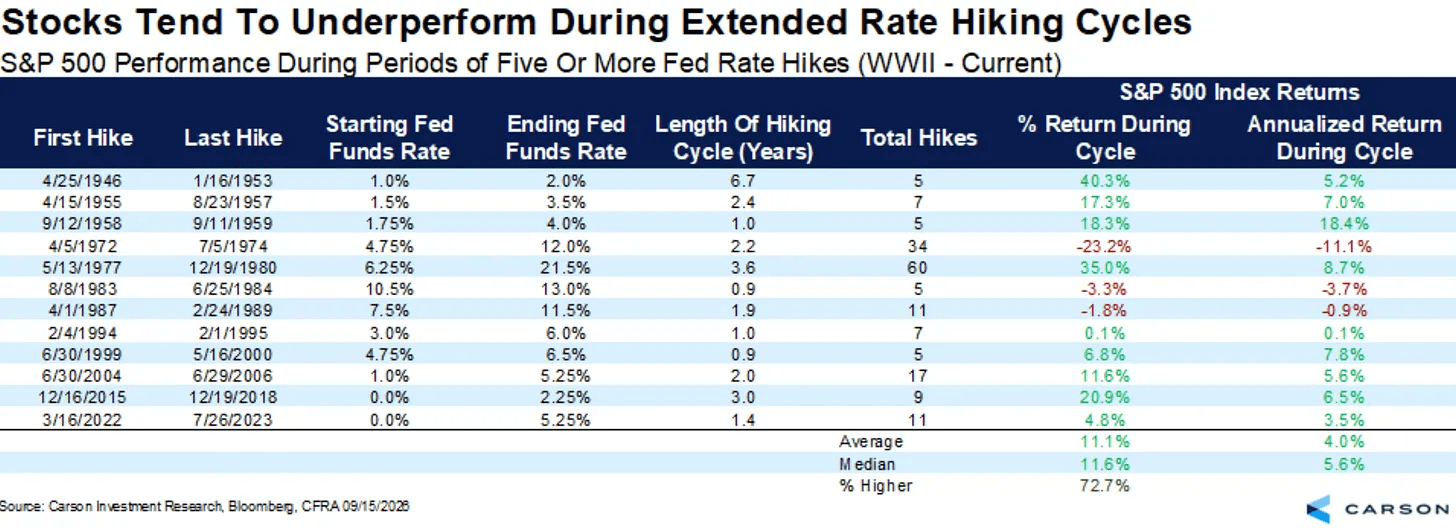
Since World War II, there have been 12 Fed hiking cycles where rates were raised at least 5 times. In most of those cycles, stocks still finished higher by the time the Fed was done tightening. So, higher rates do not automatically mean stocks have to go down.
The 10-year Treasury briefly moved above 5% last week and is now back just below that level.
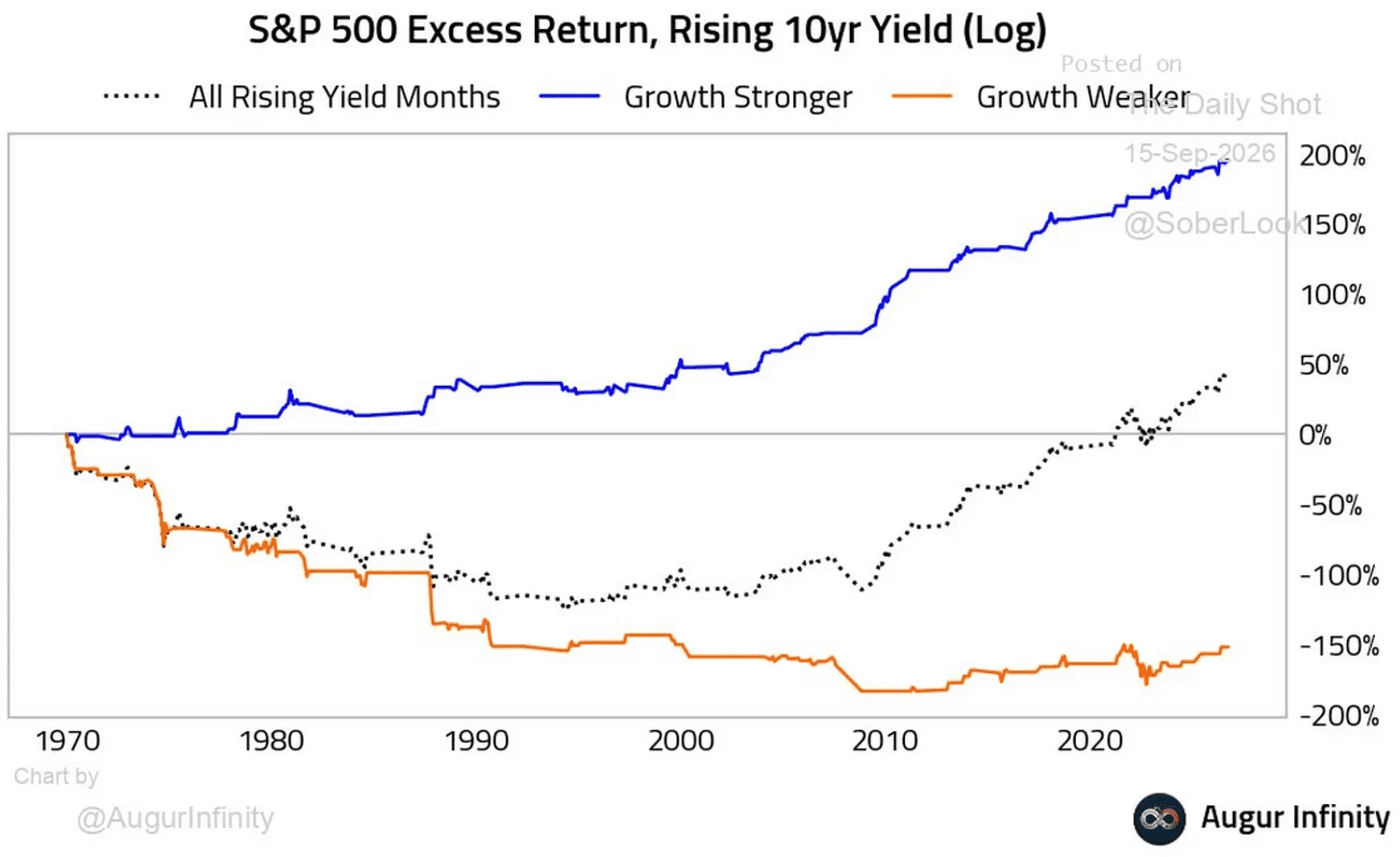
That sounds bad for stocks, but rising yields are not always a problem.
If yields are rising because the economy is strong, stocks can still do well. Companies are growing sales, earnings are improving, and that growth can help offset the pressure from higher interest rates.
The real problem starts when yields stay high while the economy begins to slow. Then companies get hit from both sides. Borrowing gets more expensive, while sales and earnings start losing momentum.
So, as long as we continue to see growth high yields shouldn’t be troublesome.
Sentiment has turned very negative.
We now have the highest number of bears in more than a year, while bullish sentiment has fallen to a 52-week low. In other words, investors have become much more cautious even though the market itself has held up relatively well.
When everyone is already expecting bad news, it’s pricing in a lot of the bad. And if the news starts getting even slightly better, there is a lot of room for sentiment to recover.

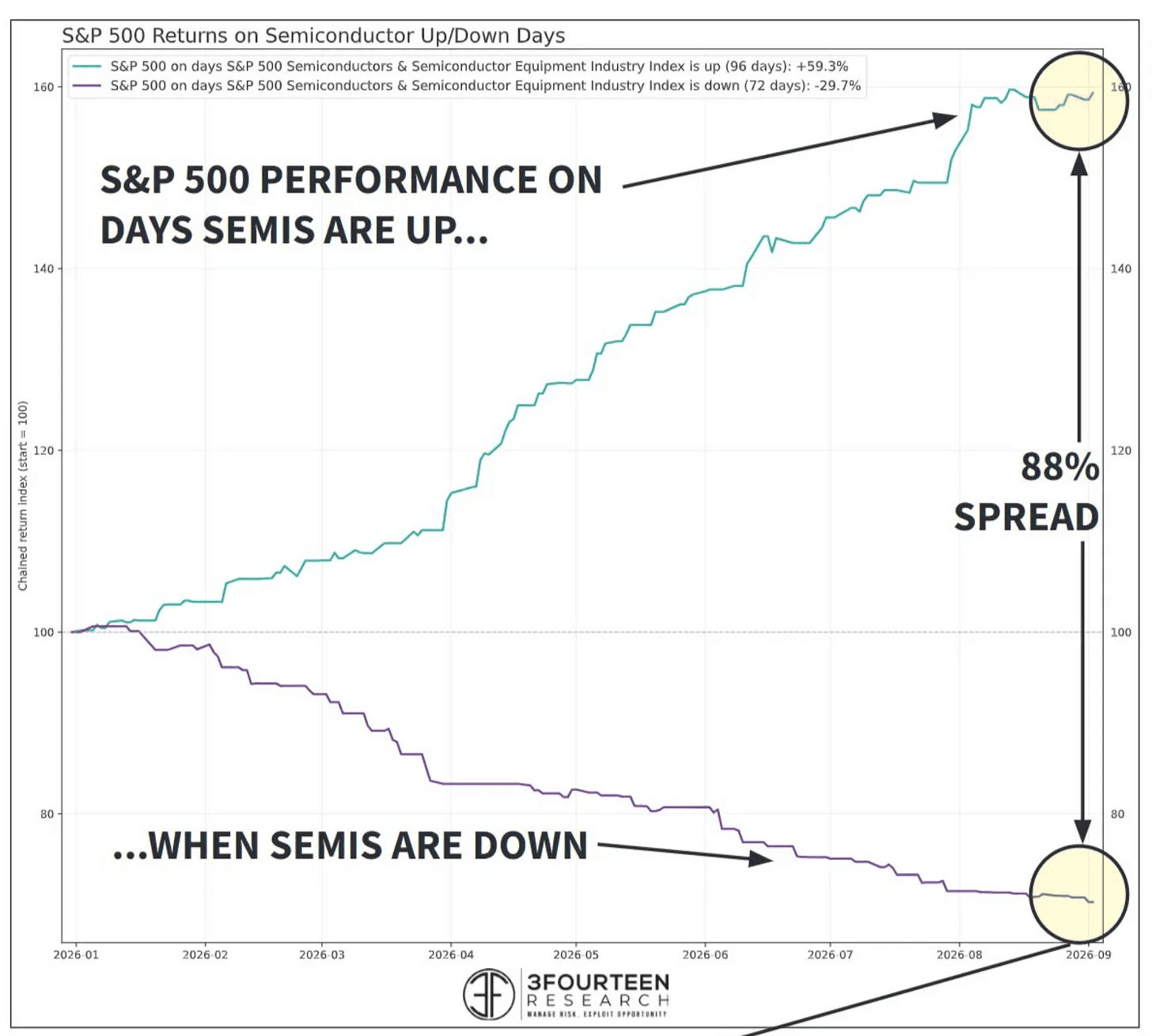
If the market wants to make new highs, semis and the AI trade will need to help lead the move.
No other sector has had that much influence on the market this year. On days when semis were up, the S&P 500 also did well. On days when semis were down, the S&P 500 struggled. The gap between those 2 groups of days is about 88%.
So semis are one of the most important areas to watch.
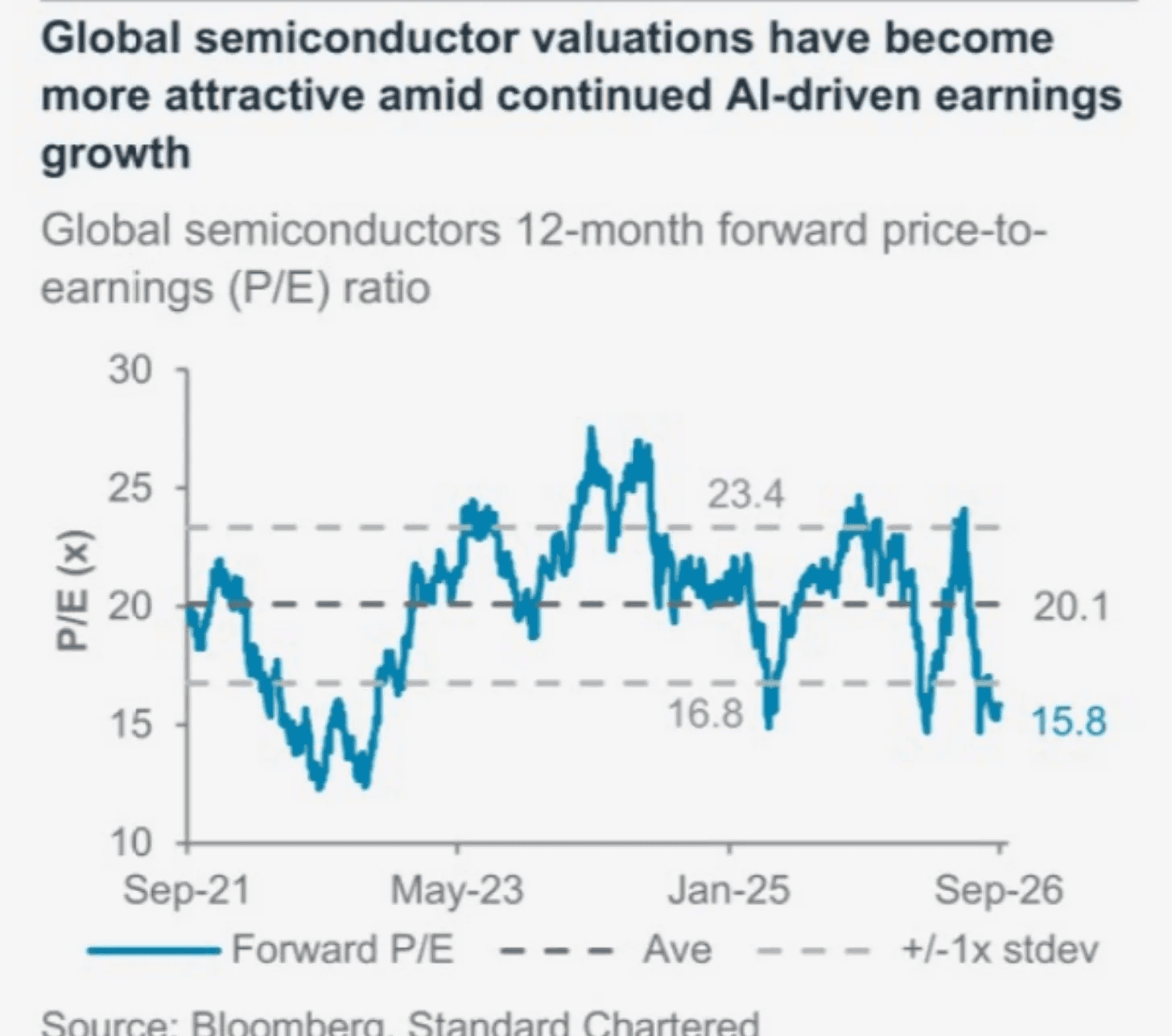
While most people were concerned about the AI bubble, semi stocks have become much cheaper.
Global chip stocks are now trading at around 15.8x forward earnings. That is close to the lowest valuation we have seen since the 2022 bear market.
So we now have a sector that has a huge impact on the broader market, while trading near multi-year lows on valuation.
There is a lot of room for valuations to recover.
The Consumer Isn’t Slowing Down
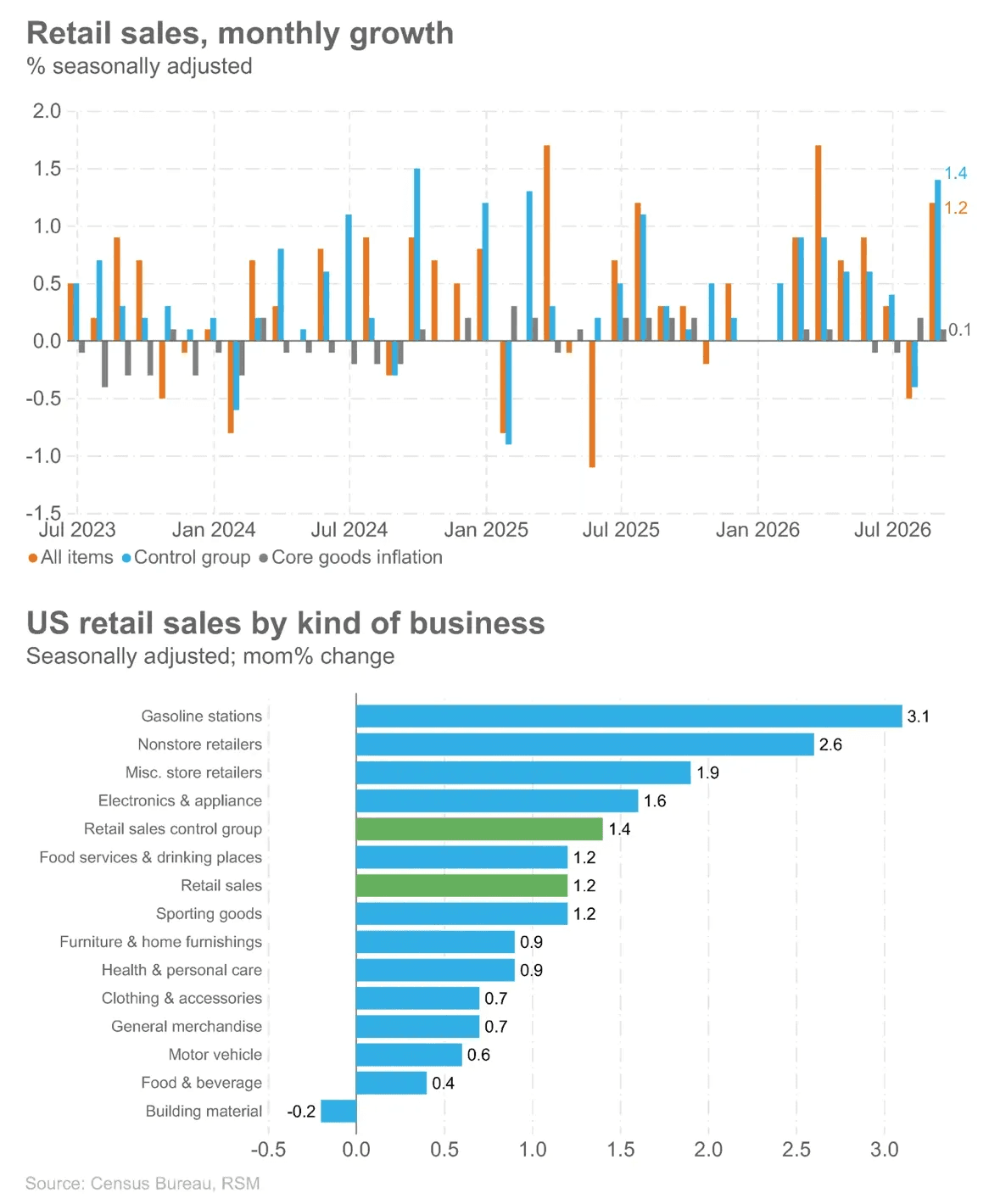
Retail sales came in much stronger than expected this week.
Sales rose 1.2% in August. More importantly, the control group, which feeds into GDP estimates, jumped 1.4%. That was the strongest reading since September 2024.
12 of the 13 major retail categories saw higher spending. Gas stations led the gains, while building materials was the only category that declined.
Some of the increase came from higher prices, but most of it came from people actually spending more. So despite higher rates, higher energy prices and weaker sentiment, the consumer is still holding up.
This was a surprisingly constructive week.
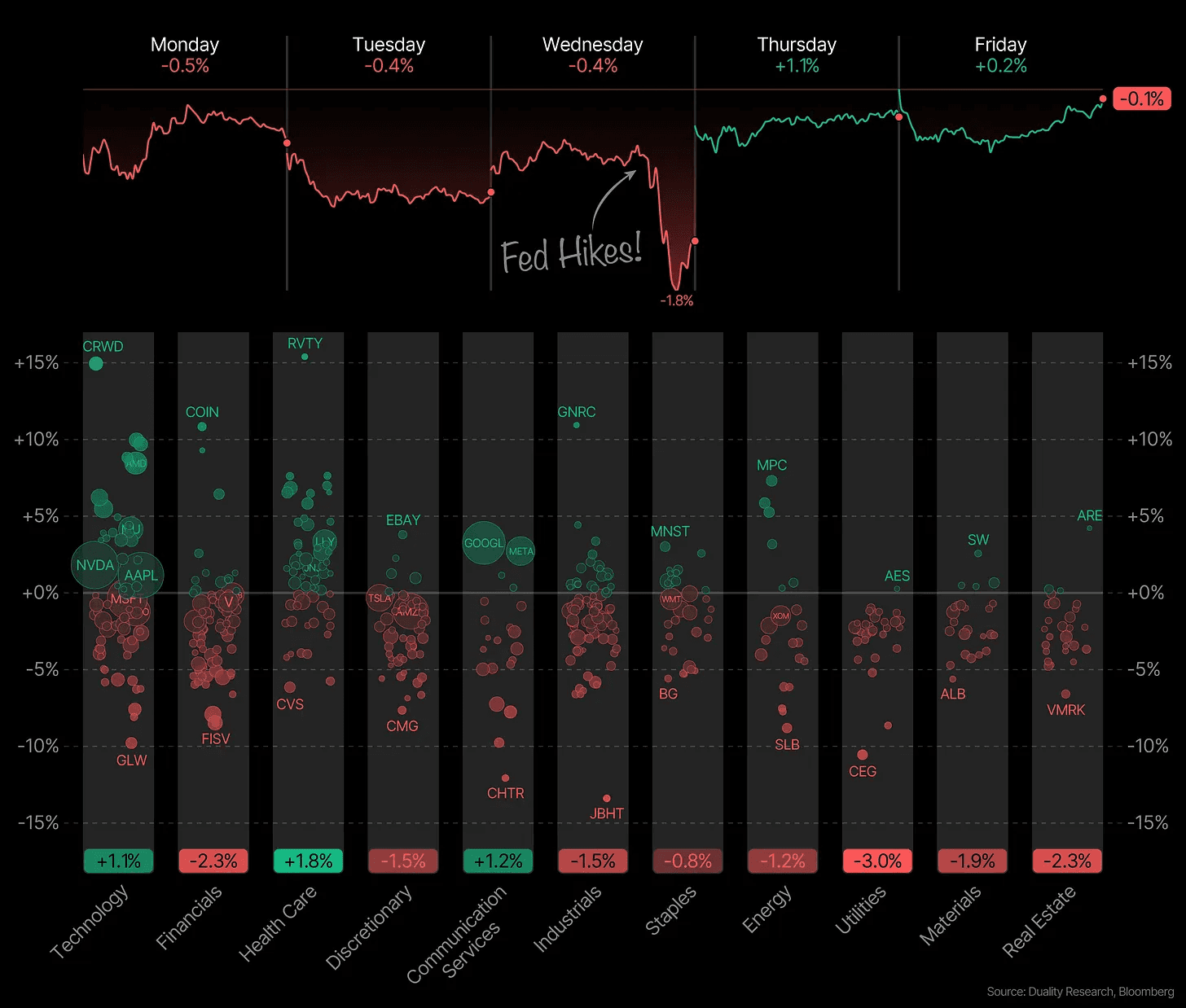
The Fed raised rates for the first time in 3 years. Oil and yields remain high. The war with Iran is still unresolved. Inflation is hot. Questions around AI spending came back. Yet the major indexes are still holding up.
The market has had plenty of reasons to break lower. It simply hasn’t.
Oil is high. Yields are high. The Fed just hiked. Inflation remains a problem. The Iran war continues. AI spending has been questioned. Sentiment is poor. Breadth has weakened. Funds have been raising cash.
The indices continue to hold important levels, and underneath the surface I’m seeing strength across software, healthcare, crypto and AI.
Semis and AI remain some of the key focus areas.
Semis have spent more than 2 months consolidating. After that much sideways movement, the eventual breakout could be important. If semis start leading again, it would also finally answer one of the biggest questions hanging over this market: That the AI trade is not slowing down.
If all of those problems are already known and they still cannot push the market meaningfully lower, then a lot of the bad news may already be priced in.
Now think about the other side.
What happens if oil starts falling? What happens if yields follow it lower? What happens if we get real progress toward ending the Iran war?
I strongly believe one of the best signals at major turns is when the market stops reacting the way you would expect.
When good news cannot push stocks higher, that can be a warning. When bad news cannot push stocks lower, that can be a sign that sellers are running out.
Right now, we are seeing a lot of the second one.
The negatives are obvious. Everyone knows about the Fed, oil, yields, Iran, inflation and AI spending concerns.
I don’t know exactly when the next move starts. But price is telling me there is no reason to get defensive yet.
If the market starts to finally break out and move higher, investors will eventually have to put money back to work. And when a lot of underexposed investors have to get exposed at the same time, they become fuel for the move.
Previous Updates
View All
- Weekly Market Update: Rate Hikes
- Weekly Market Update: AI is Not Slowing Down
- Market Update: Has AGI Arrived?
- Weekly Market Update: Consolidation
- Weekly Market Update: September is Here
- Market Update: Nvidia Crushes Earnings
- Weekly Market Update: Yields
- Market Update: The Future of Biotech
- Weekly Market Update: Earnings Acceleration
- Market Update: The Next Generation of AI Infrastructure
- Weekly Market Update: New Highs
- Market Update: Nvidia’s Way Around Memory
- Weekly Market Update: LTCM 2.0