Go Back

Lin
Weekly Market Update: New Highs
One of the biggest lessons from the recent Nasdaq pullback of more than 11% is that there’s a time and place to be aggressive.
If you burn through your capital, or your confidence, during every pullback, you won’t have much left when the market finally gives you a real opportunity to be aggressive.
The S&P 500 has now posted 2 green weeks in a row, including its best week since April. It hit 2 new all-time highs this week, its 25th and 26th of the year, and closed at a record for the first time since June 2.
The strength was broad too. The Nasdaq gained 4.7%, the Russell 2000 rose 3.2%, and the Dow finished up 1.8%. Gold jumped 8.7%, its strongest week since January, even while stocks ripped higher.
A lot of the extreme leverage that built up during the previous run has already been flushed out. As much as it hurts individually that is what the market’s have always done and will always do.
But there’s another lesson in all of this.
People underestimate how many times you can fail in markets and still become very successful in the end.
Many of the greatest traders and investors struggled for years before they really figured out what worked for them. Lawyers and doctors spend years studying before they’re trusted to do their jobs. Trading is no different. Your losses, mistakes, and bad decisions are often the tuition you pay to learn the game. Failing is part of the game.
The goal is to survive long enough to learn from them.
It takes time. This game is a marathon, not a sprint.
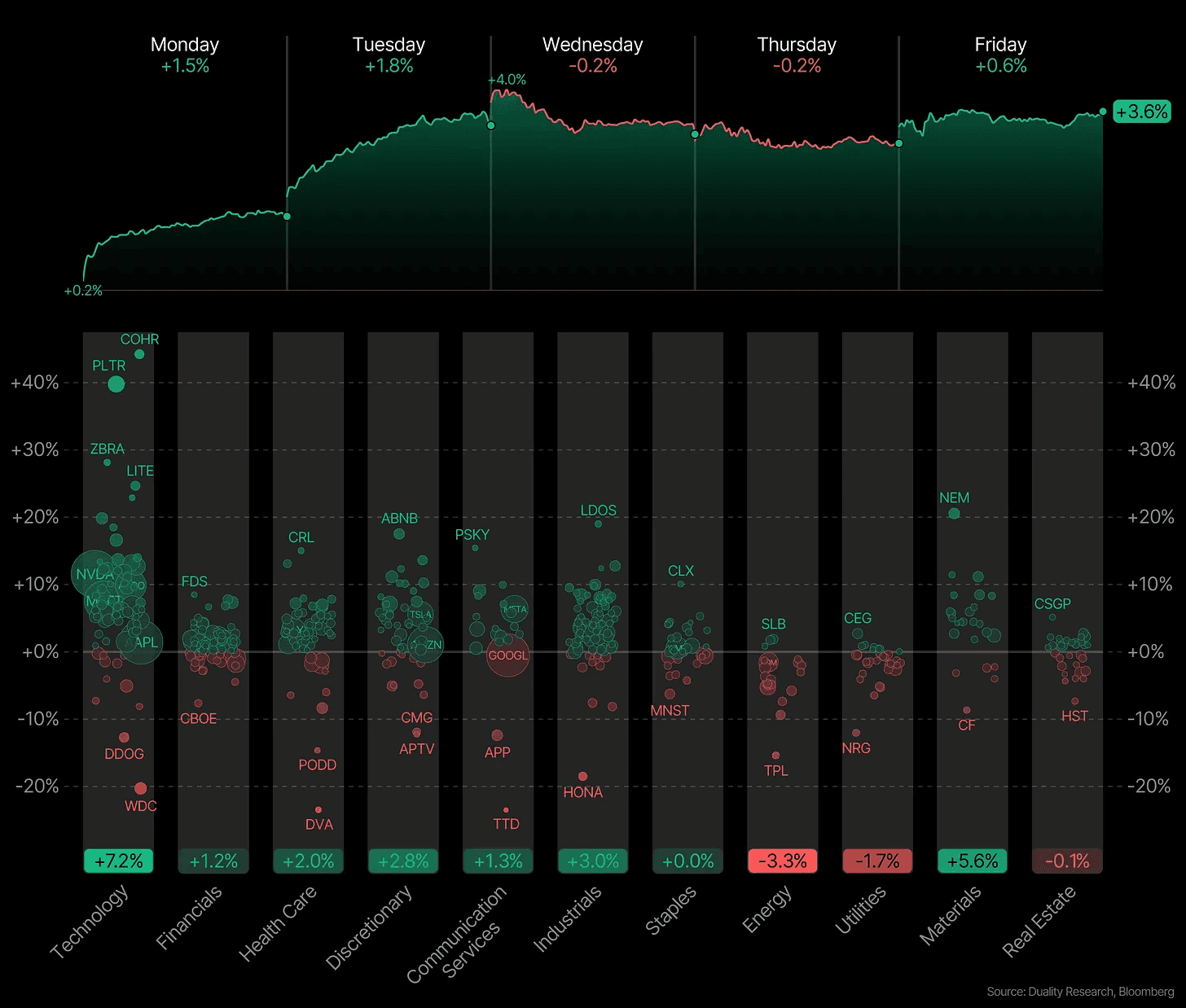
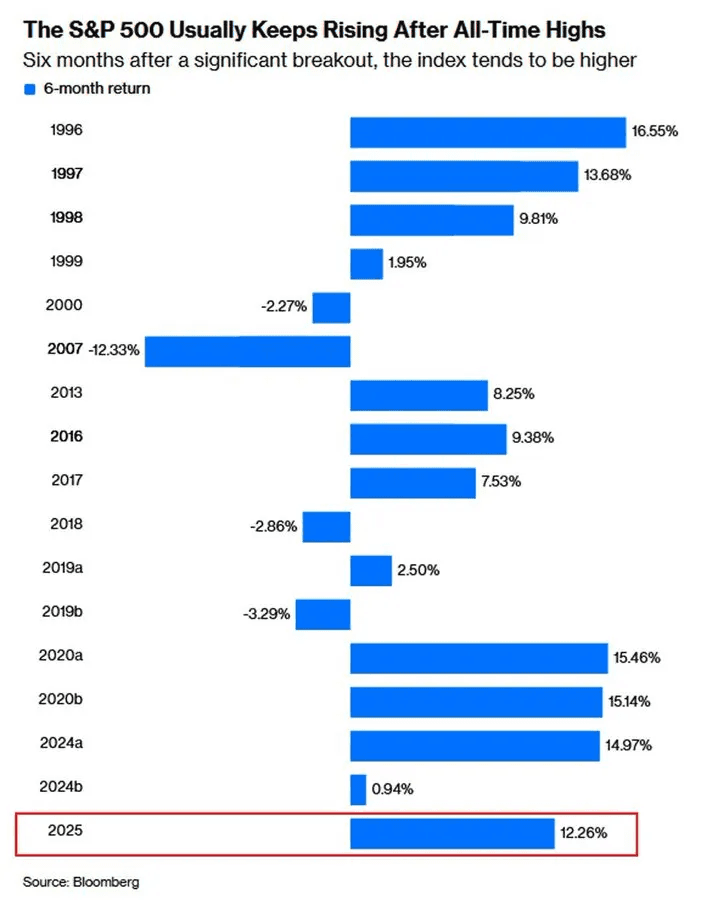
So, we’ve got new all-time highs for the S&P 500. And ATHs are one of the most positive signals in the market. It means the market has fully recovered the entire pullback and investor demand were strong enough to push through the previous peak.
Now, there is very little overhead resistance, momentum strategies start leaning more bullish, and investors who stayed in cash during the correction start feeling pressure to chase the move.
New highs also tend to cluster, because strong markets usually keep making more highs until something actually breaks the trend.
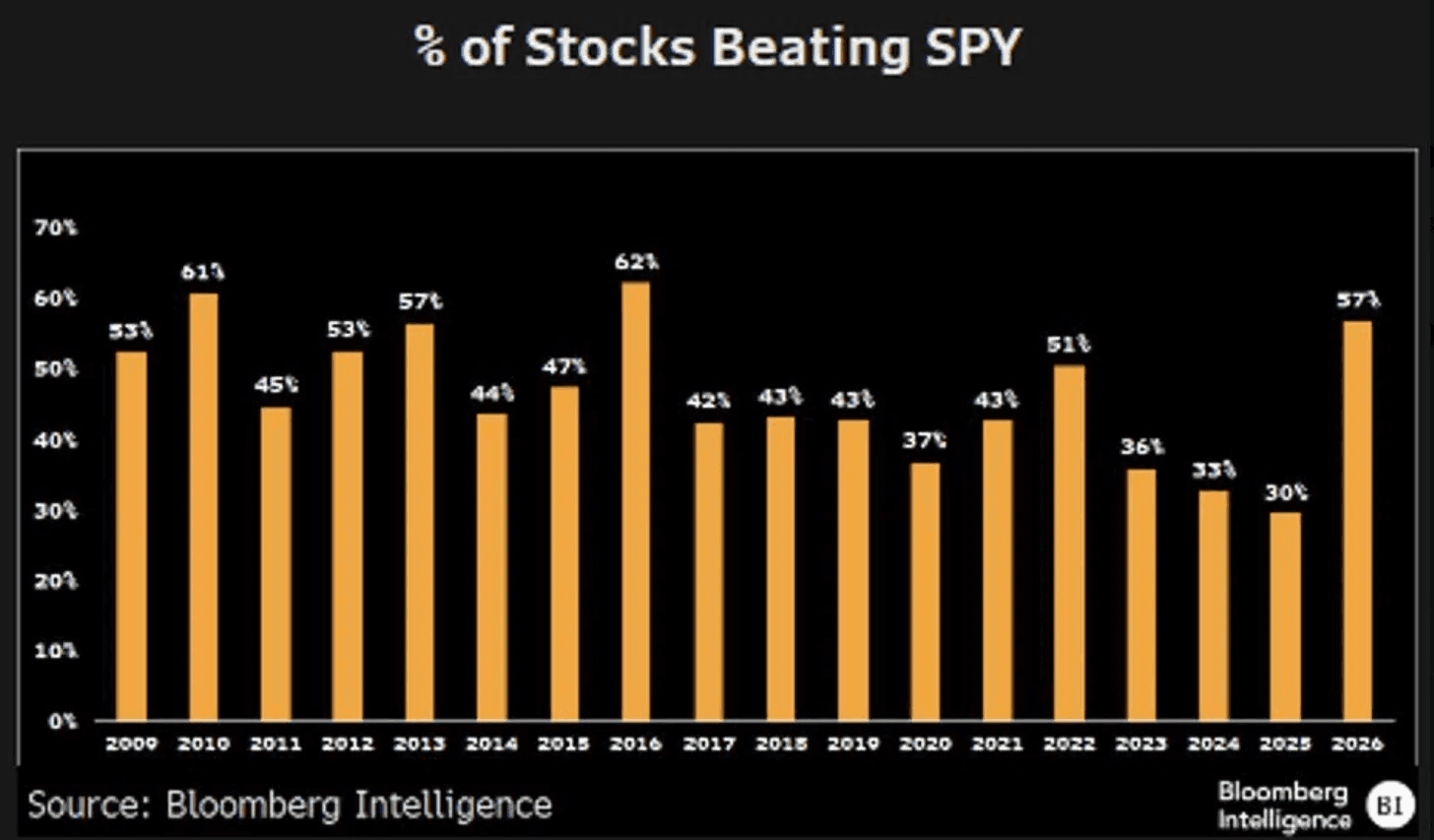
Breadth backs this up too.
57% of S&P 500 stocks are outperforming SPY this year, versus just 30% in 2024 and 33% in 2025. This rally is not being carried by a small group of mega-cap winners. Broad participation makes the market much more resilient. Because weakness in a few large stocks can be absorbed by strength elsewhere, more sectors start contributing to earnings and price momentum, and institutional flows have a much larger set of stocks to rotate into instead of simply leaving the market.
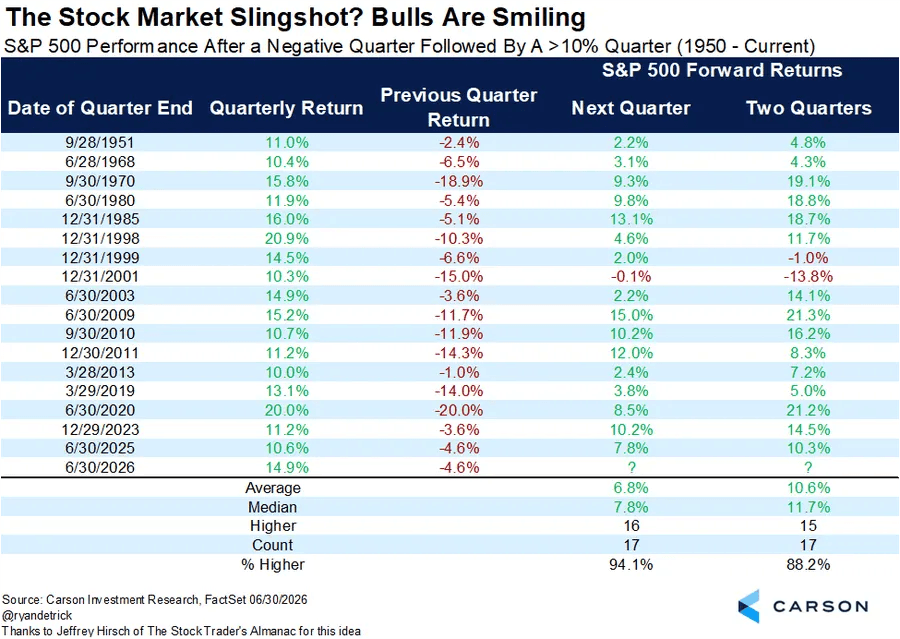
Here’s an interesting stat for the next quarter.
When the S&P 500 has followed a negative quarter with a gain of more than 10% like we just saw, the momentum tends to continue. Historically the index went on to finish the following quarter higher 94% of the time with an average gain of 6.8%.
That momentum crash we saw in July is probably exactly the kind of reset this market needed.
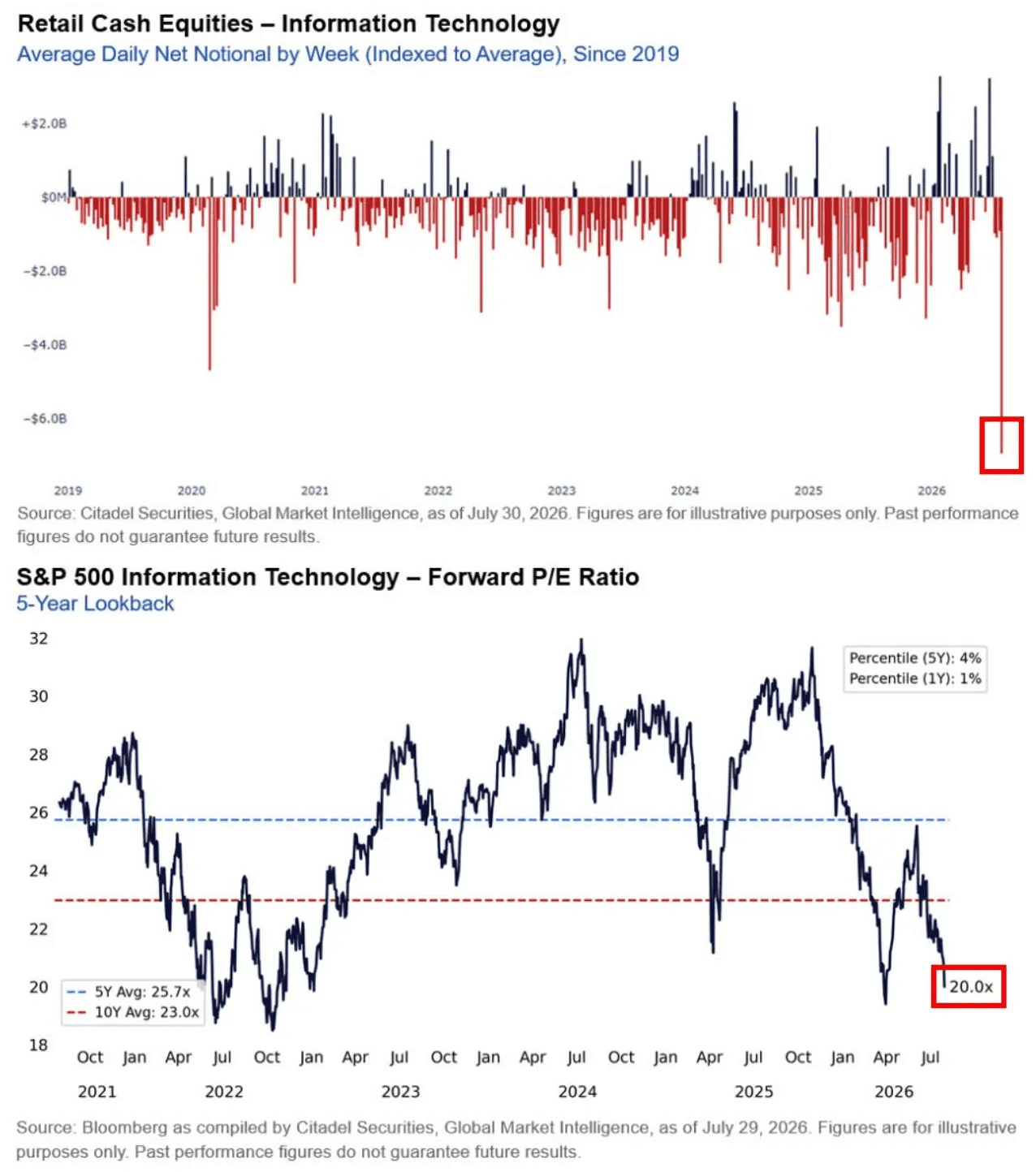
You can see the unwind directly in the flows too. Retail investors were dumping information tech right into the dip and it was a pretty big move. At the same time tech’s forward P/E came down hard as prices fell. That’s exactly what you want to see in a proper reset. People were actually selling and valuations getting cheaper.
It was the largest week of retail equity selling since in years.
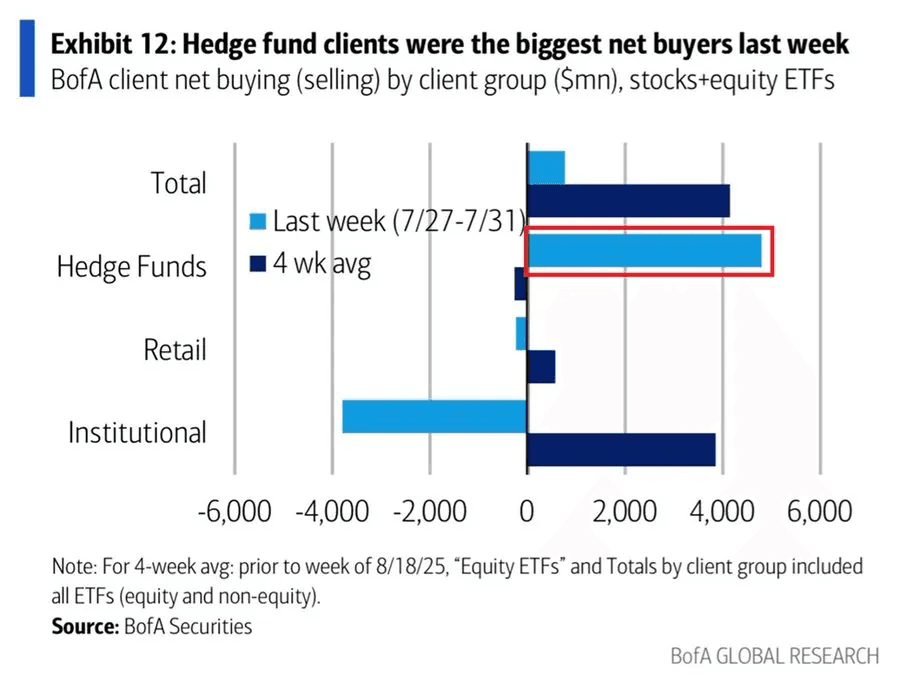
As retail headed for the exits, hedge funds were doing the exact opposite. They bought tech at the fastest pace since December 2022. In just 1 week, hedge fund flows into tech went from record outflows to record inflows. That’s a massive shift in positioning and shows how quickly institutional investors stepped in. This is the main reason we’ve seen such a large rebound in many deeply oversold sectors.
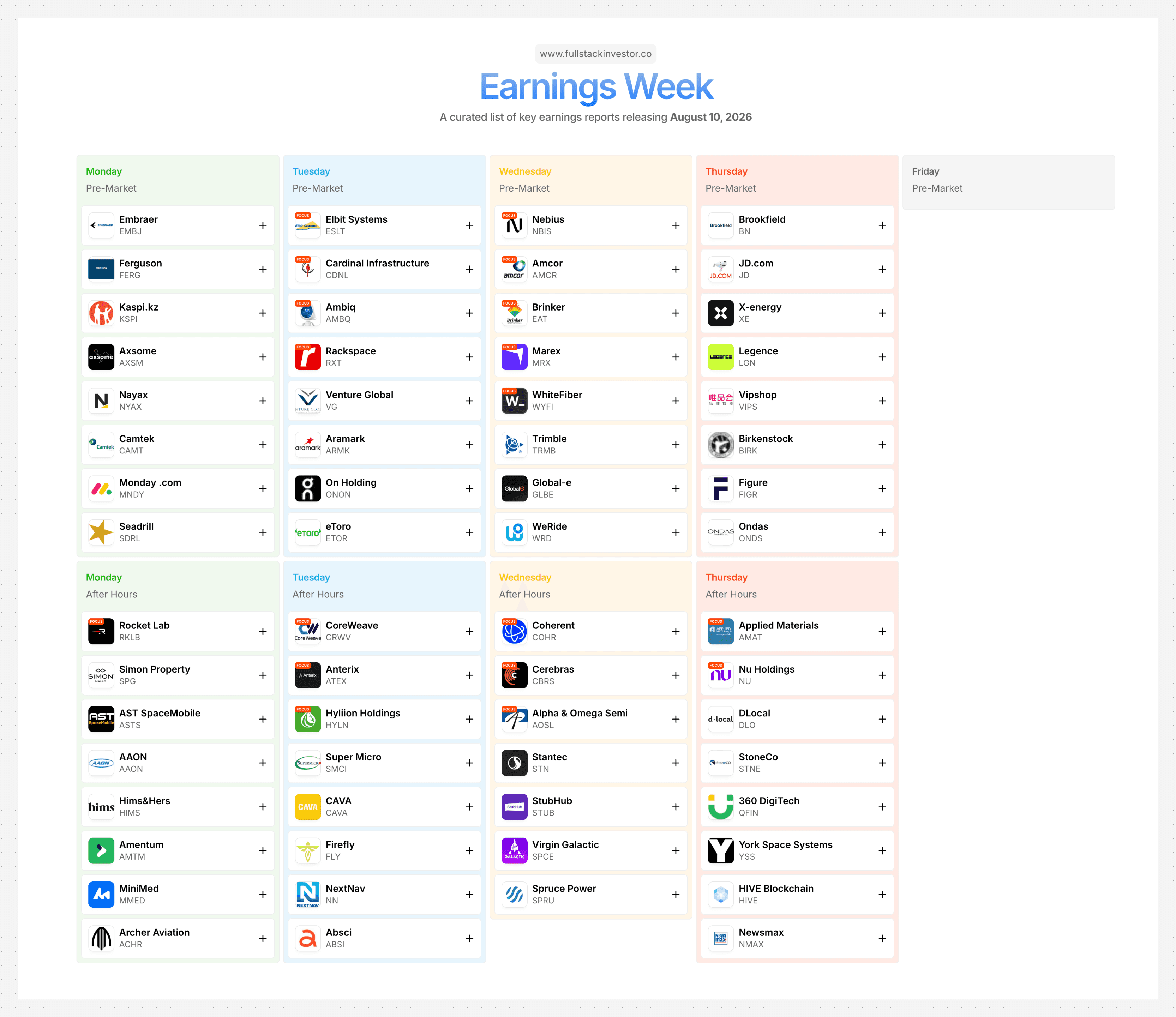
Earnings season is almost over and so far this has been very positive.
Nearly 90% of S&P 500 companies have now reported.
Q2 EPS is tracking around +30% YoY excluding investment mark-ups from Alphabet and Amazon.
That is way above the +22% growth expected at the start of July.
EPS growth jumps to nearly +50% YoY.
76% of companies have beaten EPS expectations.
All in all, earnings are coming in much stronger than expected.
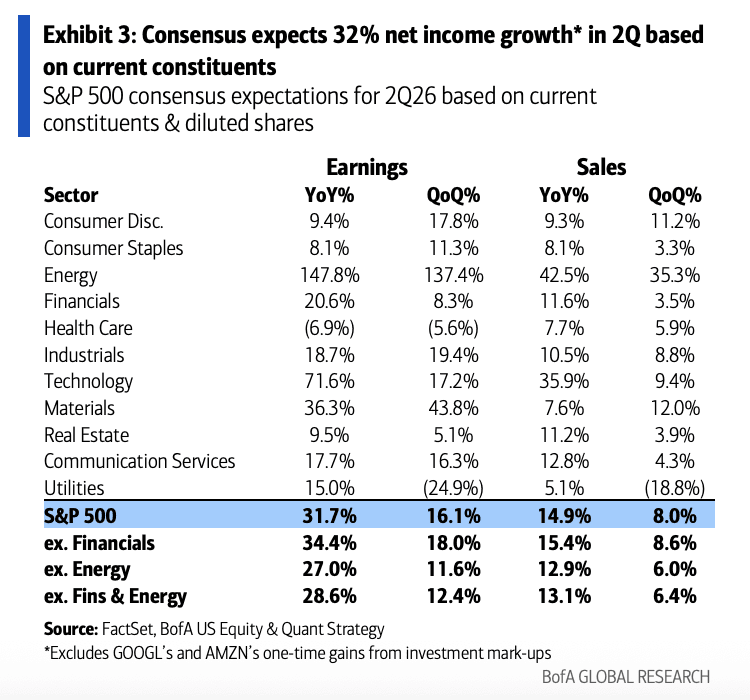
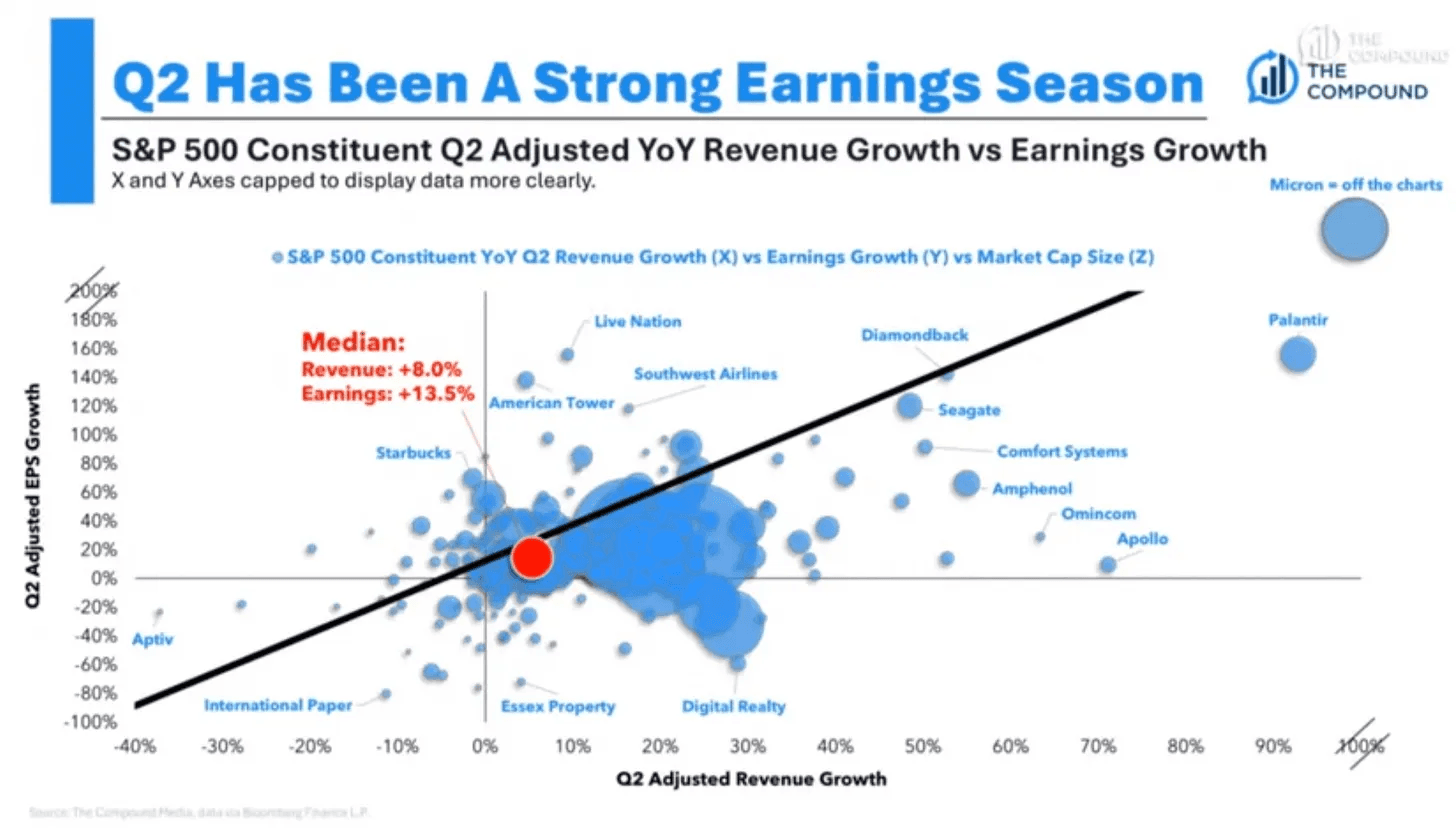
And what’s interesting is that earnings growth is running ahead of revenue growth across a wide range of sectors.
AI is helping almost every sector to turn relatively modest revenue growth into much stronger earnings growth. Margins are improving and companies are getting more efficient.
There are only a few important earnings reports left. And of course Nvidia is still missing which is scheduled for August, 26th.
On the macro side we just had the latest jobs report.
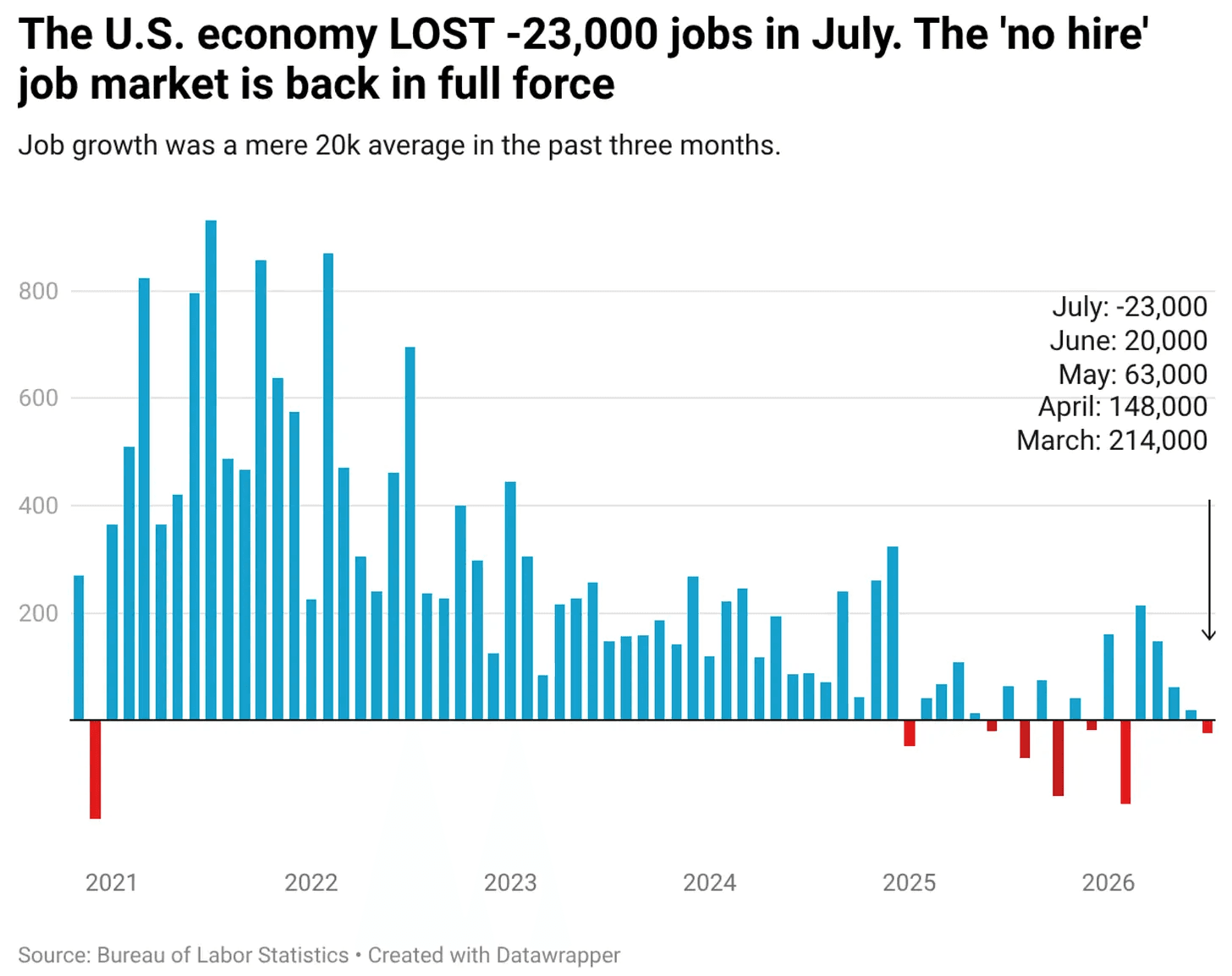
July payrolls were much weaker than expected and previous months were revised lower again. The unemployment rate fell, but mainly because more people left the labor force. Hiring is slowing fast and the labor market is losing momentum.
Though, the positive is that it gave the market another reason to believe the Fed can stay on the sidelines.
The big picture looks a lot healthier than it did a few weeks ago.
After months of consolidation and a pretty violent shakeout in AI and tech, the major indexes are starting to look like they want to begin another leg higher.
When an index spends months going sideways and then finally breaks out, the move that follows can be very powerful. Think of consolidation like a coiled spring. The longer price gets compressed, the more energy builds up. Once that range finally breaks, the move can accelerate fast.
We saw the opposite earlier this year. The market spent months consolidating, broke down, and the move lower was aggressive too. Now we may be seeing the same setup resolve in the other direction.
And the action in individual stocks supports it.
The biggest change I’m seeing right now is that leadership is starting to broaden. Tech is coming back to life. Software is acting extremely well. AI stocks are doing alright again.
That’s very different from the last few months when strength kept rotating from one area to another.
There are also simply a lot more interesting names today than there were 2 weeks ago. A few weeks back it felt like a struggle to find anything worth trading. The goal was just to survive the volatility and protect capital.
That is starting to change.
Now there are a number of stocks standing out at the same time. Software and cybersecurity are one of the key focus groups right now. When an entire group starts acting like this after months of weakness, you have to pay attention. Some of the best opportunities often come from the stocks that come out of a correction with the strongest relative strength, hold near their highs, and refuse to make new lows with the market.
There are still some things to keep in mind on the downside. A lot of beaten-down AI names still have overhead supply and many of the previous leaders will likely not outperform again for a while. Also a major escalation with Iran or another unexpected catalyst could obviously change the setup quickly.
It’s impossible to know what will happen next. But whether we go higher, lower, or sideways, the default stance has shifted back toward the upside. Still there is no point in rushing things, and it’s best to adjust gradually and not all at once.
Previous Updates
View All
- Weekly Market Update: Rate Hikes
- Weekly Market Update: AI is Not Slowing Down
- Market Update: Has AGI Arrived?
- Weekly Market Update: Consolidation
- Weekly Market Update: September is Here
- Market Update: Nvidia Crushes Earnings
- Weekly Market Update: Yields
- Market Update: The Future of Biotech
- Weekly Market Update: Earnings Acceleration
- Market Update: The Next Generation of AI Infrastructure
- Weekly Market Update: New Highs
- Market Update: Nvidia’s Way Around Memory
- Weekly Market Update: LTCM 2.0