Go Back

Lin
Weekly Market Update: LTCM 2.0
Did we just see the AI version of the LTCM blowup from 1998?
Back then, Long-Term Capital Management, one of the most famous hedge funds in the world, nearly collapsed after making huge leveraged bets that suddenly moved against it.
The Situational Awareness blowup was obviously much smaller, but is very similar.
The portfolio was very concentrated, a lot of people were following the same trades, and those trades had become crowded. Once the market corrected, leverage made the losses worse and he was forced to liquidate his positions and sold everything to Citadel.
Now, over the past few weeks, a lot of excess leverage and speculation was flushed out of AI stocks, which makes a bottom very clearly. Of course, there are no guarantees that the bottom is definitely in. But if this was the final washout and the AI trade starts moving higher again, there will be tons of opportunities ahead.
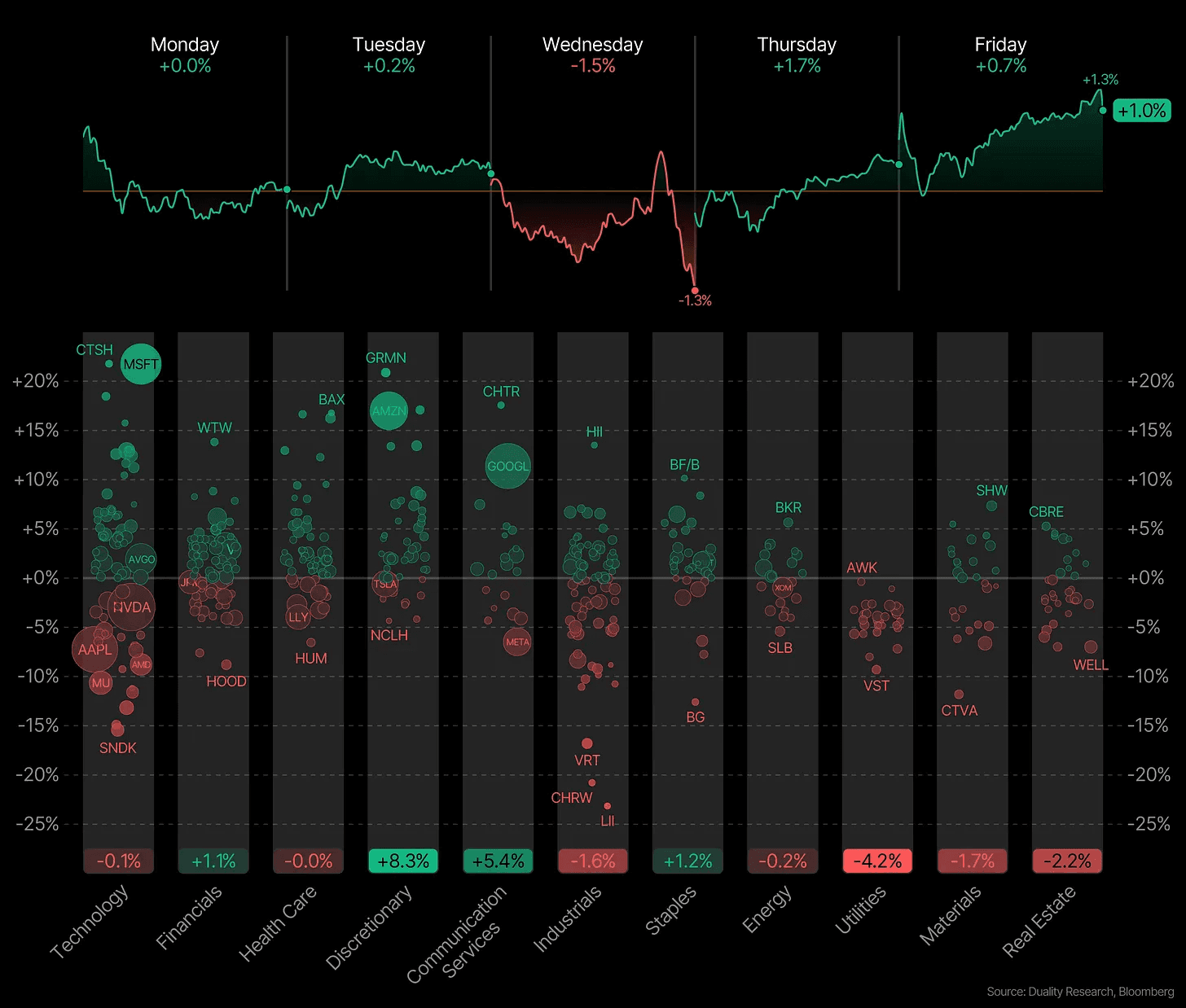
This is pretty insane.
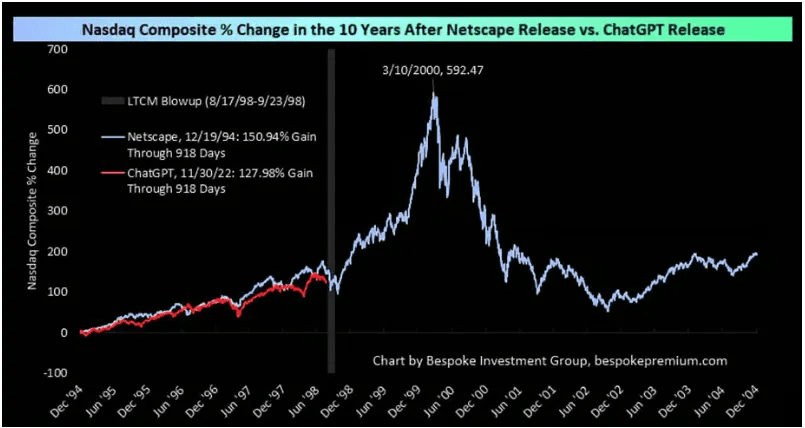
LTCM mainly used leveraged relative-value trades across bonds, currencies, derivatives, and other markets. It nearly collapsed in September 1998 after Russia’s default and the wider market panic caused its trades to move sharply against it. A group of 14 financial institutions put up $3.6 billion so its positions could be unwound in a controlled way. The Federal Reserve helped organize the deal but did not directly fund the rescue.
After the Nasdaq bottomed during the LTCM crisis in October 1998, it went on to rise around 250% before the dot-com bubble peaked in March 2000.
It would be kind of poetic to see the same thing happen again. As the saying goes, history does not repeat itself, but it often rhymes.
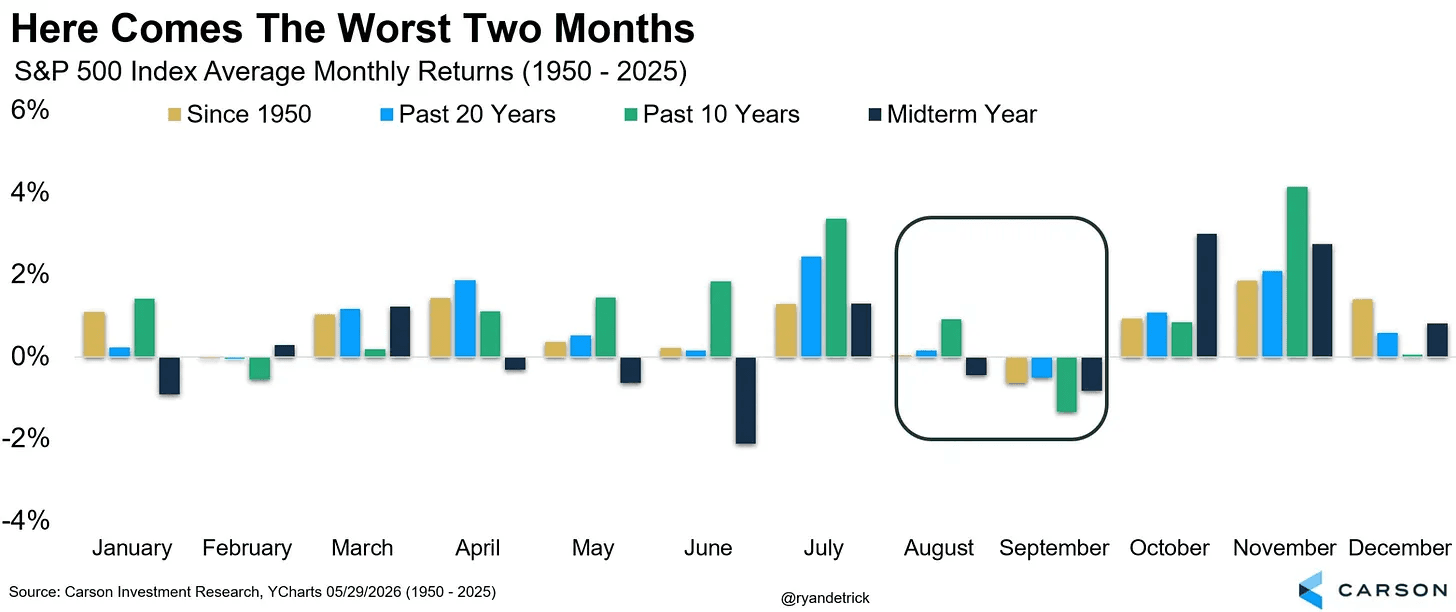
August and September have a long history of being rough months for the market.
September has been especially weak over the long run. August is less consistently bad, but it has still produced plenty of volatility and sharp pullbacks. But then we’re moving into the absolute best period in the markets and the final quarter of the year.
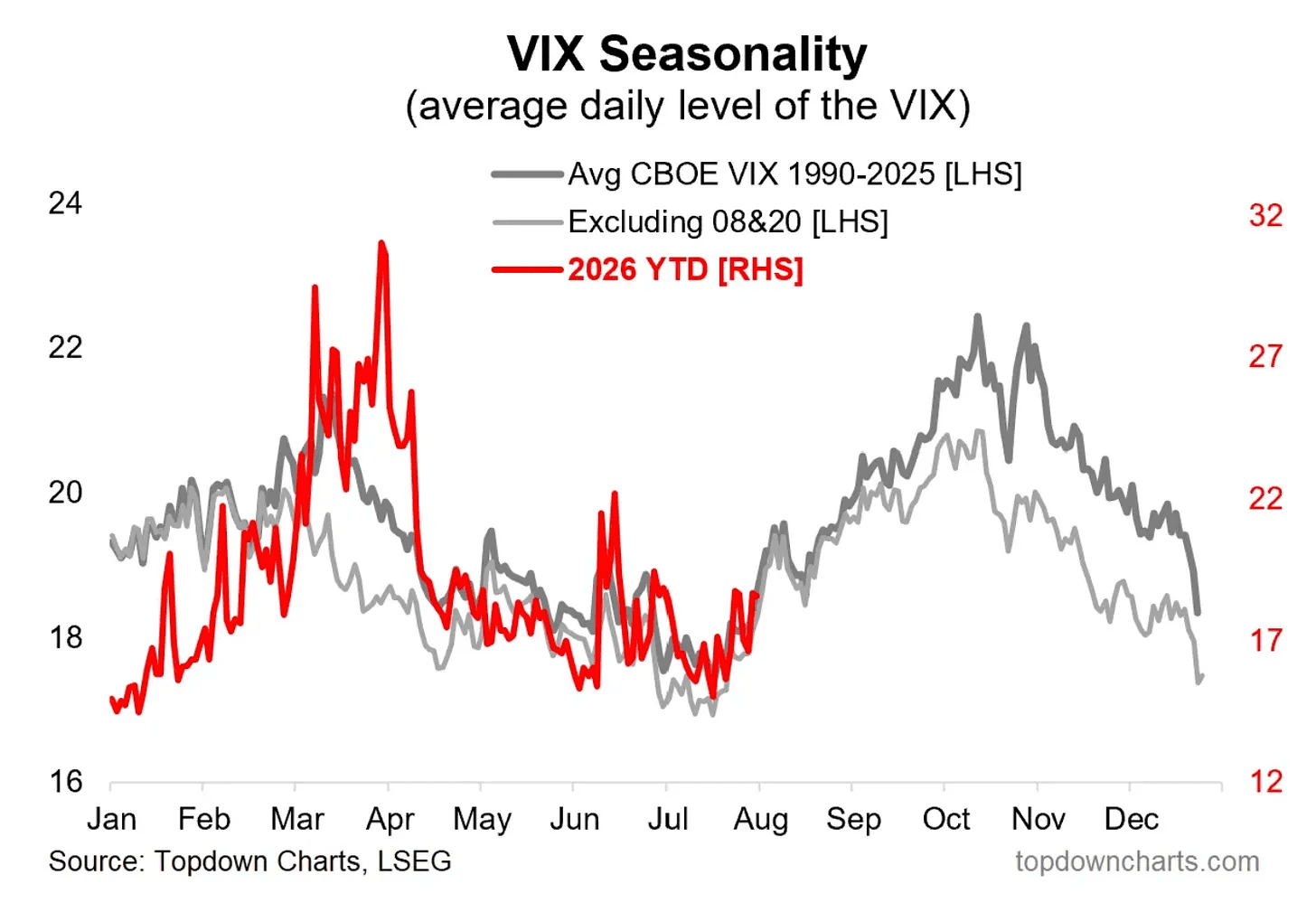
Trading volume often drops during the summer, which means fewer buyers and sellers are active. That can make price moves faster and more random. Stocks can chop around for weeks, break out and quickly fail, or suddenly drop on news that normally would not cause such a big move.
If you only followed the headlines, you would probably think the market is barely holding together. In reality, the S&P 500 is just below its all-time high, despite all the fear around AI stocks, semiconductors, oil, inflation, and geopolitics.
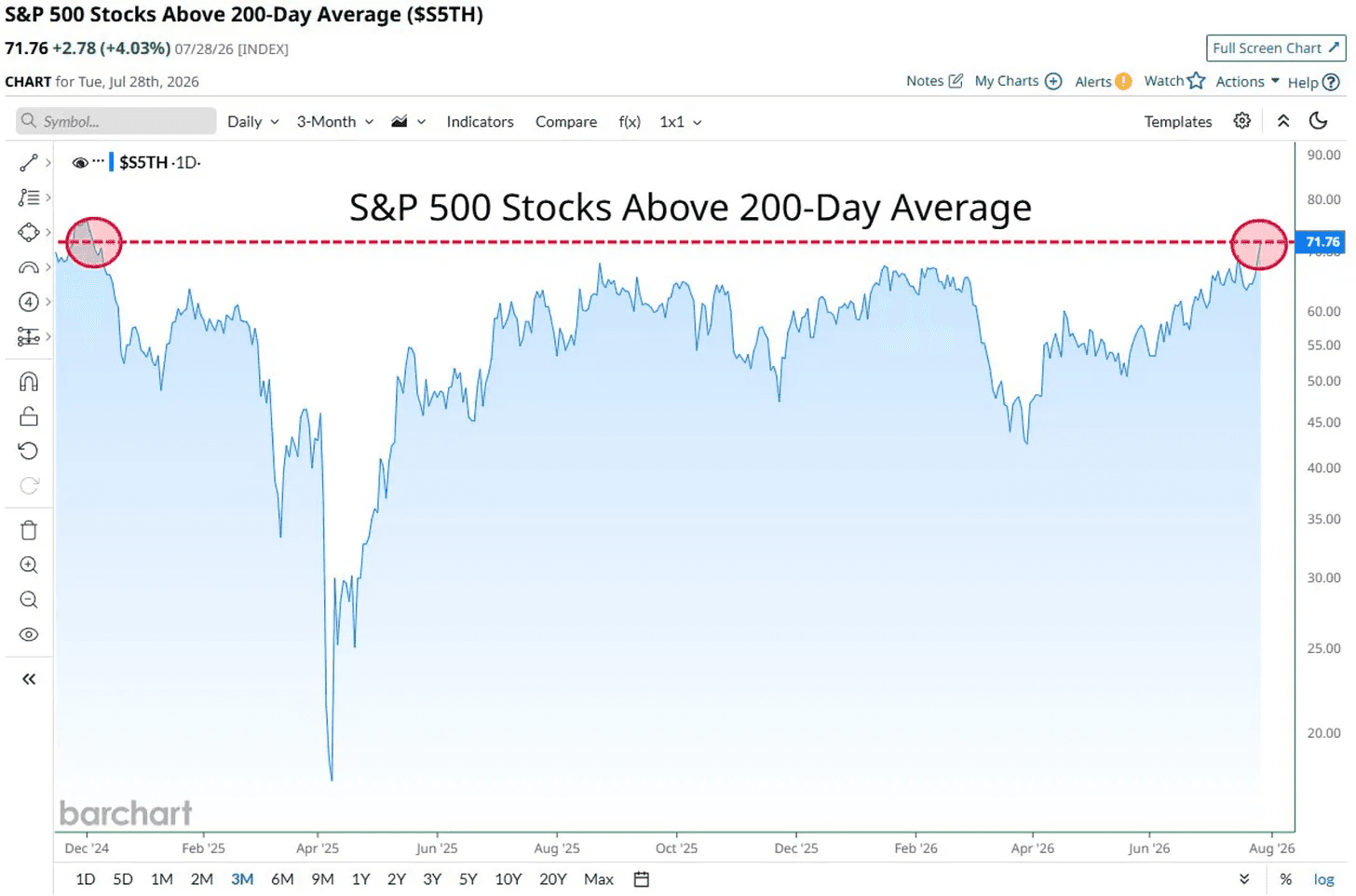
Around 72% of S&P 500 companies are now trading above their 200-day moving average. That is the highest reading since December 2024.
Most of the damage has been concentrated in tech, semiconductors, AI stocks, and other high-risk momentum names. But the weakness has not spread across the whole market.
So far, this looks more like a major reset in one crowded part of the market than the start of a full market breakdown.
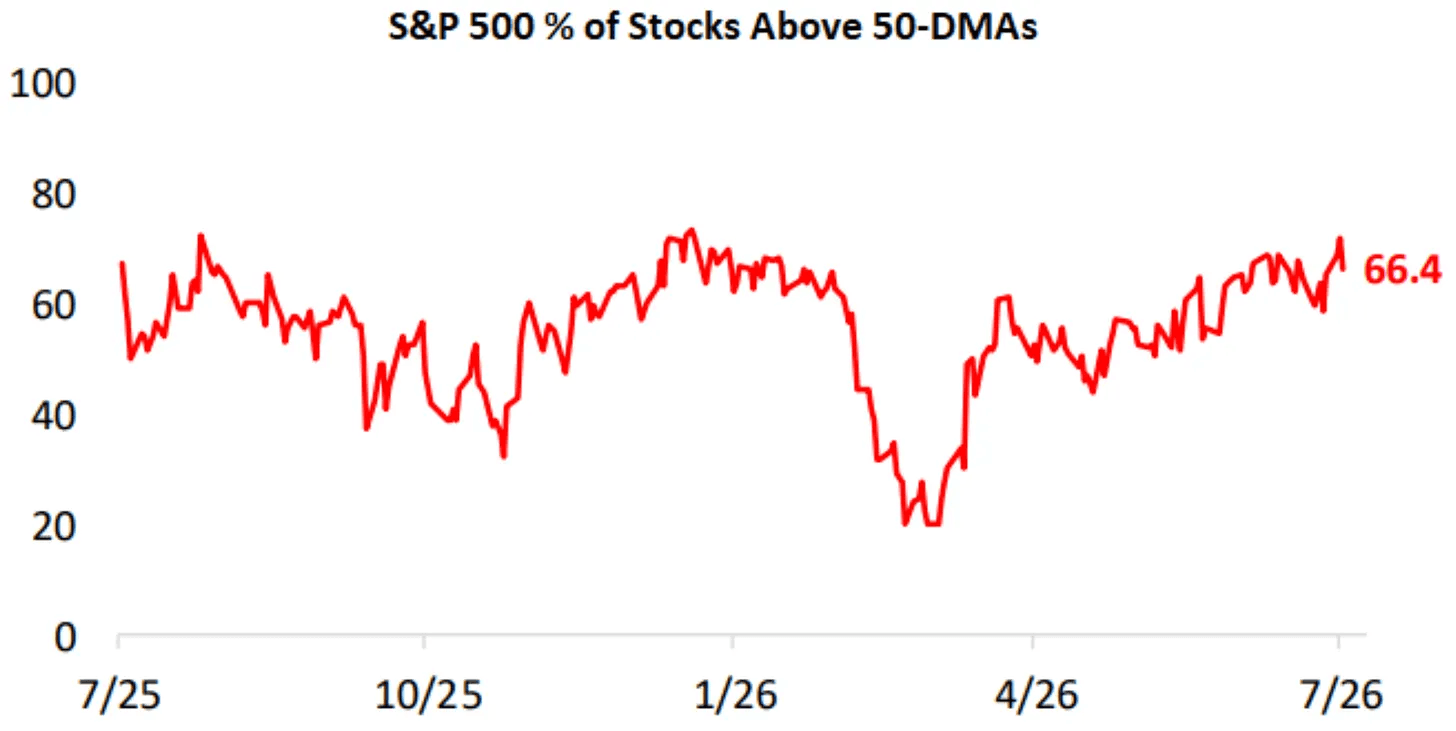
Despite everything that has happened over the last few months, more then 2/3 stocks in the S&P 500 are still trading above their 50-day moving average. This is not what you normally see at the start of a broad market breakdown. In a truly weak market, selling spreads across nearly every sector and most stocks fall below their key moving averages. We are not seeing that right now.
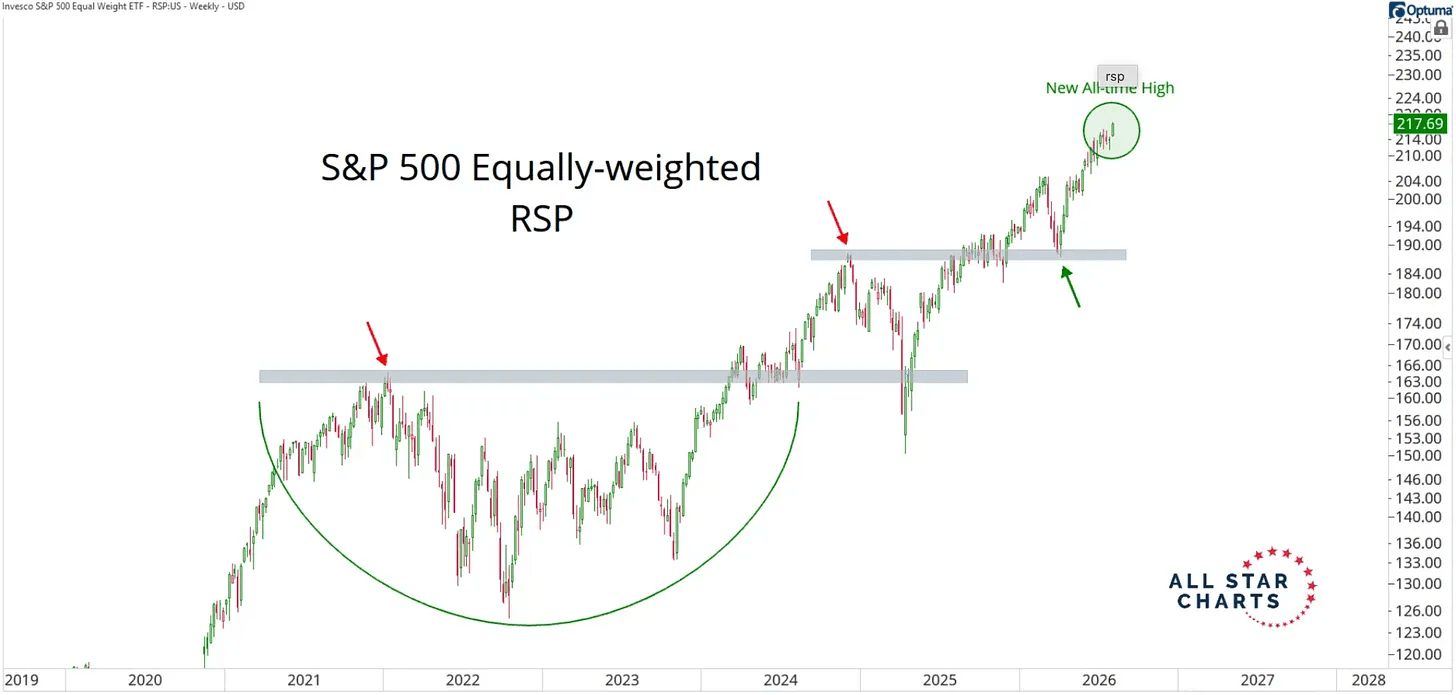
Just look at the equal-weight S&P 500, where every company has the same impact on the index. It just reached a new all-time high. The average stock in the S&P 500 is doing surprisingly well. The weakness we are seeing in the normal index is mainly coming from a small number of huge tech companies.
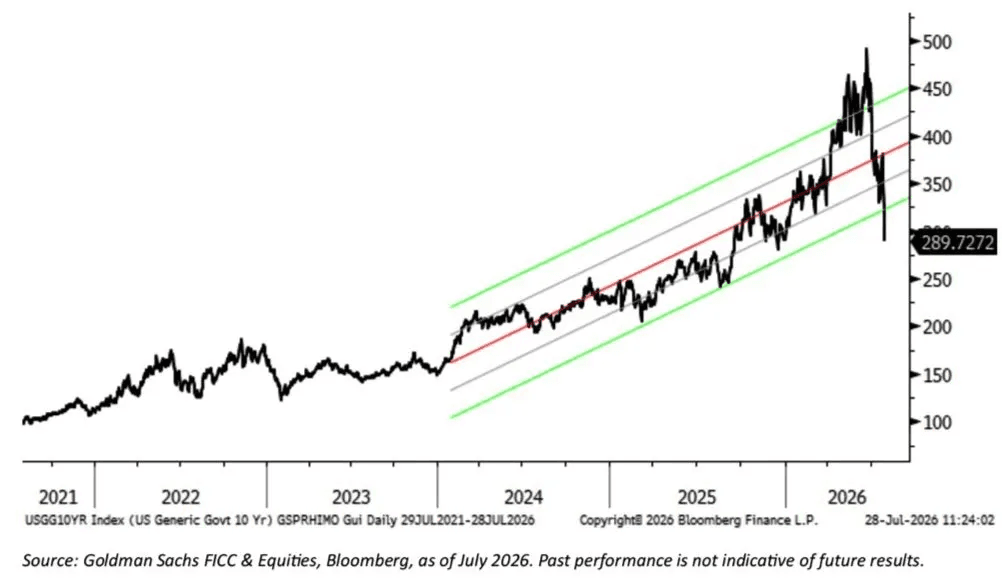
While the overall market help up well, high-beta momentum stocks got crushed, falling nearly 50% as a group. It was one of the sharpest drops we have ever seen. But before that, these stocks had gone on an incredible run and many of them had climbed too far, too fast. That is what markets often do. People get too excited on the way up, then too scared on the way down.
The rally went too far, and now the selloff likely has gone too far as well.
You have probably seen the latest hyperscaler earnings by now. Microsoft, Alphabet, Meta, and Amazon have all reported, and the message from those calls was still bullish for semiconductor demand.
The hyperscalers are continuing to spend enormous amounts of money on data centers, chips, networking, power, and the rest of the infrastructure needed to build out AI. Amazon even raised its full-year capital-spending forecast to around $220 billion and said demand is still running ahead of available capacity.
The AI investment cycle is still moving forward, and semiconductors remain one of the biggest beneficiaries.
The group has been hit much harder than the rest of the market. The selloff was brutal. SOXX fell 22.1% in July, its worst month since December 2002. That was far more than a normal pullback.
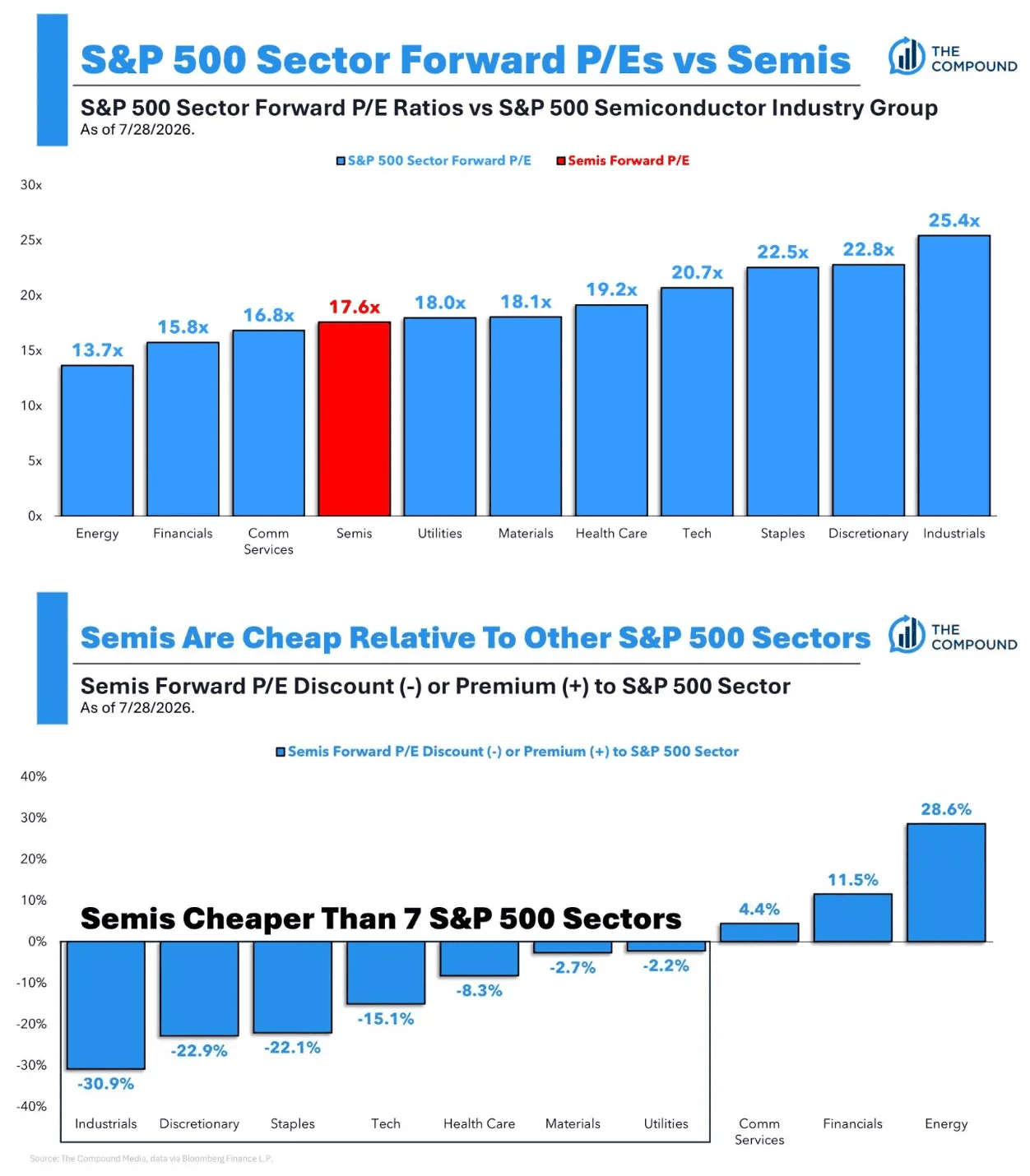
But after this correction, the setup looks much more attractive. If semiconductors were treated as their own S&P 500 sector, they would now rank as the fourth cheapest. At the same time, they have the highest expected earnings growth over the next 12 months and trade at a valuation roughly 22% below Consumer Staples.
So you now have a group with strong expected earnings growth, hyperscaler spending that remains extremely high, and valuations that have fallen sharply after one of the worst months in more than 20 years, which sounds pretty compellign to me.
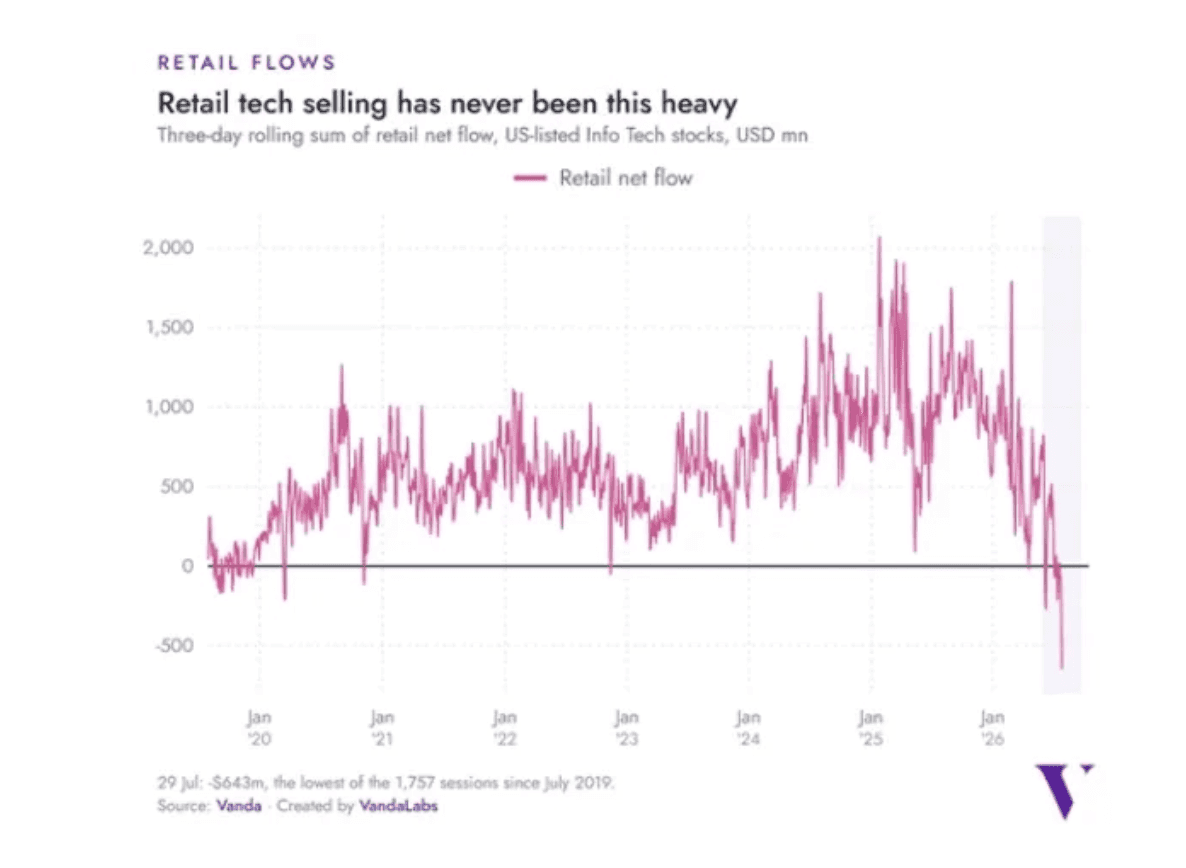
One sign of that is that retail investors sold stocks faster than they did during COVID or at any other point over the past 6 years. That is an extreme level of selling. A huge amount of fear, leverage, and weak positioning was flushed out of the market in a very short period. This is more evidence that the market may have formed a bottom.
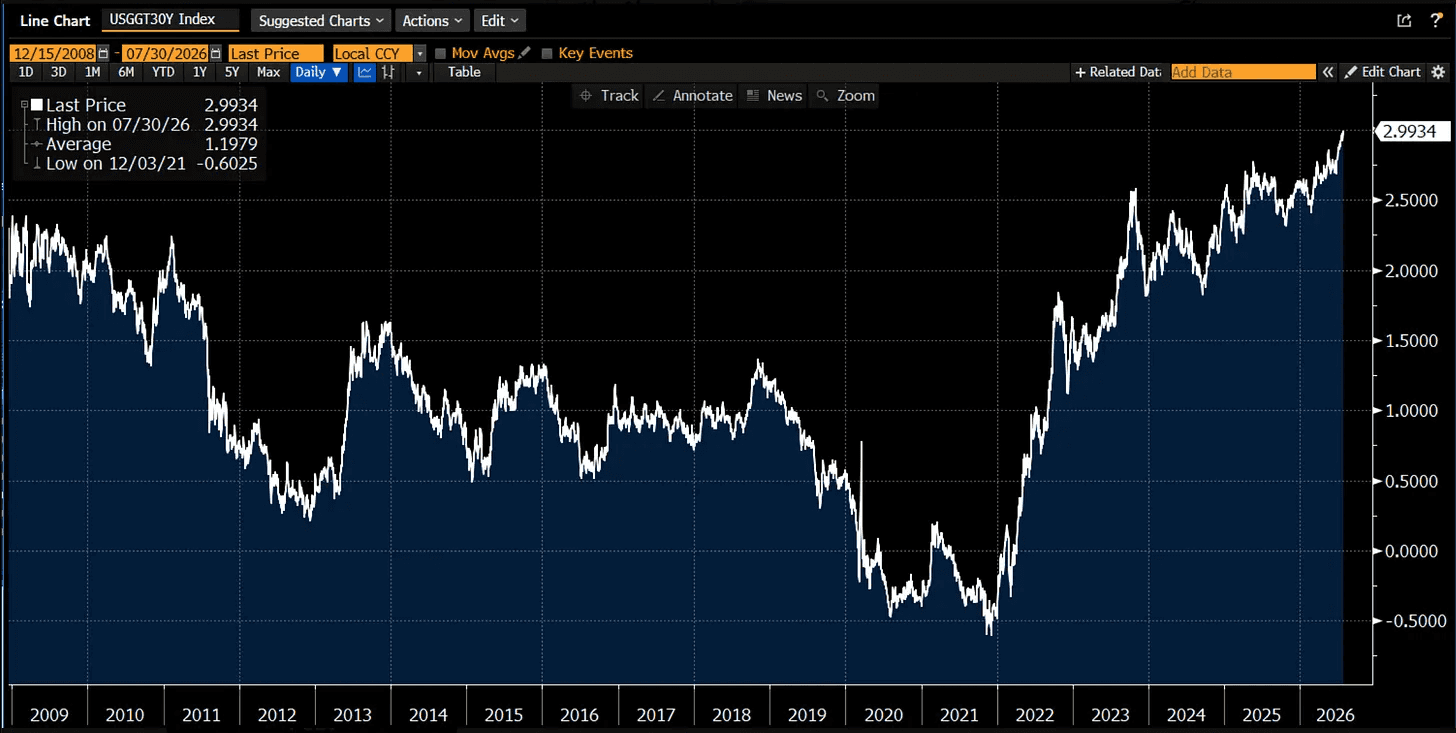
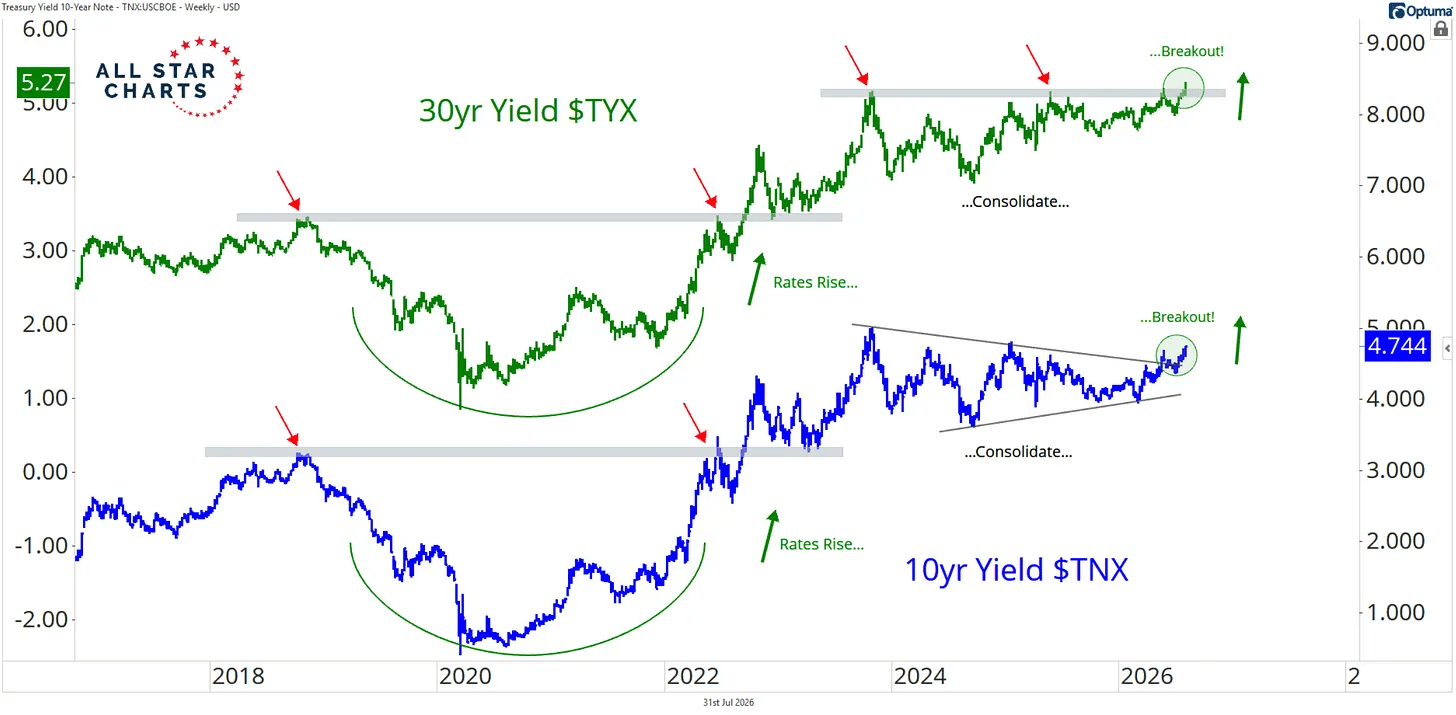
The Fed held rates steady this week. The market doesn’t care.
While everyone was watching Kevin Warsh’s press conference, the bond market quietly did its own thing and sent yields higher anyway. That is the real story of the week.
Start with the 30-year. Real yields on the 30-year Treasury are now at the highest level since 2008.
Why does this matter beyond the bond market itself? Higher yields flow directly into borrowing costs for homes, businesses, and the government. Combine that with ongoing fiscal problems, sticky inflation, and a surge in bond issuance from the hyperscalers to fund their AI buildout, and you get exactly what we are seeing.
The broader market has held up pretty well, while most of the real damage has been concentrated in tech, semiconductors, and AI stocks. And beneath the surface, the selloff was much worse than the major indexes made it look.
High-beta momentum stocks were hit hard. Retail investors sold at an extreme pace, and the forced Situational Awareness liquidation added even more pressure. It was one of the most violent flushes we’ve seen since the AI trade began.
Still, the S&P 500 and Nasdaq held up surprisingly well.
There are 2 ways to look at that.
The bearish view is that sentiment never fully reset because the major indexes never had a proper washout. The more bullish view is that most of the selling was concentrated in one crowded part of the market and driven by forced liquidation, leverage, and panic.
I lean toward the second explanation.
The market just went through a major reset under the surface without the same level of damage in the main indexes. Similar washouts have often been followed by strong rebounds. And the last 2 days of the week were encouraging. The forced seller that helped push the market lower is now gone, and we are starting to see some signs that a bottom could be forming.
That said, the market still has no clear trend.
SPY has been moving sideways for about 3 months. QQQ is trying to stabilize after a normal correction. Semiconductors probably need more time to cool off and rebuild after such a huge run. The best markets are the ones that are clearly trending higher. That is when you want to be aggressive. But chances are we’ve seen the bottom for now and should look for more exposure. Also, there is no need to go from defensive to fully invested overnight. Let the market prove itself first.
But overall, this past week looks like it might end up being a major turning point.
Previous Updates
View All
- Weekly Market Update: AI is Not Slowing Down
- Market Update: Has AGI Arrived?
- Weekly Market Update: Consolidation
- Weekly Market Update: September is Here
- Market Update: Nvidia Crushes Earnings
- Weekly Market Update: Yields
- Market Update: The Future of Biotech
- Weekly Market Update: Earnings Acceleration
- Market Update: The Next Generation of AI Infrastructure
- Weekly Market Update: New Highs
- Market Update: Nvidia’s Way Around Memory
- Weekly Market Update: LTCM 2.0
- Market Update: The Trajectory of AI Compute