Go Back

Lin
Weekly Market Update: Peak Earnings Season
Be prepared for a lot of volatility this week because the market is heading into one of the most important stretches we have seen in quite some time.
We have the FOMC, inflation data, jobs numbers, GDP, and one of the biggest earnings weeks of the quarter all happening while the market is already sitting at a major inflection point.
Something is going to give soon.
I still don’t think this bull market is over. There is still meat on the bone. But if you have been involved in high-beta momentum stocks, AI infrastructure names, or other well-owned growth names over the past few weeks, you probably would not guess that the S&P 500 is still sitting only inches below its all-time highs. The index remains supported by a smaller group of large companies, while many of the more speculative and momentum-driven parts of the market have already experienced pretty large drawdowns.
This is not the kind of environment where I see a reason to be hyperactive or force trades every day. And this has been the case for the past few weeks, as we’ve discussed, so the general stance remains the same. I’m still on the cautious side, being more selective, using smaller position sizes, and keeping risk tighter. The next trend could be very close, but nobody knows exactly when it will begin.
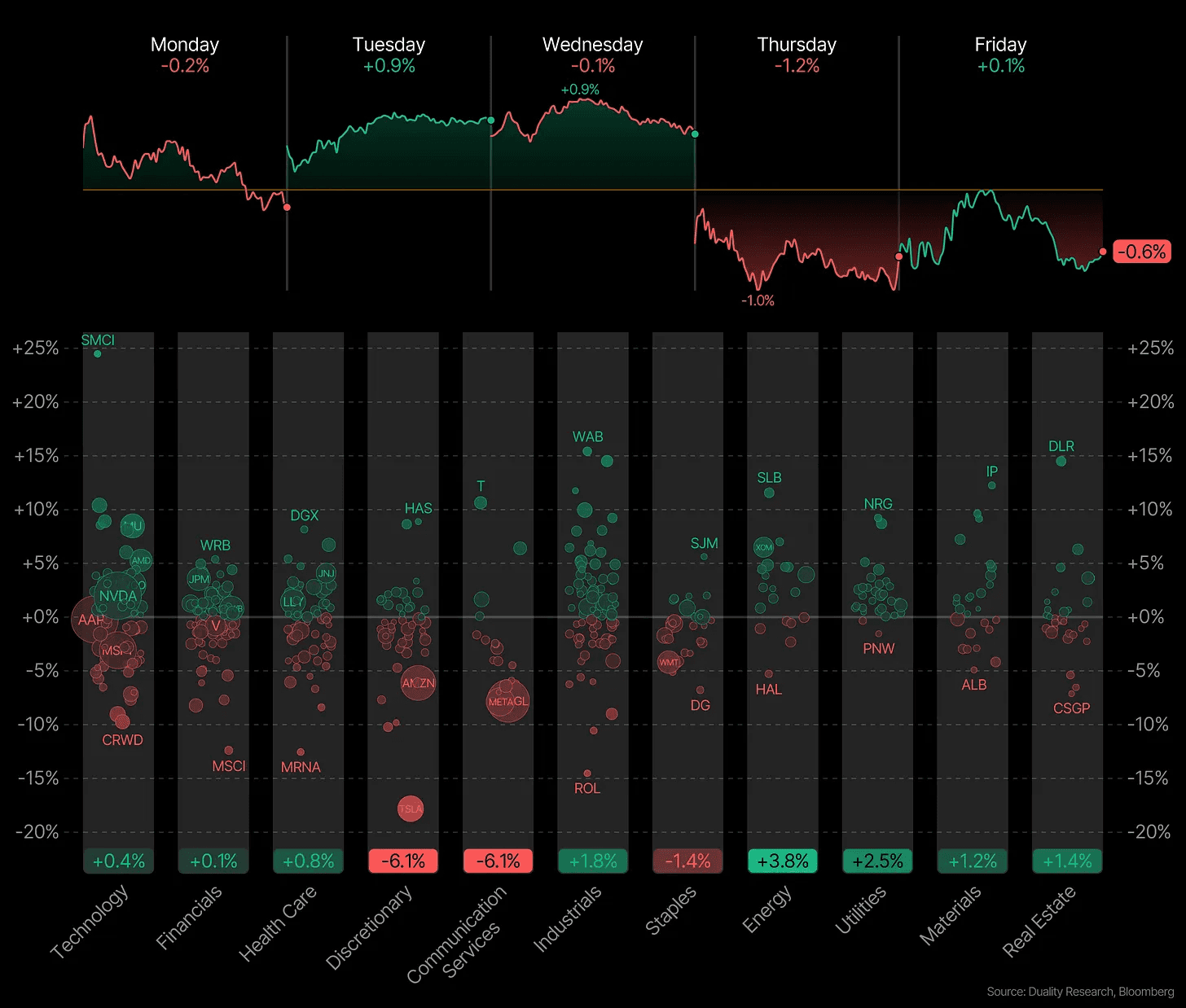
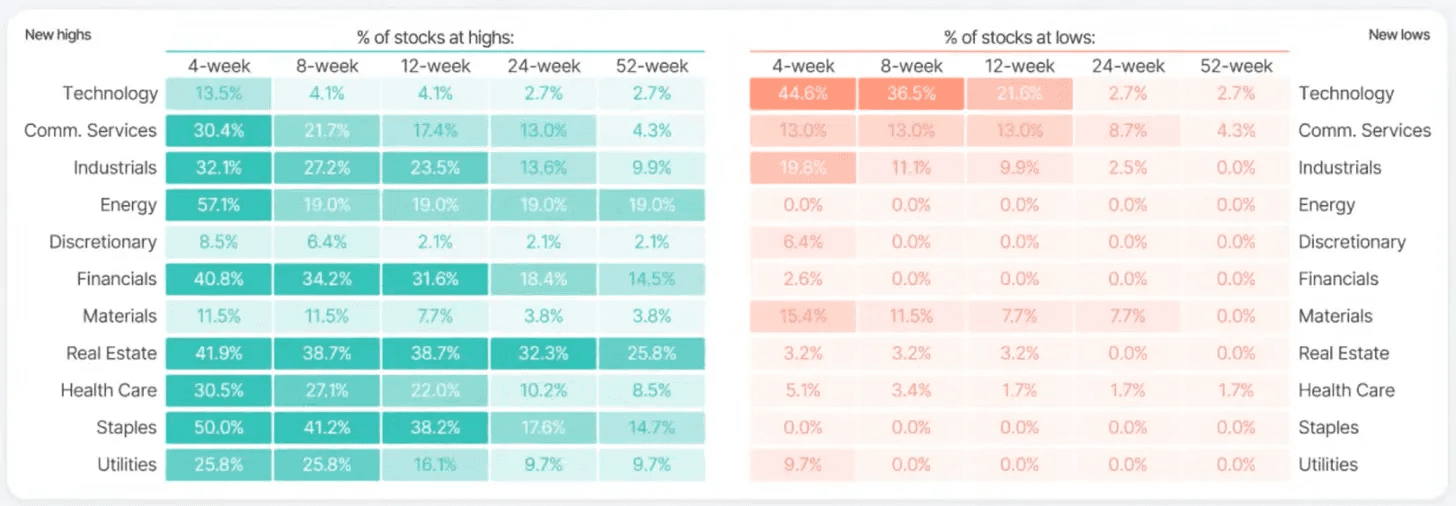
The reason the S&P 500 is holding up so much better than the Nasdaq is pretty straightforward. Tech has been sold off heavily, while most other sectors continue to push toward new highs.
Energy, staples, and real estate are leading on the upside. Energy stands out the most. Across every timeframe on the table, 0% of energy stocks are trading at new lows. Not one.
Tech looks completely different. Only 13.5% of tech stocks are at 4-week highs, while 44.6% are at 4-week lows. That is the highest number anywhere on the lows table.
The S&P 500 Energy sector is up 13% in just the past 2 weeks.
The main reason is simple: oil prices have jumped. When oil moves higher, energy companies make more money on every barrel they sell, while many of their costs stay roughly the same. That leads to better margins, stronger cash flow, bigger buybacks, and higher dividends.
Energy stocks were also much cheaper and less crowded than tech going into this move. Expectations were low, which meant there was plenty of room for investors to change their view once oil started rising.
On top of that, there is also a clear rotation happening. Money is moving out of expensive growth stocks and into areas with stronger near-term earnings and lower valuations. Energy fits that setup very well.

Look at the strength underneath the surface too. Every single name on the oil index list, BP, Chevron, ConocoPhillips, Exxon, Shell, all of it, is trading above its 20-day, 50-day and 200-day moving averages.

Volatility is returning, and from a seasonal point of view, it is showing up pretty much right on time.
The market often gets more volatile around this part of the year. Because trading during summer is much more quiet. Fewer people are active, and thus prices move much more sharply on headlines or economic data.
There are also plenty of things investors are worried about right now. We have the risk of a wider conflict involving Iran, the US midterm elections, possible Fed rate hikes, higher oil prices, and inflation starting to heat up again.

We’ve already seen Alphabet reporting earnings last week and the most important number was, as expected, CapEx. CapEx is going higher, and a lot higher than anyone expected.
From the earnings call:
Moving to investments, we are updating our full-year 2026 CapEx guidance range to $195 to $205 billion, up from our previous estimate of $180 to $190 billion. The increase in the range is primarily due to an acceleration in the delivery of capacity to meet growing demand. As we previously shared, we continue to expect our CapEx to increase significantly in 2027 and will provide more details at a later date.
Basically CapEx guidance tripled in less than two years…
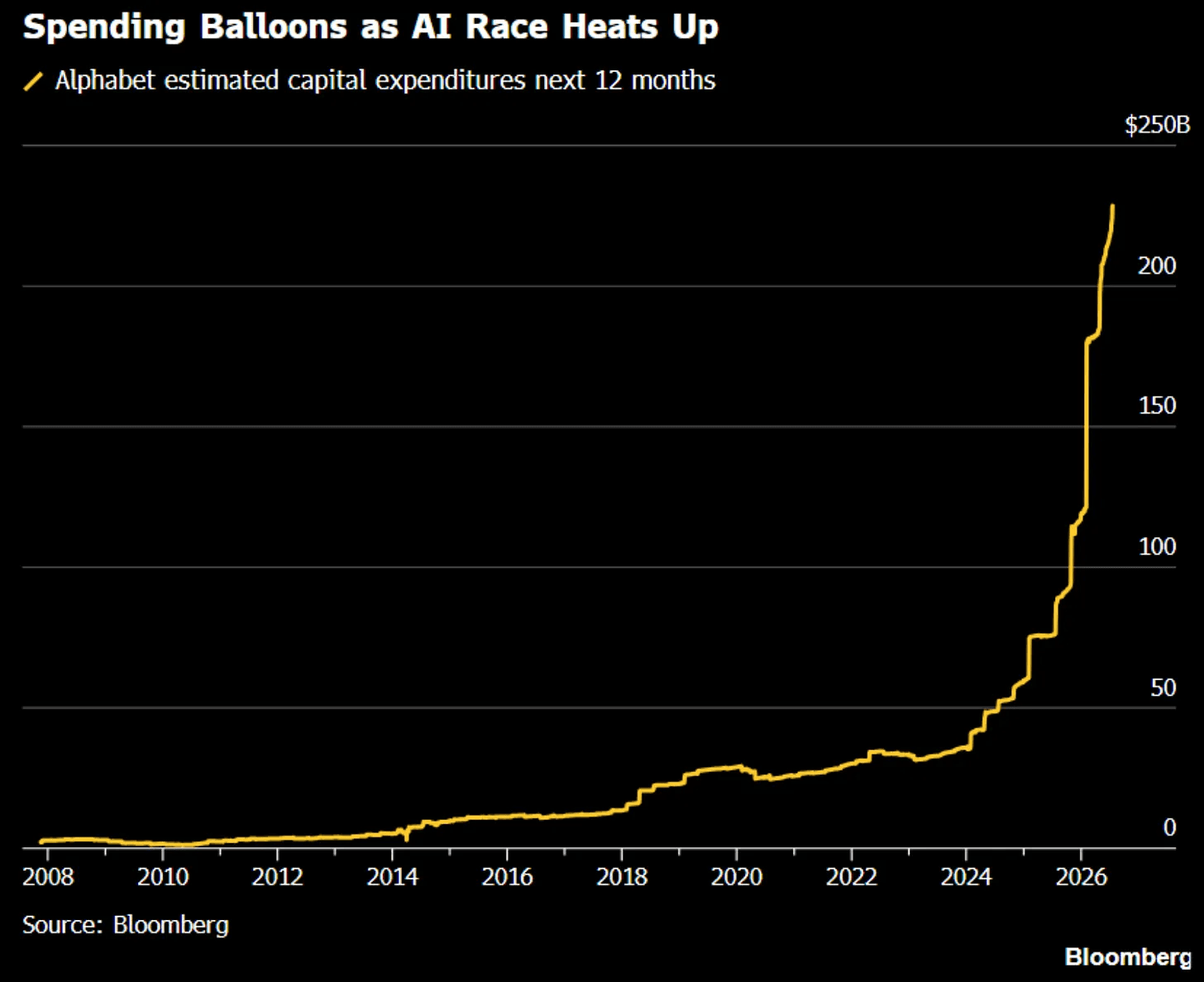
So, obviously, fears of an AI spending slowdown were greatly exaggerated. Anyone that actually understands and uses AI would know. This isn’t only an AI race anymore. It has become a spending race, with every major player trying to build more data centers, secure more compute, and scale infrastructure faster than the competition.

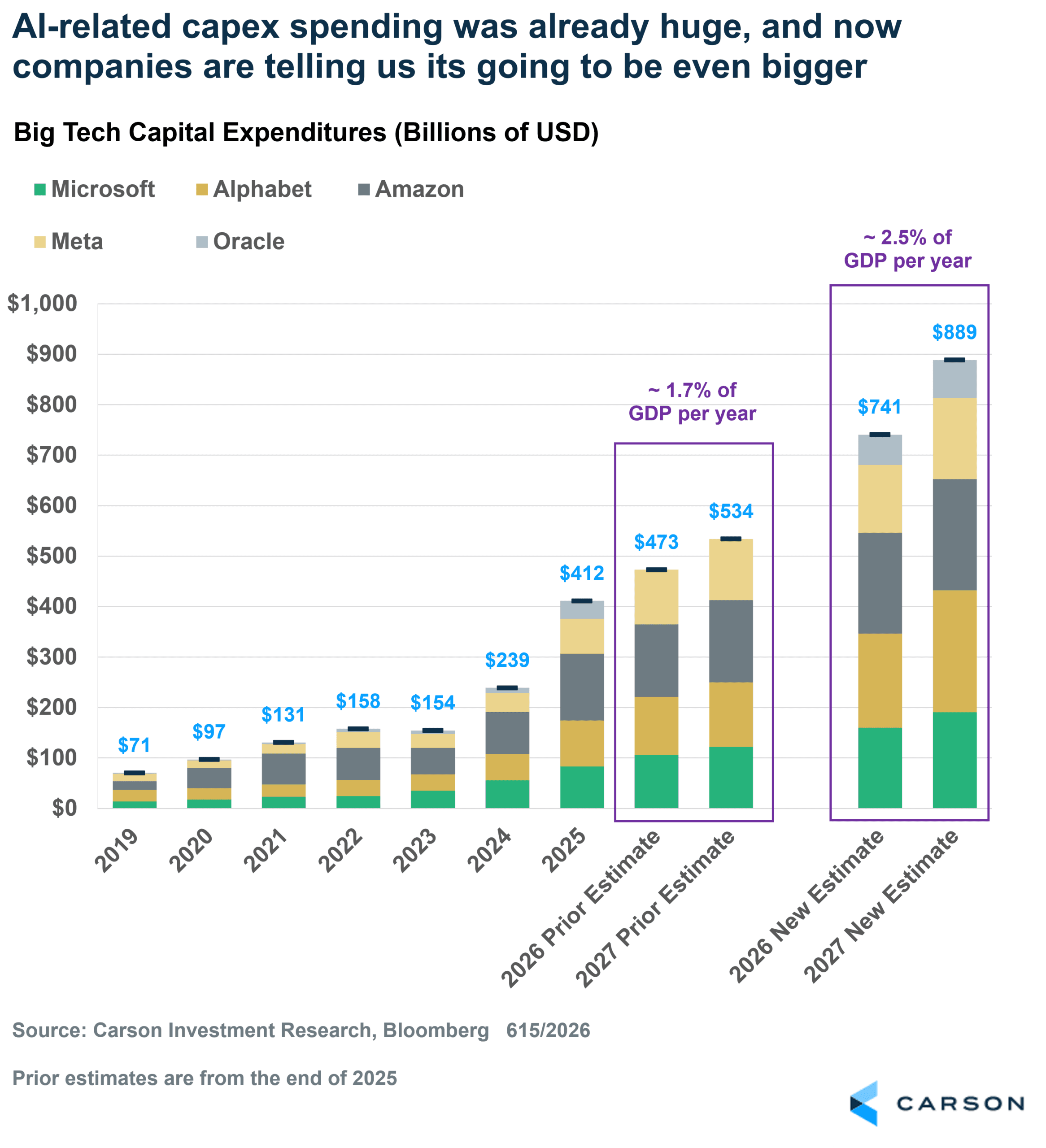
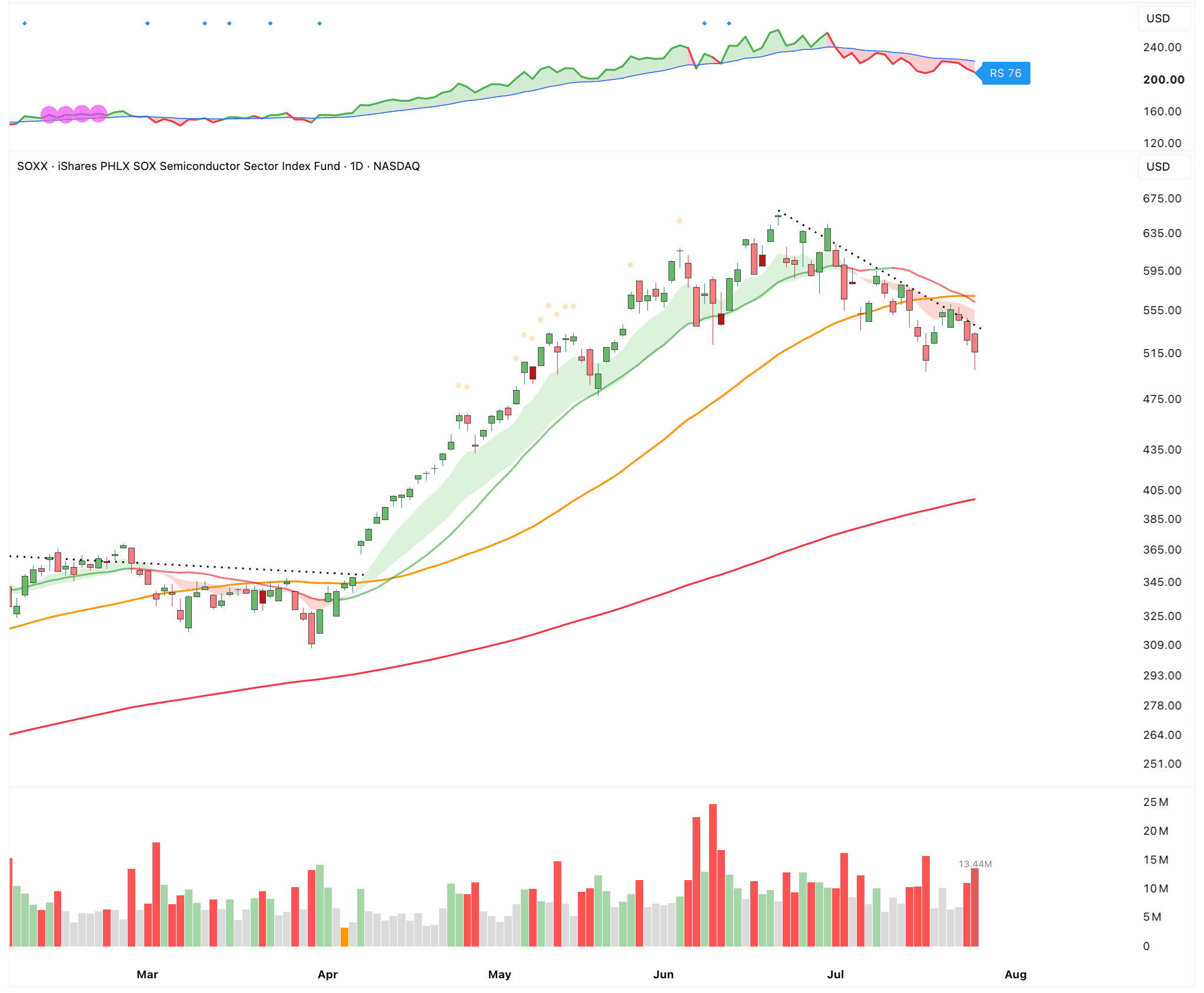
Wall Street has been skeptical about the huge CapEx numbers for a while, and it has punished many of the companies tied to that spending, especially the semiconductors. The SOXX semiconductor ETF is already down around 20% from its highs.
Of course, semis had a tremendous run, and when something goes up that quickly, a pullback is eventually going to happen. We are seeing that now.
What really stands out, though, is the volume. The selling has been relentless. Investors are not slowly trimming positions. They are dumping semiconductor stocks quickly and aggressively.
When you compare the recent selling volume with the buying volume during the rally, the difference is pretty clear. The volume on the way down has been much stronger than anything we saw on the way up. So, investors are currently more eager to get out than they were to get in.
Many semiconductor stocks have already gone through severe corrections, and some are starting to look much more attractive from a risk-to-reward perspective. Valuations are coming down, and a lot of the excess has already been removed.
However, it is too early to know when the selling will end.
There is no point in trying to catch a falling knife while momentum is still moving sharply lower. A stock can look cheap and still become much cheaper. The better approach is to wait for the selling pressure to slow down, let the stock build a bottom, and then buy once the trend starts turning around.
You do not need to catch the exact bottom to make money. It is often much safer to buy the strength after the bottom than to keep buying weakness on the way down.
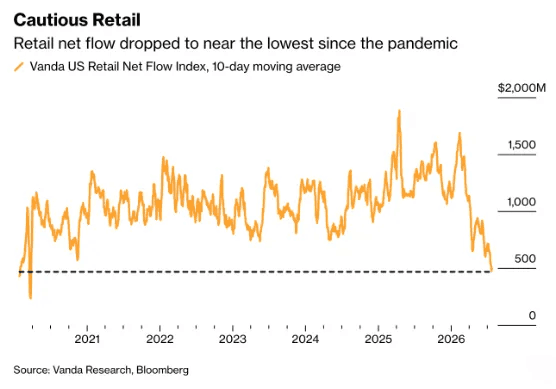
One of the reasons behind this sharp selloff is that retail investors have largely stopped buying. Many of the traders who entered the market during the COVID boom have now given back a large part of their gains or left the market completely.
In my opinion, that is actually a healthy sign. You want the gamblers and highly speculative traders to get washed out because they create too much leverage, chasing, and short-term noise.
The greatest example of all this recent leverage is South Korea.
Retail investors borrowed huge amounts of money to chase the country’s booming stock market, with much of that money flowing into Samsung, SK Hynix, and leveraged products tied to the AI trade. Margin loan balances reached a record 38.6 trillion won in June, while total investor borrowing climbed above 60 trillion won.
Margin debt has exploded to all-time highs. The use of leveraged ETFs has been so rampant that regulators had to triple the margin requirements to rein them in.
But once leveraged traders lose enough money, brokers ask them to add more cash or reduce their positions. Many investors cannot add more money, so they are forced to sell. That selling pushes prices even lower, triggers more margin calls, and forces the next group of investors to sell as well.
South Korea went through exactly that. Retail investors had piled into leveraged products tied to Samsung and SK Hynix, and these products had become a major part of daily market activity. When the AI trade reversed, the losses quickly grew, leverage started getting unwound, and forced selling made the decline much worse.
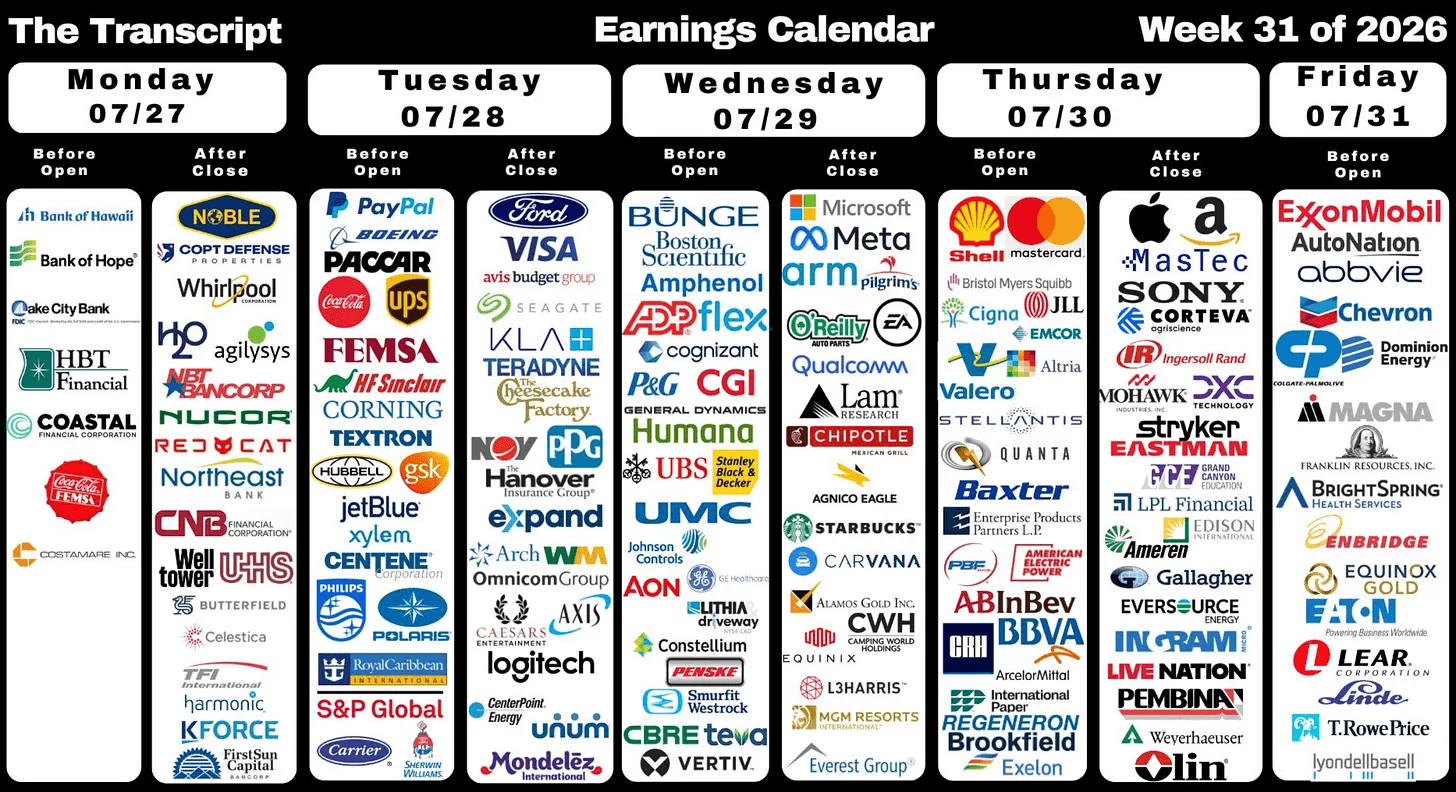
This is probably the busiest earnings week of the quarter because a huge number of large companies and AI names are reporting at the same time. Make sure to check the earnings calendar and the earnings dates of your personal holdings.
This still looks like we’re in a multi-week consolidation, but volume is drying up and it feels like a bigger move is getting closer, at least for the S&P 500. The Nasdaq is already starting to trend down.
But the important thing is that outside of tech, the market has actually held up really well. There are still plenty of stocks, sectors, and groups working, and the S&P 500 reflects that. If you’ve been trading high-beta momentum or AI stocks over the past few weeks, the experience is much different.
That gap between the index and what many traders are experiencing underneath the surface has become pretty extreme.
If you look back at the last extended consolidation, the market eventually resolved with a quick flush lower that lasted about 3 weeks before bottoming and reversing higher.
Could we see something similar here? Maybe.
In my view, this bull market still isn’t over. I don’t believe we’re putting in a major market top here. I do think we could see a sharp move lower, similar to what happened earlier this year, but I don’t believe that would mark the end of the bull market.
Even then, when the S&P 500 is acting like this, it’s usually a signal to slow down, reduce activity, and use smaller position sizes. There is no reason to be hyperactive while the market is stuck in a tight range and the next direction is still unclear.
Once the market finally breaks out of this consolidation, either higher or lower, the next trend will likely create plenty of opportunity on both the long and short side.
Right now, the main goal is to stay mentally and financially prepared. You want enough capital, enough focus, and enough flexibility to act when the market finally chooses a direction.
Patience now will create opportunity later.
The next trend will come, but if you’re not mentally and financially prepared when it arrives, what good does it do?
Previous Updates
View All
- Weekly Market Update: Earnings Season is Back
- Weekly Market Update: Big Tech Divergence
- Weekly Market Update: Accumulation
- Weekly Market Update: The Best Quarter
- Weekly Market Update: Rate Hikes
- Weekly Market Update: AI is Not Slowing Down
- Market Update: Has AGI Arrived?
- Weekly Market Update: Consolidation
- Weekly Market Update: September is Here
- Market Update: Nvidia Crushes Earnings
- Weekly Market Update: Yields
- Market Update: The Future of Biotech
- Weekly Market Update: Earnings Acceleration