Go Back

Lin
Market Update: Q2 Earnings Recap #1
This earnings season has been pretty mixed and, unfortunately, has leaned more negative than positive.
There’s nothing we can do about it, but it is important to notice and pay attention because it tells us a lot about the market environment.
But before going deeper into it, let’s look at some of the key earnings from the past week:
First off, Google:
Technically, they beat on every number:
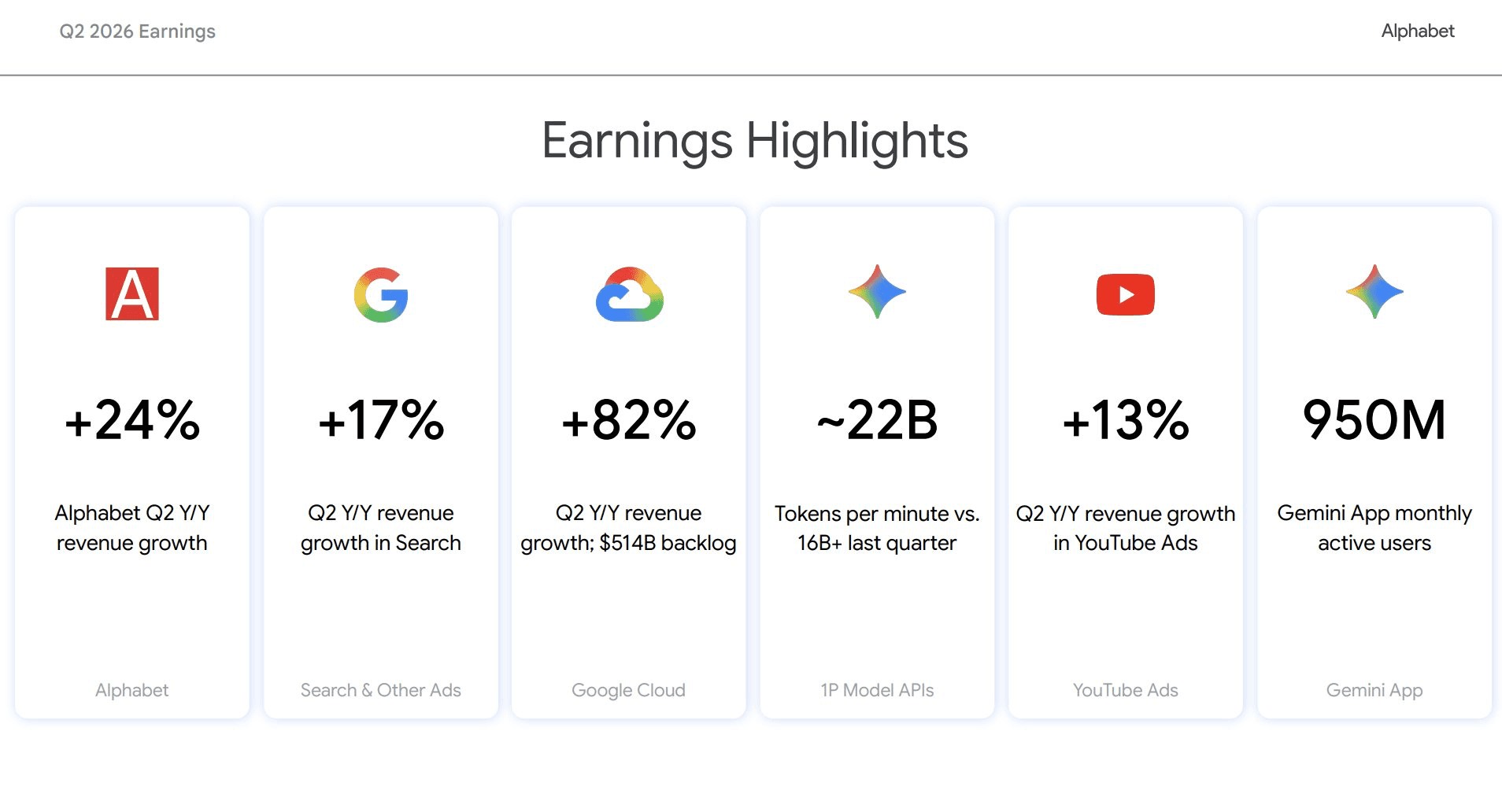
• Revenues: $119.8B vs. $117.0B (beat by 2% and up 24% YoY)
• Google Search Revenue $63.3B +17% YoY
• Google Cloud Revenue $24.8B +82% YoY
• Google Cloud Operating Income $8.8B
• Operating Income $40.8B +30% YoY
• Net Income $112.1B +298% YoY
• Gemini App 950M Monthly Active Users
• Gemini Models Processing 22B API Tokens Per Minute
• Raised their full-year 2026 CapEx guidance to up to $205 billion
So, pretty good numbers on the surface. But we knew that Wall Street was going to scrutinize every single word and number in its earnings report. The headline $112 billion in net income is misleading.
Almost all of that came from a $99 billion paper gain on Alphabet's Anthropic and SpaceX stakes, not from the actual business.
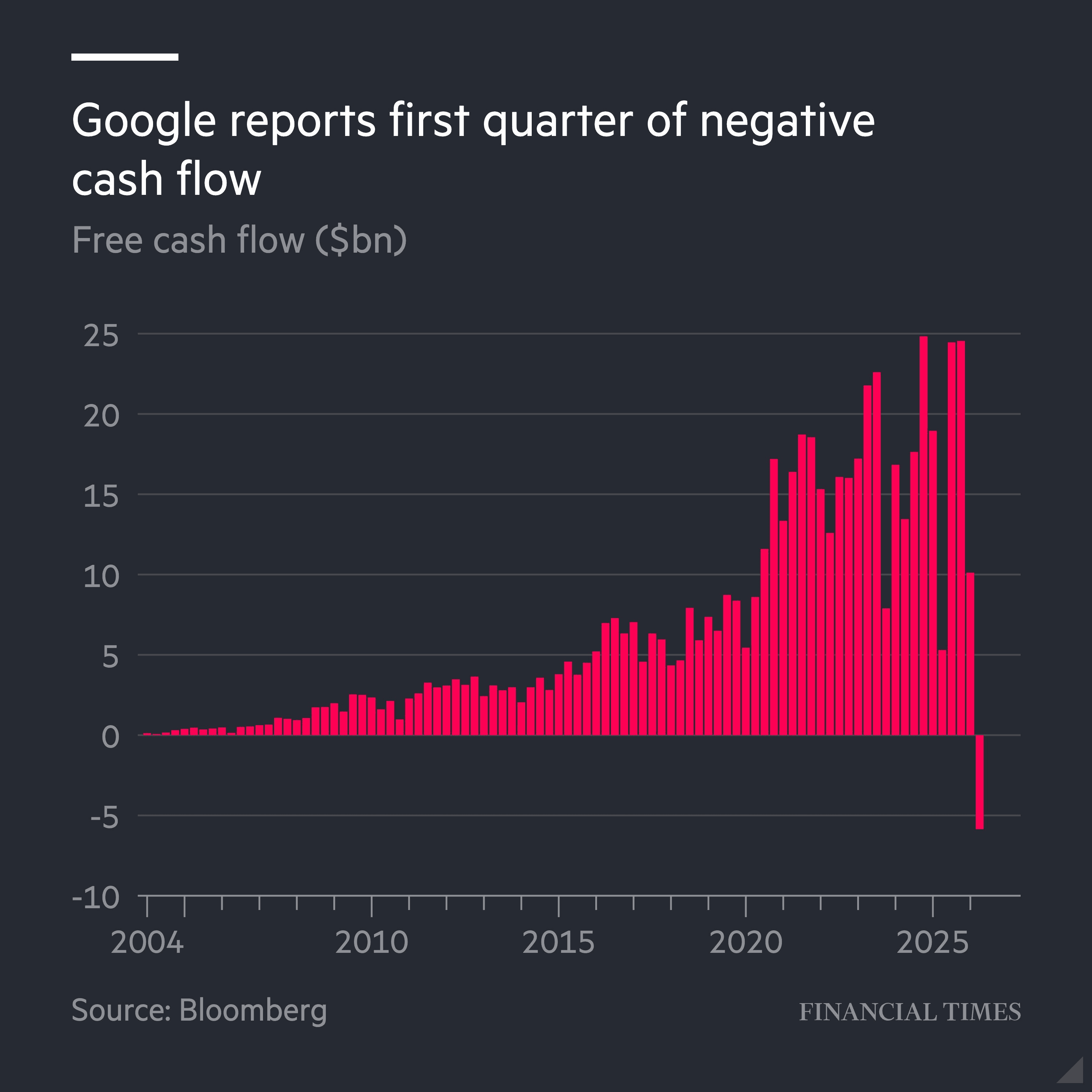
Strip that out, and adjusted EPS came in at $2.85, missing estimates of $2.90. And for the first time in history, free cash flow turned negative. Investors already knew Alphabet would spend heavily. But management raised the budget again. Each increase pushes a meaningful free cash flow recovery further into the future.
This is the type of market where even a slight beat, let alone a miss, will be punished harshly. That’s why the stock traded down nearly 7% after earnings.
Next up Tesla:
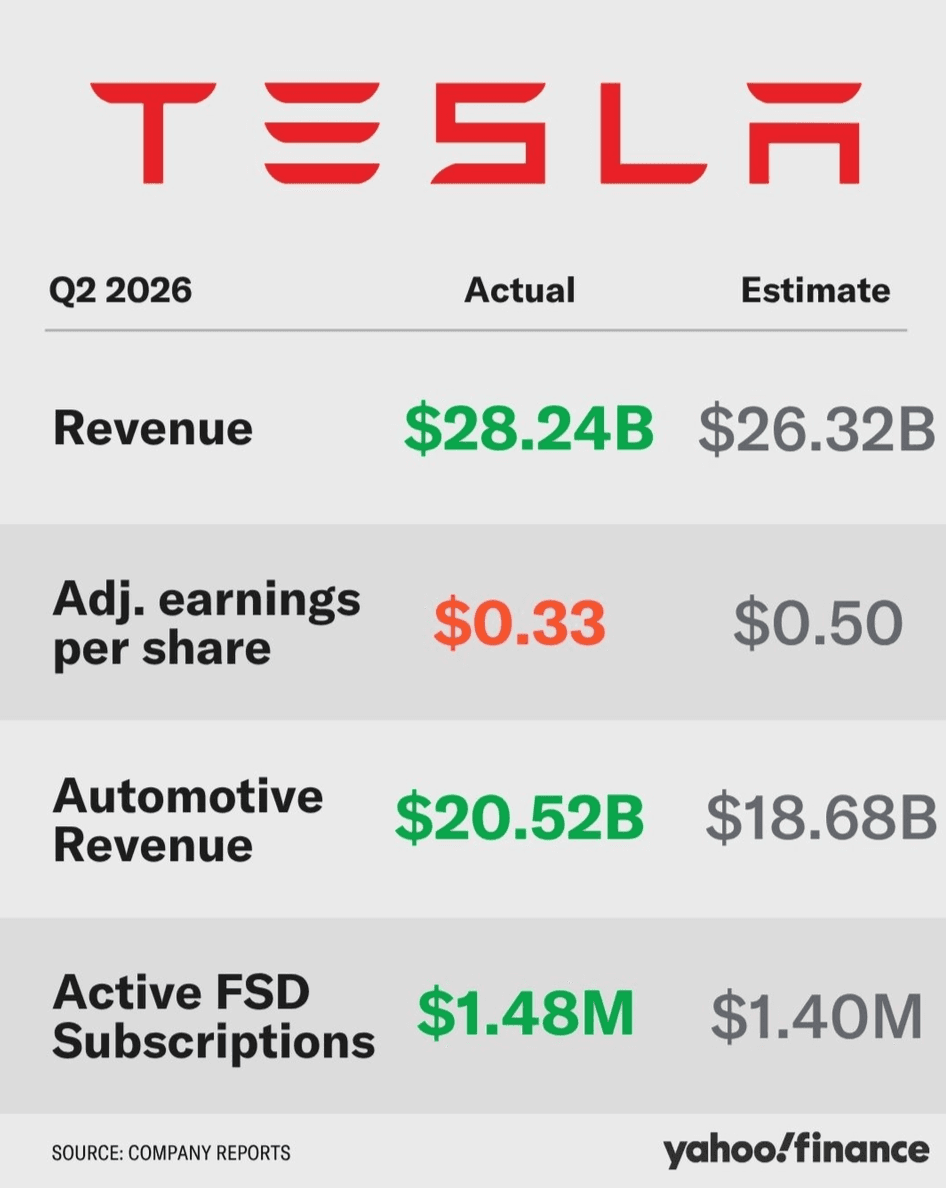
• Revenue $28.2B vs Est. $26.3B
• EPS $0.33 vs Est. $0.50
• Gross Margin 17% vs Est. 19%
• Energy Revenue $3.1B vs Est. $3.8B
• FCF ($1.1B) vs Est. ($3.6B)
• Tesla expects Optimus production in Fremont later this year.
Margins once again shrank, from 19% to 16%. They missed EPS estimates by 50% and EBITDA estimates by $800 million. Similar to Alphabet, they reported $1.11 billion in GAAP net income, but $1.005 billion of that came from gains on SpaceX equity. Take that out, and net income was just $105 million, which translates to a paltry 1.4% operating margin.
Tesla burned about $1.1 billion in cash during the quarter. Capital spending reached roughly $5.8 billion as Tesla poured money into AI infrastructure, robotaxis, Cybercab factories, batteries, and Optimus. Tesla expects more than $25 billion in capital expenditure in 2026, nearly 3 times the previous year’s level, and said spending could keep rising over the next few years.
This is definitely not what Wall Street wanted to see, which is why the stock traded down more than 14% after earnings.
The market has set high expectations. It had already priced in rapid AI growth and strong future earnings. Simply saying, “AI demand is strong,” is no longer enough. Companies need to beat estimates comfortably and give investors a clear path toward profits. Even a small disappointment can cause profit-taking, analyst estimate cuts, systematic selling, options-related volatility, and portfolio de-risking.
Alphabet grew Cloud revenue rapidly, yet investors punished the stock because capital spending rose again and free cash flow turned negative.
When good earnings results produce bad reactions, that is something to take notice of. It means the market is becoming more vulnerable, and caution is warranted now.
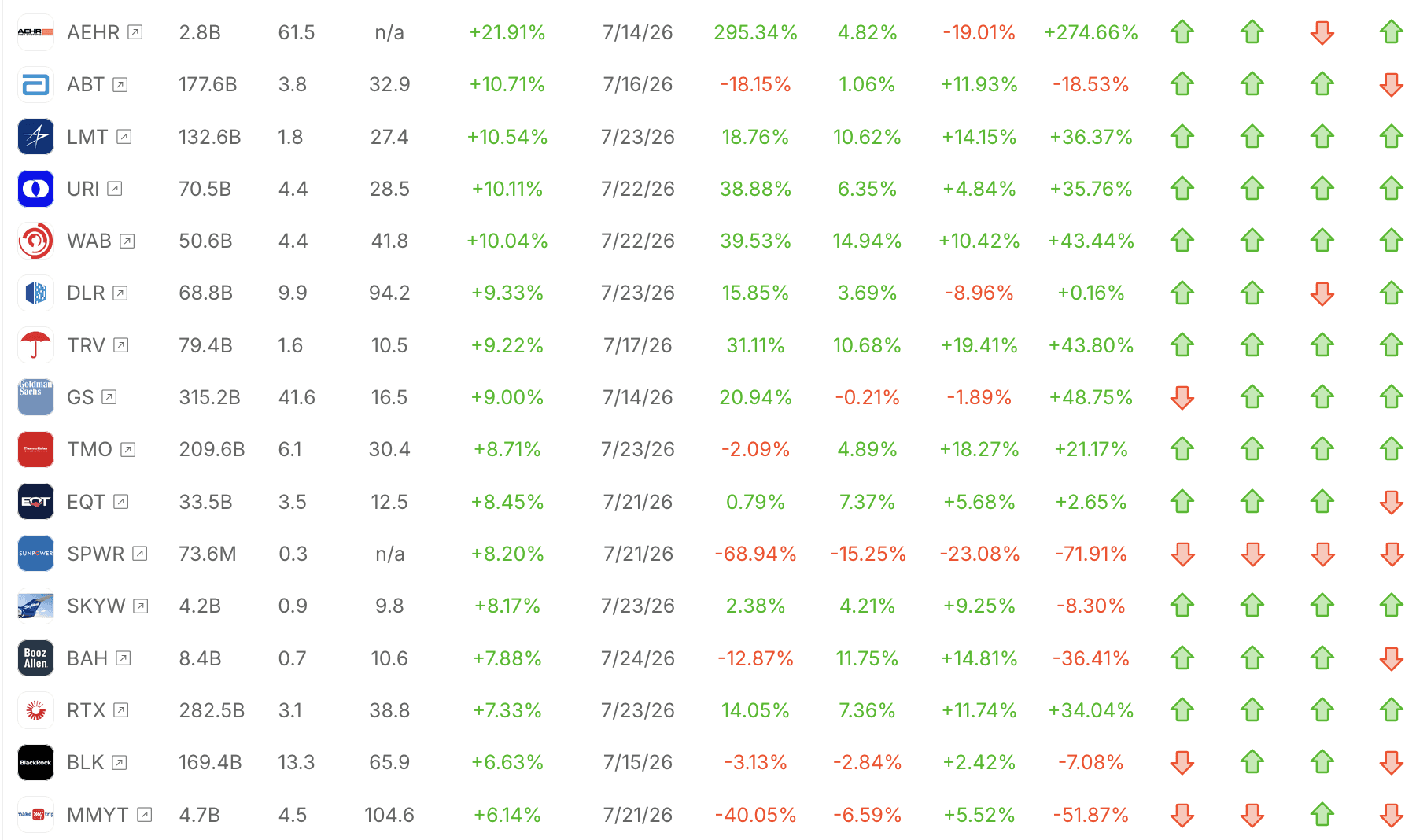
In general, earnings season so far has been mixed.
There are a few earnings reports that stand out, but almost all of them are in defensive or cyclical sectors such as insurance, financials, and real estate. Meanwhile, most tech companies and some of the biggest recent AI winners all sold off after earnings.
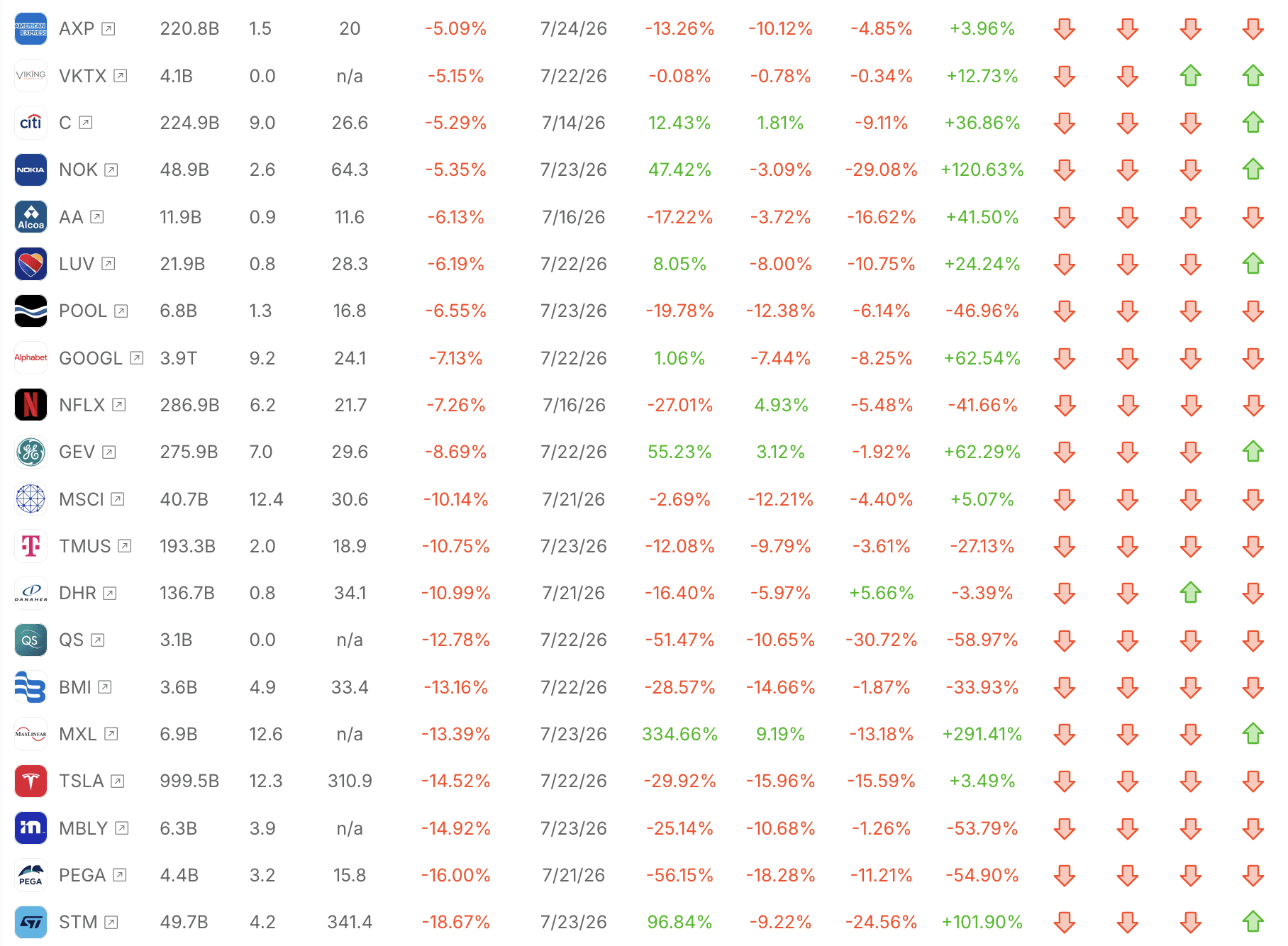
After such a strong rally, the market is no longer comparing results with the past. It is comparing them with an extremely optimistic version of the future that has already been priced into many stocks.
That creates a much higher bar. A company can grow revenue by 30%, beat estimates, and still sell off because investors expected even stronger margins, better guidance, or faster cash flow growth. In many cases, strong numbers are no longer enough. The company must deliver results that clearly exceed already aggressive expectations.
This becomes especially dangerous for stocks that have performed very well over the past year. The higher the valuation and the stronger the recent performance, the less room there is for disappointment. Even a small miss can trigger profit-taking, analyst estimate cuts, lower valuation multiples, and forced systematic selling.
Especially, since the current market environment is not on our side either. The biggest indices are losing key moving averages, as well continuing to trend lower.
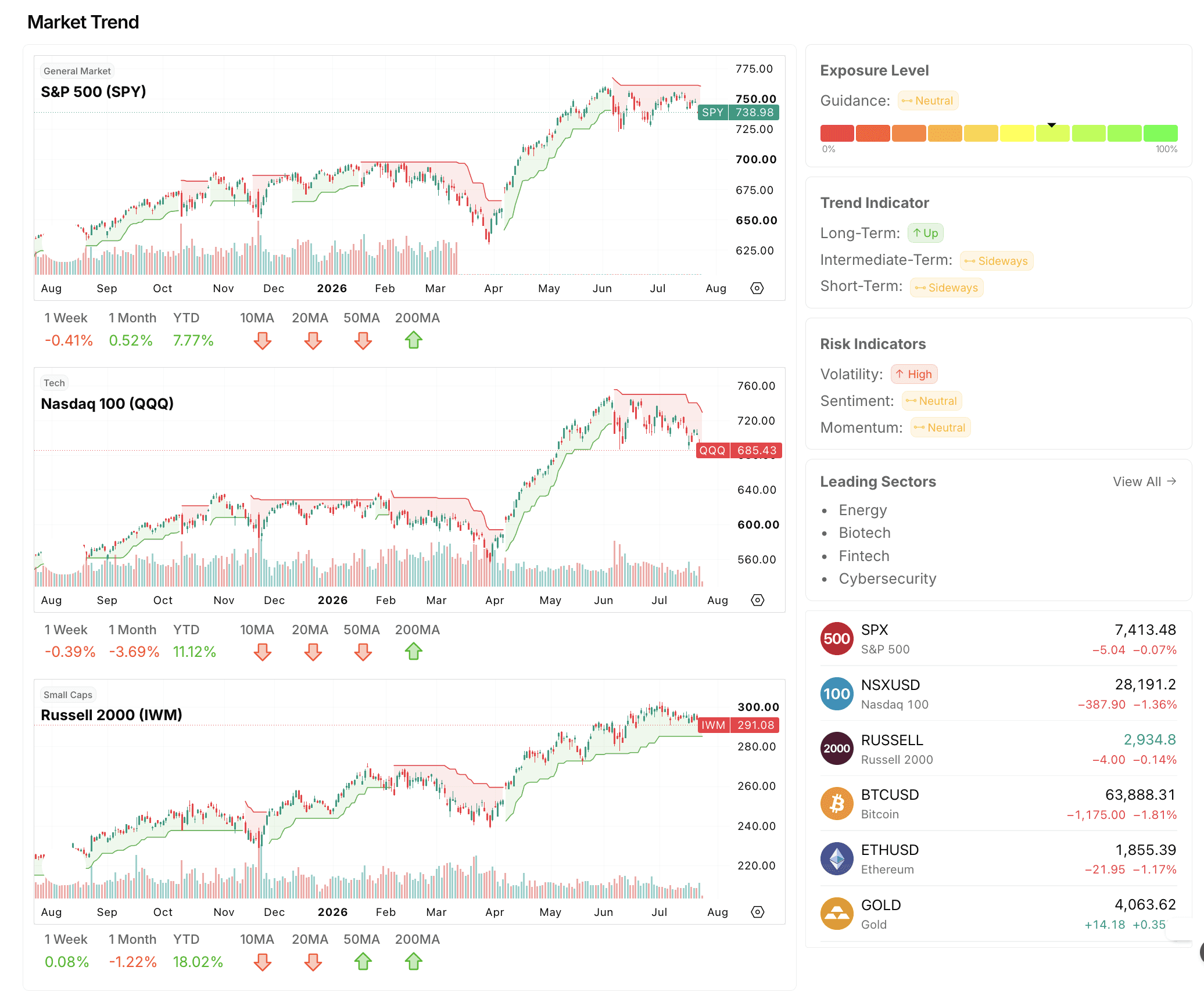
The Nasdaq and the broader tech sector look increasingly vulnerable here. This is not the time to be aggressive on the long side. The risk of a deeper breakdown and more downside ahead has increased materially.
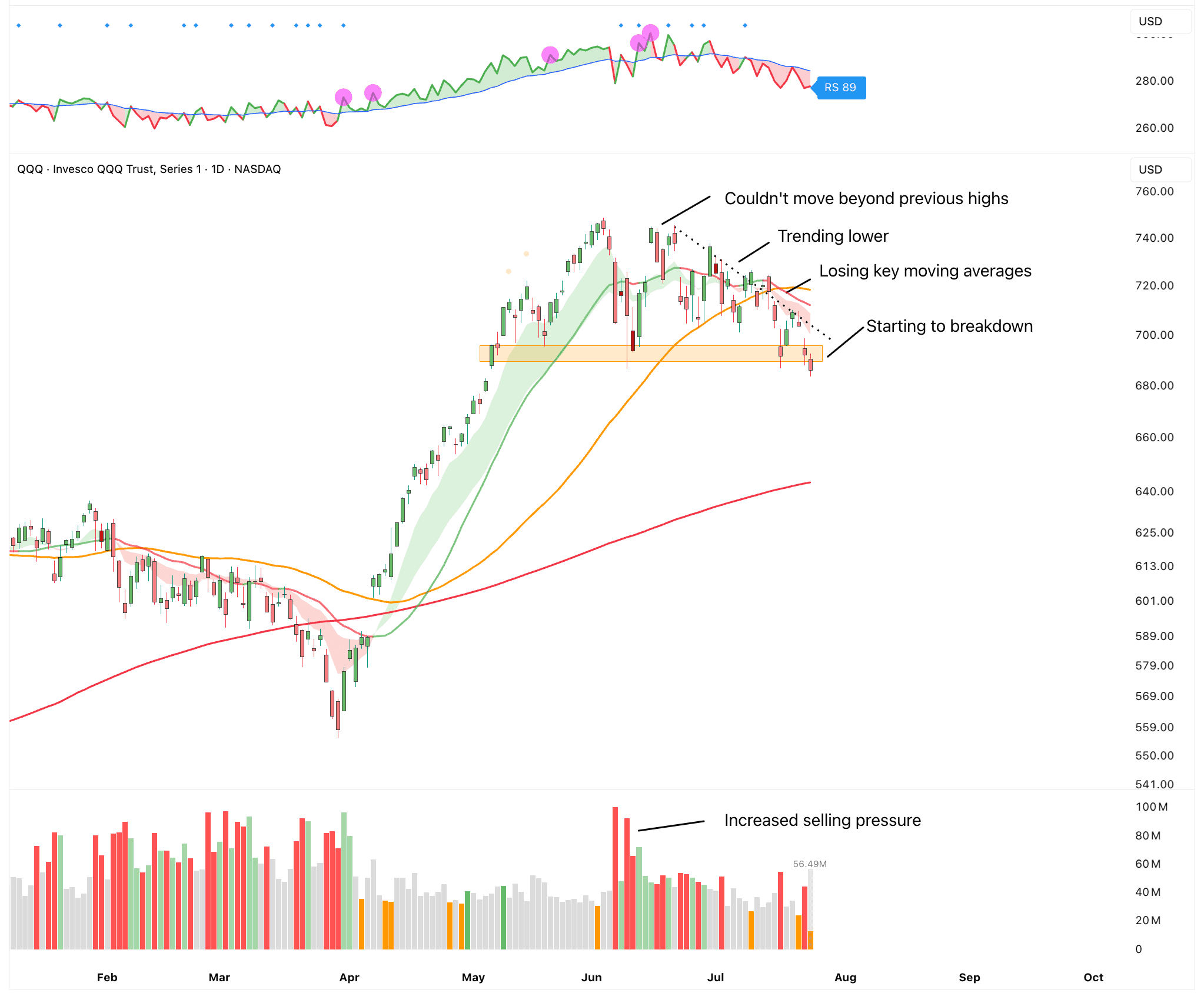
For now, it makes sense to stay on the cautious side. That means keeping individual positions smaller, trimming oversized winners, avoiding large new positions immediately before earnings, and holding enough cash to take advantage of any volatility afterward.
It is also important to separate long-term conviction from short-term earnings risk. You can still believe in a company’s long-term story while recognizing that its stock may be vulnerable over the next few weeks.
Previous Updates
View All
- Weekly Market Update: Earnings Season is Back
- Weekly Market Update: Big Tech Divergence
- Weekly Market Update: Accumulation
- Weekly Market Update: The Best Quarter
- Weekly Market Update: Rate Hikes
- Weekly Market Update: AI is Not Slowing Down
- Market Update: Has AGI Arrived?
- Weekly Market Update: Consolidation
- Weekly Market Update: September is Here
- Market Update: Nvidia Crushes Earnings
- Weekly Market Update: Yields
- Market Update: The Future of Biotech
- Weekly Market Update: Earnings Acceleration