Go Back

Lin
Market Update: The Memory Crunch
One of the most important bottlenecks is memory. If you want advanced AI chips, you need advanced memory.
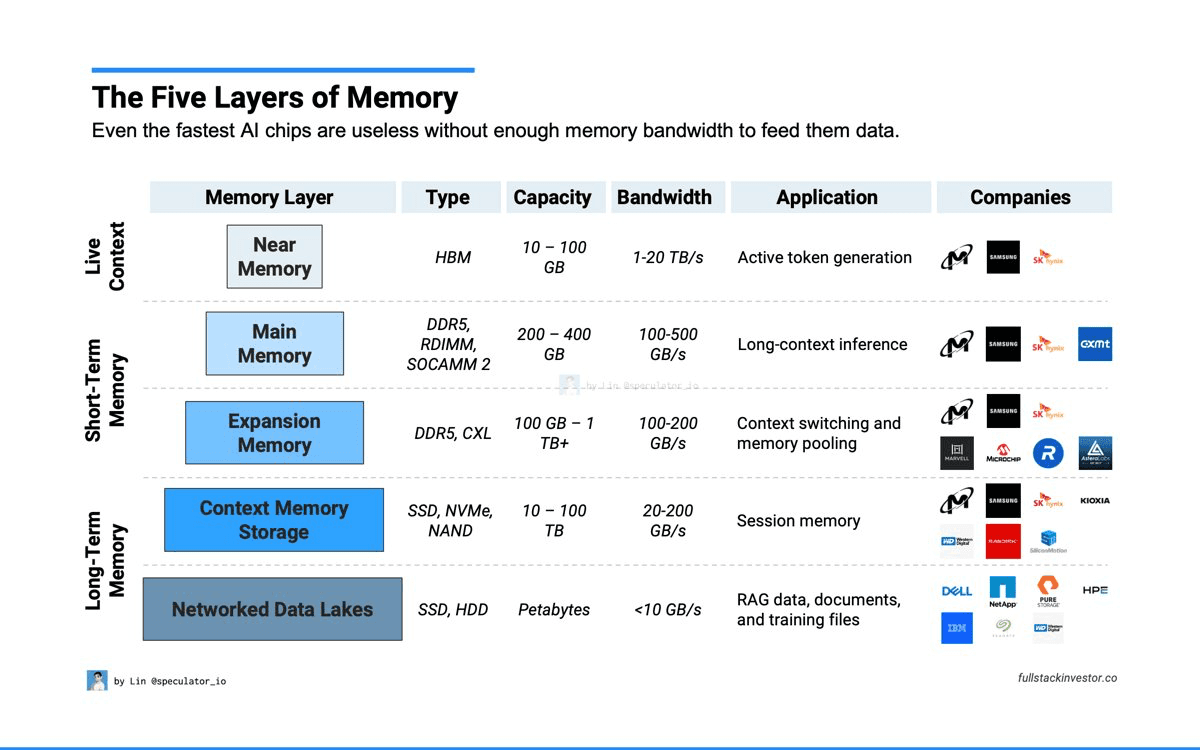
Today, the key memory pieces are HBM, DRAM, and NAND SSDs. HBM is built from DRAM, but it is much faster and more advanced. It sits close to the AI chip and feeds it data at very high speed. Regular DRAM is used as normal system memory in servers, while NAND SSDs store the huge datasets these systems need to use.
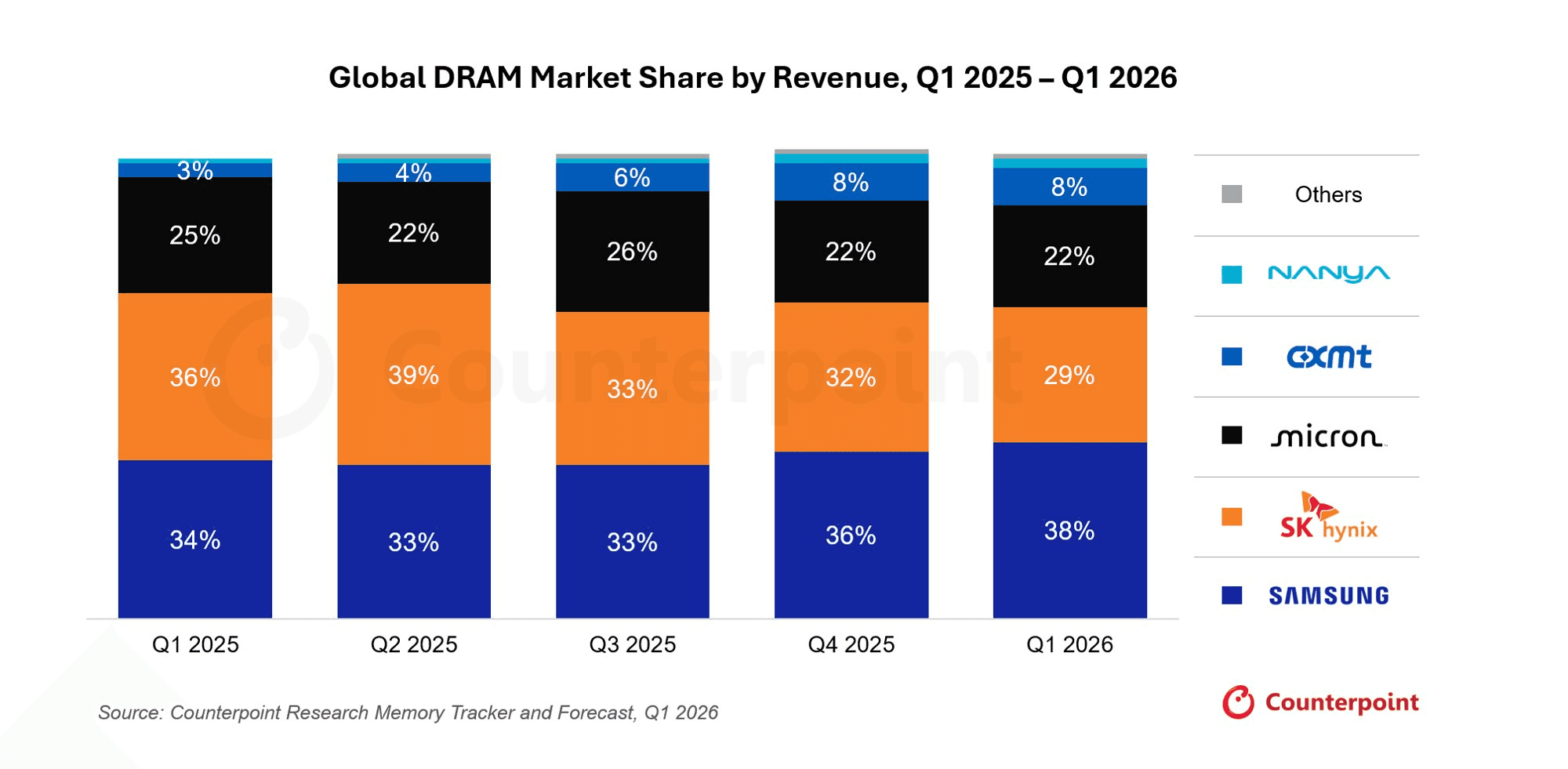
The global DRAM market is controlled by 3 companies: SK Hynix, Micron, and Samsung.
Together, they control roughly 89% of the market. Samsung has the largest share at around 38%. This makes memory one of the most concentrated and powerful parts of the AI supply chain.
The demand for memory is insanely high.
Every new generation of AI hardware consumes more memory. Better chips create more memory demand. More memory demand tightens supply. Tighter supply gives memory makers more pricing power. That is the loop.
Memory makers are now taking full advantage of this market structure. In my view, they are risking the broader AI CapEx cycle by pushing margins too aggressively. They could already make extraordinary profits at 60% gross margins. Instead, the market is moving toward levels that may be far higher.
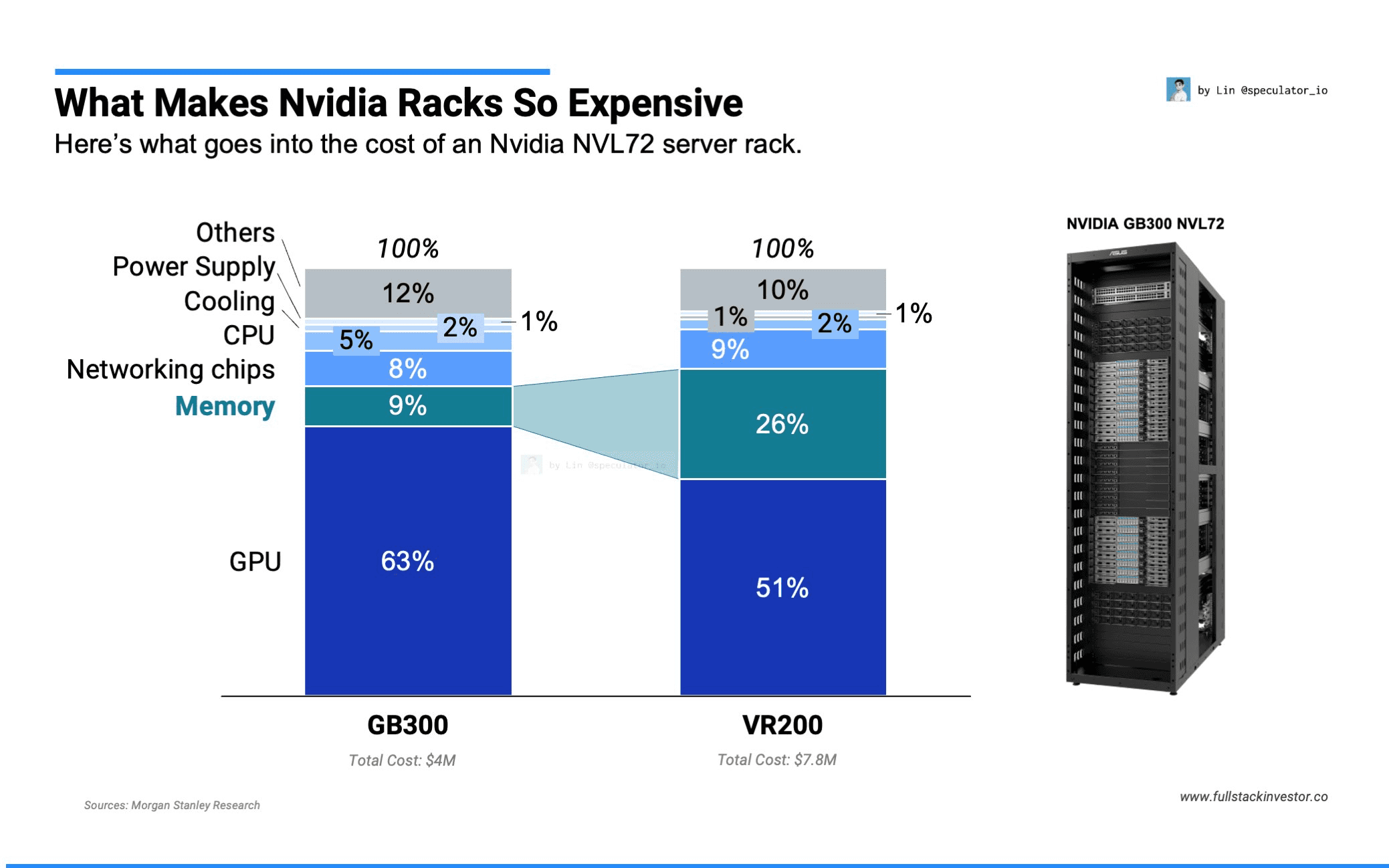
Right now the cost Nvidia’s newest super computer Vera Rubin 200 makes about 26% of the cost of the entire rack. But memory is becoming a much larger share of total hyperscaler capex quickly. If the trend continues memory could represent up to 40% of all AI capex. 40%.
We are already seeing this pressure show up in hyperscaler commentary. Microsoft increased CapEx by $25 billion because of higher component costs tied to memory and chips. Meta has pointed to higher component pricing, especially memory. Amazon has said memory prices have skyrocketed due to limited supply and strong demand.
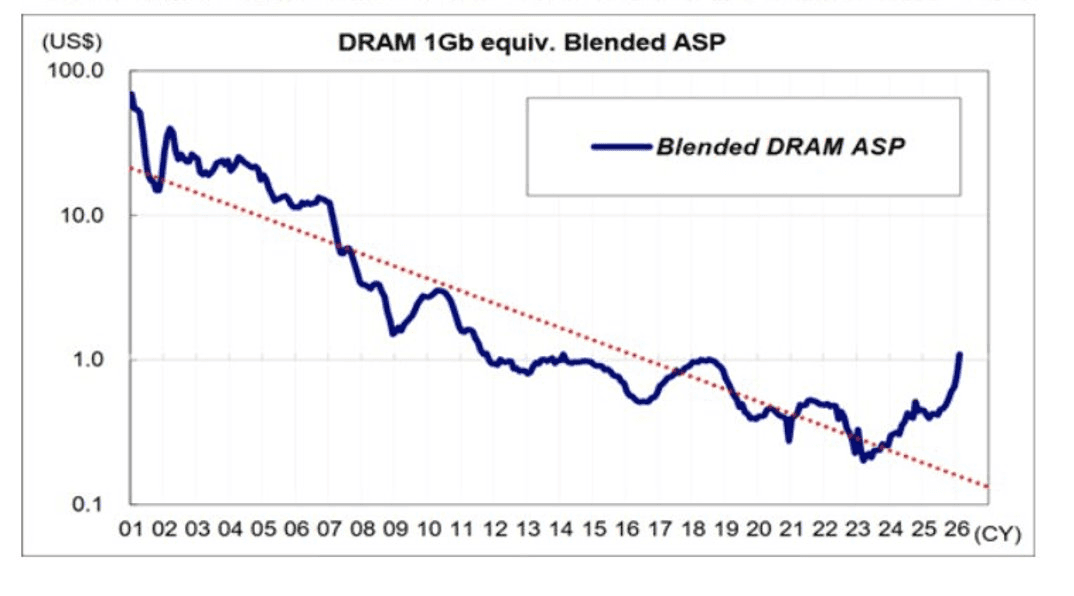
DRAM pricing is likely still far away from peaking, maybe sometime in 2027 or even 2028. Gross margins could reach extreme levels, with SK Hynix near 80%, Micron around 78% to 80%, and Samsung around 70% to 75%.
So, memory has been one of the leading sectors for months now. That’s why it sits on top of the Semiconductor theme. Eventually, this will end. But nobody knows when. This is the exact reason why it’s so important to try to hold on to leading stocks as long as possible.
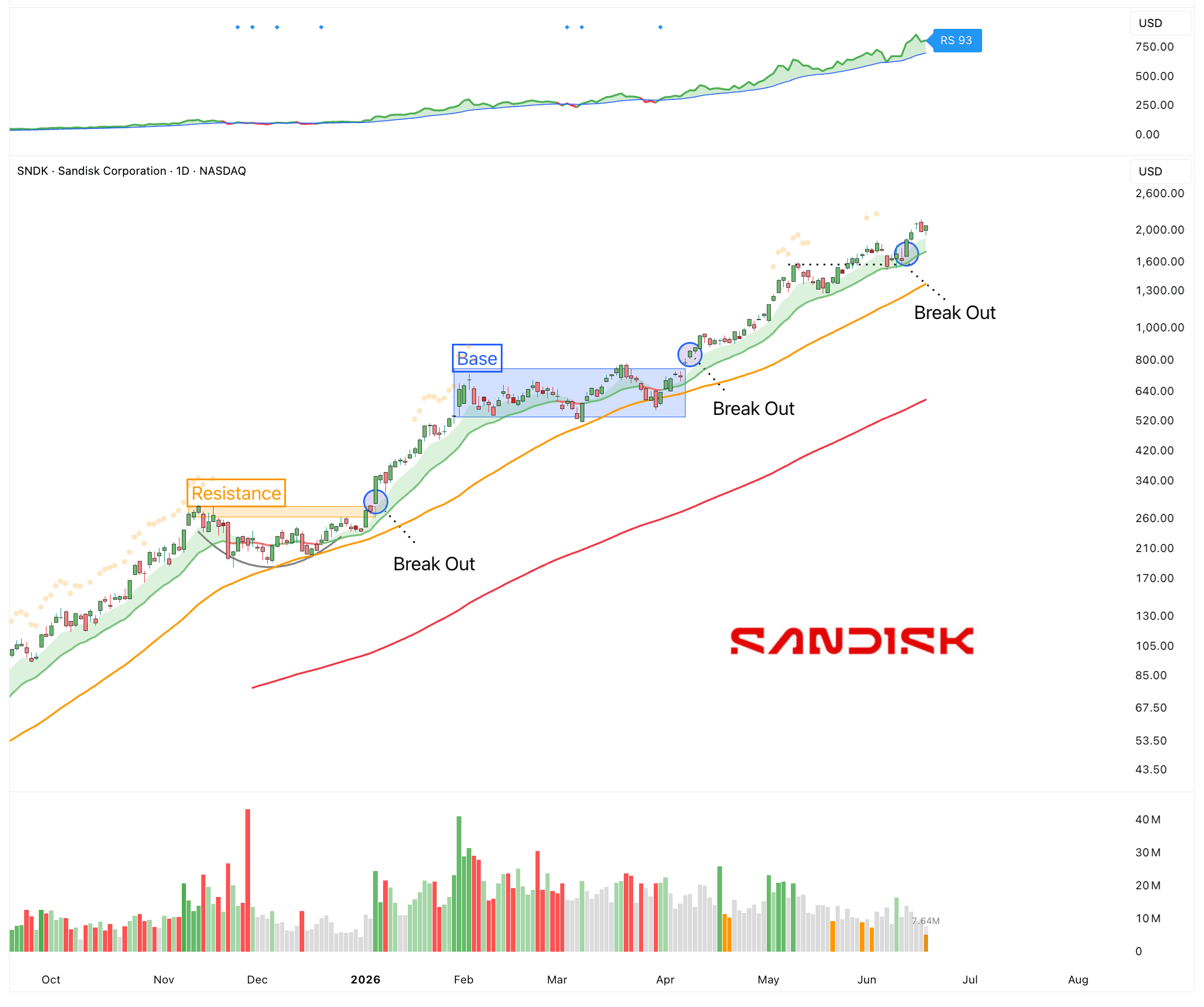
SanDisk $SNDK is the poster child. It has been featured several times over the past year and is a textbook example of a leading stock that keeps marching higher. It has not closed below its 50-day SMA in over a year. After every rally, it built another perfect base before breaking out again and continue higher. This is the blueprint of a truely leading stock.
A lot of people make the mistake of looking at a stock like this and thinking, “It has already gone up too much.” But the best stocks often look expensive the whole way up. They rarely give you a perfect entry. They rarely pull back as much as you want. They just keep holding up better than everything else because big investors keep buying them.
That is why market leaders matter so much in a bull market. Strong stocks are usually strong for a reason. They are telling you that demand is there. They are telling you that institutions want exposure. And they are telling you that the market still sees a lot of potential.
Previous Updates
View All
- Weekly Market Update: AI is Not Slowing Down
- Market Update: Has AGI Arrived?
- Weekly Market Update: Consolidation
- Weekly Market Update: September is Here
- Market Update: Nvidia Crushes Earnings
- Weekly Market Update: Yields
- Market Update: The Future of Biotech
- Weekly Market Update: Earnings Acceleration
- Market Update: The Next Generation of AI Infrastructure
- Weekly Market Update: New Highs
- Market Update: Nvidia’s Way Around Memory
- Weekly Market Update: LTCM 2.0
- Market Update: The Trajectory of AI Compute