Go Back

Lin
Market Update: The FinTech Comeback
The market is starting to broaden beyond the AI trade. This has been the key theme for the last few weeks. For a long time, AI infrastructure was the main engine behind market performance, with semis, hyperscalers, power, data centers, and hardware suppliers attracting most of the capital. Simply because growth was strongest there and the investment cycle was still accelerating. But after such a massive rally, expectations are now much higher, valuations are richer, and investors are starting to look for other sectors.
And one of those is FinTech. The sector benefits from several tailwinds at the same time: stronger risk appetite, higher activity, and improving profitability. More accounts, more deposits, more card spending, more loan demand, and more trading activity all flow directly into revenue.
The strongest fintech names are also becoming much broader businesses. For example, Robinhood is moving far beyond stock trading into crypto, retirement, cards, prediction markets, tokenization, and international expansion.
So, today I wanted to highlight some of the key names in FinTech:
Robinhood $HOOD
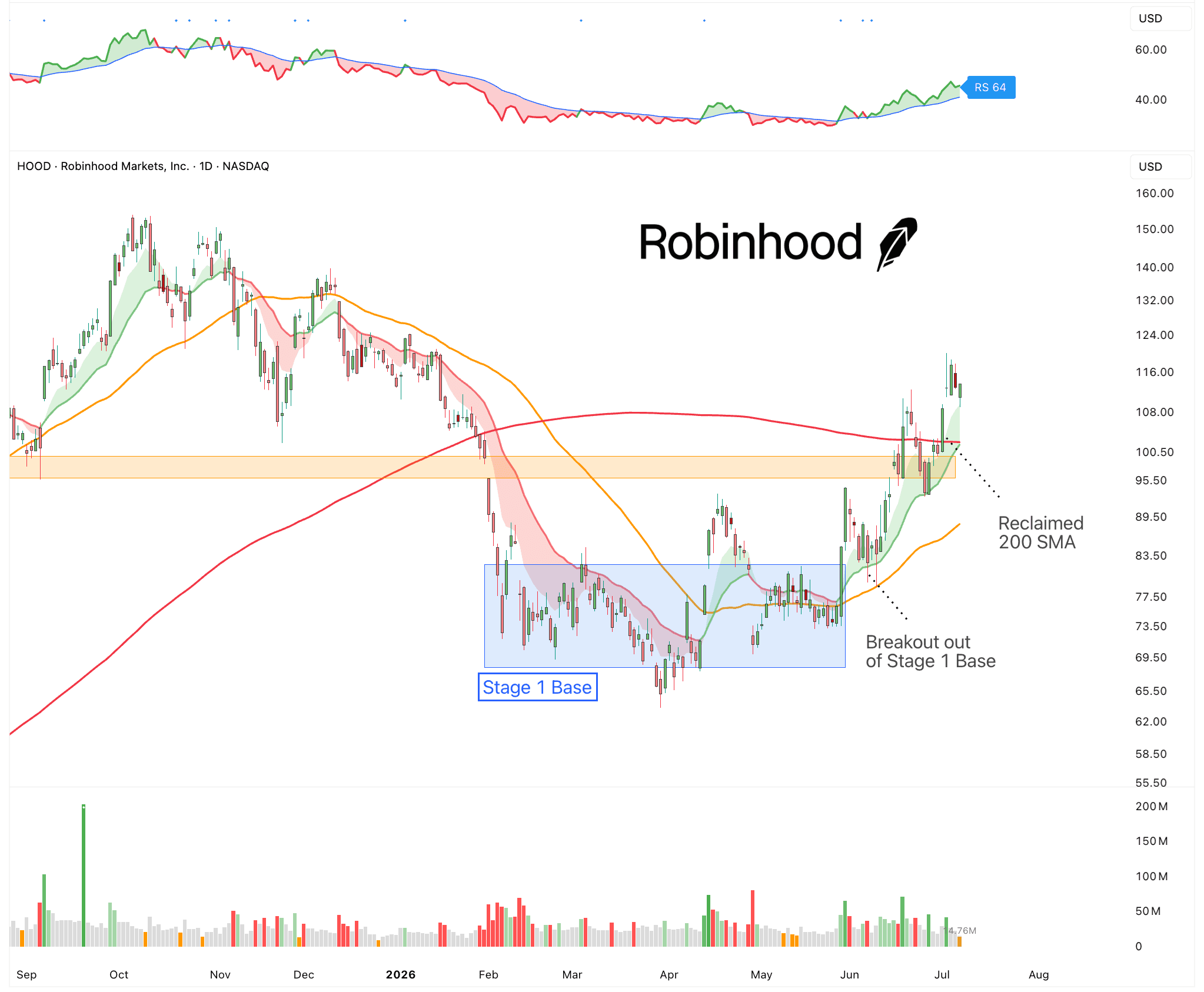
One of my key long-term position. Continues to move since it broke out which was discussed here.
It is a good reminder that even the best stocks often go through long and painful corrections. They can spend months moving sideways, shaking out weak hands, and looking like nothing is happening.
But when the business keeps improving and the stock finally breaks out again, those long bases can become the foundation for the next major move.
Interactive Brokers $IBKR
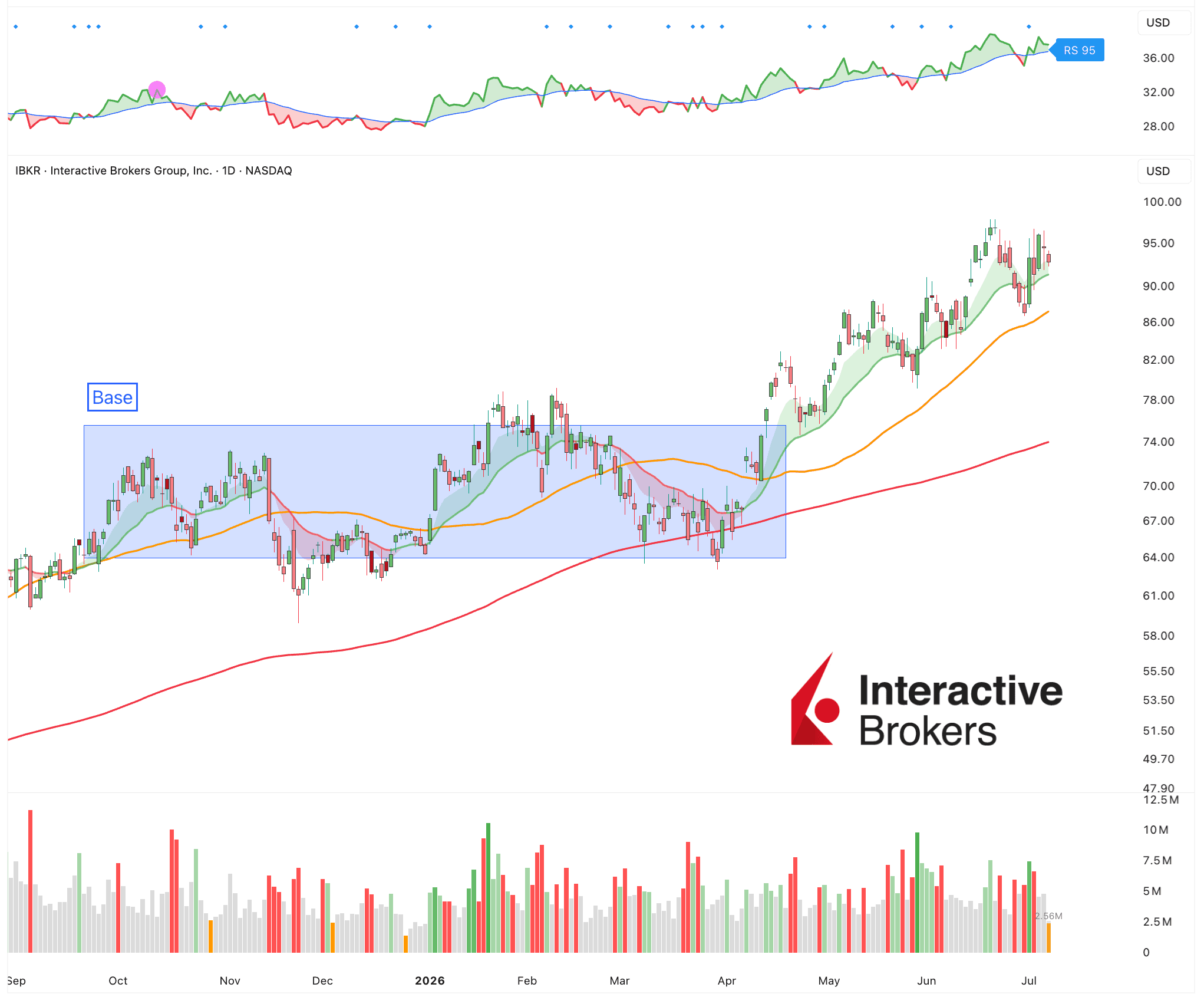
The biggest tailwind for Interactive Brokers right now is the rise of international investing.
Investors are no longer only looking at US mega-cap tech for AI exposure. They are also looking at Korea, Taiwan, and other global markets tied to semiconductors, memory, and the broader AI supply chain. That plays directly into IBKR’s hands, because global market access is one of its core strengths.
The stock also shows exactly what a steady compounder looks like: higher highs, higher lows, and a stock that just keeps grinding upward.
Dave $DAVE
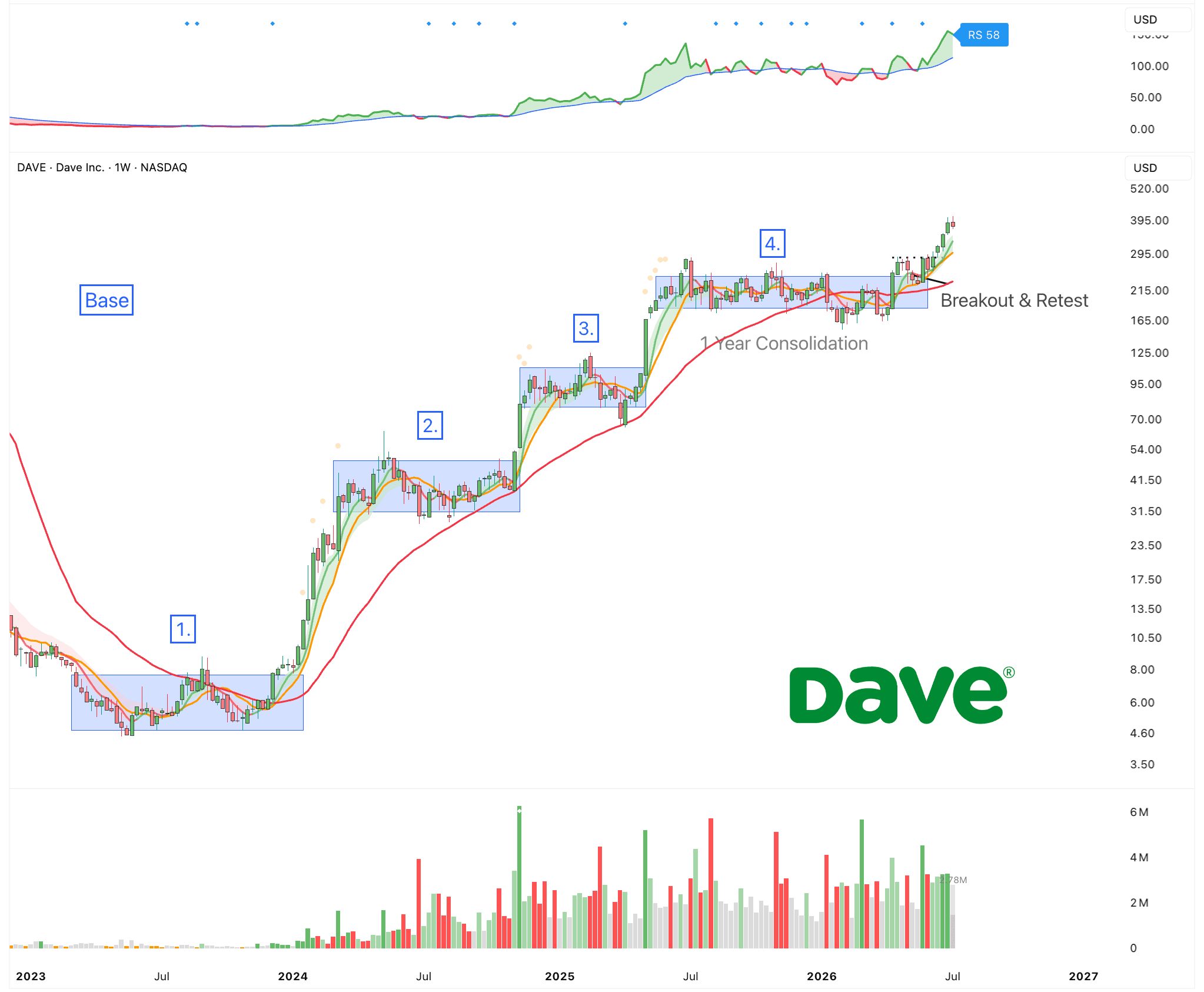
Similar story here with DAVE here as discussed here.
This is picture perfect price action. The stock built a long base, broke out, retested the breakout area, and then started moving higher again. That is exactly the kind of behavior you want to see from a strong leader.
DAVE is a great example of what tends to happen when a stock is rerating. It’s not moving in a straight line. Instead, it went through multiple bases, digested big moves, shook out weak holders, and then continued higher. Each consolidation gave the stock a new foundation for the next leg.
Sezzle $SEZL
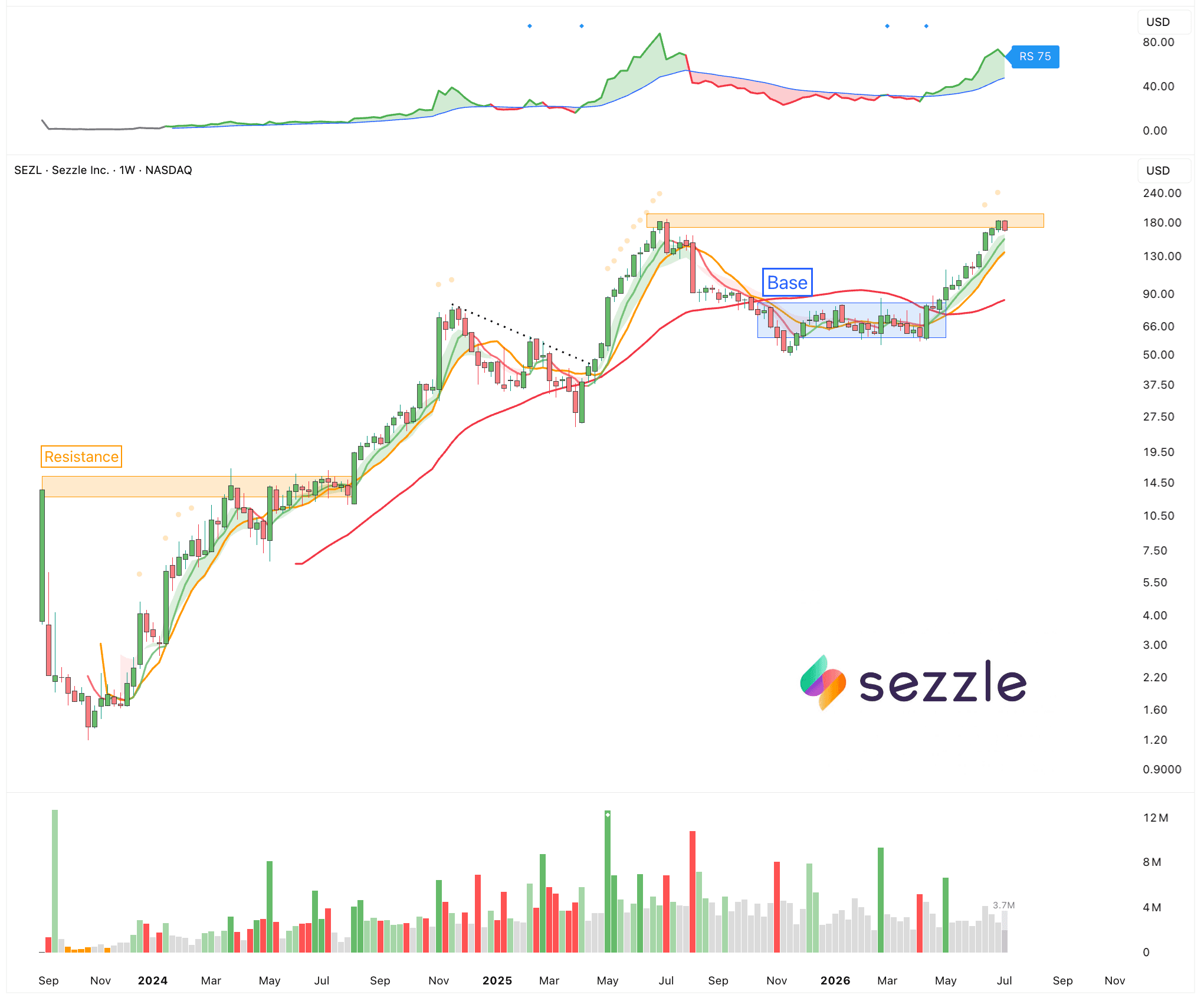
Sezzle started as a buy now, pay later company, but the more interesting part now is that it is becoming a consumer finance platform for underbanked and younger consumers. Instead of only making money with split payments, Sezzle is pushing more users into higher-value products and subscriptions. Unfortunately, I’ve neglected Sezzle for too long. And I missed the early breakout. Now, it’s going for all-time highs. So, I’ll be keeping this on close watch.
Klarna $KLAR
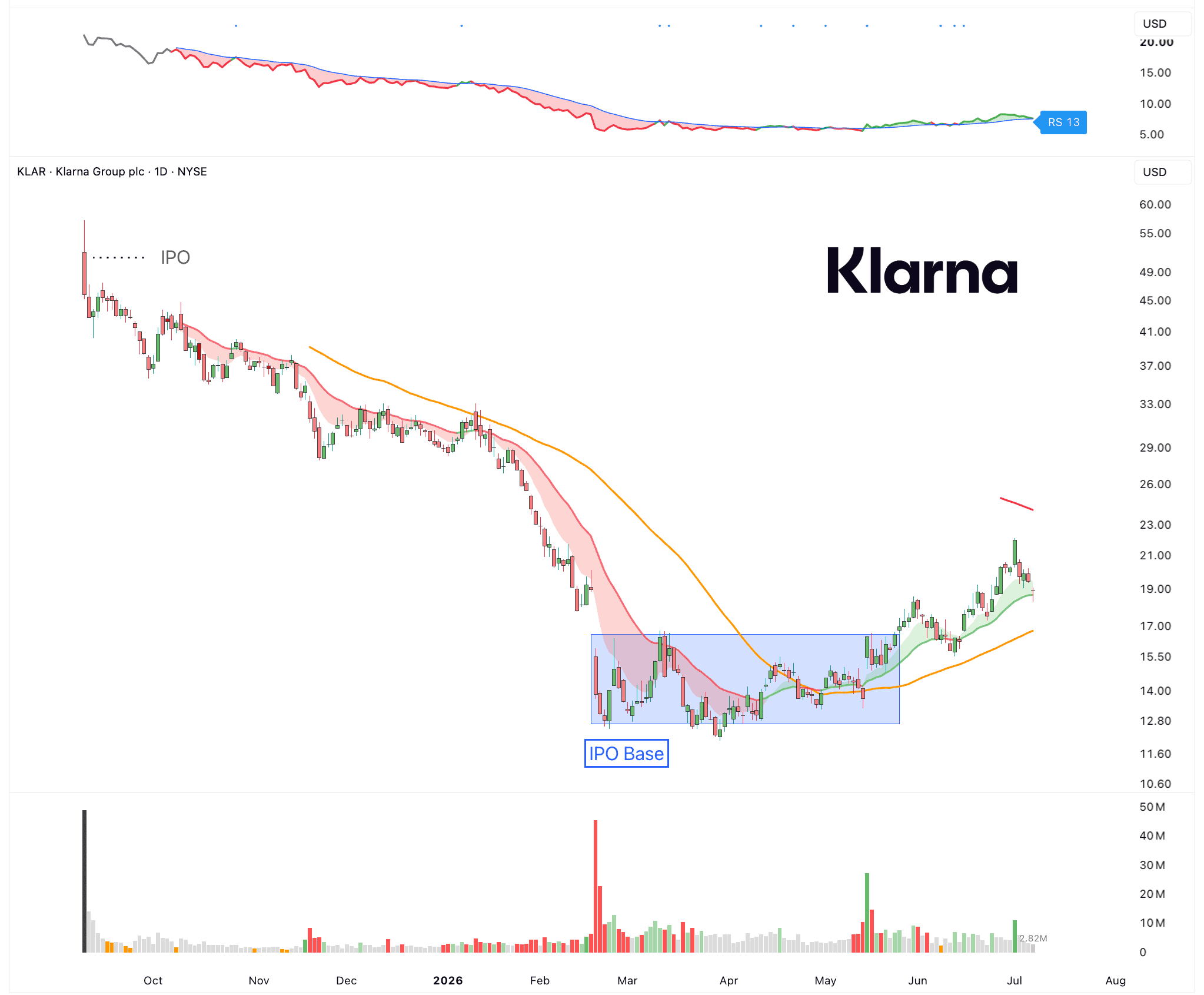
Klarna, another large player in the buy now, pay later (BNPL) game, is a great example of how many IPOs behave.
There is usually a big initial pop after the listing. Then, over time, insiders and early shareholders start to unlock and sell their shares into the open market. That selling pressure can weigh on the stock for months. That’s why it often pays to wait and observe instead of chasing the first move.
Now, almost 1 year after its IPO, Klarna finally looks like most of that selling pressure has been absorbed. For the first time in its public history, the stock has started to build a proper base and break out. So, the key lesson with IPOs is that there is no need to rush.
Virtu Financial $VIRT
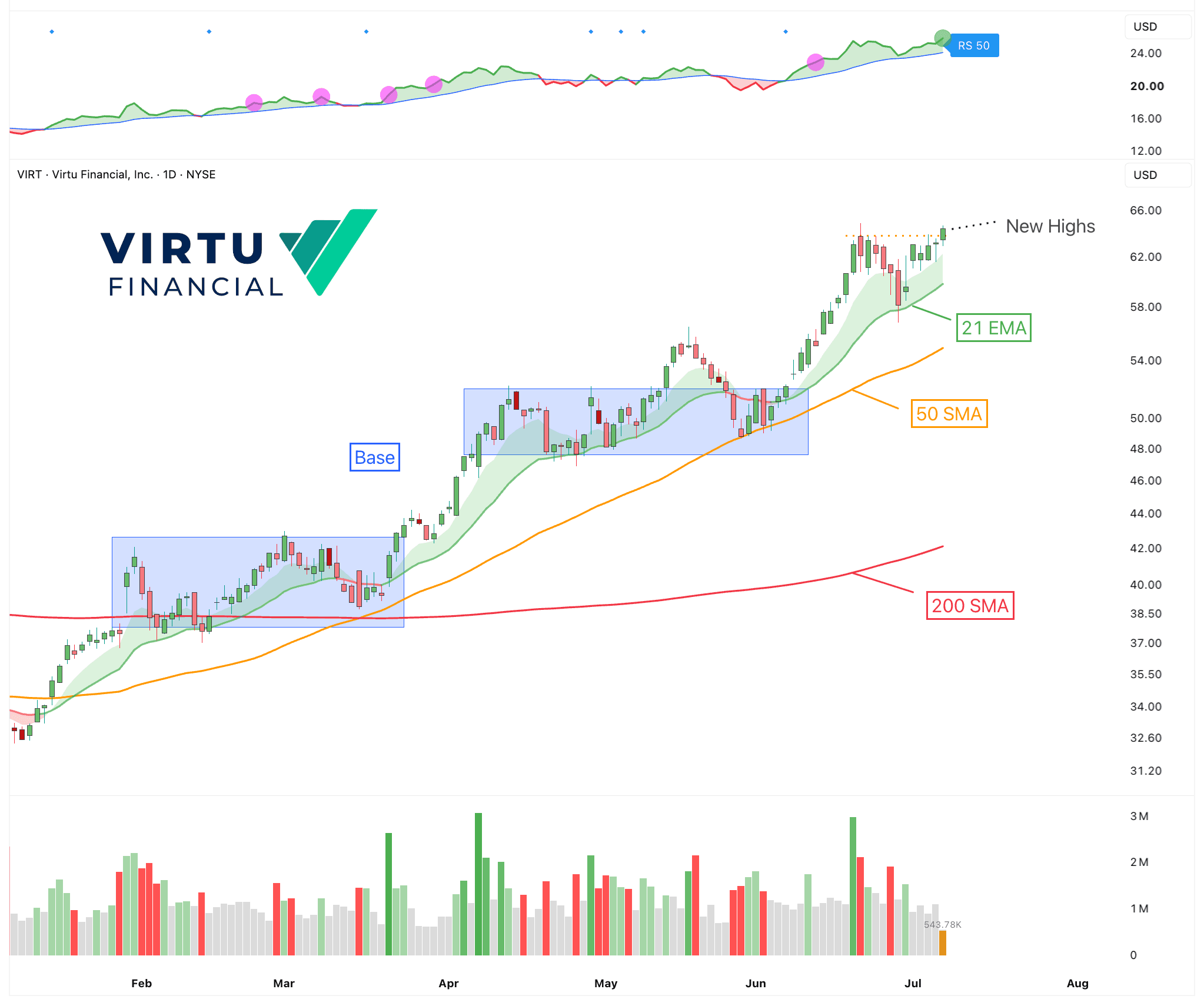
Virtu Financial is one of the largest electronic market makers in the world. It’s basically a high-tech middleman in financial markets. When people want to buy or sell, Virtu helps make sure there is someone on the other side of the trade. It makes money from small price differences across millions of trades. Volatility, higher volumes, wider spreads, and more complex global trading flows all play into Virtu’s hands. Even the recent market turbulence did not bother Virtu at all. While many stocks have been shaken around, Virtu has kept climbing and is now pushing toward new all-time highs.
Webull $BULL
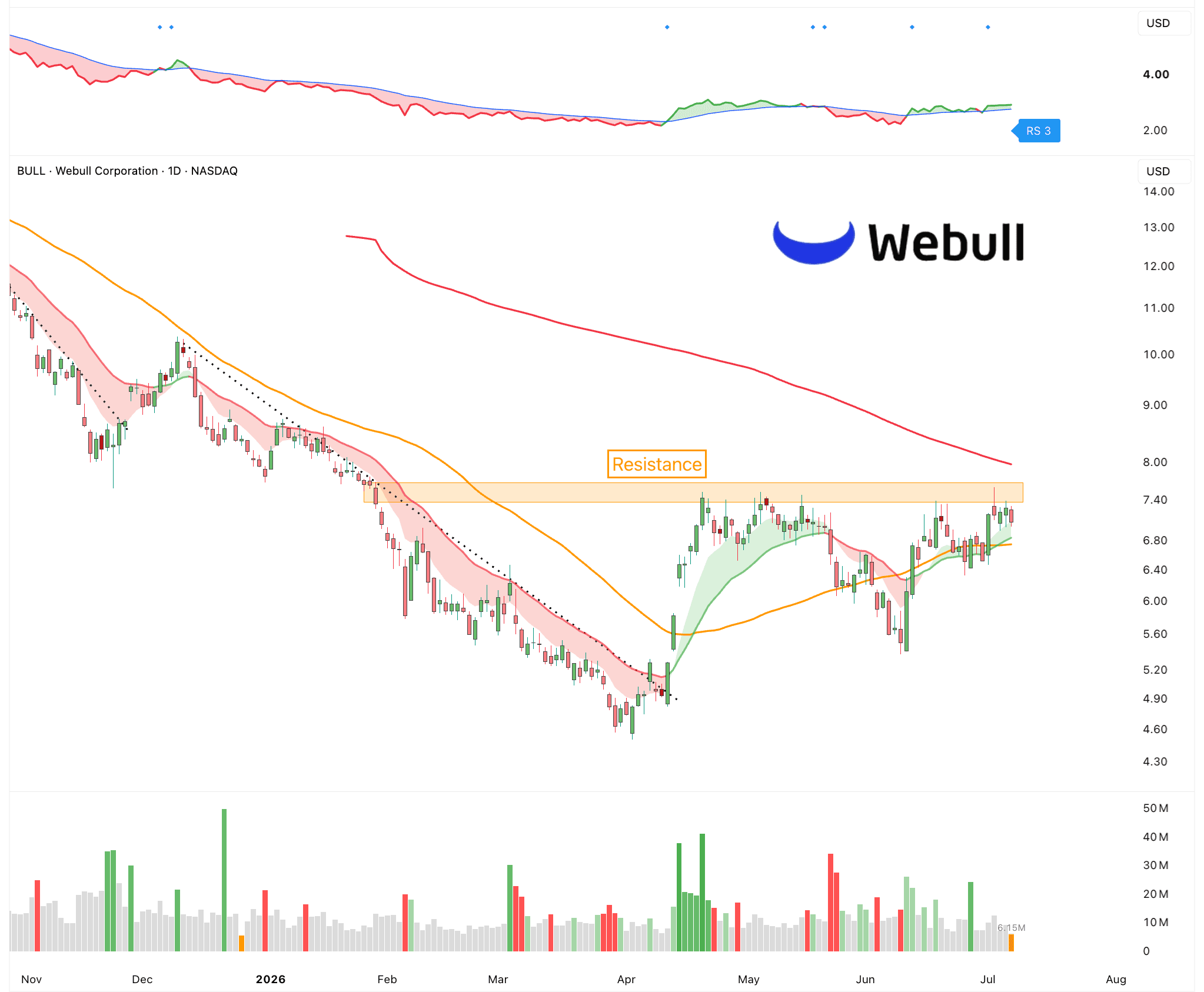
Webull is a smaller, more speculative retail trading platform compared to Robinhood. It has a ton of catchup to do. But both benefit from the same trend: retail investors are becoming more active again. More trading, more options volume, more crypto activity, and more international investing all help the model. Webull is not the main idea here. It is more of a read-through for the sector.
Previous Updates
View All
- Weekly Market Update: Accumulation
- Weekly Market Update: The Best Quarter
- Weekly Market Update: Rate Hikes
- Weekly Market Update: AI is Not Slowing Down
- Market Update: Has AGI Arrived?
- Weekly Market Update: Consolidation
- Weekly Market Update: September is Here
- Market Update: Nvidia Crushes Earnings
- Weekly Market Update: Yields
- Market Update: The Future of Biotech
- Weekly Market Update: Earnings Acceleration
- Market Update: The Next Generation of AI Infrastructure
- Weekly Market Update: New Highs