Go Back

Lin
Weekly Market Update: Earnings Season Is Here
The market environment has pretty much remained the same for the last few weeks.
The AI trade is still slowing down and taking a breather, while other sectors have picked up. The rotation continues. So, I remain cautiously optimistic on AI long-term. However, there’s plenty of technical damage across the group especially for the short-term. So, timing is important to keep in mind. It the very best stocks need to go through digestion, pullbacks, and corrections. Many of these names need time to rebuild. I wouldn’t expect every stock with an AI connection to just go higher no matter.
And now geopolitics are taking over…again.
It appears that tensions between the U.S. and Iran are escalating for the 30th time. Iran has closed the Strait of Hormuz after striking a commercial ship that was trying to pass. This was a major escalation and the US responded with its third round of strikes on Iran over the past week.
Tehran then launched missile and drone attacks on US linked sites across the Middle East. Several injuries and limited damage were reported, but no deaths have been confirmed.
This … will likely continue for a while. I don’t see any lasting resolution any time soon. So, that’s something we have to brace for.
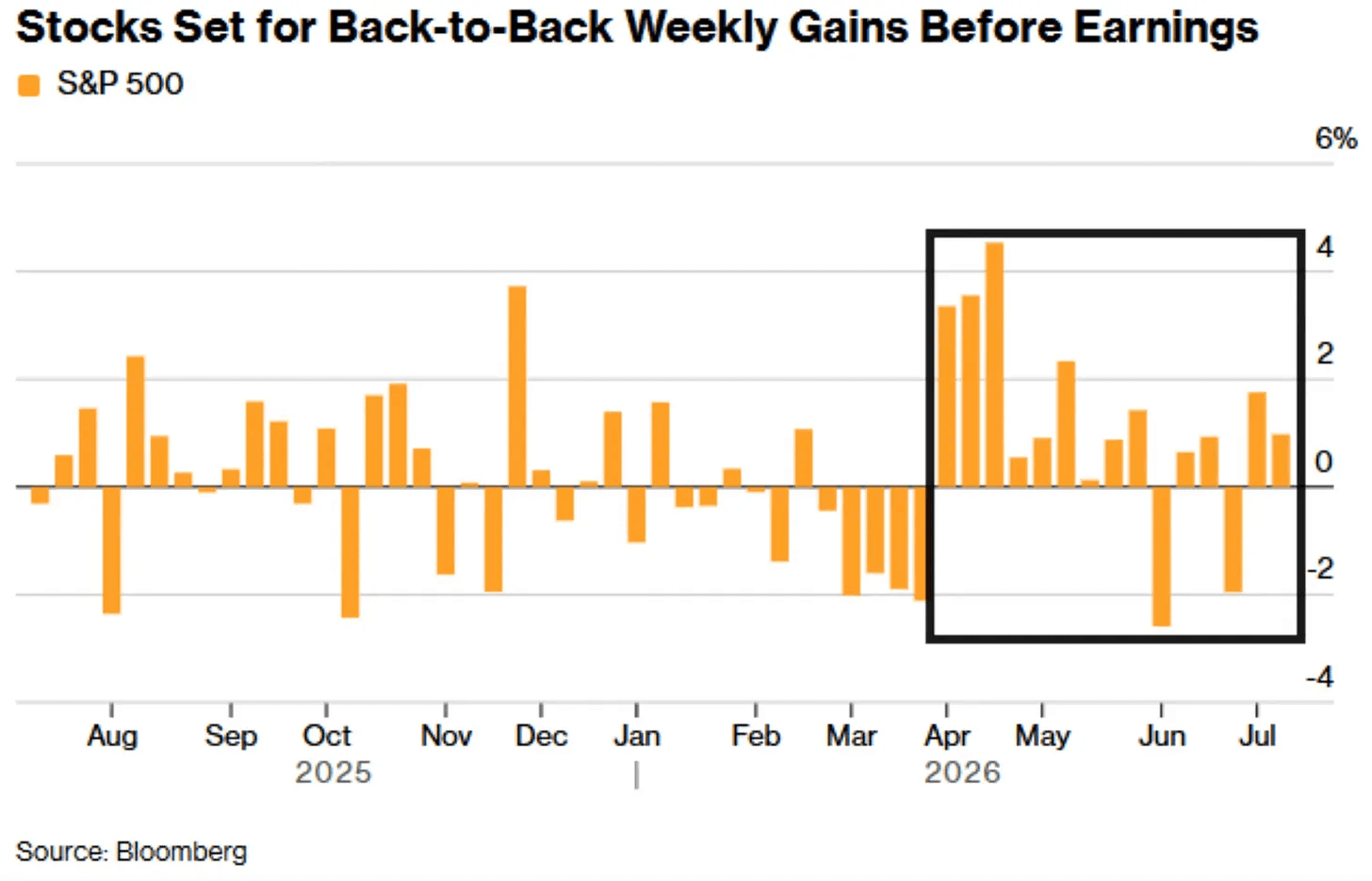
A pullback should be expected. Below is a great example of how incredible these last few months have been. Since April, there have only been two down weeks. That is not normal. We’ve been incredibly spoilt. That is important to acknowledge. April through June was the time to be aggressive. Now it’s not. Having a more neutral stance allows us to be more nimble and adjust quickly as conditions change.
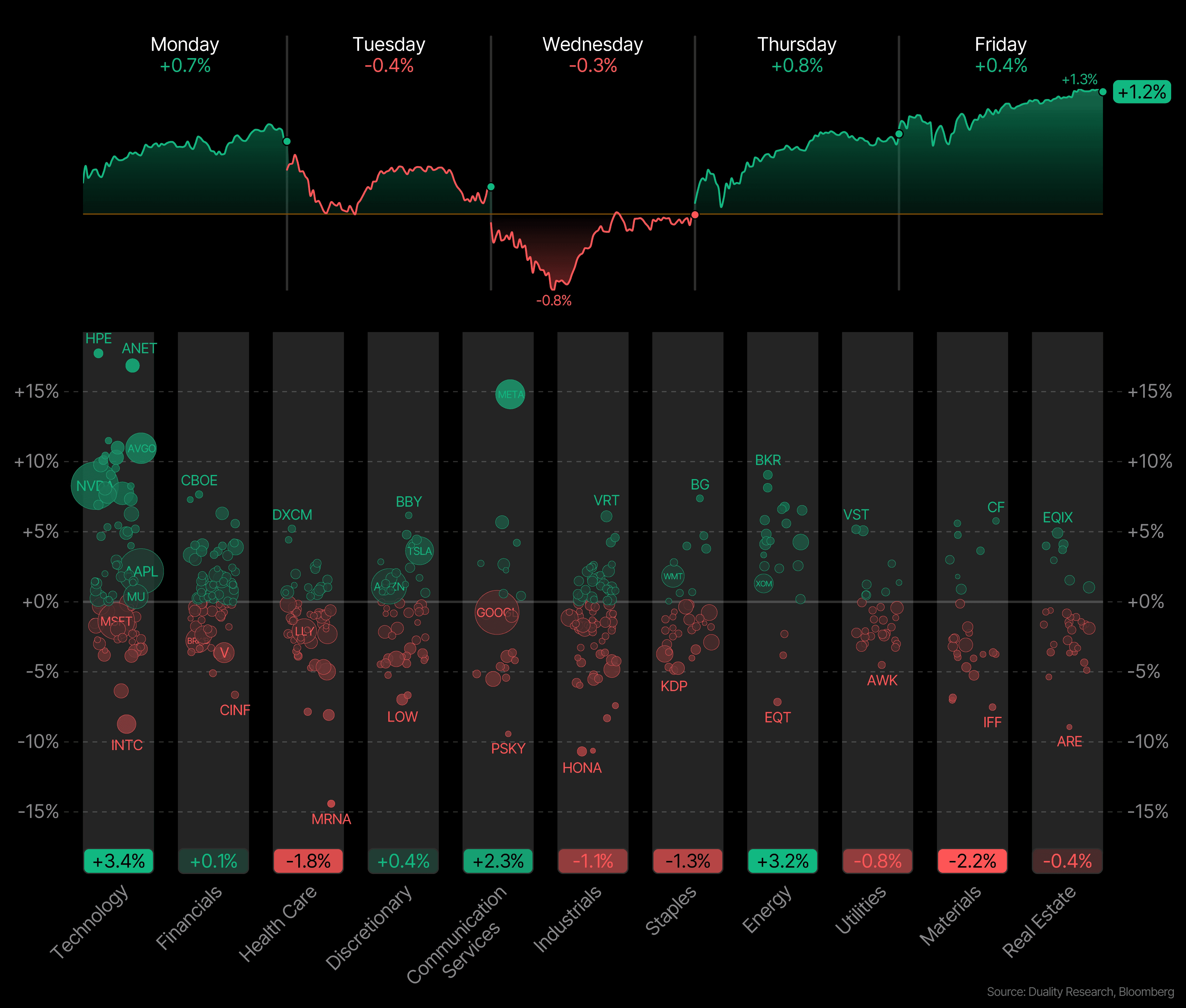
This is a great visual to show how the rotation has been playing out so far. Energy, financials, and healthcare are taking over, while tech has been sold off. This is probably a good glimpse of what we’ll see over the next few weeks.
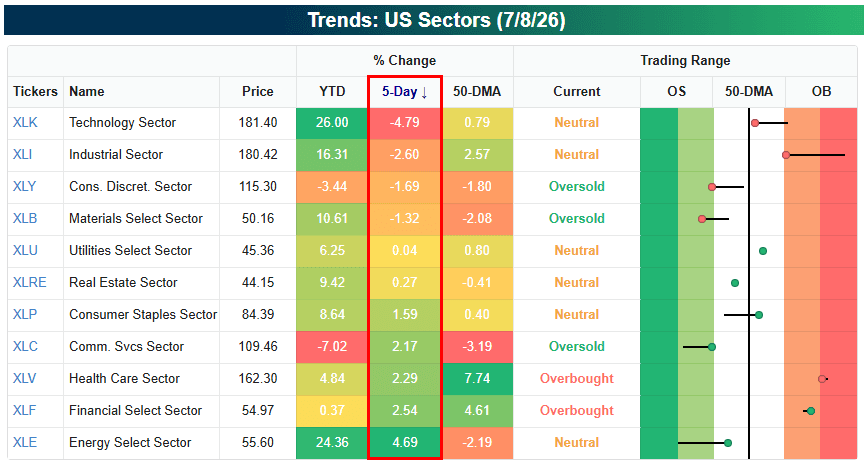
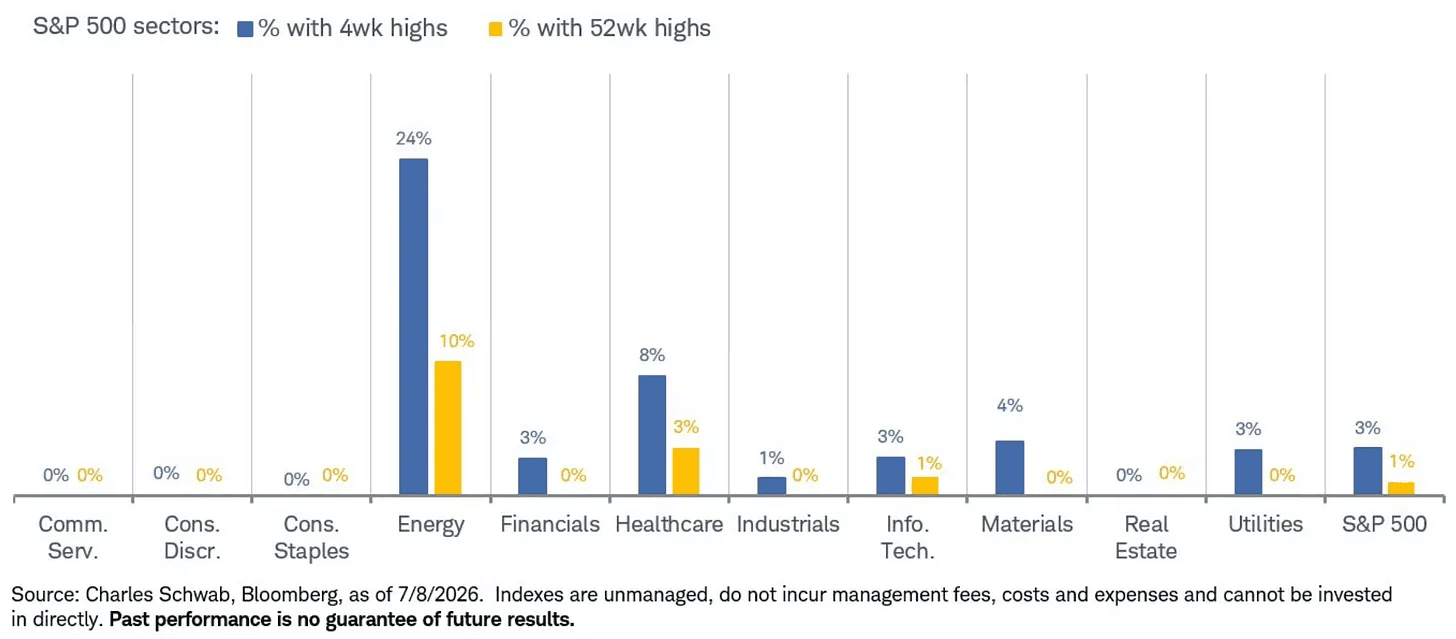
That is why we are seeing new highs in energy and healthcare stocks.
Outside of those 2 sectors, there are still very few new highs to point to. Looking at the percentage of stocks reaching 4-week and 52-week highs by sector, energy is the clear standout at 24% and 10%. Most other sectors remain stuck in the low single digits. Hence, these are some of the key areas to focus on.
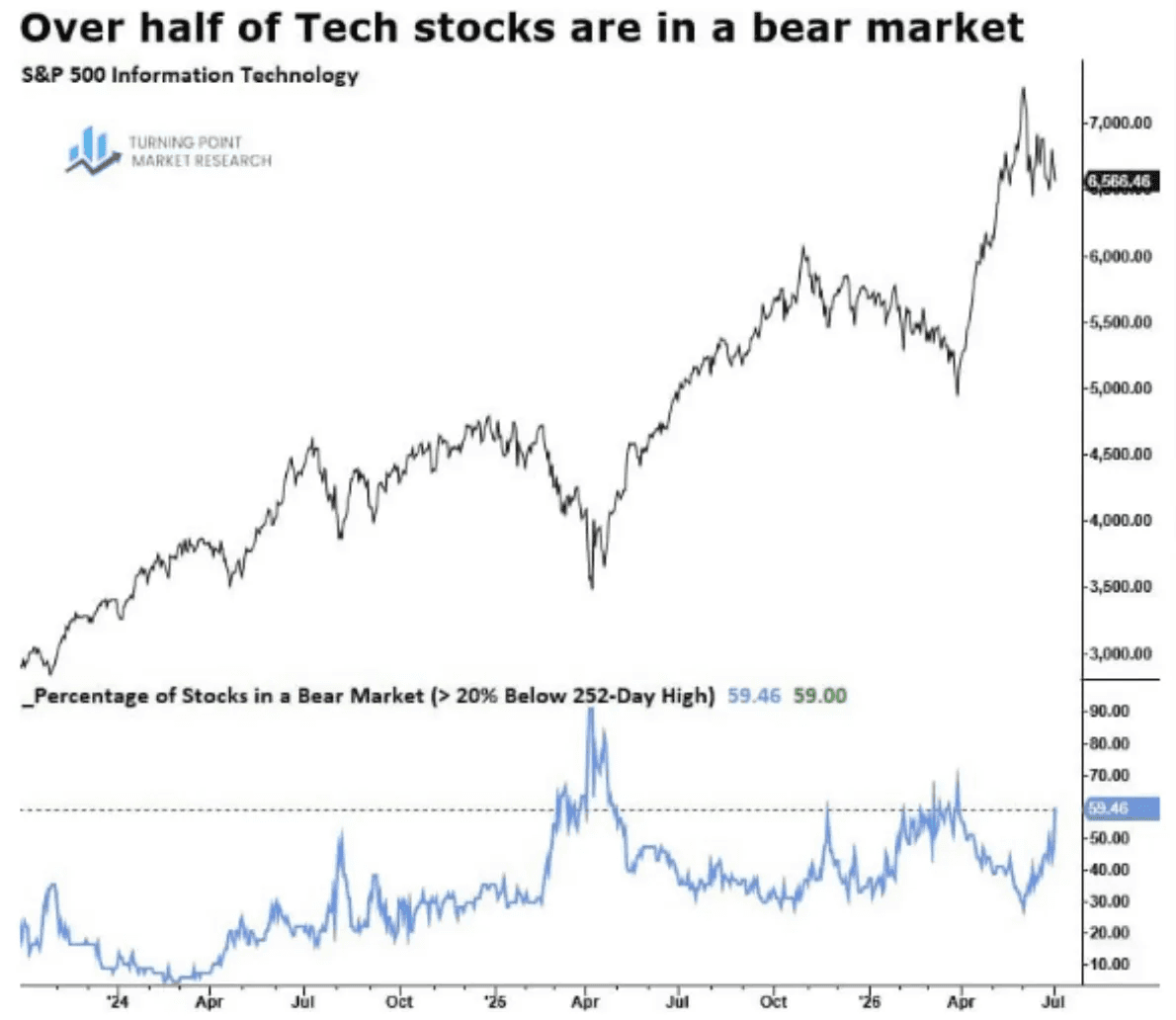
One thing you will miss by focusing only on the general market is the damage across parts of the technology sector. Almost 60% of S&P 500 technology stocks are now in a bear market, with 59% trading at least 20% below their 252-day highs and 35% down more than 50%.
Much of the sector underneath them is already deep in a bear market. The weakness is being masked by the major indices because the S&P 500 and Nasdaq are heavily weighted toward a small group of large companies.
The good news is that the technology sector now trades at around 21.5 times forward earnings, close to its April 2025 low and below both its 5-year average of 25.6 times and its 10-year average of 22.9 times. Tech is no longer trading at extreme multiples. That is partly because prices have fallen, but also because earnings estimates continue to improve.

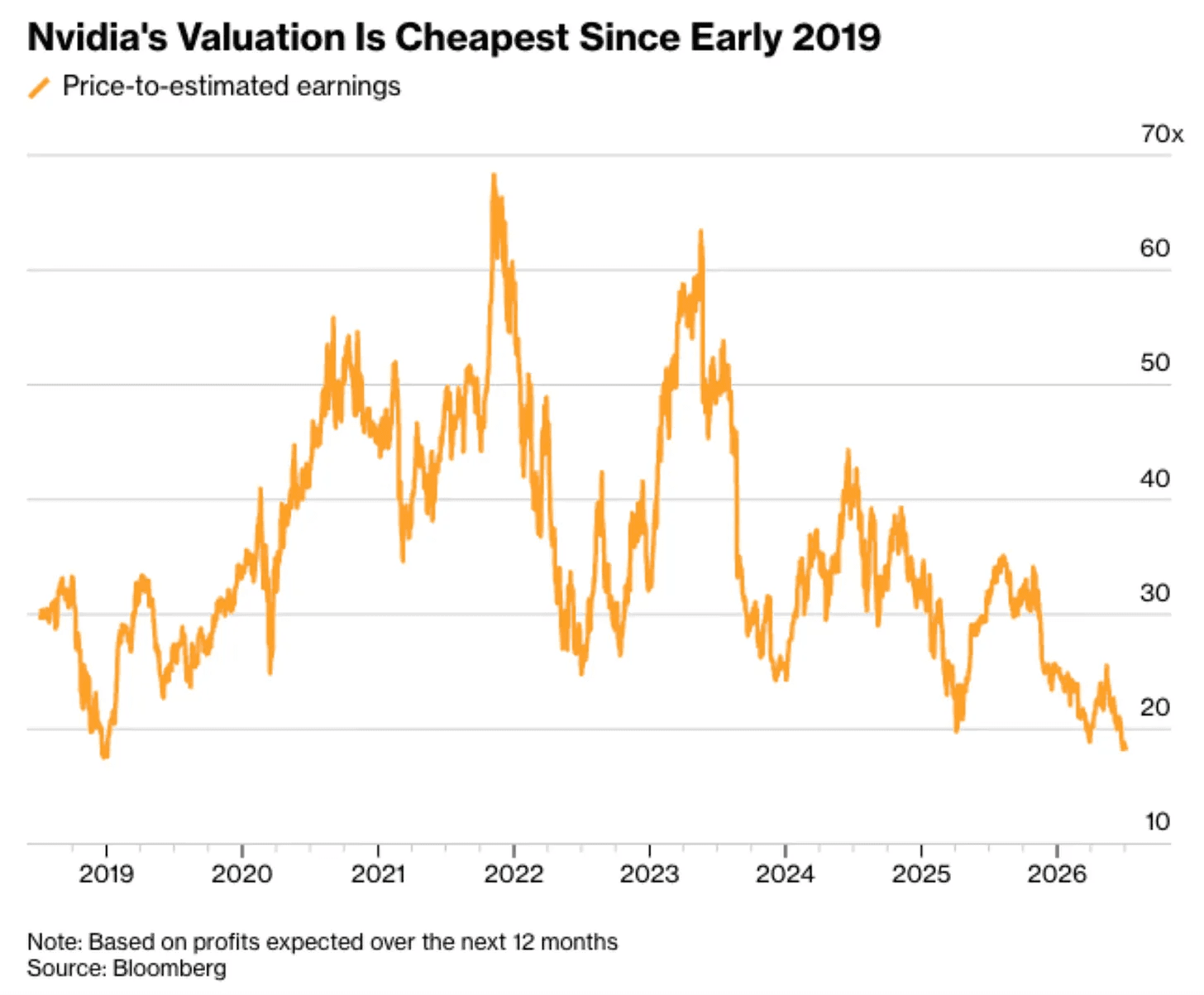
Nvidia’s valuation is now at its lowest level of the entire AI boom. The stock trades below 20 times earnings, its cheapest valuation since early 2019. That was years before ChatGPT launched and before AI became the market’s biggest investment theme. The company at the center of the AI boom pretty much has been ignored for the past year. But I expect that will change rather sooner than later.
So far, this has been a pretty good year, and there is currently no strong reason to believe that will change. A short pause or pullback remains likely, especially as we move toward September, but the longer-term setup still looks constructive.
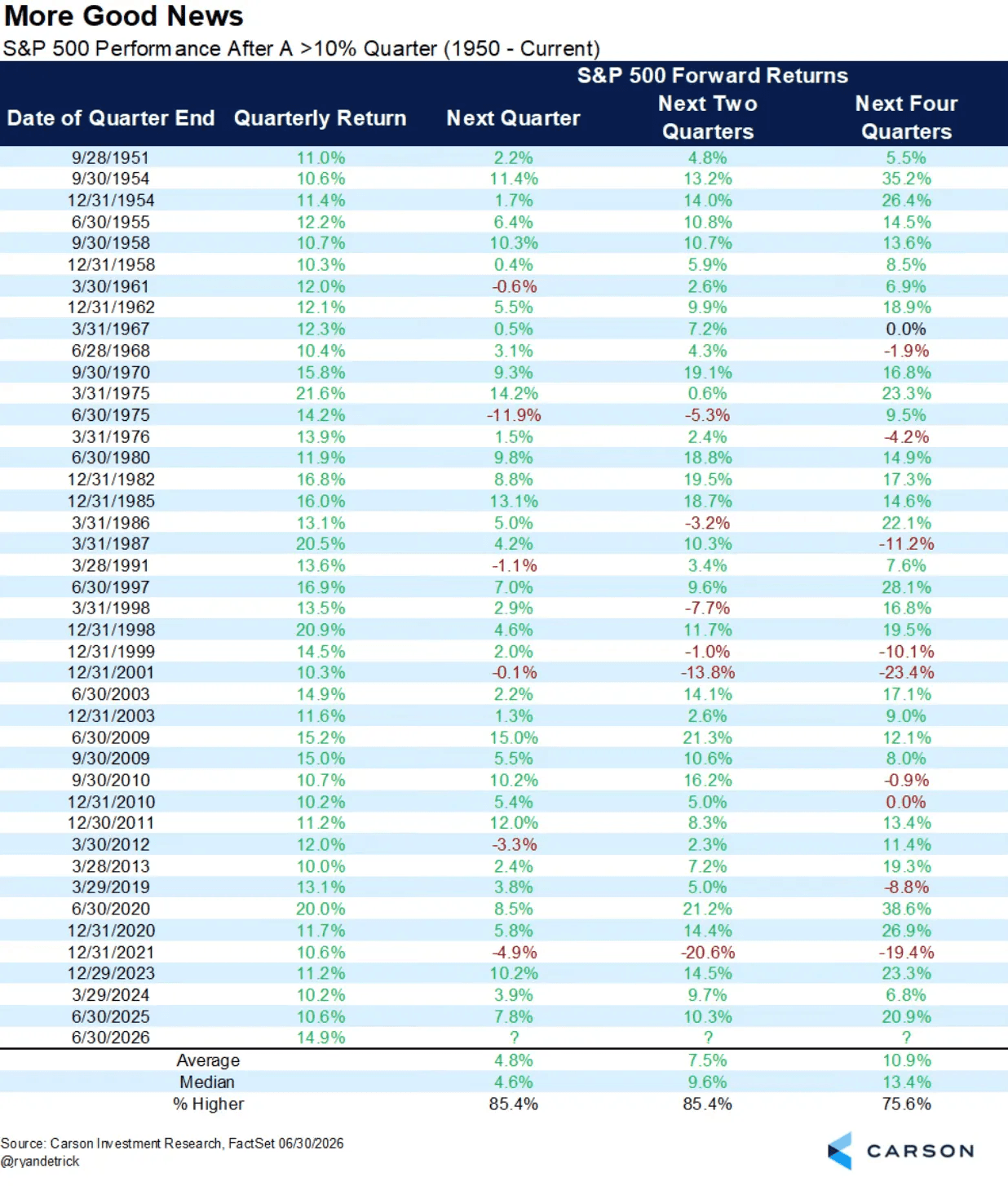
Since 1950, there have been 41 other quarters in which the S&P 500 gained more than 10%. The following quarter was positive 85% of the time, and the following 2 quarters were also positive 85% of the time. Over the next 12 months, the median gain was 13.4%. For now, momentum is still on our side.
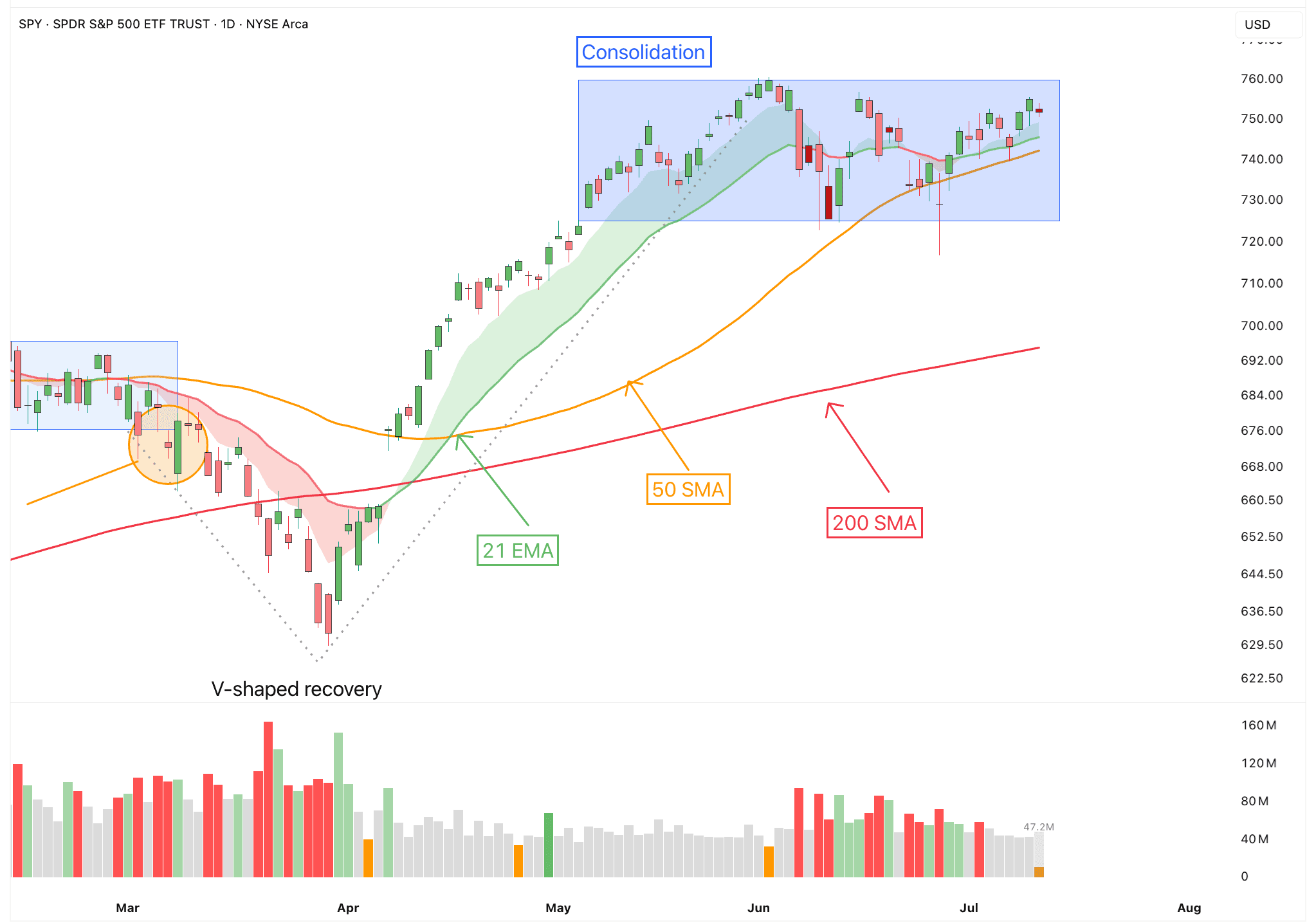
But it is still important to stay patient. There is no reason to be overly aggressive while the market remains stuck in this consolidation, as volatility tends to stay elevated and there is no clear market direction. That tends to lead to failed breakouts and breakdowns on both sides. Buying too aggressively in this environment can quickly leave you exposed to failed moves and sharp reversals.
Q2 earnings season kicks off this week. A handful of major banks will report, along with several key names tied to the AI trade, including ASML and TSMC, as well as Netflix. The numbers will matter, but the market’s reaction will matter even more. How investors respond to strong earnings and guidance will give us a clearer read on current expectations and will set the tone for the next few weeks.

The market environment has clearly changed.
For months, the easiest trade was simply owning AI infrastructure and ignoring almost everything else. That trade became crowded, extended, and eventually needed time to cool off. Over the past few weeks, that is exactly what has happened.
The key point is that weakness in semiconductors and AI infrastructure has not pulled the entire market lower. Capital has rotated into the fintech, biotech, healthcare, and cybersecurtity instead of leaving the market entirely. That is a healthy sign because it shows that investors are still willing to take risk, just in different parts of the market.
Now we are entering an important stretch. Major inflation data, bank earnings, and key reports from TSMC and ASML could determine whether the market is ready to break higher or needs more time to consolidate.
My bias remains cautiously optimistic, as it has for months, but I am not blindly bullish. I am still bullish on AI long-term while continuing to look for stocks and sectors that can perform even if AI infrastructure remains under pressure for now.
The market is becoming more selective. Stocks with the strongest combination of fundamentals, technicals, themes, and relative strength should continue separating themselves from the rest. That is important not only to realize but also to focus on.
Previous Updates
View All
- Weekly Market Update: Accumulation
- Weekly Market Update: The Best Quarter
- Weekly Market Update: Rate Hikes
- Weekly Market Update: AI is Not Slowing Down
- Market Update: Has AGI Arrived?
- Weekly Market Update: Consolidation
- Weekly Market Update: September is Here
- Market Update: Nvidia Crushes Earnings
- Weekly Market Update: Yields
- Market Update: The Future of Biotech
- Weekly Market Update: Earnings Acceleration
- Market Update: The Next Generation of AI Infrastructure
- Weekly Market Update: New Highs