Go Back

Lin
Weekly Market Update: Rate Cuts Incoming
This week was anything but dull.
Fed Chair Jerome Powell hinted at a possible rate cut as early as September. And the market liked the news. That wasn’t a huge surprise. I pointed out last week what sectors will benefit the most from rate cuts.
But even though the week ended on a positive note, the S&P 500 finished about flat.
Volatility is back.
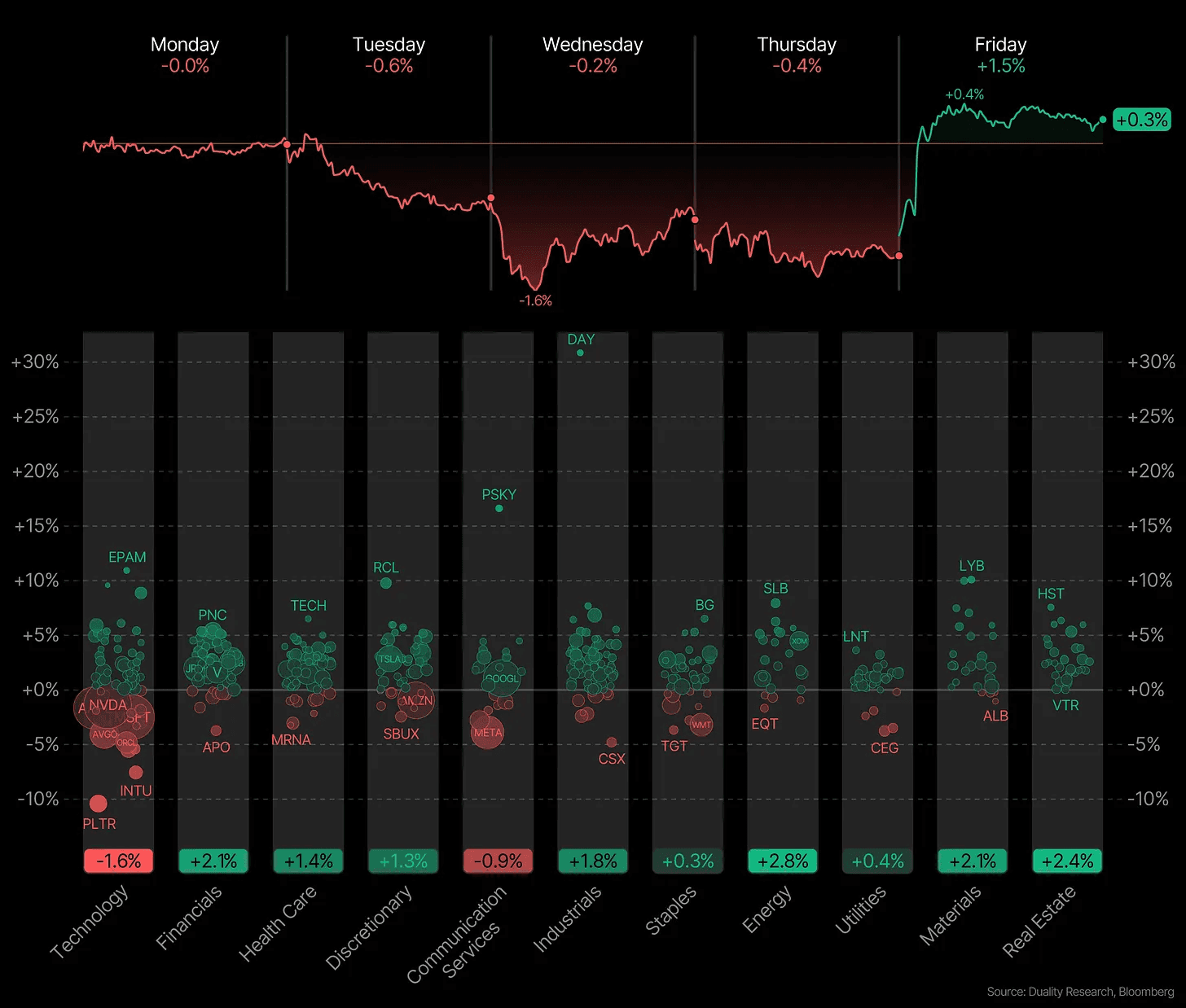
Friday was a big day for sectors that move with interest rates as I’ve highlighted them last week, but let’s go over them again:
Real Estate & Home Builders → Lower rates reduce mortgage costs, making it easier for buyers to qualify for loans.
Gold & Precious Metals → They benefit from falling yields and act as a hedge when monetary policy gets looser.
Crypto → Crypto thrives on liquidity and a “risk-on” mood usually push digital assets higher.
Small-Cap Stocks → These firms often depend more on affordable financing, so cheaper money helps them grow.
Tech & Growth Stocks → Their long-term cash flows look more attractive when the discount rate falls.
Emerging Markets → A weaker dollar makes debt easier to manage and draws foreign investors back.
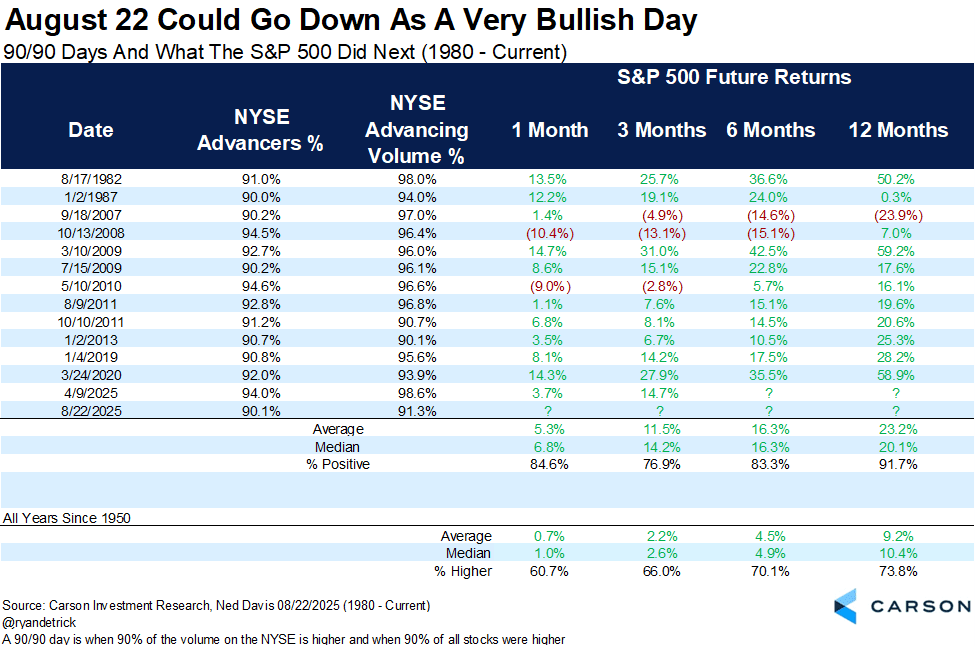
Almost 80% of NYSE stocks moved higher. That tells us this was not just a rally in a few names, but a broad push across the market.
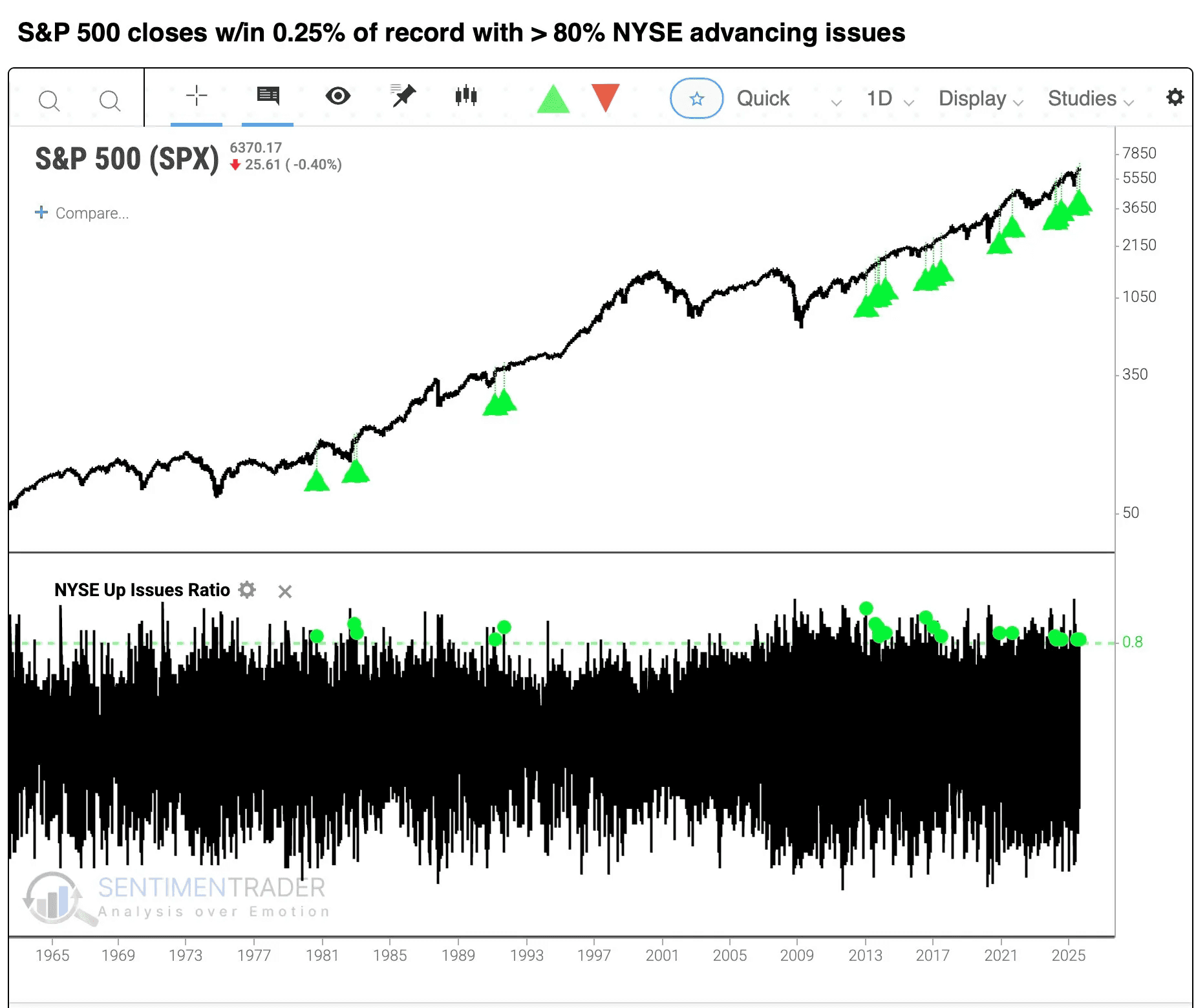
These events tend to be quite bullish, with the S&P 500 higher more than 90% of the time a year later and up more than 23% on average.
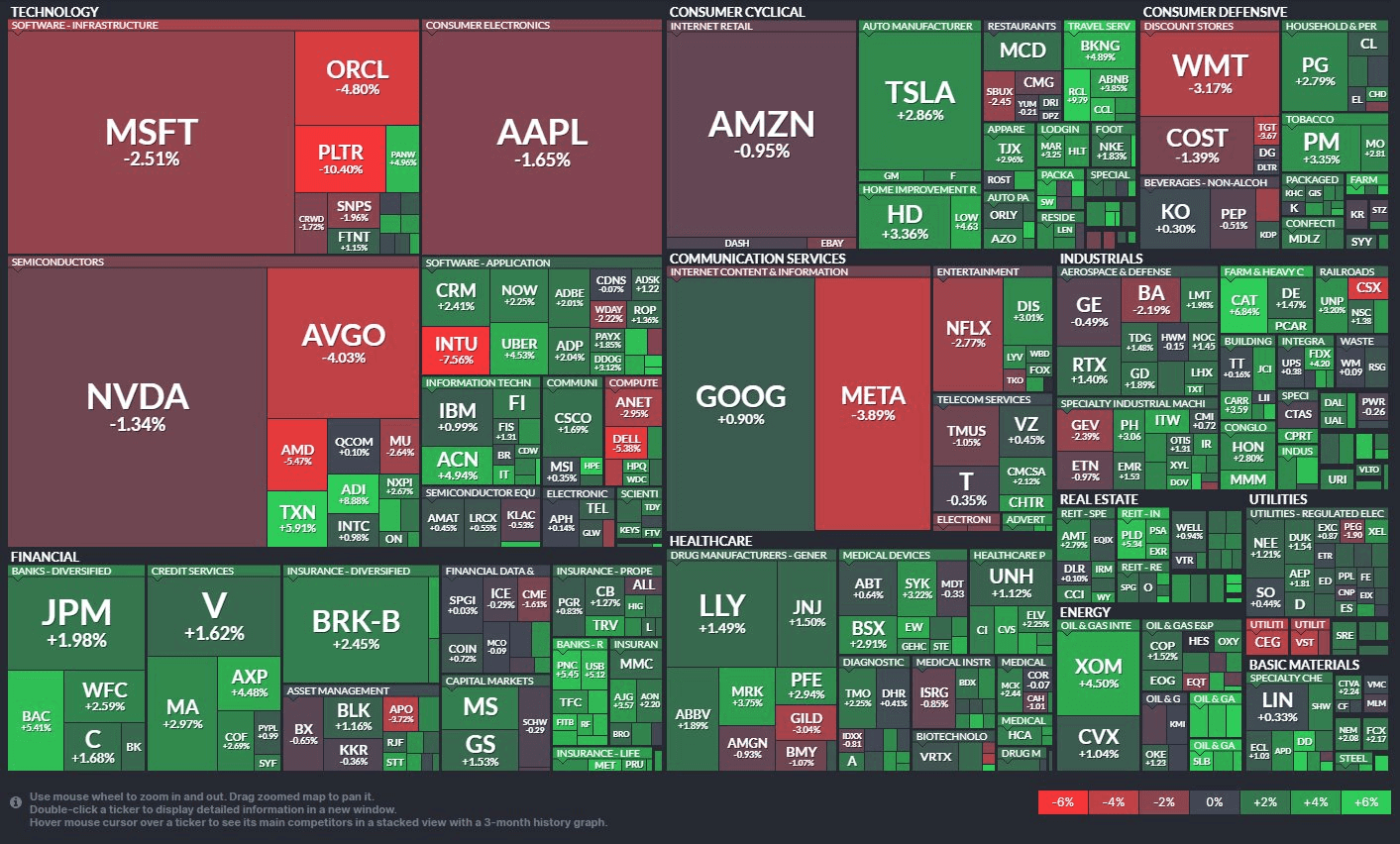
Interestingly, the Mag 7 a quiet week, while the rest of the market was advancing. That’s a healthy sign of rotation since leadership is spreading out instead of staying in just a few mega-caps.
And next week won’t be boring either. Nvidia, the most important stock in the market right now, reports earnings on Wednesday.
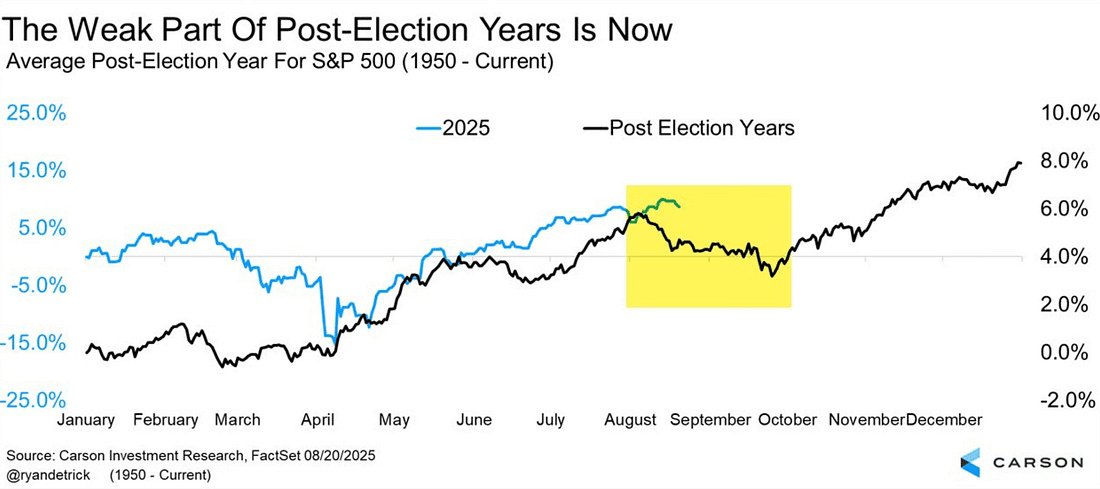
Don’t be surprised if we see more volatility going forward. This is the time of year where volatility usually picks up. And I still think a pullback or a bit of consolidation would make sense before we move into the strongest season of the year.
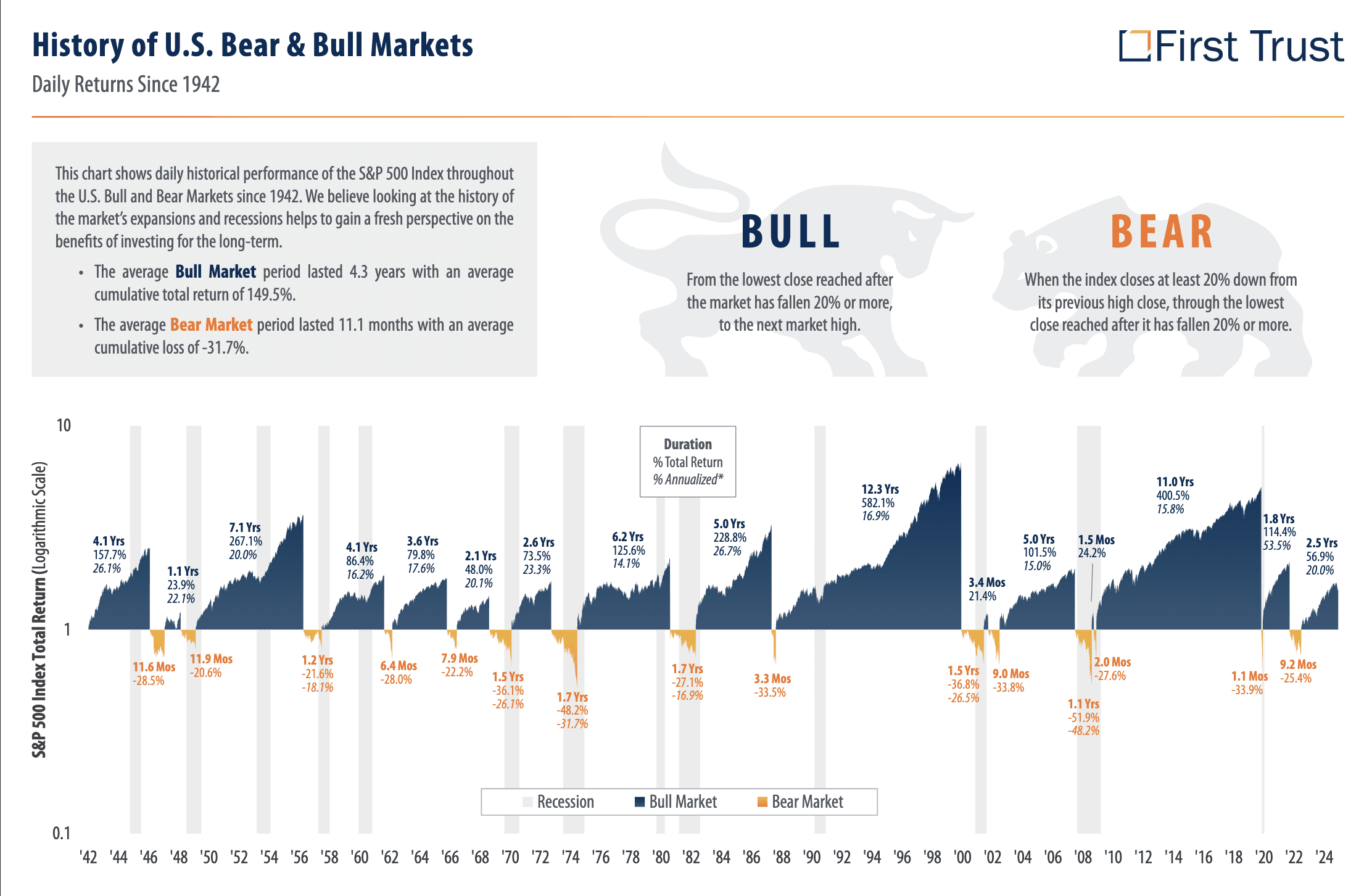
Bull markets last an average of 4.3 years. We’re only about 2.5 years in. So, the bull market could definitely go on for a little longer.
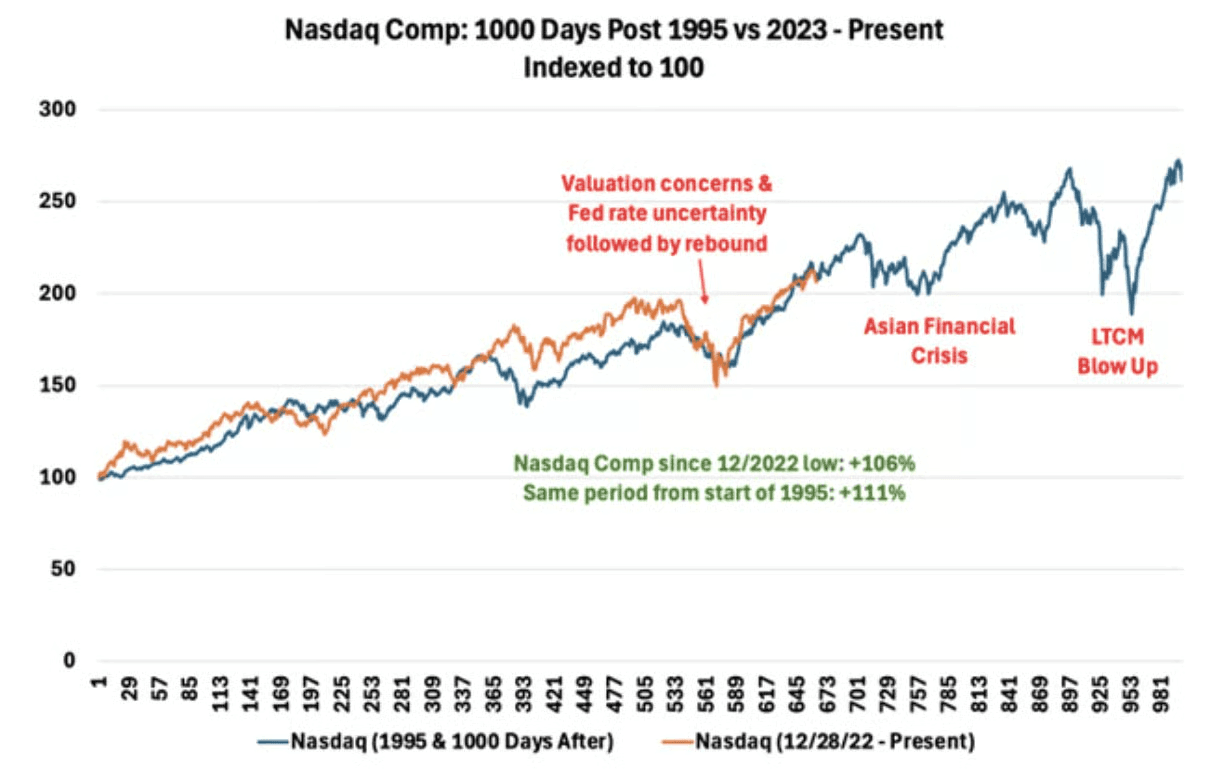
The Nasdaq is also following almost exactly what it did in the mid-1990s. Since the low in December 2022 it’s up 106 percent, very close to the 111 percent gain it had over the same stretch in 1995.
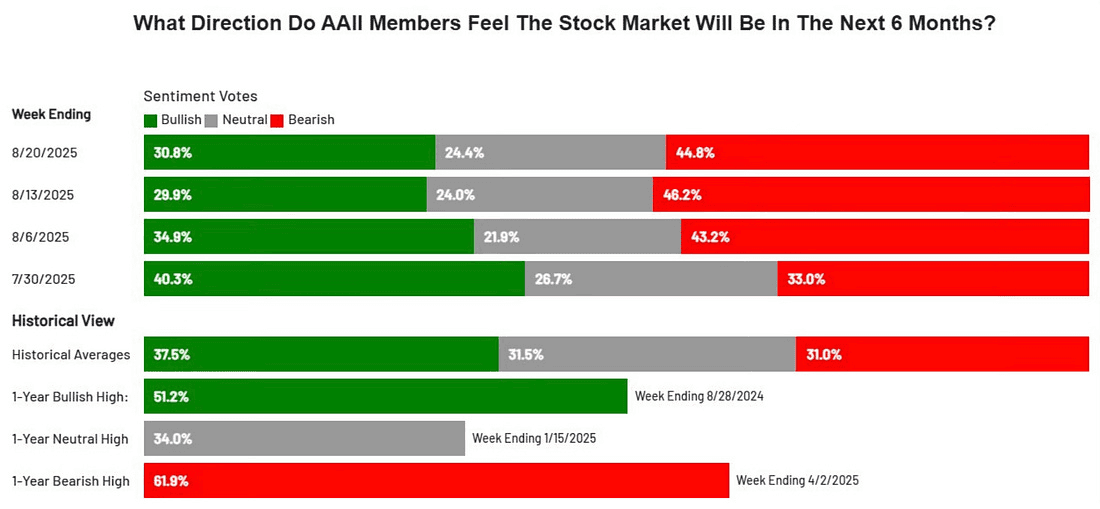
What’s really interesting is that investors remain very bearish even with the market at all-time highs.
The latest AAII survey shows 45 percent bears versus only 31 percent bulls. That makes three straight weeks where bears outnumber bulls. Which is actually positive, because there are still plenty of investors who are underinvested.
While institutions continue to hesitate, retail investors are still buying the dip. They’ve been net buyers of US equities in 16 of the past 18 weeks.
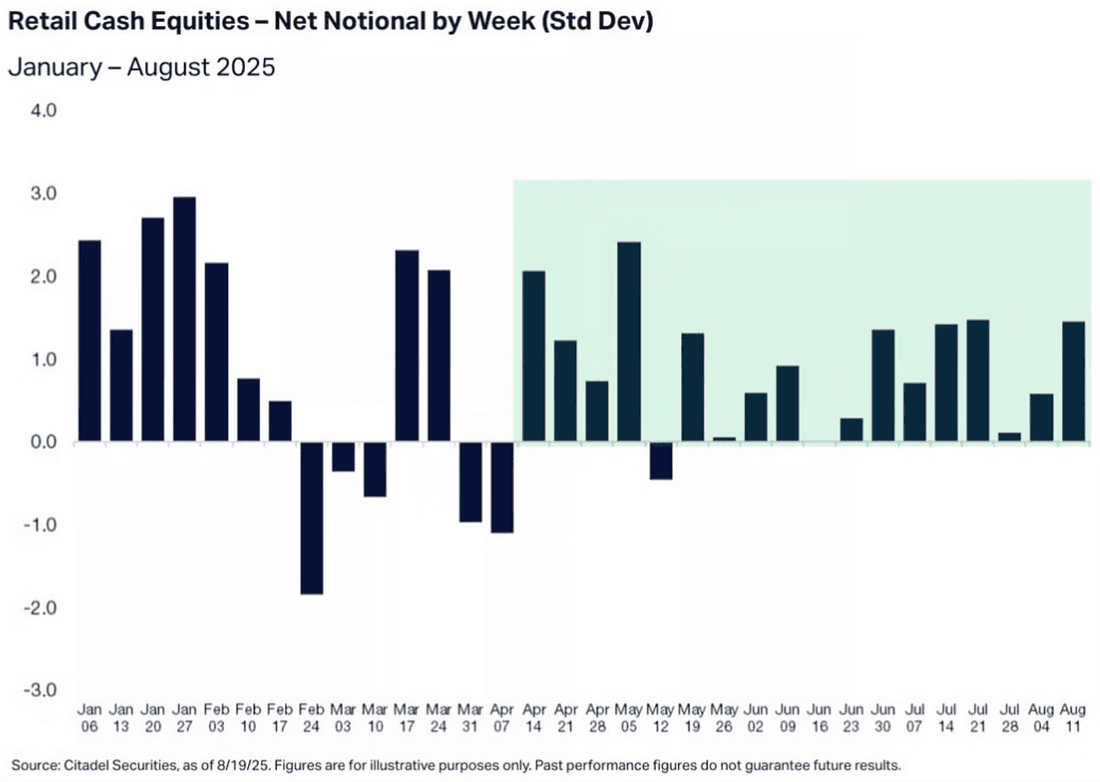
The bull market is still alive and well, and there’s little reason to think it’s ending anytime soon. That doesn’t mean it will be a straight line higher. There will be bumps, pullbacks, and plenty of days where the market feels shaky. That’s just part of every long run.
What matters most is keeping your eyes on the leading companies. The best stocks tend to separate themselves during periods of volatility, and those are the names worth focusing on.
Previous Updates
View All
- Weekly Market Update: Big Tech Divergence
- Weekly Market Update: Accumulation
- Weekly Market Update: The Best Quarter
- Weekly Market Update: Rate Hikes
- Weekly Market Update: AI is Not Slowing Down
- Market Update: Has AGI Arrived?
- Weekly Market Update: Consolidation
- Weekly Market Update: September is Here
- Market Update: Nvidia Crushes Earnings
- Weekly Market Update: Yields
- Market Update: The Future of Biotech
- Weekly Market Update: Earnings Acceleration
- Market Update: The Next Generation of AI Infrastructure