Go Back

Lin
Weekly Market Update: Deleveraging
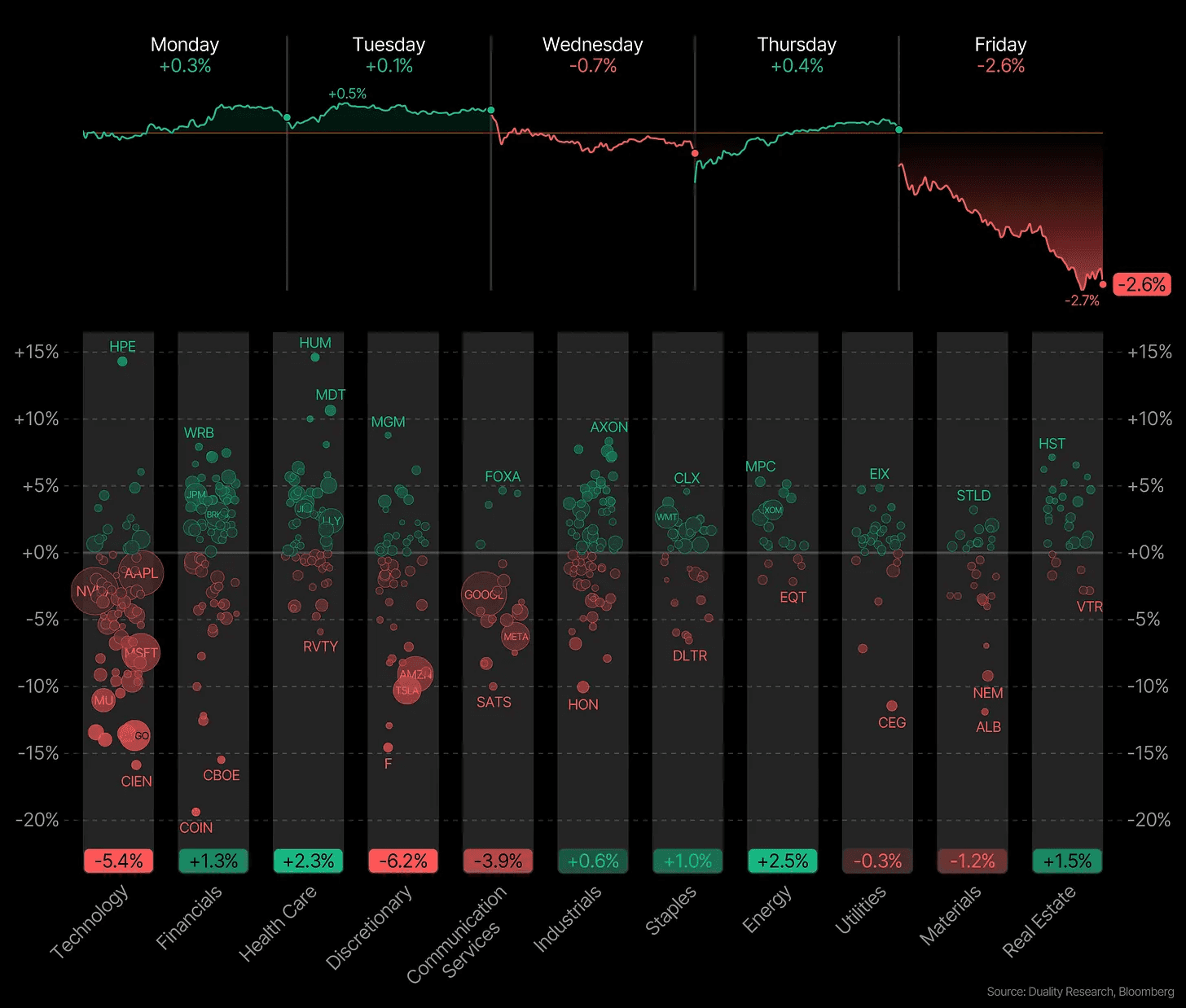
Markets held together through most of the week, then fell apart on Friday.
The S&P 500 had its worst day since October 10, 2025. The Nasdaq dropped almost 5% on Friday alone, its biggest single-day loss since April 4, 2025, and wrapped up its worst week in 14 months with a 4.7% decline.
One bad day doesn’t erase a good year. But it’s a reminder of how fast the mood can change.
I think there’s a few reasons for this:
Extremely strong jobs report: This feels like the main driver of the selling. The jobs market is still very strong, which means we now have a combination of strong employment and somewhat sticky inflation. That makes it much harder for the Fed to justify cutting rates. The market has essentially priced out the chance of a rate cut this year, because with jobs numbers this strong, there is very little reason to ease policy.
Meta, Amazon, and Microsoft capital raise rumors: Until now, most of the AI buildout has been funded through cash flows. But we may now be entering a new phase where companies need to take on debt to fund the next stage of AI infrastructure. Mid-Friday, a report came out that Meta, Amazon, and Microsoft were planning to follow Google’s lead by raising debt to fund their AI ambitions. That raised concerns that the AI capex cycle may be becoming more capital intensive than the market expected.
SpaceX IPO: I think the concern is overblown, but the market clearly cares, and that is what matters in the short term. The largest IPO in history is coming, and that has created liquidity concerns. The IPO is expected to raise around $75B. That is a huge number, but it is not trillions. The market trades close to $1T in volume per day, which means SpaceX would absorb roughly 7.5% of 1 day’s total market volume. I do not think that alone is enough to break the market, but the fear around liquidity still became part of the selling pressure.
Korea: At this point, the market has become highly correlated with Korea, and Korea had a sharp selloff from Thursday into Friday. Samsung, SK Telecom, and the memory trade have been helping carry global markets higher, so weakness there matters. Korean investors are also using a lot of leverage, which can turn a normal pullback into something much more violent. When leverage starts to unwind, volatility can spread quickly across anything connected to the same trade.
Global tension: The ceasefire is looking very fragile. There had been hopes for a broader US-Iran deal. This keeps pressure on oil, shipping, and risk sentiment. Iran still has leverage through the Strait of Hormuz.
Just one of these factors is enough to create some volatility, add all five at once and you get a monstrous move like we just saw.
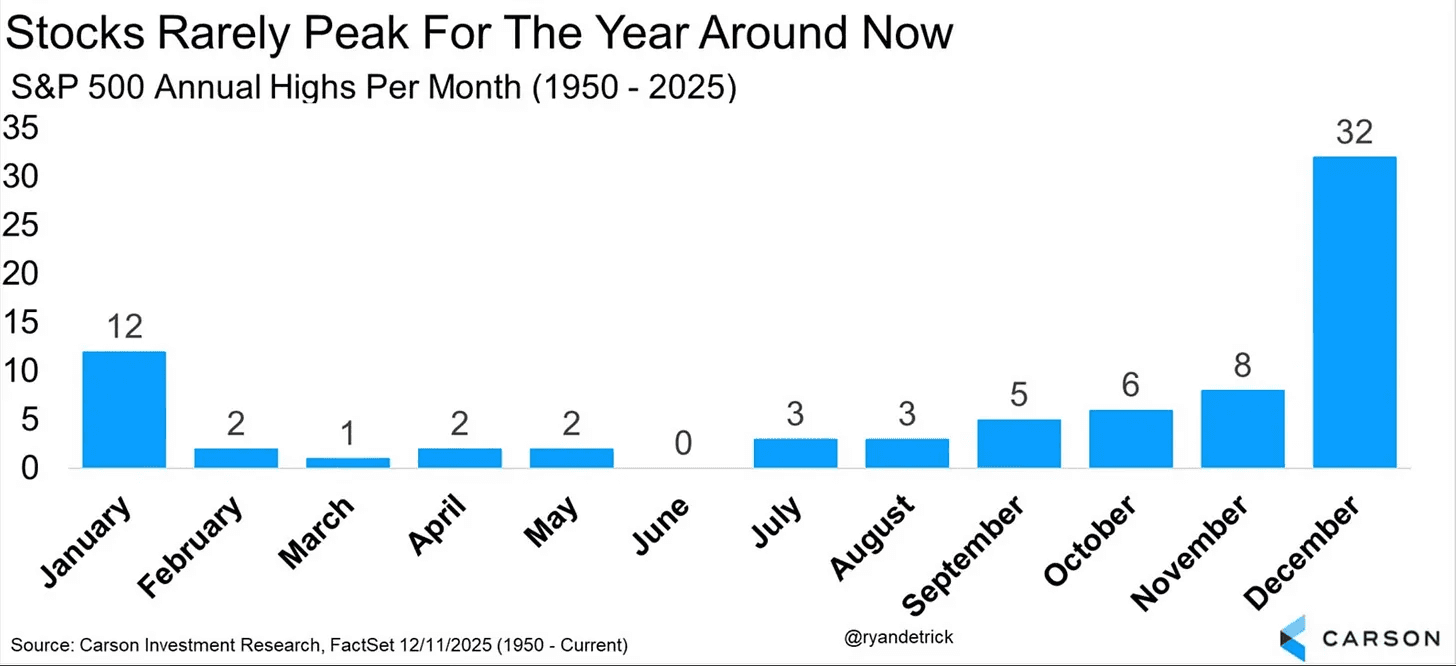
Since 1950, the S&P 500 has never made its final high of the year in June, not once in 75 years, which means a summer pullback would not be unusual at all.
Most years, the market does not move higher in a straight line. It rallies, gets stretched, pulls back, shakes out weak hands, and then starts to reset before the next real move can develop. So if we do get more weakness in the summer, it would actually fit a very normal seasonal pattern.
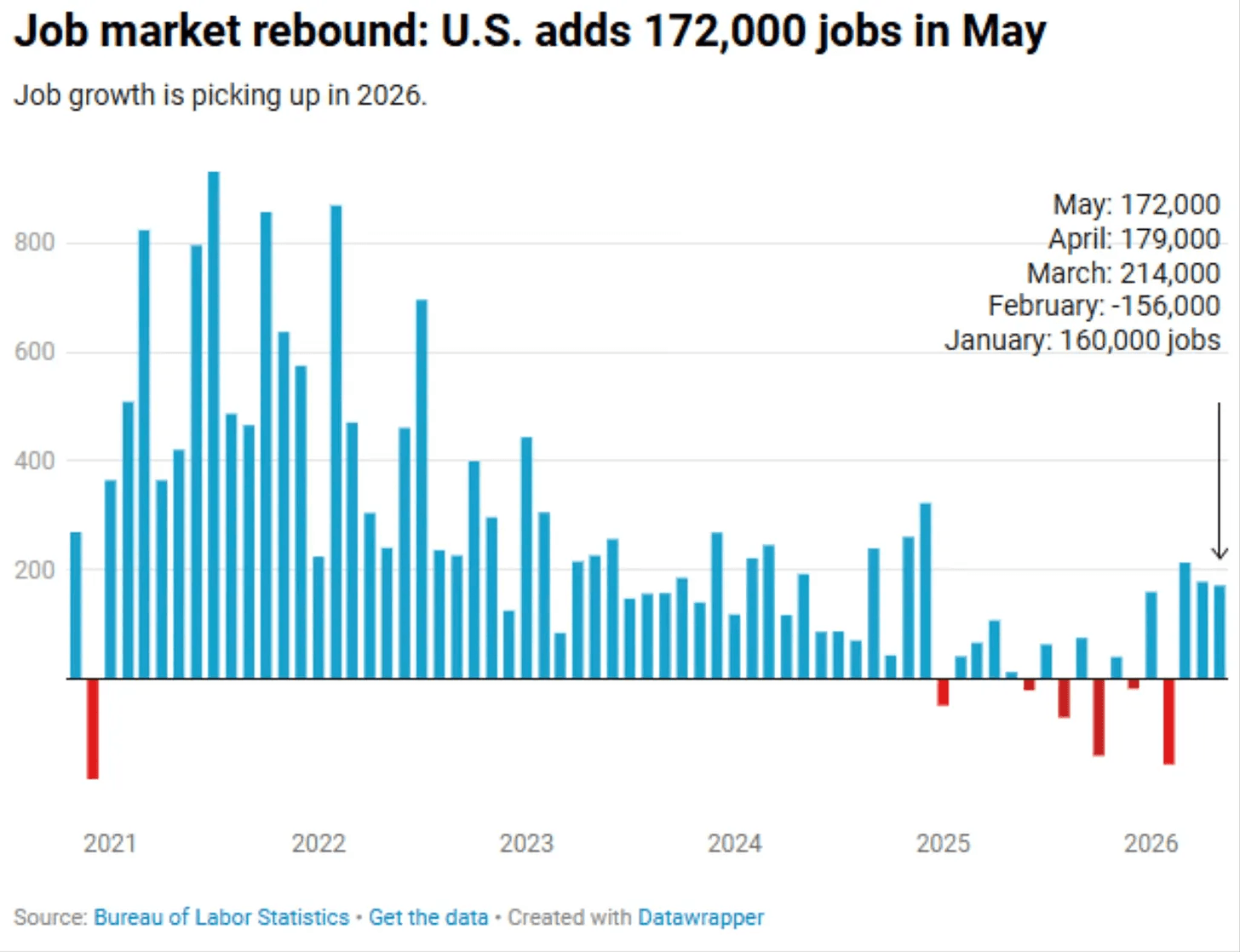
The May jobs report was a blowout. The U.S. added 172,000 jobs, nearly double the consensus estimate of 88,000. The prior two months were revised up by a combined 93,000 jobs. The unemployment rate ticked down from 4.34% to 4.30%. The three-month average of monthly payroll gains is now at its highest level since March 2024.
When the labor market looked weak, the market could argue that the Fed needed to cut rates soon to protect the economy. But if the economy is still adding jobs, unemployment is falling, and payroll growth is accelerating again, there is no urgent reason to cut.
A lot of the rally was built on the idea that rate cuts were coming. Lower rates usually help valuations, especially for growth stocks, AI stocks, tech, and anything priced on future earnings.
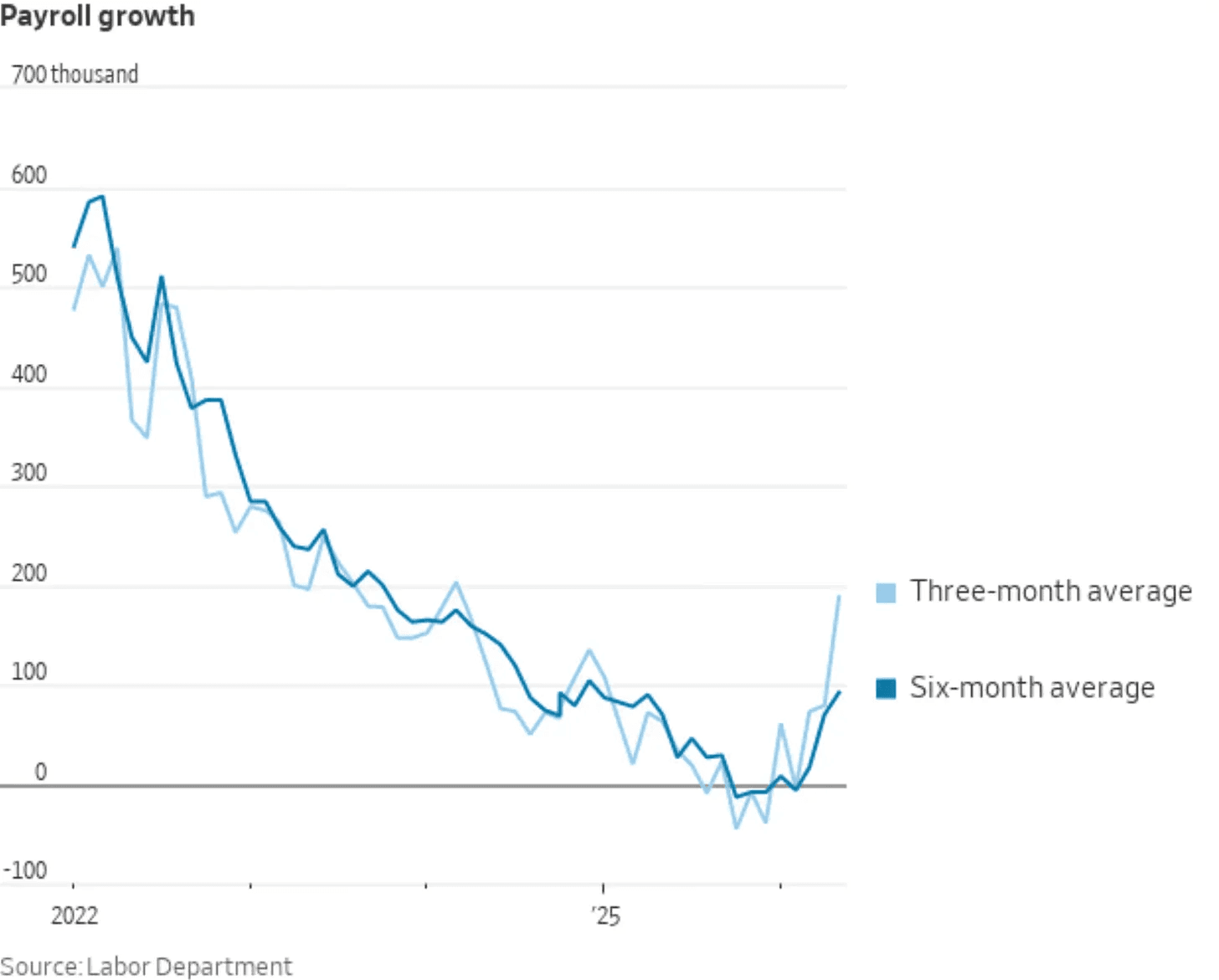
Earlier this year, payroll growth was close to zero and even dipped negative for a short period, which made the labor market look fragile. But since then, both the 3-month and 6-month payroll averages have turned sharply higher. The economy is clearly stronger than many people expected.
SpaceX, ChatGPT, Anthropic, and a long list of other big private companies are getting closer and closer to the public markets.
The problem is simple. IPOs are usually priced for perfection. The company, early investors, bankers, and insiders all want the highest possible valuation, because this is their chance to cash out or raise money at the best price. By the time retail investors can buy the stock, a lot of the easy money has already been made in the private market. Public investors are often buying the hype, while insiders are finally getting liquidity.
That does not mean every IPO is bad. Some become monster winners. Palantir, Zoom, MongoDB, Arm, CoreWeave, and a few others had huge moves after going public. But even many of the winners had brutal drawdowns first. Even great companies can be terrible stocks if you buy them at the wrong price and at the wrong time.
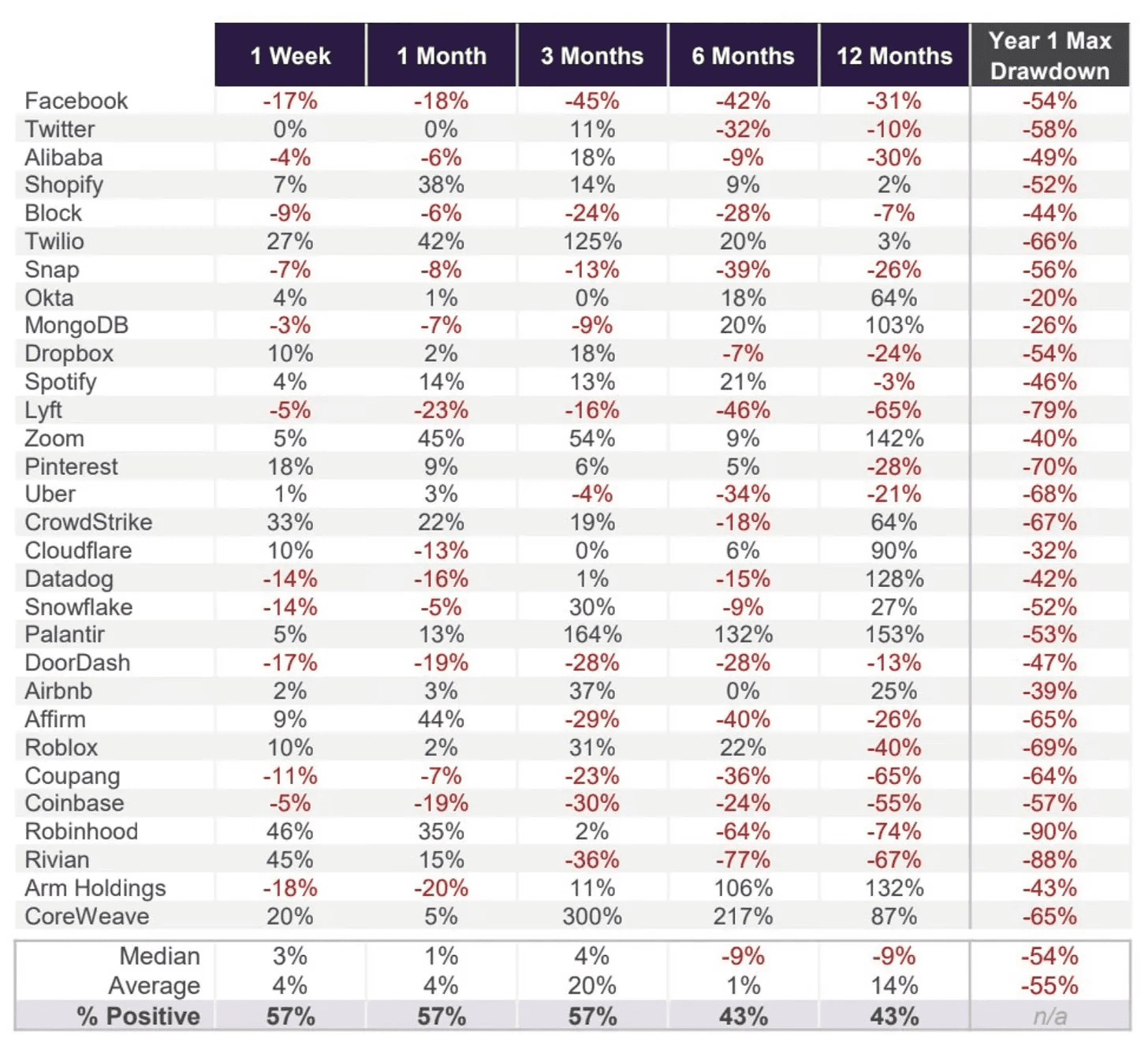
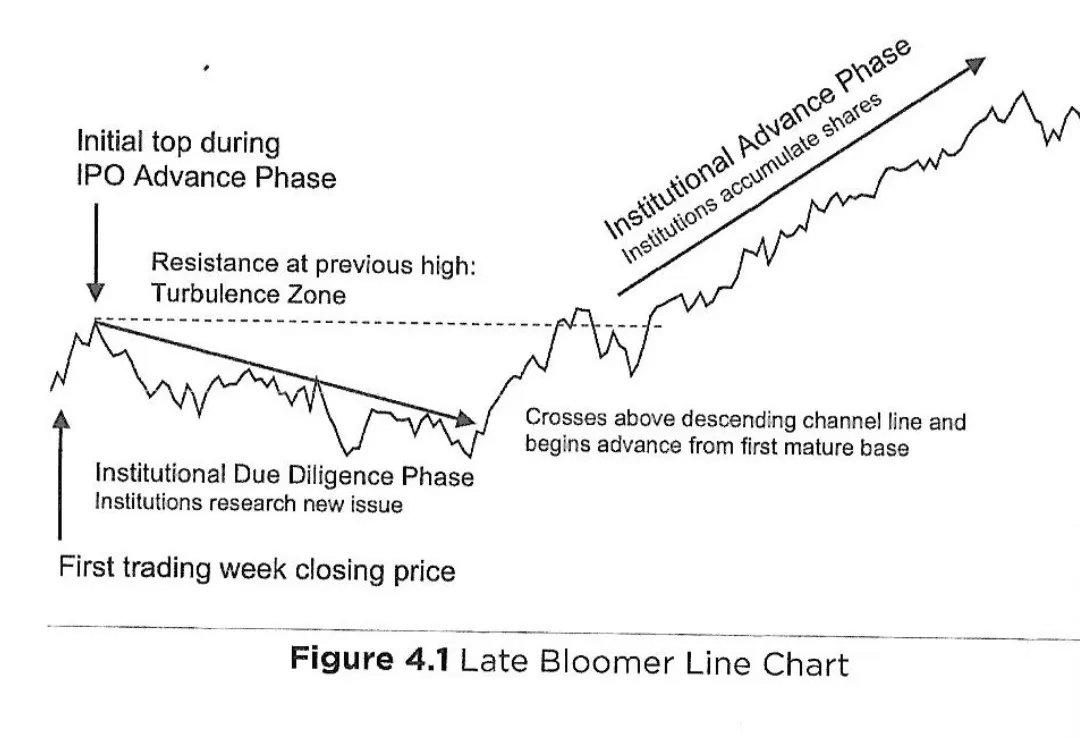
So the lesson is not that you should ignore every IPO. The lesson is that you do not need to chase them on day 1. Let the hype cool down. Let the lockup periods pass. Let earnings reports come out. Let the market show whether institutions actually want to own the stock after the initial excitement fades. The best IPO setups usually come later, after the stock has formed a real base, shaken out weak holders, and proved that the business can grow into the valuation.
The IPO market itself is also nowhere near bubble territory.
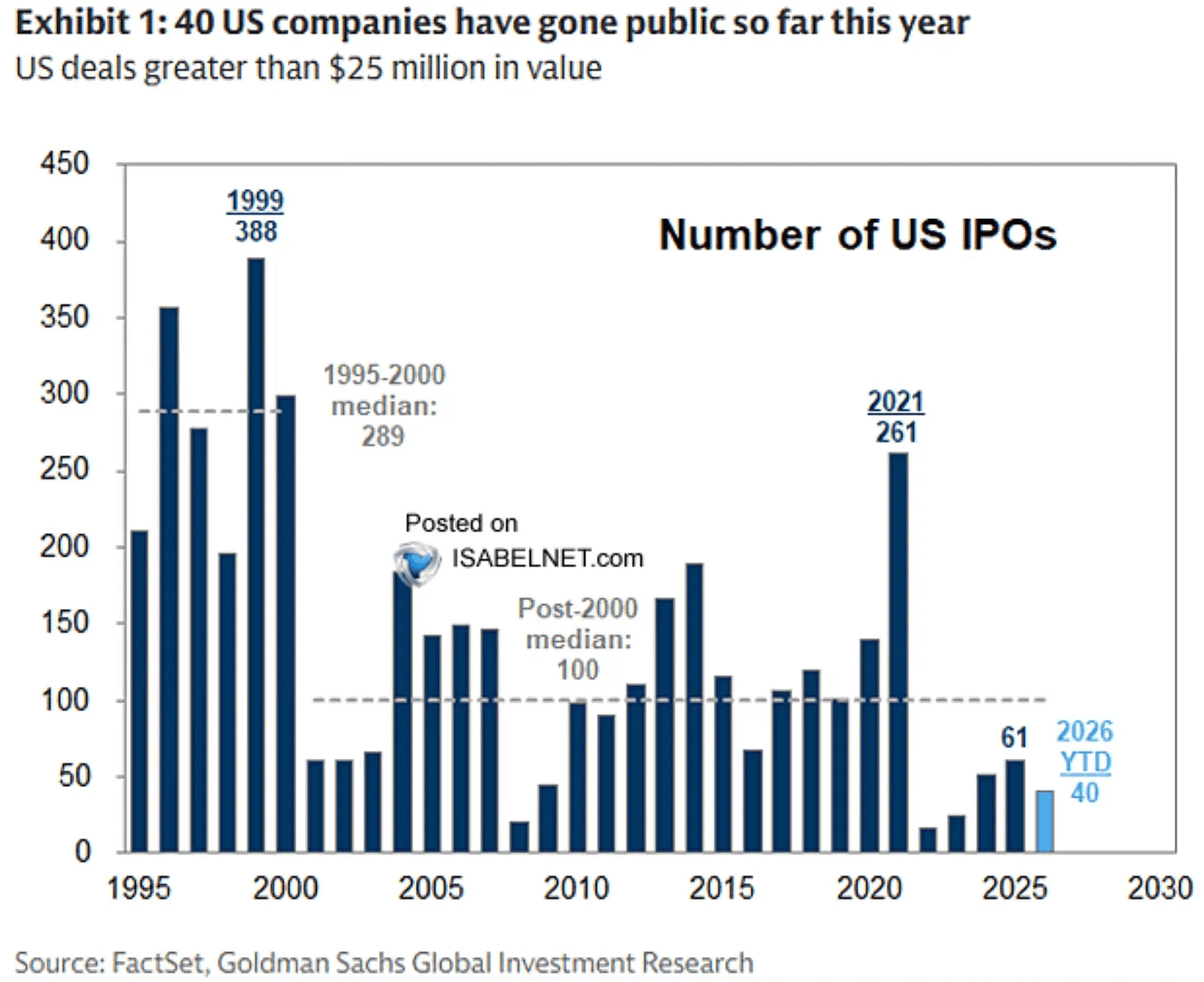
40 US companies have gone public so far in 2026, and Goldman Sachs expects roughly 100 IPOs to raise about $160B by year end.
Since 2000, the median year has seen around 100 IPOs, which means we are currently on pace to finish right around average. That is very different from a true IPO mania. During the dot-com bubble, nearly 400 companies went public in a single year. We are not even close to that kind of environment.
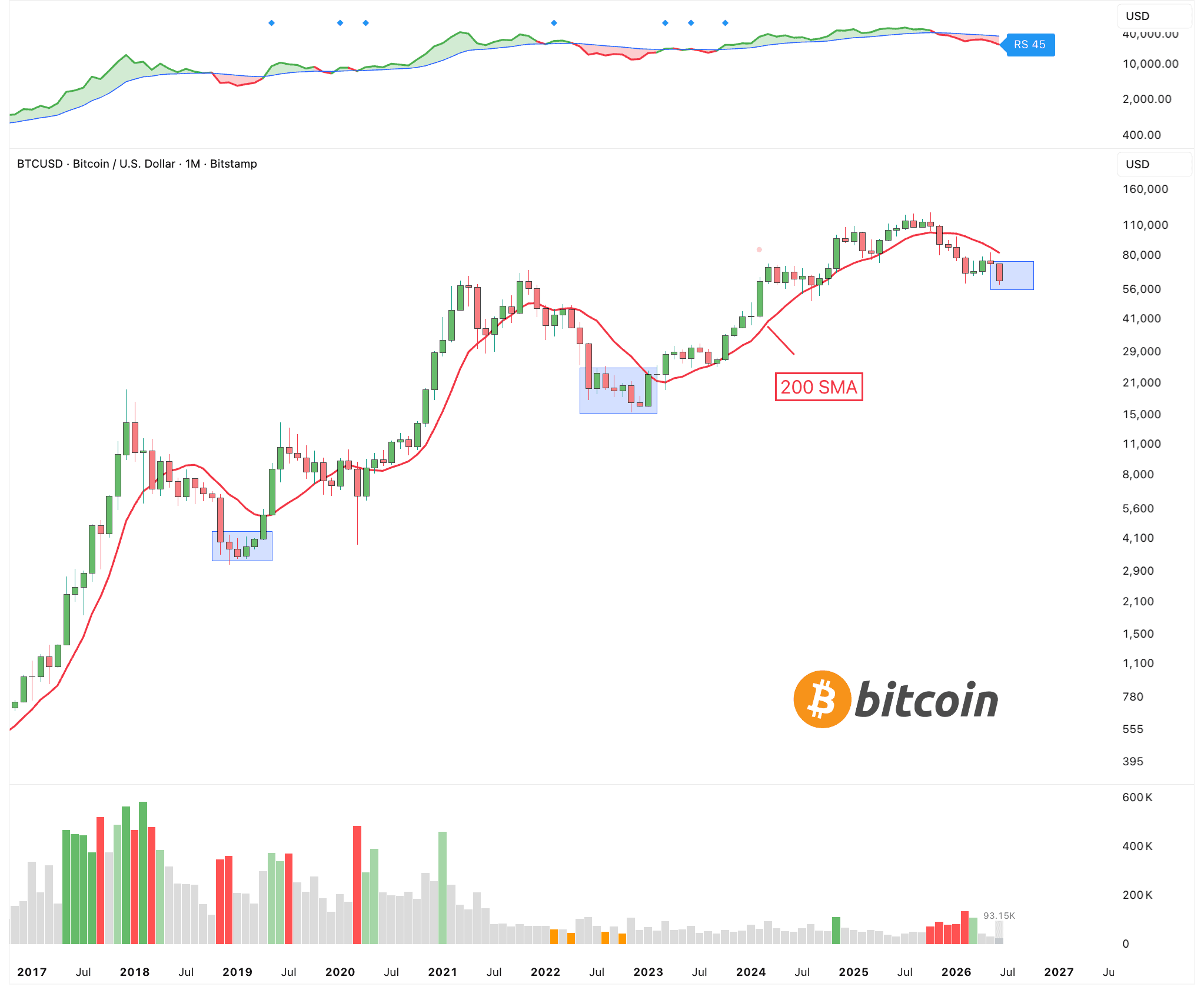
Bitcoin is now down 53% from its all-time high of $126,273 and trades around $61,000 today. That is not a small pullback. That is a major drawdown by any normal measure, and it has now been grinding lower for 242 days.
It also shows, once again, why keeping the process simple matters. Sometimes just watching the 200-day moving average can help you avoid the worst part of a major drawdown. If an asset breaks below its long-term trend and keeps making lower highs and lower lows, that alone tells you to be more careful. Downtrends can last for months or even years, and bottoms usually take time to form.
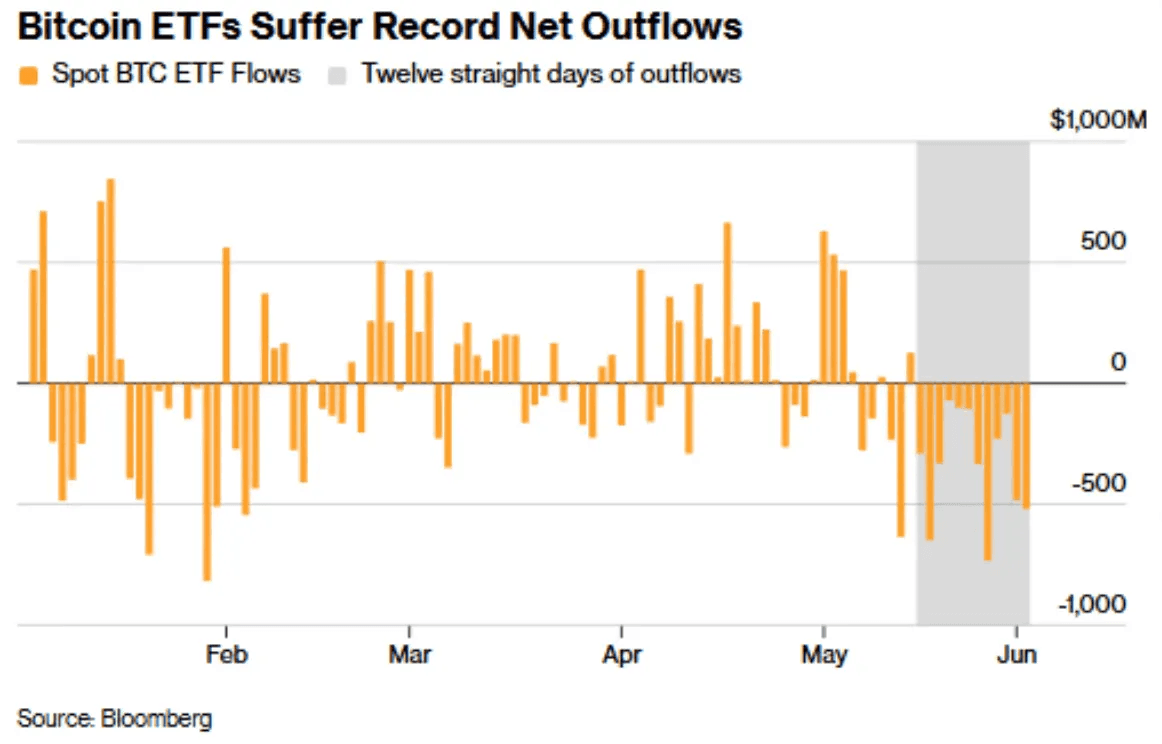
Bitcoin ETFs have now suffered 12 straight days of outflows, which is a record streak. ETF flows were one of the biggest reasons Bitcoin traded so well earlier in the cycle. Institutions were buying, liquidity was coming in, and the ETF bid helped support the entire move higher. Now that flow has reversed. Institutions are not just pausing their buying. They are actively pulling money out,
This was an overdue reality check after 9 straight green weeks, and it was also a reminder that markets do not move vertically forever.
Volatility is the price of admission, especially after such a strong run.
Volatile markets are designed to make you overreact. They make you sell weakness, chase strength, and change your mind every few hours. That is how people get chopped up. Before you enter any position, know why you are buying, where you are wrong, and how much you are willing to lose. If you cannot define your risk, your strategy is mostly hope. Your job is to control what you can control: your exposure, your risk, and your downside.
The next few weeks will tell us whether this was simply a healthy pullback or the start of a more meaningful change in character. If the market stabilizes, holds key levels, and starts building bases again, this could actually create much healthier setups once the excess is worked off.
For now, though, it makes sense to be a little more cautious in the near term, wait to see where the dust settles, reduce unnecessary risk, keep position sizes under control, and stay patient.
Previous Updates
View All
- Weekly Market Update: Earnings Season is Back
- Weekly Market Update: Big Tech Divergence
- Weekly Market Update: Accumulation
- Weekly Market Update: The Best Quarter
- Weekly Market Update: Rate Hikes
- Weekly Market Update: AI is Not Slowing Down
- Market Update: Has AGI Arrived?
- Weekly Market Update: Consolidation
- Weekly Market Update: September is Here
- Market Update: Nvidia Crushes Earnings
- Weekly Market Update: Yields
- Market Update: The Future of Biotech
- Weekly Market Update: Earnings Acceleration