Go Back

Lin
Weekly Market Update: The Long Awaited Correction
The S&P 500 finished July up 2.2%, adding to what’s been a strong year so far.
This market has been a clear example of both a lockout rally and a thematic bull run. If you were positioned in the right sectors, you likely did really well.
But just as July ended on a high note, August kicked off on a rough note.
This past week was packed with big macro events. We had the Fed’s rate decision, fresh inflation data from the PCE report, and the latest jobs numbers. That mix of a still-stubborn Fed and a weaker-than-expected labor market created a tricky setup. Combine that with an extended market, and the result was a fast, sharp pullback.
None of this should really be surprising, if you looked at the market clues especially after nearly four months of non-stop gains.
Now we’re heading into the part of the year that tends to be more challenging. August is usually flat, and September is historically the weakest month before we enter the strongest season of the year.

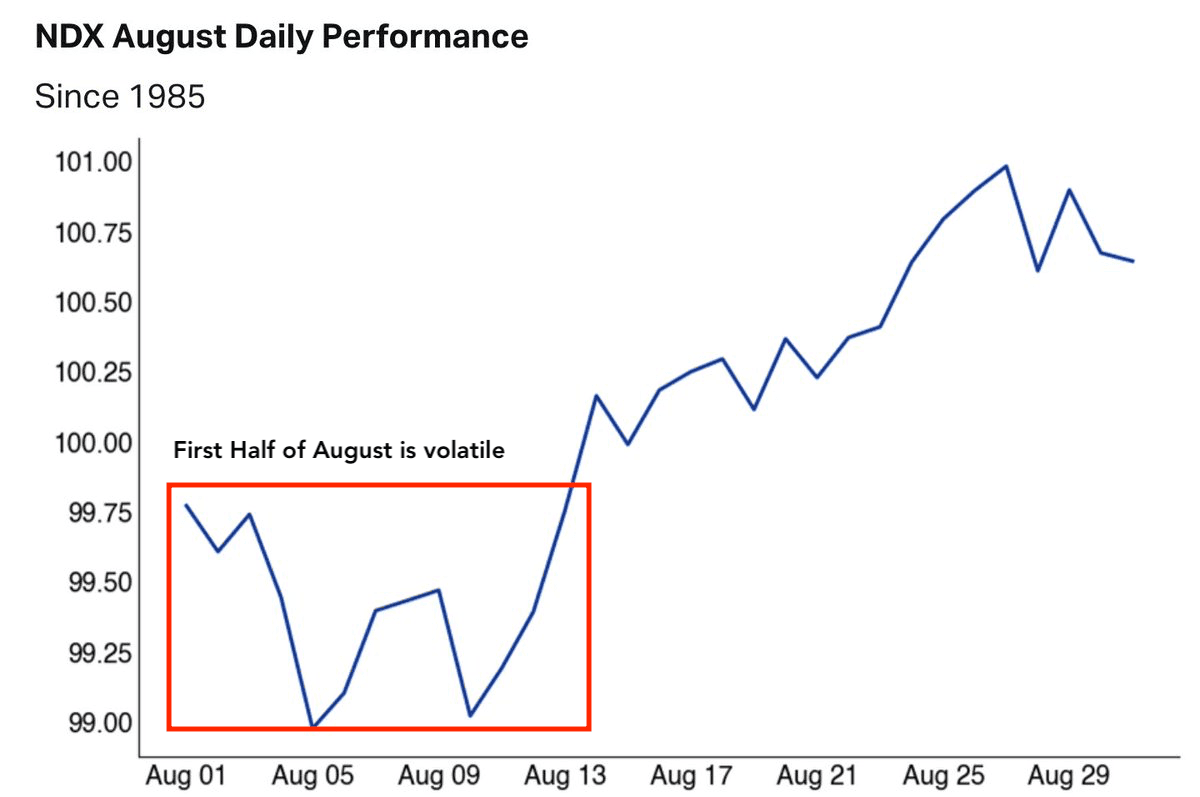
Looking at history, the Nasdaq 100 often starts August with some volatility. Since 1985 follow a double-dip pattern with a W-shaped recovery into the end of the month.
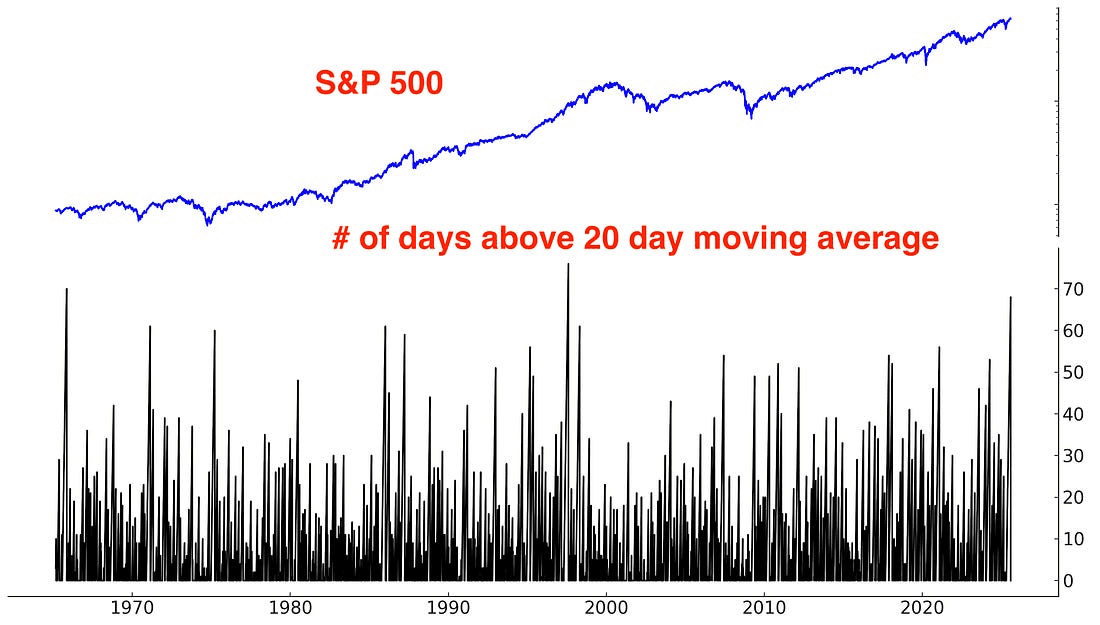
This pullback ended a 68-day streak of the S&P 500 staying above its 20-day moving average. After such a long run without even a small pause, some weakness now is perfectly normal.
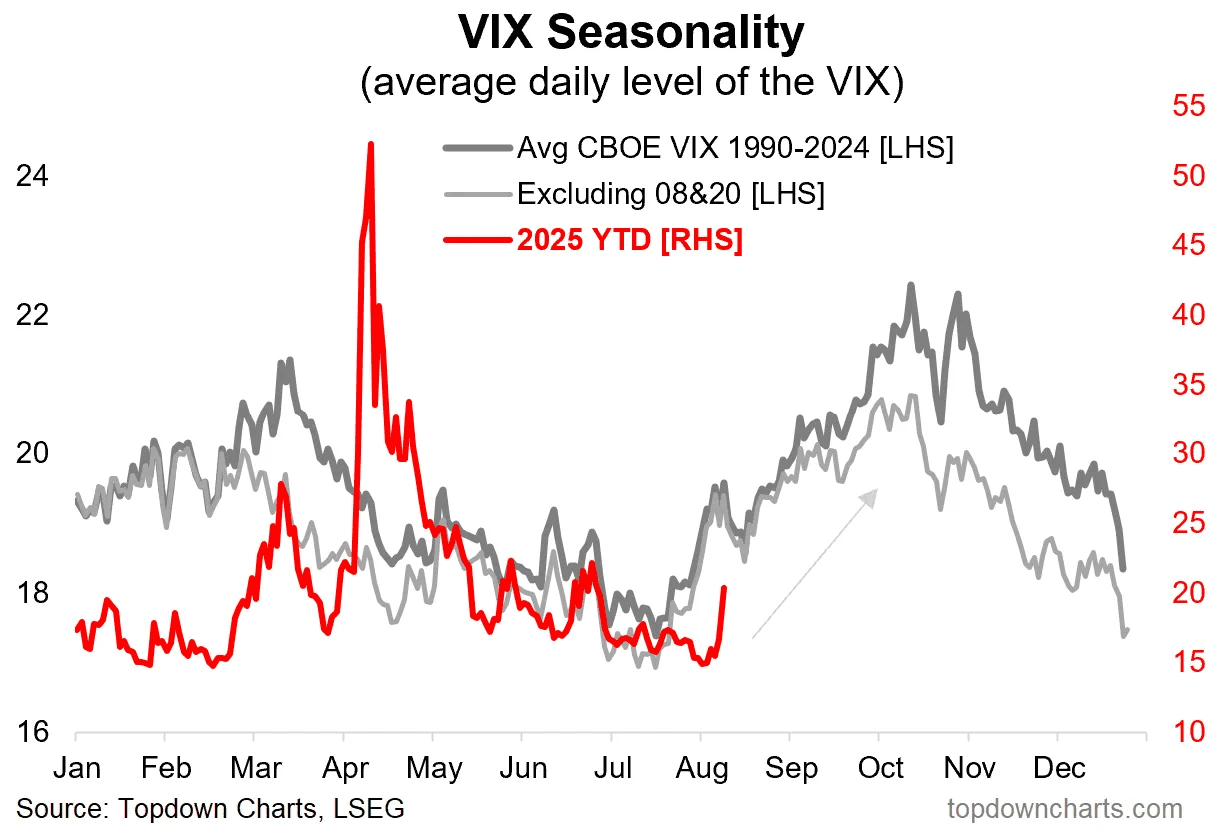
And if seasonal patterns hold true, we should expect a bit more volatility around this time of year.
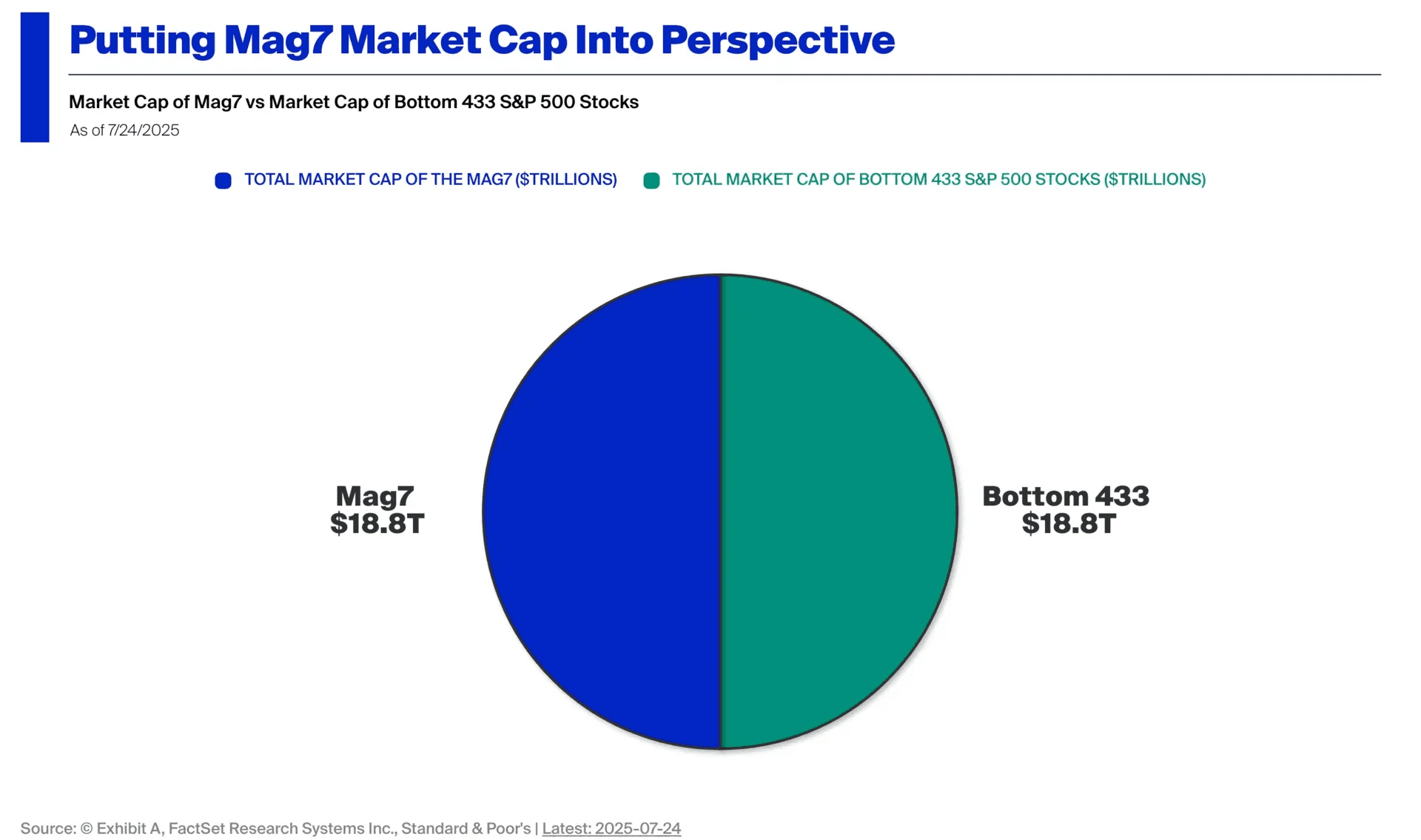
One thing to keep an eye on is how concentrated the market has become. Right now, Nvidia and Microsoft alone make up nearly 15% of the S&P 500. That’s the highest level of concentration we’ve ever seen for just two stocks.

The Mag7 are now roughly the same size as the bottom 433 companies in the index combined.
Is that a problem?
Not really. In fact, it makes sense.
These are some of the best companies in the world, with unmatched revenue, profits, and growth. It’s not a stretch to say they deserve a bigger share of the market.
Why would investors choose smaller companies that consistently lag behind?
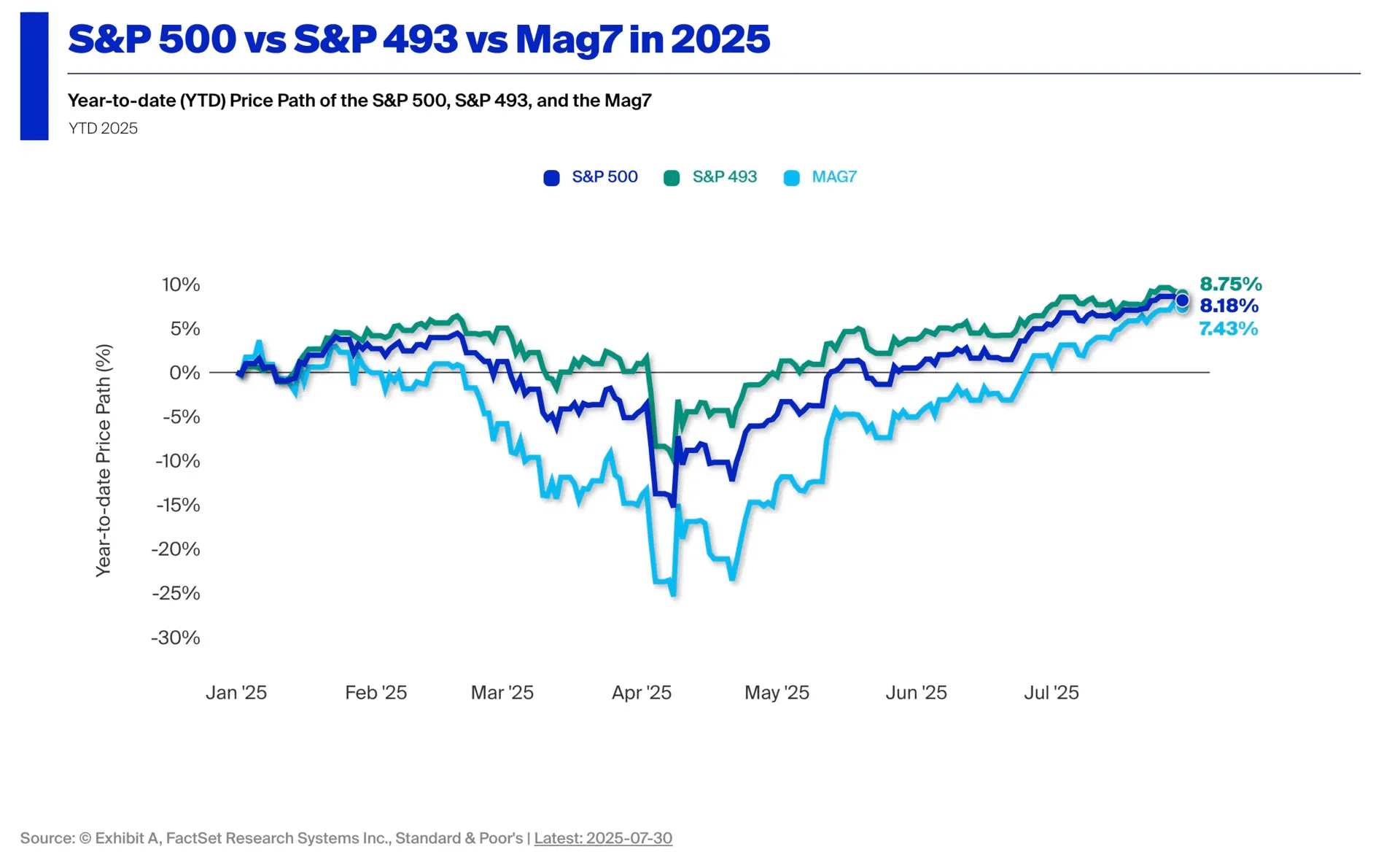
Still, it’s worth pointing out that this rally hasn’t only been about the biggest names. The rest of the market has been participating too. Year-to-date, the other 493 stocks in the S&P 500 have actually outperformed the Mag7.
One of the clearest long-term trends right now is energy.
AI, chips, data centers, robotics, EVs, autonomous vehicles. Everything we’re building needs more power. And not just a little. A lot more.
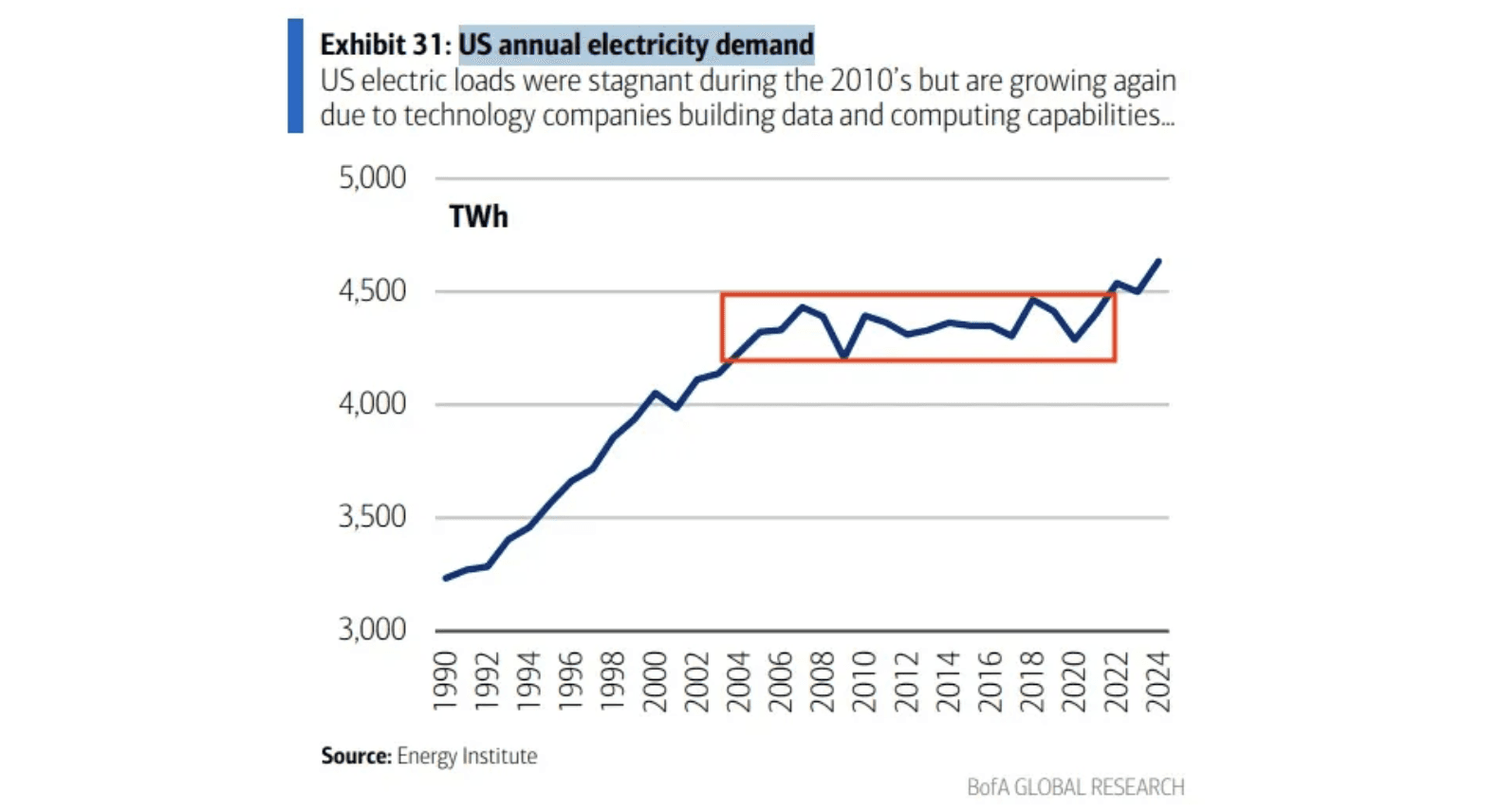
After nearly two decades of flat growth, electricity demand in the US is finally breaking out. And this looks like just the beginning.
At the end of the day, energy is the foundation of every major tech trend ahead.
There’s no major reason to think this bull market is about to end.
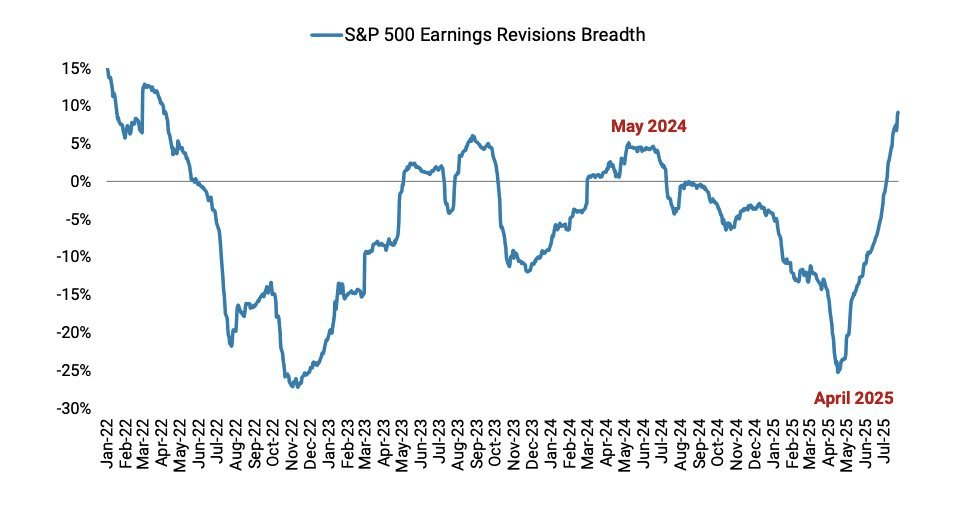
As you can see below, companies are raising their earnings forecasts. They went from a low in April 2025 to the highest level since late 2021.
In simple terms: Companies expect to make more money in the future.
And markets follow earnings over time.
Previous Updates
View All
- Weekly Market Update: Earnings Season is Back
- Weekly Market Update: Big Tech Divergence
- Weekly Market Update: Accumulation
- Weekly Market Update: The Best Quarter
- Weekly Market Update: Rate Hikes
- Weekly Market Update: AI is Not Slowing Down
- Market Update: Has AGI Arrived?
- Weekly Market Update: Consolidation
- Weekly Market Update: September is Here
- Market Update: Nvidia Crushes Earnings
- Weekly Market Update: Yields
- Market Update: The Future of Biotech
- Weekly Market Update: Earnings Acceleration