Go Back

Lin
Weekly Market Update: The V-Shaped Recovery
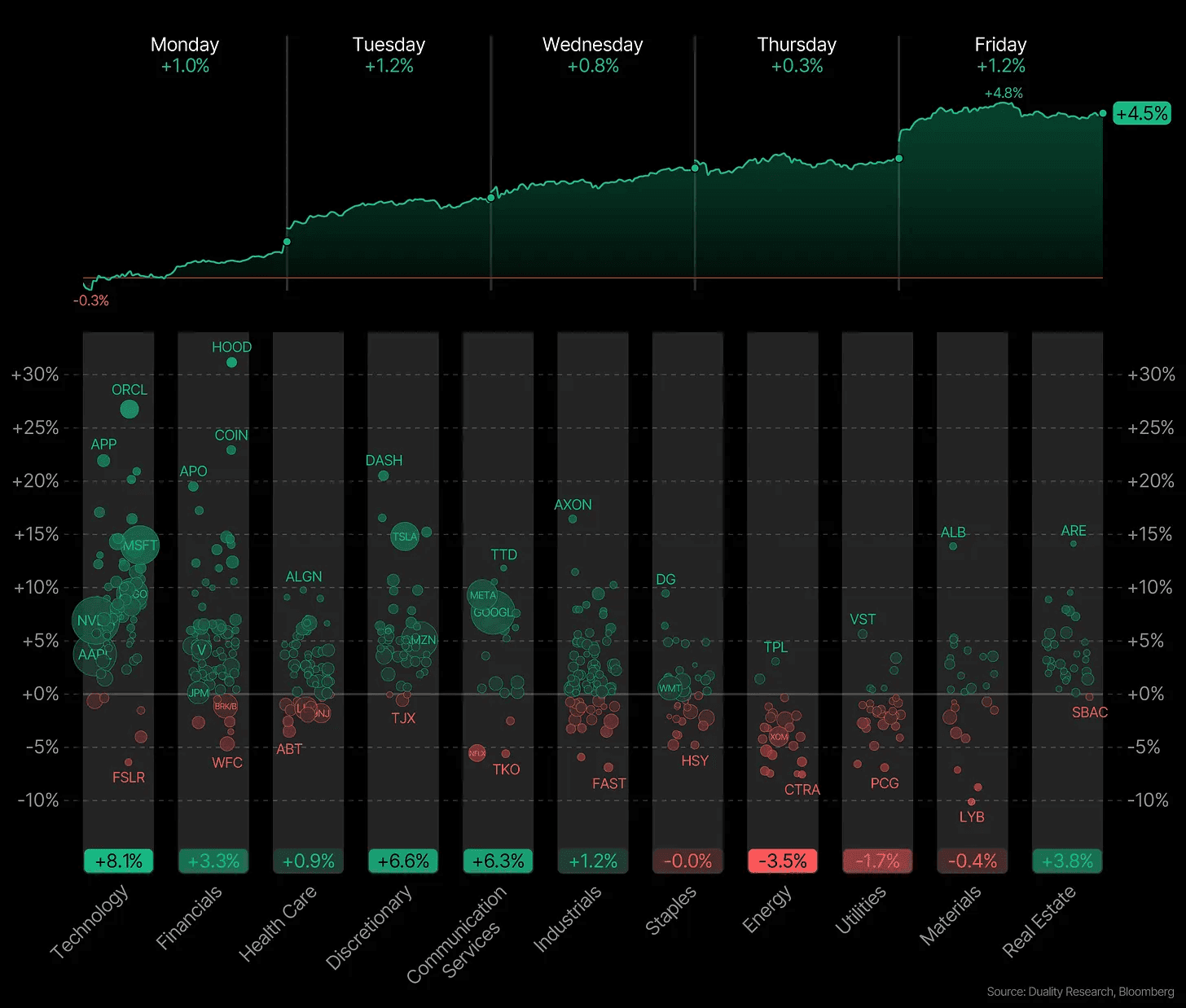
The market is experiencing one of its best recoveries this century.
The Iran war started in late-February. In a matter of weeks, the S&P 500 was down nearly 10%. Those losses have been erased in a hurry as the stock market raced back to new all-time highs in no time.
It went from correction to new all time highs in three weeks in one of the longest winning streaks since January 1992.
This is the first time in the past 100 years that the S&P 500 made new all-time highs in 11 trading days or fewer after falling 5-10%.
One of the most interesting changes in recent years is the speed of markets.
There was a time when a news event gave you room to breathe. Something happened overseas, and U.S. markets might not even notice. If they did, the reaction played out over a day or two. Now geopolitics is woven into every trading session. Everything moves instantly and reactions that once took days get made in seconds. Of course, social media has a big role to play here
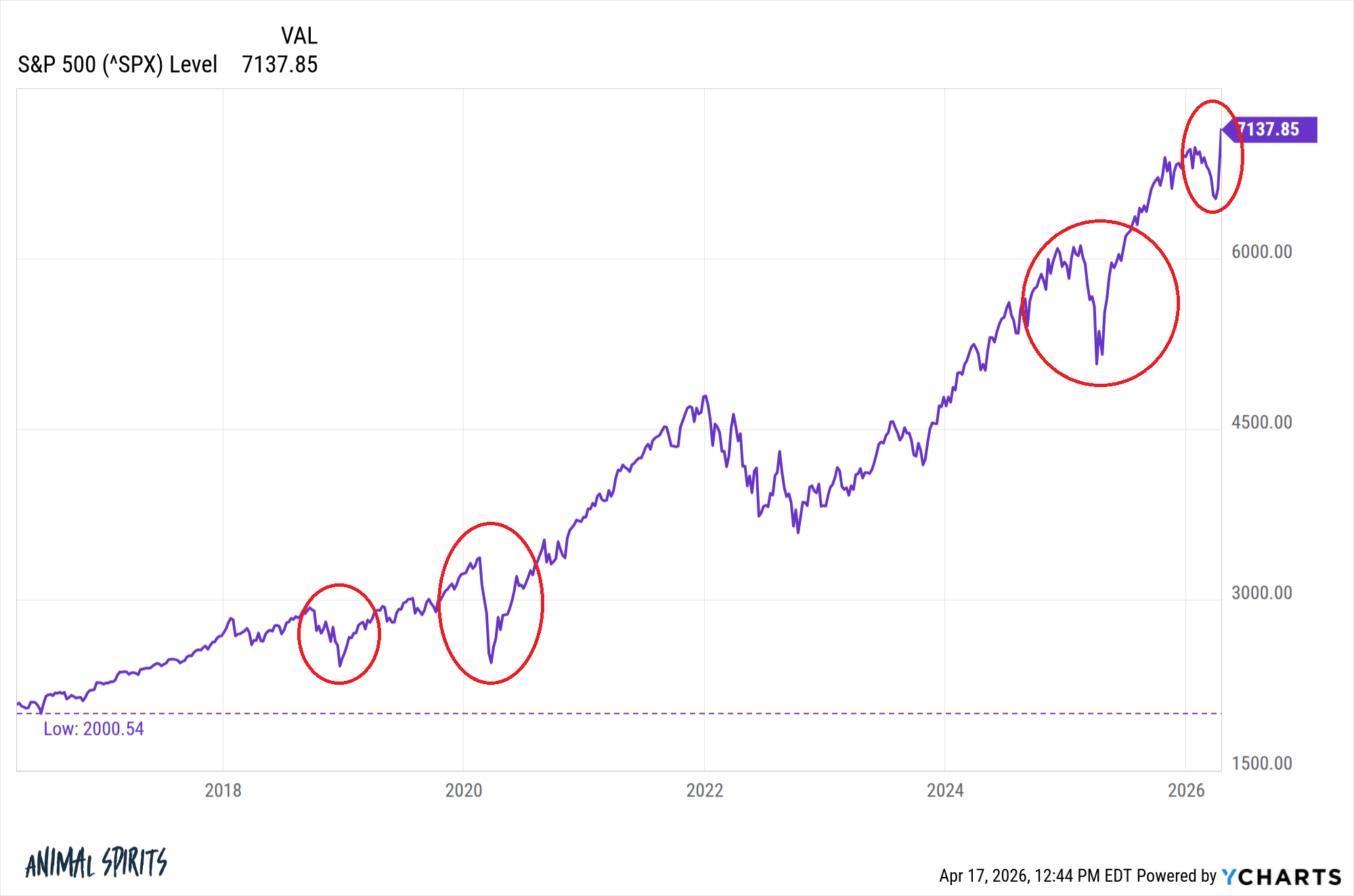
The result is a market is genuinely more volatile. Corrections hit harder and faster. Rallies ignite with little warning. Reversals come out of nowhere. At the same time, trends accelerate faster. When the money starts to move into a theme/sector, the winners run much harder than before. But the same is true on the downside. Just look at all of those V-shaped recoveries:
What stands out most, though, is how this era has become defined by the V-shaped recovery. The mini-bear market of 2018 snapped back sharply. The Covid crash of 2020 produced the fastest return to all-time highs following a 30%+ drawdown in market history. The same pattern played out after Liberation Day, and now again during the Iran conflict.
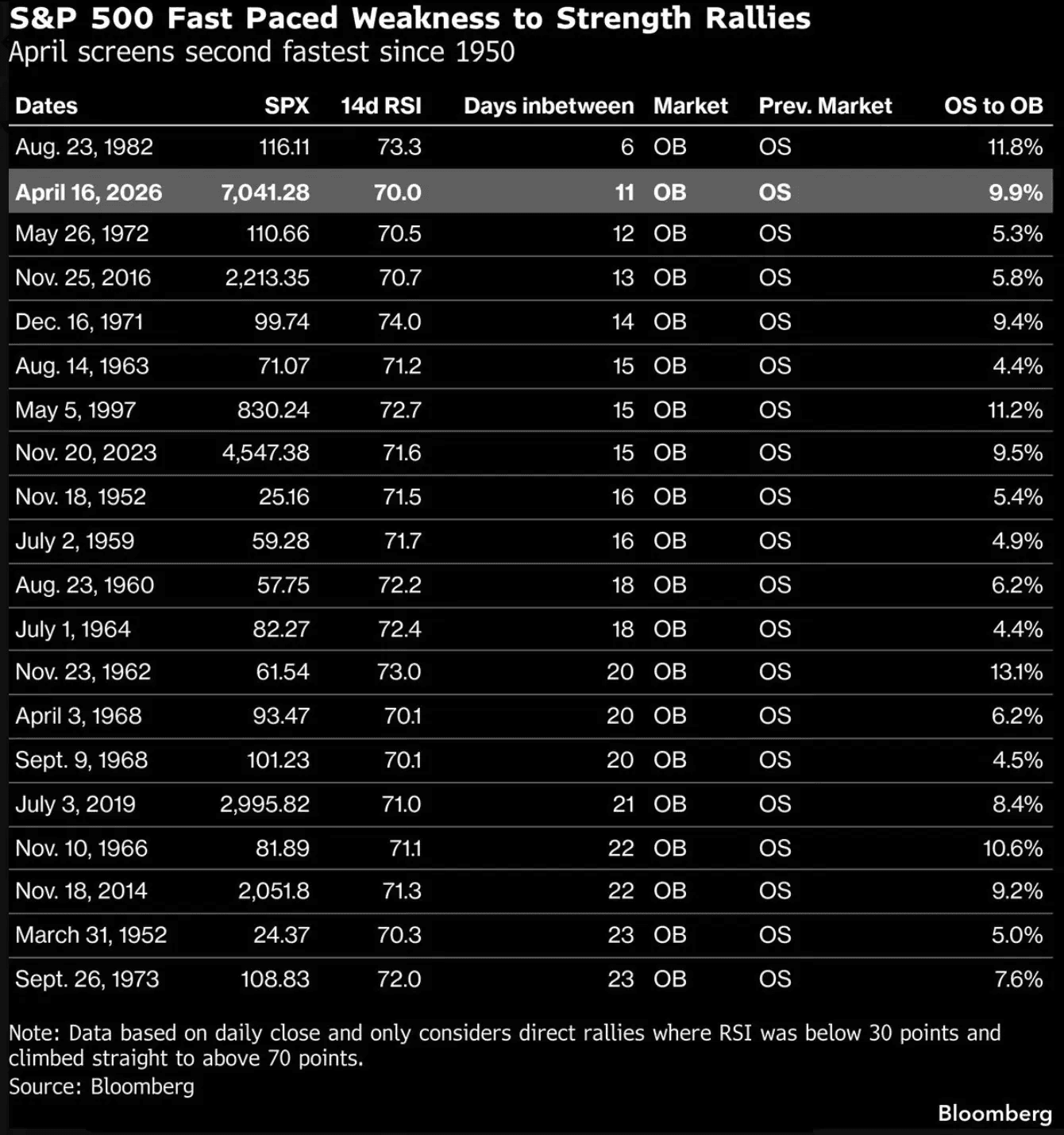
The speed of this reversal is just as remarkable as the size. Stocks went from oversold to overbought in just 11 trading days, making this the second fastest swing of that kind in history. Only August 1982 was quicker. One of the most powerful rallies since World War II.
When a rally this fast and this powerful shows up, the natural reaction is to wait for the pullback and question whether it’s just a short-term bounce..
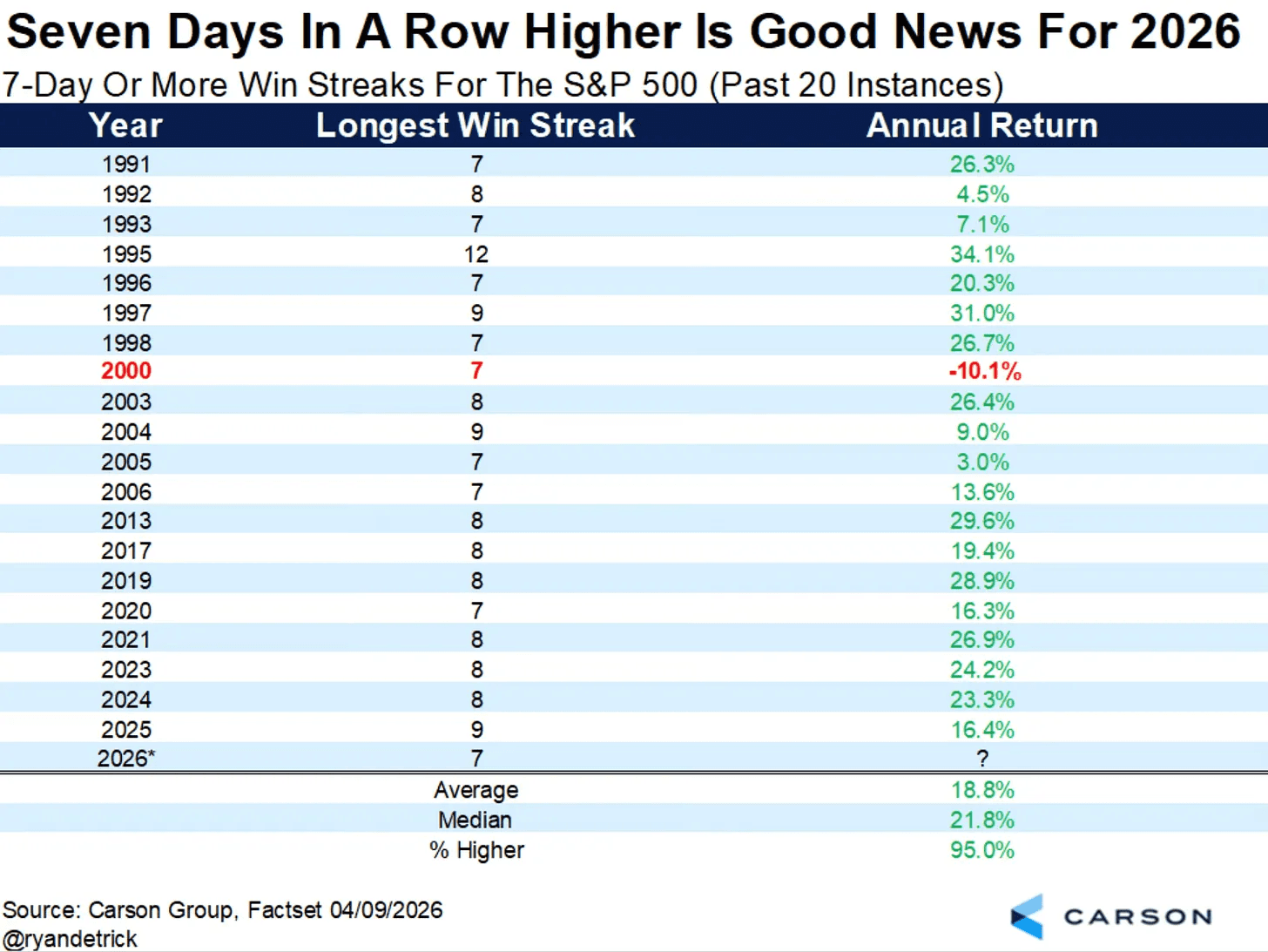
But looking at the data, it shows that in years where the S&P 500 puts together a winning streak of seven days or more, the market has finished higher 19 out of the last 20 times. Average annual return in those years: 18.8%. Median: 21.8%.
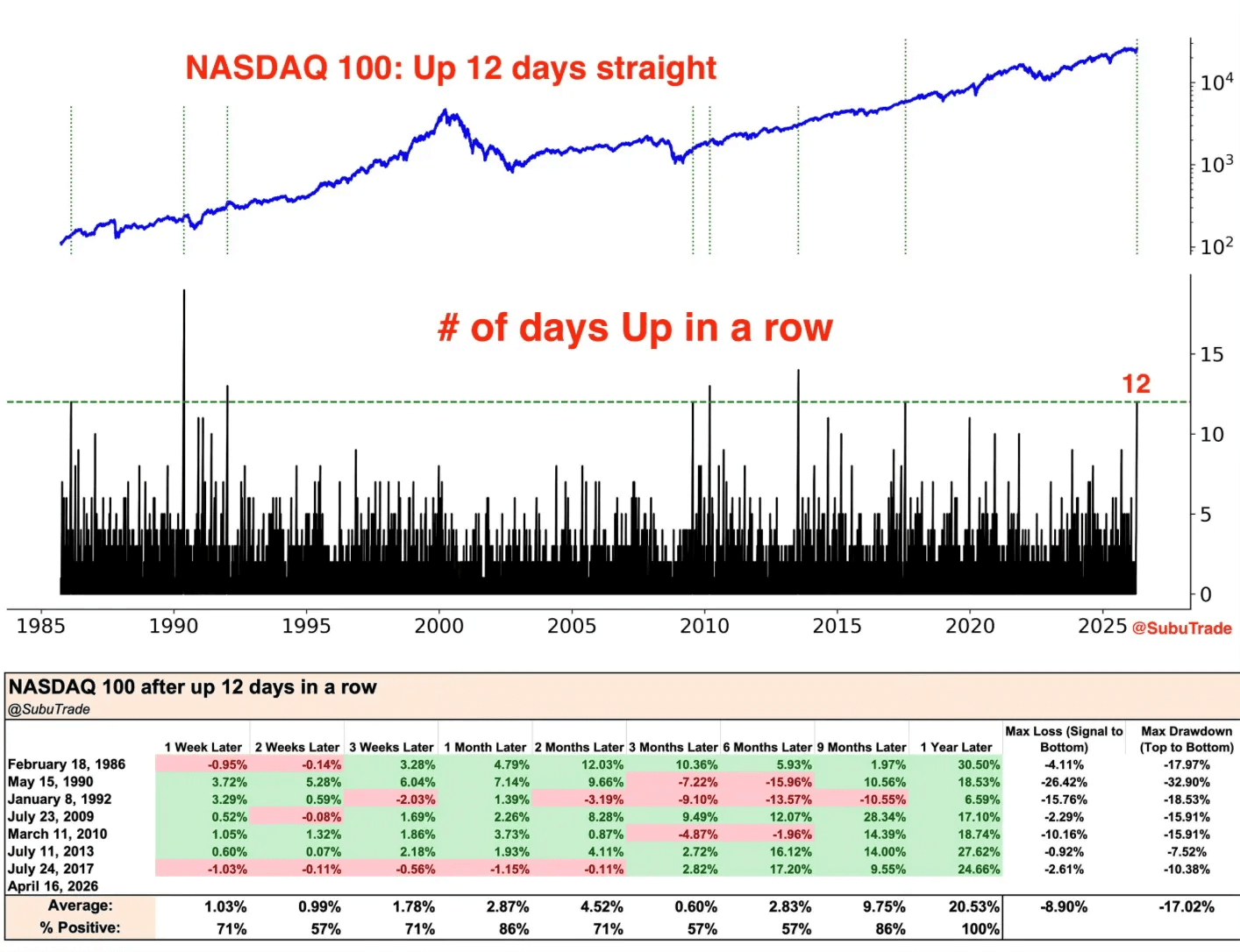
Now look at the Nasdaq. Twelve consecutive winning sessions, the longest streak since 2009. When the Nasdaq 100 has put together a 12-day run historically, the index was higher one year later every single time. 100% of instances. The average 1-year return after those signals: 20.5%.
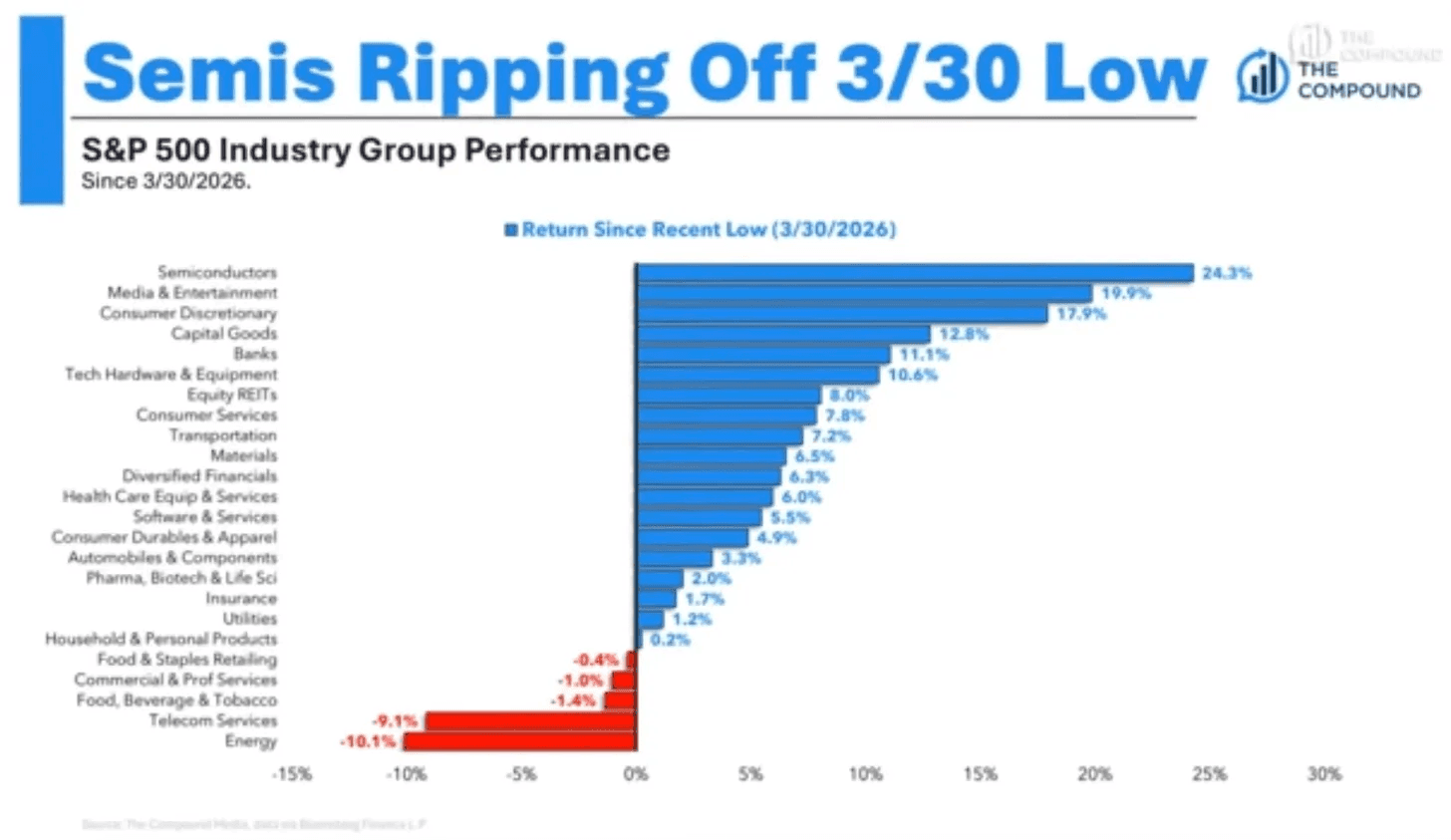
And the best-performing sector was semiconductors.
Structurally, the group also carries strong fundamental tailwinds. We’ve discussed it at long. It’s the fundamental beneficiary of AI. Up to roughly half of semiconductor industry revenues in 2026 are expected to come from AI chips for data centers.
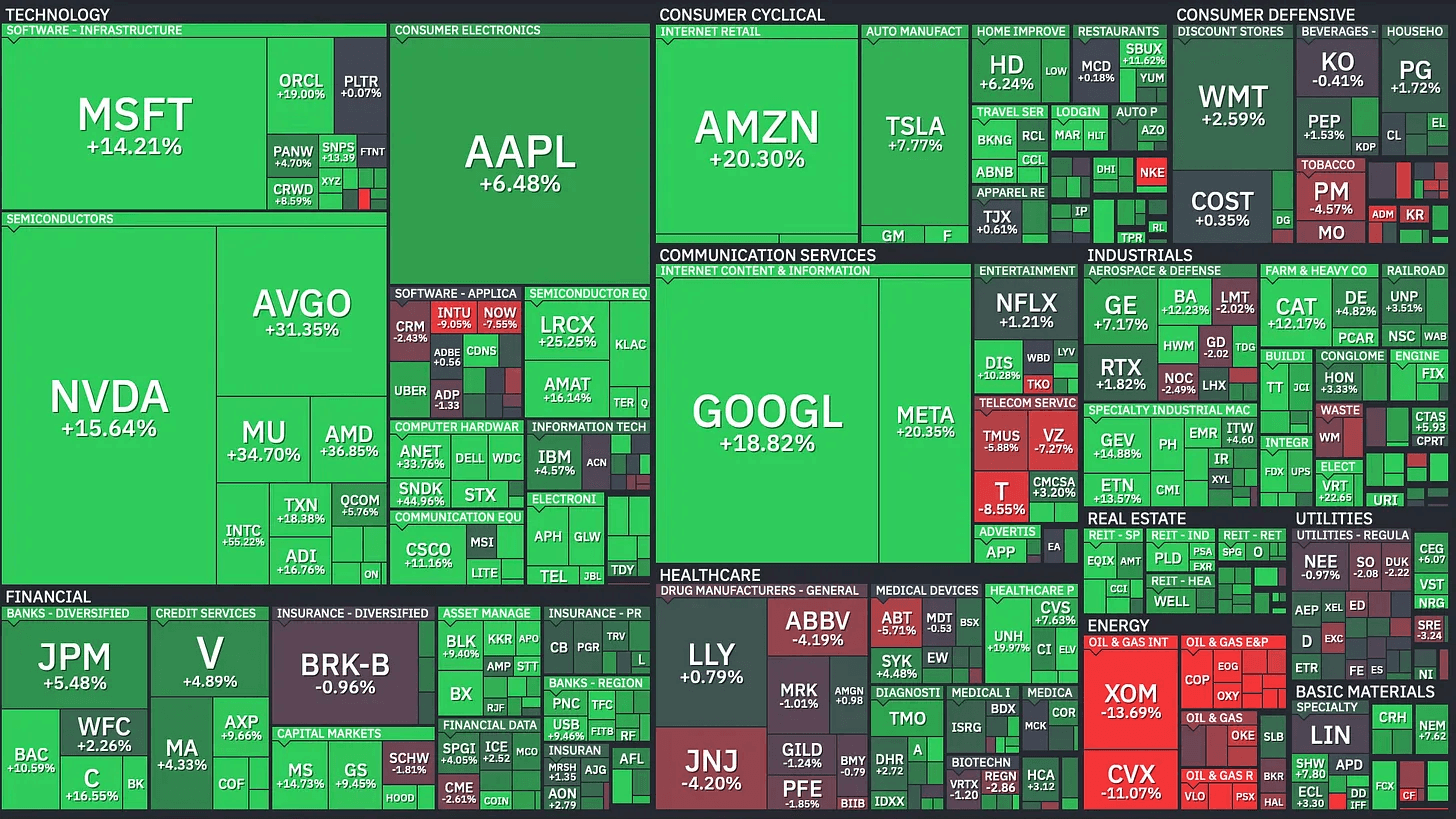
One of the key drivers off the lows were the Mag 7. We’ve just discussed how BigTech is starting to be interesting again and could take the lead after a year of consolidation.
And it seems that this is starting to take shape. Since the March lows:
Amazon up 20%. Meta up 20%. Google up nearly 19%. Nvidia up over 21%. Microsoft up 14%.
And the reason is simple:
Earnings estimates for the Mag 7 have done nothing but grow throughout this entire war and selloff period. The other 493 companies in the S&P 500 have actually seen estimates decline.
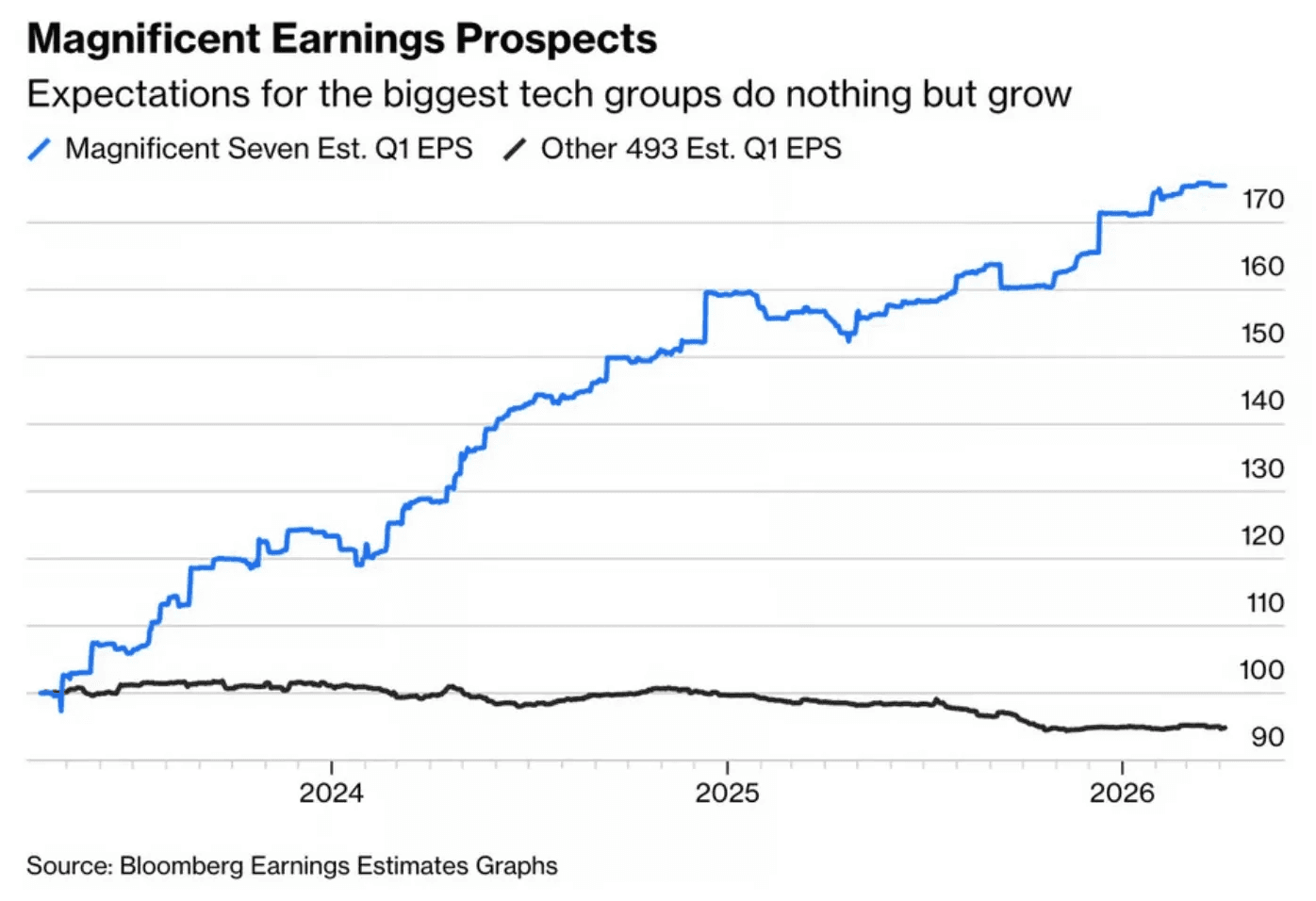
And yet the Mag 7 forward P/E has compressed all the way down to 25x. The premium to the rest of the S&P 500 is now sitting at 34%, near an 8-year low. At peak mania in 2022, that premium was over 100%.
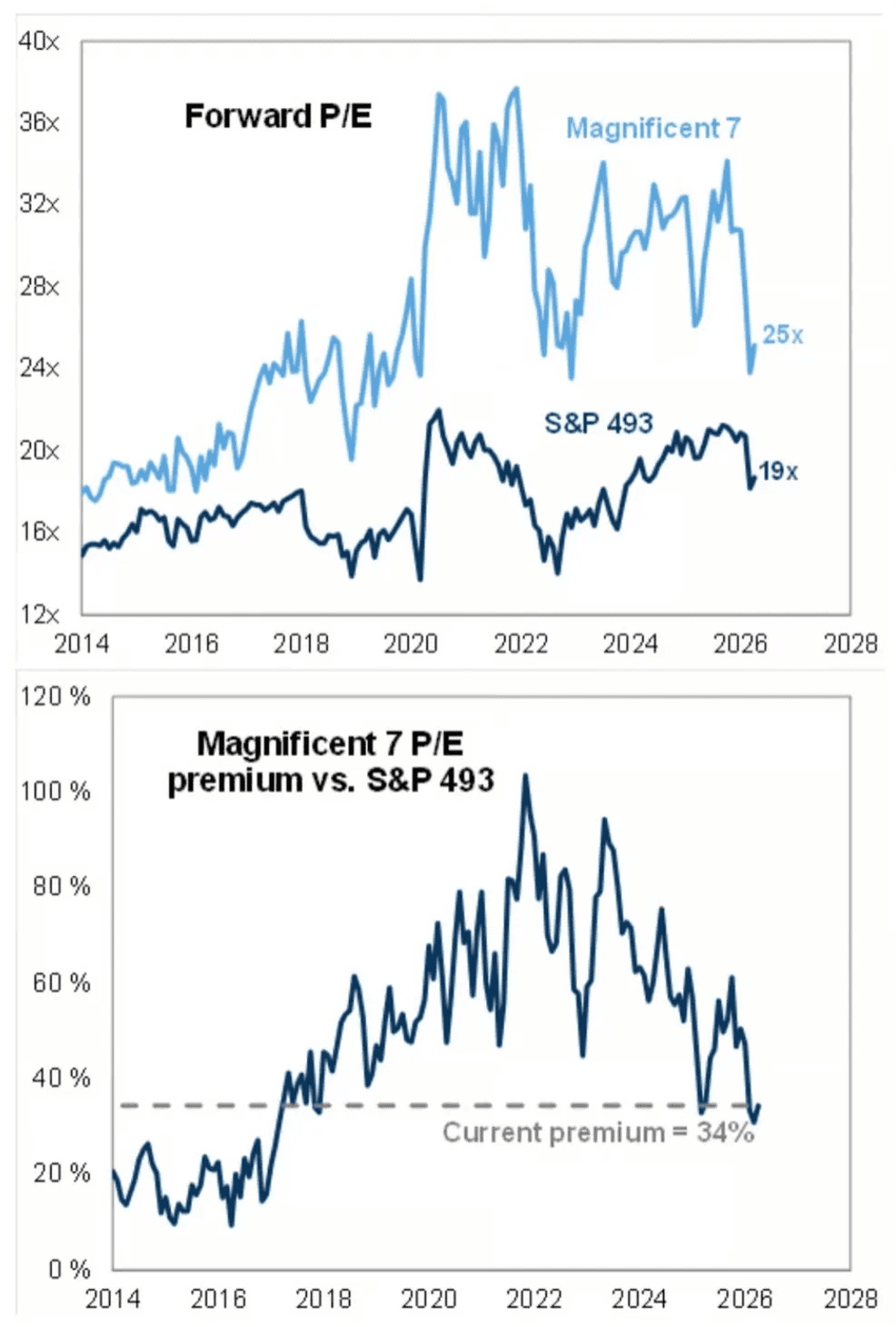
Put that together: earnings estimates going up, valuations coming down.
On a forward P/E basis, the Mag 7 is now cheaper relative to the rest of the S&P 500 than it has been in nearly a decade.
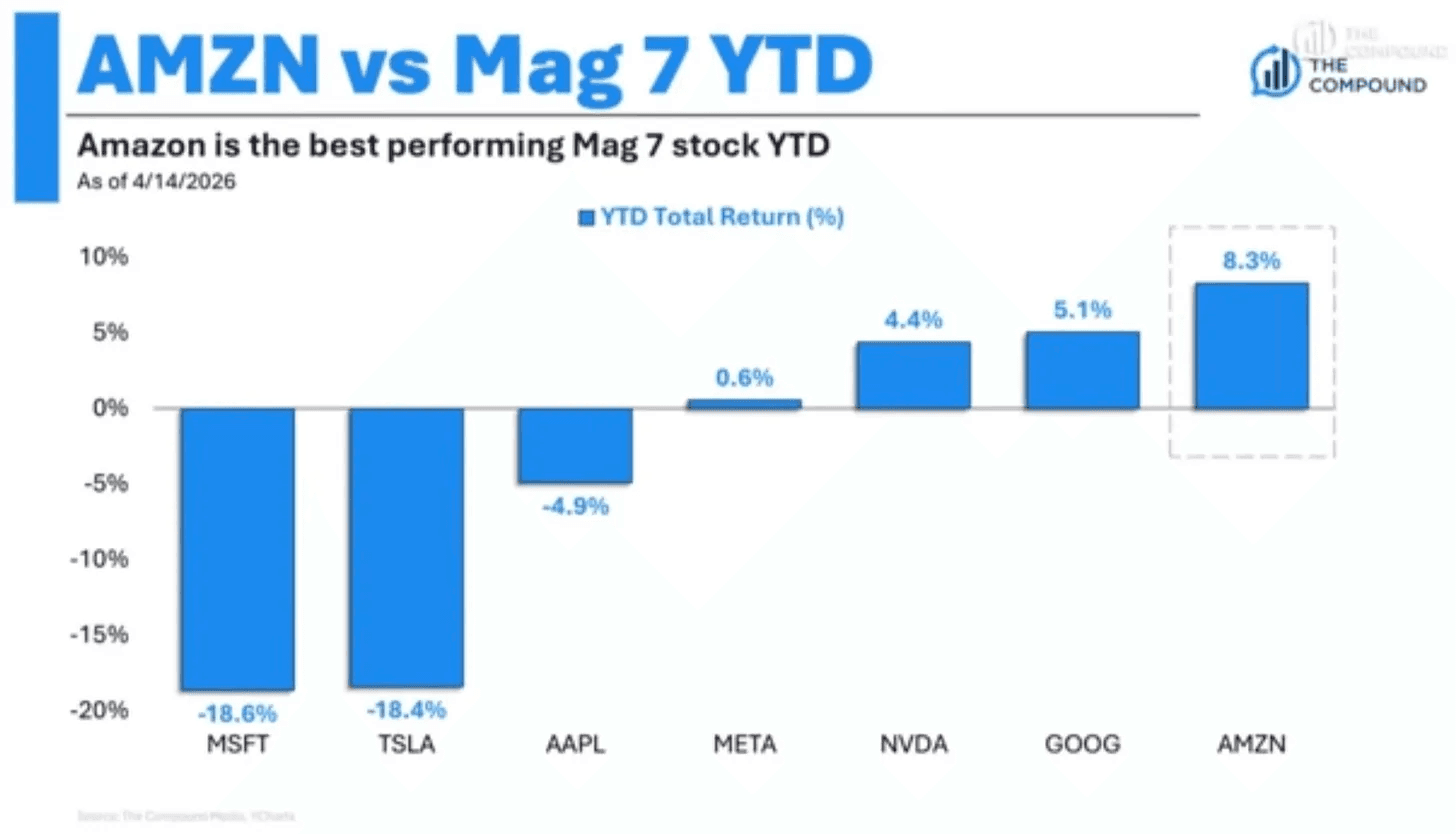
And even after all of this, Amazon is the only Mag 7 stock meaningfully positive on the year. Microsoft and Tesla are still down nearly 19% YTD. The rebound has only started. There is still room to run.
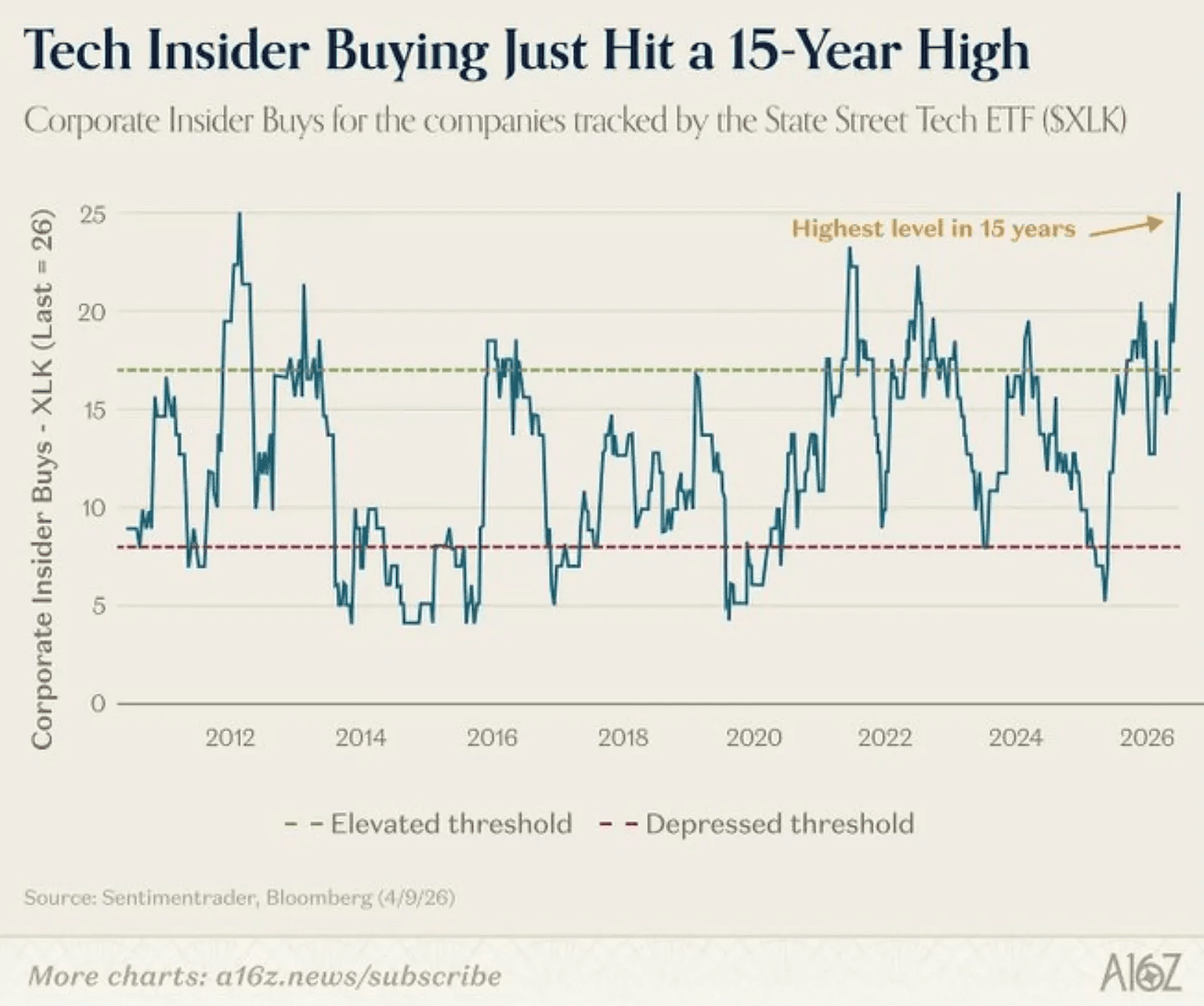
Corporate insider buying in tech stocks just hit its highest level in 15 years. The last time insider buying in XLK reached this level was during peak fear moments like 2011, 2015, 2018, and 2020. Every single one of those turned out to be a buying opportunity.
There are many reasons an insider might sell, but only one reason to buy.
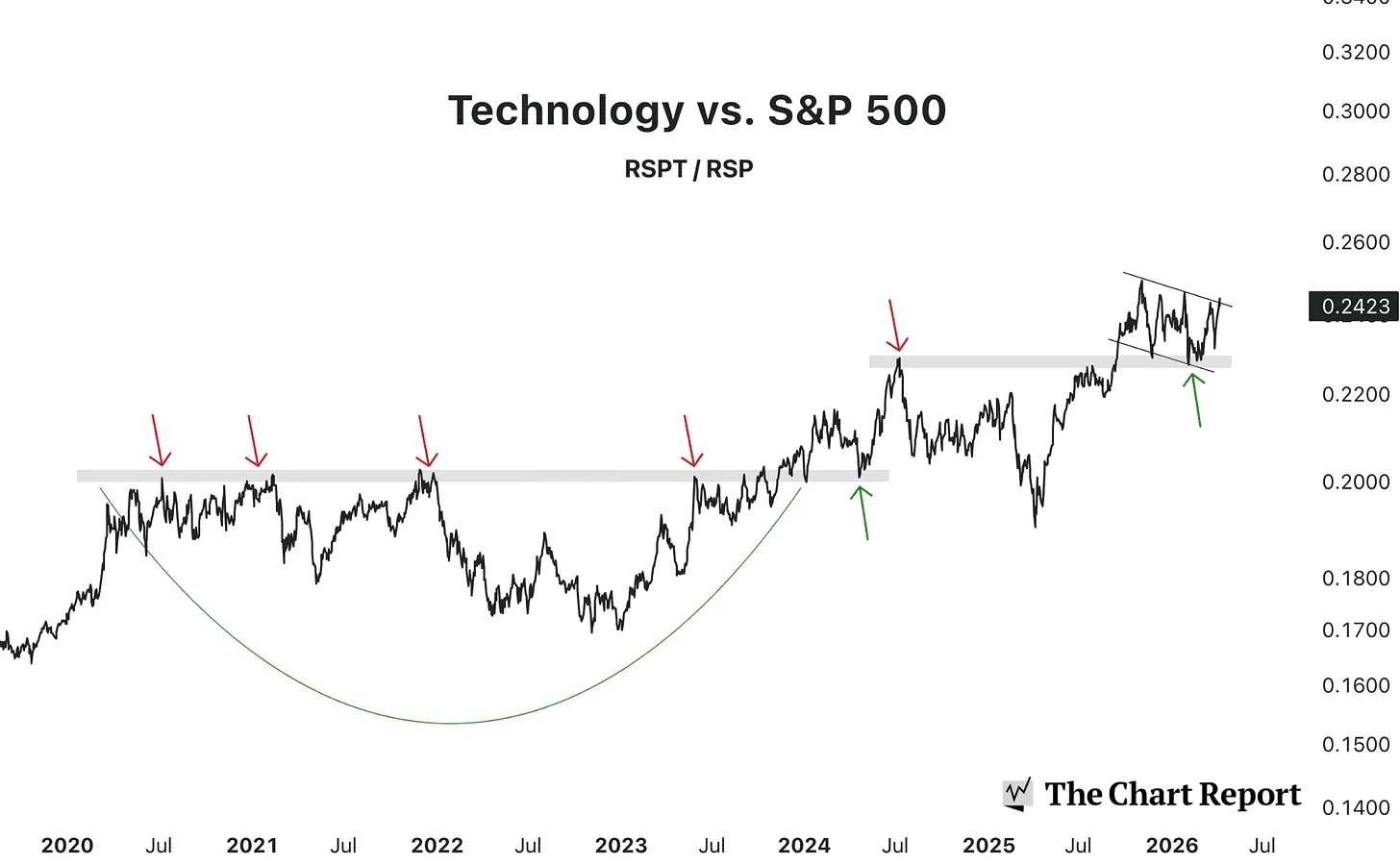
After months of lagging the broader market, tech looks ready to lead again. The relative performance chart against the S&P 500 has been building a base since last October and is now breaking higher.
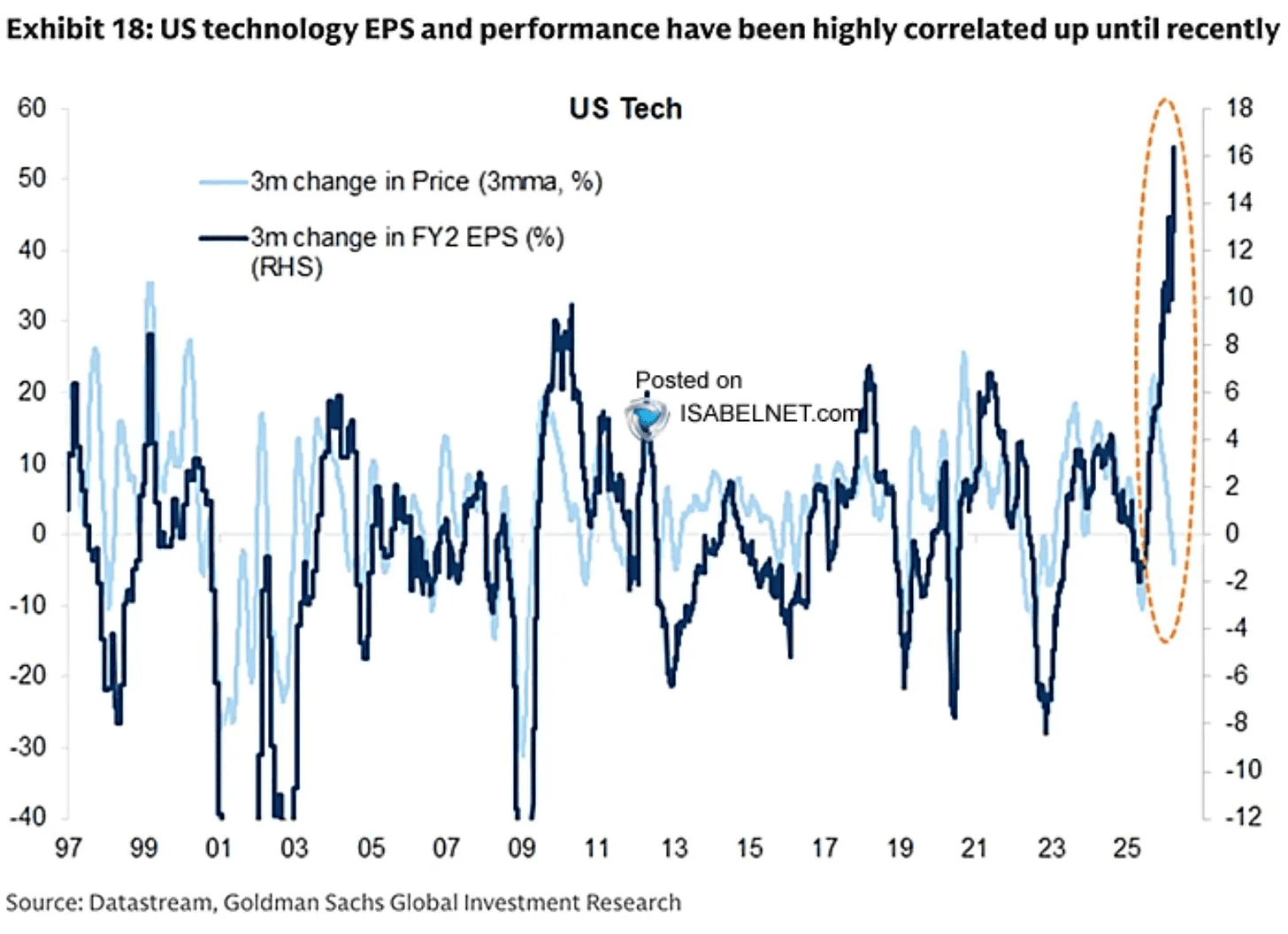
One more thing. For most of the past 30 years, US tech earnings and stock prices moved together. But this time is a little different. While the market corrected earnings have accelerated. And that is something you don’t see every day.
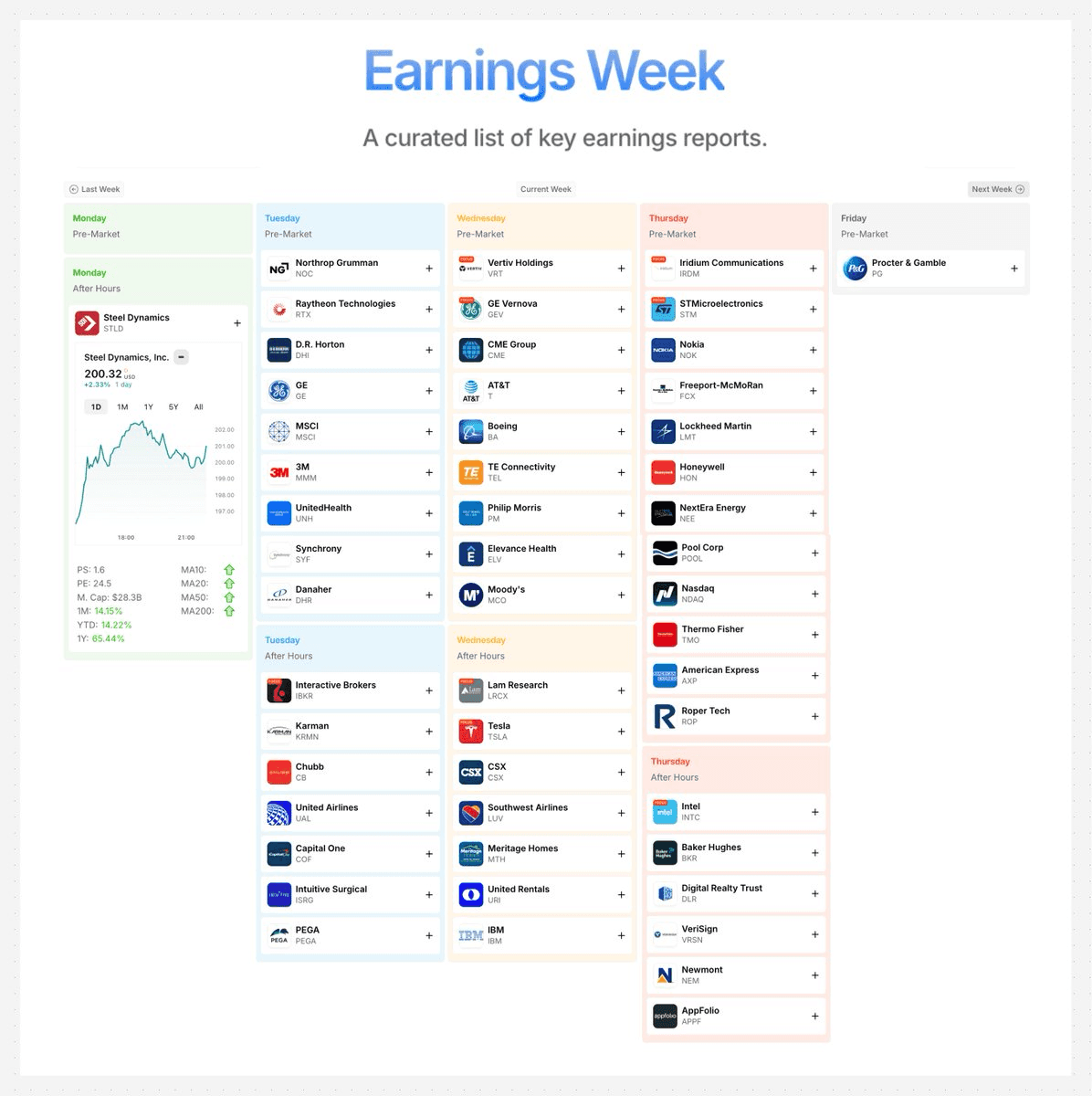
Earnings season is now starting to kick off in full gear. There are few interesting companies this week like Tesla, Vertiv, Lam Research or Intel. And in case you haven’t noticed, you now see how the stock market after their earnings report. Plus, at the bottom you’ll find a list keeping track of the biggest earnings moves.
The challenging part of these kinds of moves is that they can be so psychologically difficult to deal with. It’s hard for most investors to trigger the button when things are already up a lot. So, they wait for a pullback. But because everyone is waiting for it, it usually doesn’t come.
That’s being prepared, having a strategy, and managing risk so important.
You can’t expect to see the stock market always recover in a V-shaped fashion. Eventually there will be a financial crisis or recession that leads to an extended bear market. A generation of investors are taught that this will always happen. They haven’t seen anything else. But that will not always be the case. So, you have to be prepared for the opposite.
But for now, that’s what we’ve seen and that’s what we have to work with. And there few things that are more positive than all-time highs and v-shaped recoveries. Hence, it's time to look for opportunities. However, it’s important not to fall for FOMO and wait proper buy points and new setups to develop. And I’m releasing a new feature soon that I’ve been working on for a while to take advantage of that, and I think it might be the most impactful one yet.
Previous Updates
View All
- Weekly Market Update: Big Tech Divergence
- Weekly Market Update: Accumulation
- Weekly Market Update: The Best Quarter
- Weekly Market Update: Rate Hikes
- Weekly Market Update: AI is Not Slowing Down
- Market Update: Has AGI Arrived?
- Weekly Market Update: Consolidation
- Weekly Market Update: September is Here
- Market Update: Nvidia Crushes Earnings
- Weekly Market Update: Yields
- Market Update: The Future of Biotech
- Weekly Market Update: Earnings Acceleration
- Market Update: The Next Generation of AI Infrastructure