Go Back

Lin
Weekly Market Update: Death of the Dollar
This week was nothing short of historic.
Silver crashed by 30% for its worst day since 1980. The S&P 500 briefly touched 7,000 for the first time ever. Bitcoin is at its lowest price in over a year. Microsoft had one of its biggest one day sell offs in its history. SpaceX might merge with xAI before its IPO. And that is just the tip of the iceberg.
The market seems to be getting crazier by the day, and we are only one month into 2026.
Even with all these headlines, all three major indices finished January in the green. But the current activity does not really instill confidence and may give reason to pause. Even though there were a few early signs to be more cautious over the last few weeks, it is still surprising how quickly and how ferociously events can unfold.
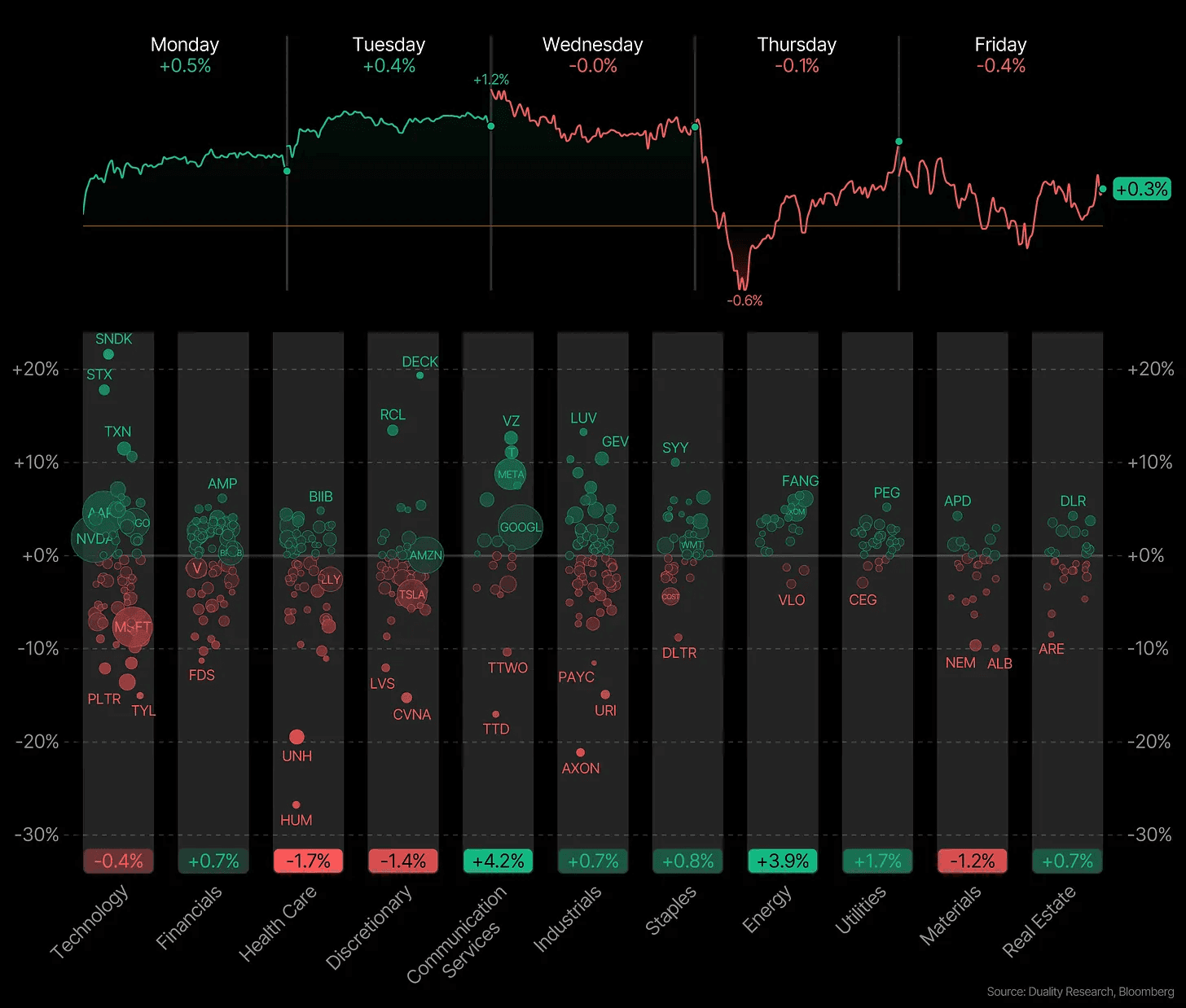
For months now tech and the Nasdaq has been going nowhere. More than 40% of the companies in the index are now trading below their 200 day moving averages. That is a clear sign that growth and tech are under pressure.
Now, as long as the index is consolidating, there is no reason to be over exposed. Maybe this is a short-term like in late 2021 and early 2025. Maybe the index just moves higher and goes on to new highs. But it’s important to keep an open mind. There are no certainties in the markets. We’ll only know in hindsight.
The most important thing you can do is to be prepared for any scenario.
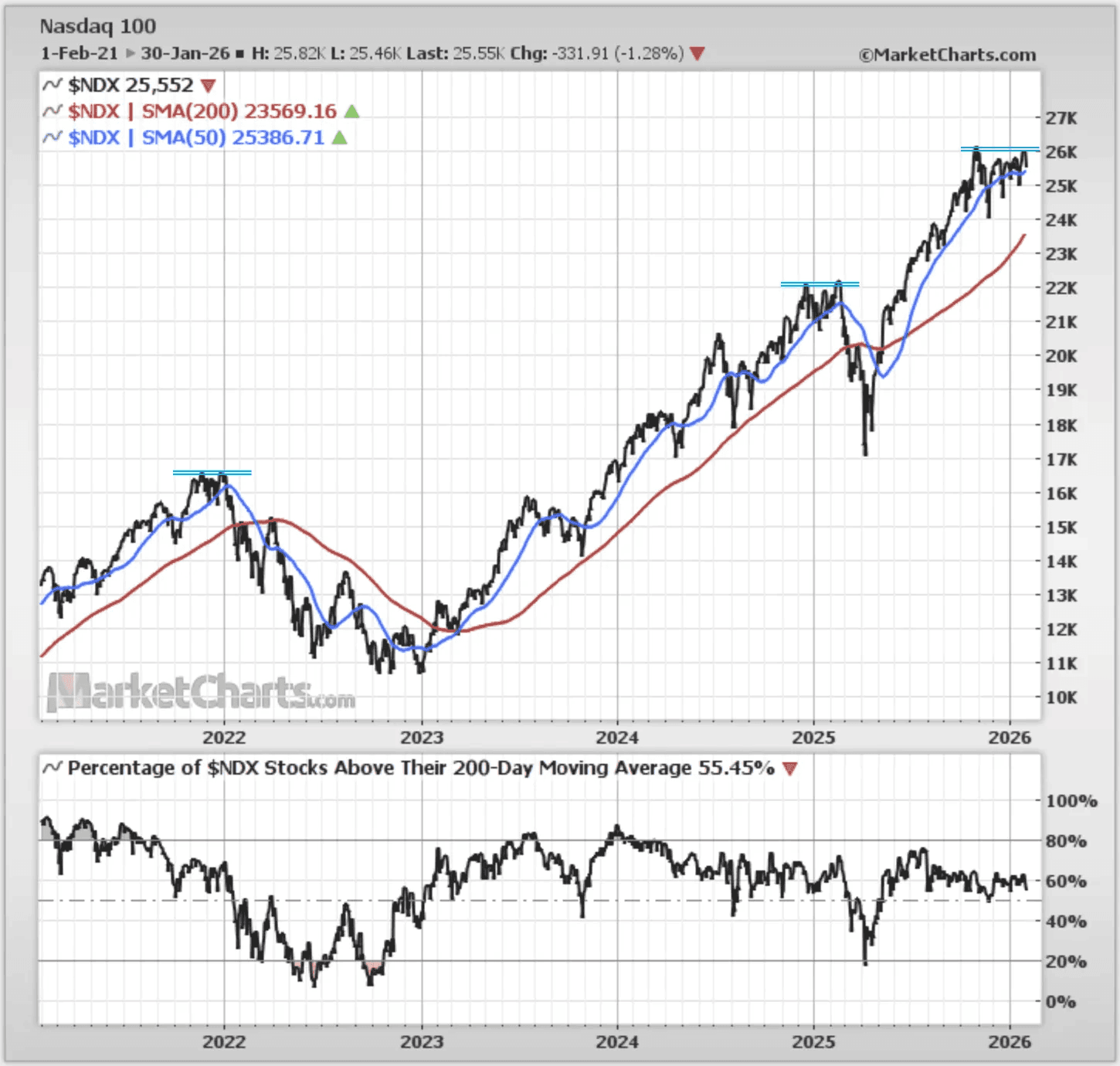
One thing I’ve paid to little attention recently is the death of the dollar.
There have been only 2 historical instances where the US Dollar rose to at least a 4 year high and then fell to a 4 year low. In both cases, the dollar saw meaningful downside price action.
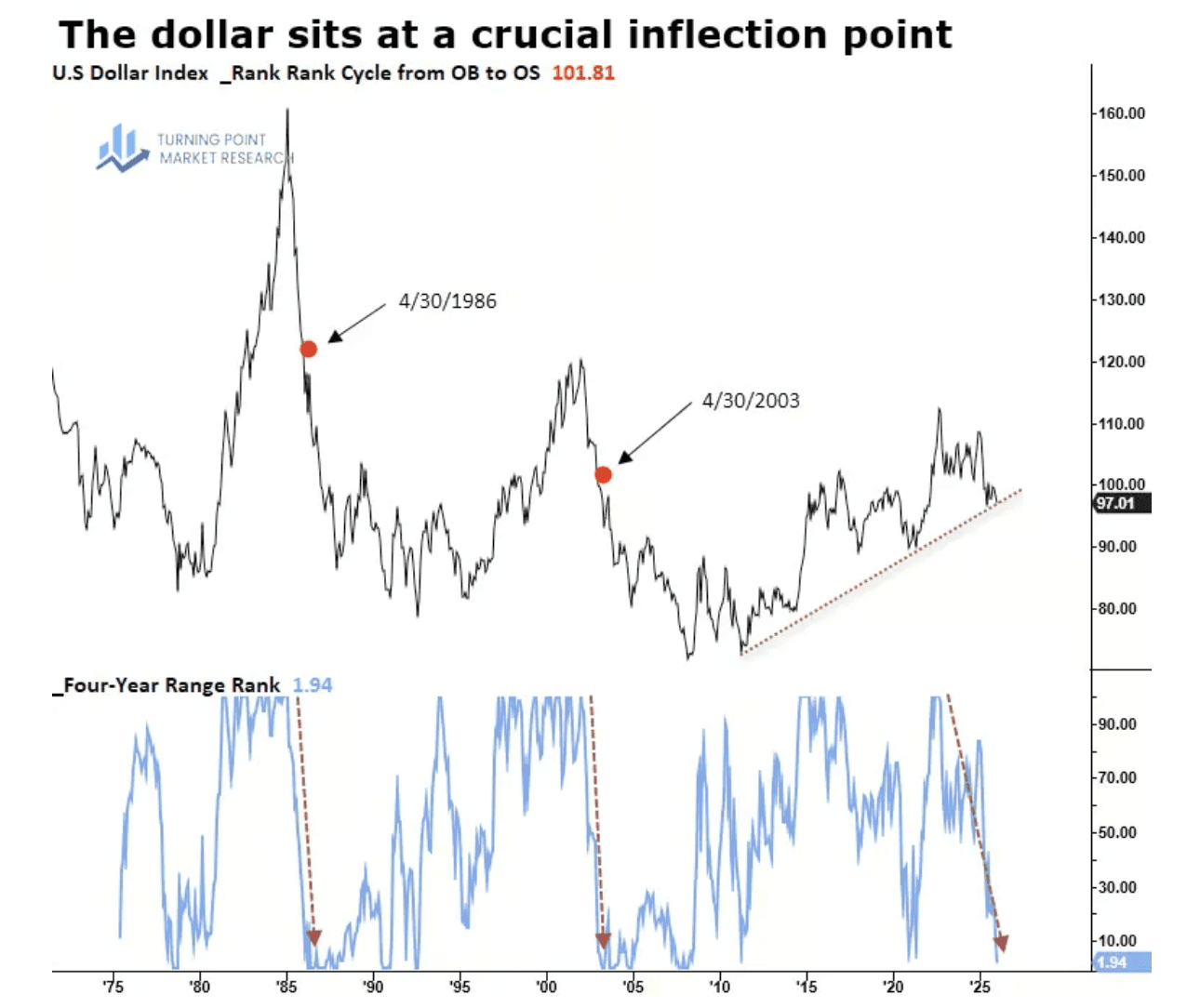
It’s basically flat over the last 4 years. This is a rare reset in long term dollar momentum that has happened only 5 times since 1971.
What does this mean for the markets?
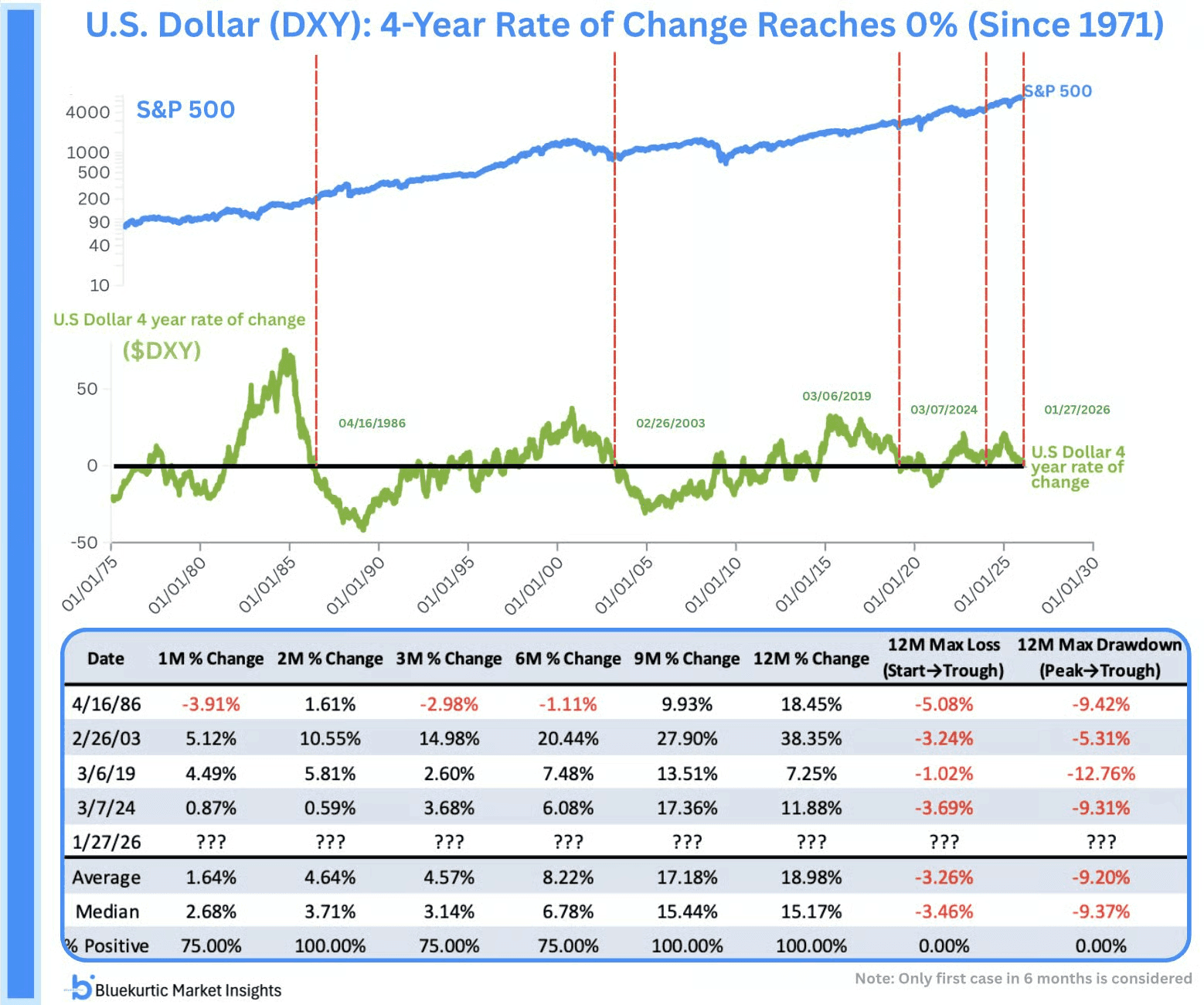
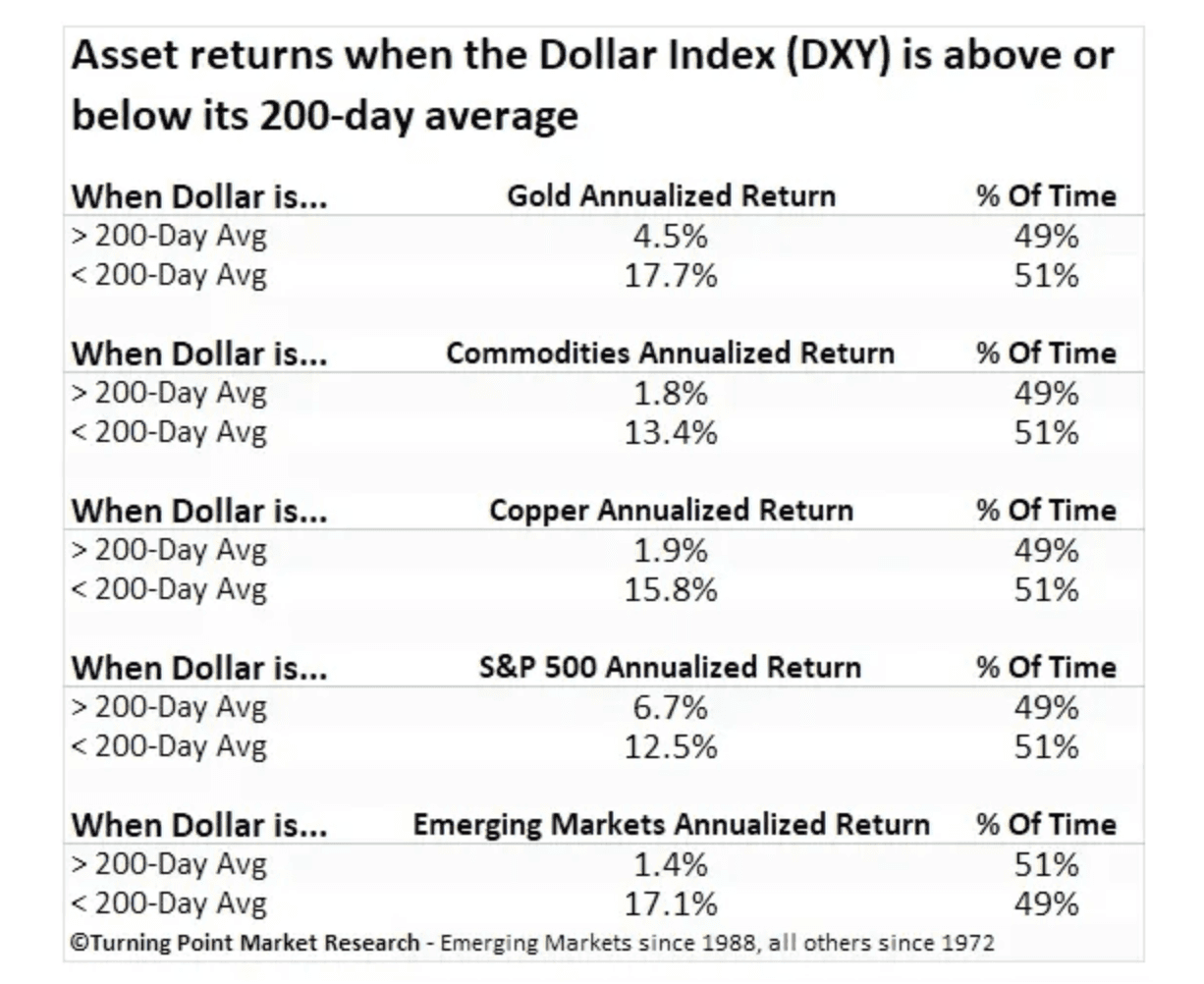
A weak dollar pushes up stocks and commodities. Many US companies earn a significant portion of their revenue in other countries. When those earnings are converted back into dollars, the numbers look bigger. US products become cheaper for other countries to buy, which helps exporters. Assets like gold, stocks, and oil tend to appreciate when the dollar depreciates.
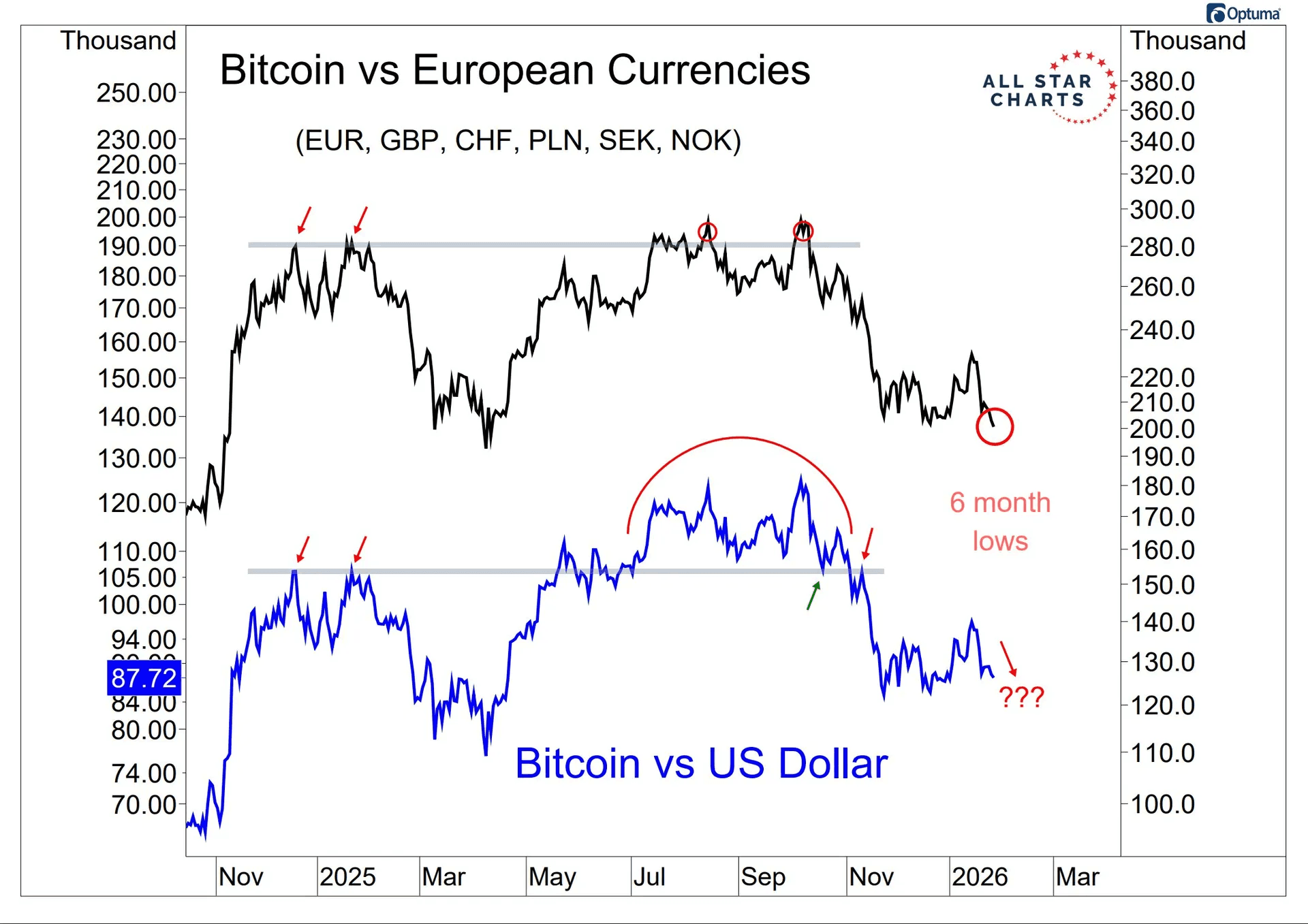
Bitcoin’s weakness has been masked by the dollar’s own weakness. When priced against a basket of European currencies, Bitcoin is already significantly lower and is at its weakest level since the April tariff selloff. It’s still important to track but there is absolutely no reason to be heavily exposed to Crypto at the moment.
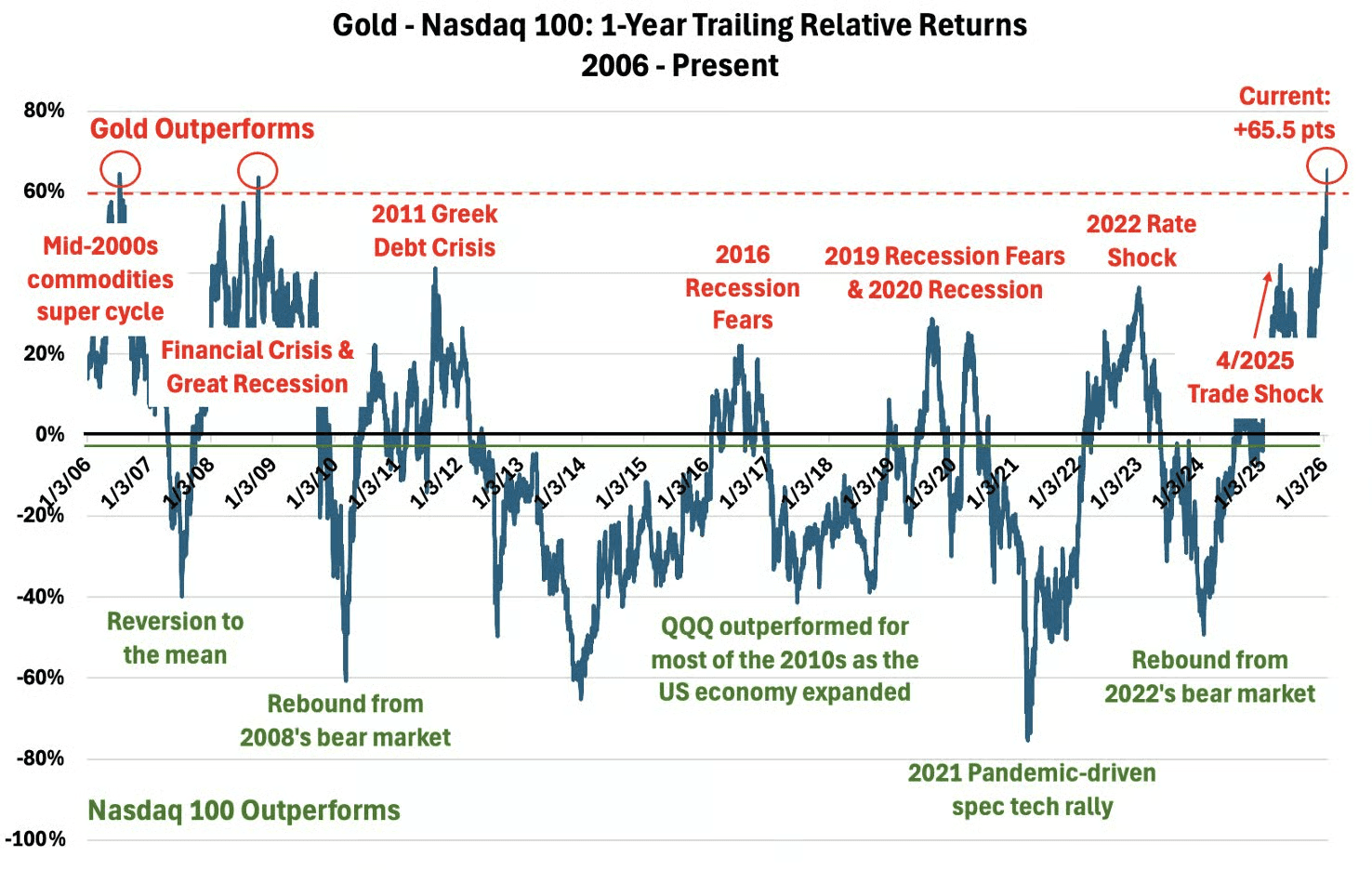
To understand how rare this move in gold was, consider this.
Gold has beaten the Nasdaq 100 by +60 percentage points over the last year. The only other times this happened were in July 2006 during the mid 2000s commodities super cycle and October 2008 during the Financial Crisis.
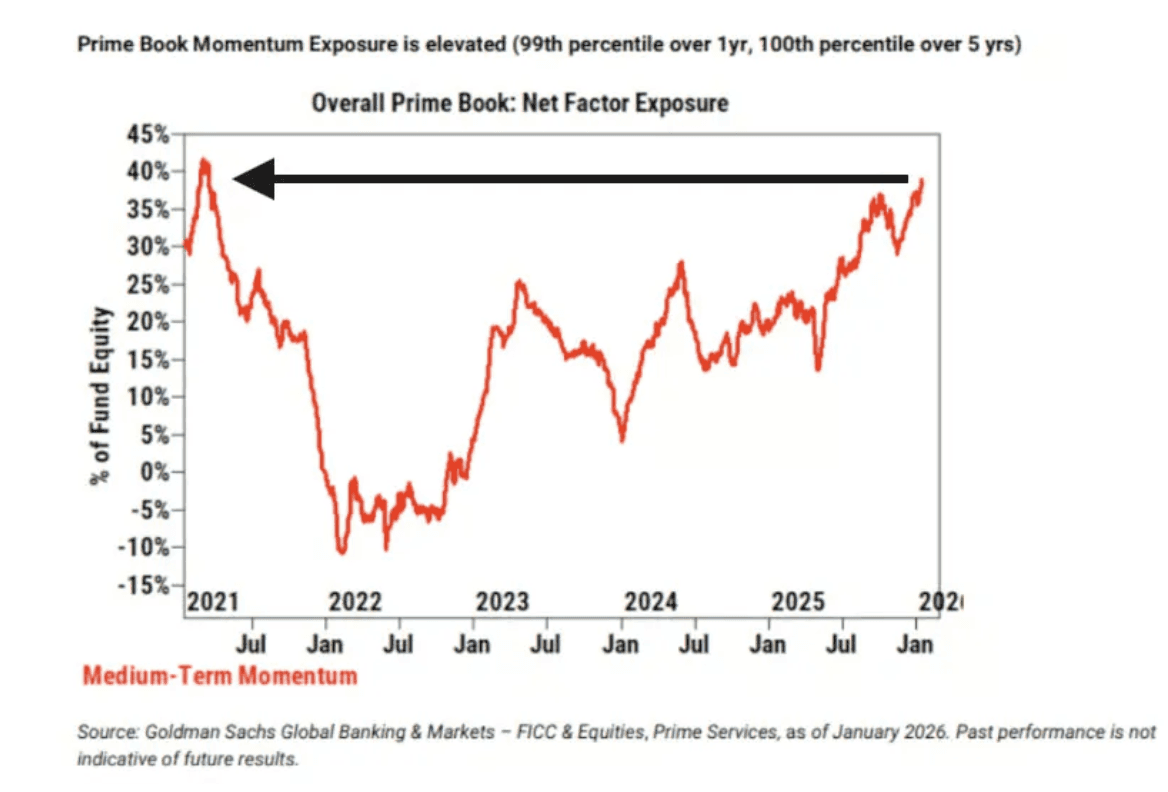
Very few investors have meaningfully reduced risk. Meaning most investors have leaned into risk assets. Almost everyone is still heavily positioned in the same names. When the market get this crowded, it becomes more fragile because if prices start to fall, everyone tries to exit at the same time. And this why we’ve seen these insane swings this week.
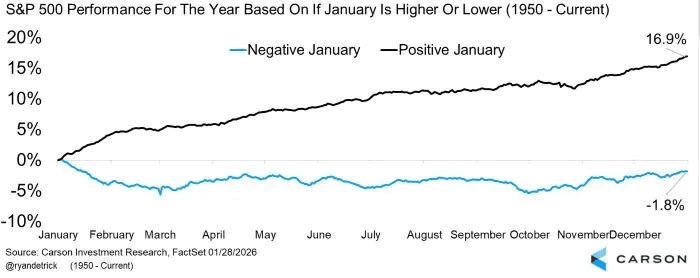
The good news is we finished January slightly up and a positive January has historically been a good sign for the rest of the year. When January ends higher, the market has gone on to post gains for the rest of the year roughly 87% of the time going back to 1950, with an average return of 12.24%.
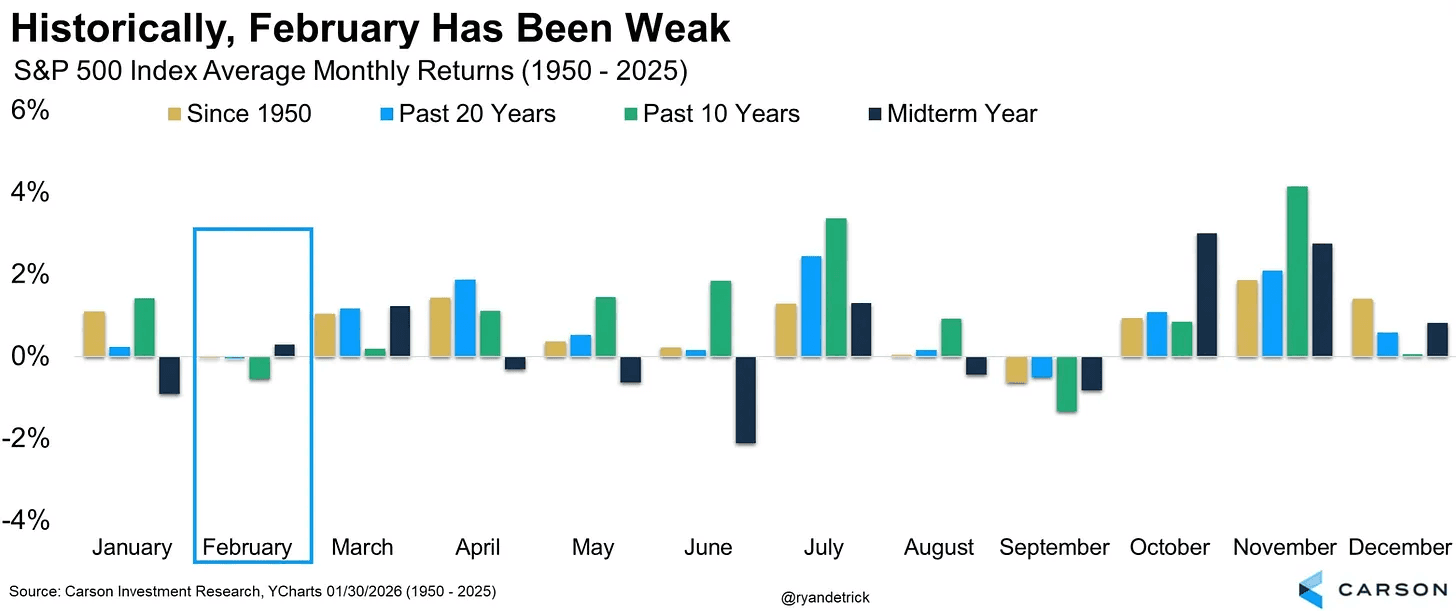
However, the calendar now flips to February, one of the two worst months of the year historically. The only month with a worse track record is September. In fact, February and September are the only months that have averaged negative returns going back to 1950, including over the past 10 and 20 year periods.
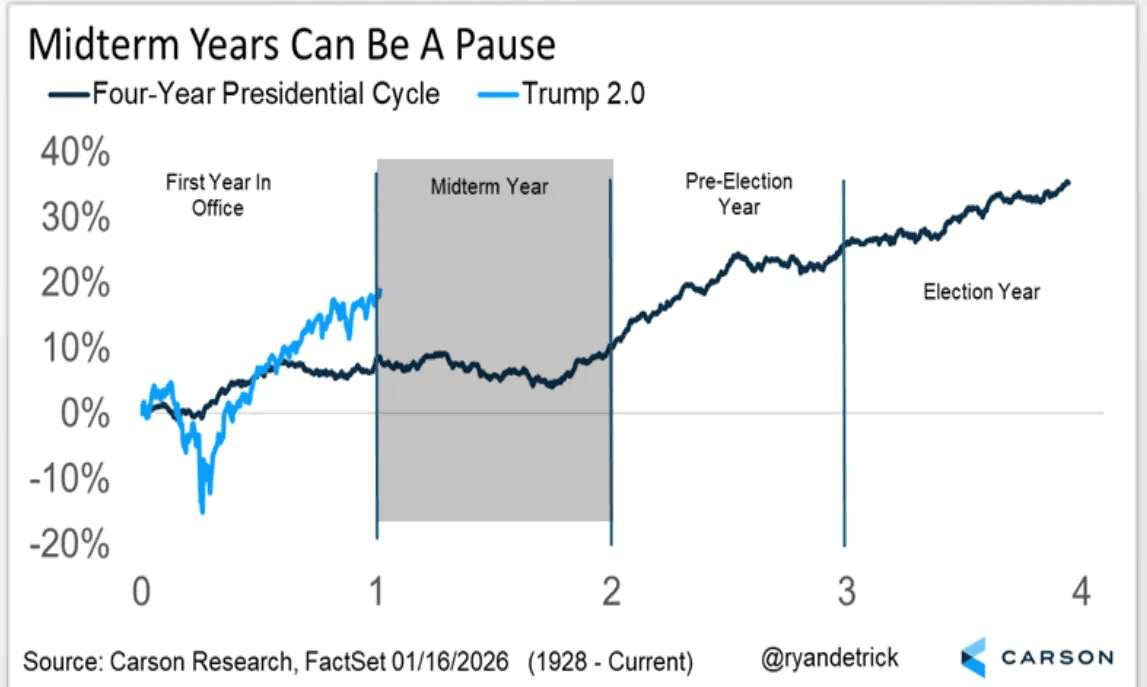
One thing I want to mention is that this midterm volatility and news driven environment is part of the course of the presidential cycle. This happens because the incumbent administration is doing a lot to try to ensure they win the midterms and remain in full power, while the opposing side is trying to create enough volatility and headlines to potentially move voters to the other side. This push and pull finds its way into markets. That’s why most midterm years are choppy and volatile.
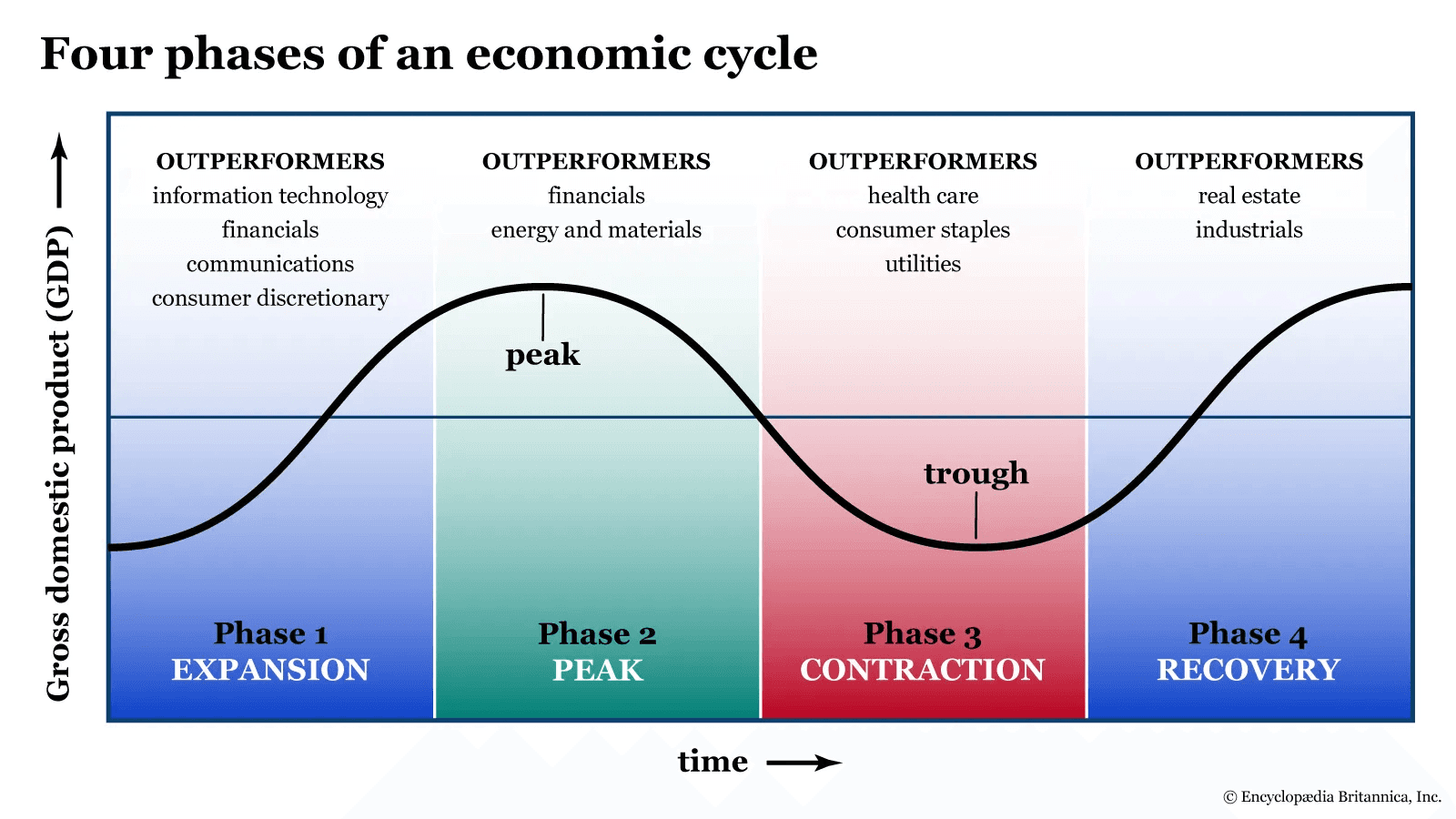
Interestingly the best performing sectors so far in 2026 are Energy and Materials while tech has been clearly lagging. I think few people would have guessed that these would be on top of the list for this year. There are 2 possible explanations to this.
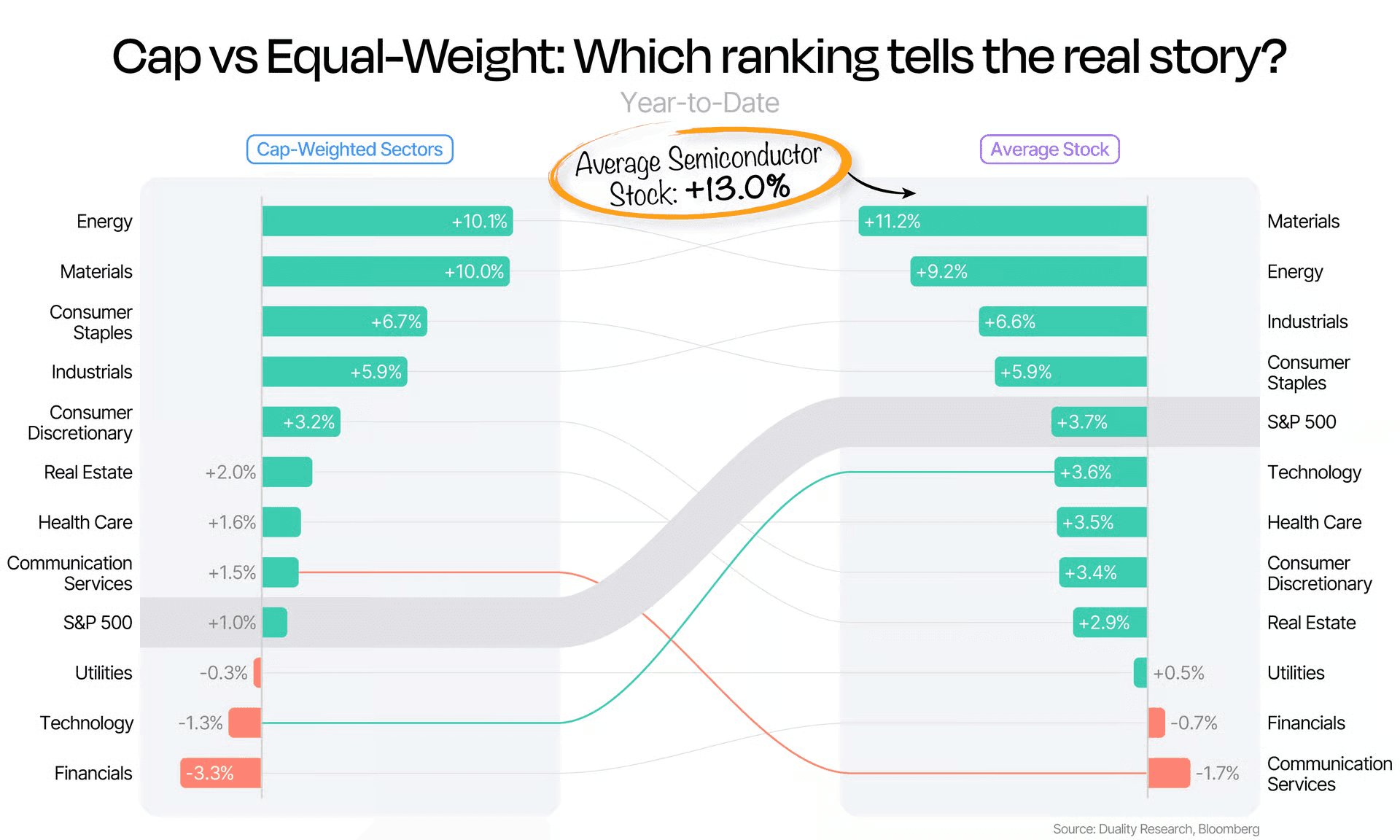
First, we’re seeing neglected sectors catch-up while also benefitting from the boom in AI infrastructure. Or second, we’re getting closer the peak of the current economic cycle. Because late in a cycle, growth stocks and tech often stop leading. The economy is still strong, but inflation, demand for raw materials, and real world production become more important. That is when sectors like Energy and Materials start to do better. These companies benefit from higher commodity prices, strong industrial demand, and tight supply.
Maybe it’s a combination of both. Now, even if it’s nearing the peak, this could very well continue for months, if not years. It’s impossible to know exactly while living through it, but it’s important to keep in mind.
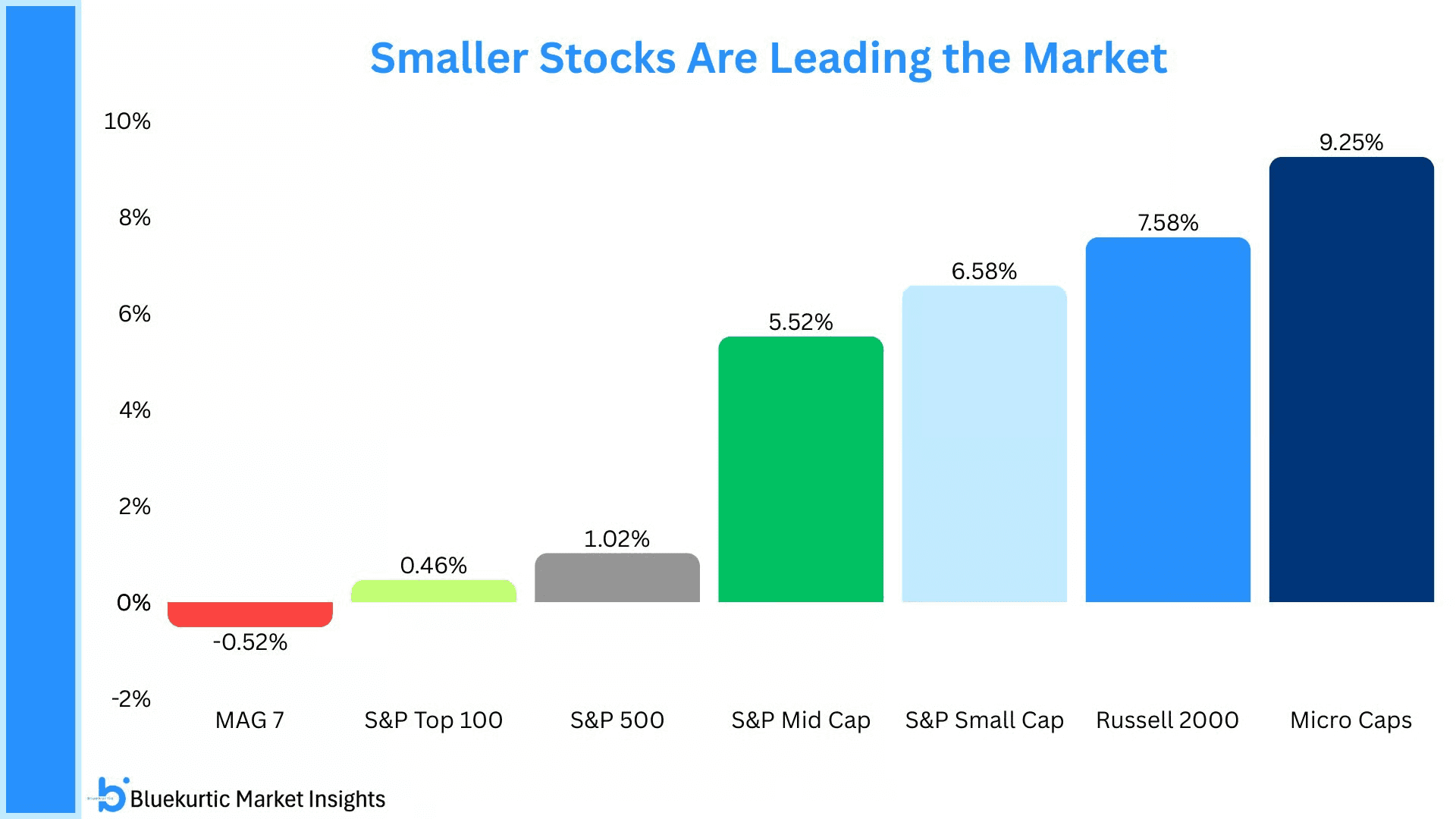
That might also be why we’re seeing rotation from bigtech to small and micro caps.
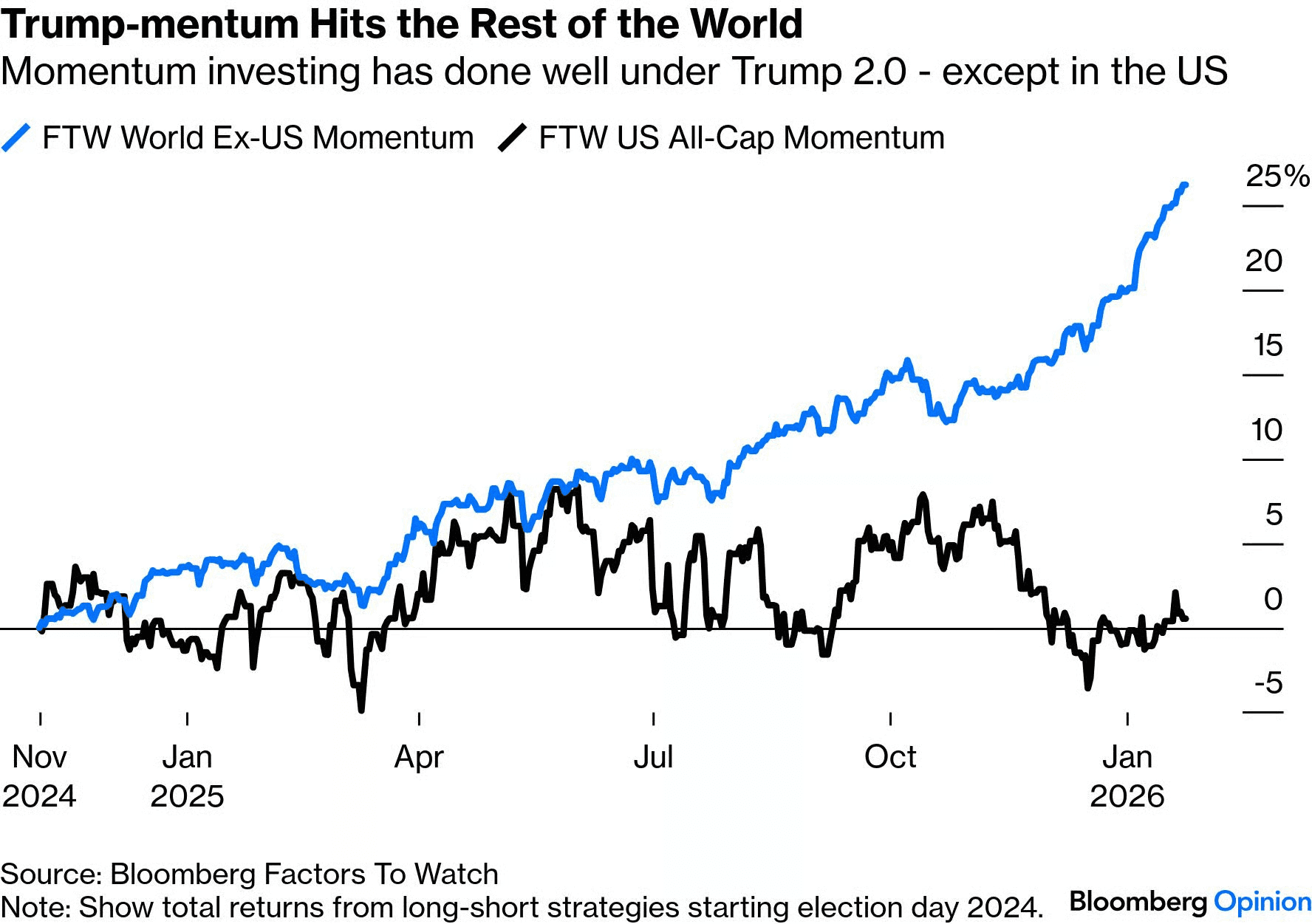
Parabolic moves often appear late in a market cycle. At this stage, many assets have already risen, valuations are high, and investors tend to focus on the few names that still show strong momentum. This can lead to more money flowing into the same assets and pushing prices up quickly, like we have seen in commodities.
This crowding can make prices rise faster than usual. At the same time, it can make the market more sensitive. Even small changes can lead to quick reversals.
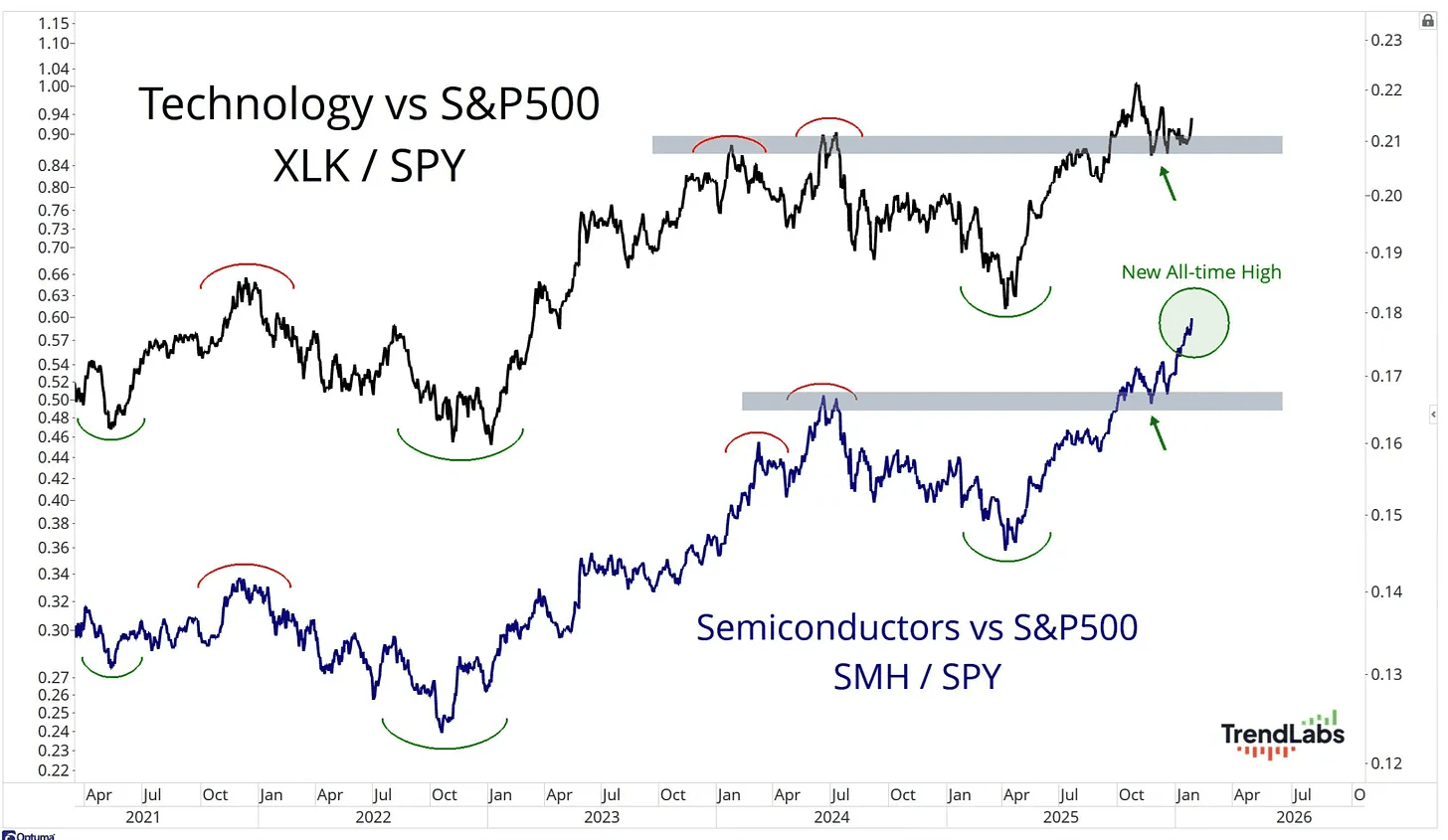
Semiconductors can be a helpful way to understand where the market might be going. Chips are used in almost everything and sit right at the heart of both tech and industrial demand. So, as long as semiconductor stocks are going up, the general market should still do well. But it’s an important sign to track.
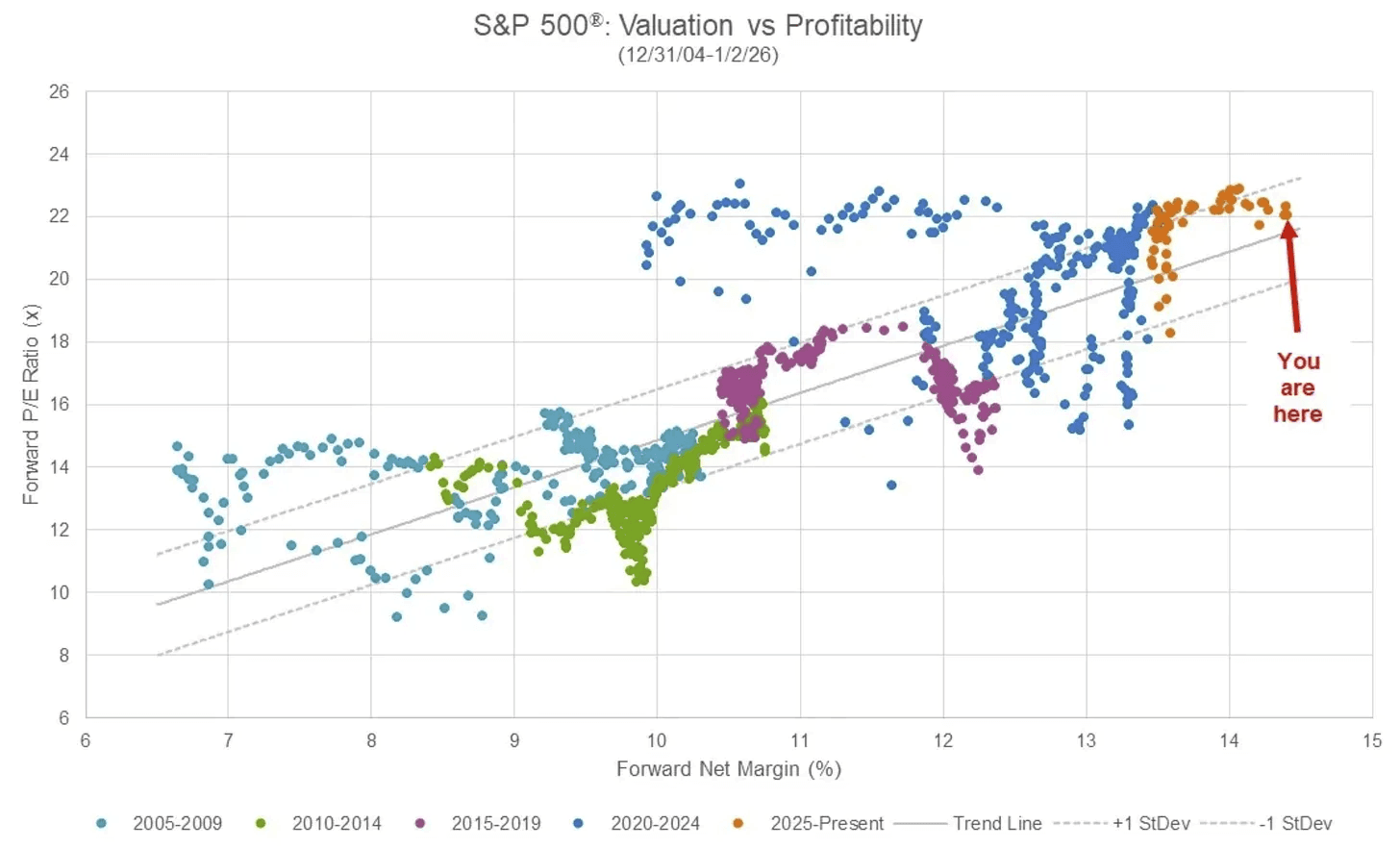
Right now, the market is priced for perfection and expecting very strong earnings. Valuations are high because investors believe companies will keep delivering big earnings. Companies are performing well, so higher prices make sense. But if expectations are even slightly too optimistic, these high valuations can fall quickly.
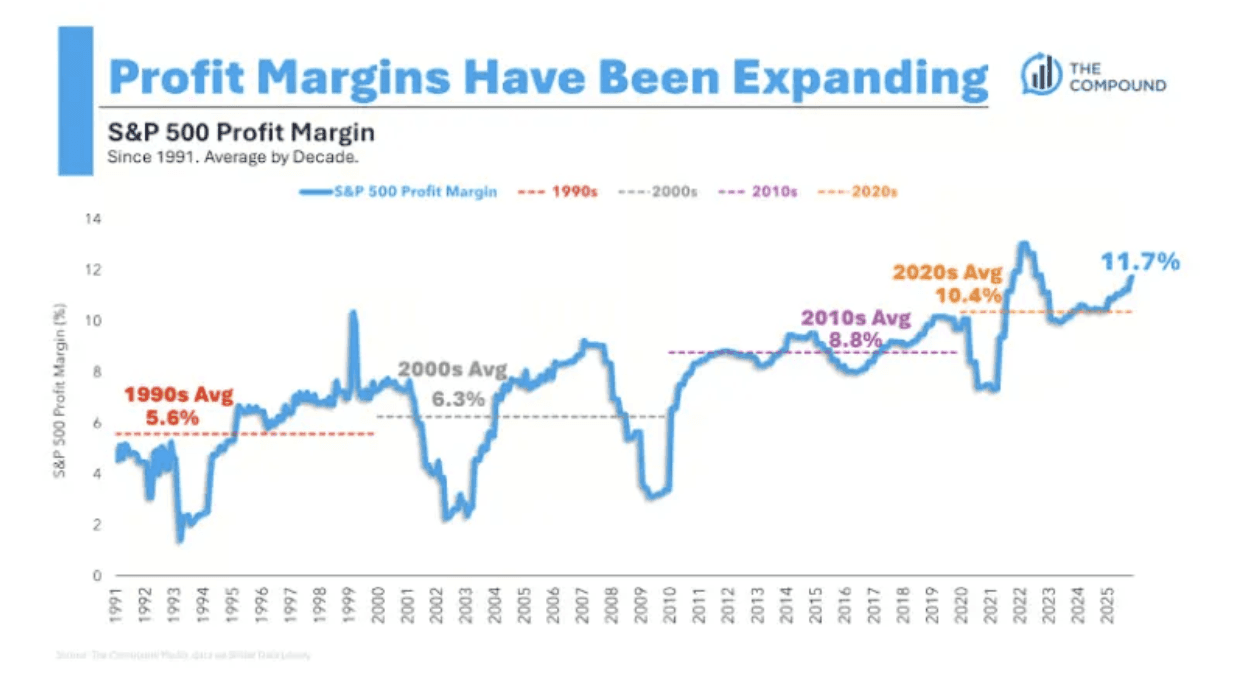
So far margins continue to improve. And much of that is likely related to AI induced productivity gains.
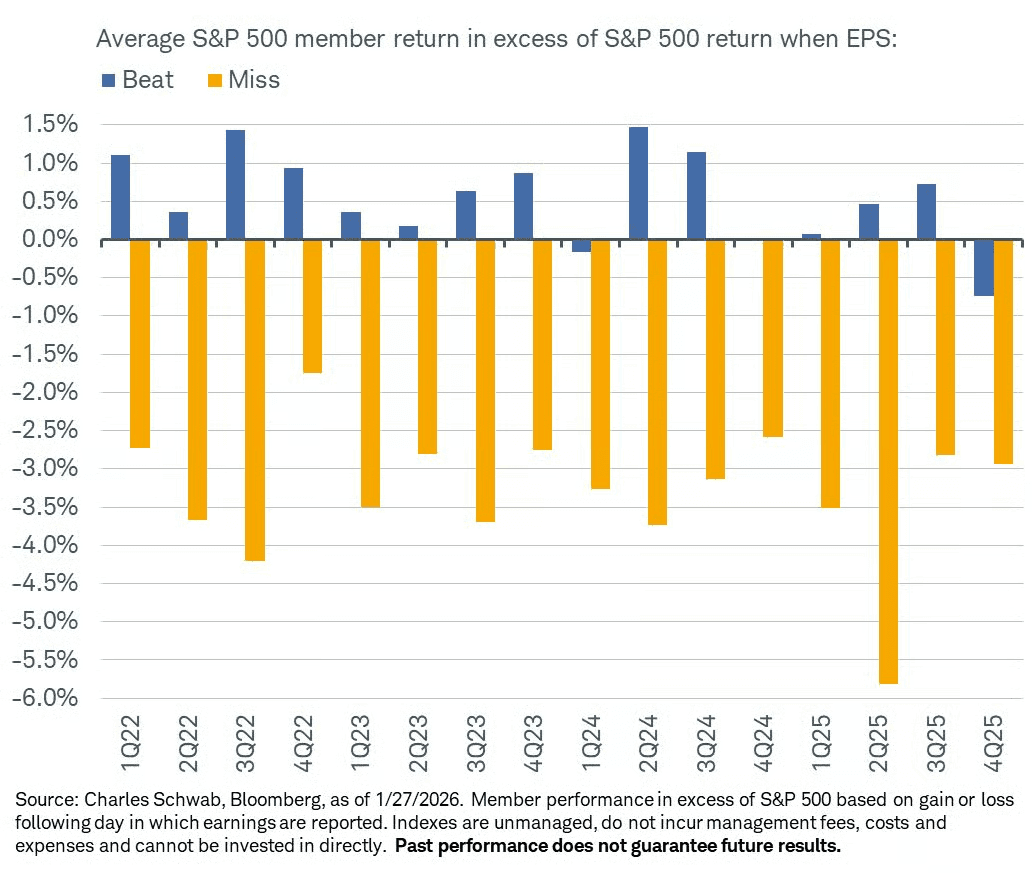
But investors are increasingly sceptic. Companies are punished heavily for any misses or disappointments in earnings.
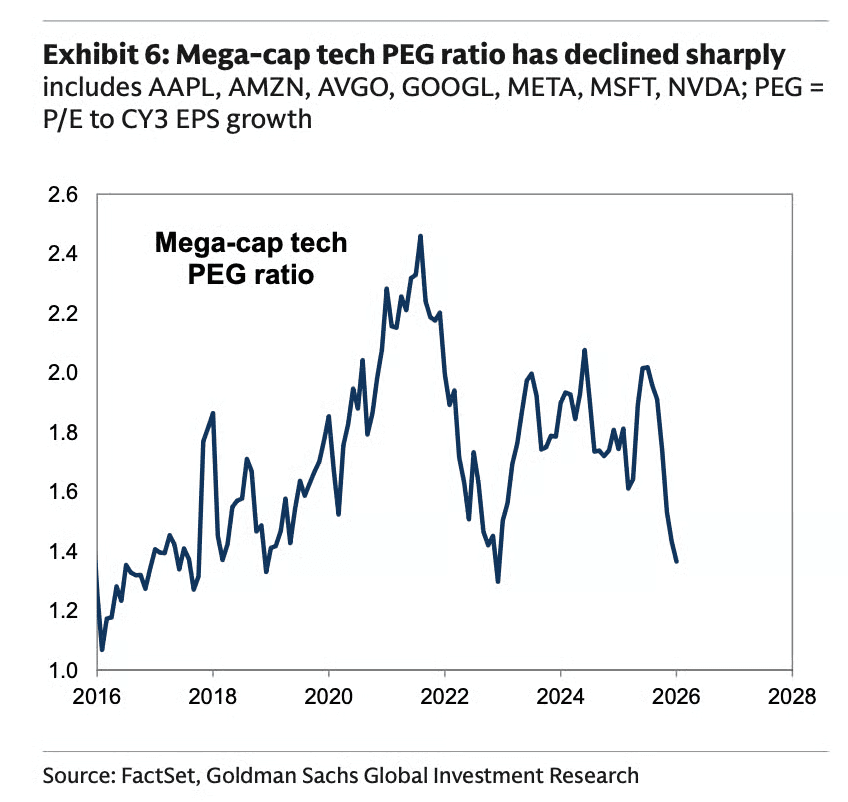
But while a correction is definitely in the cards, it is hard to think that this is the end of the AI boom. If we look at the biggest companies in the world, we can see that the PEG ratio of big tech, which compares P/E to 3 year forward EPS growth, has fallen to 1.4x. It has fallen to its lowest level since 2022.
This means big tech stocks are not as expensive as they look when you include their expected growth. So even if prices feel high, the expected profit growth is also very high.
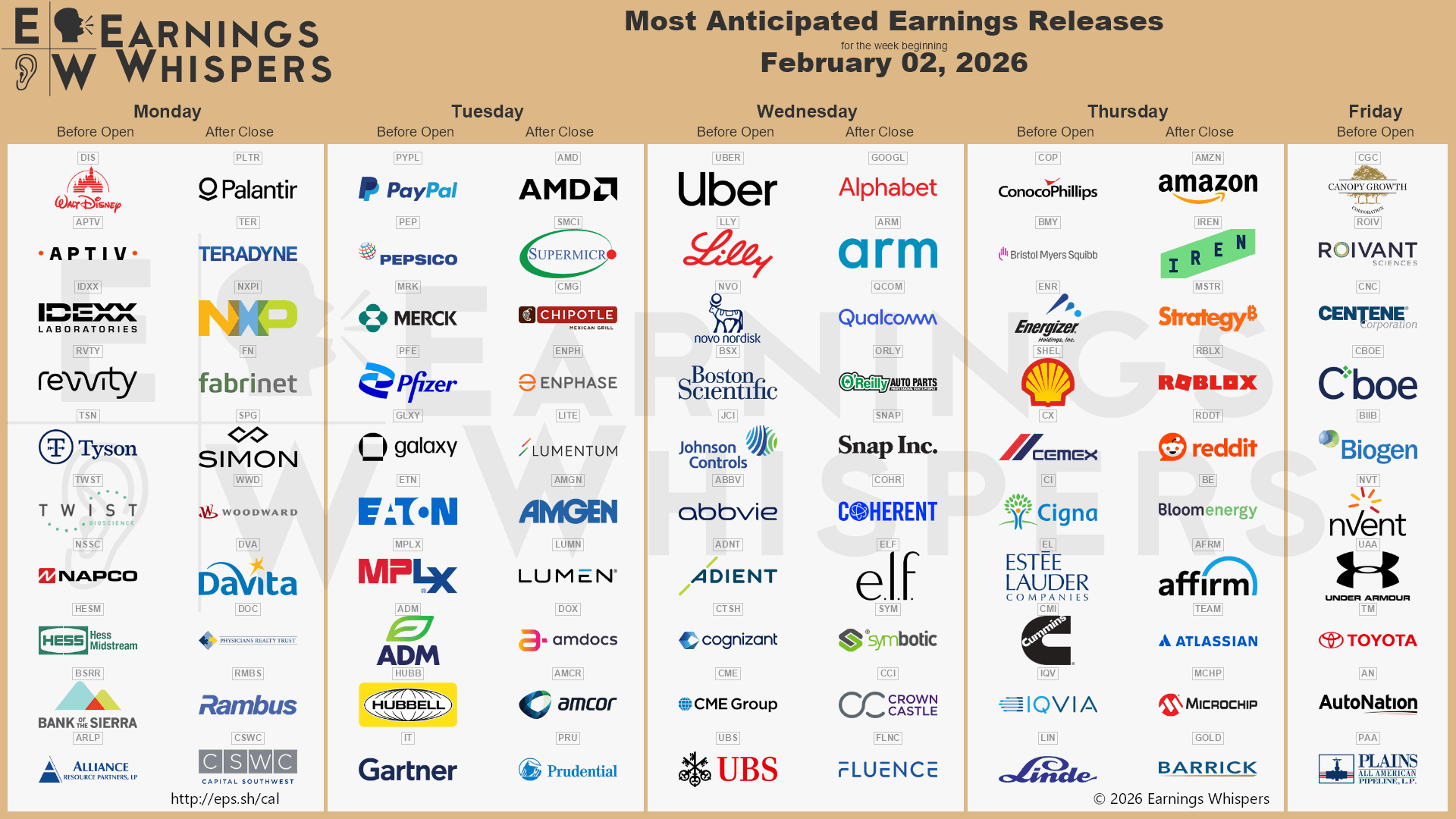
This is yet another packed week with tons of earnings reports, much like last week. Not only do we have Amazon and Google earnings, but we also have plenty of smaller but large and important companies reporting such as Arm, IREN, Palantir, Reddit, Bloom, Affirm, etc.
The best thing to do right now is to start by reducing risk. Maybe this is just temporary. But if you are heavily positioned in the same high beta and momentum names as everyone else, it helps to reduce positions slightly and spread risk more evenly. As we have seen, they can reverse very fast. It is hard to make sound investment decisions when your portfolio is swinging between euphoria and depression in a matter of day or even hours.
Avoid chasing stocks that have already gone vertical. Parabolic moves often look strongest right before they become unsustainable.
Be more selective with new positions. Also watch how stocks react to earnings. Look for exhaustion meaning that good results no longer push stocks higher, or that small disappointments lead to large sell offs.
Keep some cash available. Volatility creates opportunities, but only if you have liquidity. Focus on companies with strong margins, real earnings, and clear demand for their products, not stocks that are rising only because of momentum.
Previous Updates
View All
- Weekly Market Update: Big Tech Divergence
- Weekly Market Update: Accumulation
- Weekly Market Update: The Best Quarter
- Weekly Market Update: Rate Hikes
- Weekly Market Update: AI is Not Slowing Down
- Market Update: Has AGI Arrived?
- Weekly Market Update: Consolidation
- Weekly Market Update: September is Here
- Market Update: Nvidia Crushes Earnings
- Weekly Market Update: Yields
- Market Update: The Future of Biotech
- Weekly Market Update: Earnings Acceleration
- Market Update: The Next Generation of AI Infrastructure