Go Back

Lin
Weekly Market Update: Is Santa Coming?
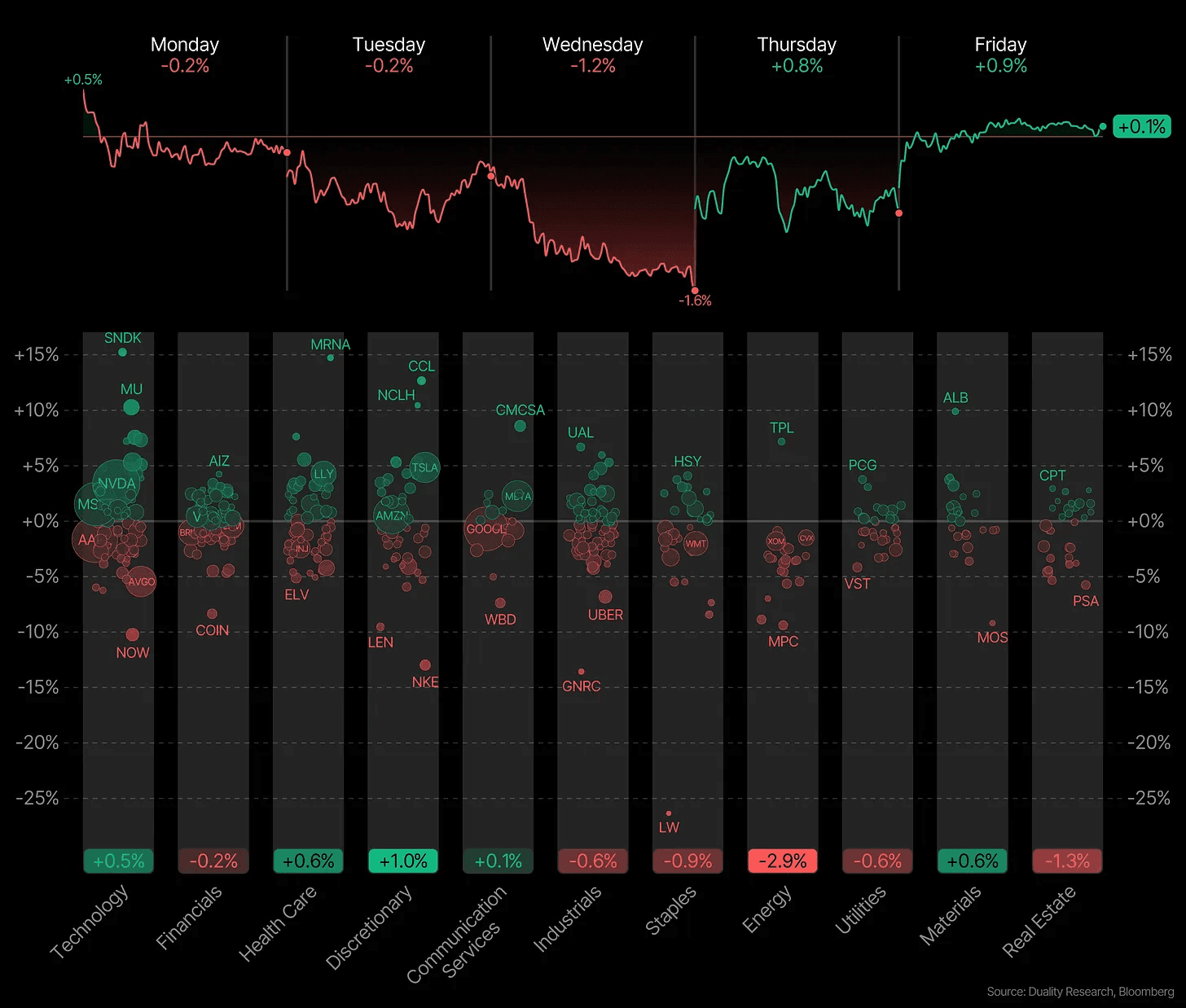
This week was a whirlwind. I feel like I’m saying this every week now.
But that’s because we’re going through a period of elevated volatility.
The unwind in AI infrastructure names seemed like it was never going to end, and that peaked on Wednesday when news came out that Blue Owl was backing out of its funding to support Oracle’s new 1GW data center in Michigan. This was a big red flag because Blue Owl had been acting as a major lifeline to these AI-centric companies building data centers. When a big lender like that steps away, people start to wonder if these projects are riskier than they thought.
That fear led to more selling.
However, all of that selling came to a screeching halt on Thursday and Friday as many of the high-momentum stocks were bid relentlessly higher.
Why did this happen? There are a few reasons.
News came out that OpenAI is considering raising $100B at a monstrous $830B valuation. This would mean OpenAI will be able to fulfill its obligations to companies like Oracle and CoreWeave. This has been the biggest fear in the AI complex.
On top of that, the recent earnings report from Micron was incredible. This was arguably the biggest and most telling semiconductor quarter we’ve seen since this AI bull market began. They absolutely smashed expectations and guided much higher than what the Street was expecting.
Another signal that the AI boom is still far from over.
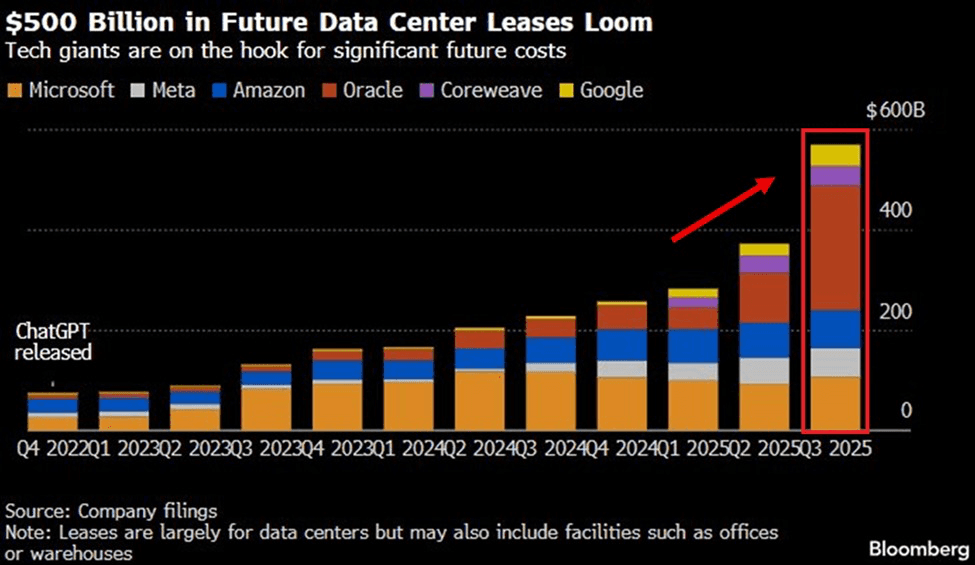
In fact, US tech companies are making massive bets on AI.
They are committing to spend a combined $569 billion on data center leases over the next several years.
This is a $197 billion increase, or a 53% jump, from Q2 2025.
The reason for this continued volatility is simple:
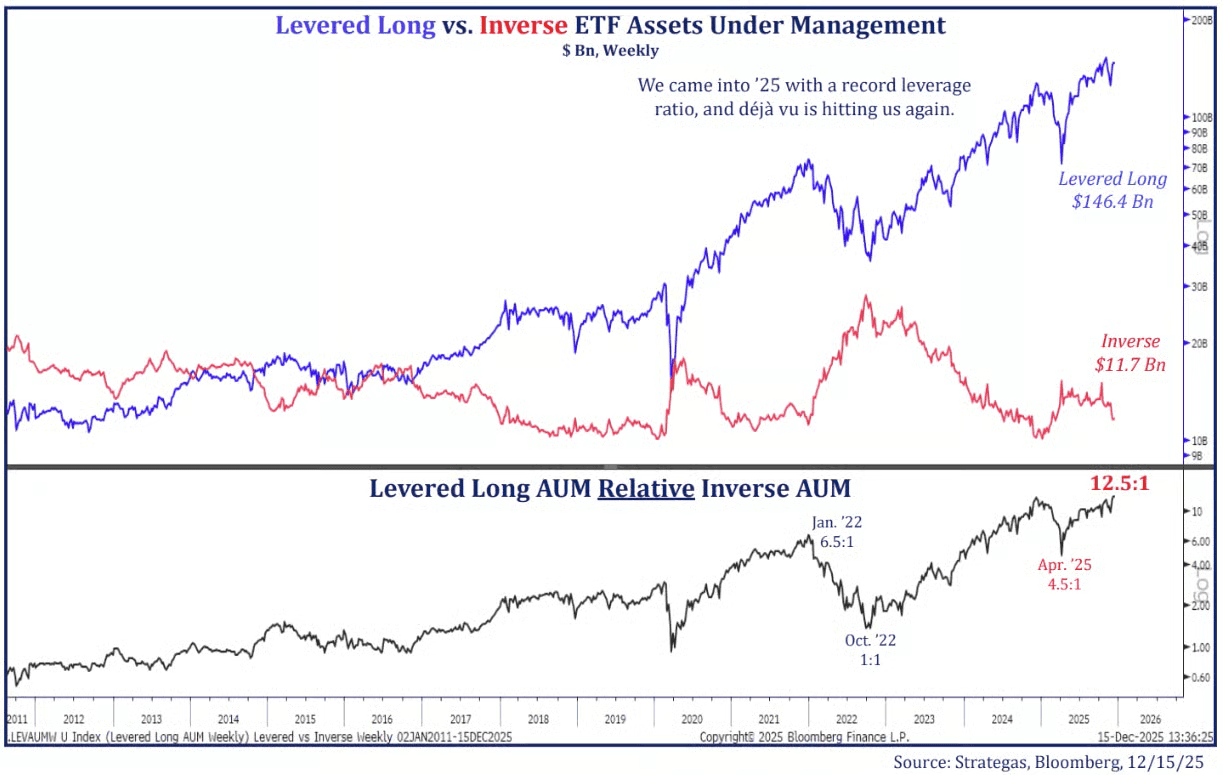
First, it’s leverage.
Right now, there is about a 12.5 to 1 ratio of leveraged long ETFs versus inverse ETFs. This is the highest in over a year. That simply means far more investors are betting aggressively on prices going up than protecting against a drop.
But When the market falls just a little, these big risky bets lose fast. People panic and sell. That selling pushes prices down even more.
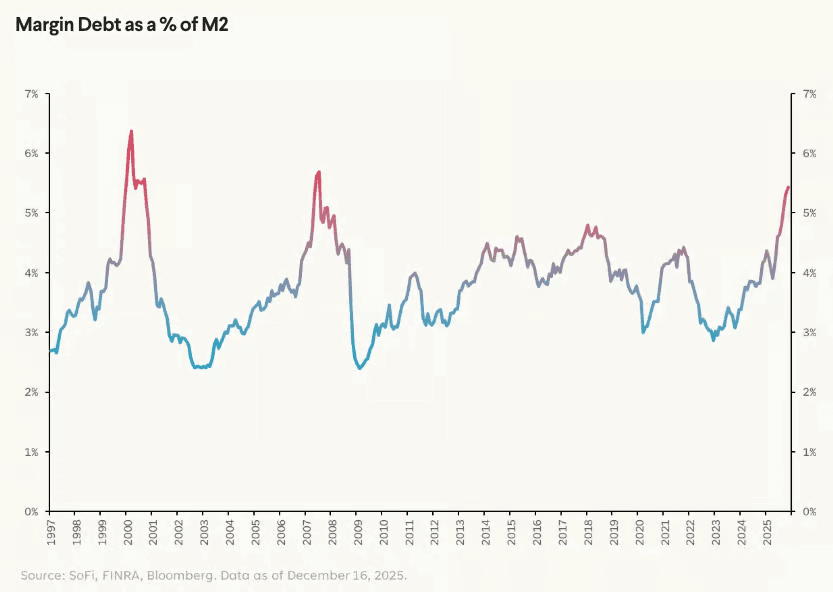
Second, margin debt is rising fast. And this matters more than most people think.
Margin debt means investors are borrowing money to buy stocks. It is leverage. You put down some of your own cash and borrow the rest, hoping prices keep going up.
Right now, margin debt compared to the total money in the system is climbing quickly. That tells us something important. Investors are optimistic. They believe stocks will be higher in the future, so they are willing to take on more risk.
The problem is that leverage only works well in low volatile markets. But when markets get choppy, leverage turns against you very fast. So leverage makes the whole system more fragile. It works great on the way up, but it increases the odds of sharp and sudden corrections.
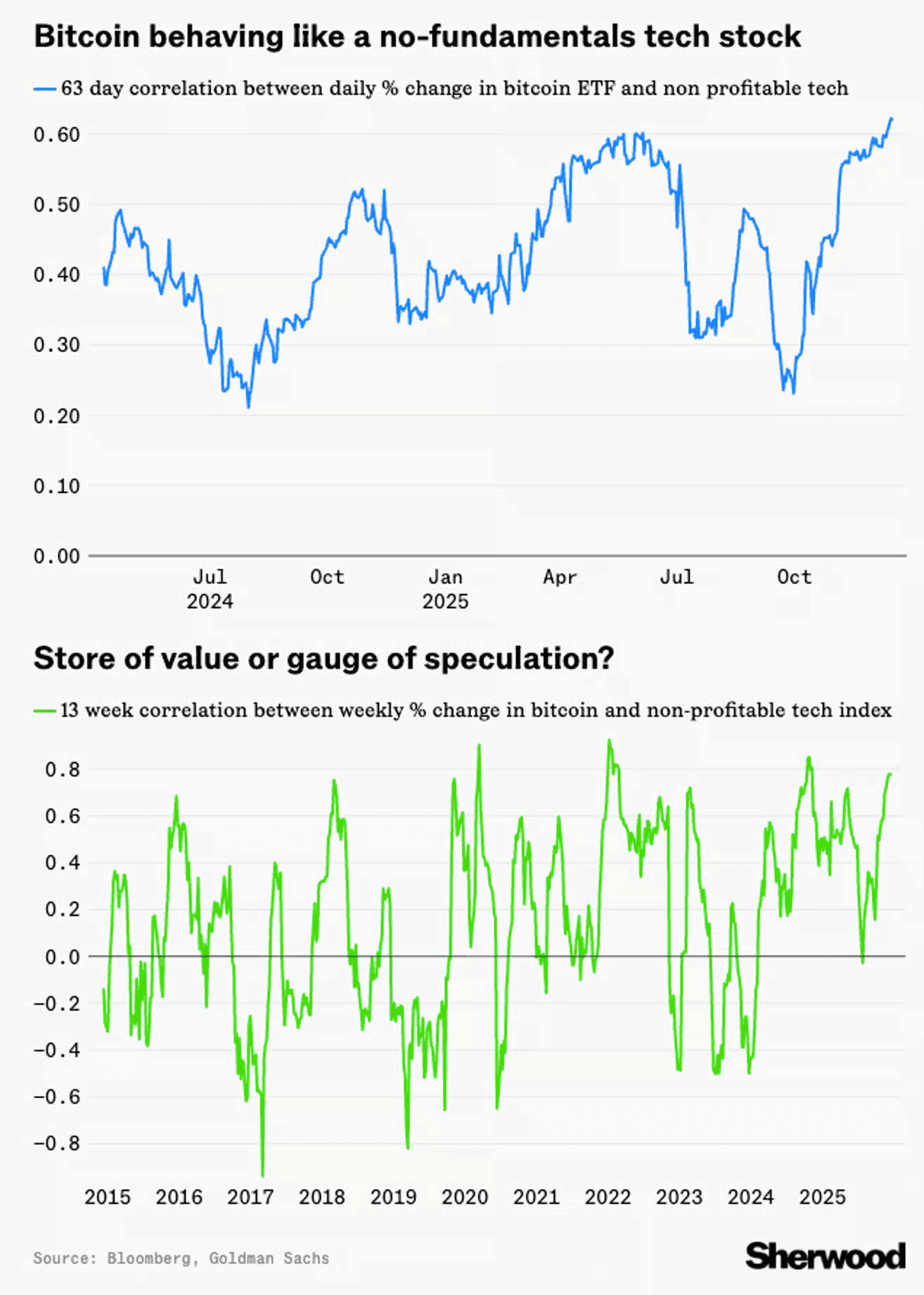
Third, Bitcoin is acting like a risky tech stock, not like a digital store of value.
Over the last 3 months, Bitcoin has been moving almost the same way as momentum names. Which is to say down.
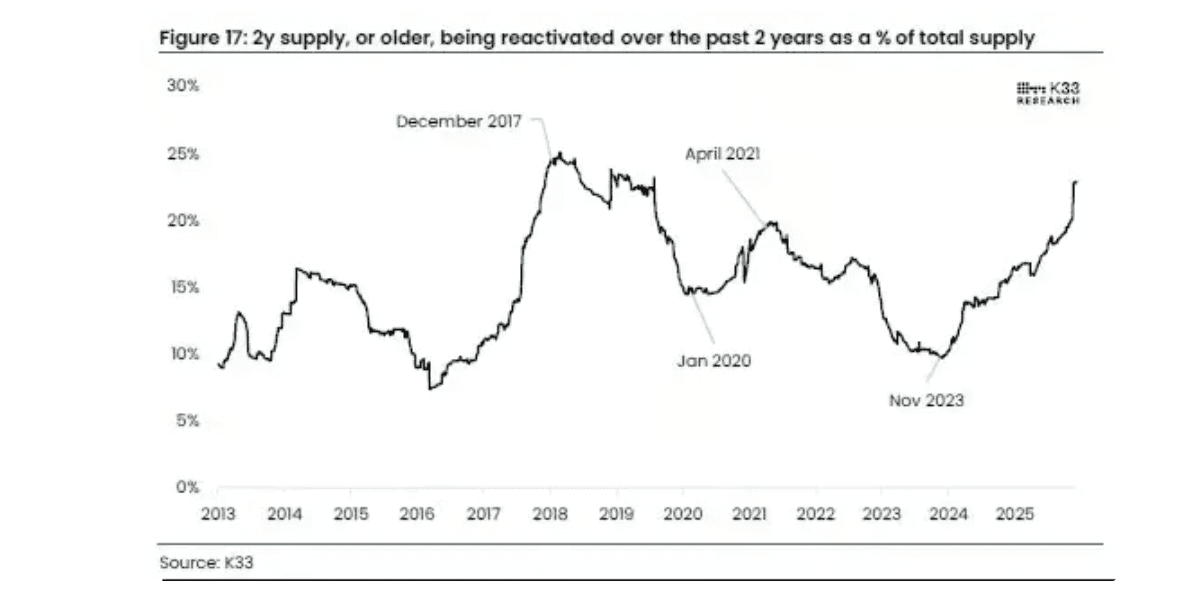
This lead to a lot of selling of long term Bitcoin holders.
Long term holders are people who bought Bitcoin and did not touch it for years. They usually believe the most in Bitcoin and sell last.
Since early 2023, about 1.6 million Bitcoin that had not moved for at least 2 years has been sold. That is around $140 billion worth. That is a huge amount.
Even more important, the last 30 days were one of the biggest selling periods by long term holders in more than 5 years.
The market loves to shakeout the few remaining holders. The bottom could be close.
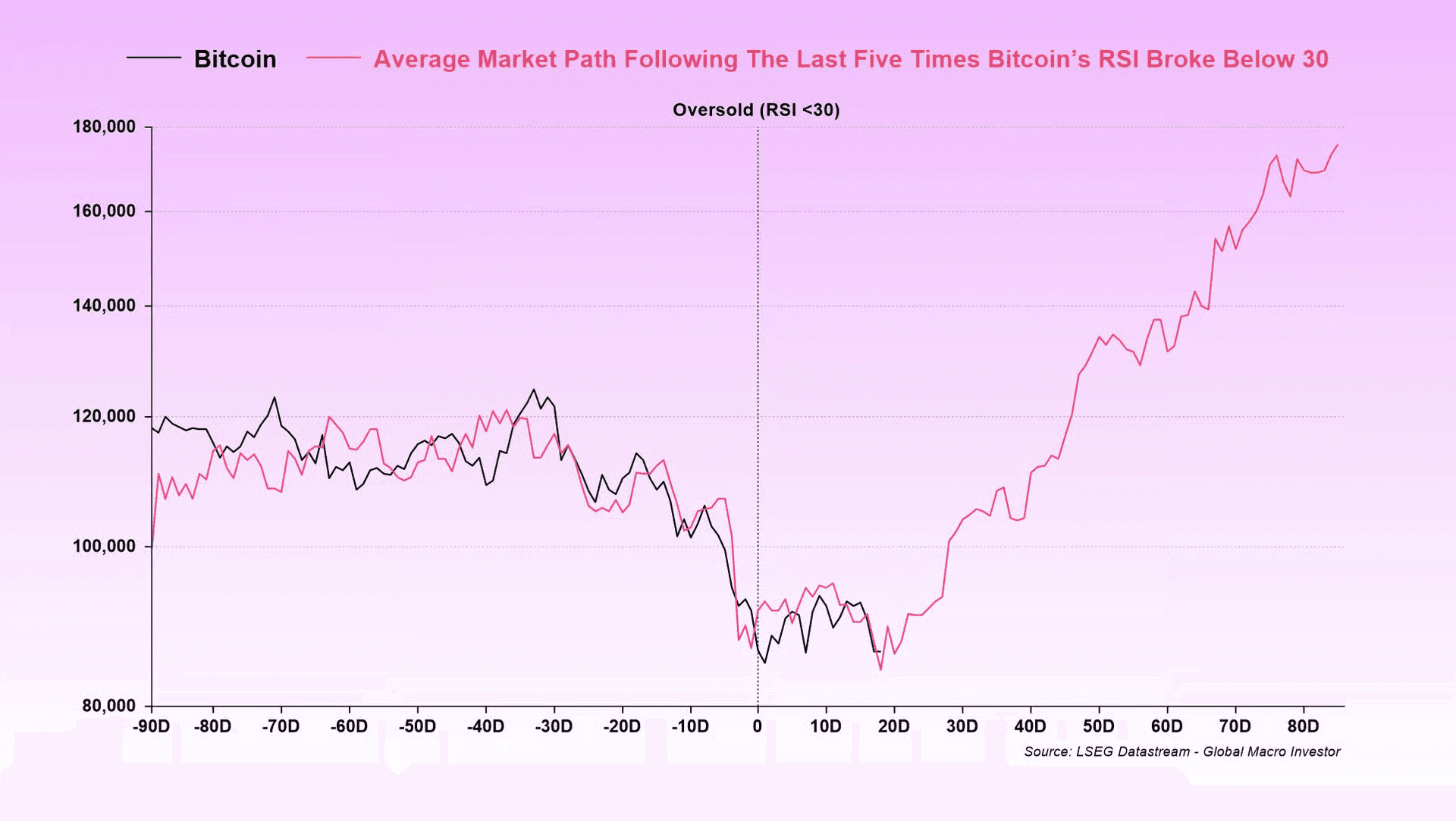
Bitcoin is very oversold.
When the RSI falls below 30, Bitcoin is considered very oversold. And this chart looks at what Bitcoin usually does after that happens.
Historically, after Bitcoin gets this oversold, prices tend to bounce. Not always right away, but often soon after. Selling pressure starts to fade because most people who wanted to sell or were forced to sell already did.
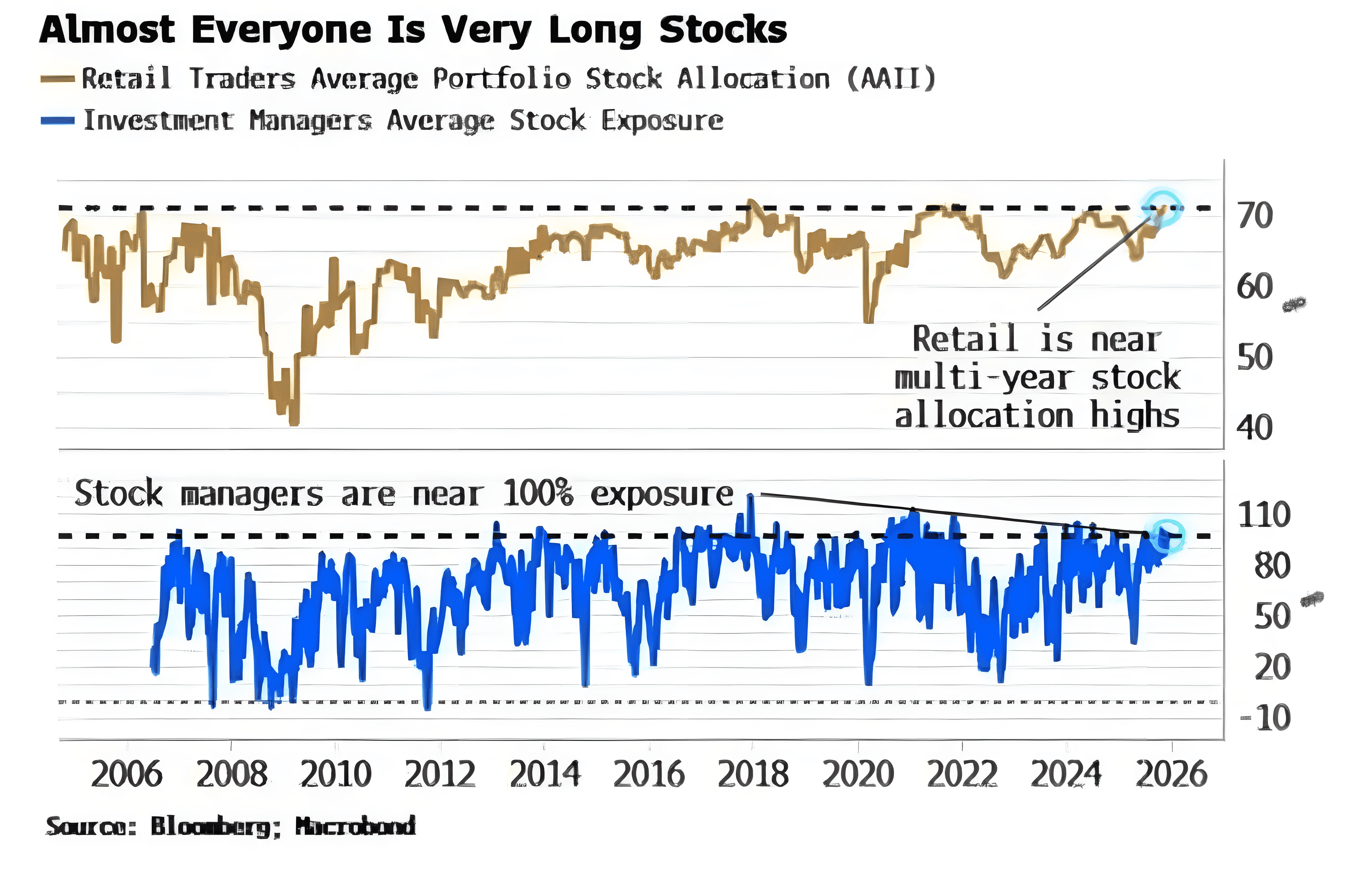
Fourth, the stock market positioning is extremely stretched right now.
Retail investors have about 70% of their money in stocks, near the highest level in 20+ years and similar to the 2021 meme stock period. Professional investment managers are also almost fully invested, with stock exposure close to 100%, which means most investors are positioned the same way.
And when everyone thinks the same, markets get fragile.
Because when something unexpected happens, there are no buyers left. Everyone tries to react at the same time. Even small changes can lead to huge moves.
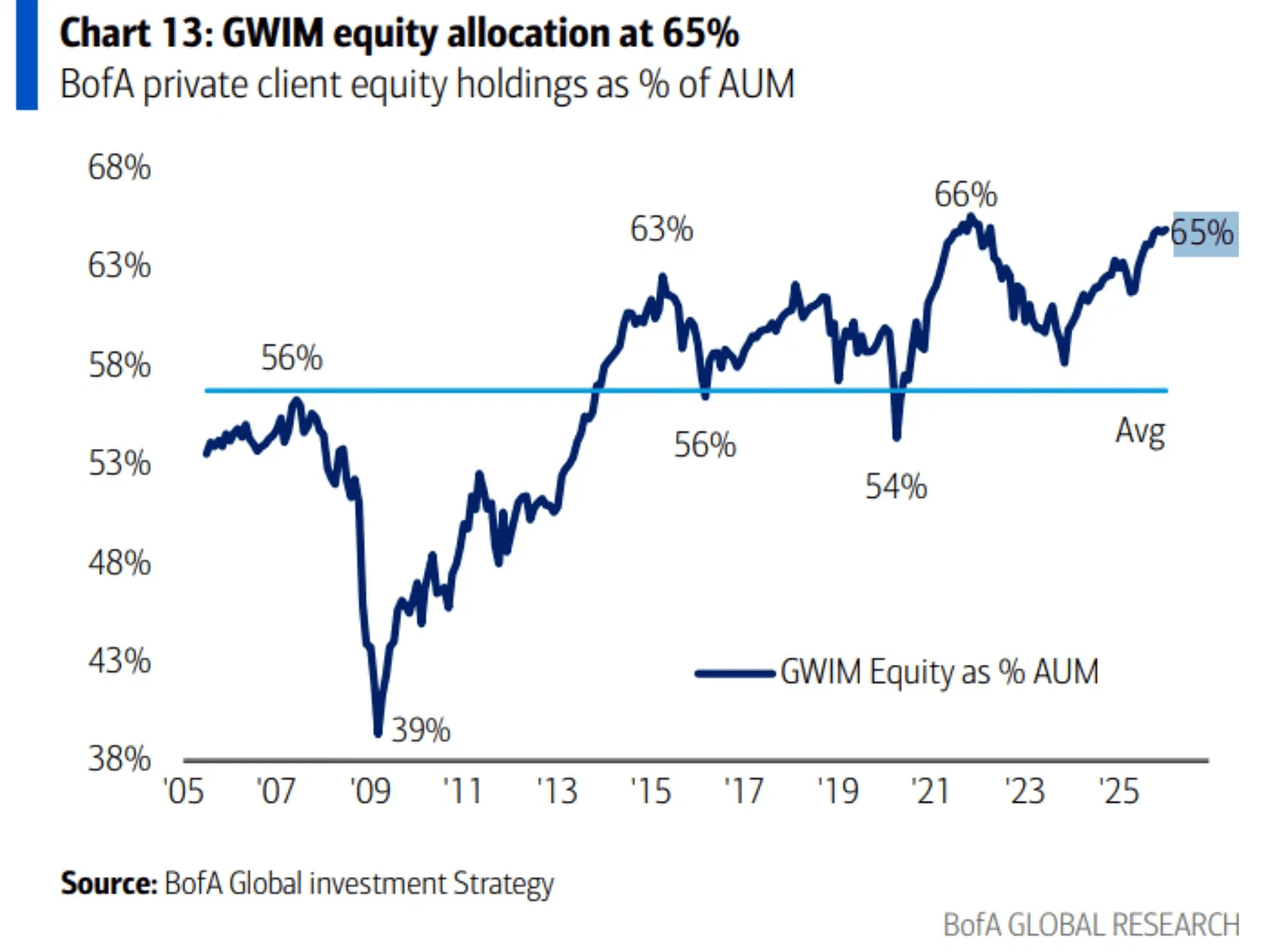
Fifth, Bank of America clients now hold about 65% of their portfolios in stocks. That is very close to a record high.
Everyone is already heavily invested. There is less new money left to push prices higher. A lot of the optimism is already priced in. This data point is not a sell signal by itself. But it’s a good temperature check.
And we know that the market loves to shake everyone out before it reverses higher for the next leg higher.
All of this is to say that there is a lot of leverage in the system right now.
Sooner or later, that has to balance out. Markets cannot function properly when leverage builds up too much, because even small price moves get amplified. Both leveraged long and leveraged short positions get whipped around or even forced to liquidate.
This is why we’re seeing this heightened volatility right now. That is the market’s way of clearing out the imbalance. Volatility flushes out excess leverage and resets the system.
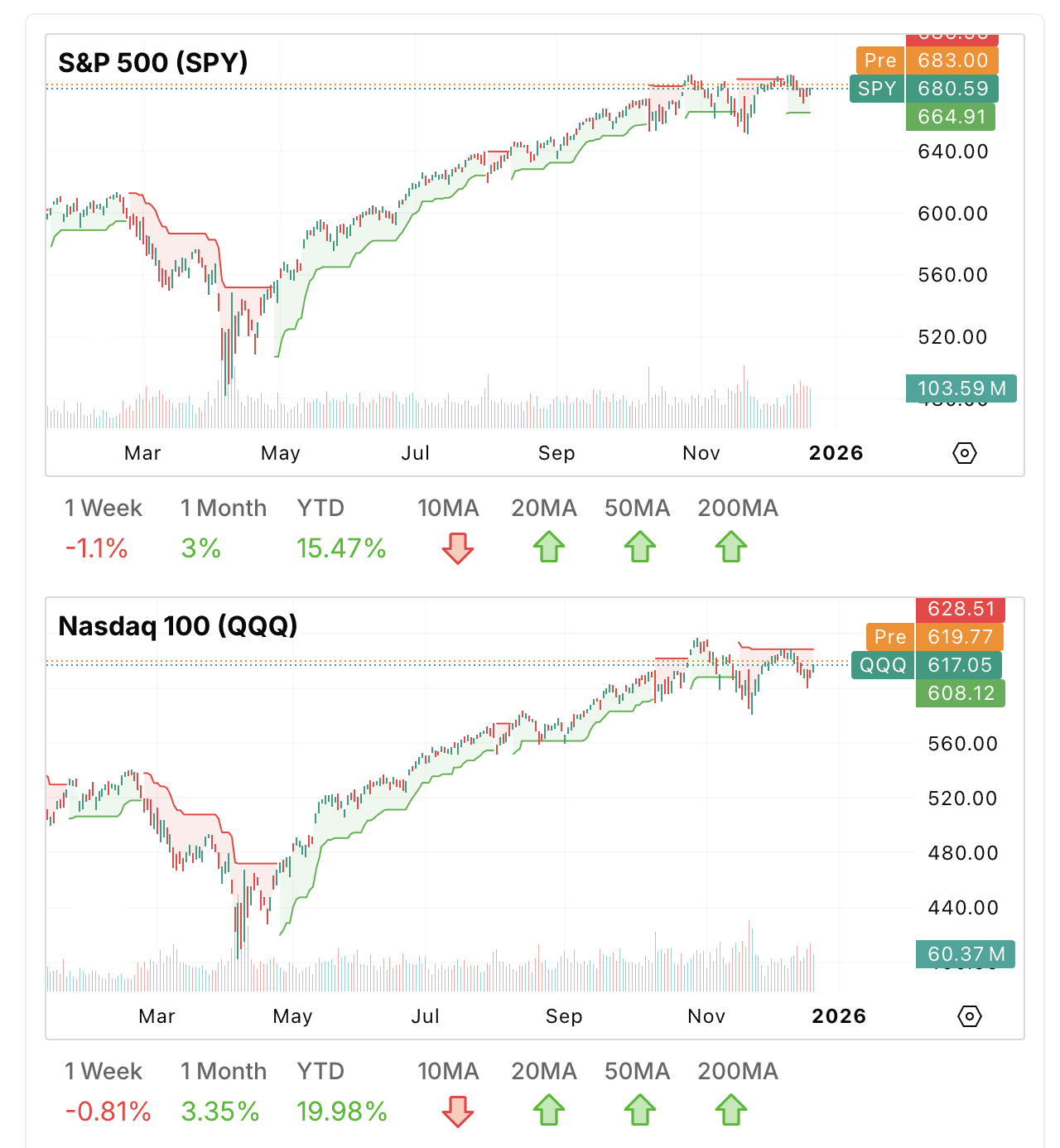
But on the positive front, the overall market is holding up better than many expected. Even after recent volatility, the big indexes have not broken down. Every time the market looked like it might break down, it didn’t. Instead it recovered immediately.
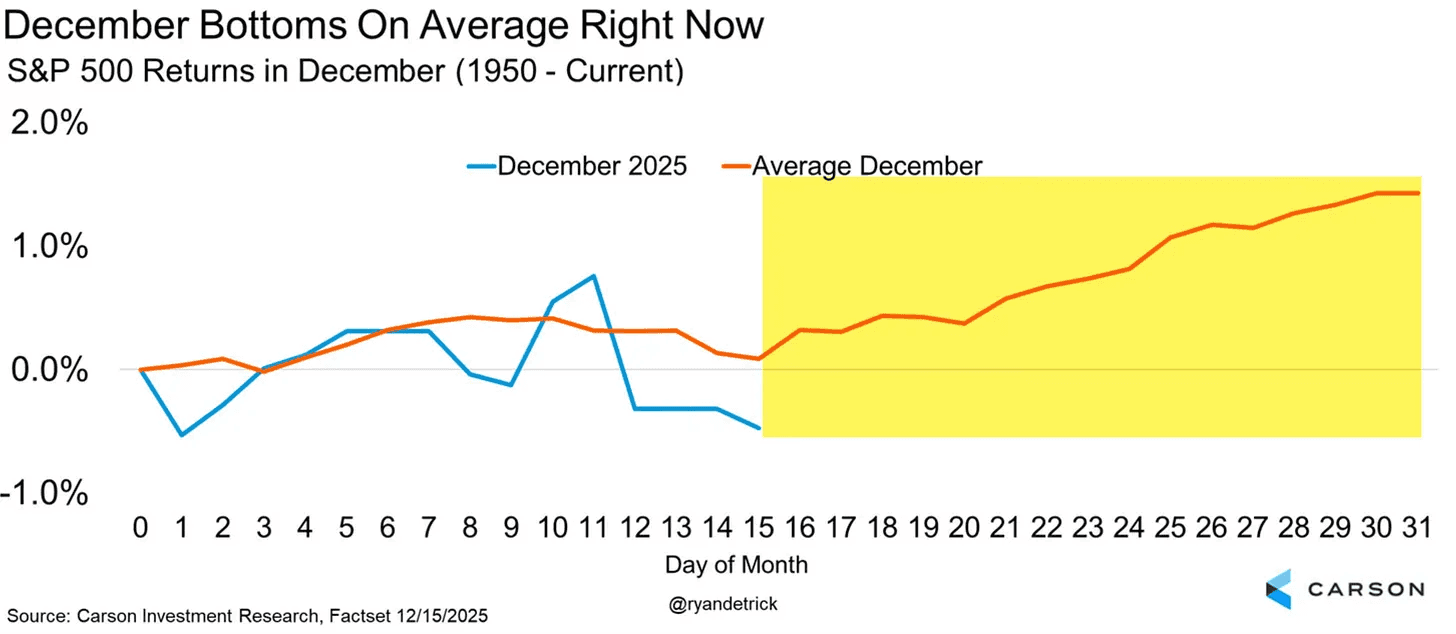
And now, we have seasonality on our side.
Going back to 1950, this is what the average December looks like.
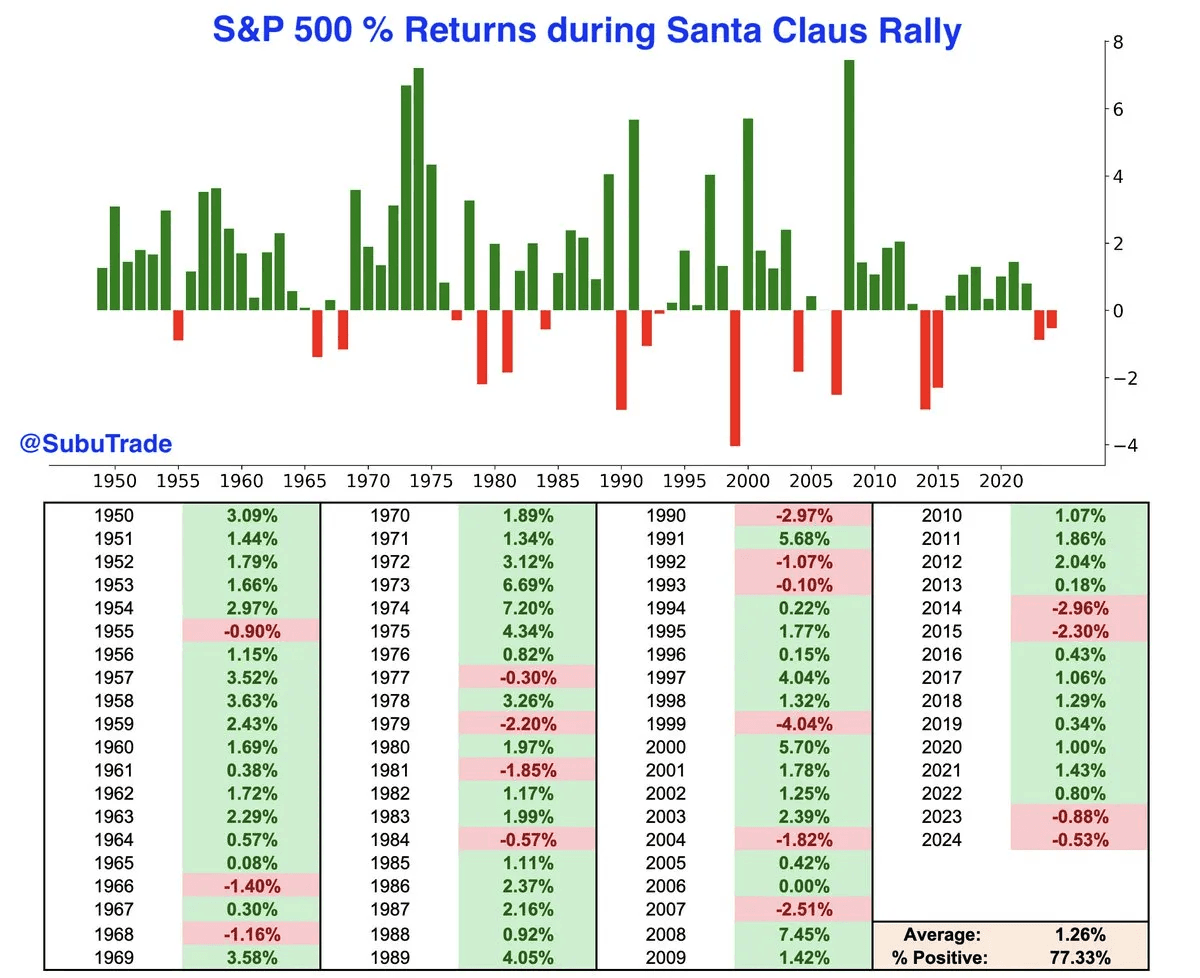
People think the Santa Rally lasts all of December, but in reality it only covers the last few days of December and the first few days of January.
Maybe Friday marked the start of the Santa Rally.
In fact, the S&P 500 is positive nearly 80% of the time during that stretch, making this one of the strongest periods of the entire year.
So there is no reason to be too bullish or too bearish right now. A neutral stance makes sense. It gives you flexibility, enough dry powder to deploy, and enough exposure so you don’t miss out on too much. You are not forced to make rushed decisions, and you can take advantage when good opportunities show up.
2026 will likely be another good year, but volatility is not going away. Large swings will be normal. That makes staying open-minded critical. The last 2 years showed that the biggest gains came from spotting major themes early and staying on top of them. That will matter just as much in 2026. Themes shift quickly, so you need to stay flexible and adapt. But we’ve been able to catch most of the leading themes. And we’ll do our best to do the same next year. I will share the top themes to focus on for 2026 in a separate update.
Previous Updates
View All
- Weekly Market Update: Earnings Season is Back
- Weekly Market Update: Big Tech Divergence
- Weekly Market Update: Accumulation
- Weekly Market Update: The Best Quarter
- Weekly Market Update: Rate Hikes
- Weekly Market Update: AI is Not Slowing Down
- Market Update: Has AGI Arrived?
- Weekly Market Update: Consolidation
- Weekly Market Update: September is Here
- Market Update: Nvidia Crushes Earnings
- Weekly Market Update: Yields
- Market Update: The Future of Biotech
- Weekly Market Update: Earnings Acceleration