Go Back

Lin
Weekly Market Update: Rate Cuts
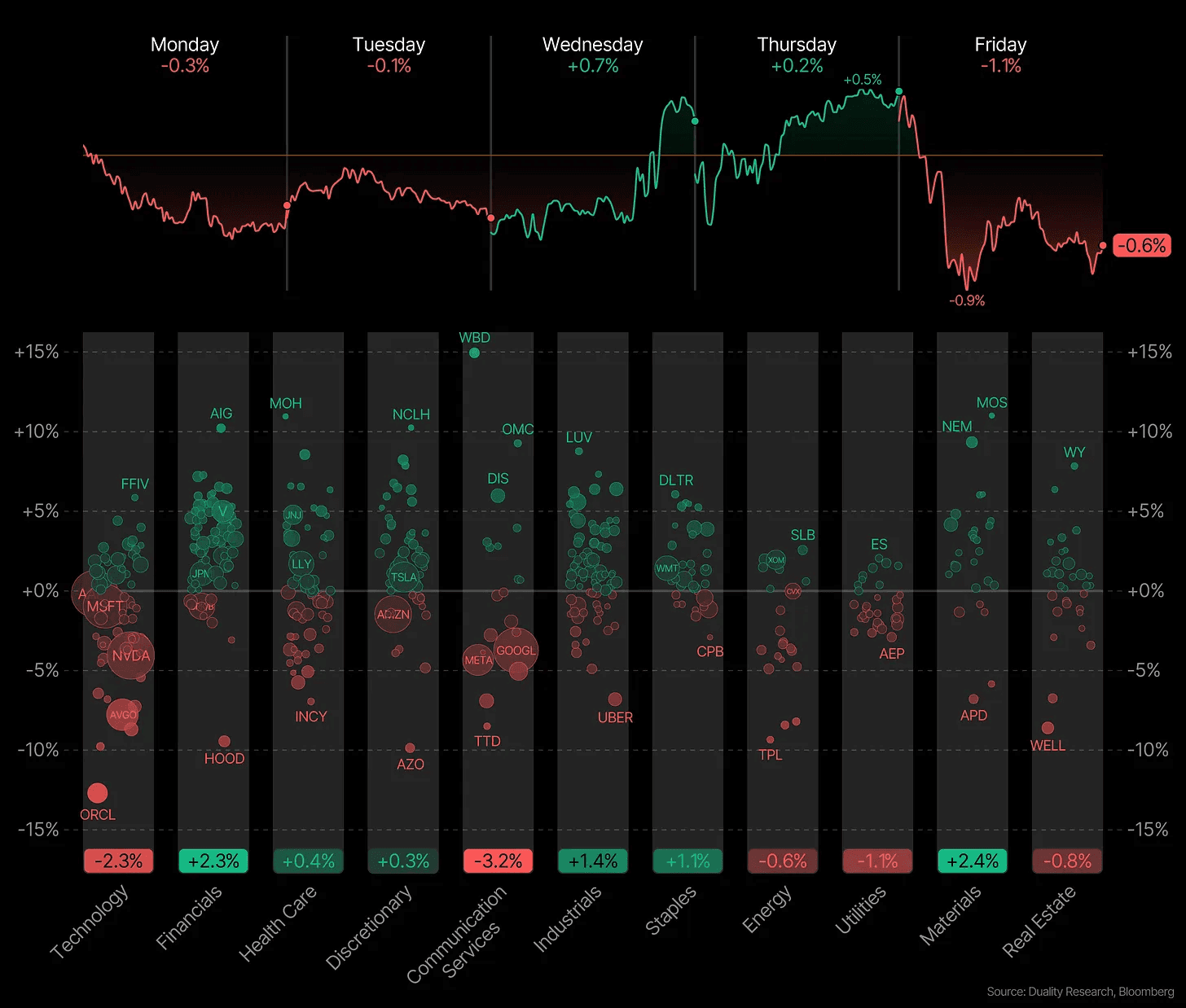
Stocks had another roller coaster week, driven by 3 main topics: rate cuts, IPO excitement, and AI earnings.
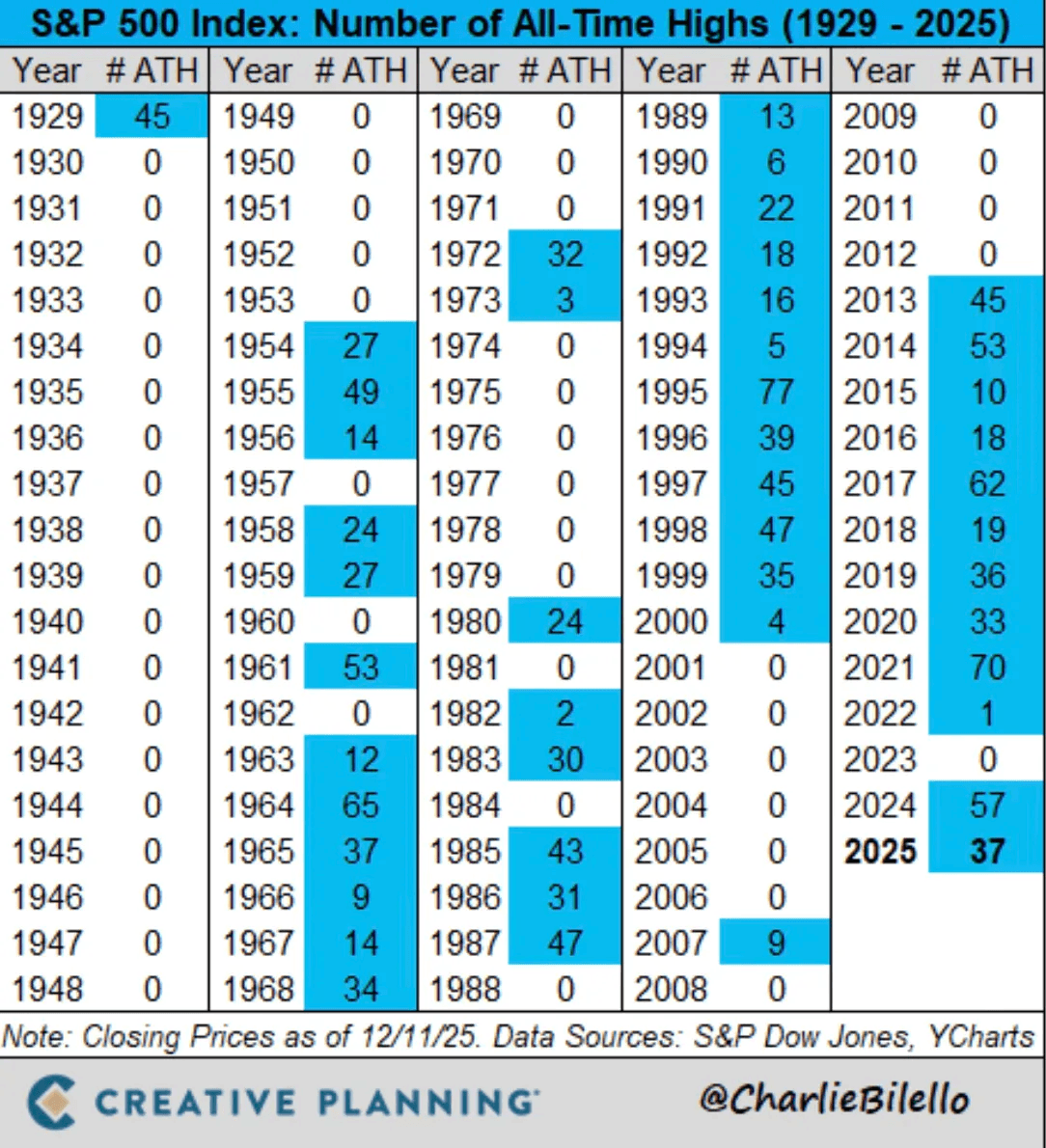
Thursday saw the market reach new all time highs. The S&P 500 hit its 37th all time high for 2025, while the Dow set its 18th high of the year.
Then Friday marked the worst session in about 3 weeks for the S&P 500 and Nasdaq.
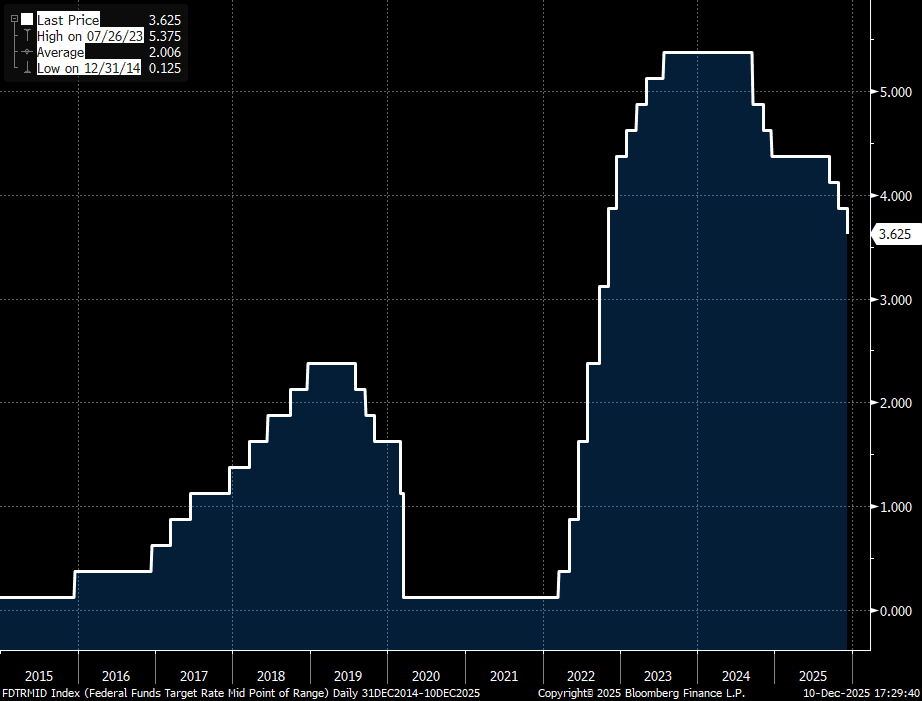
Since October, markets have mostly moved because of the Fed. And the Fed just cut rates again, down to the 3.50 to 3.75% range.
Rates are down 75 bps over the last 3 months
Rates are down 175 bps over the last 15 months
We went from 5.25 to 5.50% down to 3.50 to 3.75% in just over a year. At the same time, inflation has basically gone nowhere. The Fed’s favorite measure, core PCE, is still at 2.8% year over year. That is exactly where it was 15 months ago.
So why all the cuts? Simple. The Fed is worried about the job market.
They cut rates because they think labor market risks are rising. But it was a close call. When inflation and jobs point in opposite directions, decisions become much harder. That is why Fed members do not fully agree. Everyone weighs the risks and their forecasts a bit differently.
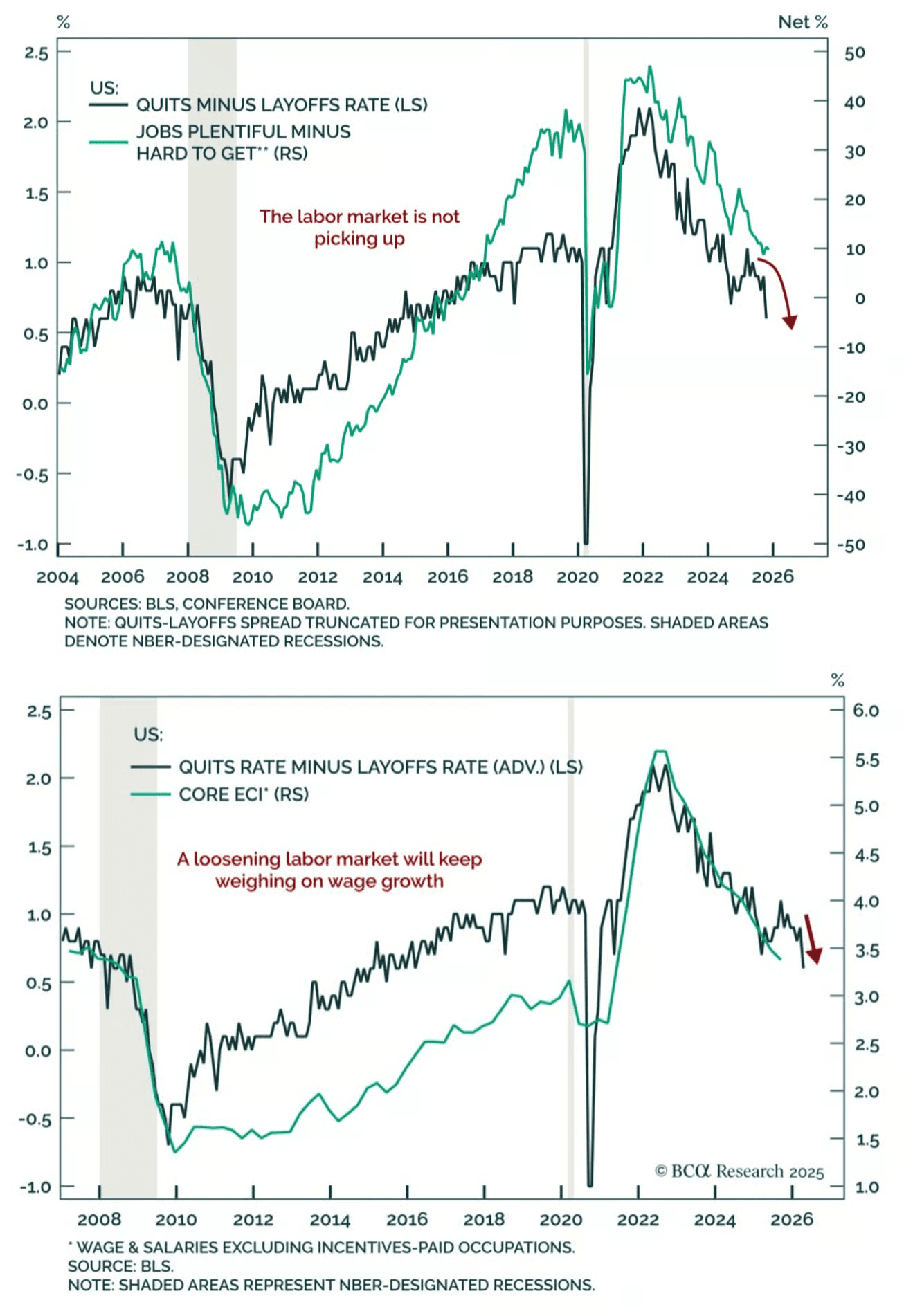
The job market is still cooling, and the Fed may need to cut more than markets expect.
First, the quits minus layoffs spread fell again in October. When it falls, it usually means workers feel less confident and hiring is slowing.
Second, wage growth is slowing. If this were just a labor shortage, wages would be rising. They are not. That points to weaker demand for workers.
Looking ahead, Powell made it clear that they have already cut rates a lot.
Now they want to pause and see how things play out. There is also a lot of economic data coming in before the January meeting. So the Fed is in wait and see mode for the time being.
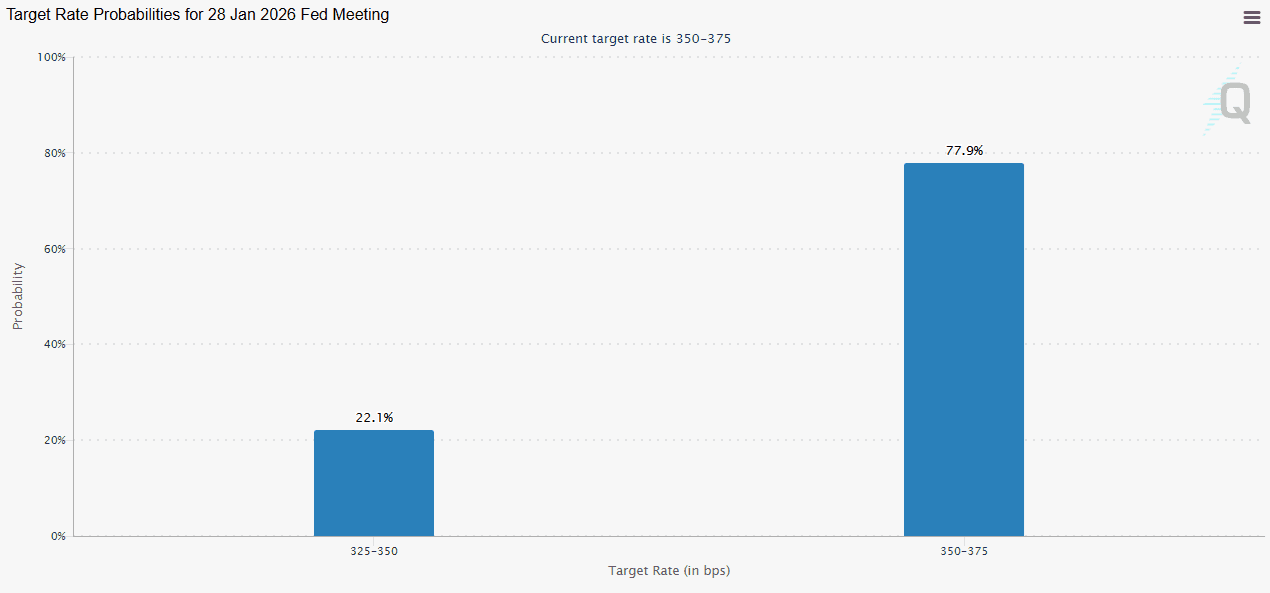
Markets are reading it the same way. Fed funds futures are only pricing in about a 22% chance of a rate cut in January.
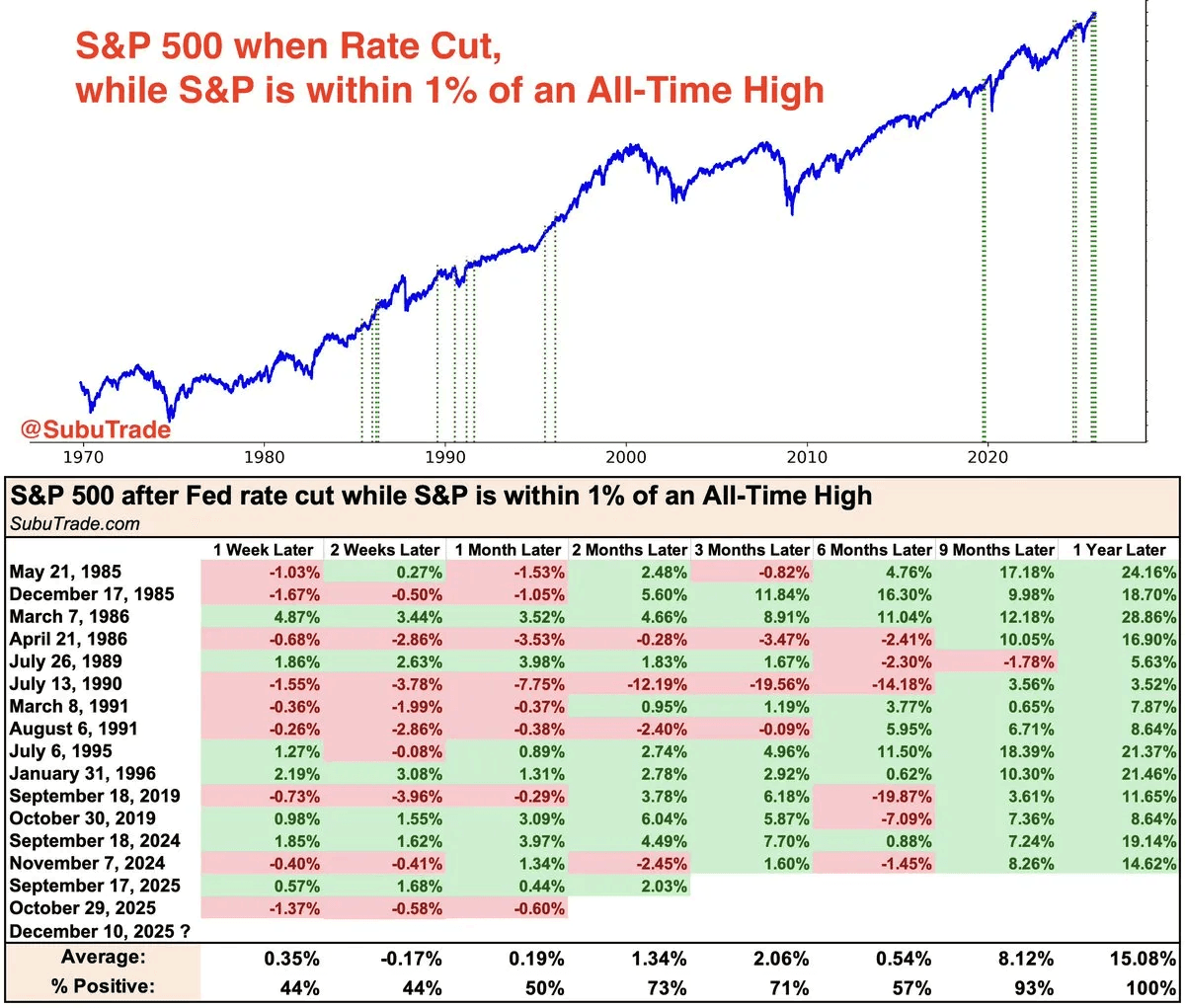
Historically, when the Fed cuts rates while stocks are near all time highs, markets have often responded well.
Lower interest rates make holding cash less attractive and reduce discount rates, which therefore support stock prices and other asset prices.
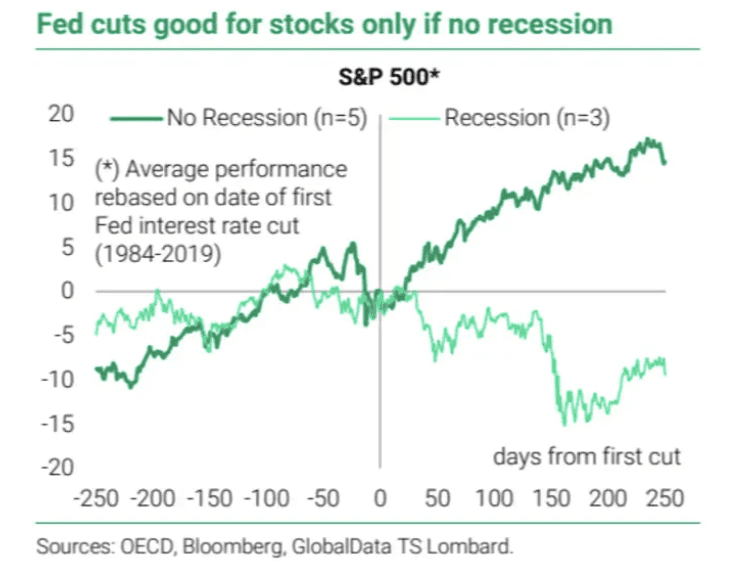
That is of course only true as long as…
…the economy does not drift into a recession.
We have now seen the 37th all time high this year.
There is one main takeaway here. And that is that all time highs usually do not come alone. They tend to show up in clusters.
Markets that keep making new highs are a signal of a constructive market environment.
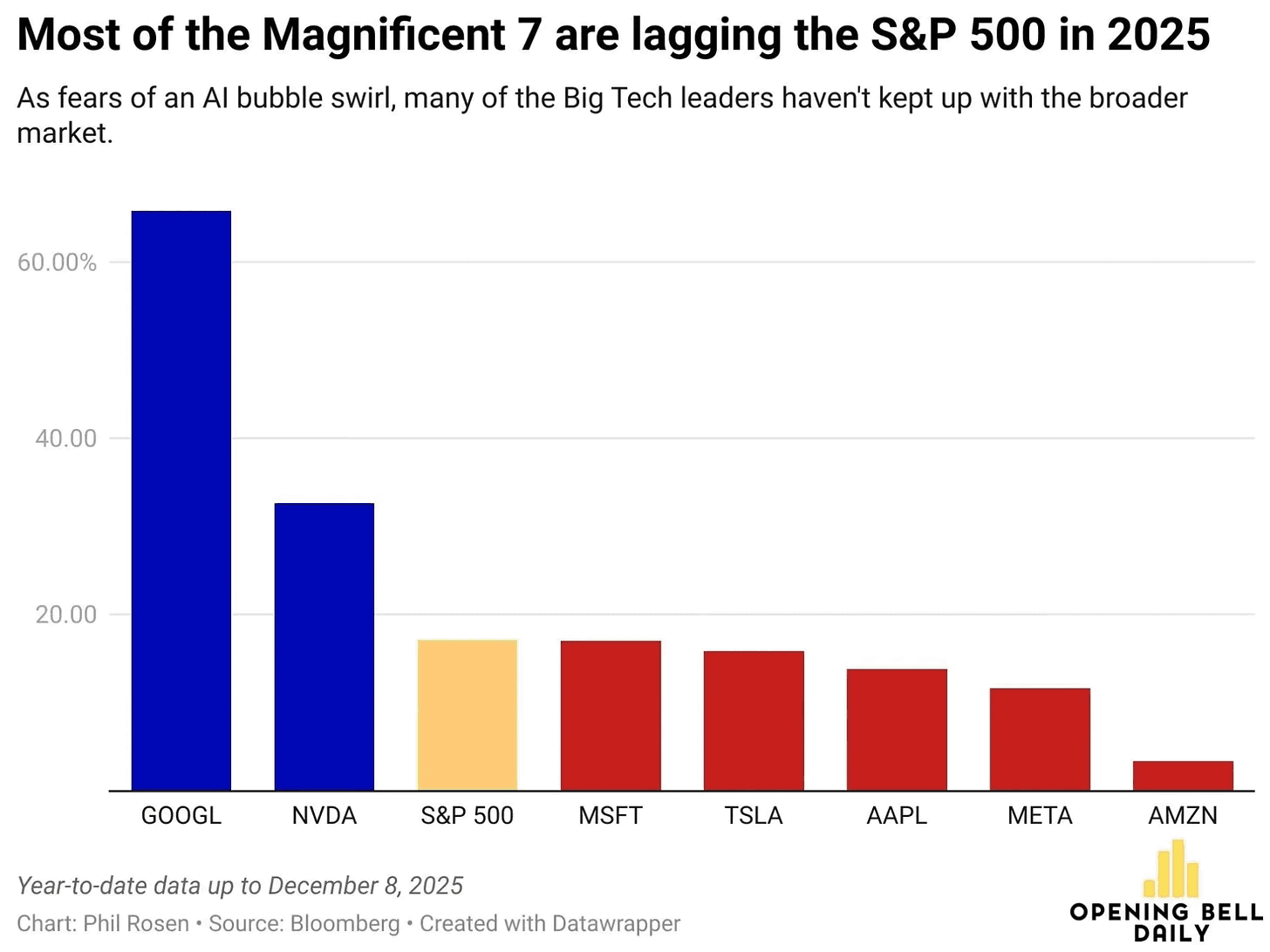
There have been two standout names among the Mag 7, and those are Google and Nvidia.
The other five are actually underperforming the S&P 500 so far this year. So it’s not just the Mag 7 carrying the market, it’s broader than that.
But it also shows why focusing on the leading stocks is so critical.
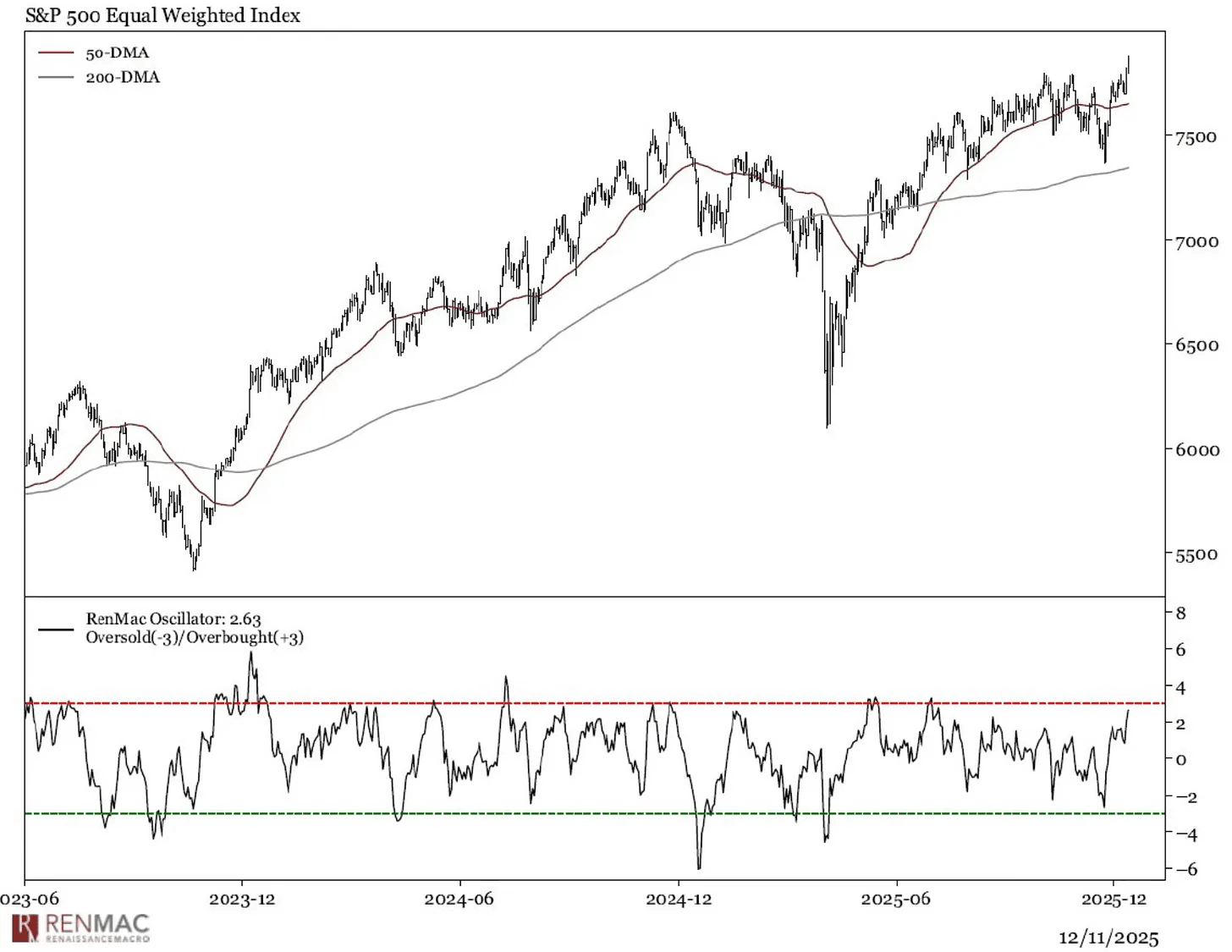
The best proof that market breadth is improving is the S&P 500 Equal Weight.
It is hitting new highs and outperforming. So it’s not just a handful of big stocks driving the market.
Because each stock has the same weight in this index, it means the average stock is doing well, or even better.
You want to see more stocks participate. It gives the market a much stronger base.
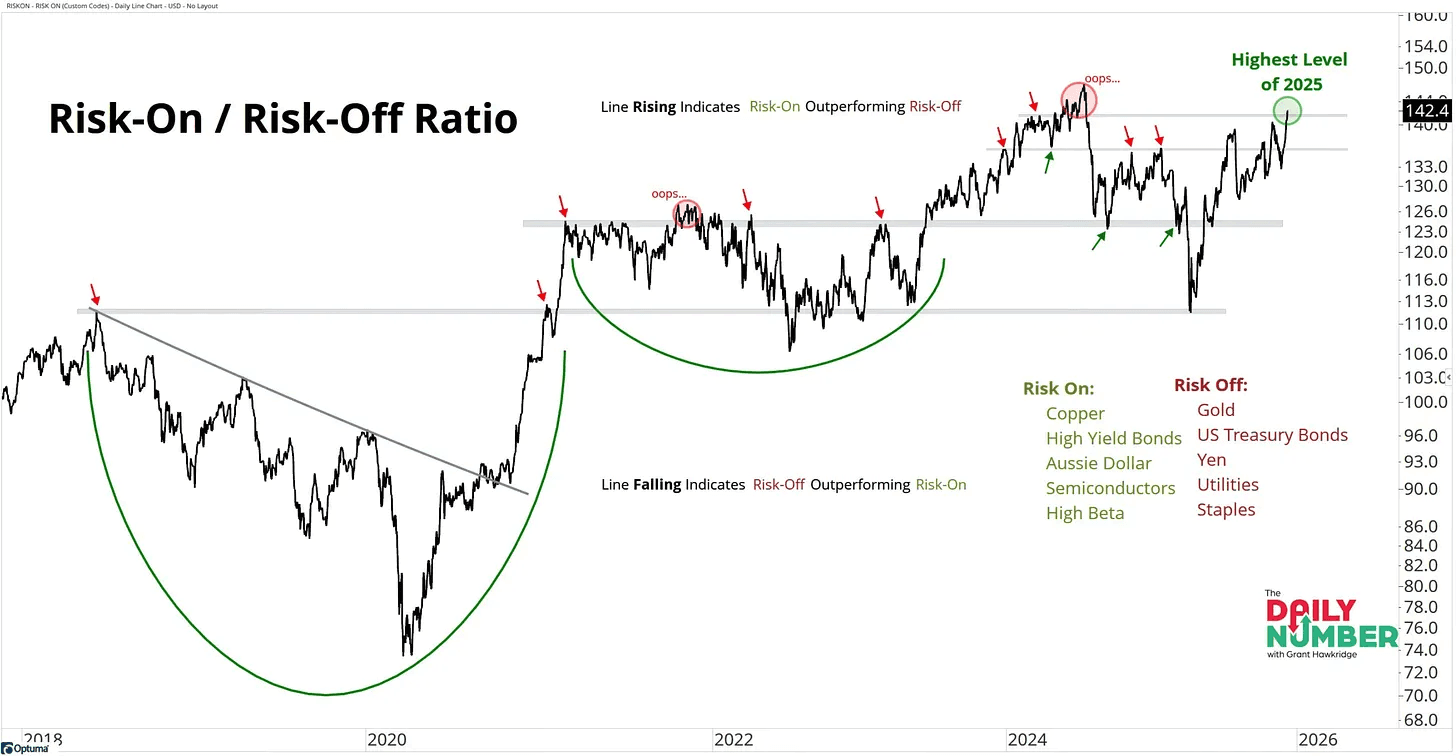
Alongside the broadening bull market and the push to new all time highs, risk appetite is also rising.
Risk on behavior is now at the highest level of 2025, and it is starting to accelerate. But it is not happening across all sectors. The market has been more selective.
Rumors of a SpaceX IPO next year have ignited a rally across the space sector. And good news around robotics and robotaxis is also having a positive effect.
For a long time, Musk said that SpaceX would likely never go public. But he has changed his view because of one opportunity: Data centers in space
Here’s a few interesting excerpts:
"Once Musk realized Starlink satellites could be architected into a distributed network of data centers, the writing was on the wall. That is the moment an IPO suddenly came into play after being unlikely for so long. If you have followed Elon’s tactics, you know that once he commits to something, he leans fully into it. Much of the AI race comes down to amassing and deploying assets that work quicker than your competition. A large war chest resulting from an IPO will greatly help his cause and disadvantage all others.”
“How can SpaceX play in this space? In the near term, the company plans to develop a modified version of the Starlink satellite to serve as a foundation for building data centers in space. Musk said as much on the social media network he owns, X, in late October: “SpaceX will be doing this.”
“Foremost among Musk’s goals right now is to “win” the battle for artificial intelligence. He is already attacking the problem at xAI and Tesla, and he now seeks to throw SpaceX into the fray as well. Taking SpaceX public and using it to marshal an incredible amount of resources shows he is playing to win.”

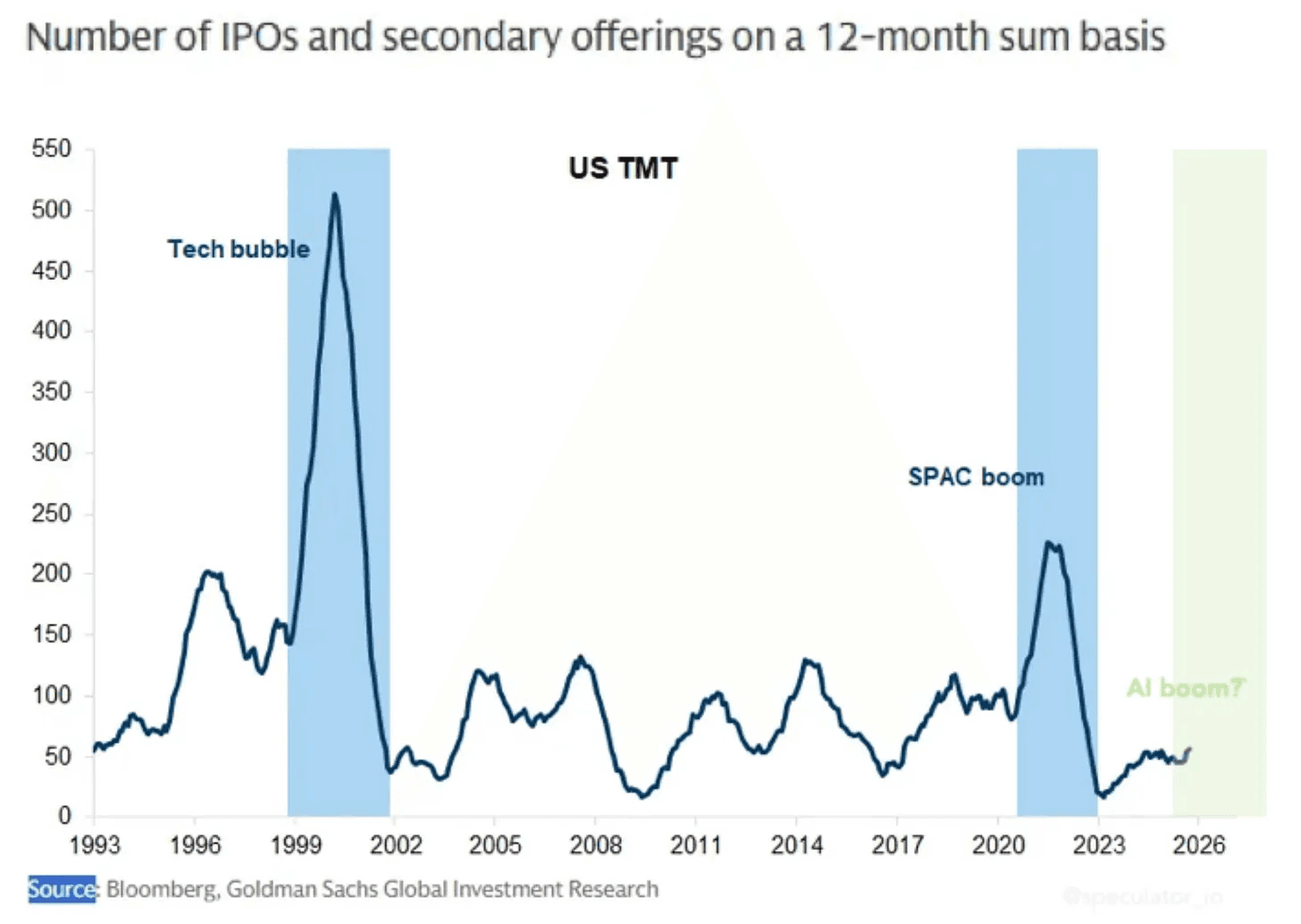
Maybe this excitement is enough to trigger an IPO boom next year.
When markets are in an actual bubble, IPO activity usually goes crazy. That is often what you see right before things peak. In full-on bubbles, almost anything can go public. Even the worst companies with unproven ideas, often with barely any revenue, all rush to list. And still, buyers chase these. When this happens, that would be a reason to think that we are closer to a potential top.
Right now, that is not happening. There are very few IPOs, which means speculation is not at extreme levels yet.
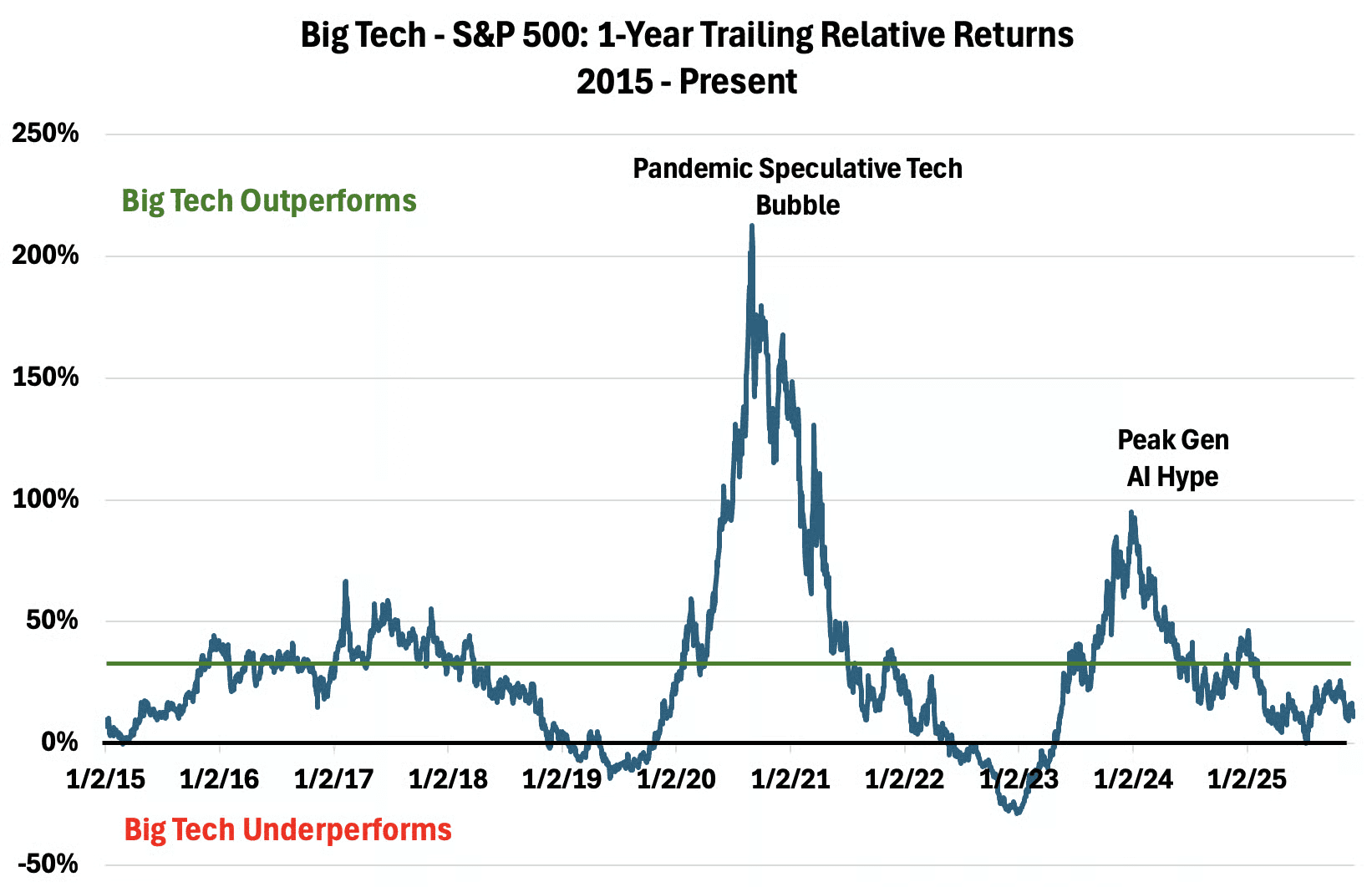
And another bubble signal would be the outperformance of Big Tech versus the S&P 500.
Even at its recent peak, it is nowhere near what we saw during the 2020 pandemic tech bubble. It’s actually falling not rising.
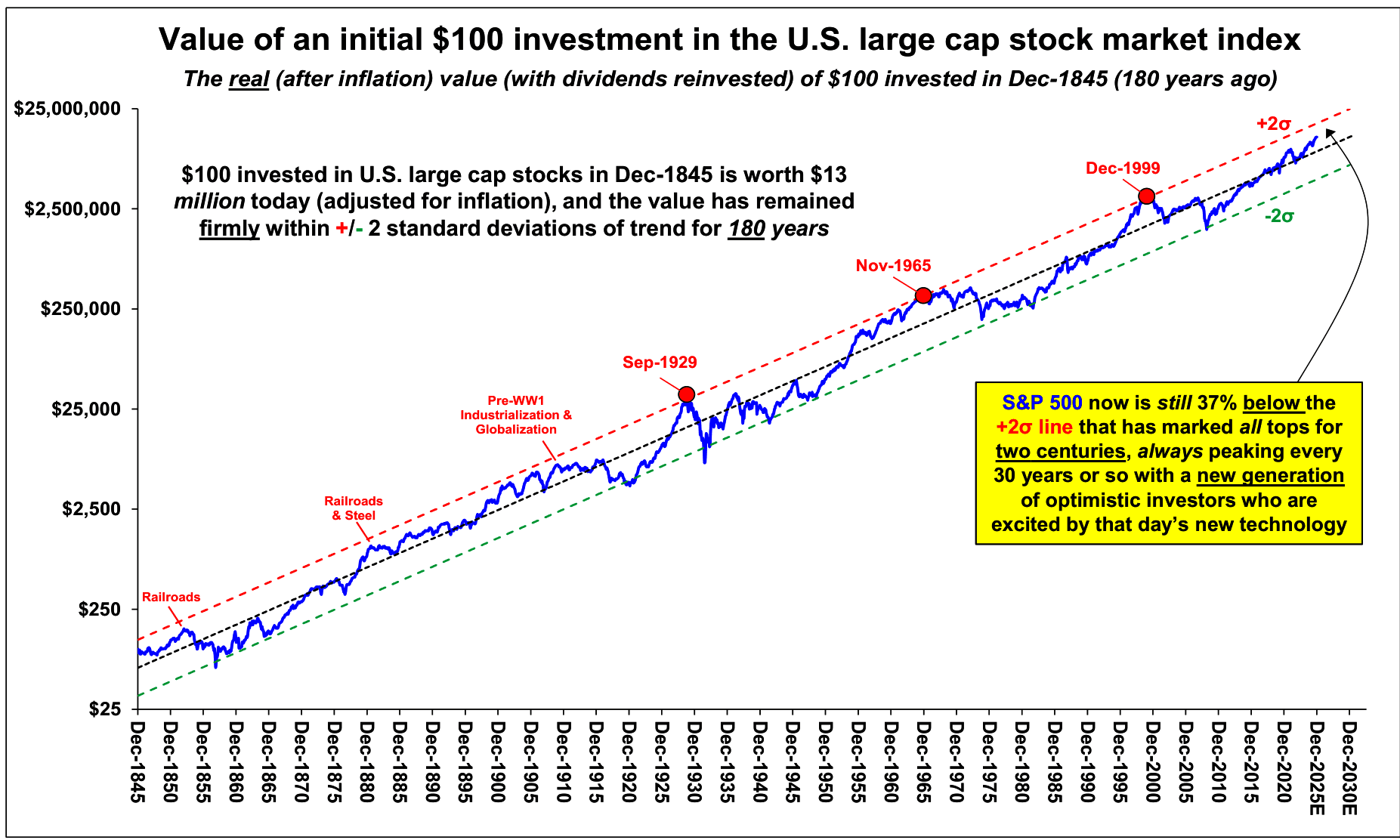
And the S&P 500 is still 37% below the +2σ line, which has marked every market top for two centuries.
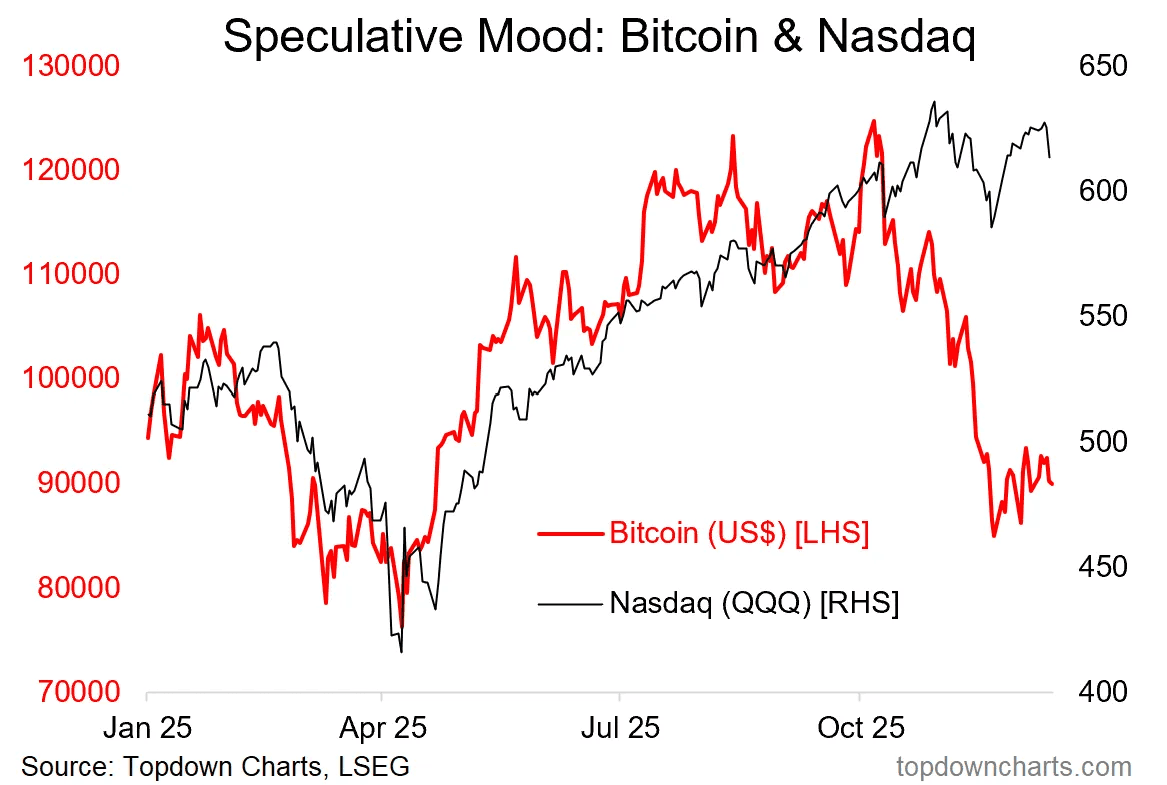
One continuing reason for concern is Bitcoin.
Bitcoin is also still well below its highs and has not really recovered.
It is rare to see this type of divergence. So either Bitcoin starts to catch up, or we see a short consolidation or reset in the market first.
So, it’s definitely something worth keeping an eye on.
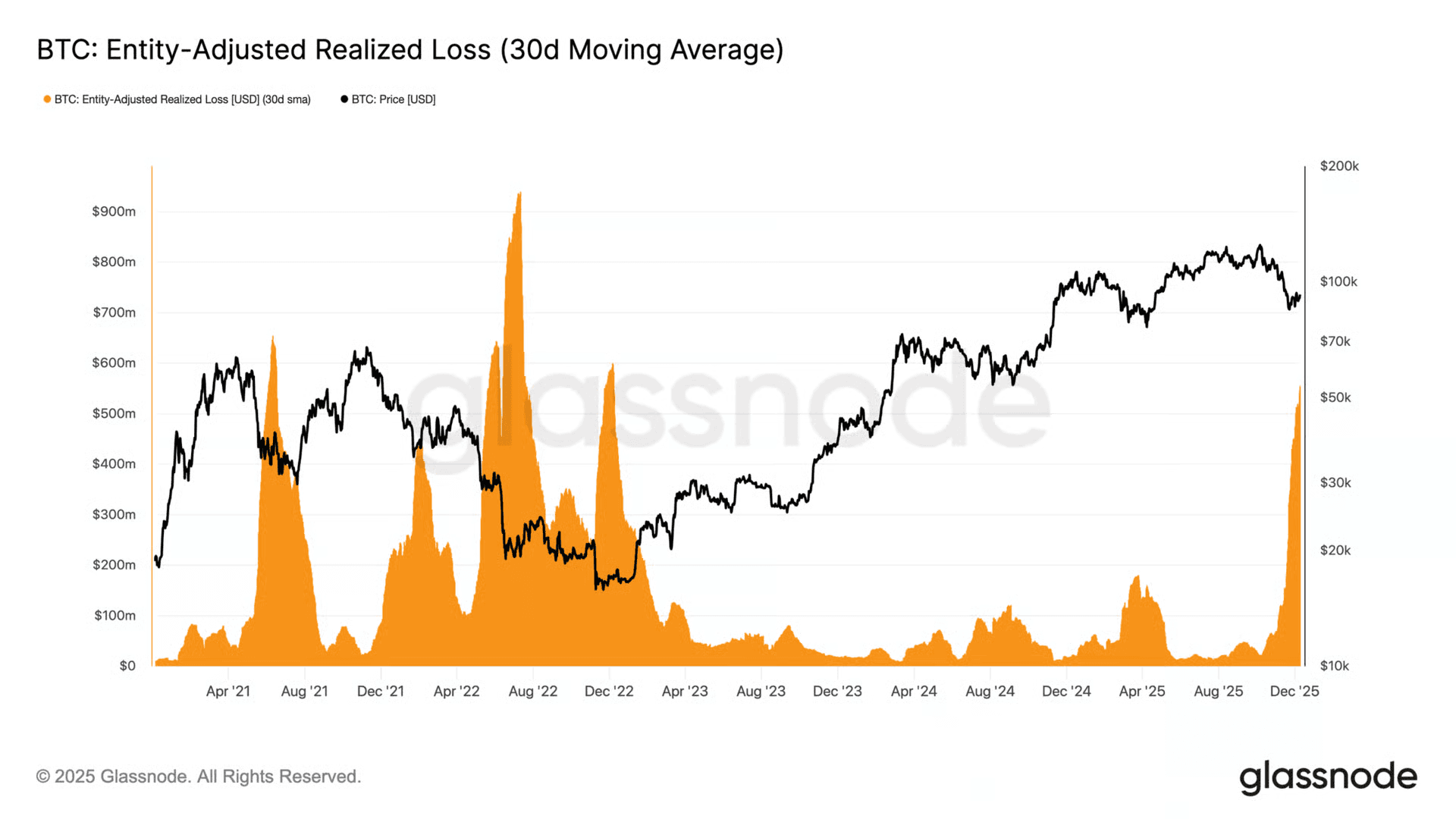
An interesting fact is that realized losses in Bitcoin have risen sharply, which means a lot of investors have sold or been forced to liquidate. This is not a perfect bottom signal, but it at least means we are getting closer.
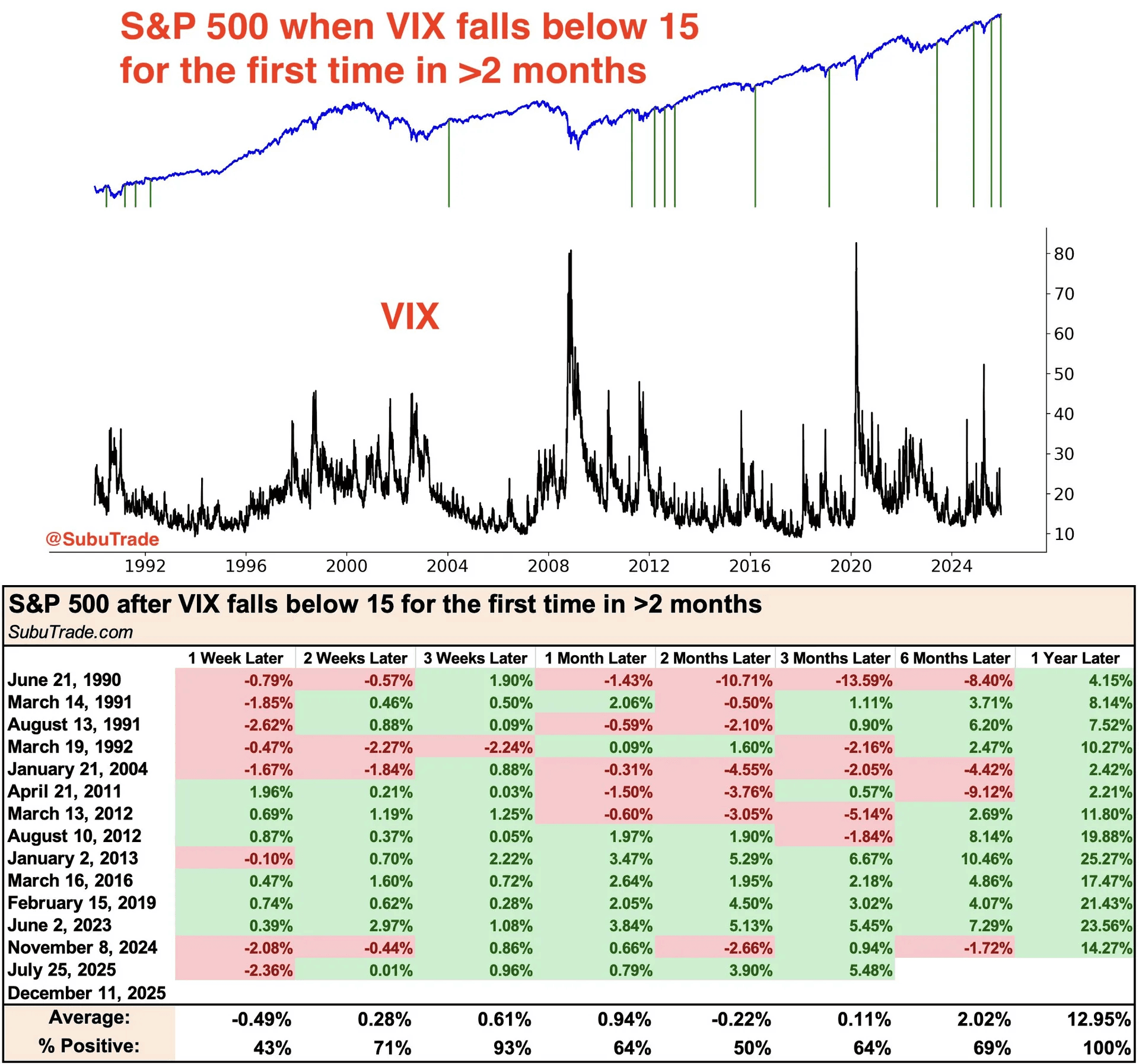
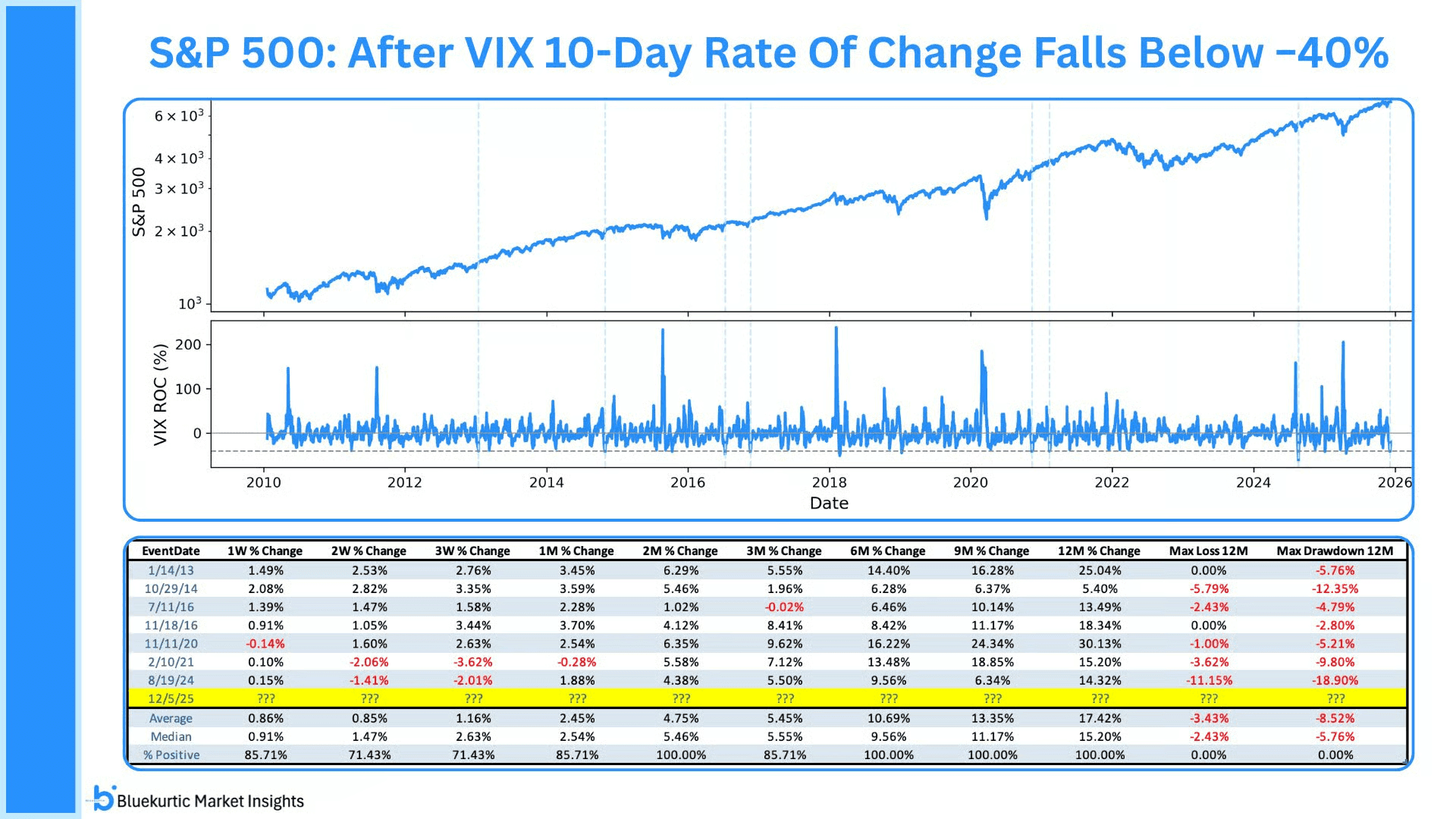
Volatility is starting to come down.
The VIX is finally back below 15 for the first time in over 2 months. In similar cases, the S&P 500 was higher most of the time shortly after.
And looking out a year, stocks were higher every time.
A return to normal volatility is not only good for stocks, it improves market liquidity. Extremely high volatility often distorts market signals. And lower volatility also supports smoother rotation across assets and a steadier market structure overall.
So there is no reason to think that this bull market is over. There are a few indicators to keep an eye on, but overall the market is still healthy. Rotation is happening, and the sectors that have been in favor will likely not be the same ones going forward. The key is to focus on the sectors that are leading right now. I’m already working on an update on which sectors to watch for 2026.
Previous Updates
View All
- Weekly Market Update: Big Tech Divergence
- Weekly Market Update: Accumulation
- Weekly Market Update: The Best Quarter
- Weekly Market Update: Rate Hikes
- Weekly Market Update: AI is Not Slowing Down
- Market Update: Has AGI Arrived?
- Weekly Market Update: Consolidation
- Weekly Market Update: September is Here
- Market Update: Nvidia Crushes Earnings
- Weekly Market Update: Yields
- Market Update: The Future of Biotech
- Weekly Market Update: Earnings Acceleration
- Market Update: The Next Generation of AI Infrastructure