Go Back

Lin
Weekly Market Update: No Appetite for Risk
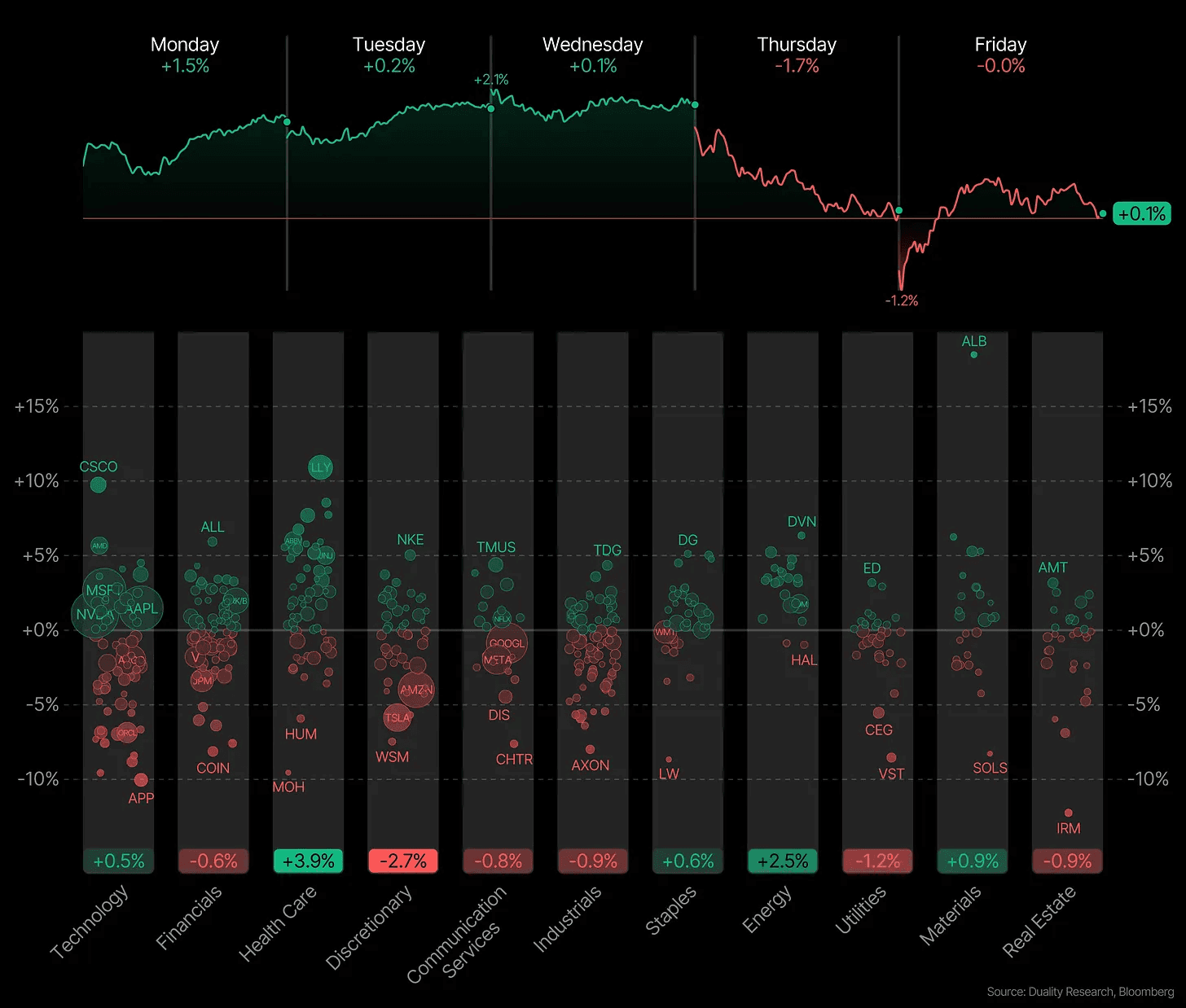
The longest government shutdown finally ended this week. It ran for 43 days from October 10 to November 12. And funny enough the S&P 500 still went up 2.4 percent during that time. If you only check the main indices you would think nothing happened, but below the surface volatility was intense.
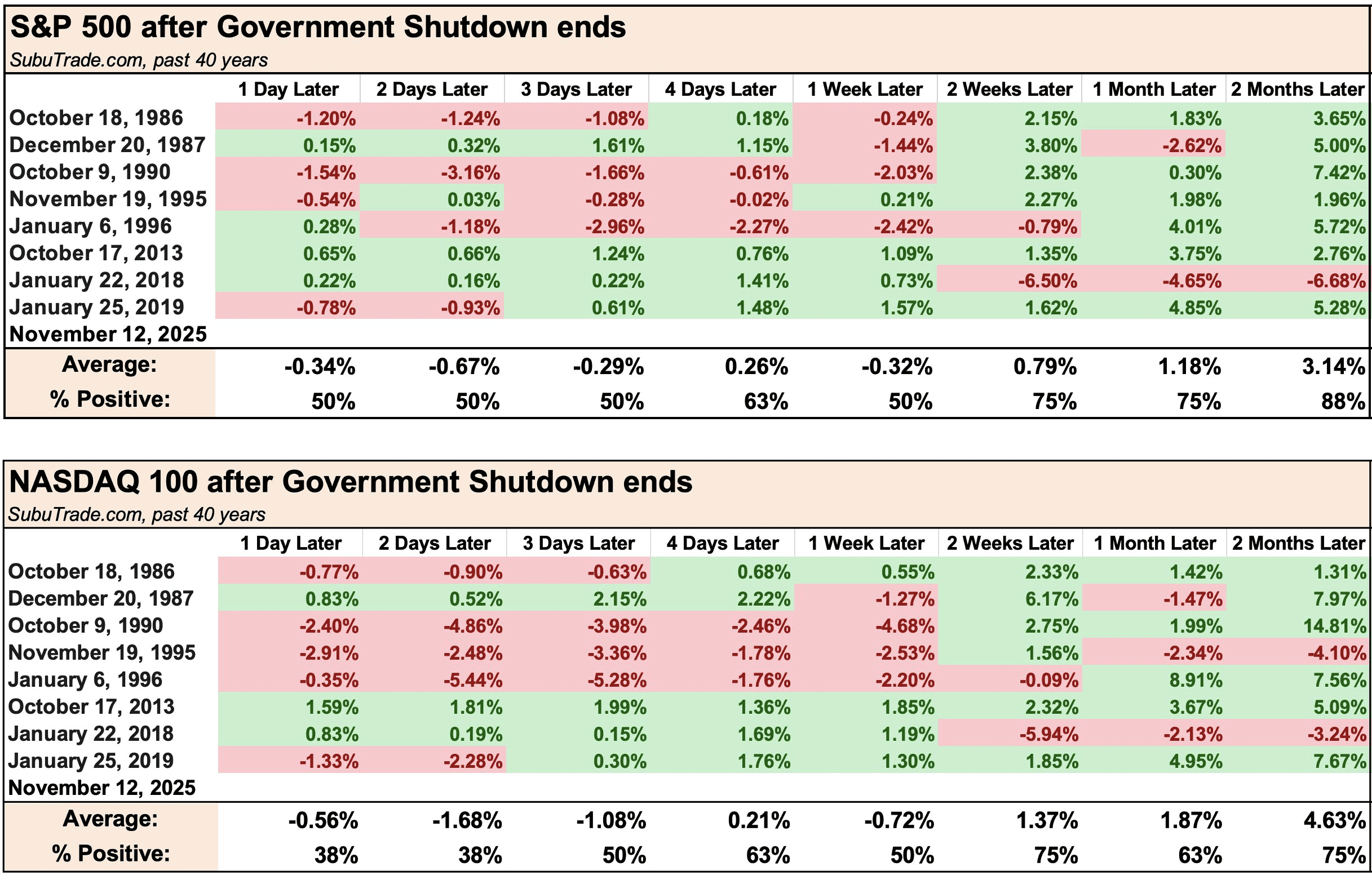
And right after it ended the market kept selling off, which is not that surprising. A bit of downside volatility after a shutdown ends is pretty common. But if you look a few weeks out the market usually finds its footing again and turns back up.
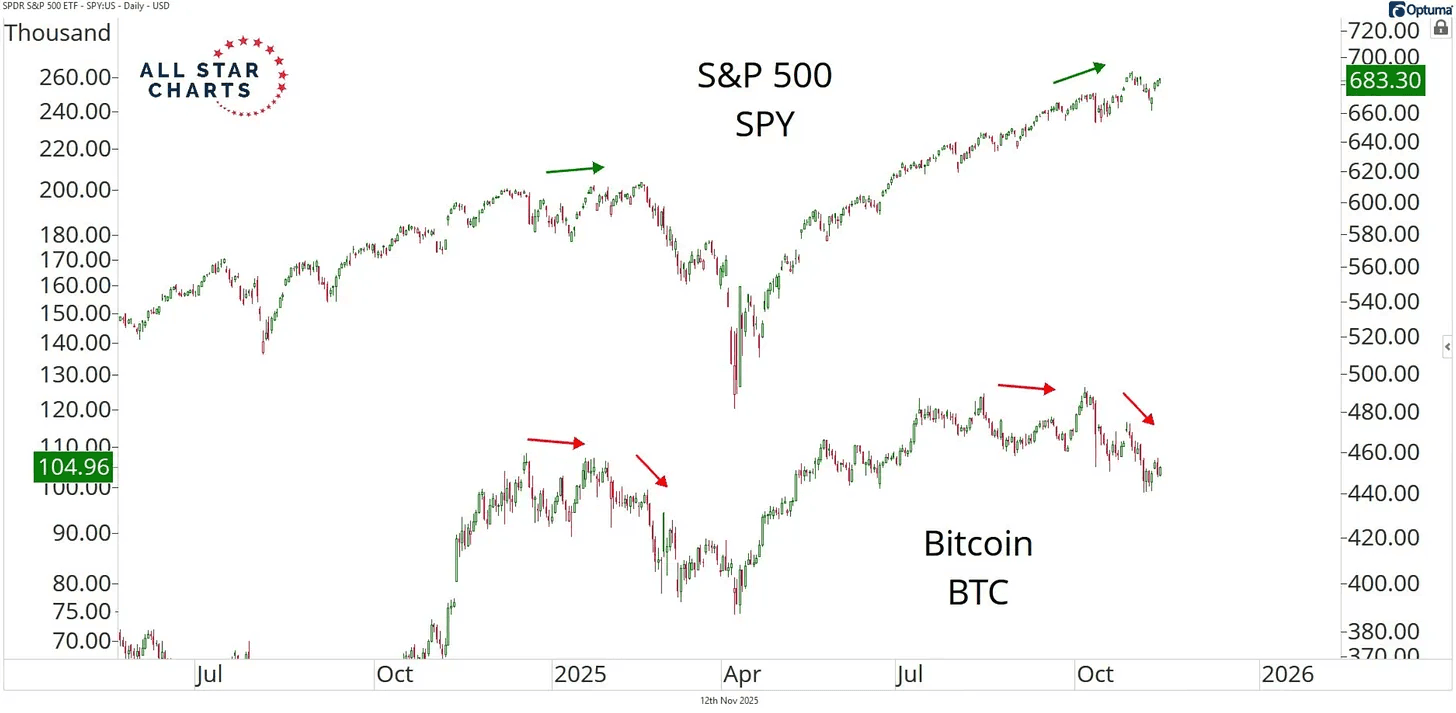
Bitcoin is still the best real-time indicator of how much risk investors want to take.
The S&P is sitting close to all-time highs, but Bitcoin actually topped in October and has been sliding since then. It is now down about 25% from its peak. And the weakness has spilled over into tech stocks as well.
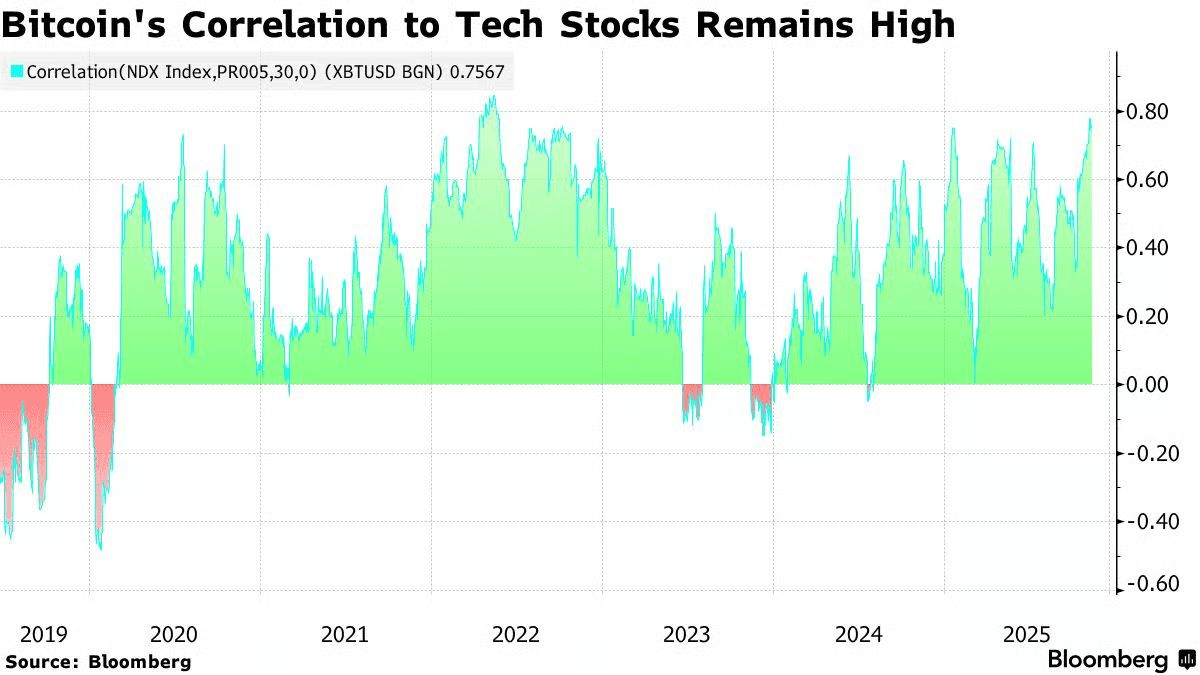
Bitcoin is moving almost in sync with tech right now. The correlation is very high. So if Bitcoin keeps dropping it will likely pull tech lower as well.
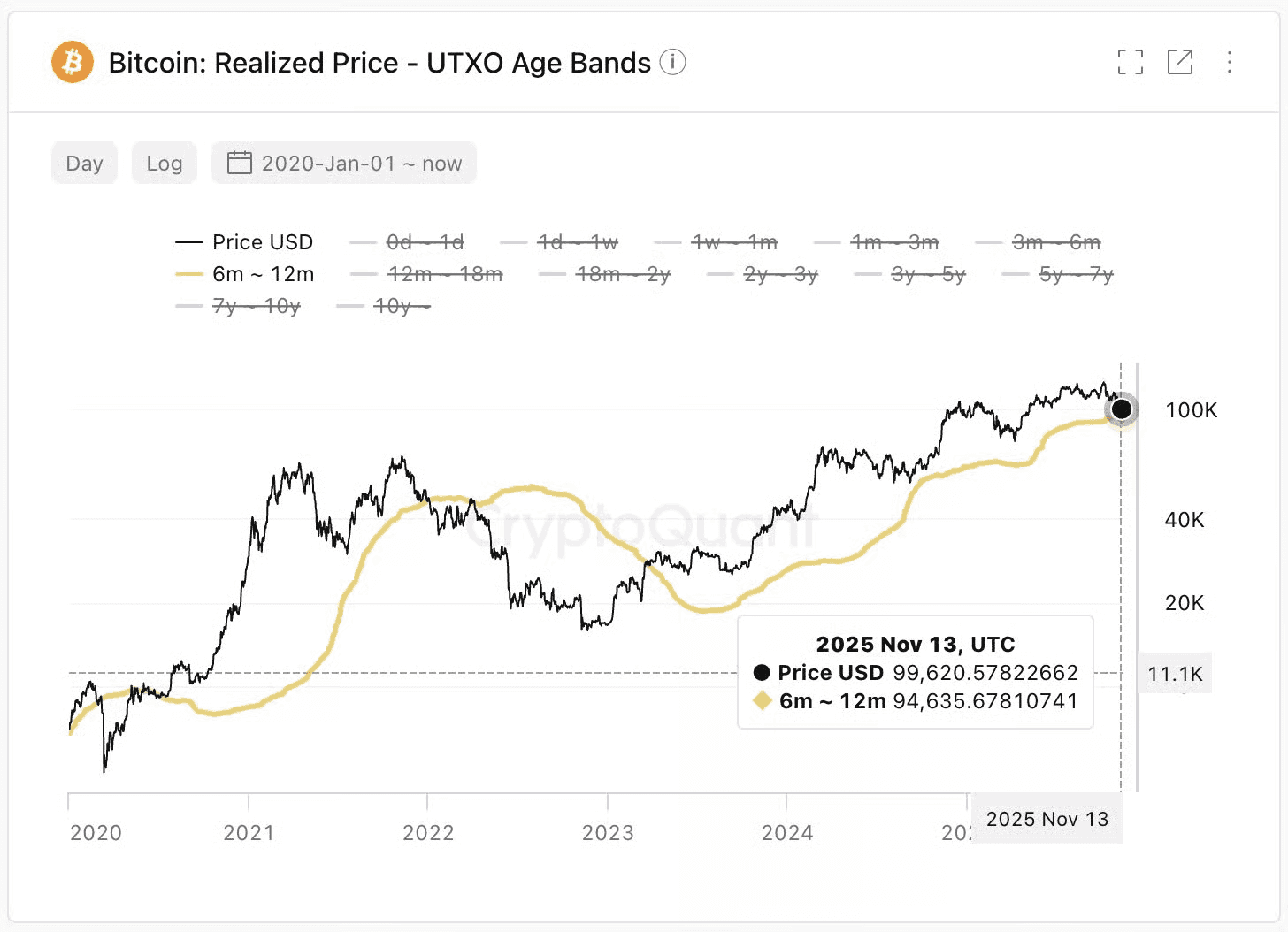
Bitcoin is now sitting right on an important level.
It just fell under 94,000, which means it has basically gone nowhere over the past year. It is trading right around the average price people paid in the last 6 to 12 months. This level needs to hold. If it drops much further it could trigger another large wave of sellers.
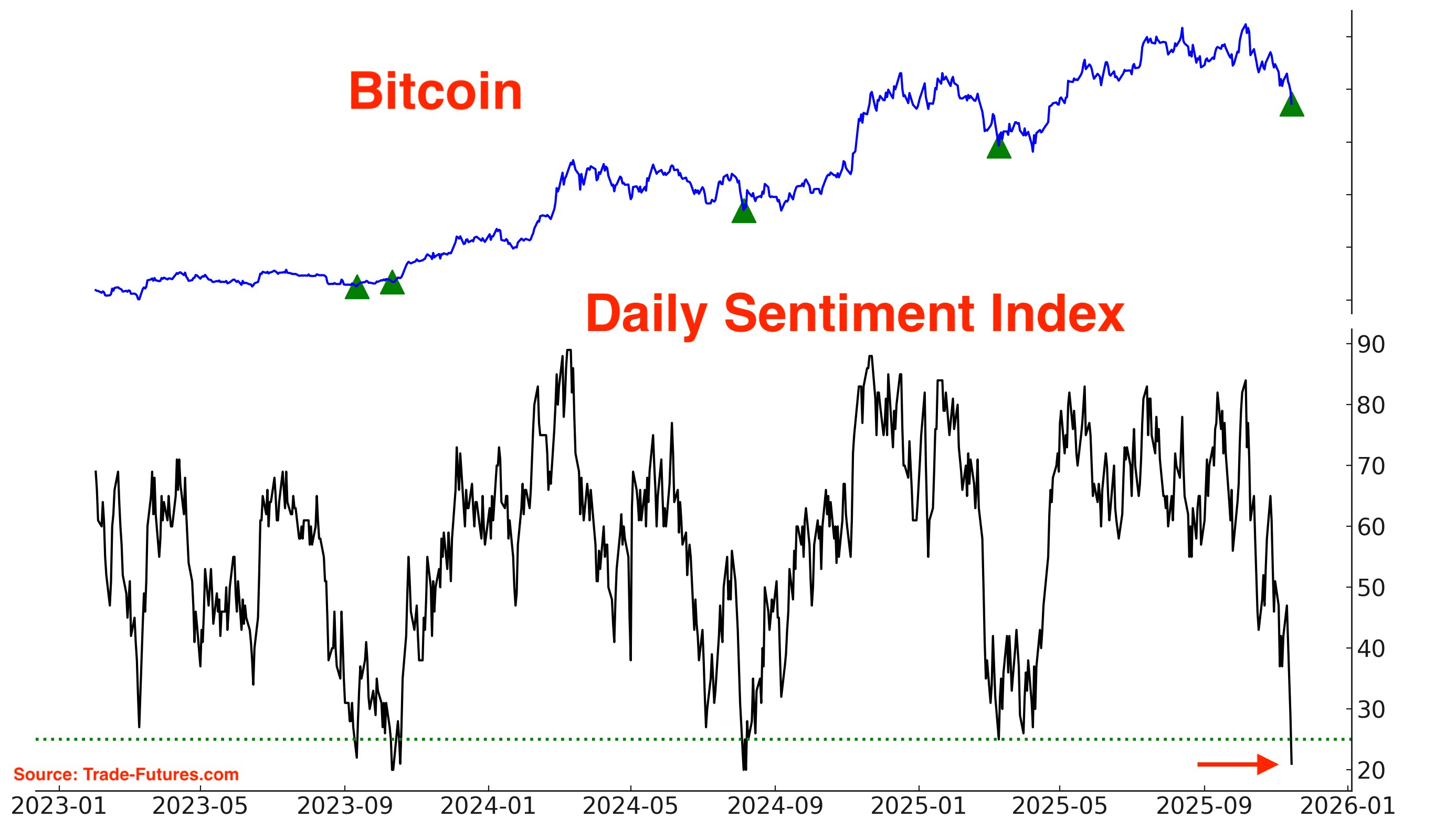
But sentiment is already very negative. In fact it is the lowest it has been in over a year, which sometimes sets up a rebound. So maybe this is where it finally finds a bottom. This is a do or die moment.
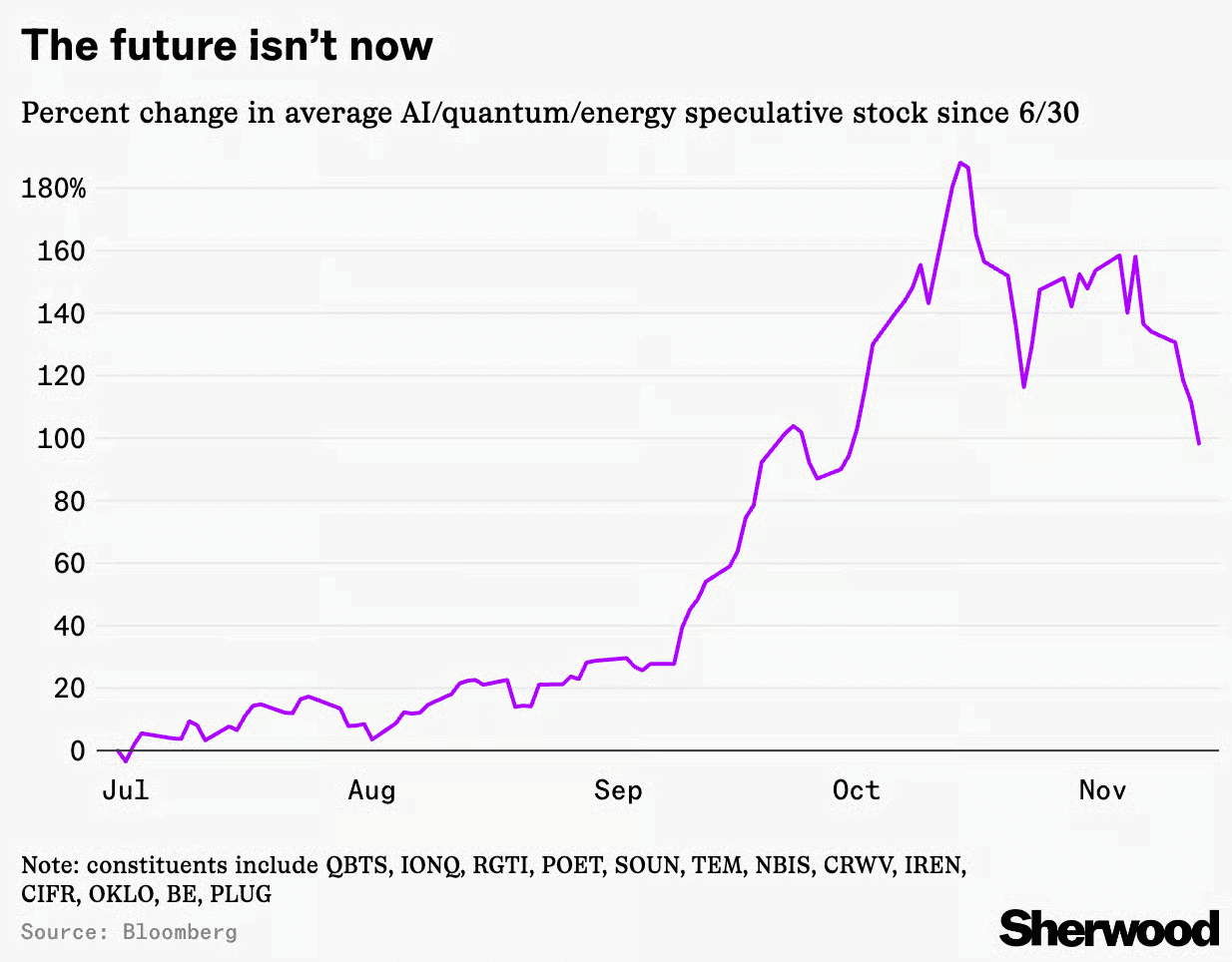
At the same time we have seen a sharp drop in many speculative stocks.
The high fliers in AI, quantum, and nuclear have taken big hits over the past month. To be fair many of them doubled or even tripled since the bottom in April, so a pullback was pretty much guaranteed. But still pullbacks can brutal if you bought near the top. This is why risk management matters so much and why staying in sync with the general market is so important.
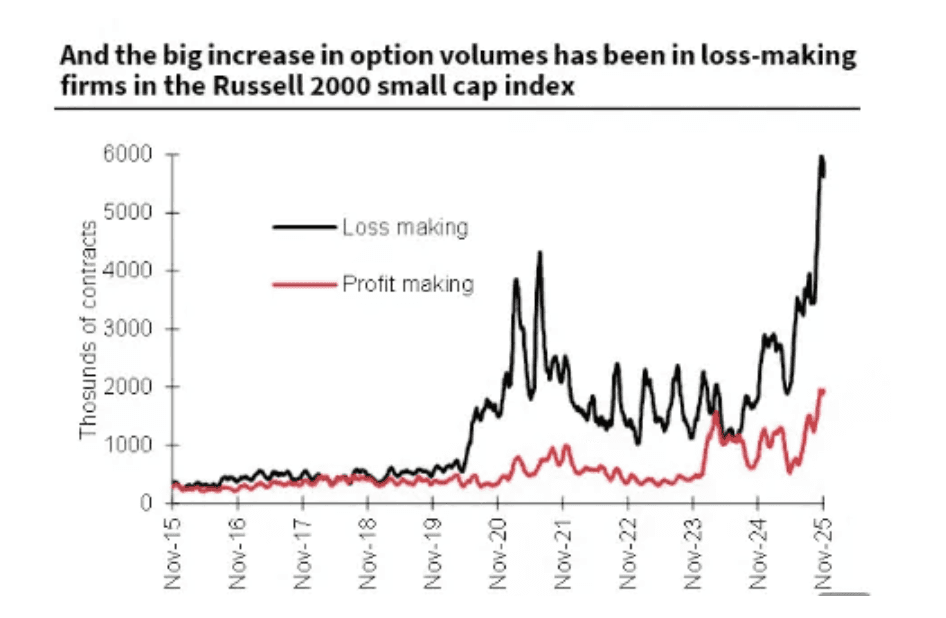
A lot of these big swings are tied to large amounts of leverage.
There has been massive buying of options. The problem with that much leverage is that it makes the market very sensitive to even the smallest moves. Every little drop gets amplified and turns into forced liquidation. That selling then creates even more volatility, and that is how we end up with the sharp drops we are seeing now.
The good news is that these corrections are healthy although painful. They wash out the excess leverage and reset the market so it can move higher again later.
So now investors are hiding in the biggest stocks again and treating them like a safe haven. This is classic megacap positioning. Everyone is crowding into the familiar winners because they feel safer than everything else right now.
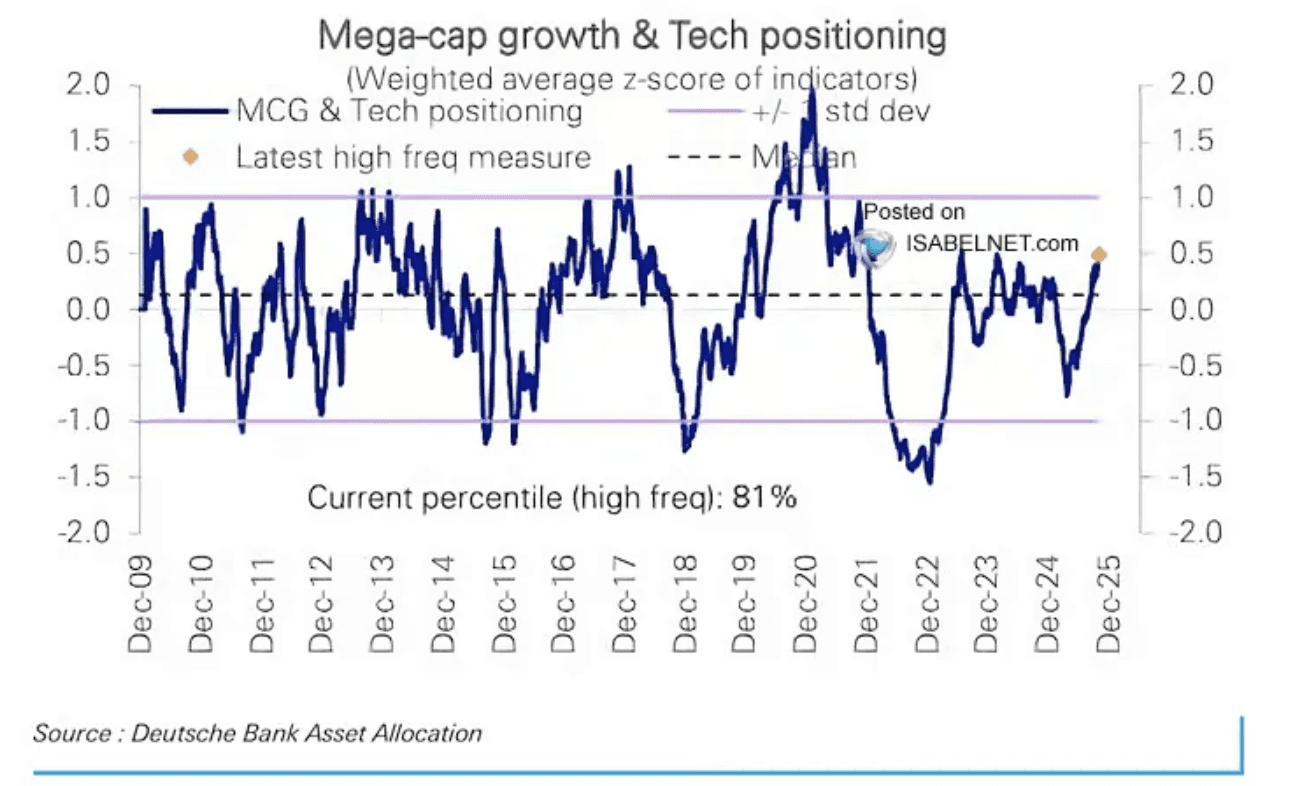
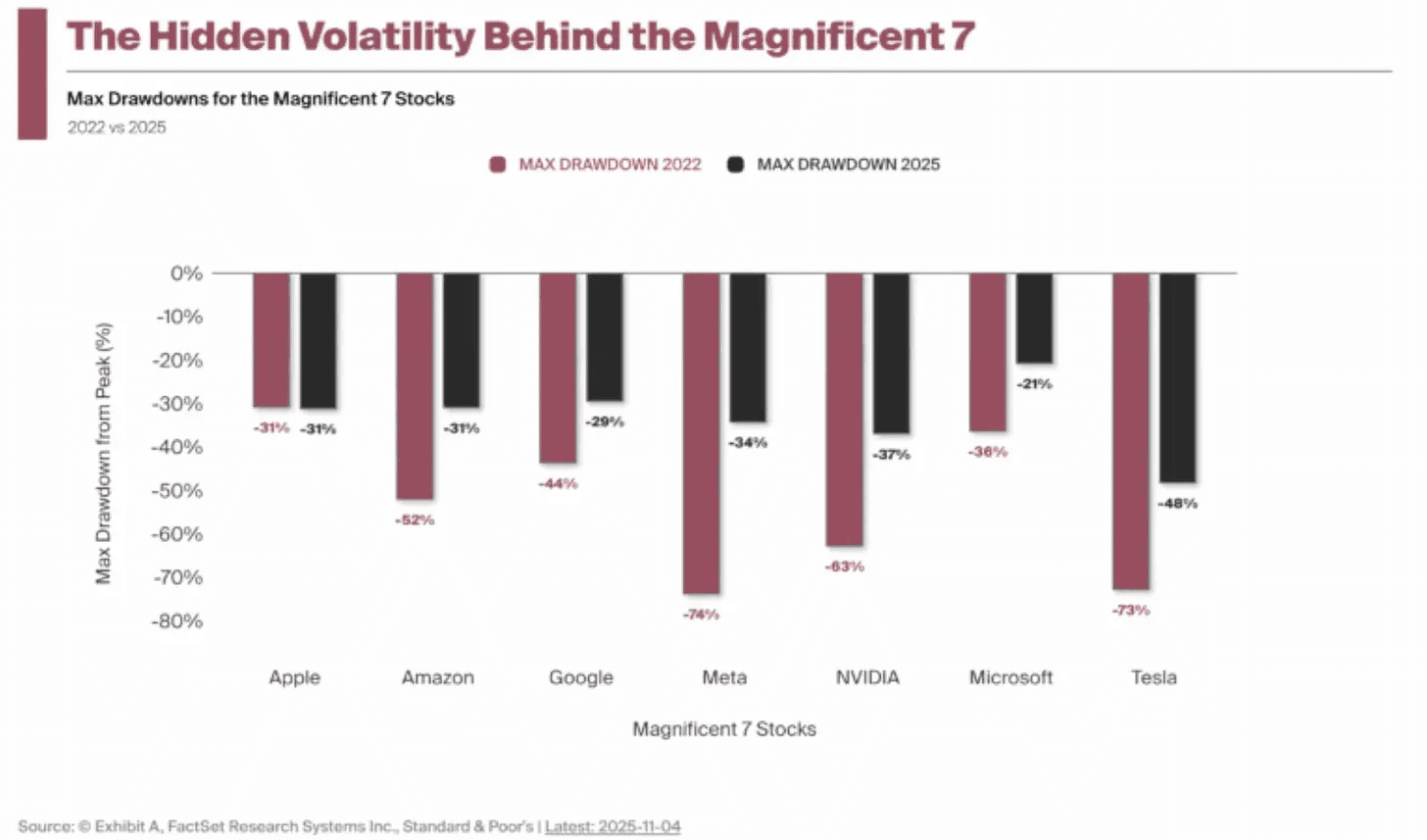
But this chart is a good reminder that even the biggest stocks in the world are not safe from volatility. If you look back at 2022 you can see how far those names actually dropped. Nothing is immune when the market decides to unwind.
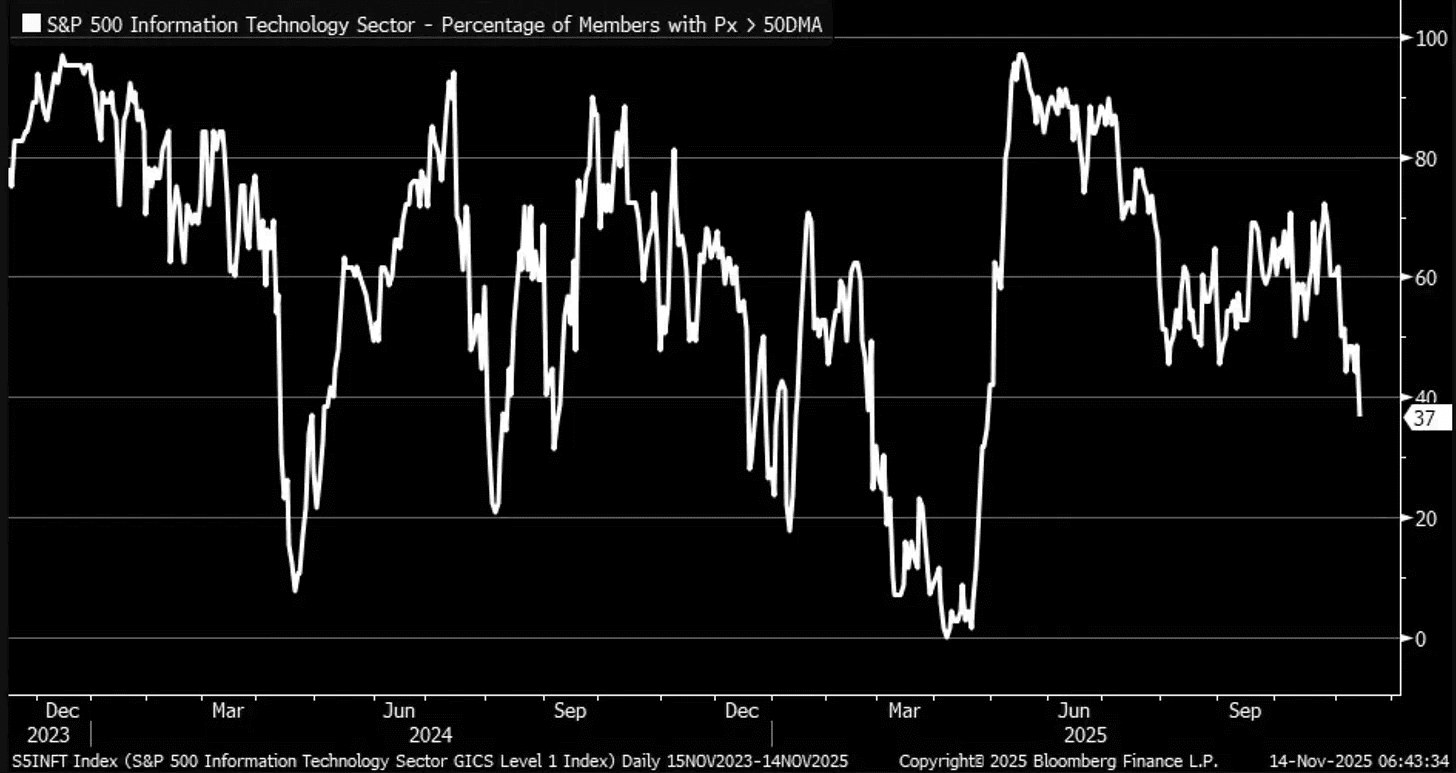
Outside of big tech most tech stocks have been in freefall. Only a small number are still above their 50 day moving average. It is the lowest reading since April. This shows how weak the broader tech sector really is right now, even though the big names still look fine on the surface. And unless this improves in a meaningful way it will be tough to get a sustained rally.
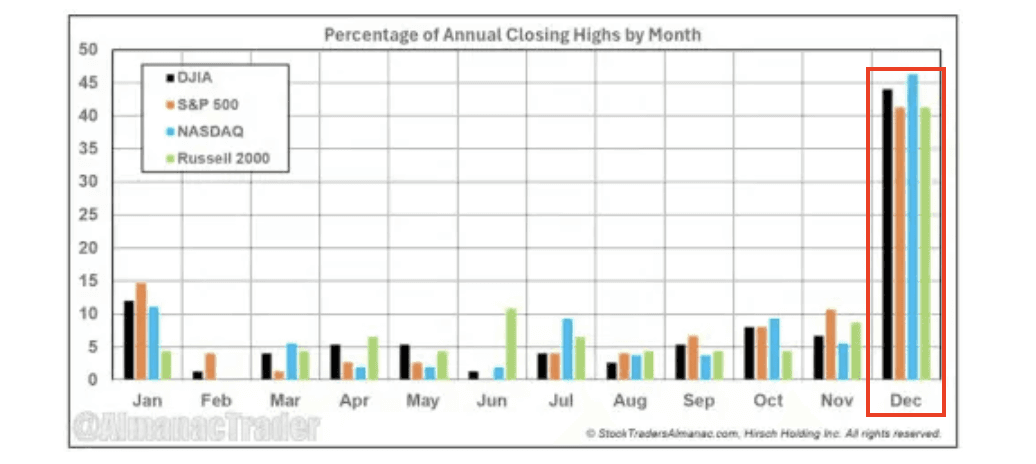
Even with all these signs to be cautious not everything is negative.
December is usually the month with the most new all time highs. So maybe we still get a Christmas rally this year.
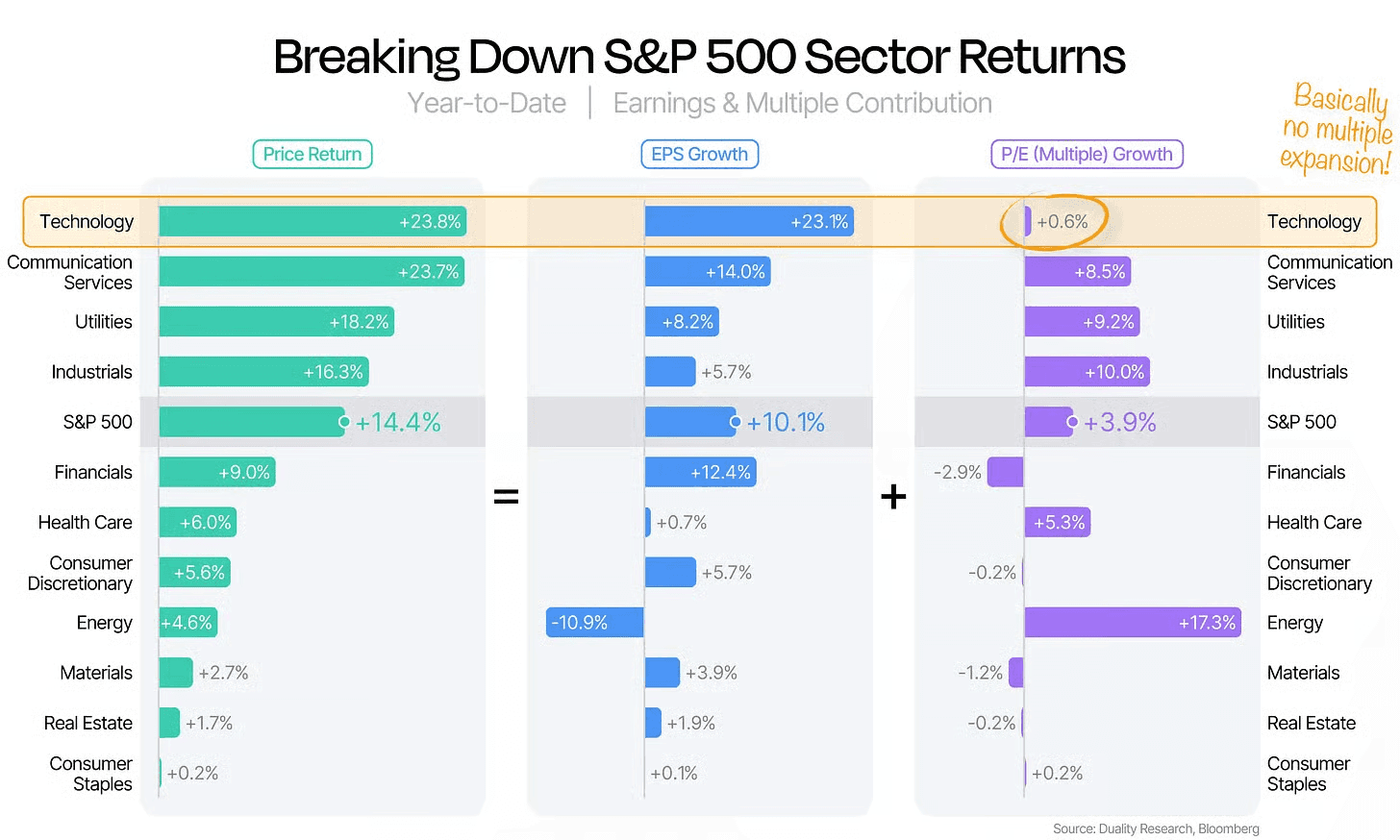
When you look at earnings vs multiples it is pretty clear what drove tech this year. Almost all the gains in the tech sector came from actual earnings growth, not from higher multiples.
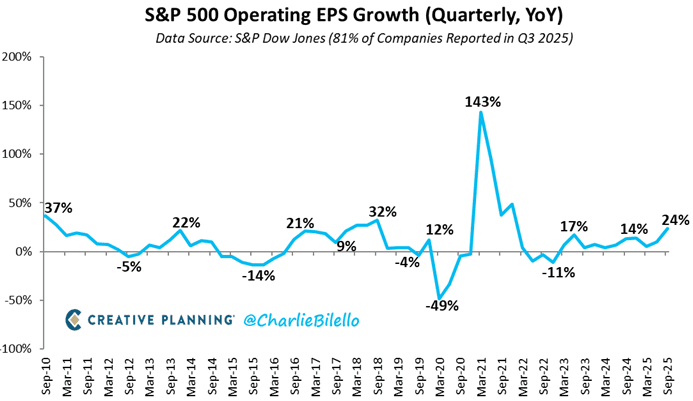
More than 80 percent of S&P 500 companies have beaten earnings expectations so far. That is the highest beat rate since the second quarter of 2021. And Q3 earnings are coming in more than 10 percent above what analysts expected. That is the biggest upside surprise we have seen since 2021.
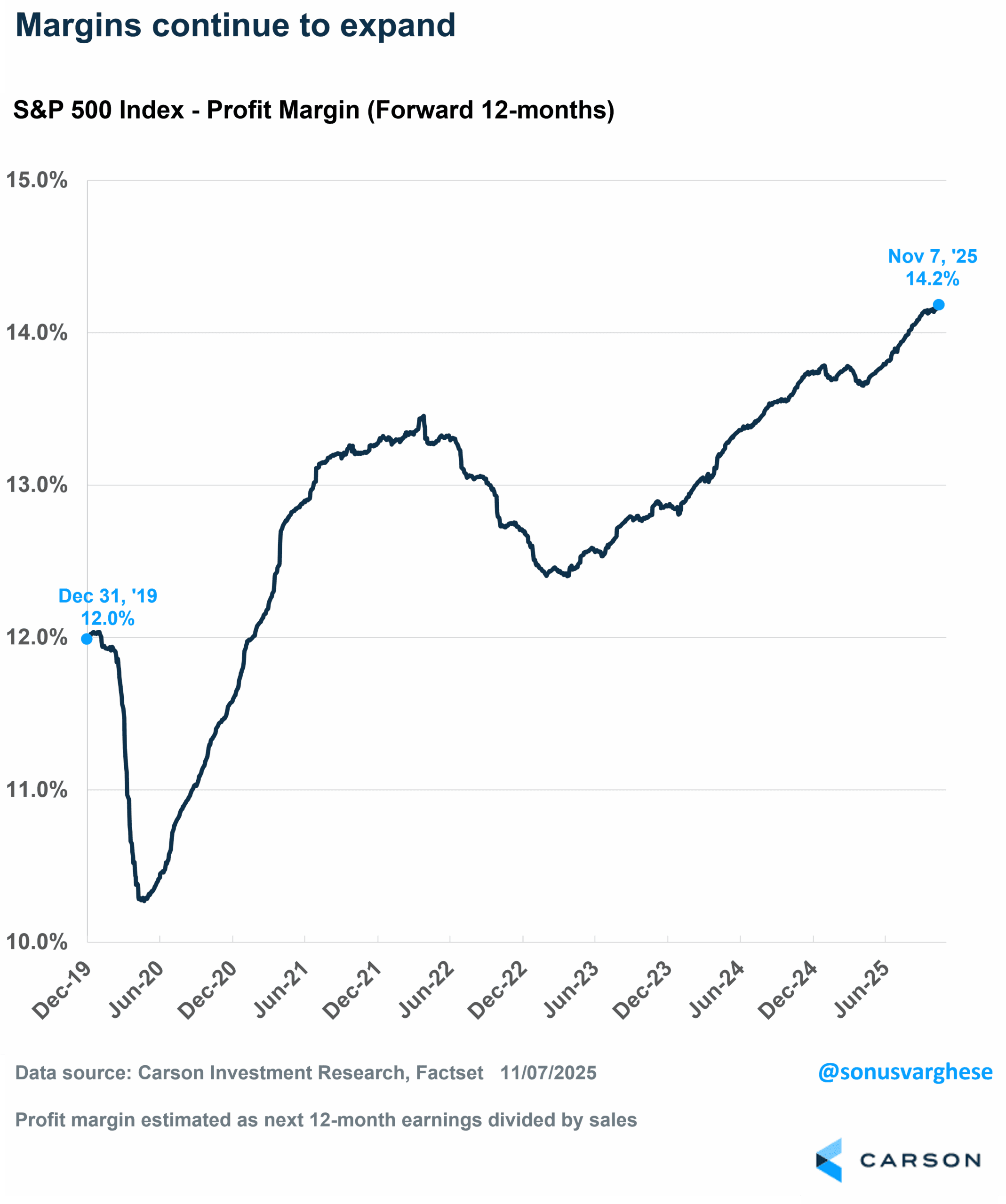
At the same time profit margins continue to expand. Companies are getting more efficient, costs are coming down, and revenues are still going up. This helps earnings grow even faster than revenue. It also shows that the best businesses still have pricing power.
Earnings season slowly coming to and end. The finale is happening this Wednesday.
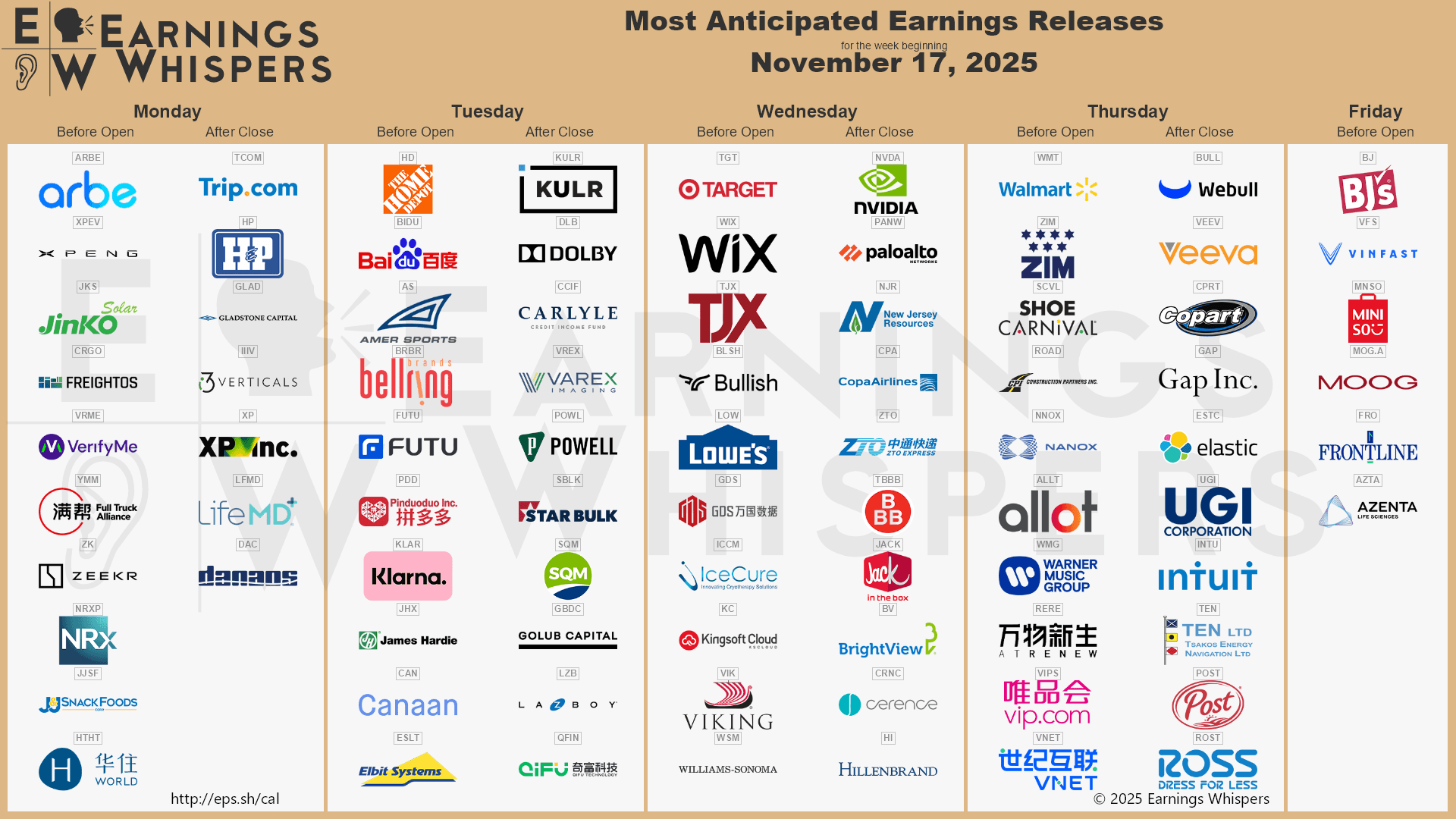
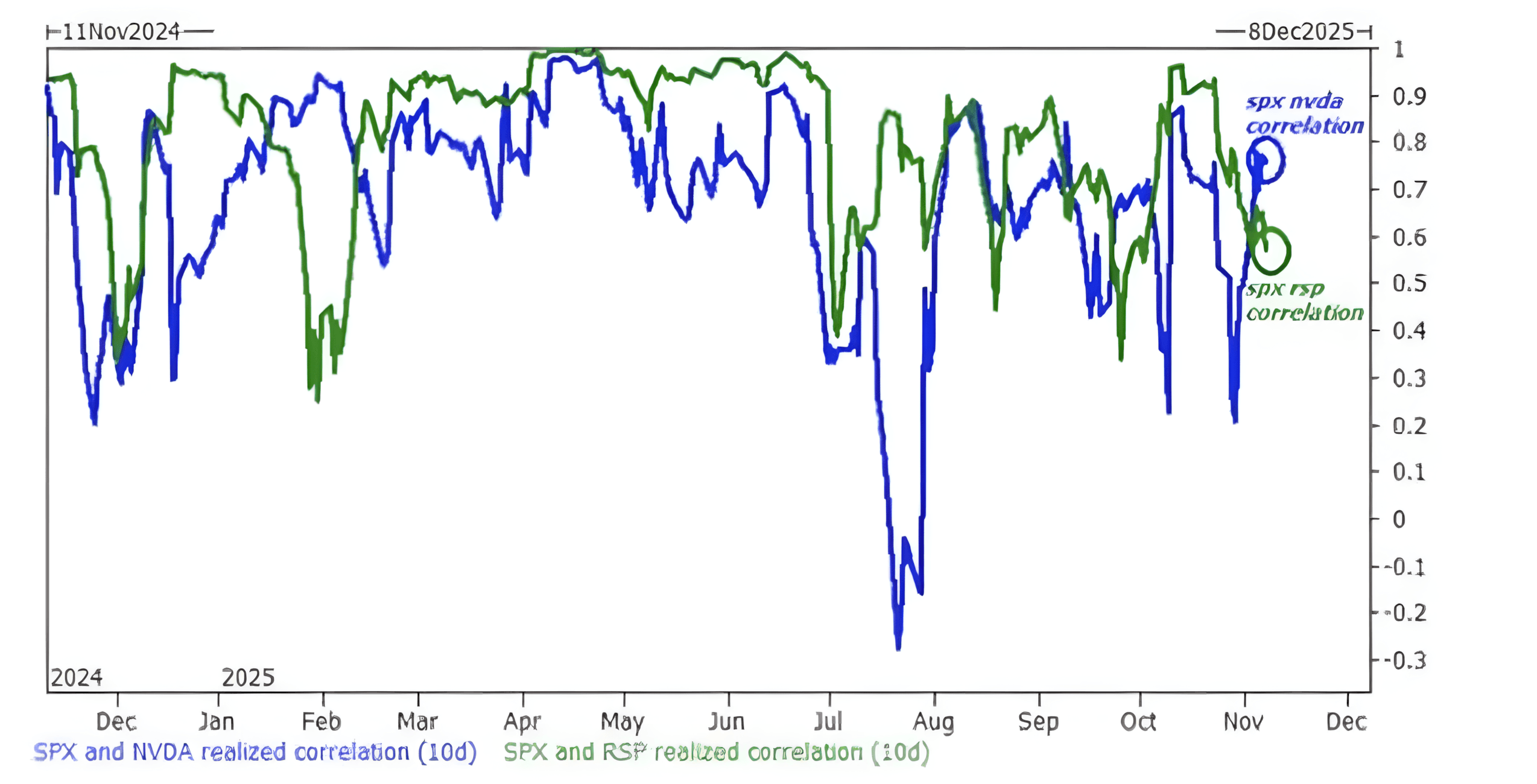
The S&P is now more connected to Nvidia than to most other companies in the index. That shows how powerful Nvidia has become. Earnings come out on Wednesday, and it looks very likely they will beat expectations. AI demand is still off the charts. But lately even great numbers have not been enough to satisfy the market, so some volatility should be expected. Still if we see real acceleration in Q3 and strong guidance it could be enough to steady the market and give it some support.
So where does that leave us?
There is no sign that this bull market is over now.
The fundamentals still look solid and the overall market has been holding up better than most people expected. But under the surface things look a lot shakier. There is almost no appetite for risk right now. And as long as that is the case it makes sense to stay cautious. Volatility will probably stick around for a while.
The best way to deal with environments like this is to keep enough cash to jump on new opportunities, keep your exposure to high beta or speculative names low, and stay patient.
Previous Updates
View All
- Weekly Market Update: Big Tech Divergence
- Weekly Market Update: Accumulation
- Weekly Market Update: The Best Quarter
- Weekly Market Update: Rate Hikes
- Weekly Market Update: AI is Not Slowing Down
- Market Update: Has AGI Arrived?
- Weekly Market Update: Consolidation
- Weekly Market Update: September is Here
- Market Update: Nvidia Crushes Earnings
- Weekly Market Update: Yields
- Market Update: The Future of Biotech
- Weekly Market Update: Earnings Acceleration
- Market Update: The Next Generation of AI Infrastructure