Go Back

Lin
Sector to Watch: AI Infrastructure
AI is one of the biggest opportunities of this decade, and likely the defining one. It is reshaping every industry, changing how work gets done, how decisions are made, and how value is created. This is the leading sector in the market right now, and that is not by coincidence. The demand for compute keeps rising and there is no sign of it slowing.
AI systems require enormous computational power. Training models, running real-time inference, operating AI agents, generating images and video, controlling robots, and enabling autonomous vehicles all depend on massive data center capacity, advanced chips, high-bandwidth networking, and reliable energy infrastructure. The more capable these systems become, the more compute they consume. Most people still underestimate this.
And this is still early. AI is not just a tool. It is a new form of intelligence that can plan, reason, and solve complex problems. As these systems move from research environments into everyday products, enterprise workflows, and real physical applications, compute requirements will expand dramatically from here.
There is practically no limit to how much intelligence we can use.
New large-scale data center projects are being announced almost every week. Companies across chips, cloud, hardware manufacturing, networking, and power systems are seeing incredible growth. Recent earnings have confirmed how strong demand really is. Many suppliers are reporting record orders, multi-year backlog commitments, and faster deployment cycles. Even second-order players such as design tools, memory, cooling, and optical components are benefiting as the ecosystem scales.
That is why the AI infrastructure theme continues to lead. If you have not yet explored the AI Infrastructure portfolio, it is worth taking a look.
The companies that did pull back are already recovering quickly. And many of the strongest names barely moved at all, while many growth stocks were selling off.
So, here are a few subsectors to keep an eye on:
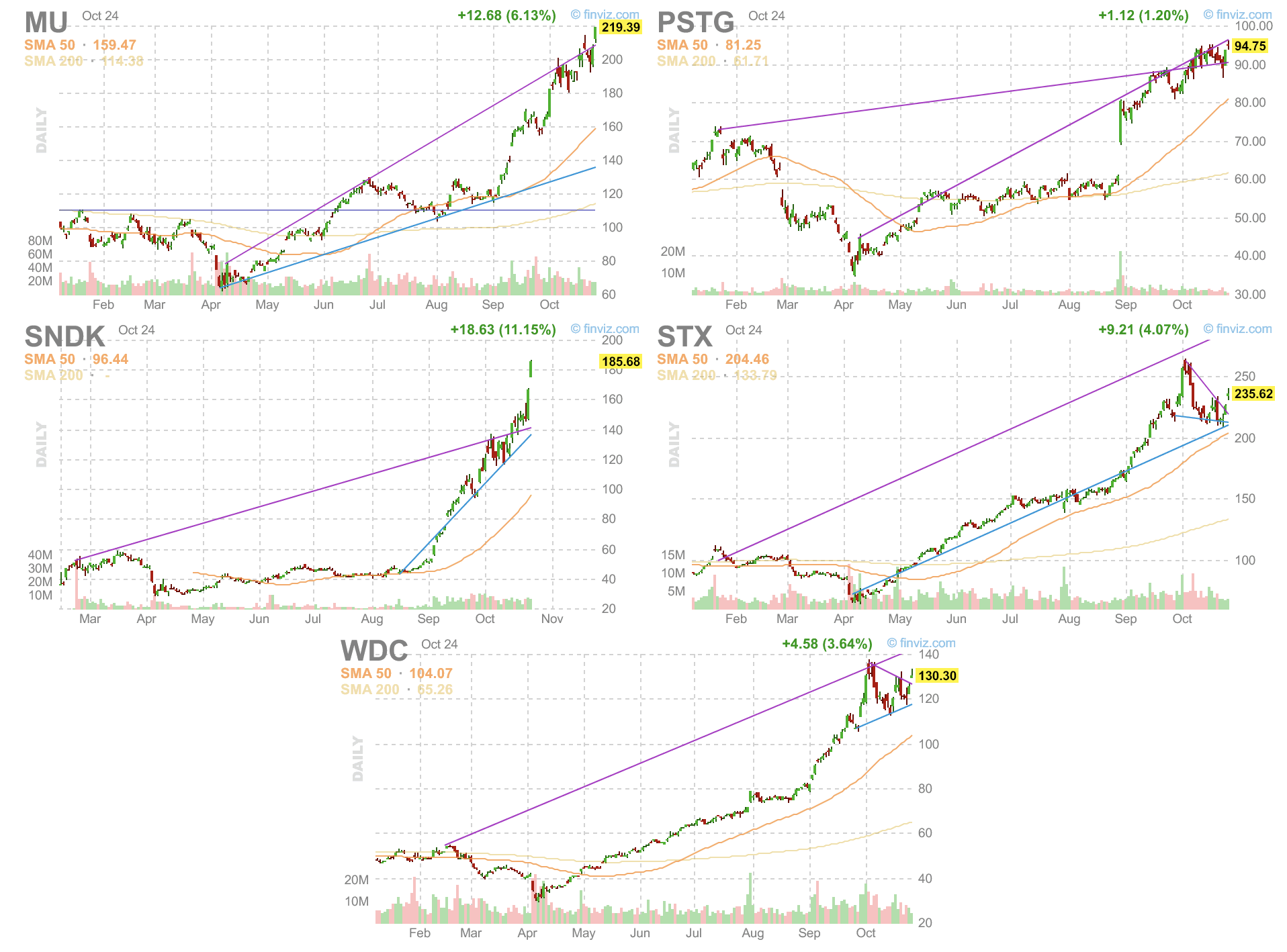
Memory & Storage
Storage is becoming a critical part of the AI infrastructure stack.
Training and running large models requires moving massive amounts of data quickly, which puts pressure on both capacity and speed. Solid-state drives are increasingly used because they offer much faster read and write performance than traditional hard drives, which helps keep GPUs fully utilized instead of waiting for data. Hard drives still matter for long-term data retention and training datasets.
Neocloud Providers
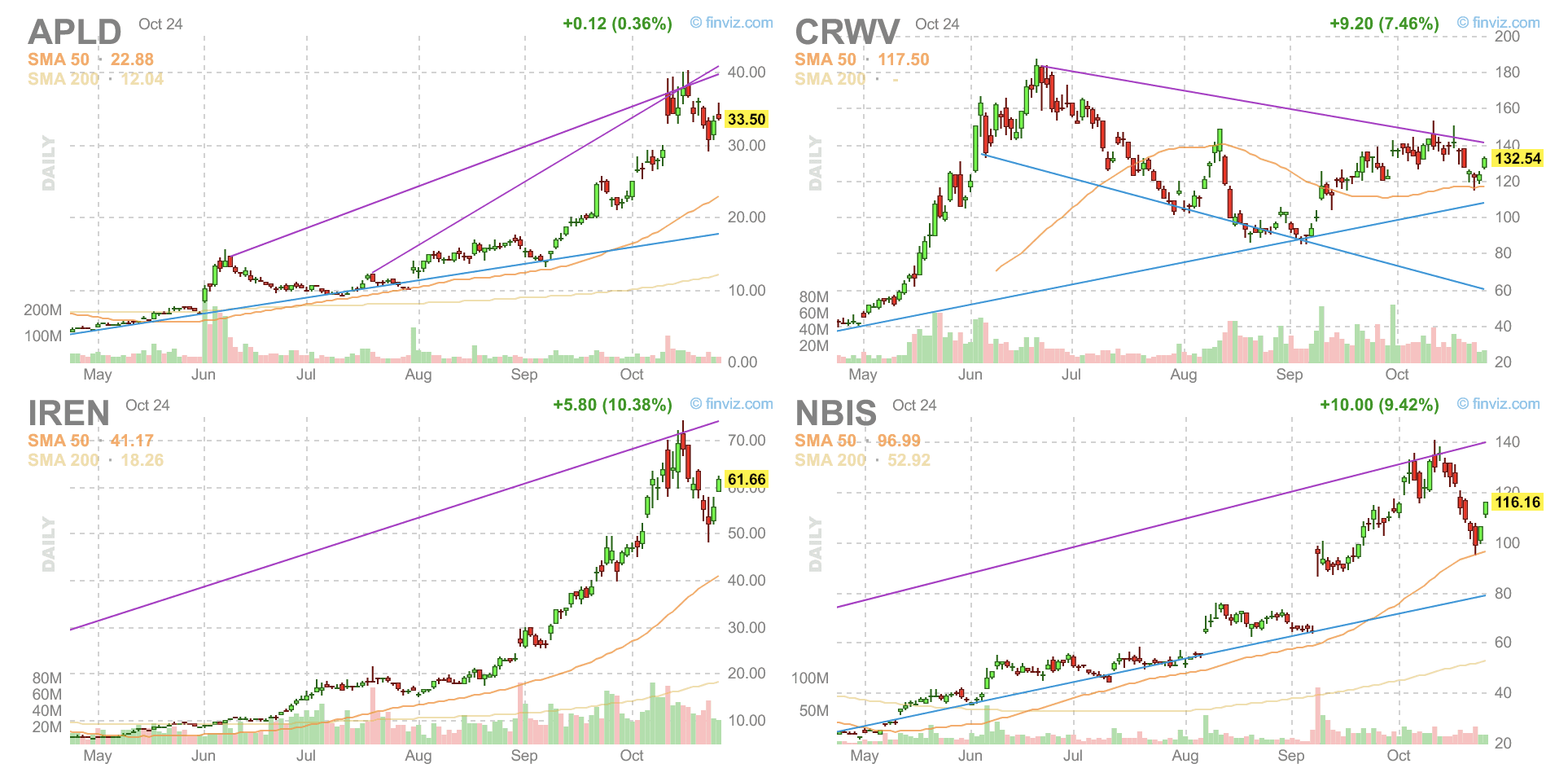
The new generation of cloud providers are at the cire of the AI boom.
They supply the physical infrastructure that makes large-scale training and inference possible. This includes high-density racks, advanced cooling systems, high-bandwidth networking, and the power capacity to run clusters of GPUs around the clock.
Traditional hyperscalers are expanding aggressively, but smaller and more specialized AI cloud companies are growing even faster. These firms move quicker and can tailor their architecture specifically for AI workloads.
Networking
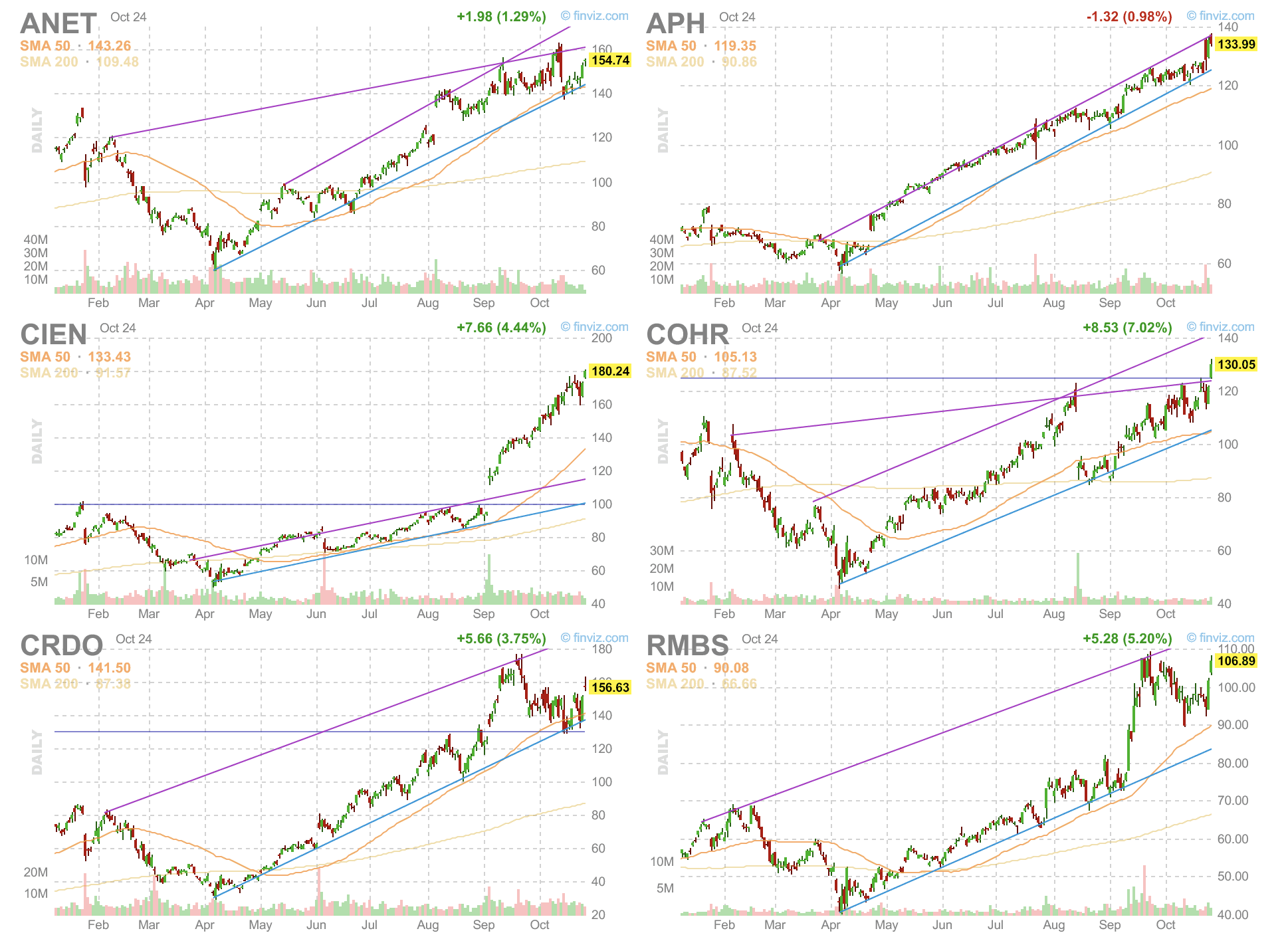
Moving data between GPUs, servers, and storage systems requires extremely high bandwidth and low latency. Without fast networking, even the most advanced chips sit idle waiting for data.
This is why technologies like high-speed optical interconnects, advanced switches, and specialized network fabrics are seeing strong demand. As models grow and training clusters scale to thousands of GPUs, the bottleneck is no longer just the chip. It is how fast data can move across the system.
High-bandwidth, low-latency networking is required to keep GPUs fully utilized, which is why demand for optical interconnects, advanced switches, and specialized network fabrics is accelerating.
The faster the network, the more efficient the compute.
Networking is not a supporting role. It is a critical layer that directly determines the performance and cost of AI.
Semiconductors
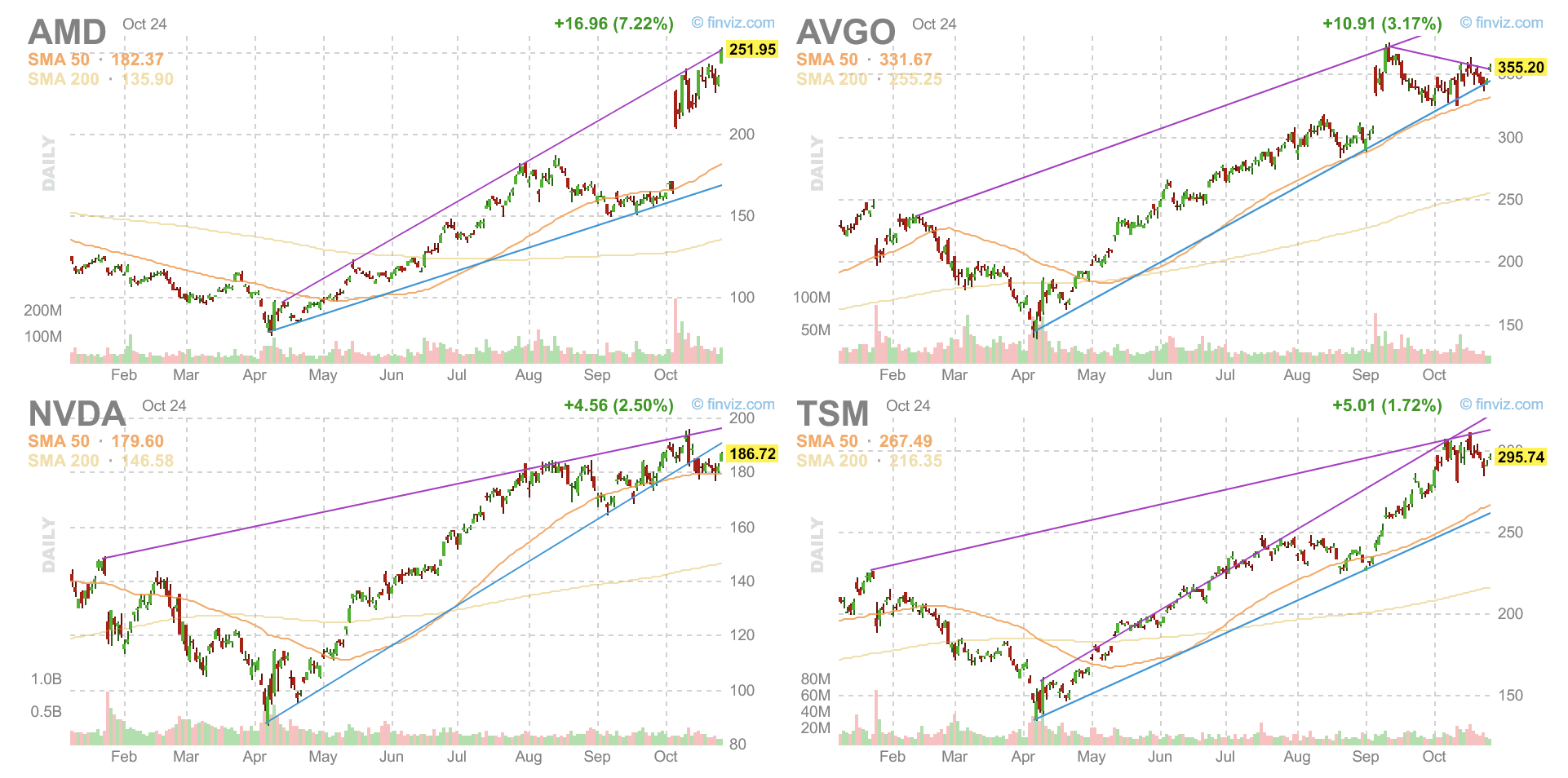
Semiconductors remain the foundation of the entire AI ecosystem. Every improvement in model size, speed, and capability depends on more advanced chips and manufacturing processes. Demand for high-performance GPUs, specialized accelerators, memory, and advanced packaging continues to rise as training clusters grow larger and inference moves into real products. At the same time, new fabrication nodes and supply chain capacity are becoming strategic priorities for both companies and governments. Simply put, without continued progress in semiconductors, the AI wave cannot scale.
Previous Updates
View All
- Weekly Market Update: Big Tech Divergence
- Weekly Market Update: Accumulation
- Weekly Market Update: The Best Quarter
- Weekly Market Update: Rate Hikes
- Weekly Market Update: AI is Not Slowing Down
- Market Update: Has AGI Arrived?
- Weekly Market Update: Consolidation
- Weekly Market Update: September is Here
- Market Update: Nvidia Crushes Earnings
- Weekly Market Update: Yields
- Market Update: The Future of Biotech
- Weekly Market Update: Earnings Acceleration
- Market Update: The Next Generation of AI Infrastructure