Go Back

Lin
Weekly Market Update: The Fog of War
The war drags on.
We’re now in week three of the war between the U.S. and Iran, with no end in sight. This uncertainty makes it hard for markets to sustain any rally. It’s like a fog that clouds the market and makes it difficult to navigate.
Think about driving in thick fog. When you cannot see far ahead, you slow down. You become careful. You do not press the gas. Markets work the same way.
The fog of war.
Sentiment is getting worse. Gas prices are rising rapidly. Layoffs are picking up. And everywhere you look, people are talking about the death of white collar jobs. Block ($XYZ) cut about 40% of its staff a few weeks ago. Now there are rumors that Meta ($META) could cut close to 20%.
This is not a healthy market environment, and it hasn’t been for quite some time.
The selling pressure didn’t let up this week. All four major U.S. equity indices finished lower for the third straight week. The Dow and the S&P 500 also closed lower, with the S&P 500 finishing just above 6,600, its lowest level since November 21.
The more interesting story right now is actually happening in commodities.
Oil had a huge week. It jumped about 8.5% and is now up around 71.8% since the start of the year. That is a massive move in a very important commodity.
Energy touches almost everything. Transport, manufacturing, food, logistics. If oil stays this high, it tends to push prices up across the board. Which means it is usually only a matter of time until inflation starts to pick up again.
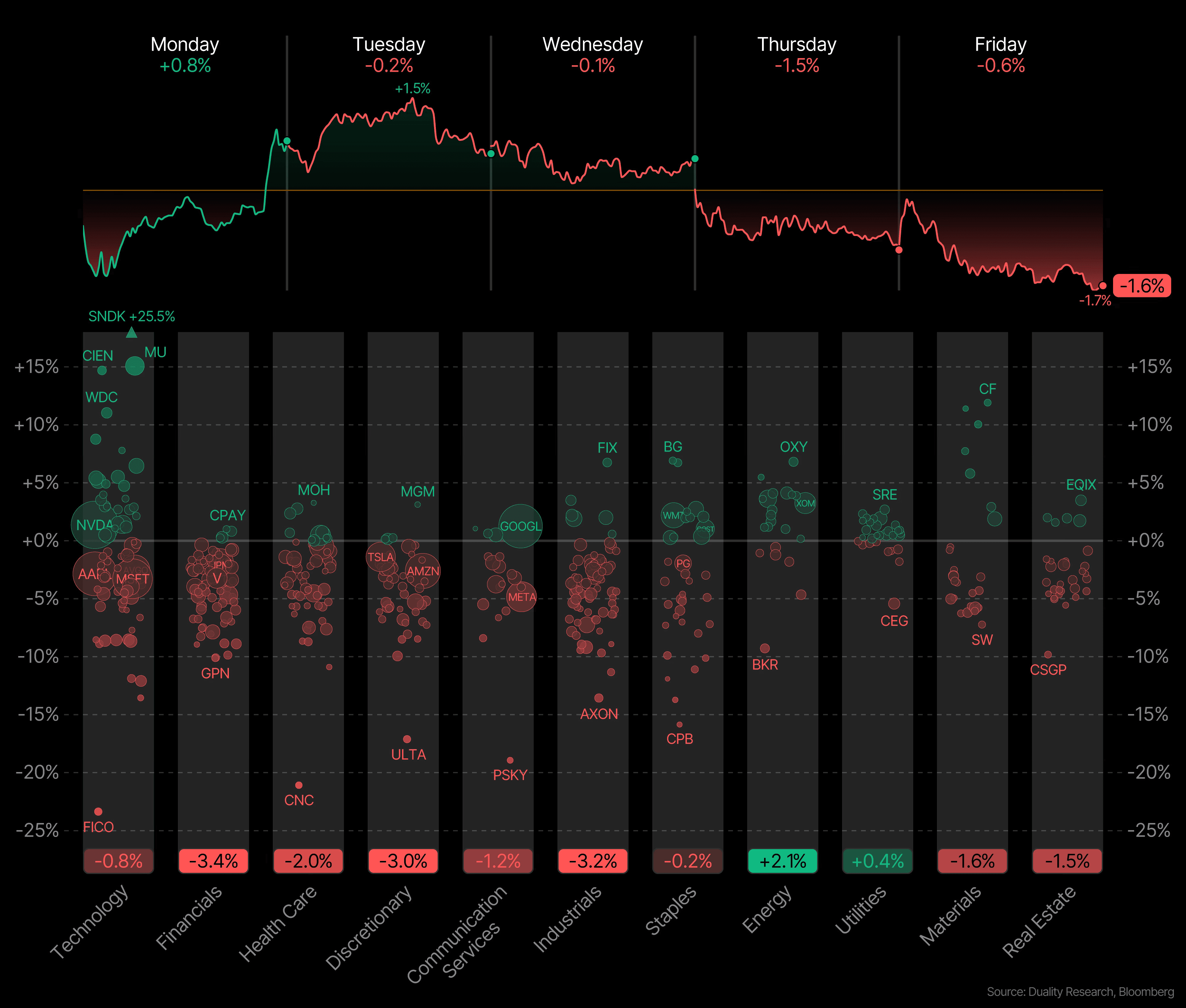
This market view shouldn’t be a surprise. Outside of a few semiconductor companies, the only sectors that have performed well year to date are defensive stocks and energy. The market has been positioning for uncertainty for a while now.
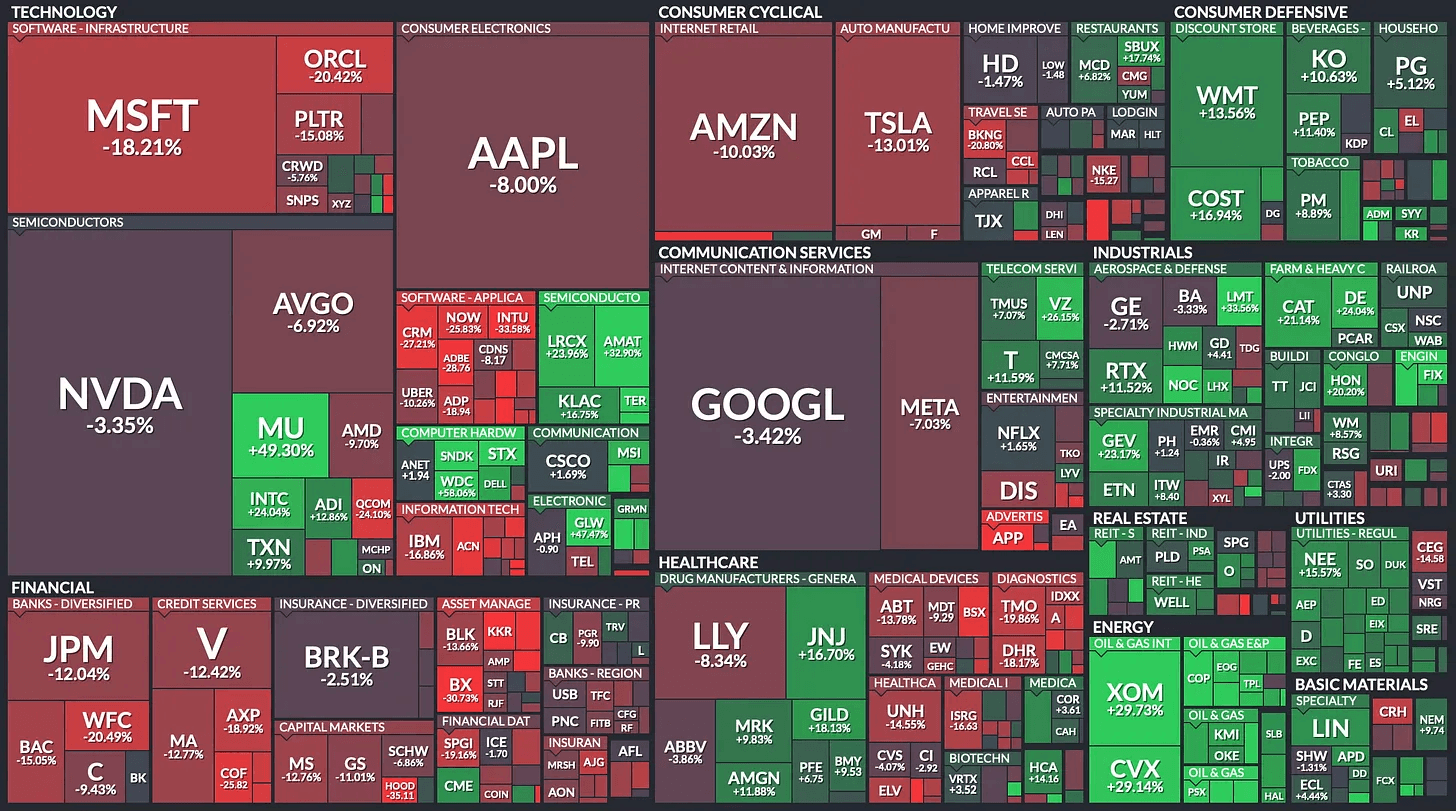
Considering everything the market has had to deal with over the past few months, war, a spike in oil prices, inflation and recession fears, you would expect the market to be in serious trouble.
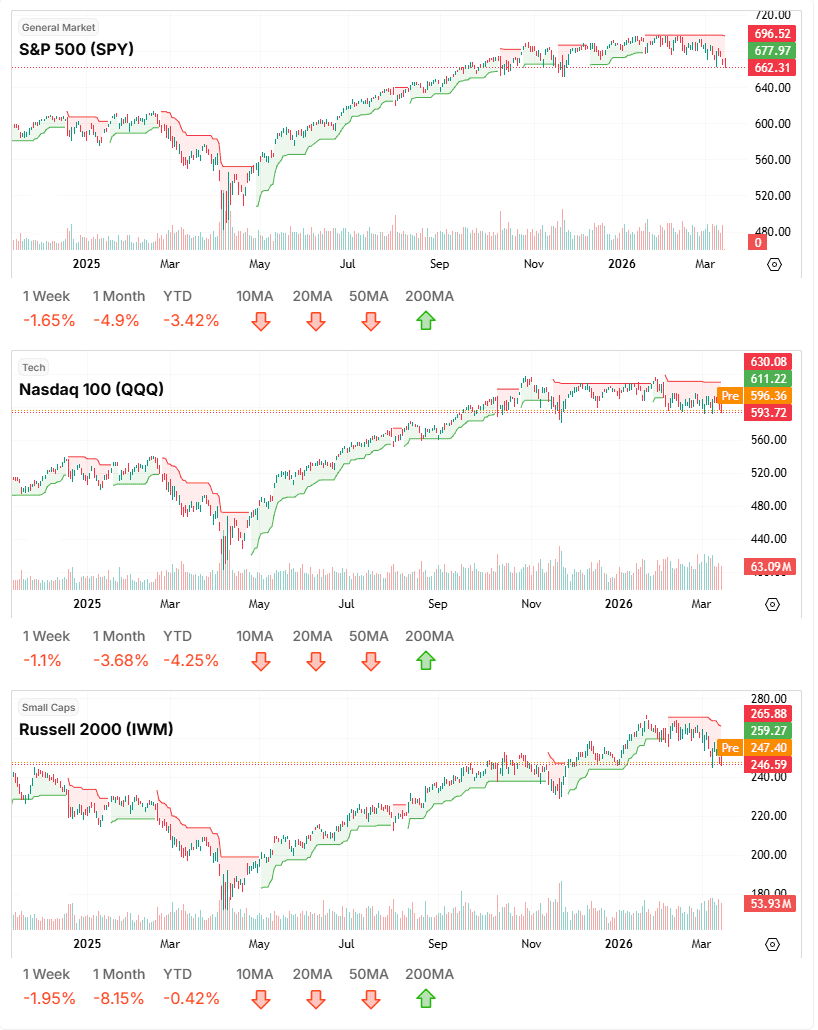
But the S&P 500 is still only about 5% below its all time high. Even with all the bad headlines and a lot of pessimism in the air, the market has held up surprisingly well.
Right now, all of the major U.S. indices are below most key moving averages, except for the 200 day moving average. This is the level everyone is watching. It is the line that separates a normal pullback from something more serious.
As long as it holds, this correction could still resolve higher. But if the market starts to lose this last line of defense, we will likely see some serious selling pressure.
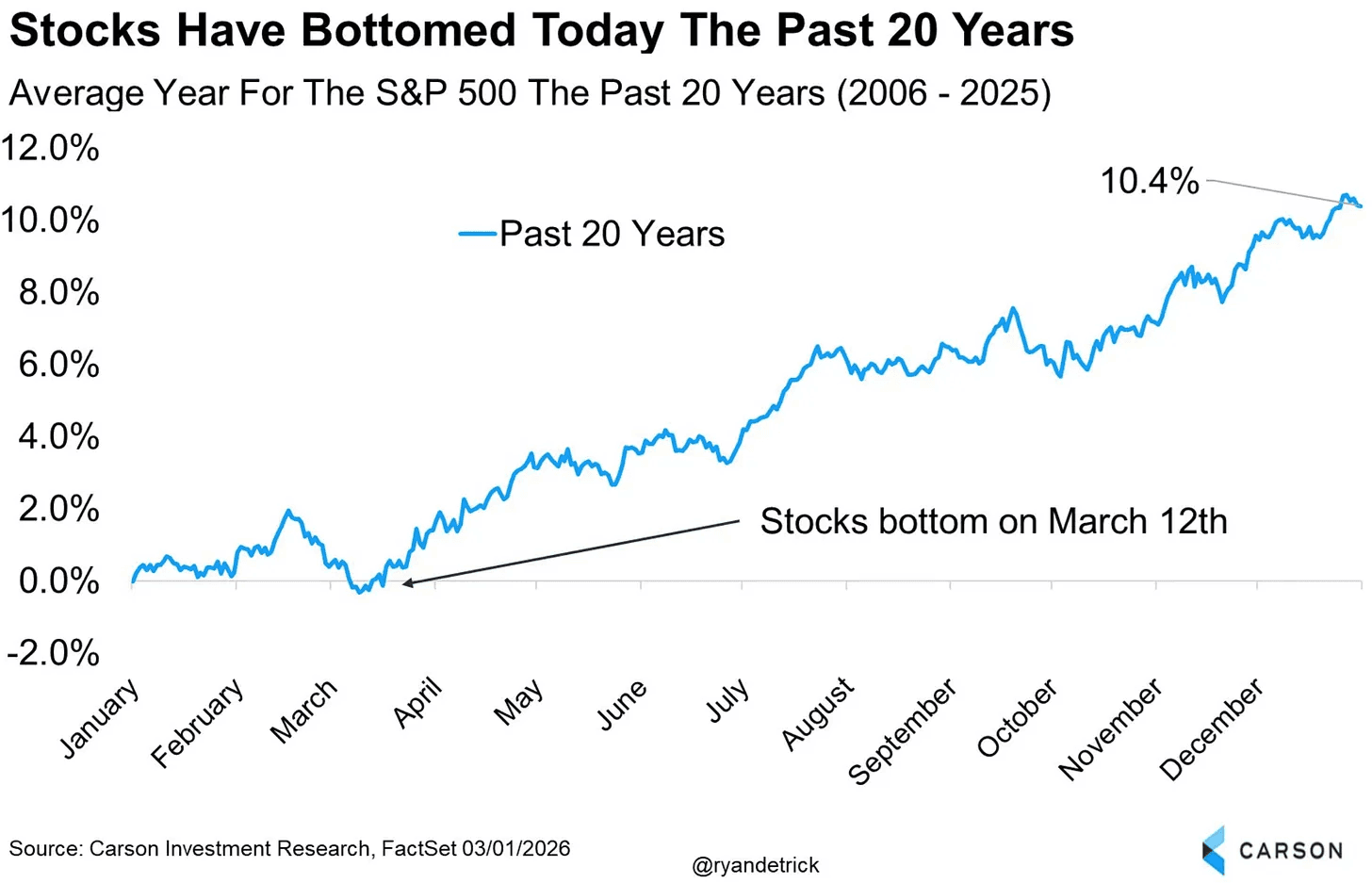
It would be an interesting coincidence if the market starts to move higher from this key level while also following its seasonal pattern. Over the past 20 years, the S&P 500 has often put in its annual low right around March 12. Thursday was March 12. Whether that pattern holds this year is anyone’s guess, but the bulls will take any positives they can get.
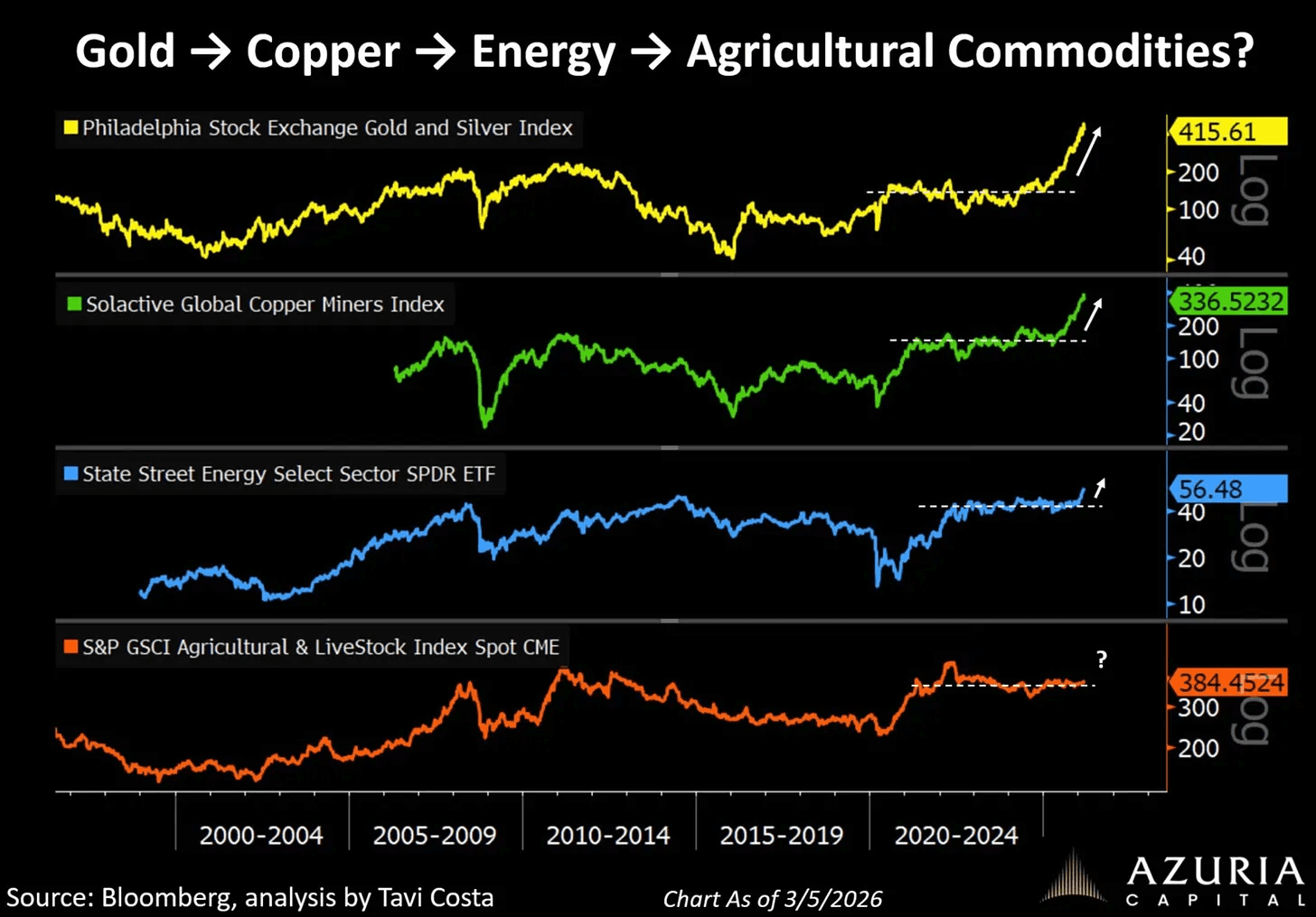
We’re seeing one commodity after another breaking out. First it was gold and silver, then copper, then energy. Agriculture could be next.
But the problem here is…
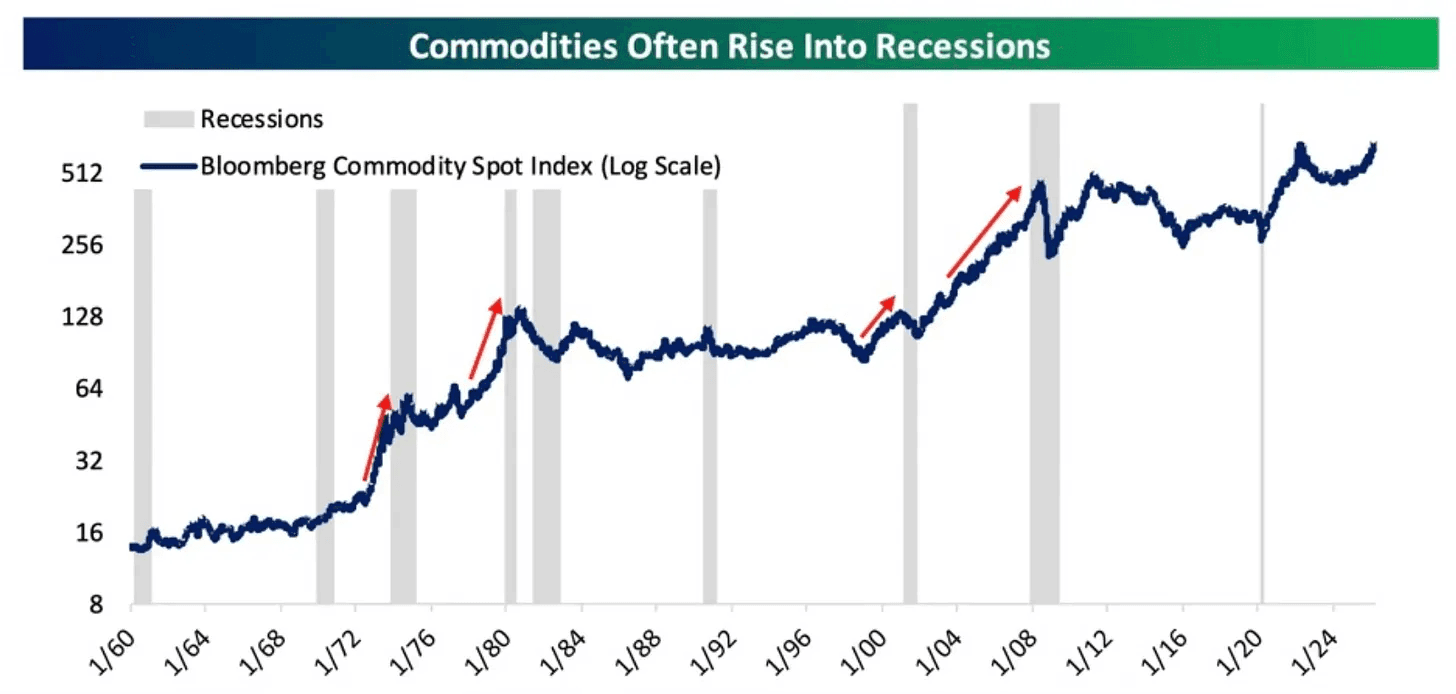
Commodities often act in a way that feels counterintuitive. Rather than falling ahead of a recession, they often rise going into it.
In 1973, 2001, and 2008, commodity prices actually accelerated right before and even during the economic slowdown. The few times this did not happen were mostly during unusual situations like COVID or the double dip recession in the 1980s.
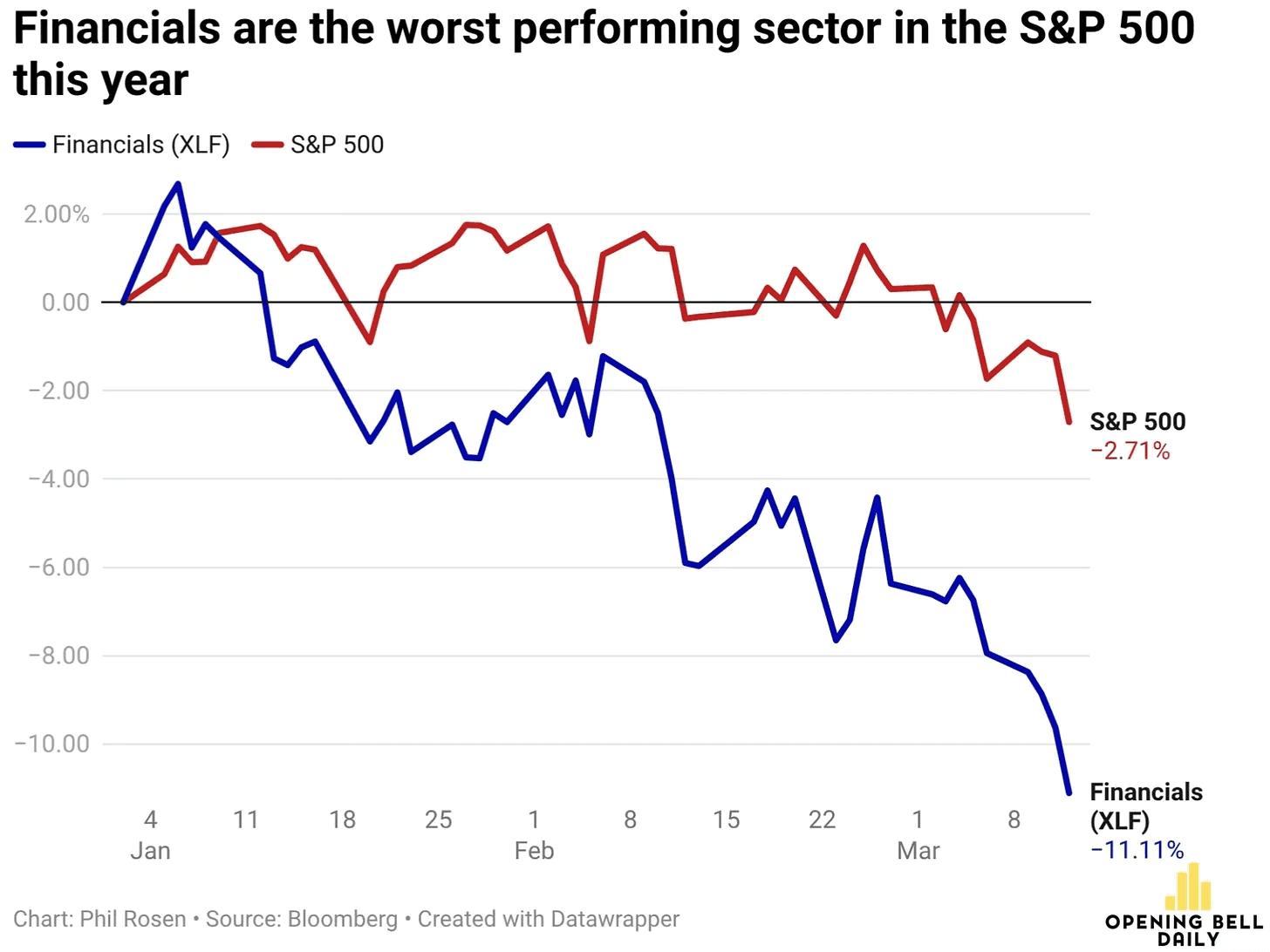
On top of that financials have been the worst performing sector in the S&P 500 this year, and it isn’t even close. They are down more than 11%, while the broader index is less than 3% in the red. This is very unusual.
If you look at more than 30 years of market history, this almost never happens. Financial stocks are correcting meaningfully, but the S&P 500 has barely moved and hasn’t even had a real pullback yet.
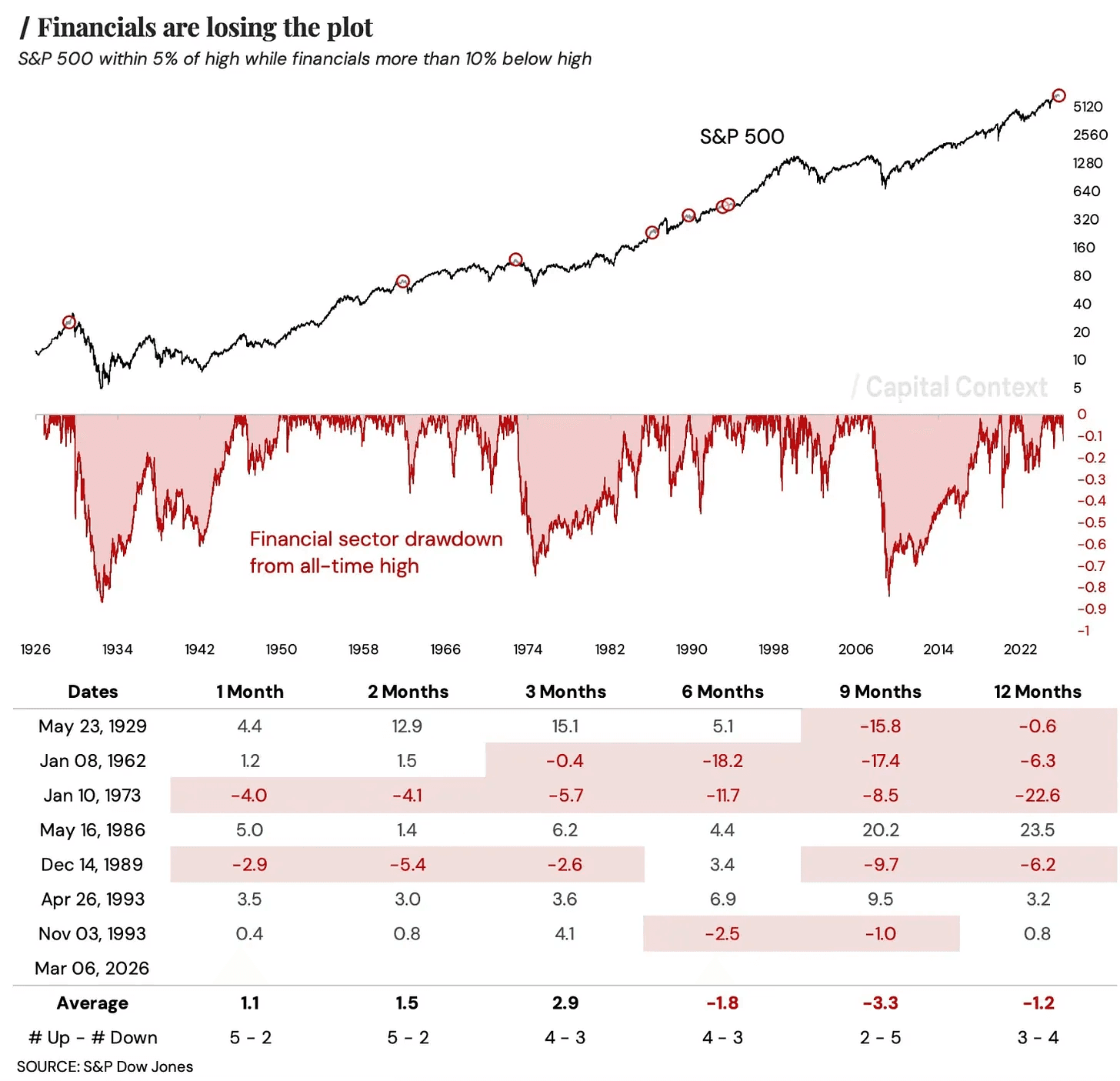
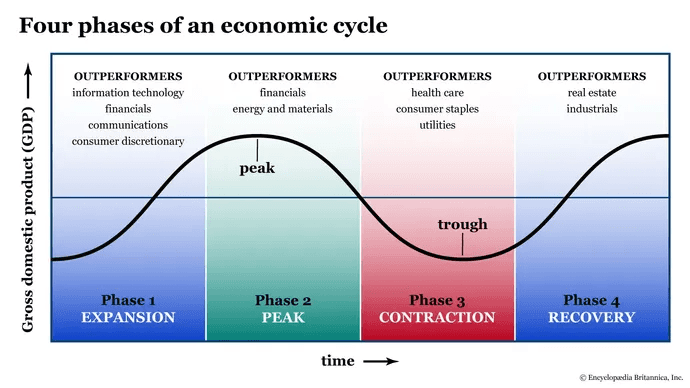
Financials usually follow the economic cycle pretty closely. They are like a thermometer for the economy. When the economy is doing well, banks and financial companies usually do well. When the economy cools down, they start to struggle. But because the market is always looking ahead, financial stocks often also bottom before the economy does.
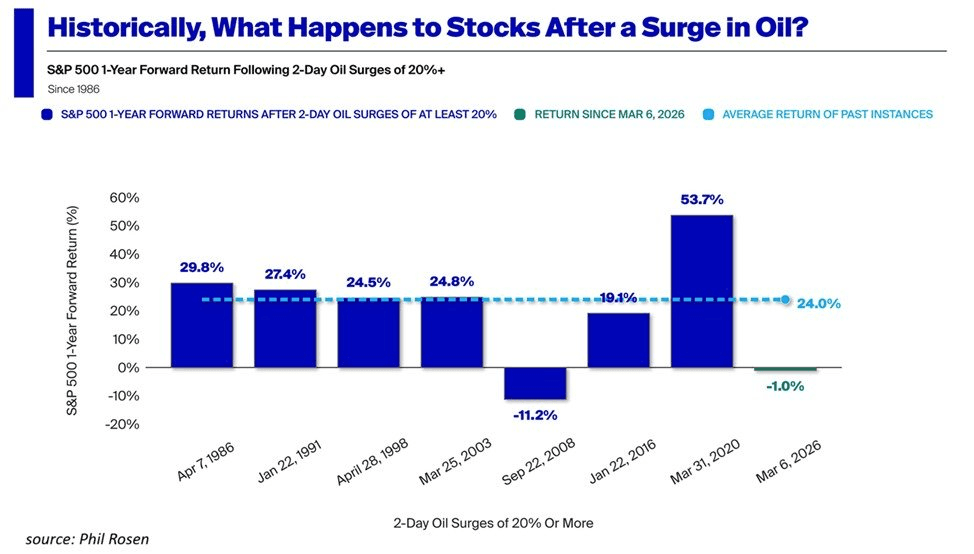
But interestingly over the last 40 years, the S&P 500's 12-month return following a 2-day oil spike has been +24%. In 6 out of 7 instances since 1986, the S&P 500 has been higher 1 year after such an oil spike.
The strongest recovery was +54% following the 2020 pandemic crash, driven by a massive stimulus response from central banks and governments.
The only negative outcome was -11% during the 2008 Financial Crisis.
So, every oil shock over the last 40 years that did not lead to a prolonged recession was followed by a strong rally.
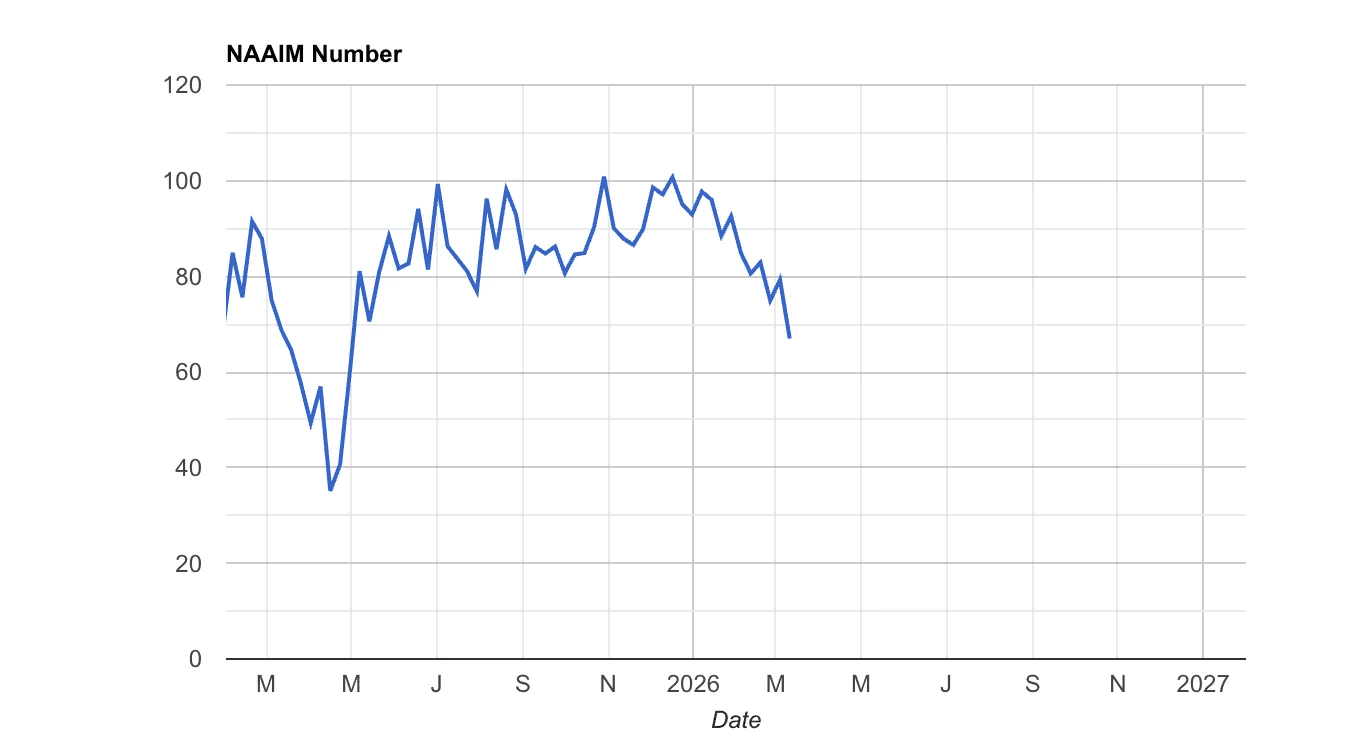
The NAAIM might be my favorite sentiment indicator.
It is a sentiment gauge that shows how invested professional money managers are in the stock market.
Every week, members are asked one simple question: How much of your portfolio is invested in stocks right now?
We are getting closer to the tariff tantrum lows, which bottomed around 40. Right now we are sitting in the mid 60s. Look how hot this indicator was in January and February. It was printing readings close to 90 almost every week. That was a red flag and a signal to start paying attention.
Now it might be time to pay attention in the other direction and watch for a potential turnaround.
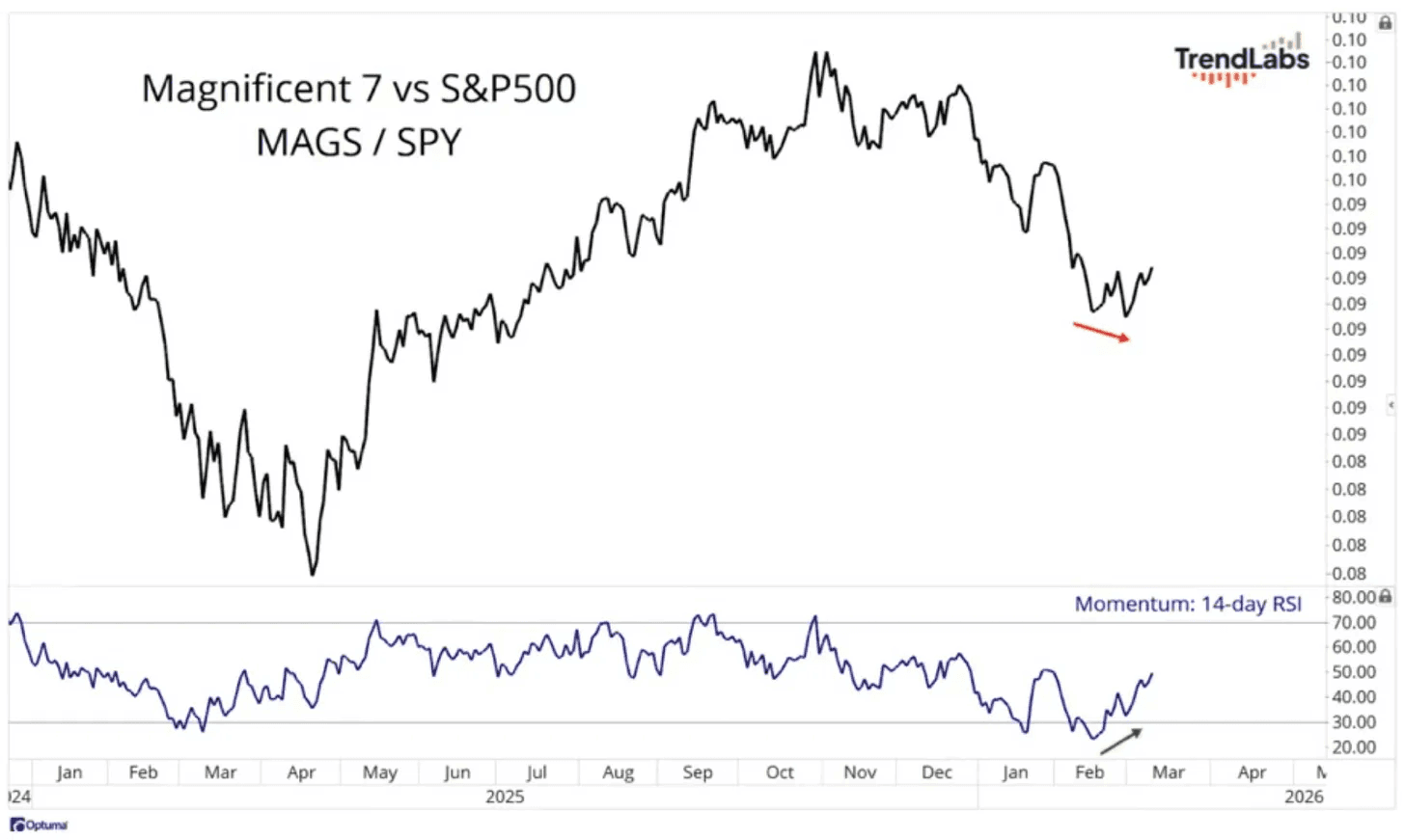
For the market to turn around here, it is essential that the Mag 7 start to come back to life. The Mag 7 still carry a huge weight in the major indices. It’s almost impossible to get a sustained rally without them participating.
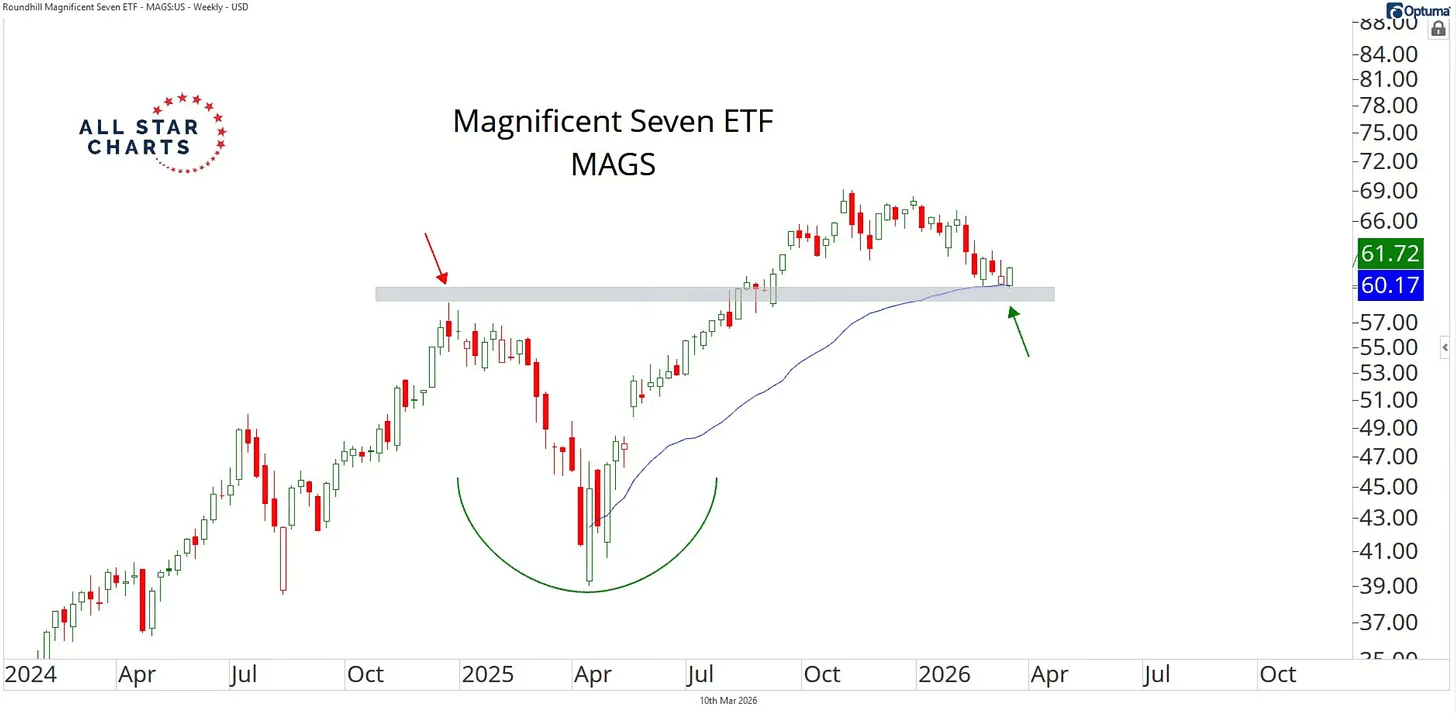
And they are finally starting to show some relative outperformance. But it needs to do more to be truly convincing.
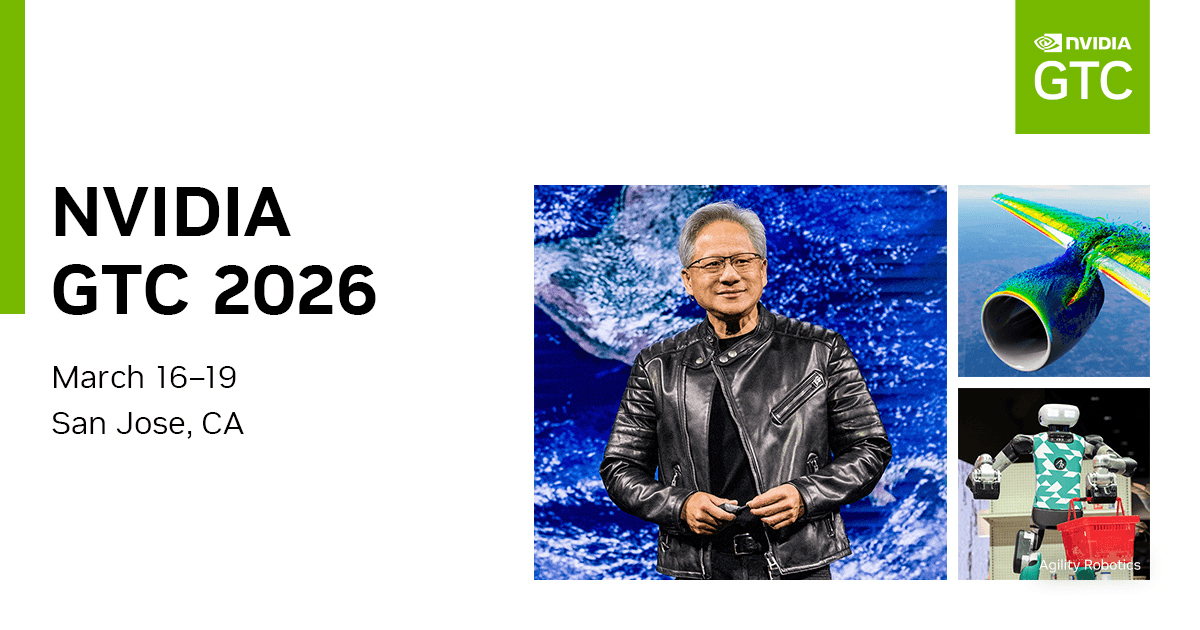
Nvidia’s GTC conference could be a potential catalyst.
This upcoming week, from Monday to Wednesday, we also have Nvidia GTC.
This is the biggest global AI conference of the year, where developers, researchers, business leaders, and tech enthusiasts come together to reveal, explore, and discuss the next wave of AI innovation.
Expect new products and updates from robotics, autonomous vehicles, AI infrastructure, agentic AI, inference, and many more.
This conference can act as a major catalyst for a number of stocks, themes, and narratives, so it will be important to keep an eye on it. It’s also very common for Nvidia to announce deals or partnerships with companies at this conference.
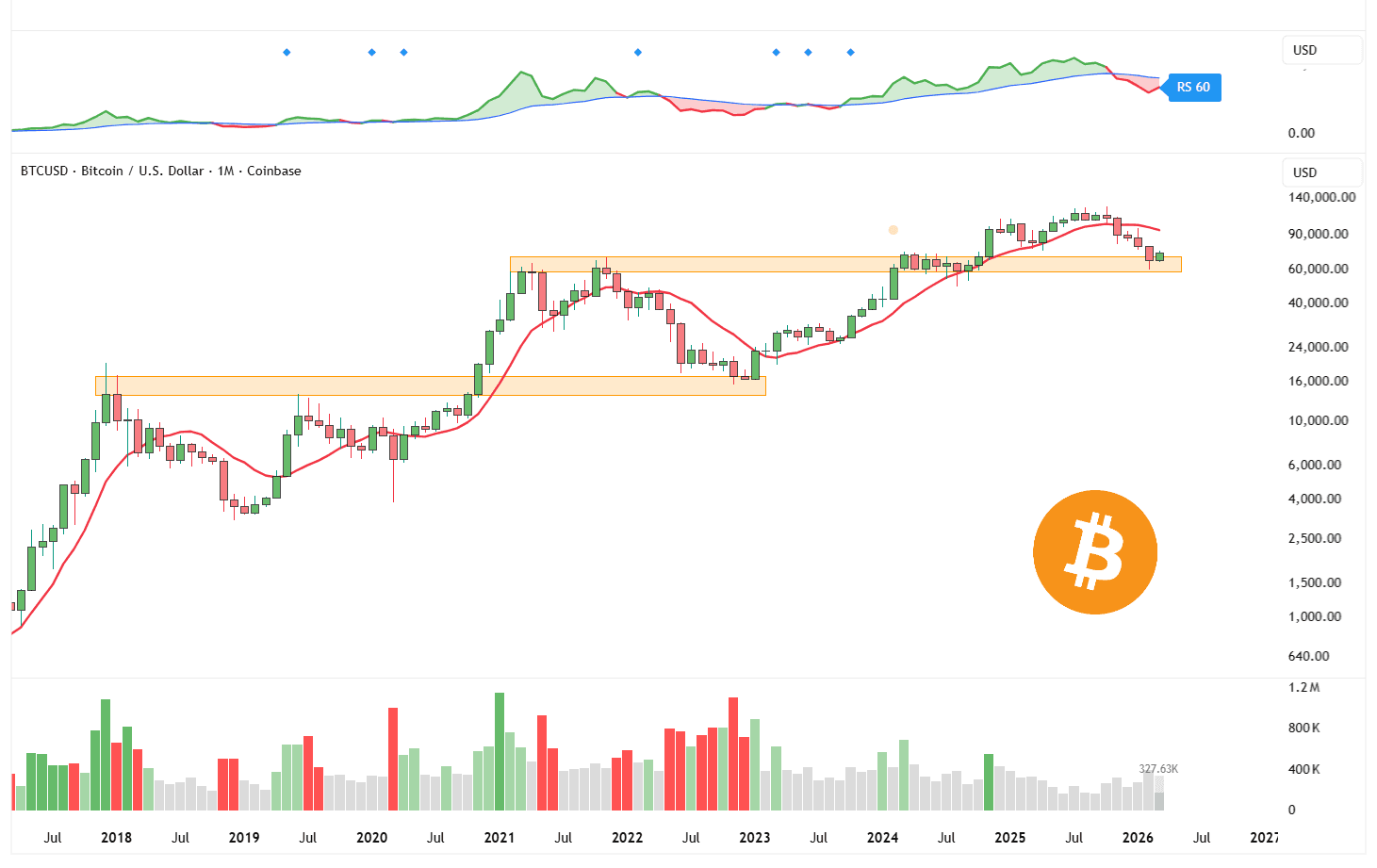
And finally, Bitcoin and the broader crypto complex are sitting at a very interesting support level right now. For the first time in a while, they are also starting to show some relative outperformance,This could be a sign that risk appetite is starting to come back to the markets.
Sentiment in the market has turned very negative very quickly. Indicators like the Fear and Greed Index, NAAIM positioning, and options activity all show that investors are very pessimistic and have already reduced risk.
But the actual market damage is still limited. The S&P 500 is only about 5% below its all-time high, and some indicators show the market is already oversold. At the same time, the technical picture is clearly weakening. All the major US indices are showing lower highs, more selling pressure, and are having a hard time reclaiming key moving averages. And the fog of war is still dense.
Because of that, this may not be the right environment for aggressive dip buying yet. It’s impossible to know when the market will finally bottom. There are a few signs suggesting we might be getting close. You do not need to predict the exact bottom. You just need to react to what the market is actually doing.
But with all that in mind, it’s clear that once this fog of war resolves and the market can finally look ahead, there will likely be a huge relief rally.
So what you can do is be prepared for both a positive and a negative scenario. If the market starts to break down from here, reduce exposure. If the market stabilizes and turns around, you can slowly add risk again. Start with smaller pilot positions to test the waters.
And sometimes the best trade is simply waiting and preparing.
Previous Updates
View All
- Weekly Market Update: Big Tech Divergence
- Weekly Market Update: Accumulation
- Weekly Market Update: The Best Quarter
- Weekly Market Update: Rate Hikes
- Weekly Market Update: AI is Not Slowing Down
- Market Update: Has AGI Arrived?
- Weekly Market Update: Consolidation
- Weekly Market Update: September is Here
- Market Update: Nvidia Crushes Earnings
- Weekly Market Update: Yields
- Market Update: The Future of Biotech
- Weekly Market Update: Earnings Acceleration
- Market Update: The Next Generation of AI Infrastructure