Go Back

Lin
Weekly Market Update: Earnings Season is Here
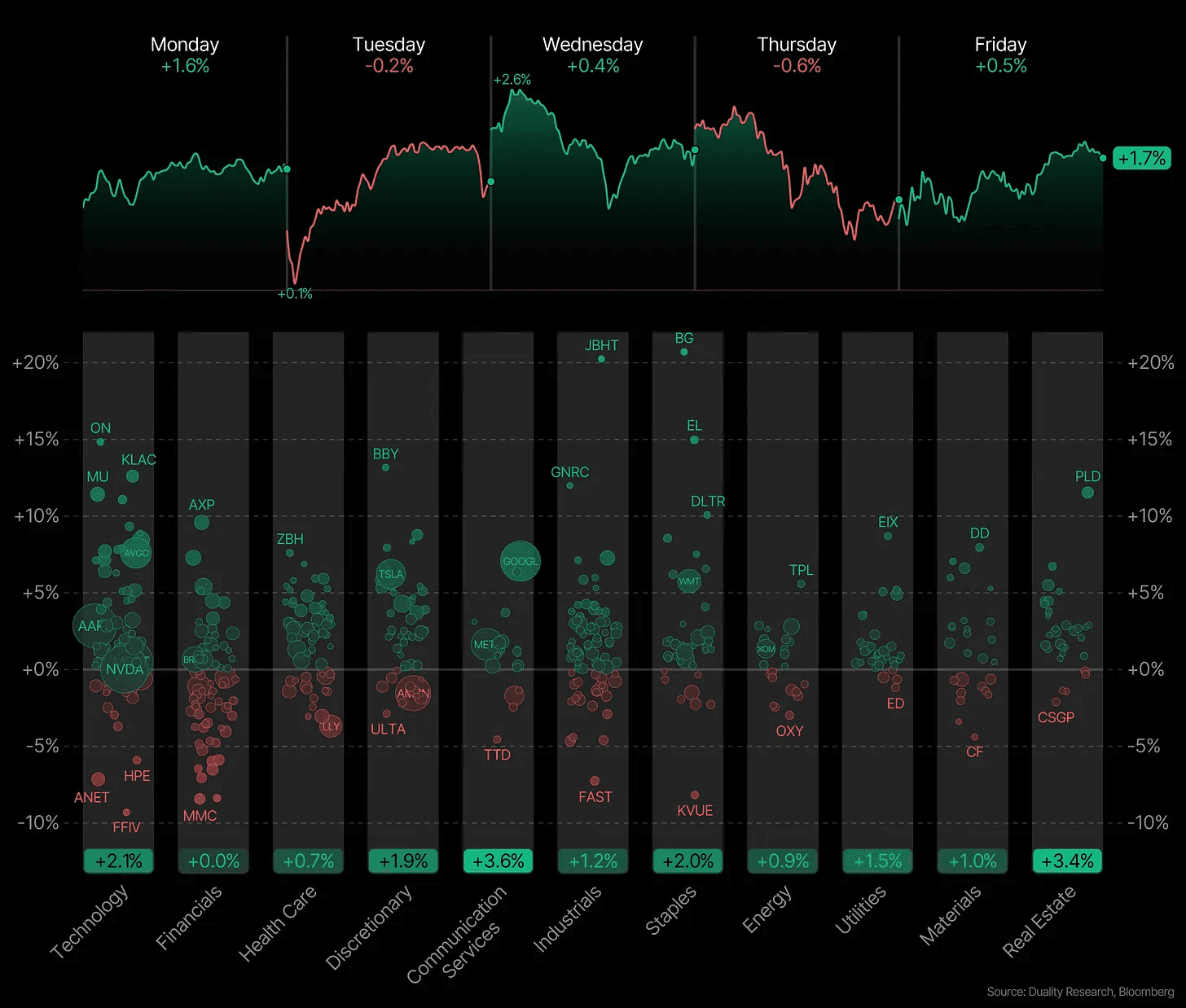
Although this has been one of the most volatile stretches we’ve seen in a long time, even without counting the wild after-hours and premarket swings, the market still managed to close on a positive note.
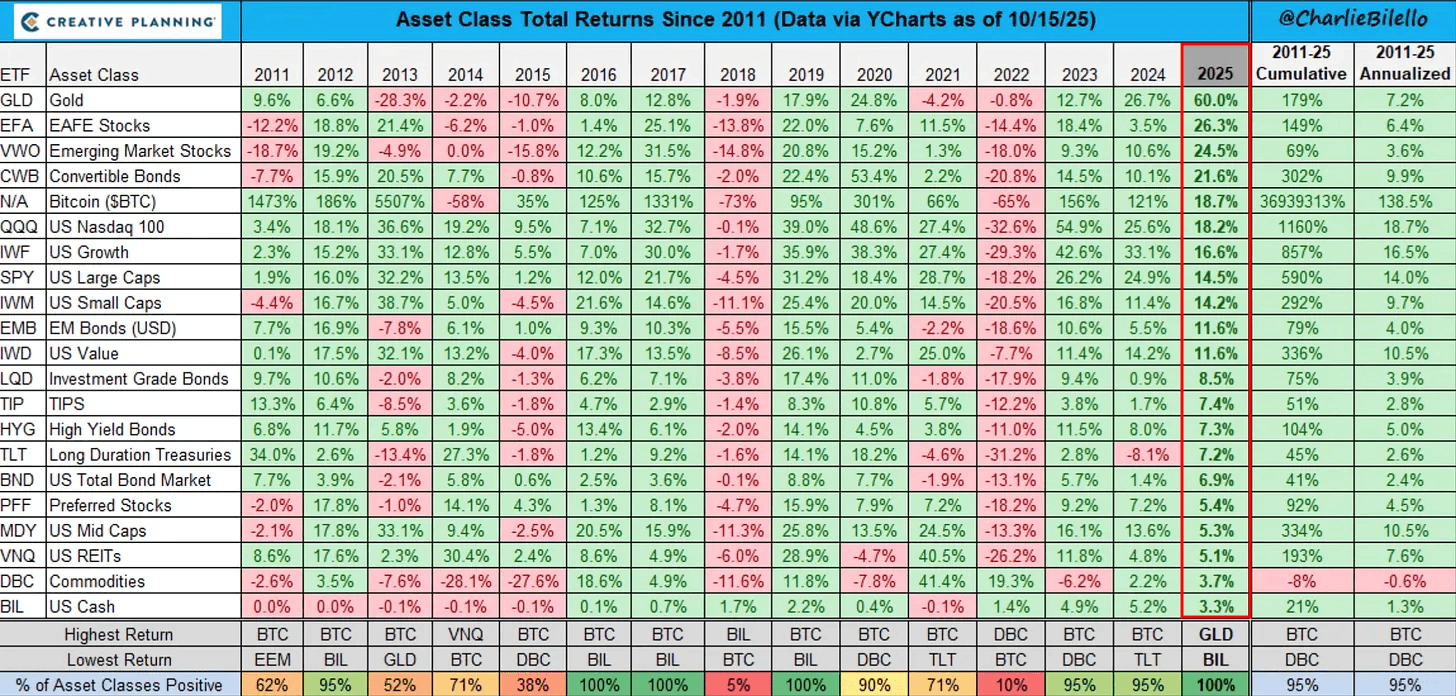
The theme of 2025 is green. Every major asset class, including equities, bonds, gold, and crypto, is positive year-to-date. That has not happened since 2019, which shows how broad this year’s rally has been across all markets.
It’s rare for the Fed to ease monetary policy and cut rates amid rising inflation and a melt-up in the equity and credit markets. But for investors, this is pretty great.
This market breadth has not been the only unusual thing.
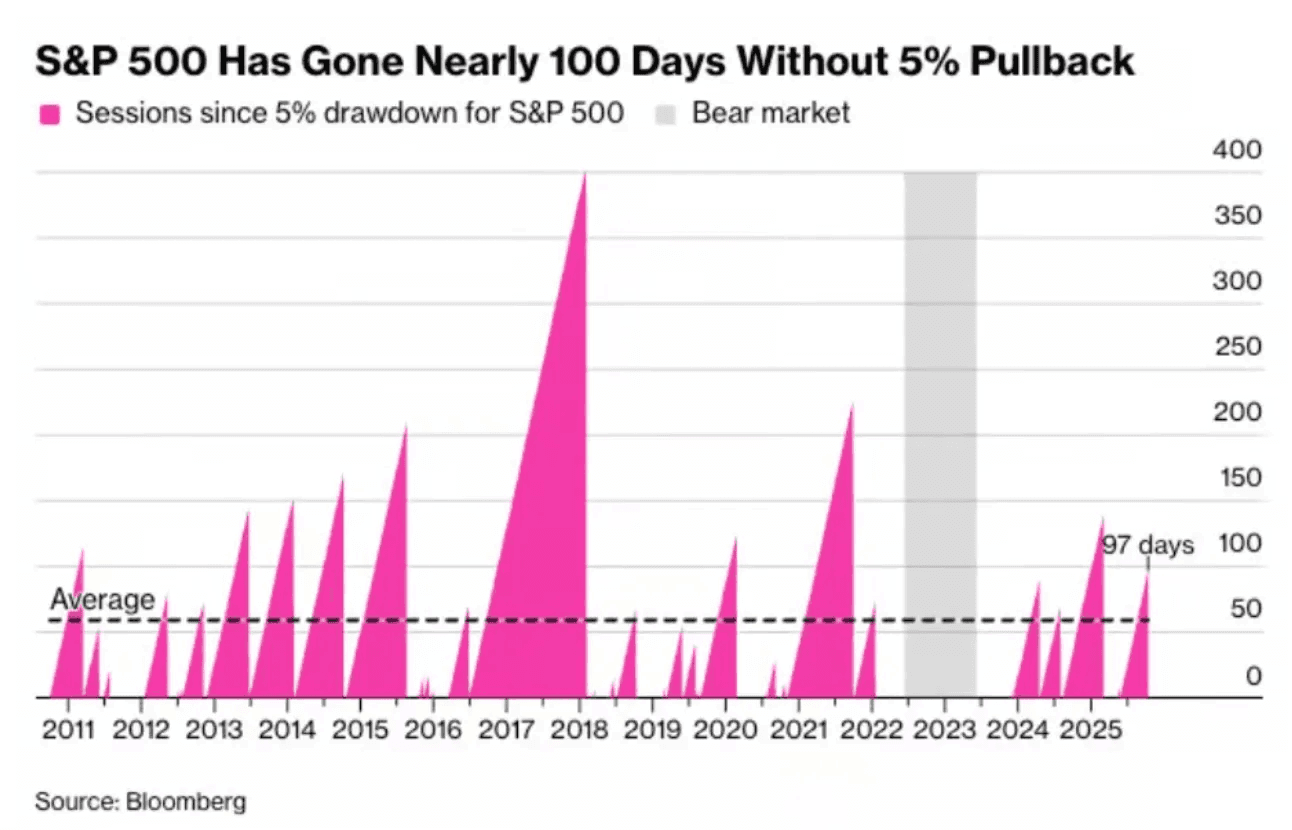
Despite the current volatility, the S&P 500 has now gone 100 days without a 5% pullback. The historical average is 59 days. It shows how smooth the ride has been over the past three months. But this streak will eventually end.
The main reason for that is simple: persistent buying.
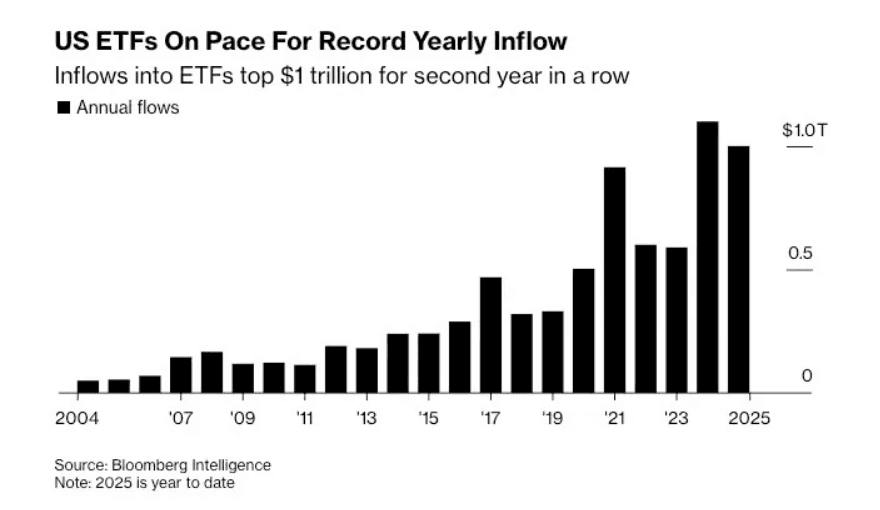
2025 has seen record inflows.
Each month has averaged roughly 3.5 times the usual seasonal pace, according to Bloomberg Intelligence. At this rate, annual inflows could exceed 1.25 trillion dollars, which would be unprecedented.
It has been a while since volatility played a meaningful role.
The VIX just spent six straight days above 20, its longest stretch since May. It even reached 29, the highest reading since April.
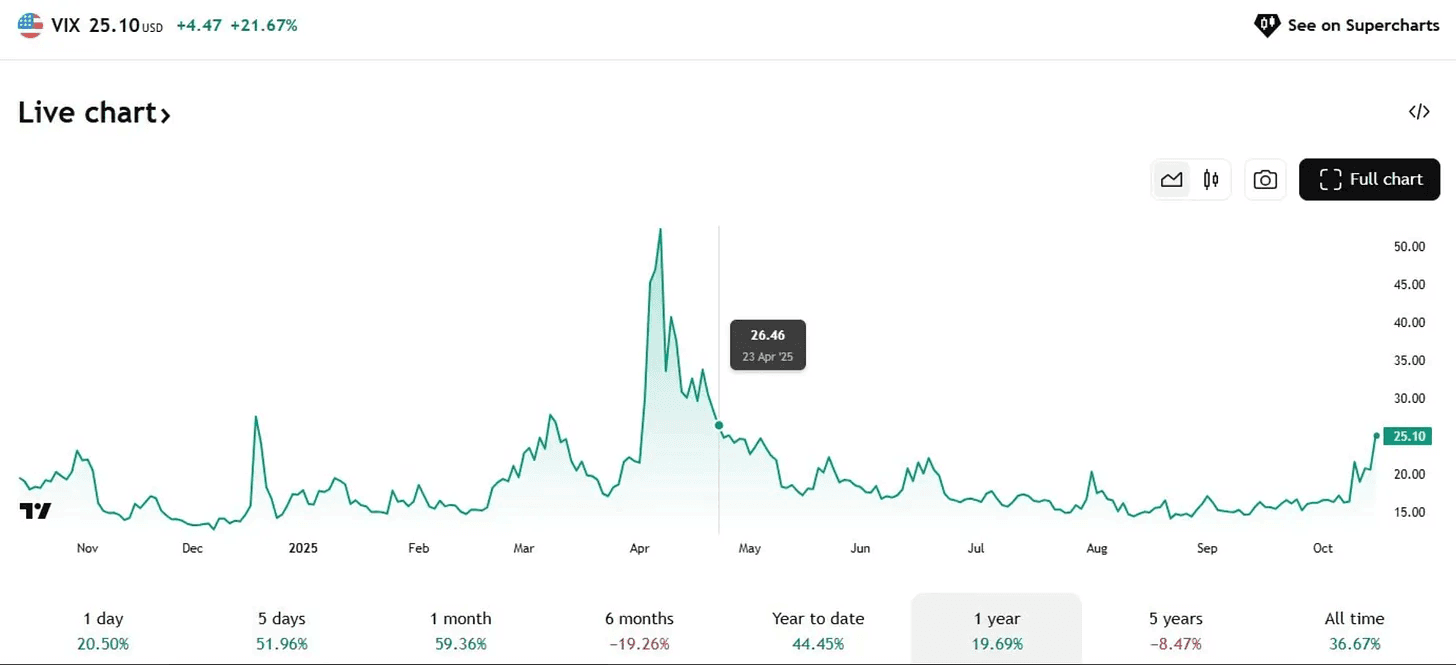
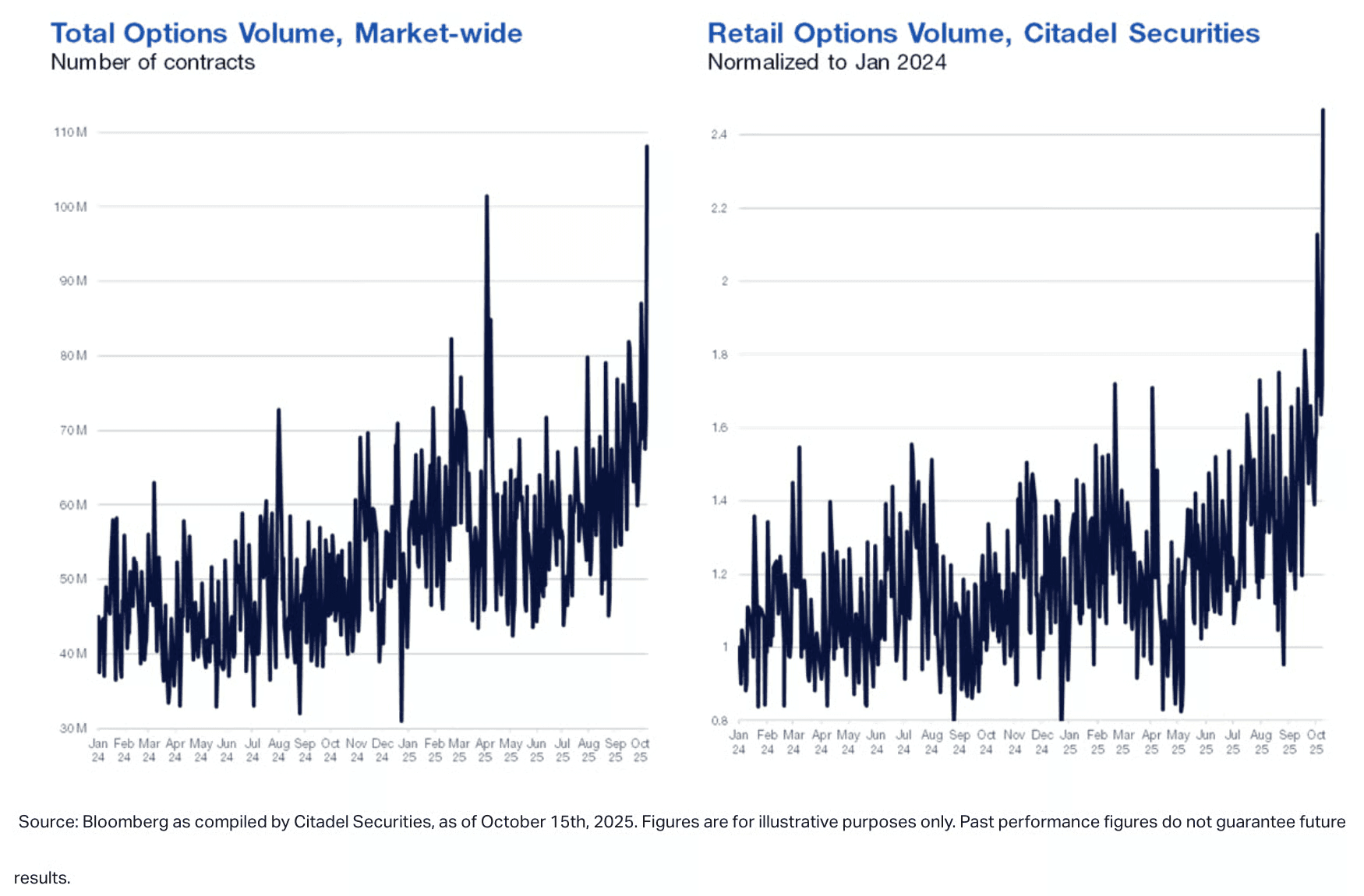
One of the reasons for this volatility is options.
On Friday, October 10, the market recorded the largest options trading day in history.
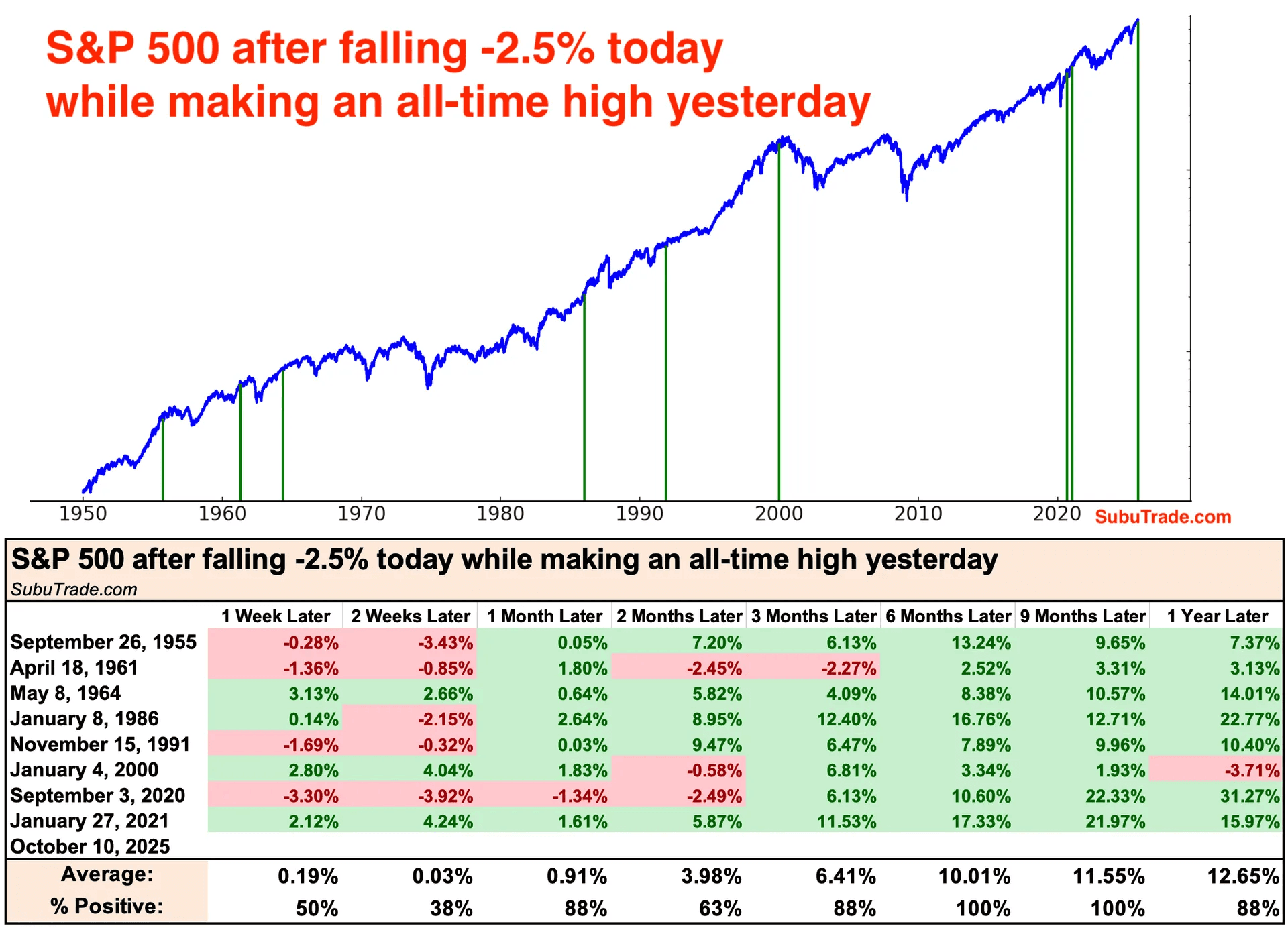
Last week, on Thursday, the S&P 500 closed at an all-time high. On Friday, it dropped more than 2.5%. Historically, quick pullbacks from all-time highs have often led to higher prices over the next 12 months. But the following weeks tend to be even more volatile.
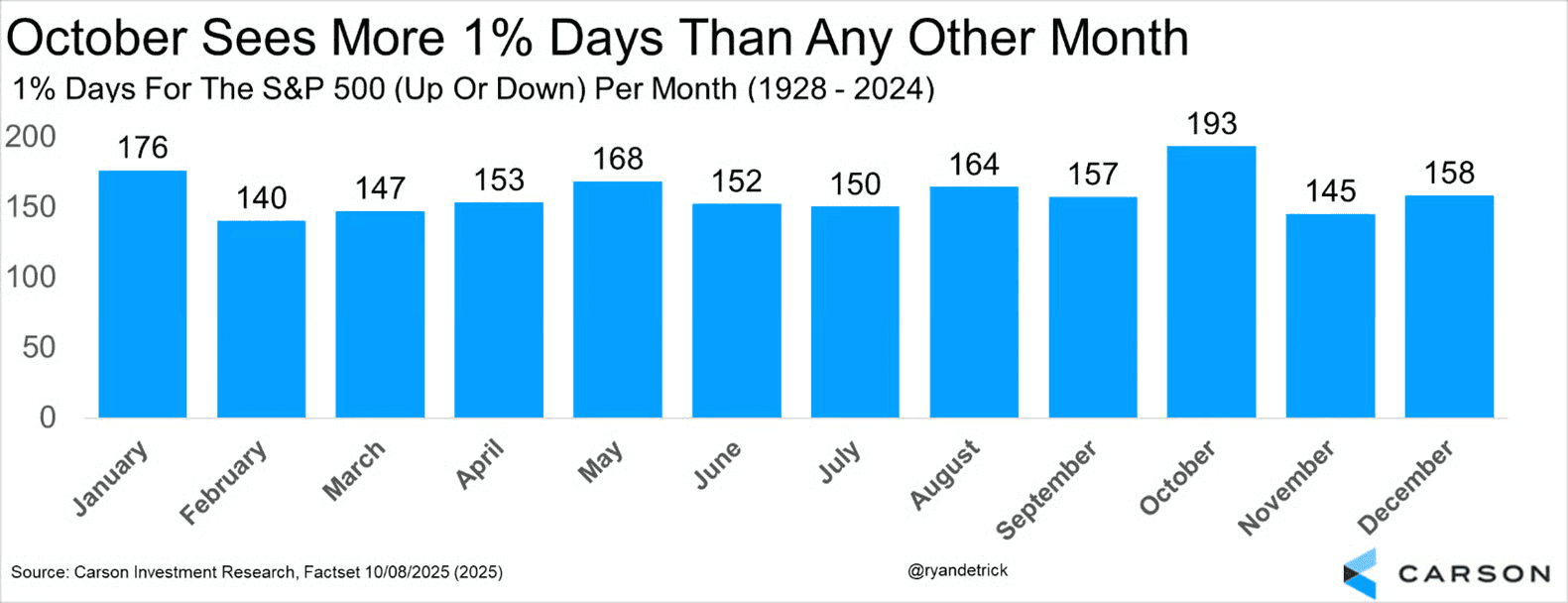
No month has historically produced more 1% up or down days than October.
This year’s volatility fits that pattern perfectly.
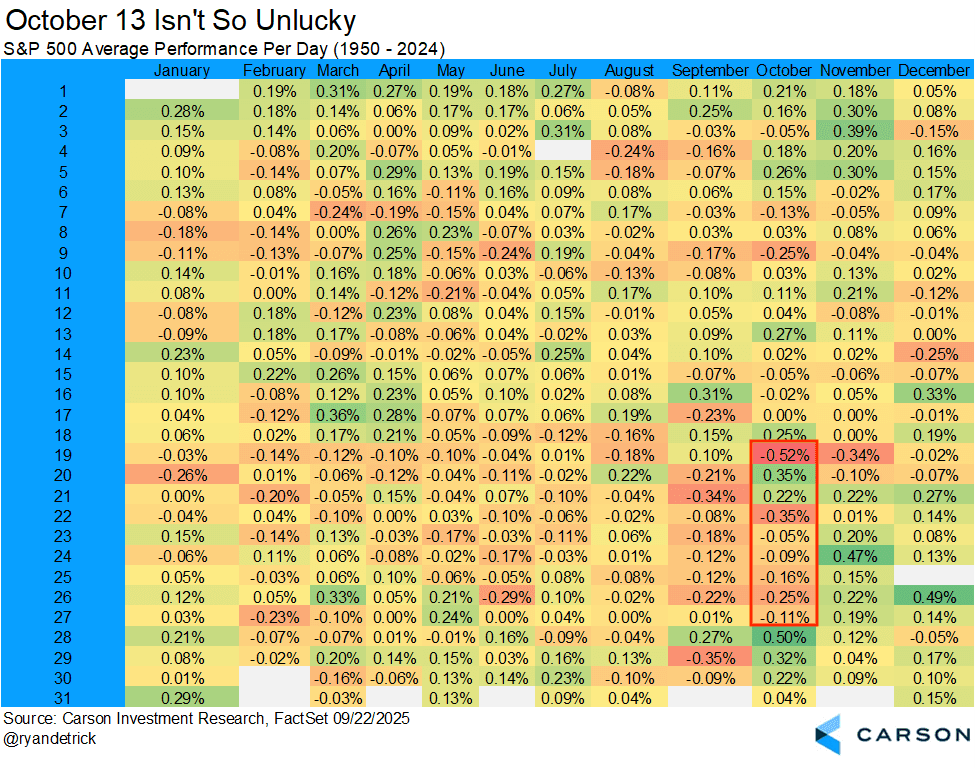
On top of that, based on historical patterns, the coming days are typically among the weakest of the year.
Once that period passes, November often brings one of the strongest seasonal stretches, supported by favorable positioning and end-of-year optimism.
Recently, momentum has started to show signs of fatigue.
The S&P 500 has now closed below its 20-day moving average for six consecutive sessions. It is the first time that has happened since the April lows.
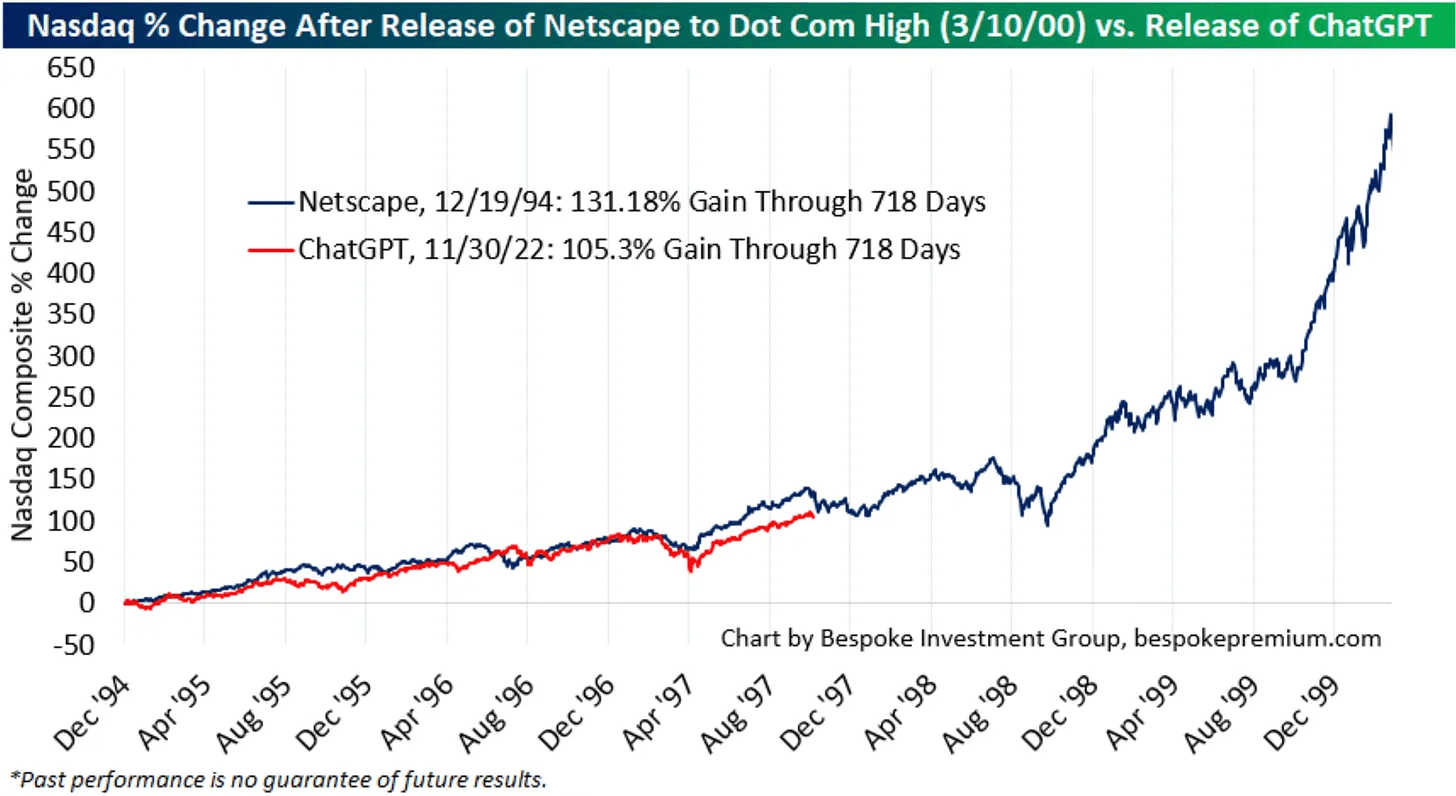
But I keep coming back to this fascinating chart that compares the Netscape IPO during the dot-com boom to the release of ChatGPT. The Nasdaq continues to track almost identically, now 718 days in.
If this really is an AI-driven boom like the one in the late 1990s, history suggests there could still be another year or two of strong gains before a major peak. But sharp pullbacks are inevitable.
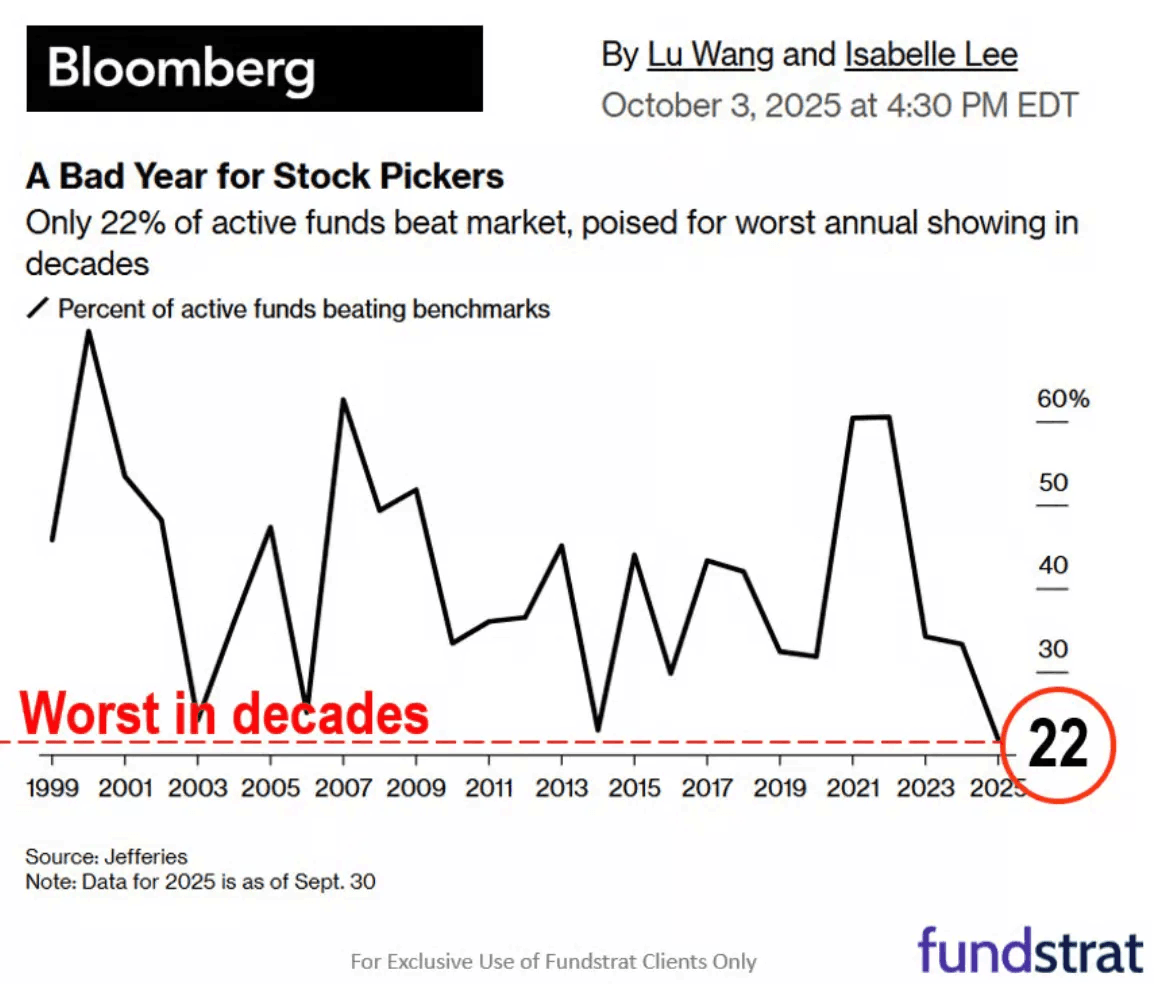
Active fund managers are also under growing pressure.
Only 22% of active funds are outperforming the S&P 500 this year, marking one of the weakest results in decades. That creates a strong incentive to chase performance as we move deeper into the fourth quarter.
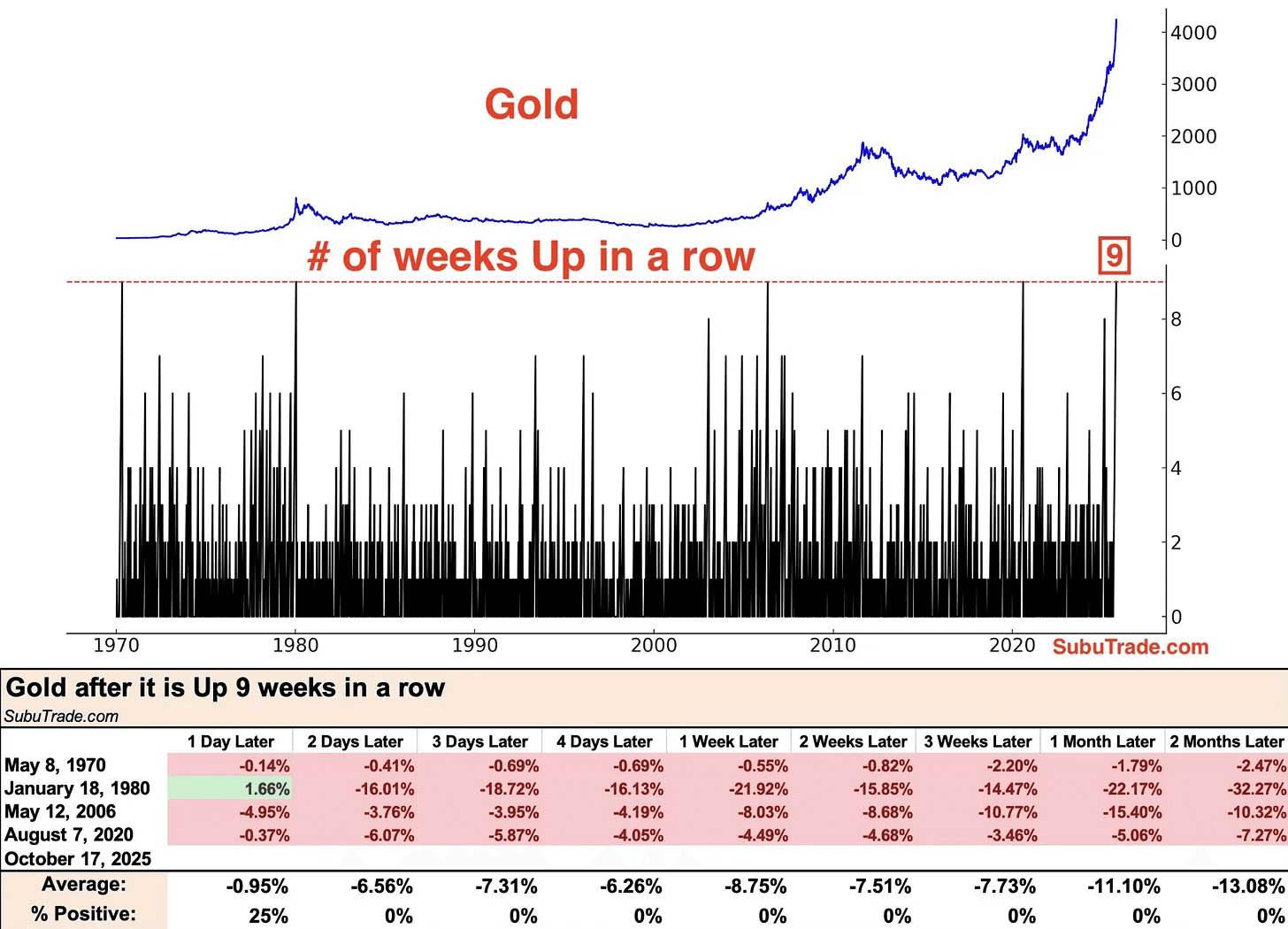
Gold is also approaching an interesting milestone. It has never been up for 10 consecutive weeks, and next week could be the first time in history. However, it’s highly likely that this could be the local top for gold.
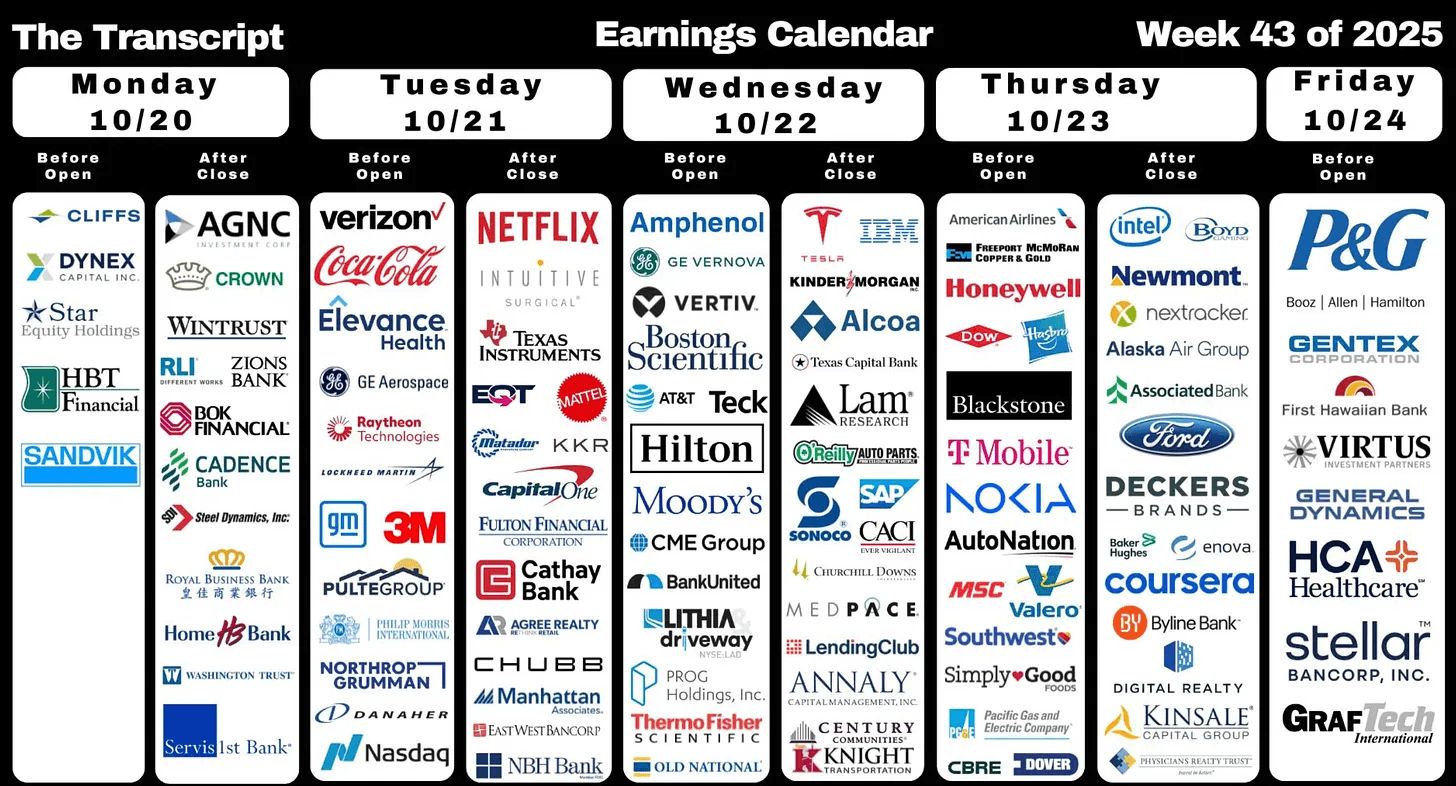
Now, attention turns to earnings season, which kicks into full gear this week. Many of the biggest companies in tech and across the S&P 500 will report.
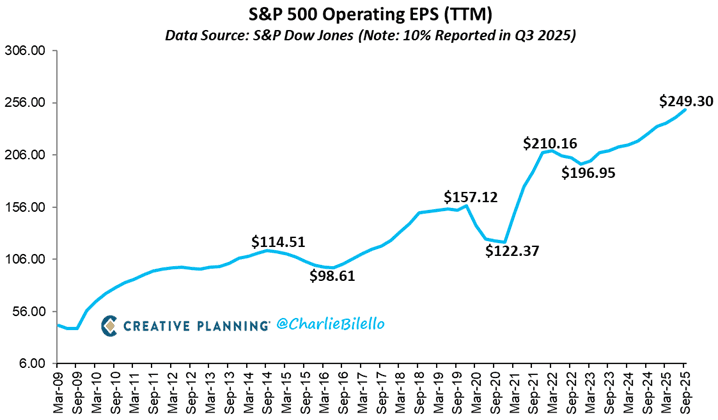
S&P 500 earnings on a trailing twelve-month basis are projected to rise 10% year over year and reach new all-time highs, which means the fundamentals keep improving.
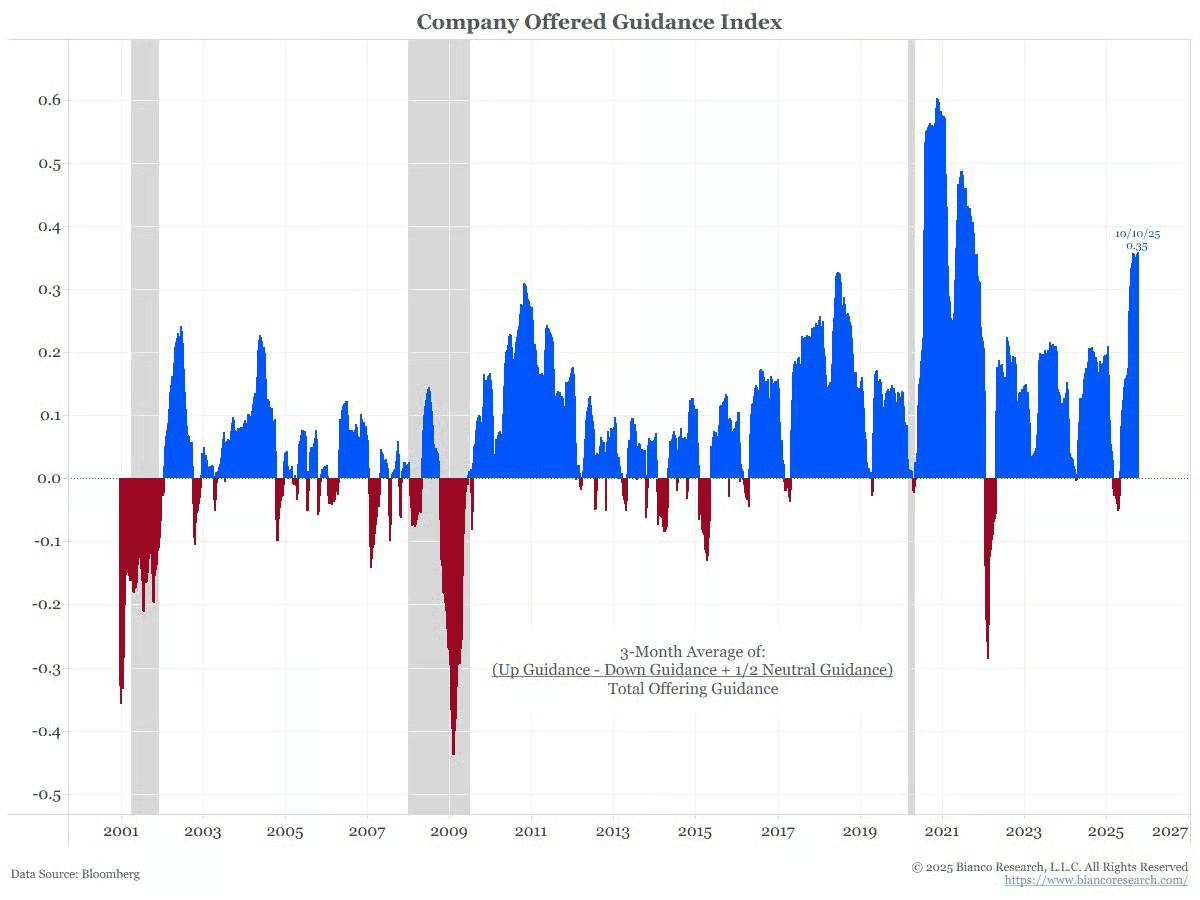
And for now, corporate guidance remains strong heading into this earnings season. The big banks already delivered a solid quarter. Let’s see how that continues.
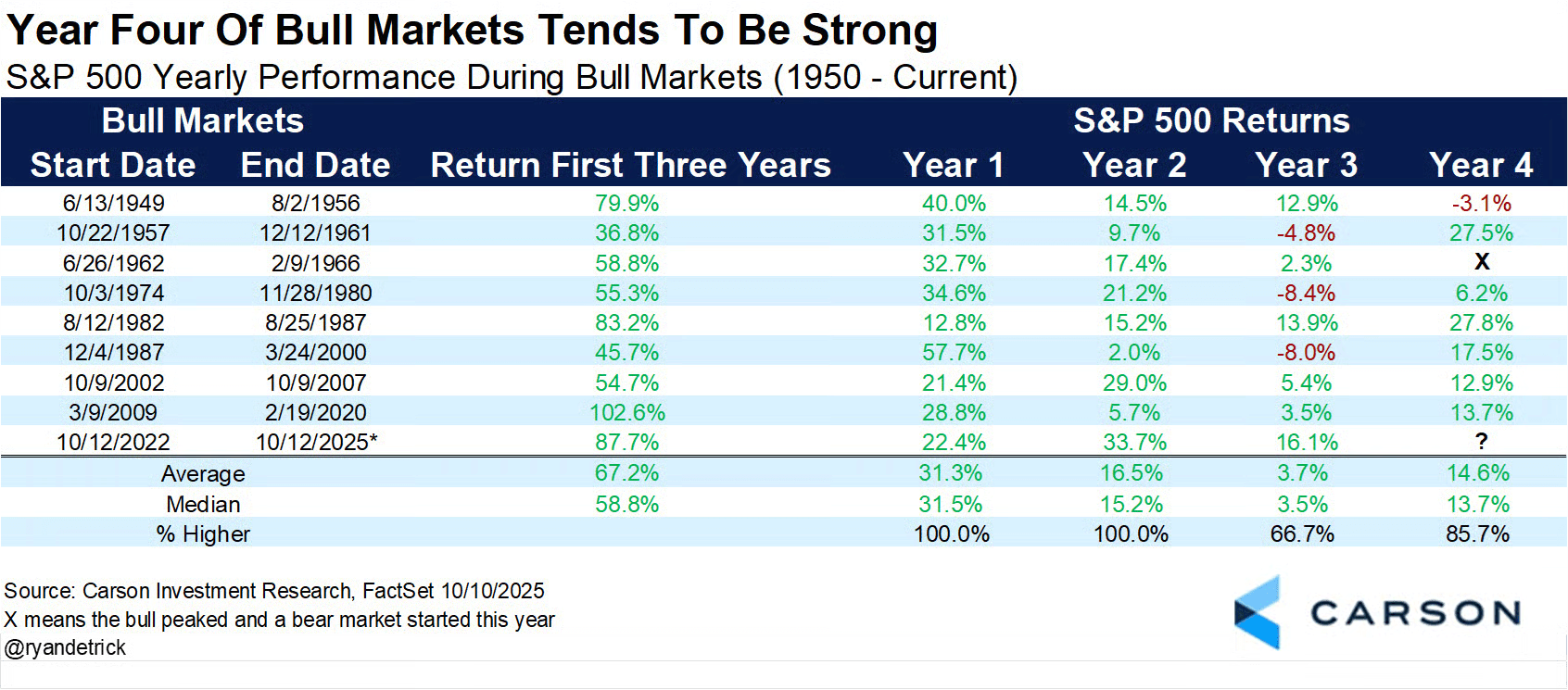
We are now entering the fourth year of the current bull market.
History suggests the odds still favor the upside. Only once, in 1966, did a bull market end in its fourth year. In the last seven cases, stocks finished higher six times, often with double-digit gains.
Since 1932, the average bull market has lasted 4.4 years. Some barely made it past year two, while others extended for more than a decade. We’re now exactly 3 years in.
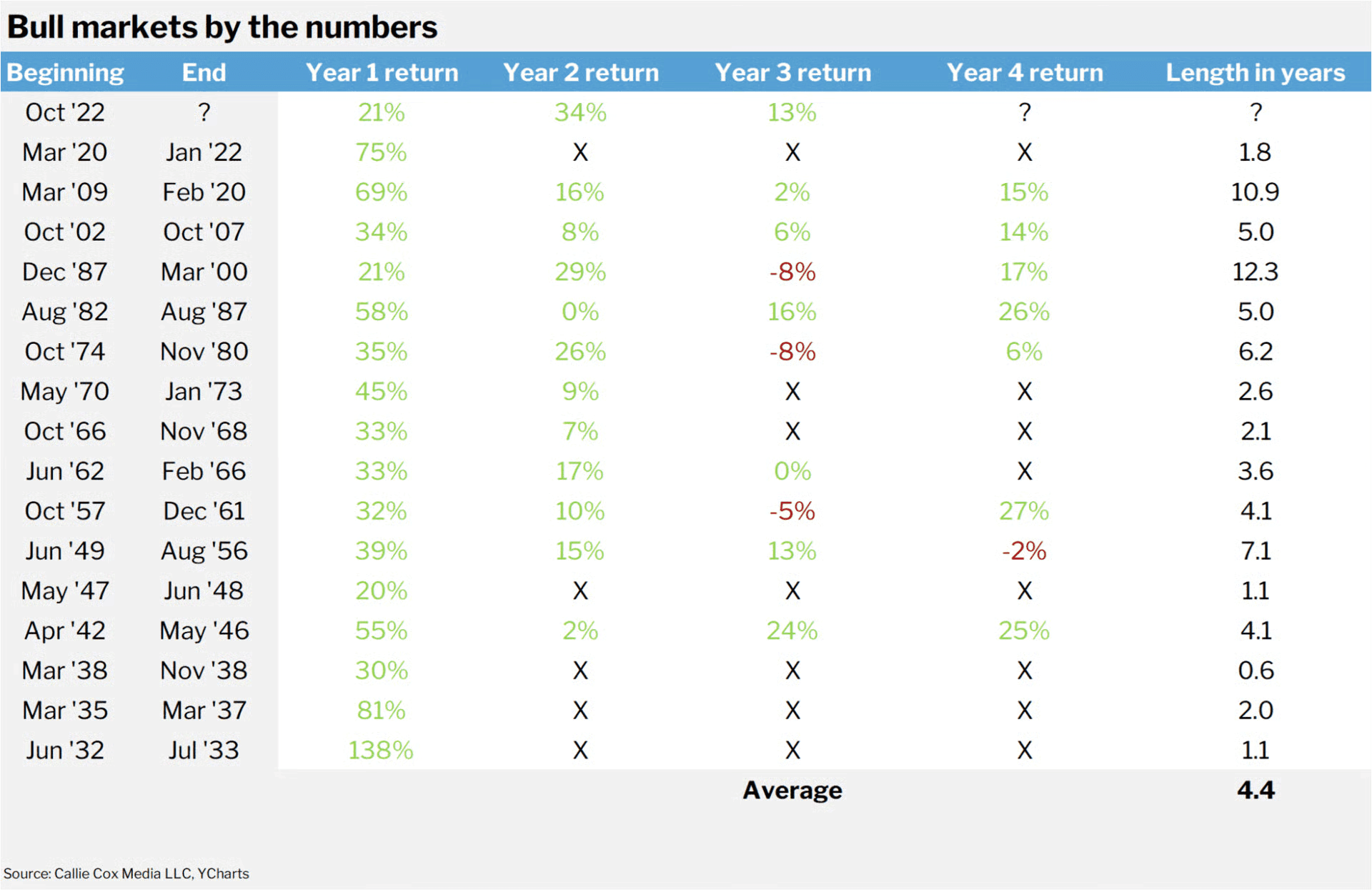
So despite the recent turbulence, the bigger picture still looks positive. The market has held up surprisingly well, though volatility is clearly picking up. Though, the next few weeks likely remain choppy as investors digest earnings, but as long as fundamentals hold, the bull market should remain intact.
Previous Updates
View All
- Weekly Market Update: Big Tech Divergence
- Weekly Market Update: Accumulation
- Weekly Market Update: The Best Quarter
- Weekly Market Update: Rate Hikes
- Weekly Market Update: AI is Not Slowing Down
- Market Update: Has AGI Arrived?
- Weekly Market Update: Consolidation
- Weekly Market Update: September is Here
- Market Update: Nvidia Crushes Earnings
- Weekly Market Update: Yields
- Market Update: The Future of Biotech
- Weekly Market Update: Earnings Acceleration
- Market Update: The Next Generation of AI Infrastructure