Secular Trend
Photonics
The Speed of Light
In A Nutshell
Photonics is about using light instead of electricity to move data.
Inside every data center powering applications ChatGPT, Google Search, or Netflix, thousands of chips need to talk to each other. Every step of training or inference depends on how fast these chips can talk to each other. If that communication slows down, the whole system slows down.
Today, most of that communication still runs through tiny copper wires. The problem is copper is hitting its limits. It was good enough when workloads were smaller and less intense. But AI changes the scale completely. Models now move massive amounts of data every second. Copper starts to break under that pressure. It loses energy as heat, it struggles to keep signal quality at high speeds, and it only works well over short distances.
Photonics solves this by replacing copper with laser light traveling through glass fibers. Light can carry much more data, over longer distances, and with far less energy loss. It doesn’t heat up the same way copper does, and it scales much better as data rates increase.
AI is not just compute heavy, it is communication heavy. As models get bigger and clusters get larger, the amount of data moving between chips grows even faster than the compute itself. This creates a bottleneck. You can keep building faster chips, but if the data cannot move fast enough, you don’t get the benefit. That’s why improving interconnect speed is now just as important as improving the chips. Hence, companies like Google, NVIDIA, Microsoft, Meta, and Amazon are investing heavily to switch from copper to light. And it’s driving one of the fastest-growing areas in semiconductors.
But this is where things get interesting.
The entire photonics stack depends on one critical material: Indium Phosphide (InP). And right now, there isn’t enough of it. In 2025, global demand for InP-based devices hit around 2 million units. But production capacity was only about 600,000 units. That’s a 70% supply gap. Supply is extremely concentrated. Only 2 to 3 companies can produce InP substrates at scale. AXT Inc and Sumitomo control about 75% of global supply.
And it’s not getting fixed anytime soon.
Major suppliers are already fully booked through 2026. Buyers aren’t negotiating price anymore. The mindset has shifted to one thing: secure supply at any cost. Because capacity cannot ramp quickly. Building new production takes years, and key equipment has lead times of 18 to 24 months.
The biggest buyers in the world are all competing for the same supply.
Table of Content
Sector Map
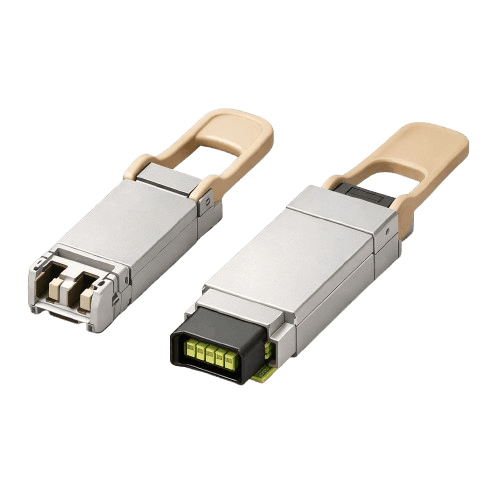
Optical Transceivers

Optical Packaging








The Leading Photonics Stocks
Ticker
M. Cap
PS
PE
YTD
10MA
20MA
50MA
200MA

AEHR
2.9B
49.8
n/a
317.79%

AXTI
4.5B
29.3
3,704
298.08%

MRVL
210.2B
19.4
79.3
175.88%

AAOI
8.4B
13.5
n/a
172.49%

LITE
81.5B
28.5
n/a
139.59%

OPTX
271.3M
10.7
n/a
132.41%

FORM
9.0B
8.4
78.6
98.10%

VIAV
8.6B
6.1
n/a
93.46%

TSEM
25.0B
50.6
87.2
83.78%

STM
45.0B
4.0
156.1
79.14%
