Go Back

Lin
Market Update: The Next Phase of AI
And they’re not far off.
Today, AI is mostly contained to chatbots, agentic AI workflows, coding, search, image, and video. It can write, research, analyze, summarize, code, plan, and automate tasks faster than any human ever could.
But the next major phase of AI isn’t just going to live behind a screen.
It will move into the physical world. This is where robotics comes in.
For the last few years the entire AI trade has been centered around compute, GPUs, data centers, power, networking, power, energy, memory, and the infrastructure needed to train and run increasingly powerful models. Before AI can act in the real world, it needs the intelligence layer first.
It needs the brain.
Now that brain is getting better at a rapid pace, and it leaves one major question.
What happens when you give that brain arms, legs, sensors, cameras, hands, and the ability to interact with the physical world?
That is the opportunity robotics represents.
Humanoids, warehouse robots, industrial automation, defense drones, autonomous
machines, surgical robots, and physical AI systems are all part of the
same bigger theme. AI is moving from chat bots that answer questions to
systems that can take action.
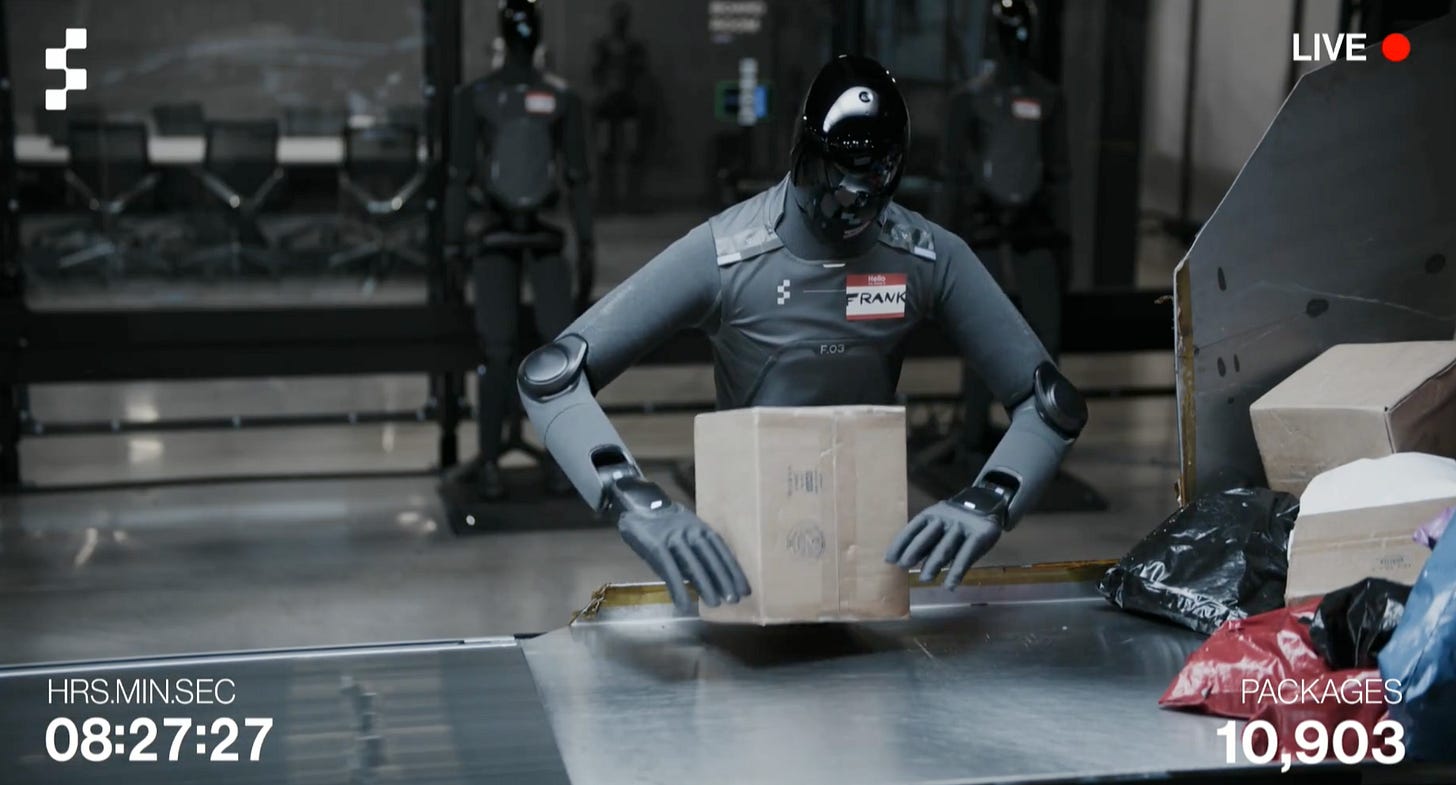
Just yesterday, Figure Robotics
live-streamed a team of humanoid robots running a full 8+ hour shift at
human performance levels. The demo was fully autonomous running
Helix-02, completing warehouse packaging and sorting tasks a human
normally would at an exceptional rate.
This is going to become one of the most important market themes of the next several years.
The
government is going to pour so much capital into this group in a race
against China that I think it eventually becomes one of the biggest
themes in the history of the market.
The market has spent the last
few years pricing in the intelligence layer. The next trade may be
about pricing in what happens when that intelligence gets a body…
I see a lot of robotics watchlists out there that miss most of the best names in the market.
This primer does not.
What
you’re about to read will be the first edition of what I hope becomes a
larger series on robotics, hence the 1.0 in the title. For a theme this
big and one that is changing so quickly, I think it will be worth
revisiting over and over again.
This is a theme that will likely
evolve in waves. I believe it has a shot to be one of the biggest themes
and opportunities in the history of the market.
AI Beyond The Screen
For the last few years, AI has mostly been something we interact with through a screen.
Chatbots,
coding, search, image generation, video generation, enterprise
software, agentic workflows, research assistants, customer support
automation, and data analysis have all been part of the first major
wave.
This initial phase of AI has been about making digital work
faster, easier, and more automated. It helps us all write, code,
research, analyze, summarize, and make sense of more information faster
than any human could realistically process on their own.
But nobody thinks AI will stay digital forever.
The next logical step is embodied AI.
The
next major phase is going to be about moving AI out of the browser and
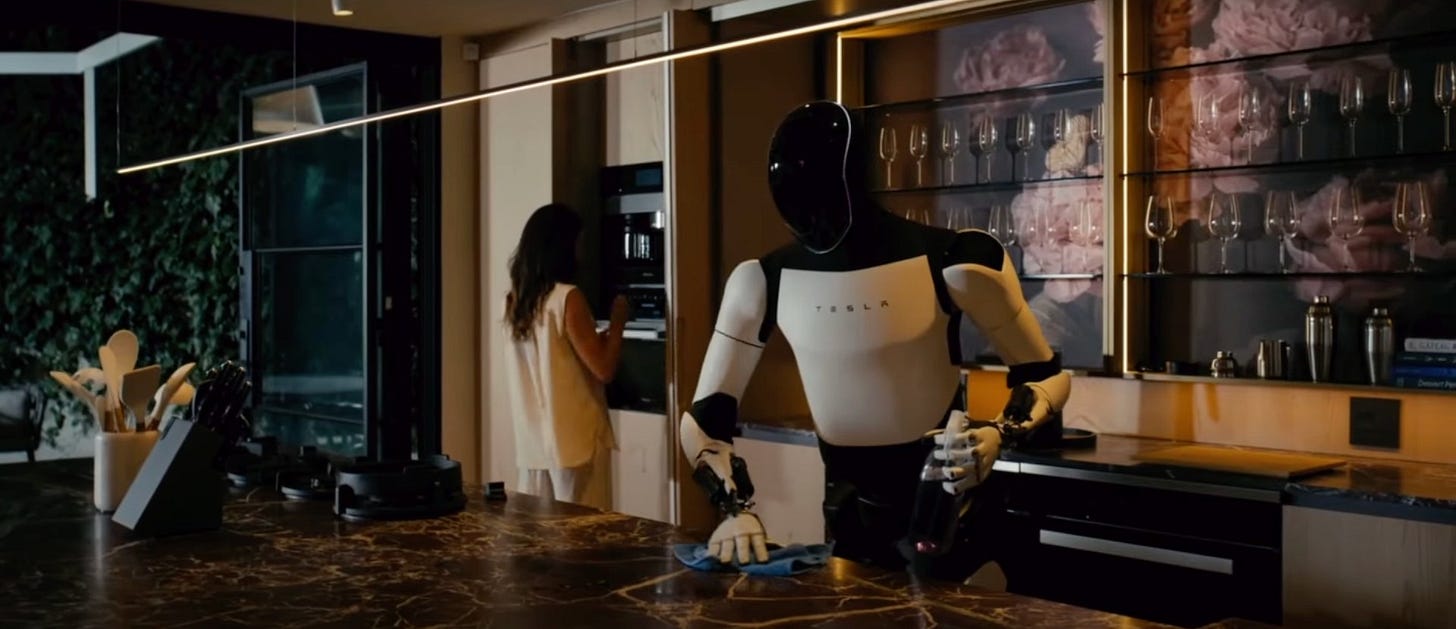
into the physical world. That is where robotics comes in. Once
intelligence can be embedded into machines that see, move, sort, lift,
inspect, deliver, build, operate, and interact with the real economy,
the opportunity becomes much larger than digital productivity.
This is why robotics feels like the natural next step after AI infrastructure.
Before
AI can act in the real world, it needs the brain first. Now that brain
is getting better at an insane pace, the next question becomes obvious.
What happens when that intelligence gets connected to cameras, sensors,
hands, arms, legs, batteries, actuators, motors, and the ability to
operate in the physical world?
Warehouses, factories, hospitals,
restaurants, logistics networks, defense systems, homes, the list goes
on. The robotics opportunity is massive, I’m viewing robotics as the
shift from AI that helps humans do digital work to AI that can help
automate physical work.
The first phase of AI was about building intelligence, the next phase may be about giving that intelligence a body.
The Impact
The physical world is full of repetitive, dangerous, boring, expensive, and labor intensive work.
Warehouses,
factories, hospitals, restaurants, farms, construction sites, defense
systems, logistics networks, and homes all have tasks that are difficult
to staff, expensive to perform, dangerous for humans, boring, or just
perfectly suited for automation.
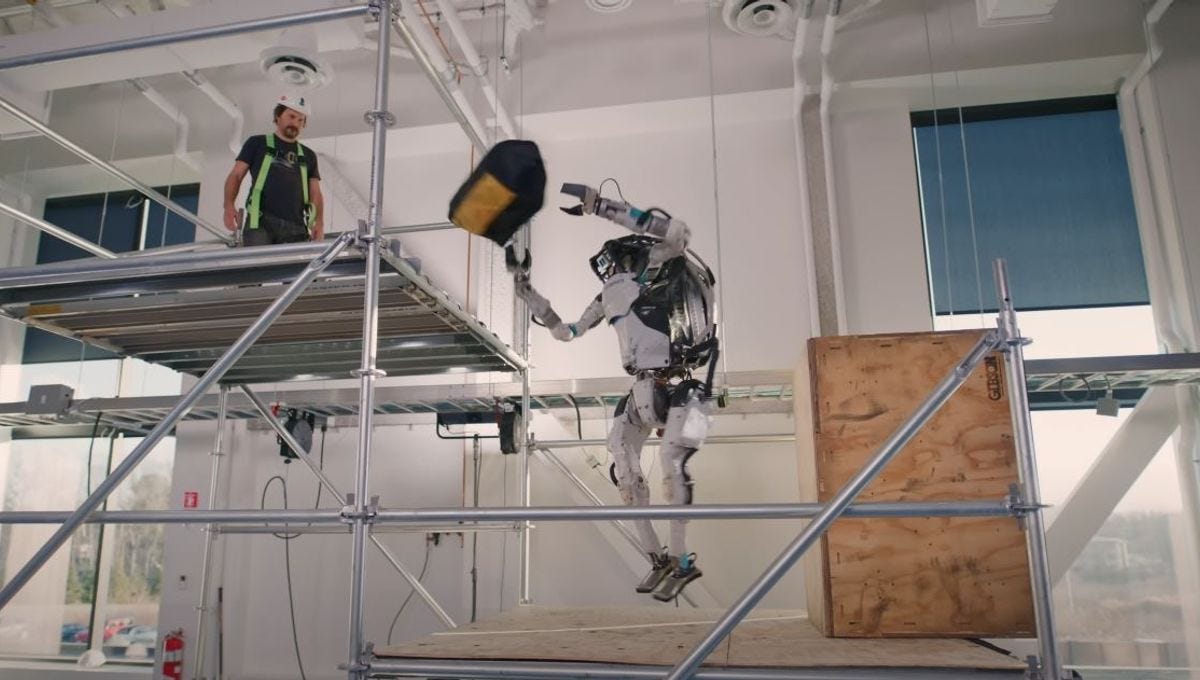
Think about a time you didn’t want to do the dishes, take out the trash, make dinner, etc.
Now apply that same concept to businesses.
Across
the economy there are endless examples of human time being wasted on
work that is repetitive, physically demanding, dangerous, inefficient,
or simply not the best use of labor.
Sorting packages in a warehouse
Running supplies through a hospital
Handling repetitive kitchen work in a restaurant
Performing exhausting seasonal work on a farm
Stocking shelves
Carrying supplies around a construction site
The list goes on.
Robots
will be key because they attack one of the biggest problems in the
physical economy: the mismatch between the amount of work that needs to
be done and the number of people willing or available to do it.
I
think the idea that robots are just going to replace every human labor
worker is the overly simplistic way people are going to frame this
theme. The bigger point is that a lot of physical work is labor
constrained. We could likely be doing much more labor intensive work if
we had the supply for it.
The first major robotics wave probably
happens in structured environments where the return on investment is
easiest to understand. Warehouses, factories, logistics networks,
hospitals, restaurants, farms, and industrial facilities all make sense
because the tasks are repeatable and the environment is somewhat
controlled.
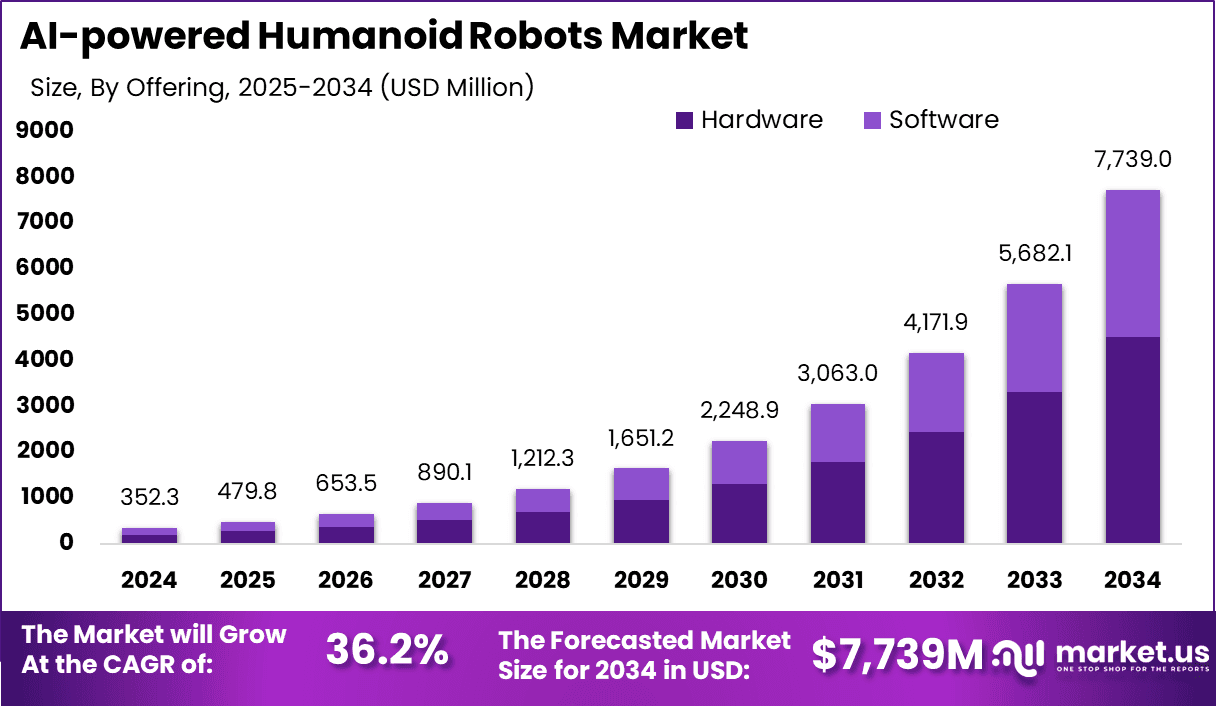
The physical world is the largest market there is.
Most
of the economy still depends on humans moving, building, cleaning,
delivering, inspecting, repairing, and operating. If AI starts
automating even a small percentage of that physical work, the
opportunity is enormous.
Why Now?
Robotics has been hyped before so the obvious question is why this time could be different.
To me the answer is convergence.
We
see that the currently AI models are improving quickly. Not only that
but the physical components and sensors are becoming more capable as
simulation software is making it easier to train robots before real
world deployment. We’re seeing real progress.
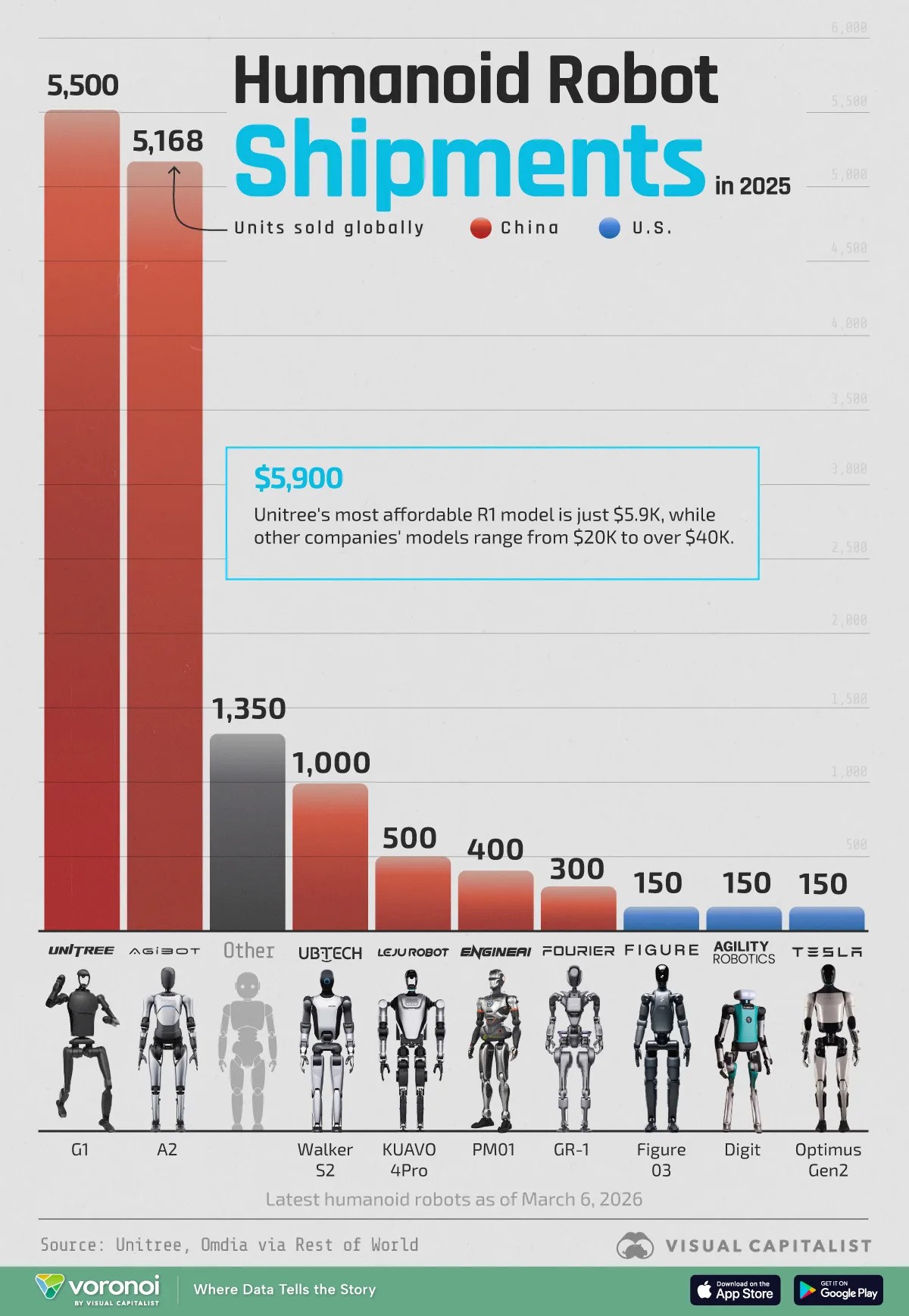
Humanoid robot shipments are also exploding over the past few years.
The most exciting pure play humanoid companies are still largely private or buried inside much larger businesses.
Figure,
Apptronik, 1X, Agility Robotics, Boston Dynamics, and others are
obviously private, which makes is difficult to get exposure. That’s fine
though, in my opinion the opportunity today is about identifying the
companies supplying the intelligence, perception, components, automation
systems, batteries, software, and infrastructure that make robotics
possible.
The humanoids will come. Eventually.
The U.S. vs. China
The U.S and China are in a robotics race.
And China is winning.
China is shipping robots faster and deploying them in real world environments sooner.
According
to CNBC’s China Connection, Chinese humanoid startups took the top six
spots in Omdia’s 2025 global humanoid robot shipment rankings, while
Figure and Tesla were the only U.S. companies in the top ten. Pretty
insane stuff.
In March 2025 companies such as Tesla, and Boston
Dynamics met with lawmakers on Capitol Hill to argue for a more
coordinated U.S. robotics policy including a dedicated federal office,
tax incentives, training programs, research funding, and support for
commercial innovation.
The argument they made is simple: if China is treating robotics as a national priority, the U.S. should too.
And China clearly is treating it like a priority.
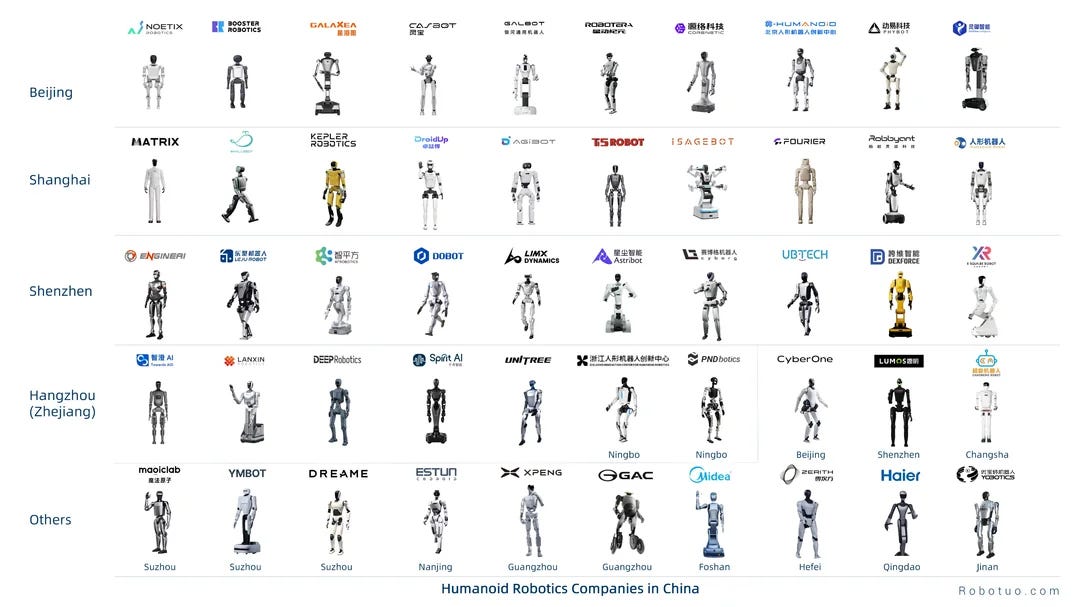
The
country already has more than 100 humanoid robotics startups, a massive
industrial robot market, a giant EV and battery ecosystem, and a
government that has made intelligent robots part of its broader
industrial strategy.
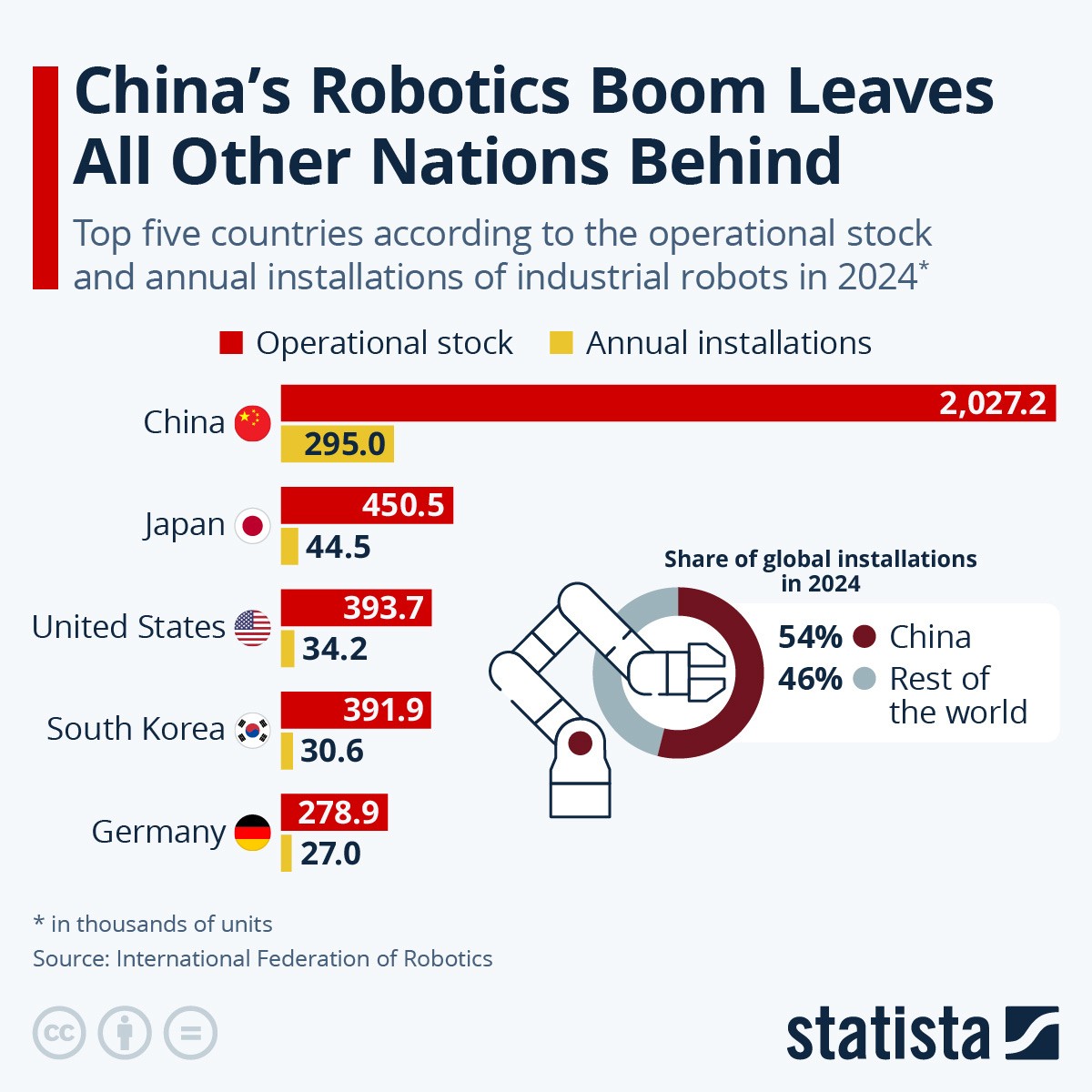
CNBC also noted that China has more than 1.8
million industrial robots operating, while Chinese domestic suppliers
now account for roughly half of China’s own industrial robotics market.
In
order for the U.S. to catch up to China, America needs to start
prioritizing the robotics arms race. There’s no other choice.
Government Policy
According
to reports, the Trump administration is already looking at robotics as
the next major area of focus after its AI push.
Commerce
Secretary Howard Lutnick has reportedly been meeting with robotics
industry CEOs and the administration is considering an executive order
on robotics this year.
The Department of Commerce also said it is
committed to robotics and advanced manufacturing because they are
central to bringing critical production back to the United States.
Washington
is starting to look at robotics the same way it has started looking at
AI, semiconductors, drones, batteries, rare earths, and energy
infrastructure.
Not only that, but earlier this year Melania Trump hosted an event at the White House with robots present.
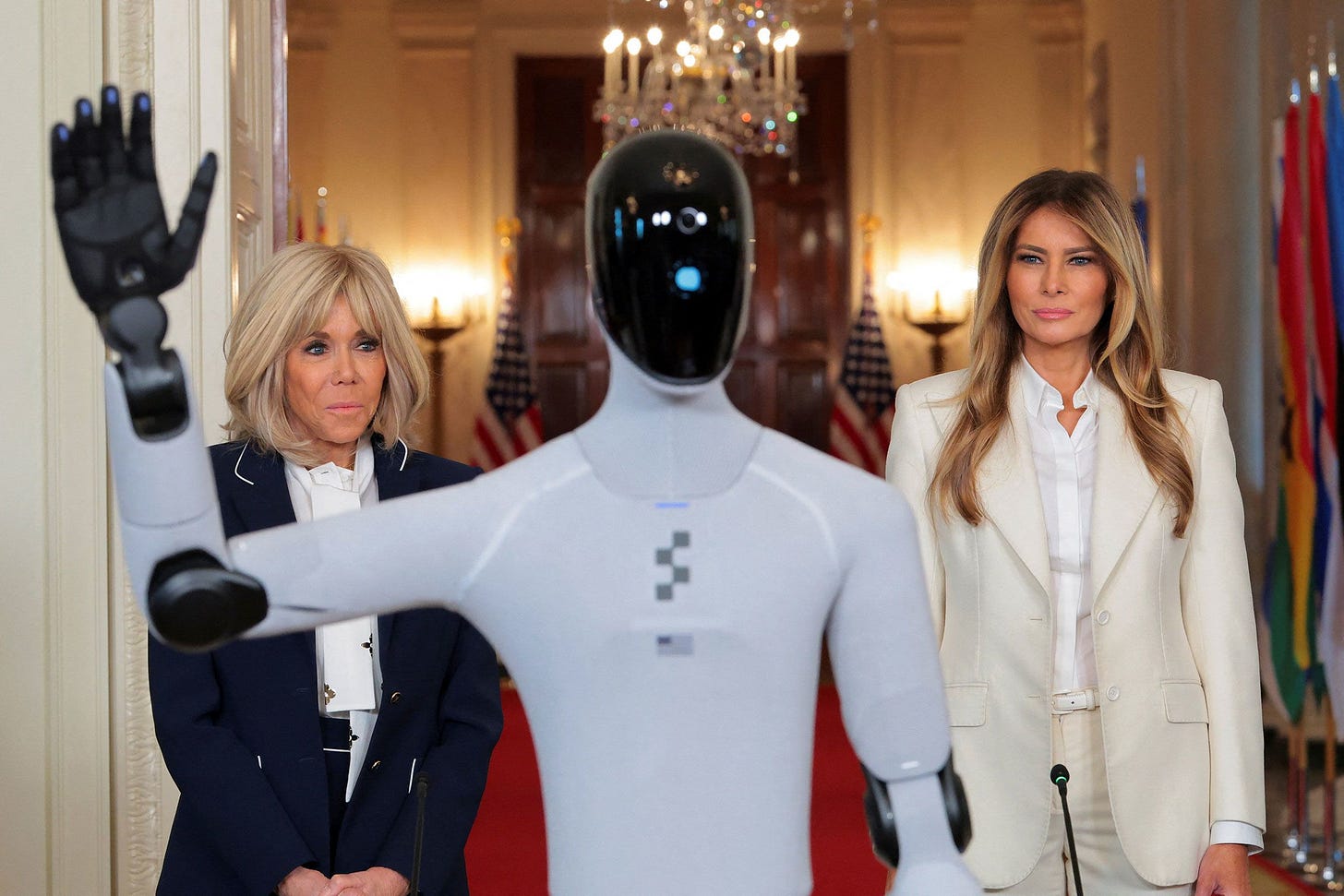
This is why I think robotics eventually becomes industrial policy.
The
U.S. wants to reshore manufacturing but reshoring without automation is
difficult. Labor is expensive and skilled labor is limited but if the
U.S. wants to rebuild industrial capacity and compete with China, robots
are going to be part of the answer.
There is an obvious tension here though.
If
the government pushes robotics too aggressively, people will argue that
America is bringing factories back only to fill them with machines
instead of workers. More of the “AI is stealing our job” debate.
But
the other side of the argument is that robots can make American
companies more productive and more competitive. New jobs will emerge. If
robotics helps manufacturers produce more in the U.S., then the job mix
may shift toward building, deploying, maintaining, programming,
supervising, and operating robotic systems.
The better question
to ask is whether robotics allows the U.S. to rebuild industries that
otherwise would not be competitive here at all…
Robots Are Coming 1.0 List
Below I’m going to discuss each major group within the robotics ecosystem and the public names I’m watching inside each basket.
This
is going to be a fast evolving theme and there will be multiple
iterations of these robotics primers going forward. I strongly believe
this is not just a one article opportunity.
Robotics is going to evolve in waves and the names that matter today may not be the only names that matter months from now.
I
want to preface this by saying I’m ONLY including the highest quality
robotics names. I consistently see lists that either omit high quality
names, or include the low quality meme names. I will not be including
meme stocks, or the lowest quality names.
These are the highest quality, U.S. traded robotics stocks in the market.
The Robotic Brain: Edge AI, Embedded Compute, and Real Time Intelligence
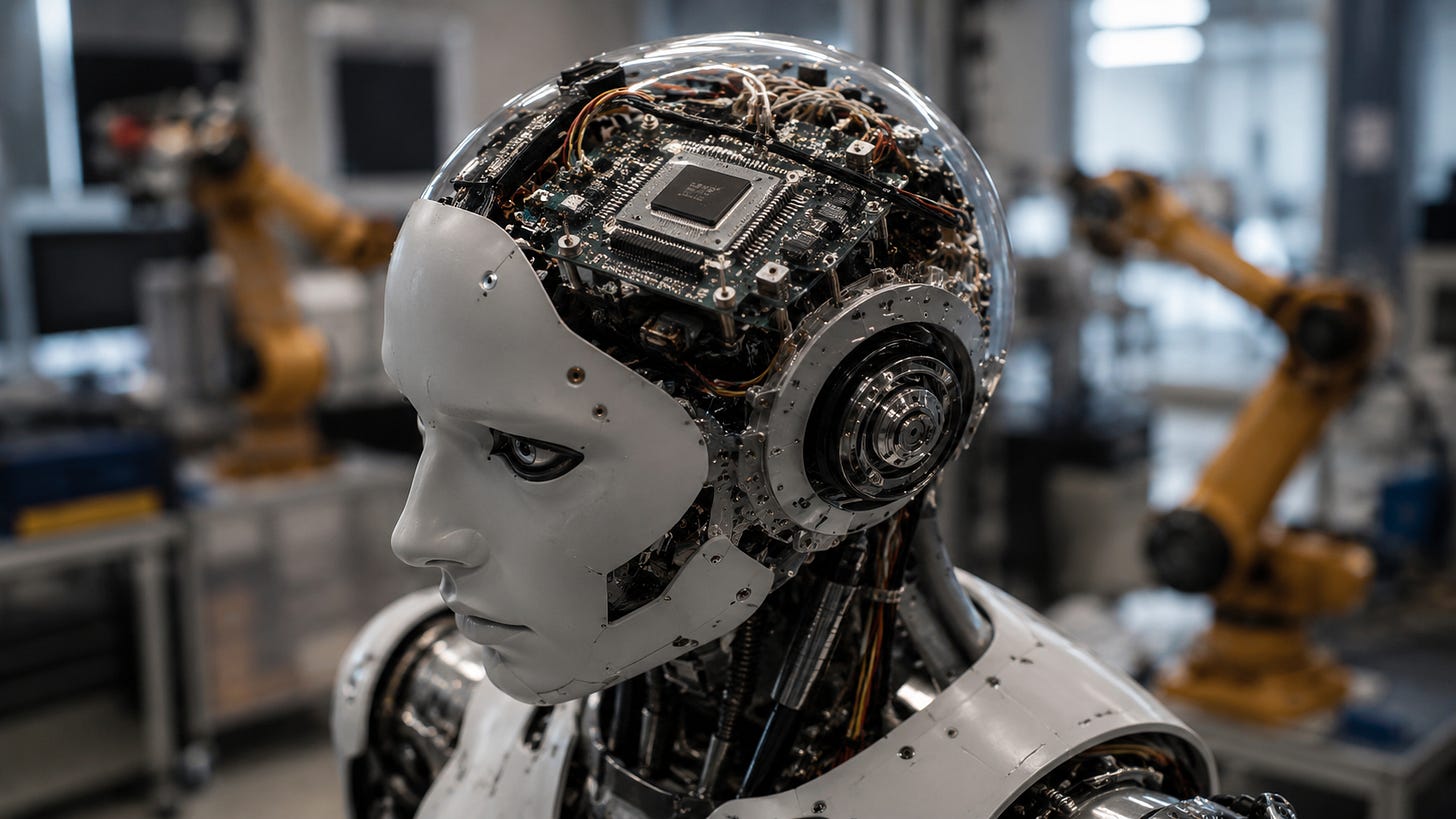
Robots can’t rely entirely on the cloud for all of their decisions.
It
needs to process information locally and make decisions without waiting
for every instruction to be sent back and forth from a remote data
center.
That is where the edge AI and embedded compute bucket becomes important.
Below I’m going to discuss the most key names in this group.
AMBA:
Ambarella
is a computer vision and edge AI semiconductor company. One of the only
semis that hasn’t ran yet, I highlighted it in my 2026 outlook and it’s
on my 2026 list. Their chips are used to process video and visual data
efficiently which makes it relevant for machines that need to see and
react to the physical world. In robotics, that visual intelligence layer
matters because a robot needs to identify objects, track movement,
avoid obstacles, and make decisions in real time.
AMBQ:
The
company focuses on ultra low power semiconductor solutions. Not every
robotics application will have a massive battery so power efficient
processing could become increasingly important. Their products are
designed for power constrained environments including robotics and
industrial automation.
SYNA:
Synaptics
is a fan favorite but it’s very high quality. It sits in the edge AI,
IoT, connectivity, and human machine interface bucket. Robots need
sensing, connectivity, embedded intelligence, and interfaces to interact
with humans or other robots and their environments. It is not a pure
robotics name I know that, but it fits the broader theme.
The Eyes: Sensors, Vision, Cameras, LiDAR, Radar, and Perception
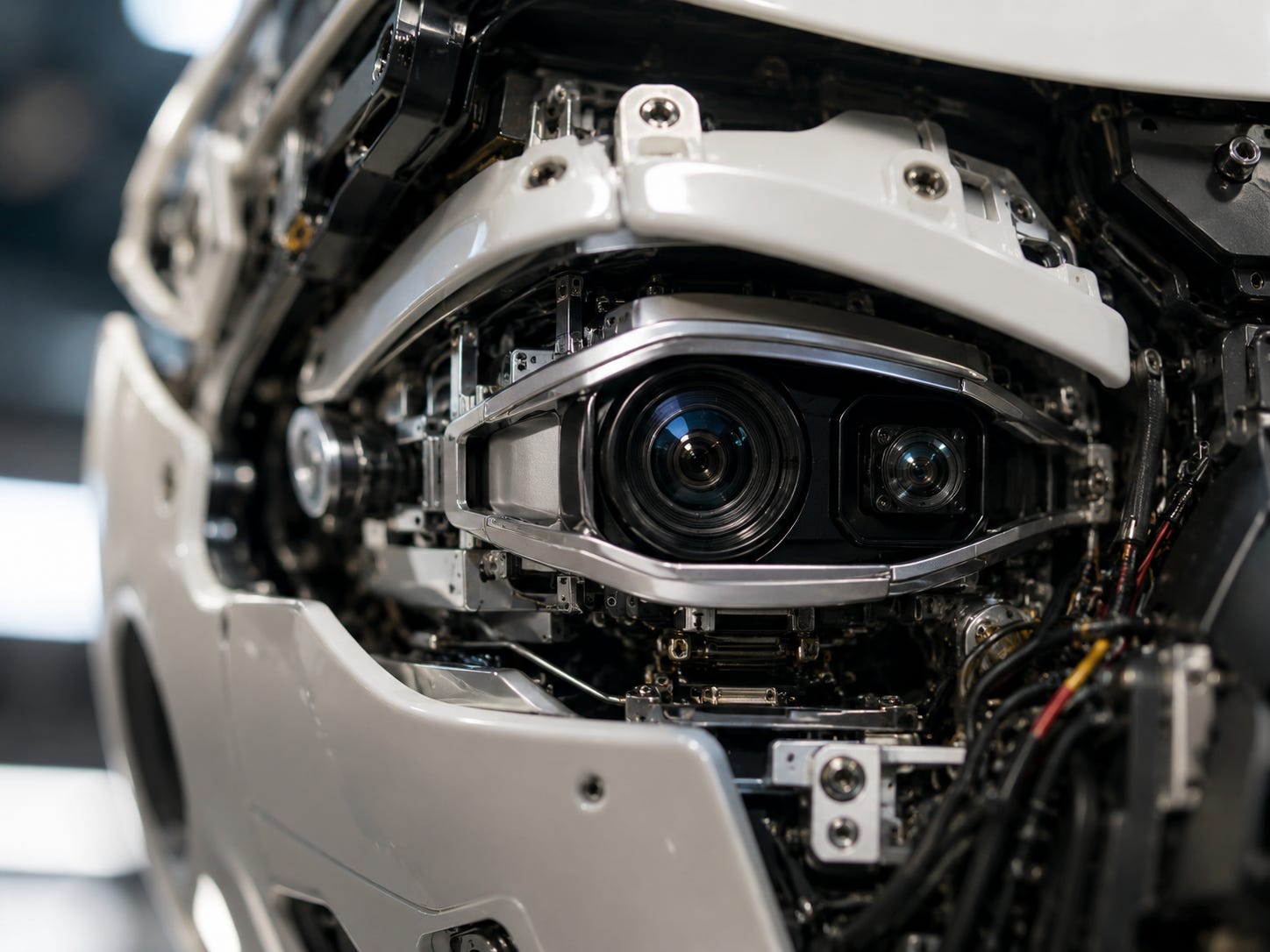
AI gives robots intelligence.
Sensors, cameras, etc. give them awareness. Touch, hearing, and vision are important to robots just as they are to humans.
A robot needs to see the world and operate safely around humans, how else would it do that besides cameras and vision?
OUST:
I
own Ouster. Their sensors help machines understand depth and
surroundings. So many use cases, people think LiDAR is just autonomous
cars but it’s not. Mapping, industrial automation, drones, cars,
robotics, security, and other autonomous systems use LiDAR. Ties to
Nvidia, Anduril, Amazon, and Google.
AEVA:
Aeva
is more autonomous vehicle centric but they still matter in the
robotics space because there’s overlap in vision between vehicles and
robotics. They focus on advanced sensing technology that can help
machines detect objects, distance, velocity, and movement. Nvidia
partnership here to boot.
CGNX:
Cognex
helps machines inspect products, read labels, identify objects, detect
defects, and understand what is happening in industrial or
warehous/factory environments. As factory automation and robotics
adoption accelerates, the demand for products like Cognex offers will
only increase.
NOVT:
Novanta
is one of my favorite names. They operate in the precision technology,
photonics, vision, motion, and advanced industrial and medical space.
Robotics need precision systems, imaging, and motion technologies to
work reliably. This makes it a textbook supply chain name.
VPG:
Arguably
one of the most important names in this part of the robotics stack and
it’s been on fire as of late. Vishay Precision Group fits through
precision sensors, force sensing, weighing, measurement, and control
systems, which are all critical for robots that need to interact with
the physical world.
A robot needs to understand how much force to
use, how much pressure it is applying, how to pick something up, how to
touch something without crushing it, and how to make precise movements
in real time. This is what Vishay ensures.
CTS:
CTS
is a company that designs and manufactures custom engineered solutions
that help machines sense, connect, and move. Robots are filled with
sensors, controls, connectors, and feedback systems that help them move,
react, measure, and operate properly in the real world. CTS is behind a
lot of this.
The Body: Actuators, Motion, Components, and Physical Systems
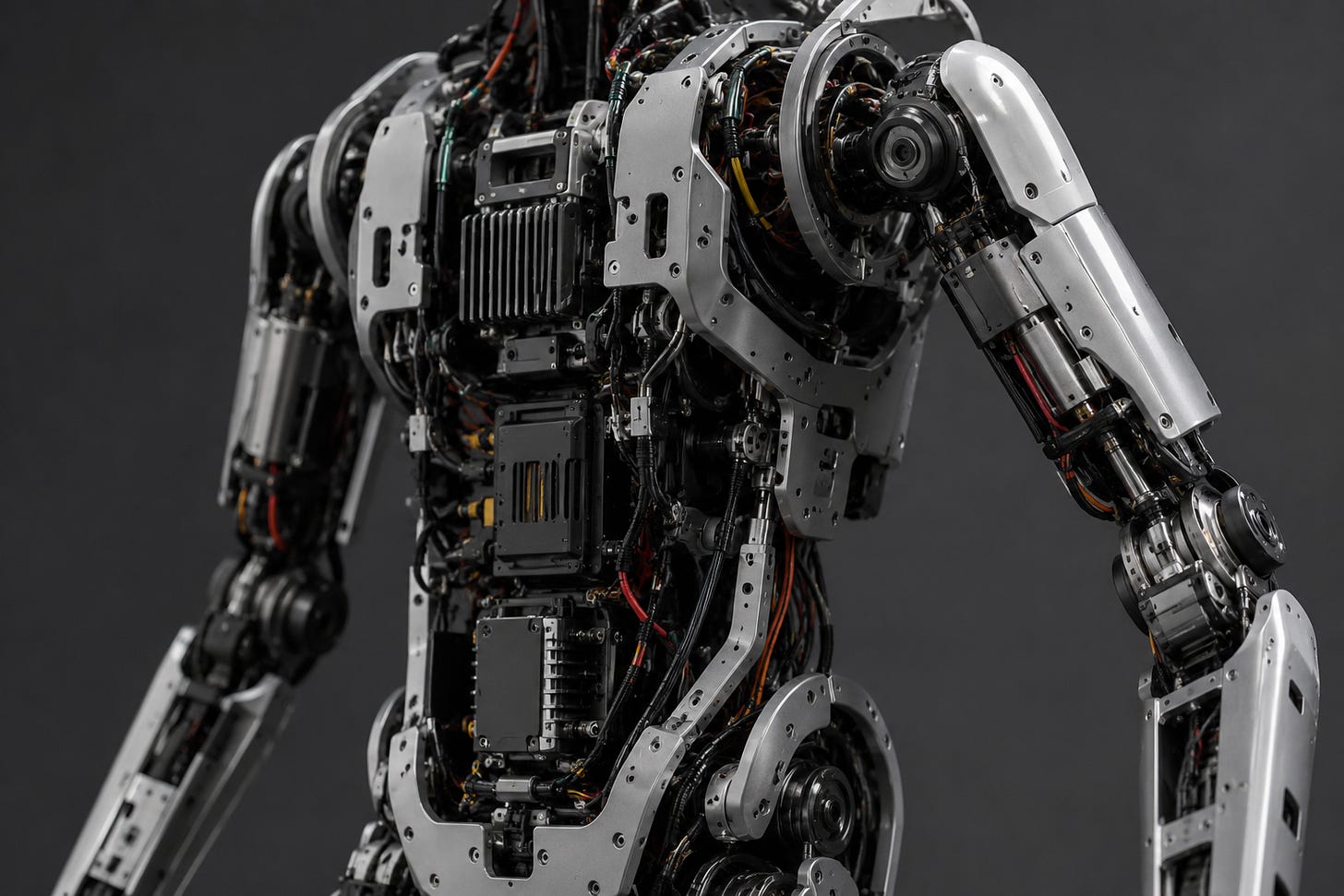
This is where robotics gets very difficult.
Building
a machine that can walk, balance, lift, grasp, etc. is sci-fi esque
stuff that takes a lot of perfection and engineering.
ROK:
Rockwell
is factory automation, industrial software, control systems, and
manufacturing productivity. It’s not part of the humanoid robot story
but it’s more part of the broader automation story. When factories
become more automated, Rockwell will be part of the reason why.
MOD:
Modine
fits into the physical systems and thermal management side of the
robotics stack. They don’t actually build robots but they design
heating, cooling, ventilation, and heat transfer systems for data
centers, industrial equipment, commercial vehicles, agriculture,
construction, mining, and other demanding end markets. Keeping robots
and other systems cool will be very important.
TER:
This
has been a monster stock for quite some time now, everyone knows it and
has likely looked at it before. Their robotics parts are used by
massive companies including Amazon. They also have exposure to
semiconductor testing and robotics through Universal Robots and MiR.
ALNT:
Under
the radar but I like this one a lot. Allient sits in a very important
part of the robotics stack, motion, controls, and power. They make
precision motion control components and systems such as motors, drives,
motion controllers, encoders, gear motors, control electronics, and
power quality products across industrial, aerospace/defense, medical,
vehicle, and electronics markets. Robots need controllers and motors to
move!
Humanoids
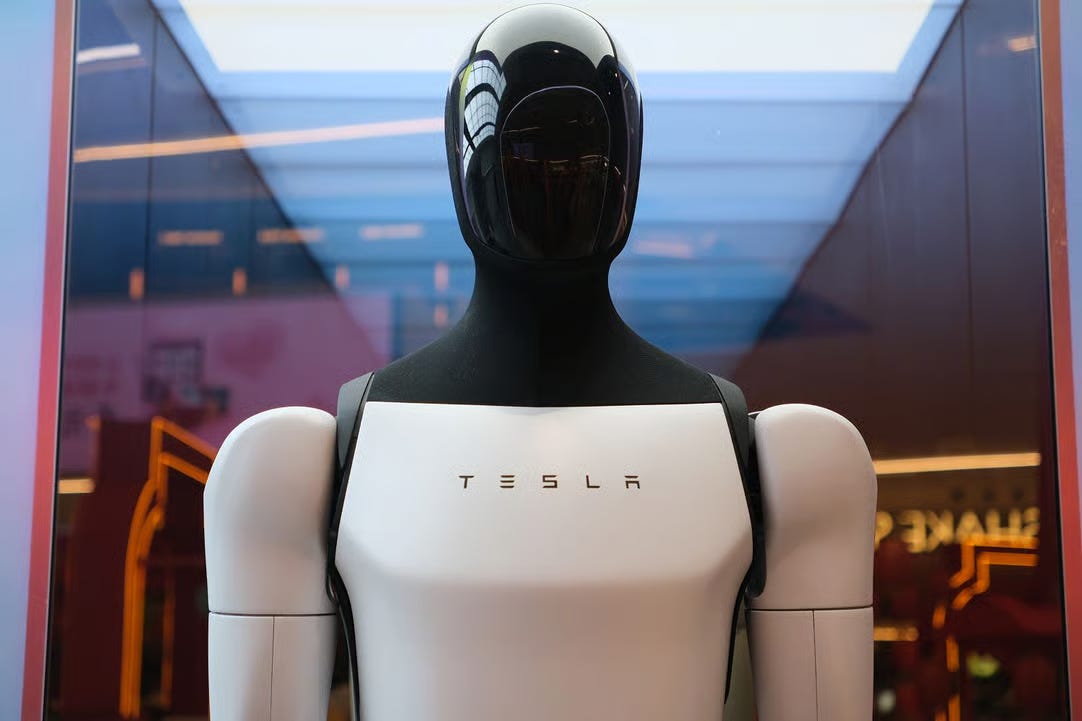
There aren’t many plays on Humanoid robotics in the market today.
As
I mentioned above many of the humanoid robotics players are still
private. They’re also the hardest part of the theme because building a
robot that can walk, balance, see, grab, move safely around humans, and
perform useful work for long periods of time is an insanely difficult
engineering problem.
It’s going to take some time before we see true humanoids, but there are a few plays.
TSLA:
Tesla
speaks for itself but it belongs in this article because Optimus is
probably the most well known humanoid robot project in the public
market. The entire thesis at this point hinges on Optimus becoming a
success, hence the expensive valuation. Their Optimus robot has the most
resource + capital and is arguably the most advanced humanoid in
America.
MBLY:
Mobileye
is more associated with autonomous driving but the overlap with
robotics is now there too. The robotics angle became even more direct
after Mobileye announced its plan to acquire Mentee Robotics, an AI
first humanoid robotics company. This officially pushed Mobileye beyond
cars and into physical humanoid robotics.
XPEV:
Xpeng
is increasingly trying to position itself as a broader physical AI
company across smart EVs, robotaxis, flying cars, and humanoid robots.
At their 2025 AI Day, Xpeng unveiled several applications centered
around “Physical AI,” including their the next generation IRON humanoid
robot. They’re often referred to as the “Tesla of China.”
Deployment: Warehouses, Logistics, Restaurants, and Real World Use Cases
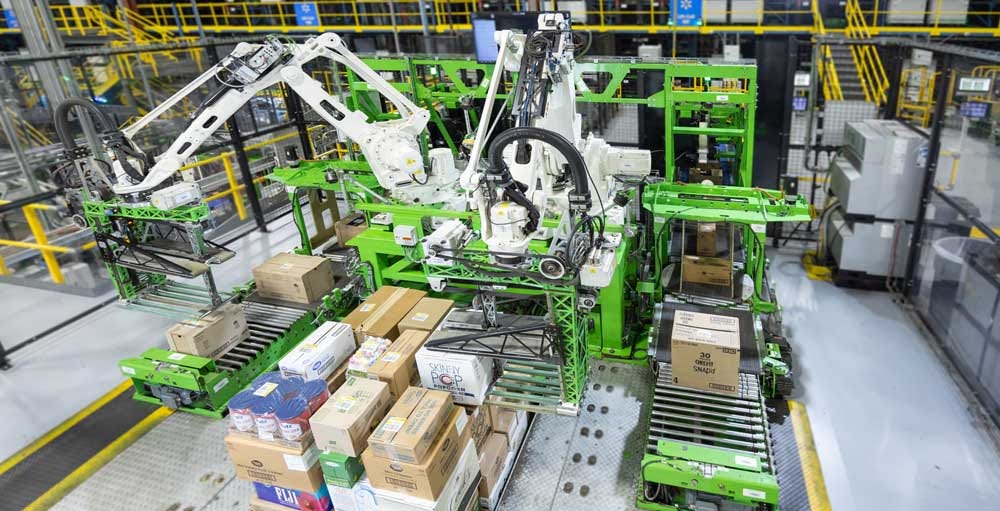
The
early winners of the robotics trade are likely not going to be the
companies trying to put humanoids in every home. Instead it could be the
companies deploying robots into warehouses, factories, restaurants,
hospitals, logistics networks, and other structured environments where
the return on investment is easier to measure.
SYM:
Symbotic
builds systems that help warehouses move, sort, store, retrieve, and
ship goods more efficiently. They have a major deal with Walmart and
Softbank still holds a large stake. Sketchy accounting history so it’s
risky to hold or own this but it fits the theme and there’s real revenue
+ connections to legit entities like the two listed above.
ZBRA:
Zebra
fits through logistics, data capture, RFID, asset tracking, mobile
computing, and warehouse visibility. Automated environments need clean
real-time data, and Zebra sits right in that layer. Robots need to know
where inventory is, and warehouses need systems that can track
everything accurately.
AMZN:
Not
much needs to be said. Amazon might be the biggest robotics company on
earth, they’re a monster and a behemoth with over a million robots
active in warehouses. They use robots to move inventory, sort packages,
improve fulfillment speed, reduce manual strain, and make the entire
logistics network more efficient.
Robotic Surgery
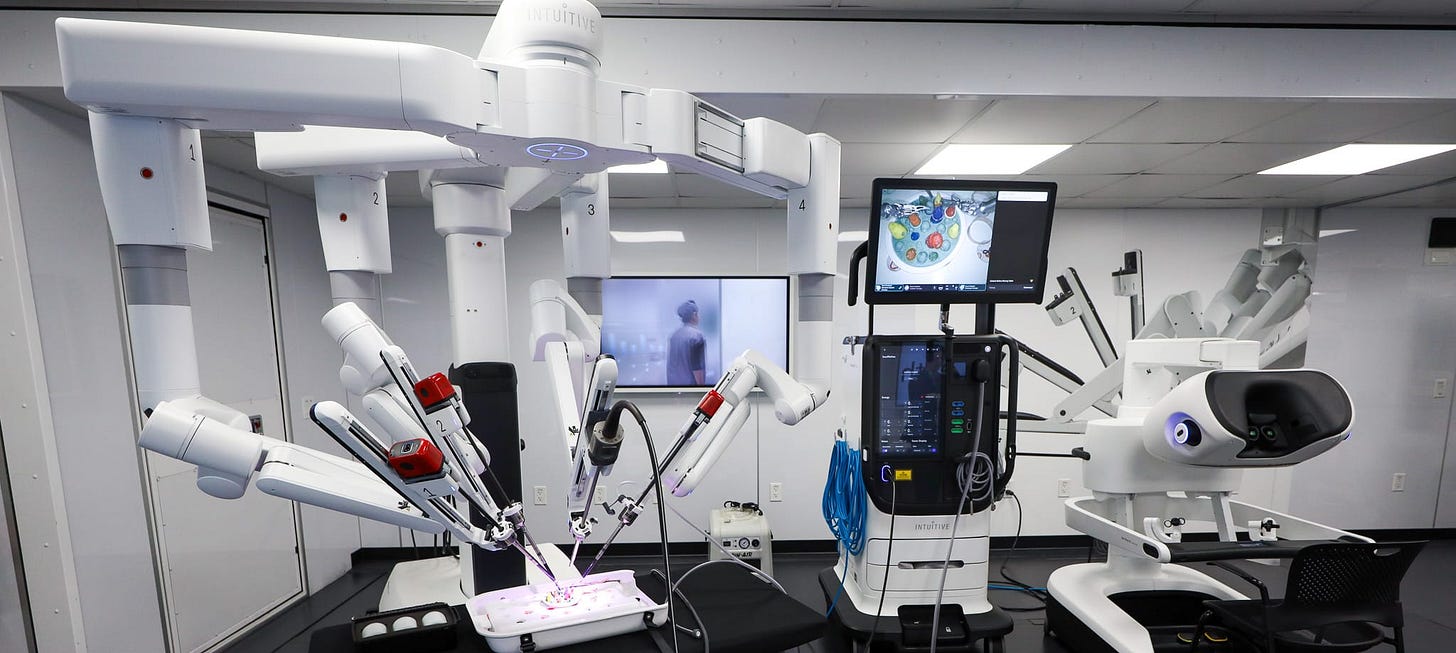
Some parts of robotics are already real, commercialized, and proven. Surgical robotics is one of the best examples.
There
are thousands of robotic surgery systems already installed across
hospitals around the world and millions of procedures have already been
performed using robotic assisted technology. Surgical robotics is
already here. Hospitals buy these systems, surgeons train on them,
patients undergo procedures with them, and companies are generating real
revenue from them.
PRCT:
This
company is a surgical robotics name built around Aquablation therapy,
an image-guided, robotic-assisted, heat-free waterjet procedure for
treating BPH, or enlarged prostate. Pretty small TAM when you consider
only men over 50 will use something like this, but the market cap is
small enough there might be room. Its systems use real-time imaging and
robotic precision to help surgeons remove targeted prostate tissue while
preserving surrounding anatomy.
ISRG:
Intuitive
Surgical is probably the most proven robotics company in the market.
It’s been around forever and everyone knows about their devices by now,
they’re everywhere and nearly every hospital uses them. They have real
revenue, products, and a dominant position in surgical robotics. It’s
not a humanoid stock but it is proof that robotics can create enormous
value outside of humanoids, I expect more companies like this to emerge
in the coming years.
The Robots Are Coming 1.0 List:
AMZN: $2.9T
TSLA: $1.4T
ISRG: $150B
TER: $55B
ROK: $51B
SYM: $30B
XPEV: $15B
MOD: $15B
ZBRA: $12B
CGNX: $11B
MBLY: $8.5B
NOVT: $6B
SYNA: $5B
AMBA: $4B
OUST: $2B
CTS: $2B
PRCT: $1.48B
AMBQ: $1.5B
VPG: $1.3B
AEVA: $1.3B
ALNT: $1B
Looking
at this list, my ten favorite names at the moment are and AMBA, ALNT,
AMBQ, AEVA SYNA, OUST, CGNX, NOVT, VPG, CTS. You can find the thesis for
these names above.
You’ll notice I didn’t include
sections for names like RR, SERV, etc. While I think those can
definitely be momentum movers, I wanted to keep this list and the in
depth thoughts contained to the stocks with higher quality fundamentals
and narratives
For this 1.0 list, I wanted to focus more on the
companies that I think have legitimate and established positioning
inside the robotics stack whether that is edge AI, vision, sensors,
machine perception, motion, precision components, or the systems that
help machines interact with the physical world.
As this theme evolves and future editions of “The Robots Are Coming” are released, I’ll continue adding names, removing names, and updating the group + my holdings.
How I Plan To Play This Theme
I’m going to be focused on the names that have not just a good narrative, but good fundamentals.
As
of now I own OUST and TSLA. I want more exposure here, and will look to
add more exposure in the weeks ahead. For my style of swing and
position trading I need a fundamental base to back my thesis.
AMBA, ALNT, AMBQ, AEVA SYNA, CGNX, NOVT, VPG, CTS are
the names I don’t own that stick out amongst all the others. These are
high quality and have good fundamentals, not just a good story.
You
have your mega caps in TSLA and AMZN as well, and I do own Tesla. But
in my view, the names that go from small-mid caps to larger market cap
stocks are where the biggest gains will be found.
I will look to add more exposure to this group in the weeks and months ahead.
In Closing
The robots are coming.
No,
not all at once. We’re not going to wake up tomorrow with humanoids
walking around, I need to emphasize that this theme is going to take
time.
It will likely move in waves but the direction of travel is obvious.
AI
is becoming more capable and the hardware needed to bring it into the
real world is improving quickly. At the same time we have governments
increasingly focused on manufacturing, defense, supply chains,
automation, and technological dominance.
This is all while the
physical economy is still filled with work that is repetitive,
dangerous, labor constrained, expensive, and eventually well suited for
machines. That’s why I think it’s important to start paying attention
now, not later.
The first phase of the AI trade was about building the brain.
The next phase may be about giving that brain a body.
This
does NOT mean every stock on this list is going to work. Some will be
long term winners, some will be trades, and some will probably fade
away. I listed my favorites, I believe those are the most fundamentally
sound names of the group and the ones I’d be inclined to own.
I view robotics as an ecosystem built around moving AI beyond the screen and into the physical world. Not just humanoids.
This
is only version 1.0 of the robotics thesis trade. More to come in the
months ahead as new information, names, narratives, and themes within
the robotics basket emerge.
Have a great evening, and I’ll talk to you soon.
Previous Updates
View All
- Weekly Market Update: The Best Quarter
- Weekly Market Update: Rate Hikes
- Weekly Market Update: AI is Not Slowing Down
- Market Update: Has AGI Arrived?
- Weekly Market Update: Consolidation
- Weekly Market Update: September is Here
- Market Update: Nvidia Crushes Earnings
- Weekly Market Update: Yields
- Market Update: The Future of Biotech
- Weekly Market Update: Earnings Acceleration
- Market Update: The Next Generation of AI Infrastructure
- Weekly Market Update: New Highs
- Market Update: Nvidia’s Way Around Memory