Go Back

Lin
Weekly Market Update: A Record Streak
The market has been unstoppable for weeks. The S&P 500 closed at a record high of 7,399.
As Stocks are driven mainly by 2 things: earnings and sentiment.
Earnings are what give a business its real value over time. They show whether a company is growing, becoming more profitable, gaining market share, and building something durable. In the long run, stock prices usually follow the direction of earnings because eventually fundamentals matter.
Sentiment, on the other hand, determines how much investors are willing to pay for those earnings today. It reflects confidence, fear, optimism, pessimism, positioning, momentum, and expectations about the future. Sentiment can push prices far above fair value when people get excited, and far below fair value when fear takes over. But how far is only known afterwards.
And right now we’re in the goldilocks period where both are happening at the same time.
earnings growth is accelerating and new products are being released at an incredible pace. AI agents are already building products, writing code, analyzing data, and handling tasks that previously required entire teams. At the same time, technologies like autonomous vehicles, drones, robotics, and humanoids are all advancing rapidly. The largest companies in the world are in an arms race to secure compute, energy, chips, talent, models, distribution, and infrastructure. And that is what is getting investors excited too. Hence they are willing to pay a higher and higher price.
That’s why this market has been so powerful,
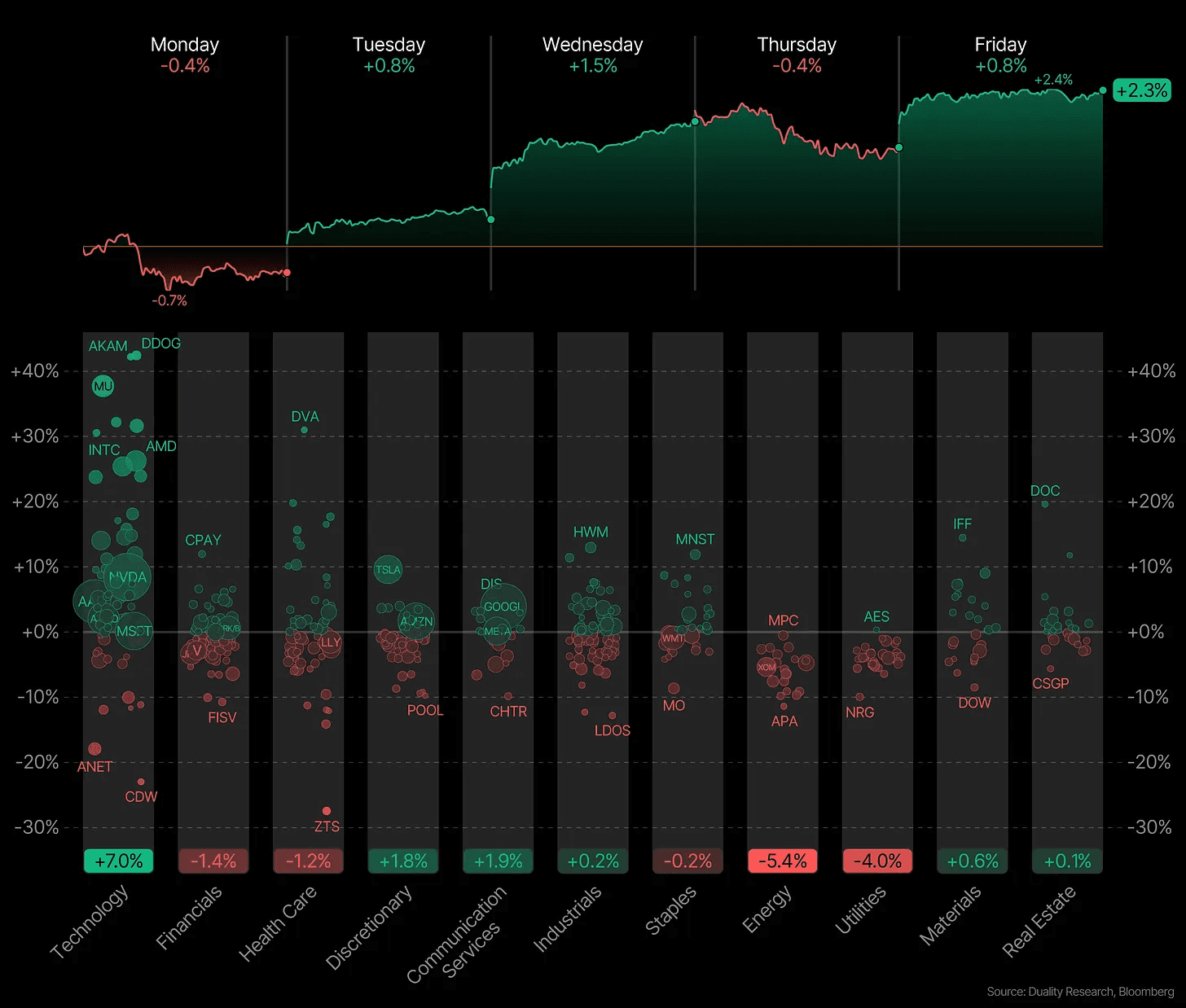
All of this leads to six consecutive positive weeks, the longest winning streak since 2024. And it is a great reminder that strength continues to feed on itself. Strong earnings drive higher prices, higher prices improve sentiment, and improving sentiment pulls even more capital back into the market. Momentum attracts momentum. And that is a self-reinforcing cycle.
This streak will eventually end, but it is also important to keep in mind that episodes like these lasts longer than most think. Strong markets usually do not end when people expect them to.
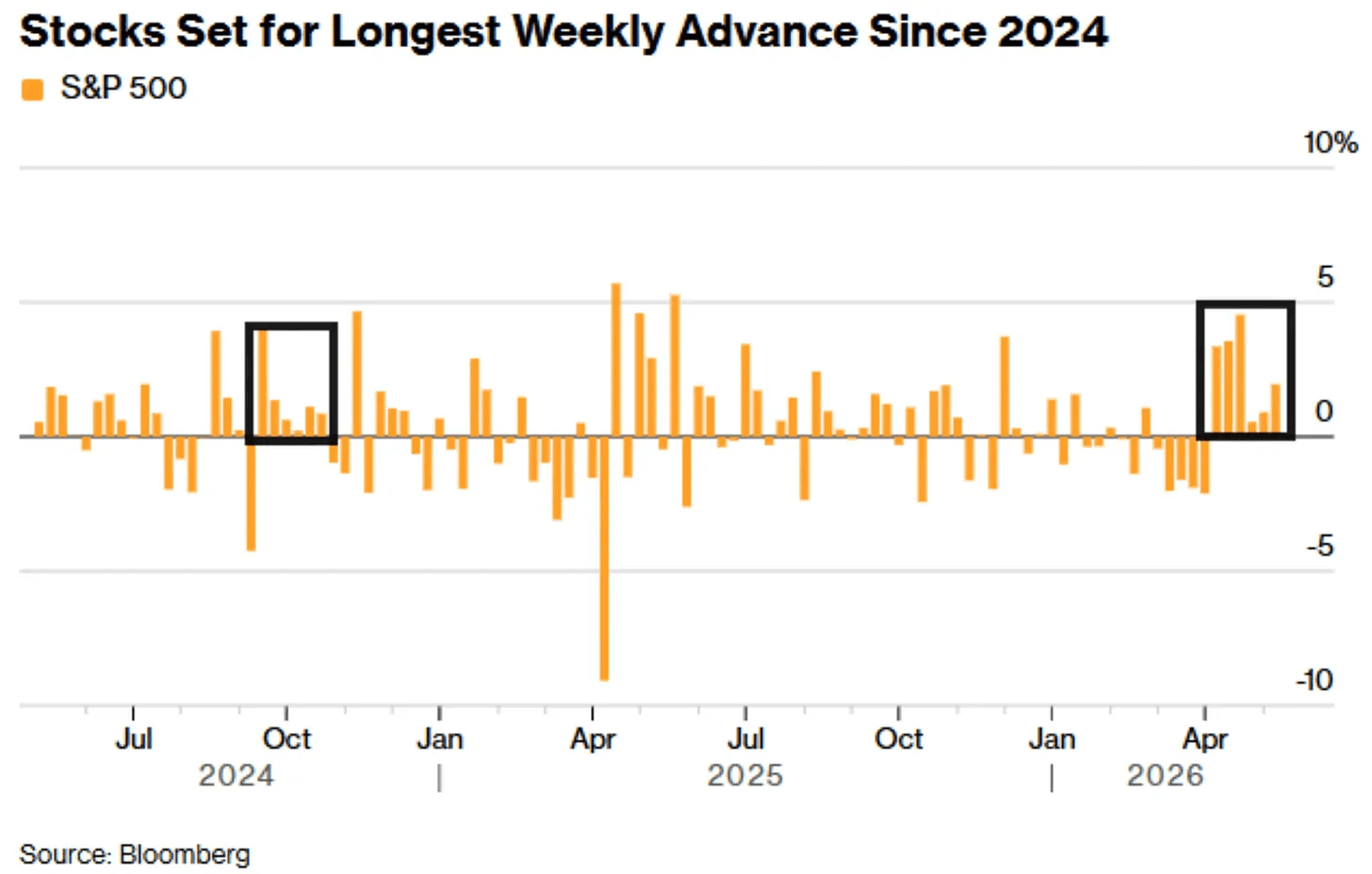
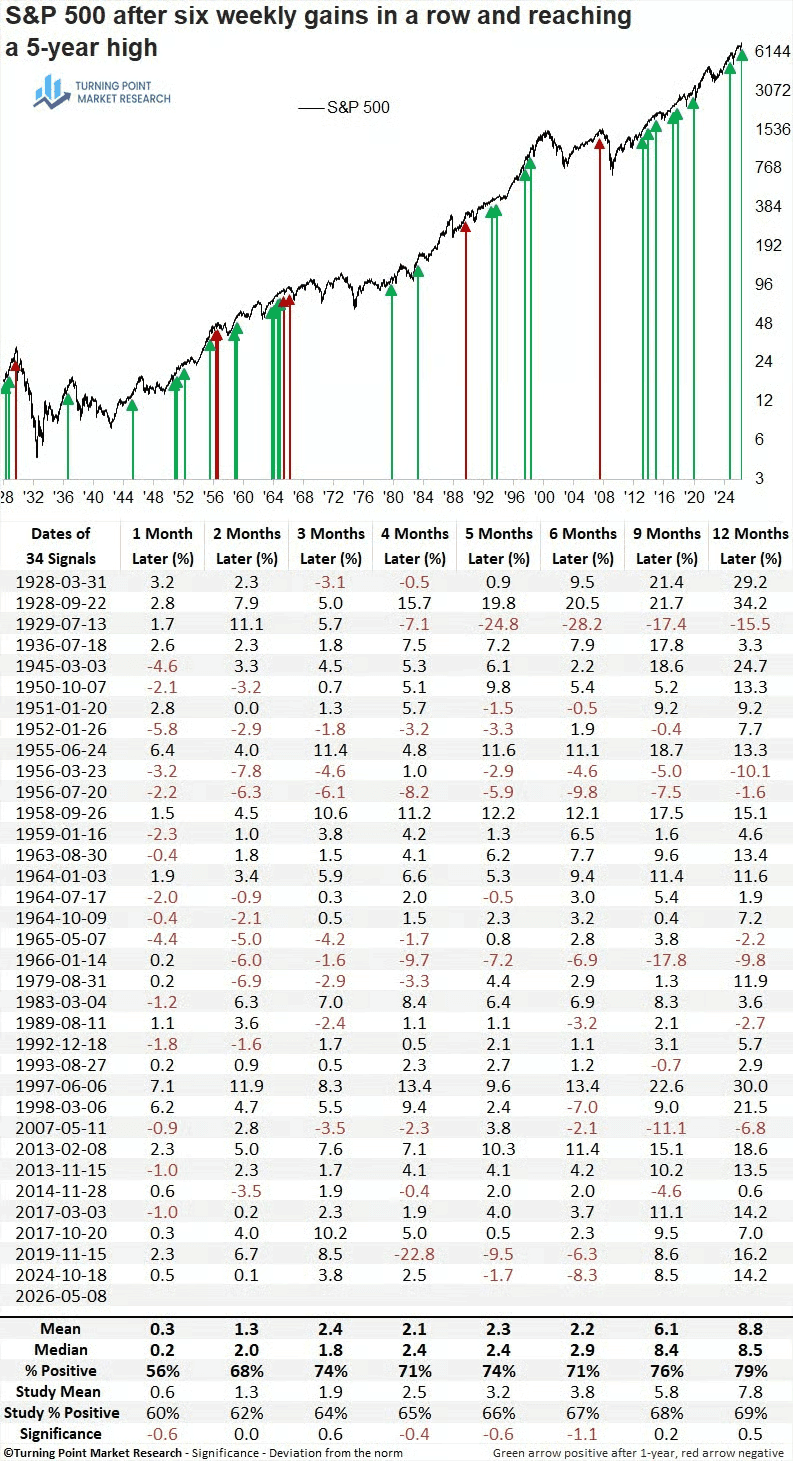
The main takeaway is that strong momentum usually stays strong.
Historically, when the S&P 500 rallied for 6 straight weeks while also making a new 5-year high, the market tended to continue performing well over the following 12 months.
There is absolutely no reason to have a bearish bias. But there are signs to pay attention to as this rally gets more extended.
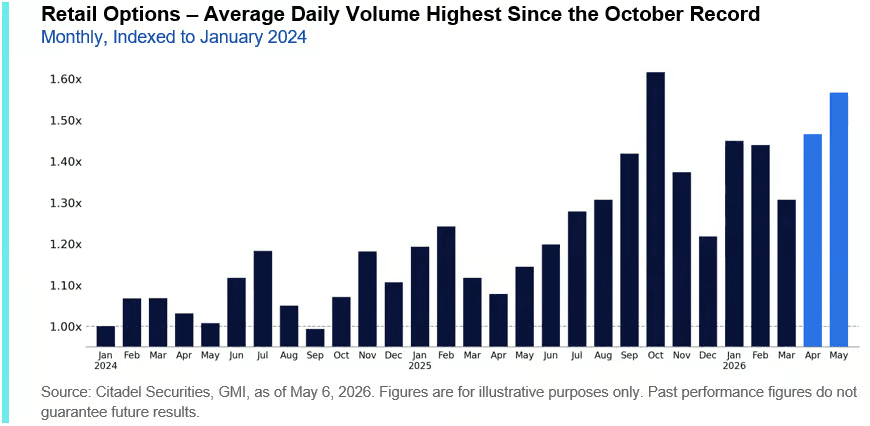
Retail investors are becoming extremely aggressive again.
Individual investors aggressively piled back into stocks in April after only a brief pause earlier in the year. Last week alone ranked in the 98th percentile of all weekly retail inflows since 2019, meaning retail buying was stronger than almost any other week over the past several years.
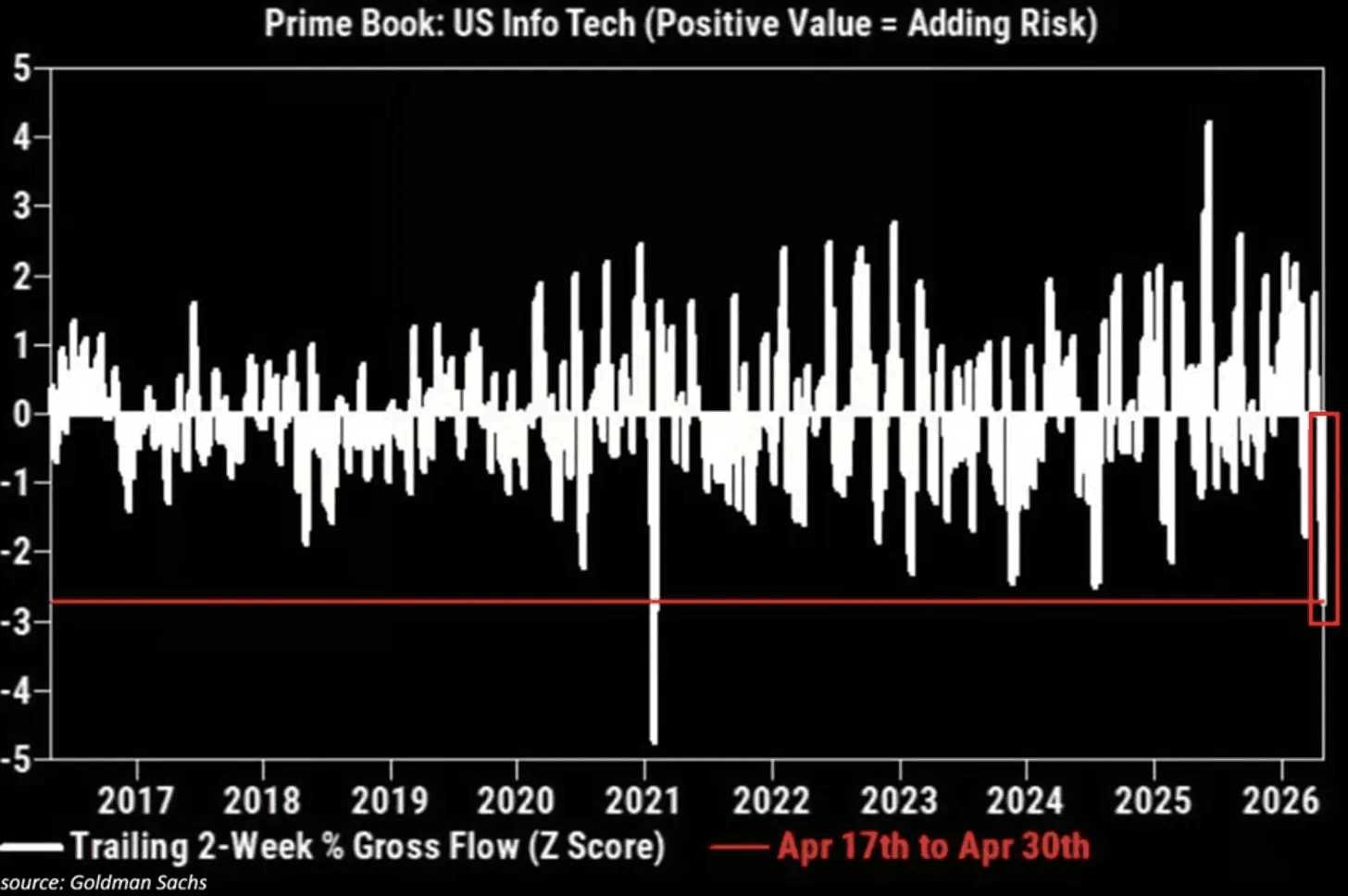
Hedge funds are doing almost the exact opposite. They just posted their largest 2-week reduction in US technology exposure in a decade, excluding the meme stock frenzy in early 2021.
Most of the selling came from long positions being cut rather than shorts being covered, with semiconductors leading the reductions. Even the Magnificent 7 names were sold in 4 of the last 5 trading sessions.
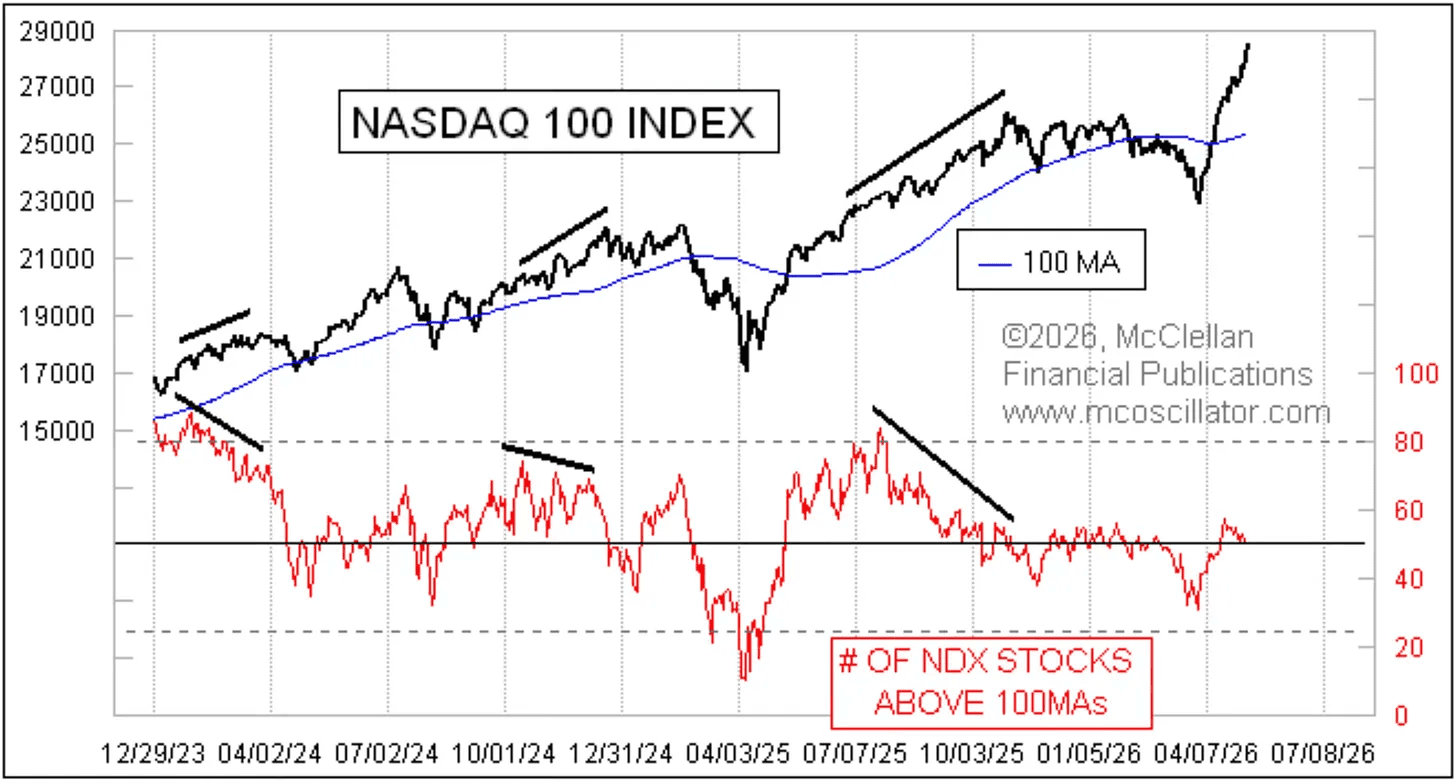
The rise in the Nasdaq-100 has been incredibly strong, but participation underneath the surface continues to narrow. Fewer stocks are carrying more of the index. The number of Nasdaq 100 components trading above their own 100-day moving averages peaked at 57 in April and has already slipped to 52 even while the index itself continues pushing higher.
Momentum can stay powerful for much longer than expected. But narrowing breadth is still something worth paying attention to.
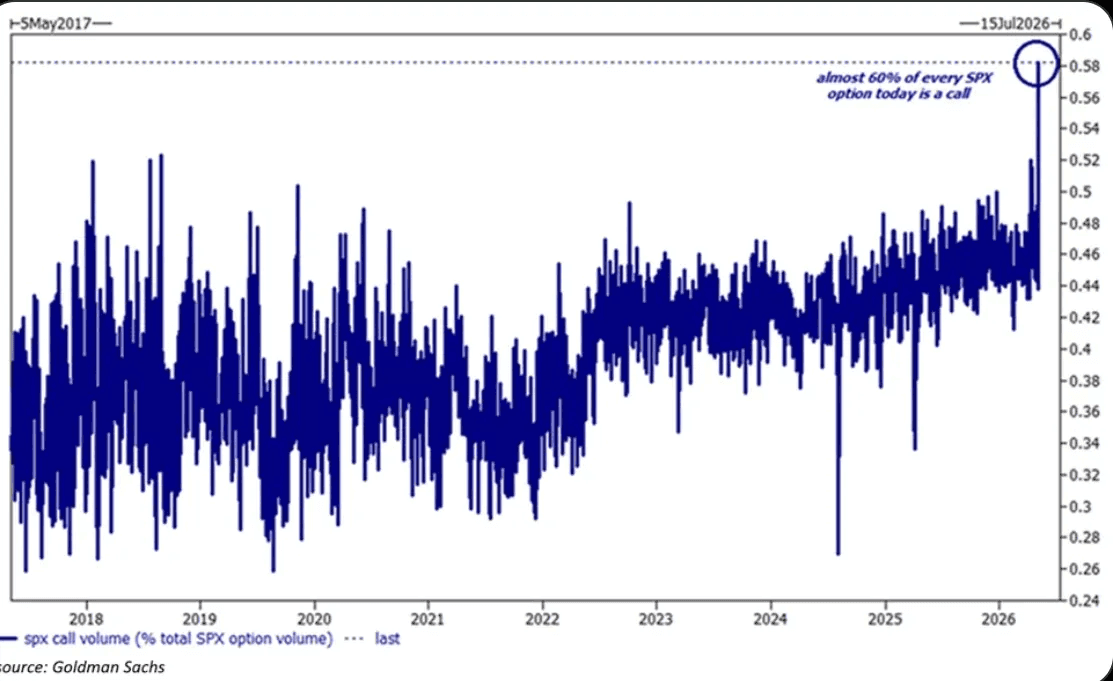
Everyone is leveraged.
60% of all options bought today are calls. It basically means a huge number of traders are suddenly betting on stocks continuing to go higher in the short term. That can become a problem because when too many people pile into the same trade at once, the market often gets stretched. At some point there are fewer buyers left, momentum cools off, and some of those late bullish traders get caught offside during a pullback or consolidation.
But that is the short-term picture.
Over the long run, the bigger story still looks incredibly bullish. We just heard from the 4 largest technology companies in the world, and if you listened closely, the message across all of them was basically identical: we are not slowing down.
AI spending is still accelerating. Infrastructure investment is still exploding. Data center buildouts are still ramping. The race for compute, energy, chips, models, and AI products is still in the very early innings.
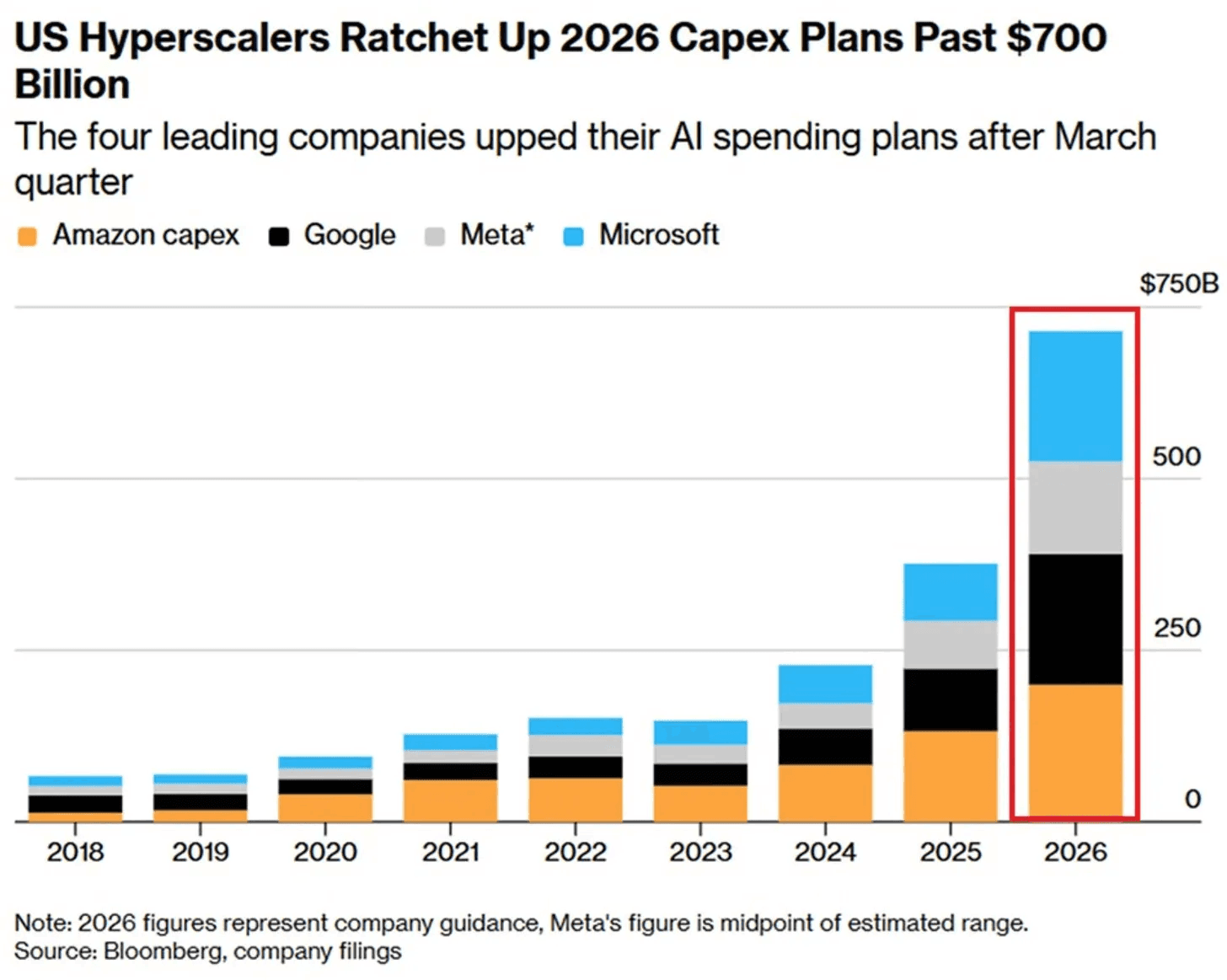
Combined, the four hyperscalers are now on track to spend more than $700 billion in capital expenditures in 2026 alone. That’s nearly double what they spent last year, and $100 billion more than they had projected just one quarter ago.
The market remains incredibly strong across the major indices and the rally off the April lows continues to be one of the most aggressive advances I can remember.
Every small dip continues to get bought almost immediately, leadership is expanding, and bulls remain firmly in control.
There is no denying that both S&P 500 and NASDAQ are extended in the short term. The NASDQ has now posted 6 straight green weeks and many of the major leaders are stretched far above key moving averages. A pause, pullback, or consolidation would be completely normal after a move this powerful.
In my view, the bigger risk right now is overthinking the rally.
That does not mean risk management stops mattering. There are still some signs worth monitoring underneath the surface. Market breadth has narrowed in some areas, the number of stocks hitting new lows has started to rise, and short-term sentiment is becoming increasingly aggressive. Retail investors are rapidly piling back into stocks. Those divergences matter and eventually they will play a role.
But none of that changes the primary trend right now.
If we do finally get a pullback, I think there is a higher probability it is a buying opportunity rather than the beginning of a lasting collapse.
My focus is on long opportunities, especially in AI, space, semis, and energy. The main goal remains the same: trying to identify the future leaders and sectors.
Previous Updates
View All
- Weekly Market Update: Rate Hikes
- Weekly Market Update: AI is Not Slowing Down
- Market Update: Has AGI Arrived?
- Weekly Market Update: Consolidation
- Weekly Market Update: September is Here
- Market Update: Nvidia Crushes Earnings
- Weekly Market Update: Yields
- Market Update: The Future of Biotech
- Weekly Market Update: Earnings Acceleration
- Market Update: The Next Generation of AI Infrastructure
- Weekly Market Update: New Highs
- Market Update: Nvidia’s Way Around Memory
- Weekly Market Update: LTCM 2.0