Go Back

Lin
Weekly Market Update: Sell in May?
April wrapped up with new records.
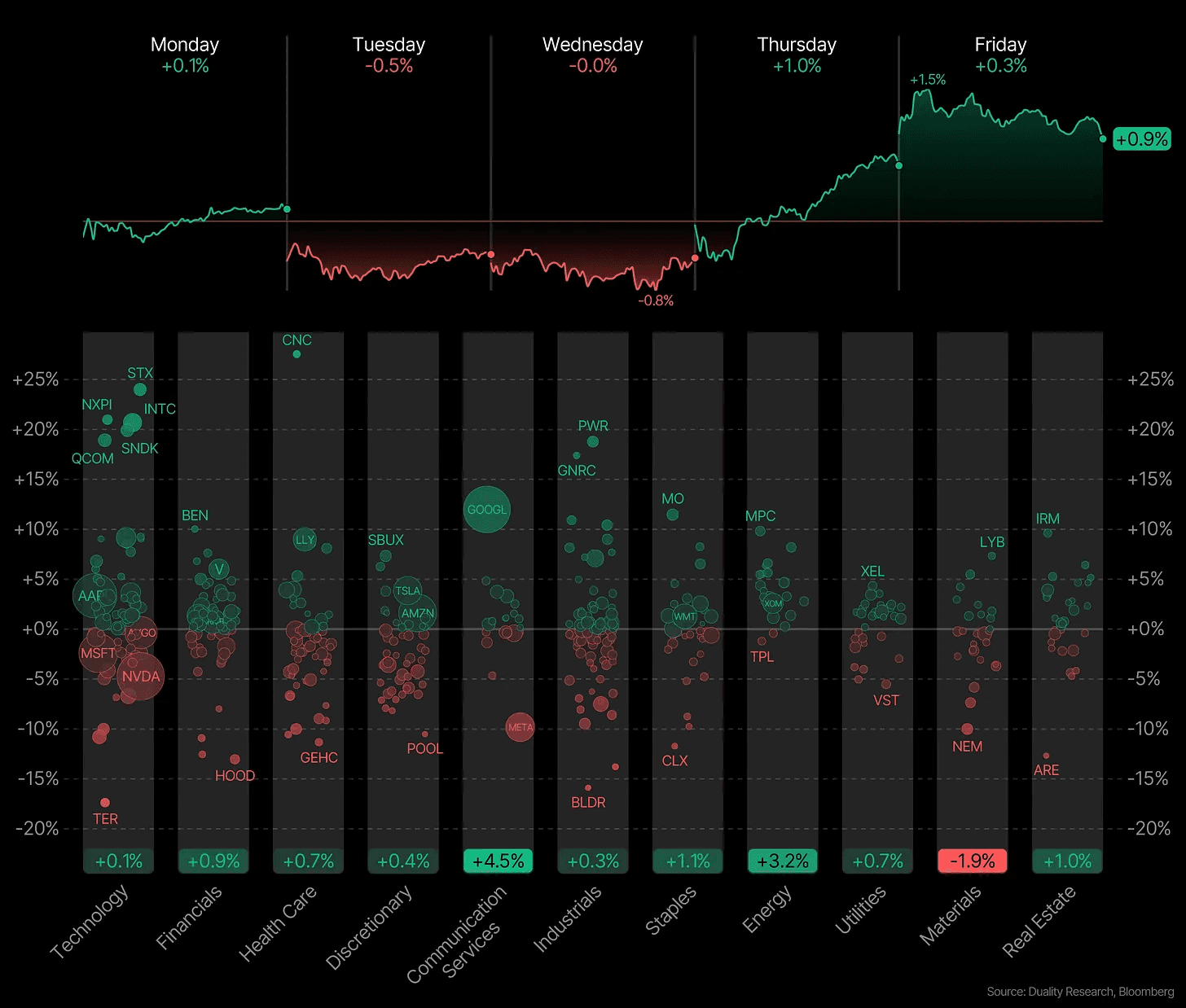
And last week was just more proof the AI trade is far from over.
All the major hyperscalers making massive capex commitments that clearly show there is no real slowdown in AI spending, and if anything, the pace of investment is actually accelerating. We’ve discussed this at length over the last year. So, this shouldn’t be too surprising.
A lot of people still want to call this a bubble, but when you look at the data, it just doesn’t hold up, because the capex is real, the earnings are real, and AI is driving huge gains in profitability that are directly feeding into higher stock prices, while earnings revisions continue to move higher. And while some parts of the market get too euphoric, it doesn’t mean the entire market is in a bubble.
What many people don’t fully grasp is the sheer scale of what’s happening, because when a small number of companies are spending hundreds of billions of dollars to go after opportunities that are measured in the tens of trillions, that kind of investment naturally becomes a powerful tailwind not just for the broader market, but for a wide range of individual companies as well.
And that capital has to flow somewhere, which is why we’re seeing it move across the entire value chain, into semiconductors, power and energy, data centers, storage, cooling, software, and all the companies involved in building both the physical and digital foundation of the AI economy. This is still the leading sector without a doubt. Pretty much every sector and stock highlighted in “The Secret AI Model” is making new record highs..
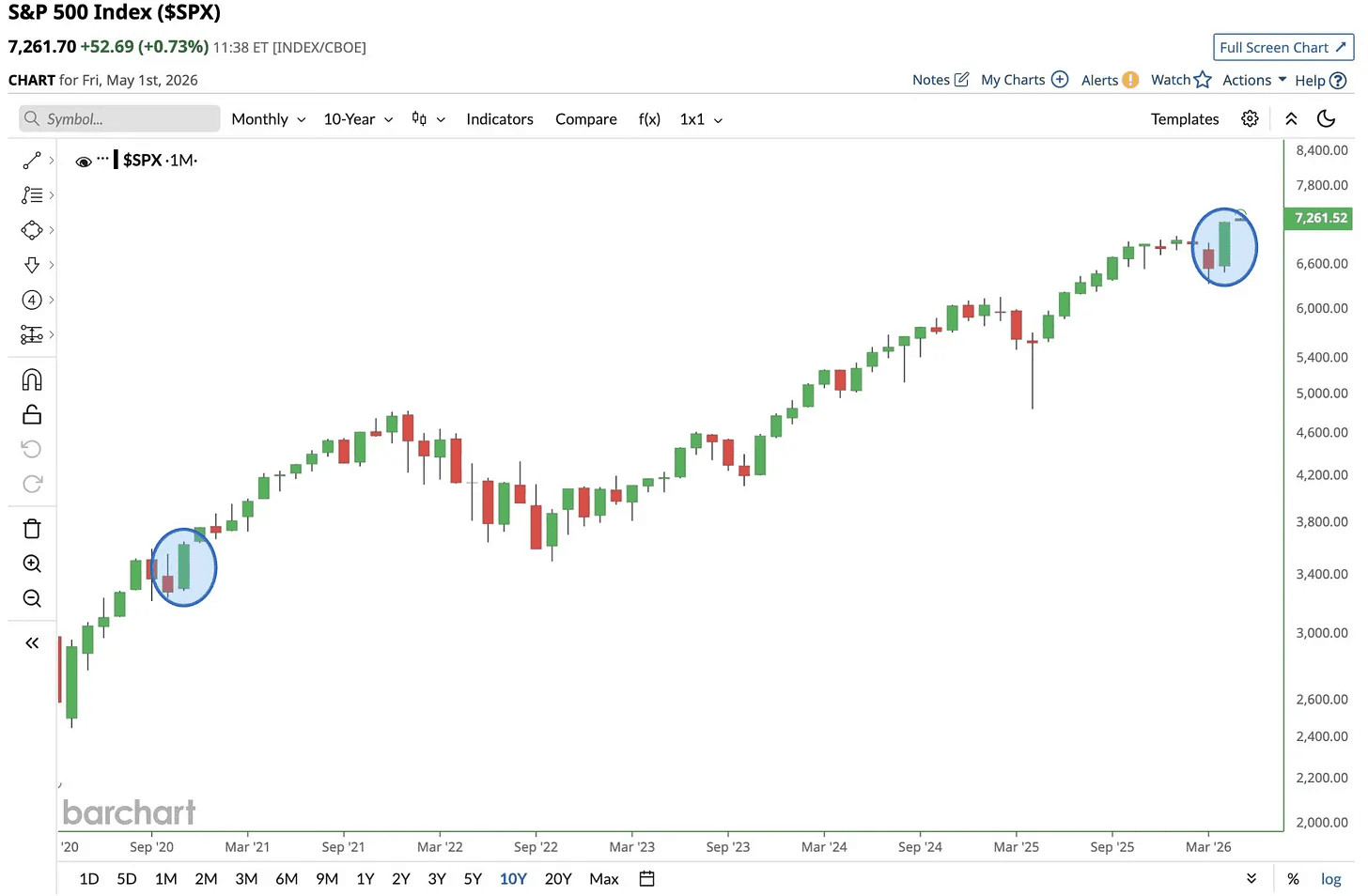
The S&P 500 just had its best month since November 2020. It ranks as the 27th best month ever going back to 1928, and the 4th best April on record.
Just look at that chart. That strong green candle into month-end says a lot. Moves like this, especially near all-time highs, are clearly a positive sign. That doesn’t mean we won’t see pullbacks. We will. But right now the trend is still up, and the base case should stay bullish. Any dips are more likely opportunities than something to fear.
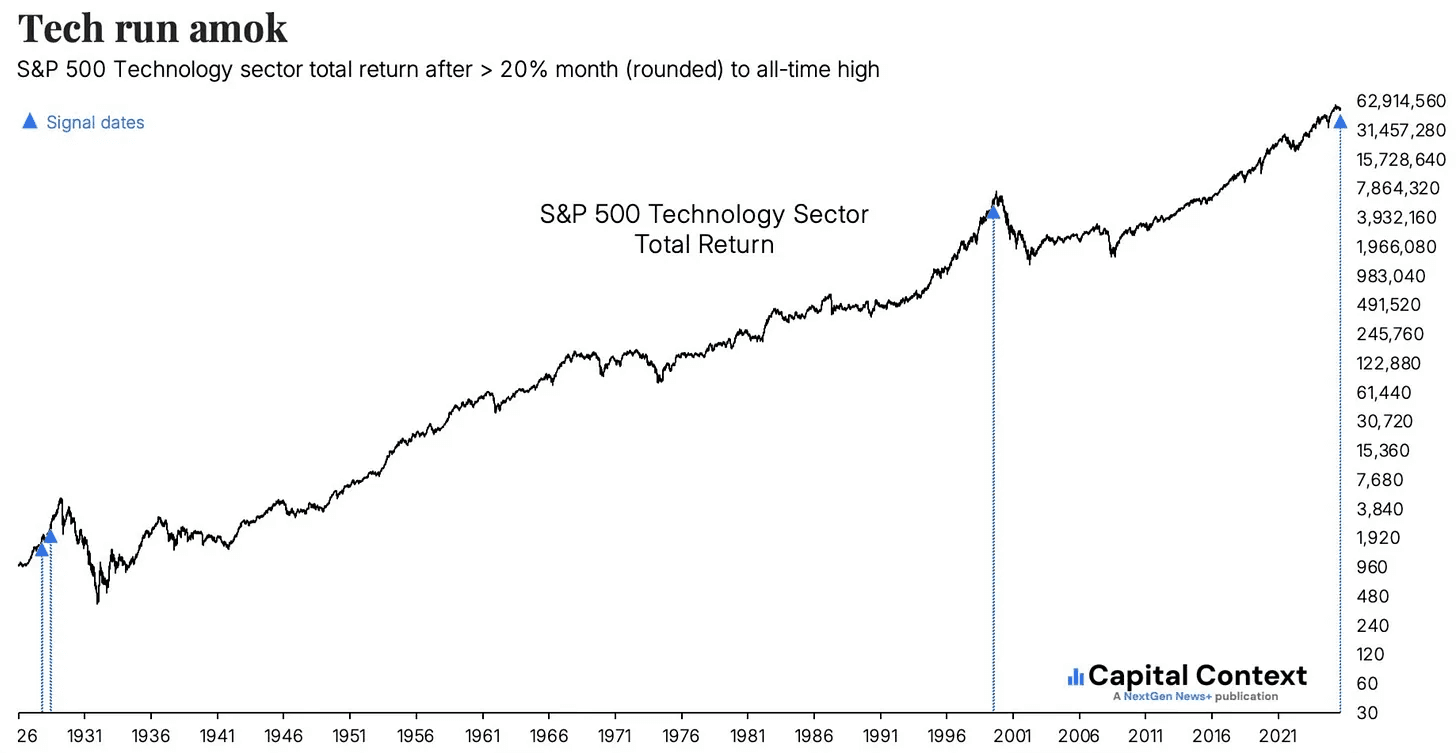
And unsurprusingly the biggst driver this month was: tech.
The S&P 500 Technology sector just had its second best month in the last 27 years. And if you zoom out even further, going back to 1926, there have only been 2 other times tech delivered a 20%+ month at all-time highs. Interestingly, Both times, the market kept moving higher after. but it also happened closer to the end of the cycle.
AI is advancing at an exponential pace and is already shaping up to be the most transformative technology we’ve seen in decades. But as powerful as that trend is, expectations tend to move even faster than reality over time, and that gap is exactly what leads to bubbles forming in the first place.
That’s not meant to sound pessimistic, it’s simply how every major innovation cycle has played out. So the key is to take advantage of it while it’s here, because it won’t last forever.
Now the calendar flips to May. And you know what they say.
May through October is historically the weakest six-month stretch of the year, but weak doesn’t mean bad or uninvestable. Since 1950, the S&P 500 has still averaged about 2.1% during those months with a 66% win rate, which means the market is up more often than it’s down even in the “worst” period.
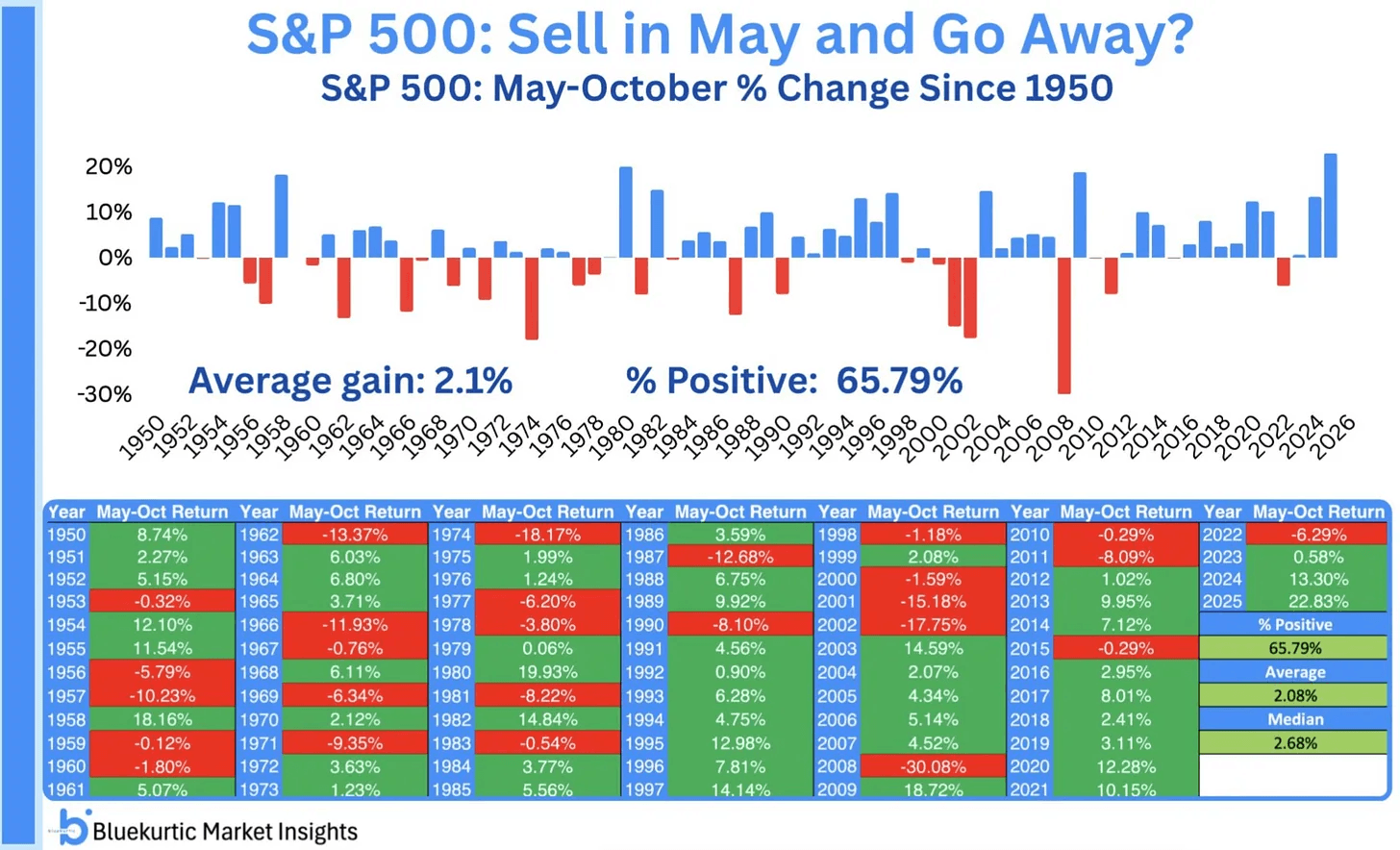
And if we look over the past 10 years, that six-month stretch has finished lower only once.
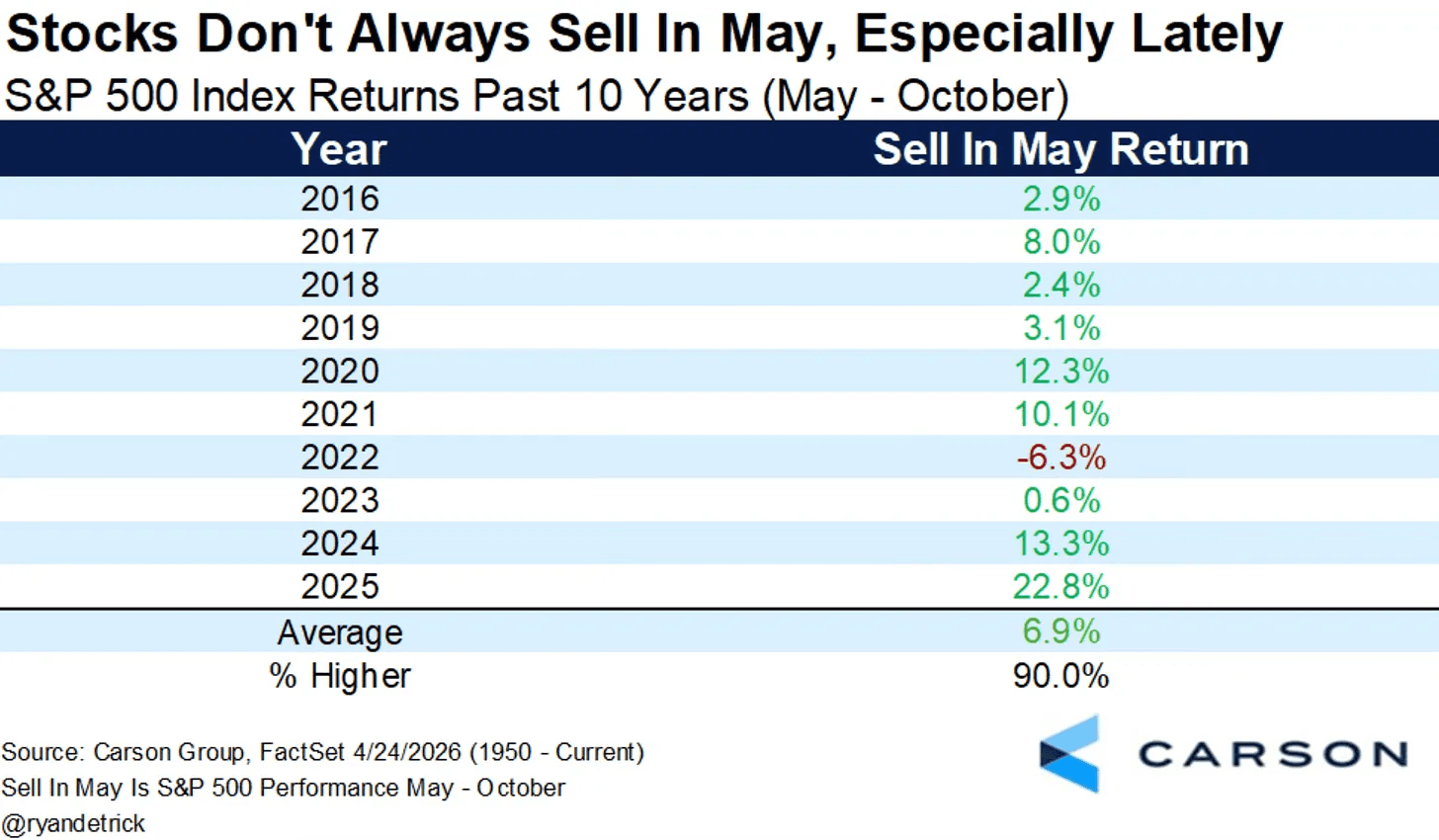
In fact, May has been up in 12 of the past 13 years, which is pretty much the opposite of what the “Sell in May” narrative suggests. And if you zoom out a bit, it becomes even clearer, because since 1990, May’s average return is actually higher than both the average and the median month, so it’s not even a weak month in the way people think.
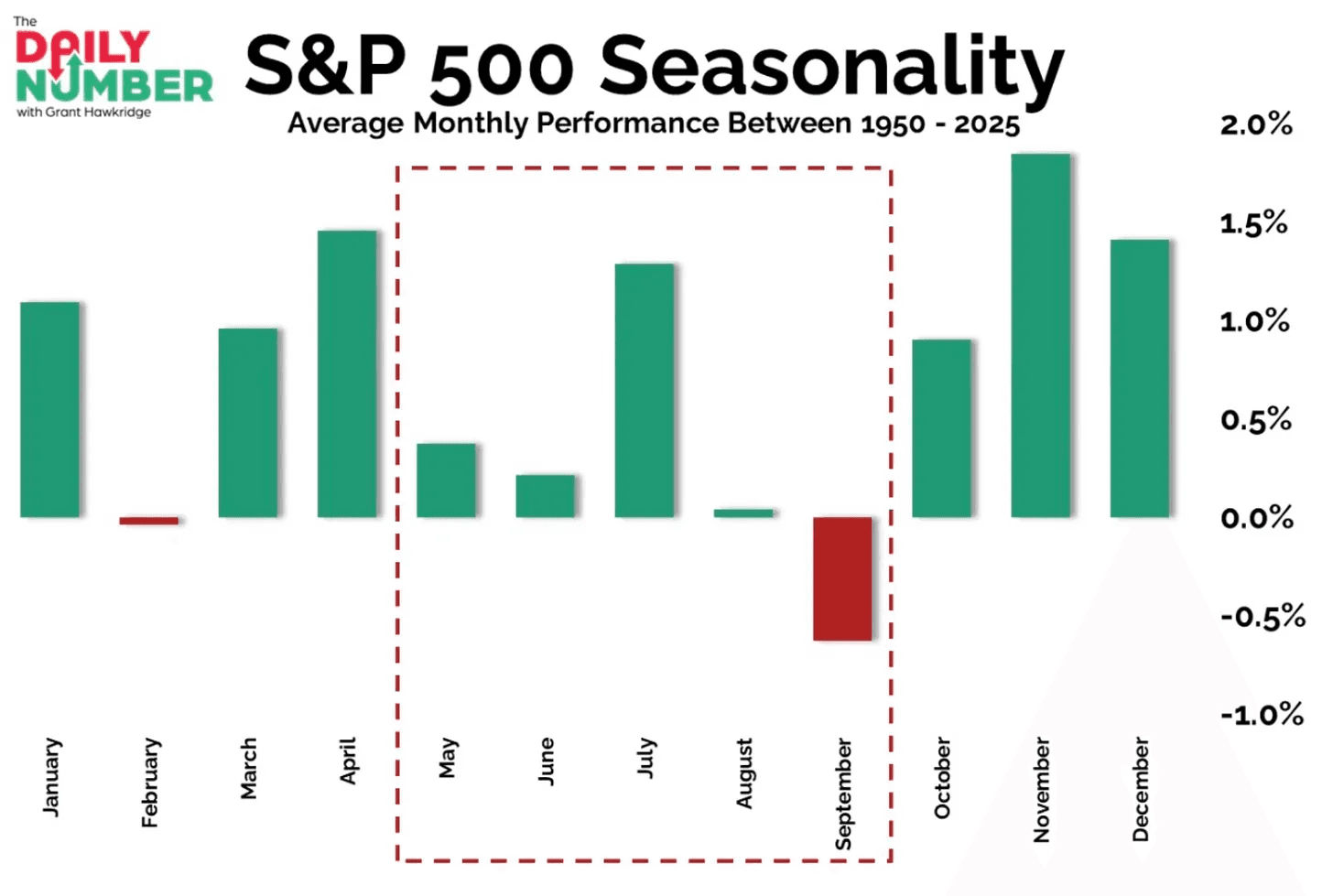
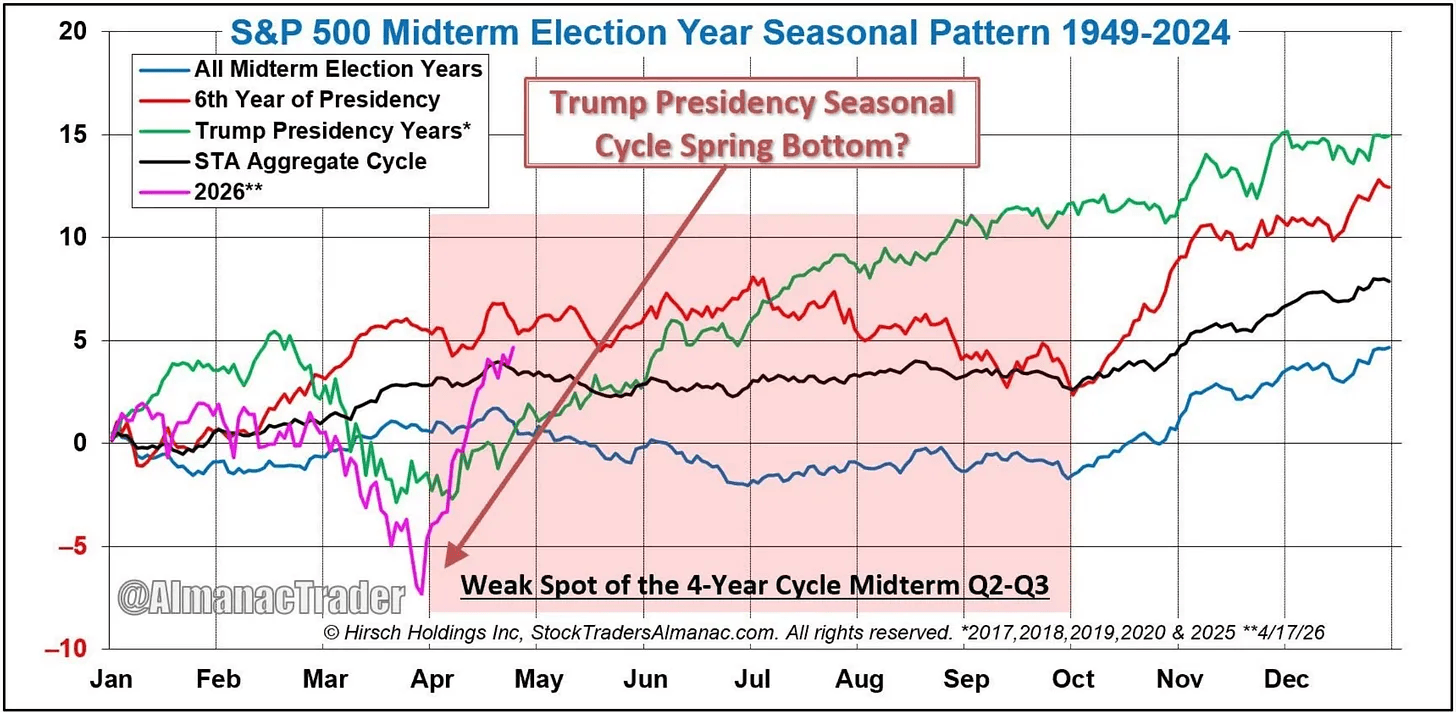
That said, 2026 is a midterm year, and historically those tend to come with a bit more volatility, especially through Q2 and Q3. After such a strong run in April, some consolidation or choppier price action here would be completely normal and nothing out of the ordinary.
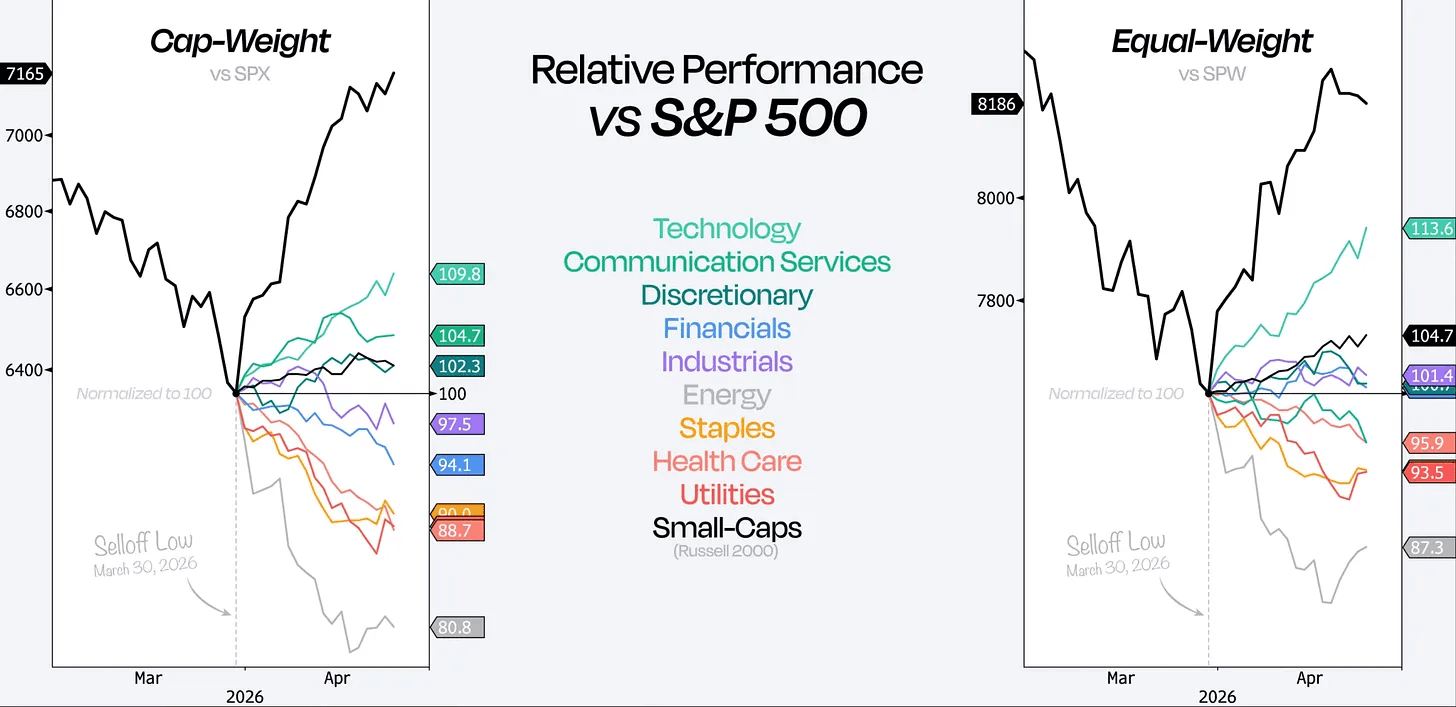
Yes, technology is leading, and it should be. But just as important is what’s happening under the surface. Since the March 30 lows, the sectors you want to see leading in a healthy market are actually leading, while the ones that typically lag are still lagging. That’s why I always emphasize focusing on the leading sectors and stocks.
Investors are rushing back into the market, and you can clearly see it in how quickly cash is being deployed.
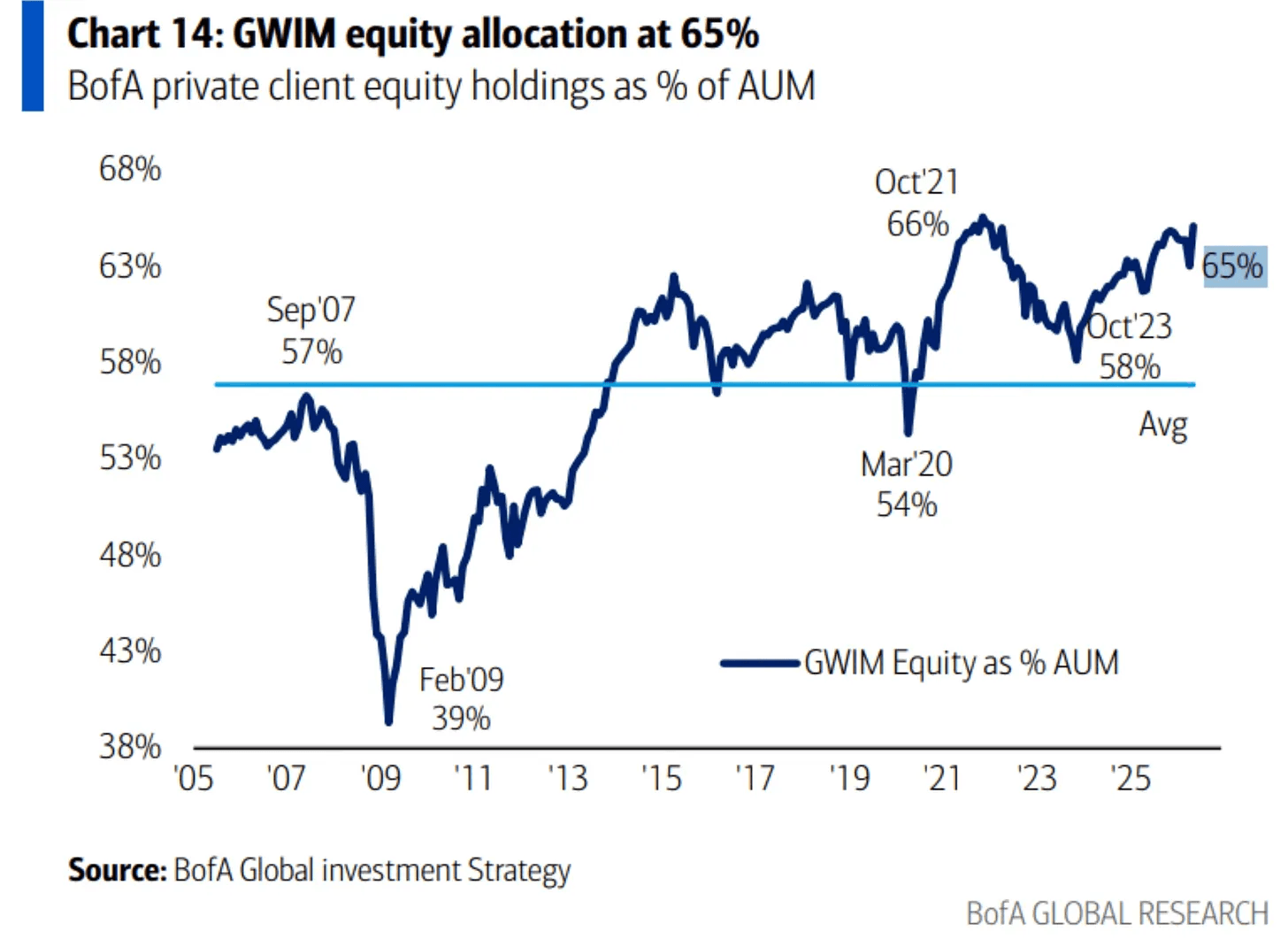
BofA’s private clients, who manage around $4.4 trillion in assets, now have 65% allocated to equities, which is the highest level since December 2021, while cash levels have dropped to just 10%, the lowest since September 2018.
That’s a pretty clear signal that capital is being put to work, and more importantly, that it’s moving into stocks, which tends to act as a tailwind for the market as long as that trend continues.
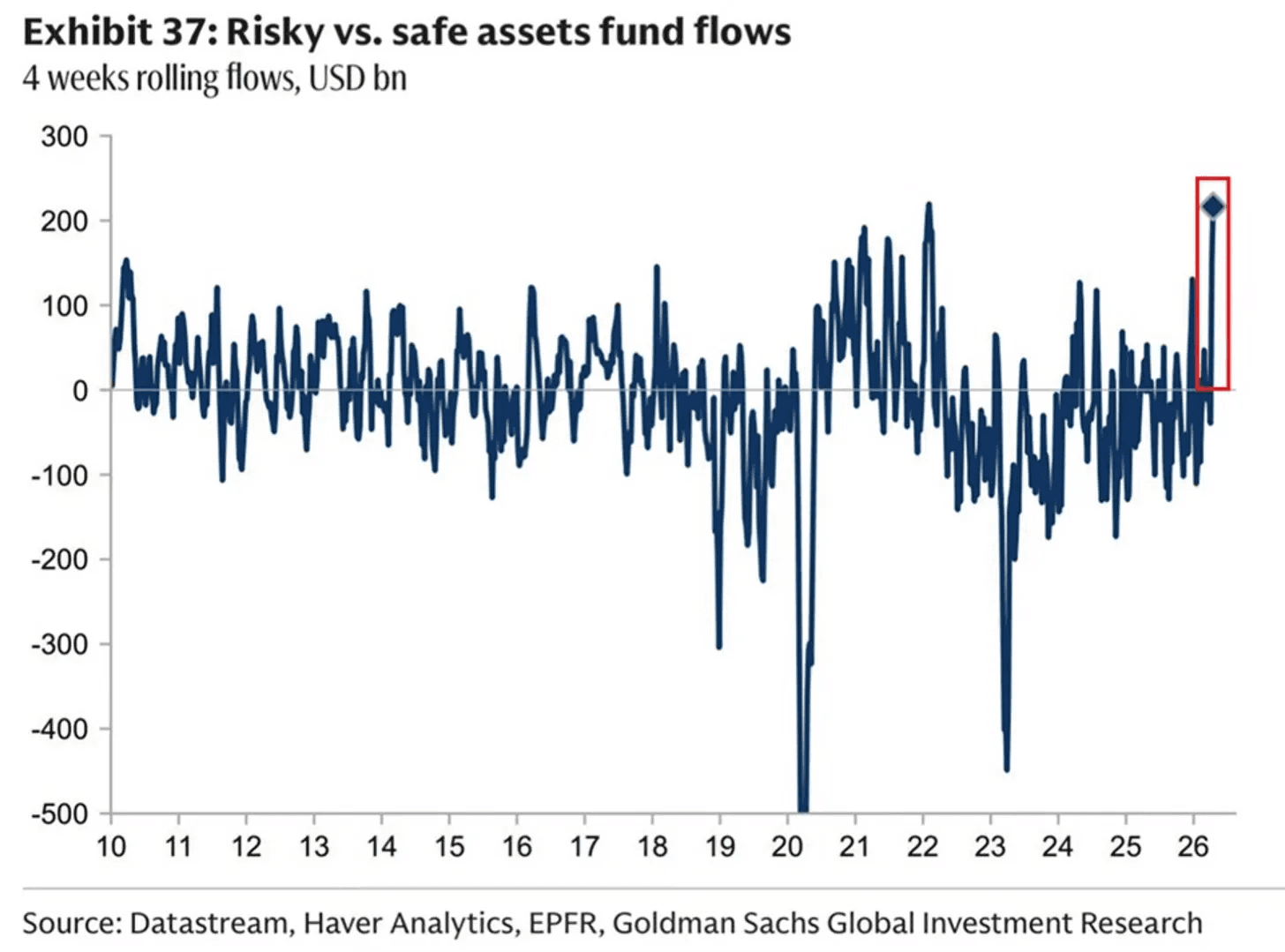
The fund flow data is telling the same story, just in an even more extreme way, but it’s not so much that investors are rushing back in, it’s that their appetite for risk is clearly very high right now. Over the past four weeks, inflows into risky assets have exceeded inflows into safe assets by a record $220 billion, which shows how strongly capital is leaning into equities and other higher-risk areas.
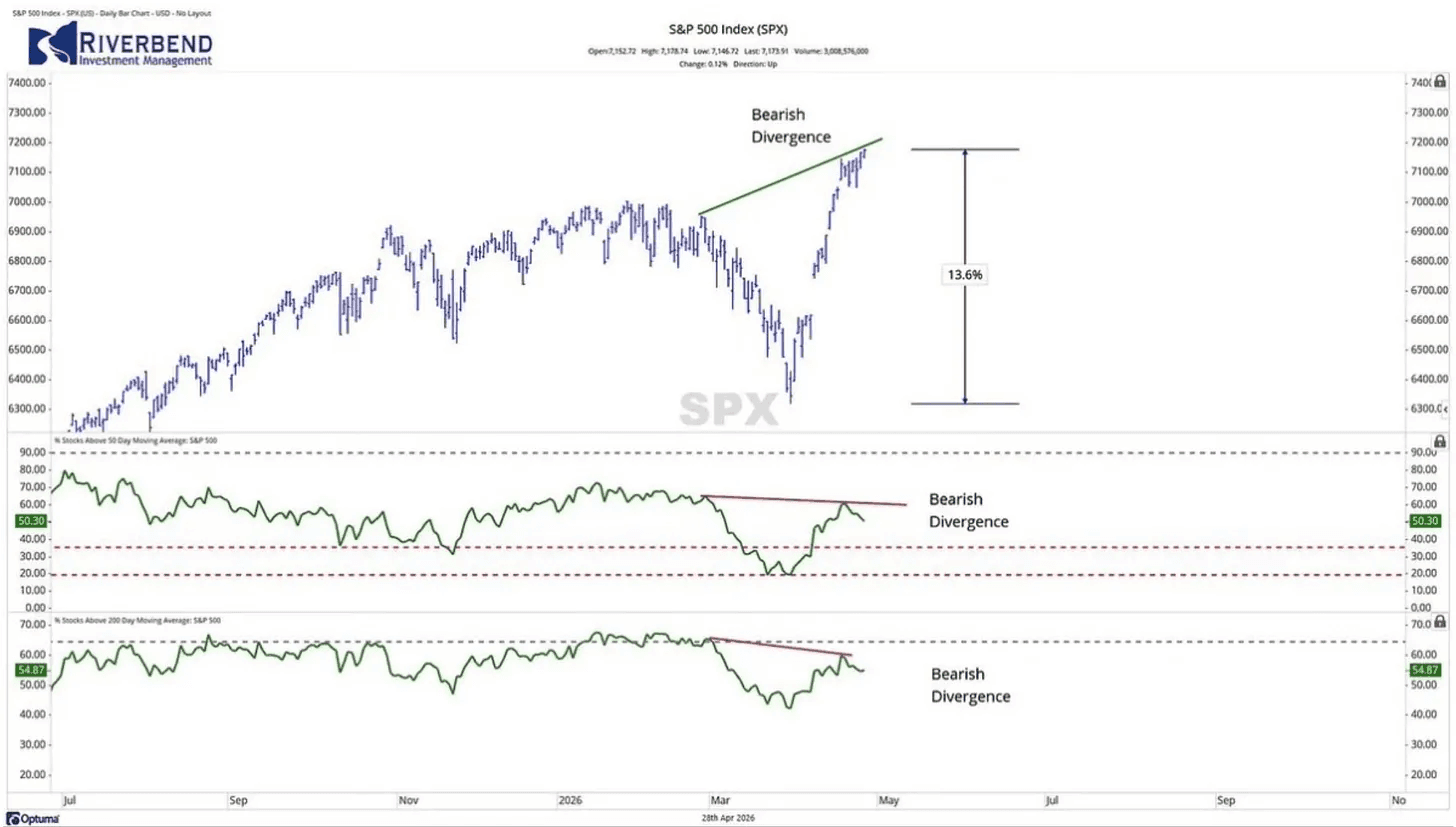
One thing catching my eye right now is the breadth divergence building under the surface. The S&P 500 is pushing to new all-time highs, but the percentage of stocks trading above their 50-day and 200-day moving averages isn’t keeping up, which tells you fewer stocks are participating in the move.
That does not mean something is about to break, but it is worth paying attention to. And after a 14% move off the March 30 lows, a bit of short term exhaustion would be totally normal. Markets do not go straight up. A pause or small pullback here would actually be healthy and set up a stronger next move higher instead of pushing things too far too fast.
The market remains in a clear uptrend.
Yes, things are a bit stretched right now, so a pullback here would be completely normal and not something that should come as a surprise, especially since there will always be some headline or, in this era, a tweet that will trigger a correction. Especially, since everyone rushed in to buy over the last few weeks and many are eager to take some profits. So, expect volatility from here. But pullbacks and pauses are opportunities to buy, unless the technicals actually breaks down and tells us something has changed.
So, none of that changes the bigger picture. Selling in May has not worked out so well in the past. This is still a strong market being driven by massive earnings growth, accelerating AI infrastructure spend, powerful leadership, broad theme participation, and expanding speculative appetite.
For now, it’s about being patient and taking advantage of the environment and the opportunities that are in front of us right now.
Previous Updates
View All
- Weekly Market Update: AI is Not Slowing Down
- Market Update: Has AGI Arrived?
- Weekly Market Update: Consolidation
- Weekly Market Update: September is Here
- Market Update: Nvidia Crushes Earnings
- Weekly Market Update: Yields
- Market Update: The Future of Biotech
- Weekly Market Update: Earnings Acceleration
- Market Update: The Next Generation of AI Infrastructure
- Weekly Market Update: New Highs
- Market Update: Nvidia’s Way Around Memory
- Weekly Market Update: LTCM 2.0
- Market Update: The Trajectory of AI Compute